
Five Years of Betting On You: Why Your Work Is Not Your Worth
by Laurie Ruettimann
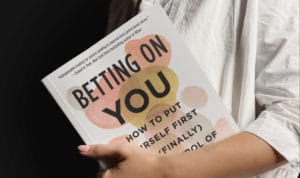
Five years ago, Betting On You — the book — came out in hardcover, at a moment when the world had very little patience for career advice of any kind. It was less than a week after the January 6 insurrection, the pandemic had flattened public life, stages were dark, bookstores were cautious, and the news cycle felt permanently locked on crisis. I remember thinking that if a book was ever going to disappear quietly, this would be it.
It didn’t disappear. Against the odds, it found its way. The book sold well enough to earn a second printing in paperback and was published internationally in Europe, South America, and Australia and New Zealand. I spoke about its ideas across time zones, first virtually, then in person as stages reopened. Major outlets covered the work. From the outside, it looked like success, the kind you are taught to recognize and be grateful for.
But from the inside, my life felt a little weird.
Betting On You is built around a central truth I believed then and still believe now: your work is not your worth, and no system will ever love you back. I also wanted the book to change my life in the way people pretend books change lives. I wanted the clean upgrade. I wanted to land in the league of authors who get treated like sages instead of workers with a public-facing job. I’m ambitious, and I’m not embarrassed about that.
Then reality arrived and stayed. A global pandemic will knock the wind out of any competitive person’s sails, especially if you’re trying to promote a book while people are suffering and dying. The book did well, my platform grew, opportunities followed, and none of that automatically made me happier, calmer, or more grounded. Some days, I felt worse, because the work of “launching” felt absurd next to what the world was living through.
So I went back to therapy.
I feel like 2021-2023 were lost years. A global health crisis and an American social contract on fire will do that to a person. I stopped waiting for professional momentum to fix my mood and started doing the plain work again. What was that like? Therapy. Consistent movement. Real rest. Paying attention to my body instead of overriding it. This wasn’t a reinvention strategy. It was a return to the values I actually hold, and a complete return to the spine of the book.
The same pattern showed up spiritually. Over the past few years, I’ve doubled down on Judaism, not as a personal branding exercise or identity performance, but as practice and structure. It has given me rhythm, community, and a way to stay oriented when the world feels loud and unstable. It has also made me more accountable, which is the part people don’t always say out loud. When I don’t show up, people notice.
My life widened in other ways, too.
Since I published the book, I’ve become more involved in my community. I’m back to fostering kittens. I take classes. I put myself in rooms where I am not the expert. Right now, that means learning more about allyship and advocacy in the face of rising authoritarianism, and sitting with the uncomfortable question that always follows: what can one woman actually do?
I can’t do everything. I can do something. I can show up. I can pay attention. I can help where I’m needed. I can keep learning. I can refuse to confuse outrage with action or cynicism with wisdom. I can do my part without pretending it will save the world.
Betting On You was never really about “winning” at your career.
Capitalism is a slog. That hasn’t changed. The market still rewards scale, speed, and endurance, and work is still unstable and uneven by design. What has changed is my clarity about what actually holds.
The book was always about relationships, love, connection, and responsibility to yourself and others. It was about refusing to confuse your job with your identity and choosing a life that can sustain you when systems can’t. Five years later, that theme is not an idea I admire. It’s a practice I repeat.
I’m grateful for the book. I’m proud of it. I’m also honest about what it could and could not do. A book can articulate a truth. Living that truth takes repetition, humility, and choice.
Betting On You didn’t change my life. I did. I keep doing it. That’s the real work.
You must be logged in to post a comment.