
 Moral Injury at Work: Why Betting On You Still Matters
by Laurie Ruettimann
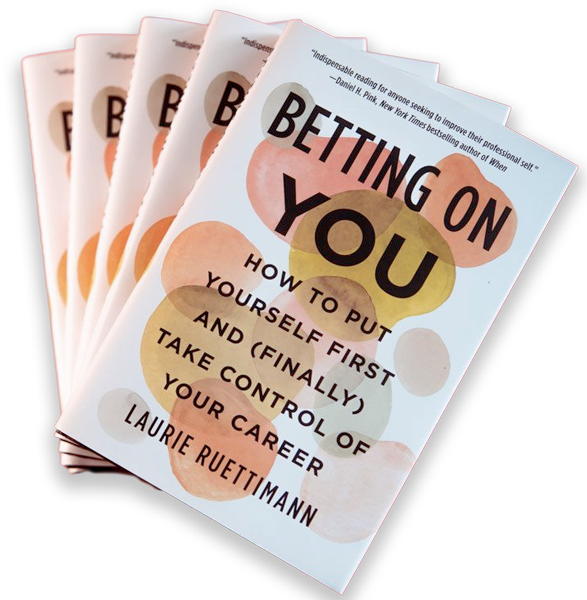
My book Betting On You came out in January 2021, days after an insurrection and in the middle of a wrecked economy.
The pandemic was still impacting daily life. Supply chains were brittle. Workplaces were fragile. People were scared and trying to make rational decisions inside systems that made no sense.
Many readers assumed the book was a summary of my professional career wrapped up in a response to a once-in-a-generation crisis. Like, I wrote the book because of COVID.
They were wrong.
Sadly, the book is evergreen with career wisdom for any economy. That’s because economic situations change, but people don’t.
In 2021, instability came from outside organizations. A global pandemic. Government shutdowns. Forces that leaders and employees did not create but had to endure.
Today’s instability is self-inflicted. We’ve deployed AI without guardrails. There are tariffs and policy whiplash. Someone (cough cough) slashed government funding. And there are repeated layoffs framed as discipline, efficiency, or inevitability.
I don’t know about you, but I’m frustrated when constant restructuring—driven by short-term shareholder logic—is applied to human beings who pay taxes and helped build companies and communities.
When I travel around America and still talk about my book, I notice one thing: Employees are not confused about what is happening. They are injured by it, and they’re no longer blaming the pandemic. They are blaming their leaders.
This Is Moral Injury
Back in 2021, HR teams grappled with burnout for their workforce and themselves.
But 2026 is totally different. Now, everyone is experiencing moral injury.
Moral injury occurs when people are asked to participate in, enable, or quietly accept actions that violate their sense of right and wrong. It shows up when leadership decisions create harm and then distribute the ethical and emotional cleanup downward.
Employees also experience moral injury when they are told to be grateful to still have a job while watching colleagues disappear. Productivity is praised and humanity is treated as a rounding error. The explanation around layoffs and merit increases changes. The executive compensation never does.
That’s moral injury.
HR Feels It Too
Betting On You touched on moral injury. So does my LinkedIn Learning course on HR and ethics.
HR professionals are asked to translate decisions they did not make. To soften language around outcomes they know are damaging. To maintain trust they did not break. To carry the weight of layoffs, restructures, and “strategic resets” while being told to stay neutral, optimistic, and professional.
They are expected to build bridges between employees and leaders so everyone can keep going, even when the direction is undefined, incoherent, or unsafe.
This is not a resilience problem. It is a moral one.
Why Betting On You Still Matters
My book was never about quitting your job or chasing passion. It was about judgment, limits, and professional detachment. Seeing work clearly, without romance or denial.
It argued that most people are dangerously over-invested in their jobs. They link their identity, worth, and emotional stability to institutions that will not reciprocate.
That kind of attachment looks noble in good times. In repeated downturns, it becomes a liability.
Betting On You was never about impulsive exits. It was about reclaiming your own agency inside imperfect systems. You can plan for mistakes, failure, and disappointment without becoming cynical. You can make decisions based on reality instead of hope. And when it sucks, you can leave.
For HR, the Message Is Sharper
If you work in HR, I want you to remember that you are not the moral center of the organization. You are not the savior. You cannot absorb moral injury and convert it into something humane through effort alone.
You are an employee, like everyone else. But you do have judgment.
You decide how honestly you communicate. What you normalize. Whether you participate in harm quietly or name it clearly. Where your limits are — even when the organization pretends limits do not exist.
In a self-inflicted downturn, that judgment matters more than culture decks, resilience programs, or productivity theater.
The Book Doesn’t Offer Comfort. It Offers Clarity.
What are you actually responsible for? What are you pretending you can control? What is the cost of staying silent and who pays it?
Those questions mattered in 2021 because the world was on fire.
They matter now because leaders are making choices that injure people morally, not just economically.
It all still matters, and I hope you check out the book whether you work in HR or not.
You must be logged in to post a comment.