Year: 2017

  • Something New: HR Book Club #HRBookClub

    I believe you can read 12 books in 2018. I’m starting #HRBookClub to make this goal a reality for you.

    Reading is a crucial habit for leaders and business professionals, and far too many people leave high school and never pick up a book again. Maybe you’re one of those people — too busy and tired — and many books look boring. In fact, many traditional HR books are boring. That’s why I’m creating #HRBookClub. Why waste time reading bad books? That makes no sense.

    While researching book clubs, I learned that quite a few of them are formal and even dogmatic. There’s a book assignment, meetings, discussions, and even homework. Reading is hard enough for some people. Why complicate it? And what if you don’t like the book of the month? Do you just skip it? That’s stupid. I won’t allow needless complexity in #HRBookClub.

    Some of the book clubs are too elitist, as well. You might enjoy reading books on the intersection of climate change, behavioral economics, and blockchain. You’re probably not the guy for the #HRBookClub. But if you don’t read 12 books a year, we’ve got your back.

    Also, a lot of the book clubs are too feminine and try to emulate Oprah. Who doesn’t want to drink Pinot Grigio and bitch about their kids while attending the neighborhood book club? There’s only one Oprah, and anybody else who tries to mimic her style is doomed to fail. I promise that #HRBookClub is not just for menopausal women with a Lexus RX, although we welcome those women. That’s my future. I can’t run from it.

    So, stay tuned for more updates. I’m currently working on a website and formal plan for #HRBookClub. It won’t be ready in the next week, but I don’t care. I’ll announce the book selections for January on my blog on Tuesday, and we’ll roll with the punches.

    Welcome to #HRBookClub, everybody. Reading will change your life if you let it. Let’s start with a realistic goal — one book a month — and go from there. We’re in this together!

  • 2018 Resolutions

    I always end the year by writing about my accomplishments, failure, regrets and resolutions. I love this time of year because the calendar naturally moves me to reflect and take action. This post is all about 2018 resolutions.

    Earlier this year, my marriage needed a tune-up. To be fair, all relationships require regular maintenance. Mine was just long overdue. People get old, grow apart, find themselves in different places and wonder why it took so long to notice. Following the advice of a dear friend who sat down with me at SHRM in New Orleans, I gave my marriage the full attention it deserves and found a counselor.

    Now, I find the intersection of psychology and consumerism to be fascinating. The first role of a counselor is to be honest. The second is to offer some hope. The third is to take your money and make you feel good about the exchange. Rarely do those three imperatives line up smoothly.

    We saw a therapist who came highly recommended. I’m sure she is a lovely human being, but she’s a horrible businesswoman. Our sessions started late even though her office was in her basement. She never seemed to remember who we were or why we were there and often had to refer back to her files while simultaneously talking to us. She also sent out messages to her MailChimp email list about her troubles filing claims with BCBS. And once, while trying to make a point about first-world problems, she said that real problems hit you in the face.

    Correct, by the way. Real problems do hit you in the face. But real problems also hit you in the heart.

    After a few sessions, sitting in her office felt like the Twilight Zone. The one thing this counselor was good at doing? Uniting us in a shared belief that she needed to take a business class through the SBA.

    There were a few good moments, though, where I learned a lot about myself and marriage. The counselor told me that continually putting my husband and relationship under a microscope is counterproductive. Instead of airing my grievances, I should make a list of the things I want to improve in my life and get to work.

    So, with that in mind, I identified a few things that I want to address.

    • Drink less and/or quit drinking 100%
    • Stop ruminating
    • Manage my anger and hopelessness
    • Stop watching too much TV and surfing the web in the evening
    • Exercise more consistently like I did just a year ago
    • Talk less, listen more
    • Work on improving my professional career
    • Spend more time with friends
    • Build and stick to a better budget

    None of this has anything to do with my marriage, but all of it could improve my marriage. Or not. That’s not the point. Do it, anyway, because it must be done.

    So, I’ve been tackling my list for the past few months. None of it is easy, and it’s not like I’ll ever finish the work. However, shifting my focus from the cracks in my marriage — to the flaws in my own foundation — has been helpful. In retraining my gaze, I’ve noticed that the relationship I have with my husband has improved a little. The relationship with myself is waaaaaaaaaaay better.

    Reminds me of this Derek Walcott poem.

    Love After Love – Derek Walcott

    The time will come
    when, with elation
    you will greet yourself arriving
    at your own door, in your own mirror
    and each will smile at the other’s welcome,

    and say, sit here. Eat.
    You will love again the stranger who was your self.
    Give wine. Give bread. Give back your heart
    to itself, to the stranger who has loved you

    all your life, whom you ignored
    for another, who knows you by heart.
    Take down the love letters from the bookshelf,

    the photographs, the desperate notes,
    peel your own image from the mirror.
    Sit. Feast on your life.

    I hope to feast on my life in 2018. That’s my resolution. Hope you can feast on yours.

  • 2017 Regrets

    I always end the year by writing about my accomplishments, failure, regrets and resolutions. I love this time of year because the calendar naturally moves me to reflect and take action. This post is all about 2017 regrets.

    Out of all of these articles, this is always the most difficult one to write. I think regret and shame are two sides of the same coin. Regret is nostalgic, narcissistic and unproductive. Regret has your attention focused on personal disappointment instead of motivating you to do better. Regret is boring.

    The closest thing I feel to good old-fashioned regret is missing my friend Mike Carden in New Zealand.

    On my first day of learning how to drive on the lefthand side of the road, I drove from Auckland to Lake Taupo. If you’ve never been there, it’s all about #lakelife except cleaner than your American lake. And the people are friendlier. But it’s still a lot of bars and restaurants and tattooed people in shorts and jandals.

    Mike Carden, a longtime friend and random dude you don’t know from New Zealand, happened to be in Taupo on the same night. Except he was flying in late. I wanted to stay awake and see him and his new haircut that makes him look like a lead singer in a 90s boyband, but I was struggling to stay sober during the trip. So, I went to bed instead of waiting up like a normal person who can have a conversation without alcohol.

    I felt like an asshole for ditching Mike, though. I woke up early and went to his hotel at 8 AM the following to surprise him with breakfast. I rang up his mobile and was like — Surprise! I’m at your hotel! Get up, you lazy Kiwi! Let’s eat!

    Except, of course, he wasn’t answering his phone.

    Mike and I are friends. I’m a significant figure in his soon-to-be-published book. I helped him achieve an enlightened form of self-actualization at a bar in Chicago. But I’m not a stalker. That’s why I left the parking lot without storming the front desk.

    But how could I travel tens of thousands of miles and miss this guy? It was all my fault because I can’t seem to moderate my drinking. Why does it have to be all or nothing? Why can’t I have one drink instead of six?

    About twenty miles into my road trip out of Taupo to Napier, my phone rang. It was Mike, and he was like — Dude, I had no reception in that lousy hotel. This town sucks. Let’s eat!

    It was too late, of course. I regretted missing my friend, but I also felt some pride that I stayed sober and could wake up and drive without a hangover. I’ll see Mike another time.

    See? I told you that regret is boring. It’s nothing more than anecdotes and emotion without action. Who wants to hear that? Here’s to a new year filled with good choices and more interesting stories!

  • 2017 Failure

    I always end the year by writing about my accomplishments, failure, regrets and resolutions. I love this time of year because the calendar naturally moves me to reflect and take action. This post is all about 2017 failure.

    My biggest failure was GlitchPath. It was a start-up focused on preventing project failure that failed. I know you think that’s ironic — just like rain on your wedding day feels ironic — but it’s not. Failure in the start-up world is typical, and I used my little web app to decided that it was time to press pause and invest my time and money elsewhere.

    But make no mistake about it, GlitchPath was a failure.

    Did I learn a lot while failing? Sure. People have specific problems and challenges in the workplace, but they’re not always honest about it. When you use a tool like a premortem and work backward to identify better solutions, you see that the world of work is fucked up for a lot of reasons. Mostly, current-day corporate processes (and culture) are built on the ruins of other failed endeavors.

    Work is just like Millennium Tower in San Francisco. Have you heard about that building? It’s a skyscraper that’s tilting, which is a horrible thing in an earthquake zone. Excavate underneath, and you quickly learn that the foundation isn’t secure. The building rests on heaps of trash from neighborhoods destroyed in previous earthquakes.

    What’s worse is that everybody knows it, and if you work backward, you learn that time and money stood in the way of anchoring the foundation into the bedrock. Now, there are no simple options on how to fix it.

    That’s your work environment. While the people closest to a problem are the ones who often have the best solutions, they are, largely, disempowered and unable to fix things. If they work backward to identify solutions, it’s a shitshow.

    So that sucks.

    GlitchPath can’t make someone take a stand against corporate dysfunction, and there’s no ten-point plan to being brave and bold in the face of hegemonic corporate power run amok. There’s you and your conscience. That’s it.

    So my biggest failure of 2017 was a true failure. It also wasn’t the end of the world. I hope 2018 brings all of us the opportunity to fail in new and more exciting ways!

  • 2017 Accomplishments

    I always end the year by writing about my accomplishments, failure, regrets and resolutions. I love this time of year because the calendar naturally moves me to reflect and take action. This post is all about 2017 accomplishments.

    As I write this, I’m in my jammies by the fireplace. Already I’m winning. Looking back at the past year, it’s easy to be absolutist and binary. But I know one thing is true: I’m Laurie Fucking Ruettimann. My list of accomplishments is a mile long in my heart, as well as on paper. Even when I failed, I kicked ass in all major categories of my life.

    Do you want a specific list? I traveled all over and met new people. Saw my family a little more and argued a little less. Was honest about my mindless patterns of behavior. Had crucial conversations with loved ones that were painful but necessary. Didn’t force myself to run while sore and in pain. Stopped listening to Morrissey after he defended Kevin Spacey and claimed to be misquoted.

    I also never quit writing or thinking about new business ideas even when I took some time away from publicly writing and speaking. Right now, I’m working on plans for 2018. I’ve ditched my expensive Lifetime Fitness membership and joined the YMCA. I’m optimistic about the new year.

    Well, as optimistic as a cynical girl can be.

    Thanks for sharing 2017 with me. Hope your list of accomplishments leaves you feeling satisfied, too!

  • Healthy Debates, Friction and Blogging

    Healthy Debates, Friction and Blogging

    Embed from Getty Images

    Healthy debates on the internet are hard. If you know someone and disagree with her, feelings get in the way. If you don’t know someone and disagree with her, it’s even worse. The whole interaction can become a psycho-social pile of garbage that doesn’t further the debate and leaves people feeling weird.

    Every once in awhile, I’m super pleased to come across a writer who disagrees with me and isn’t disagreeable. Colleen Striegel wrote an open letter in Workforce Magazine and called on HR professionals to be less reactive and more proactive when it comes to sexual harassment. She also singled me out by name and disagreed with parts of my original Vox article where I told workers to bypass HR departments when they’re harassed.

    I loved it. All of it. The article comes from a voice of authority and experience. The writer is passionate about fixing a systemic problem. And, while she mentions my name, she doesn’t make things personal. There’s no dysfunctional behavior woven into the narrative of the post. No hysterics or shady behavior. There is no mob or tribal politics.

    Colleen writes what she writes, and she moves on with her life.

    It’s a masterclass in friction and professionalism. She was motivated to write, in part, because she disagreed with me. However, the piece isn’t about me. Instead, Colleen writes about what it feels like to be a 30-year veteran of Human Resources during the #MeToo movement. She makes excellent points throughout the post.

    This article was a gift to me. Reminds me that it’s possible to identify someone by name, disagree respectfully, and make important points without being a jerk.

    Here’s to more of that in 2018 and beyond!

  • Financial Freedom is Employee Freedom: Your Thoughts?

    Financial Freedom is Employee Freedom: Your Thoughts?

    Embed from Getty Images

    It’s not easy to be compassionate and clear when discussing controversial topics. To prepare for my session at the TLNT Harassment Summit, I’ve been watching videos of preachers and politicians who have unpopular POVs and, yet, somehow manage to deliver a message of hope and redemption and win audiences over.

    How do you walk into a room of sinners and enablers and get them to acknowledge the elephant in the room and aim to do better? From Martin Luther King Jr. to corporate preachers like Simon Sinek and Mel Robbins, you have to step on stage with the goal of changing the world and making life better.

    It’s easier said than done, especially if your audience is complicit in whatever you’re trying to fix. That’s why I’ve been studying Dave Ramsey. He tells poor and working-class people that they caused their money problems; however, they can also fix them using his simple plan.

    I’ve had a few moments where I’ve nearly stormed the stage at HR events during the Great Recession because Dave Ramsey was there telling women that the first step to personal freedom is personal accountability. He never once mentioned the beauty tax, the tampon tax, and the overall expenses of raising children that consume much of a working-class parent’s earnings. Wealthy people earn beyond those necessary costs, and those wages and earnings are taxed differently.

    It’s frustrating.

    I had my pitchfork ready to go, especially in 2009 when I saw him at an event in New Orleans. Even during the worst economic time in modern American history — where rich people walked away from debt, but poor people lost their homes — the audience nodded their heads and seemed to believe that having an emergency fund of $1,0000 and using a zero-sum budgeting system to pay off debt could work for them.

    It gave me pause.

    Years later, and especially during this #MeToo movement, I think that people could walk away from horrible bosses and have more mobility in the job market if they had an emergency fund and less debt. I also think it would be cool if unicorns existed. I’m not naive.

    Maybe HR professionals can’t storm into an office of a sexist, bigoted CEO and fire him on the spot. But they can implement and support fair wage and gender parity initiatives. They can advocate for employees who are traditionally overlooked during the year-end compensation cycle. And they can expand their employee benefits packages and offer financial coaching and literacy programs.

    Can’t attack a problem head-on? Work backward and make inroads where you can. Be like Dave Ramsey. Fix the small stuff, gain momentum, and snowball your efforts into lasting employee reform.

    And, if you’re doing some of this good work, I want to hear about it.

    Tell me one way you’re working hard to enable employees to take charge of their financial lives. Email me at laurie@thecynicalgirl.com, and I’ll pick a winner. If you can get to New York City on January 29th, you’ll have a seat at the TLNT Harassment Summit.

    Hope to see you there!

  • Talent Isn’t Fancy

    Talent Isn’t Fancy

    Embed from Getty Images

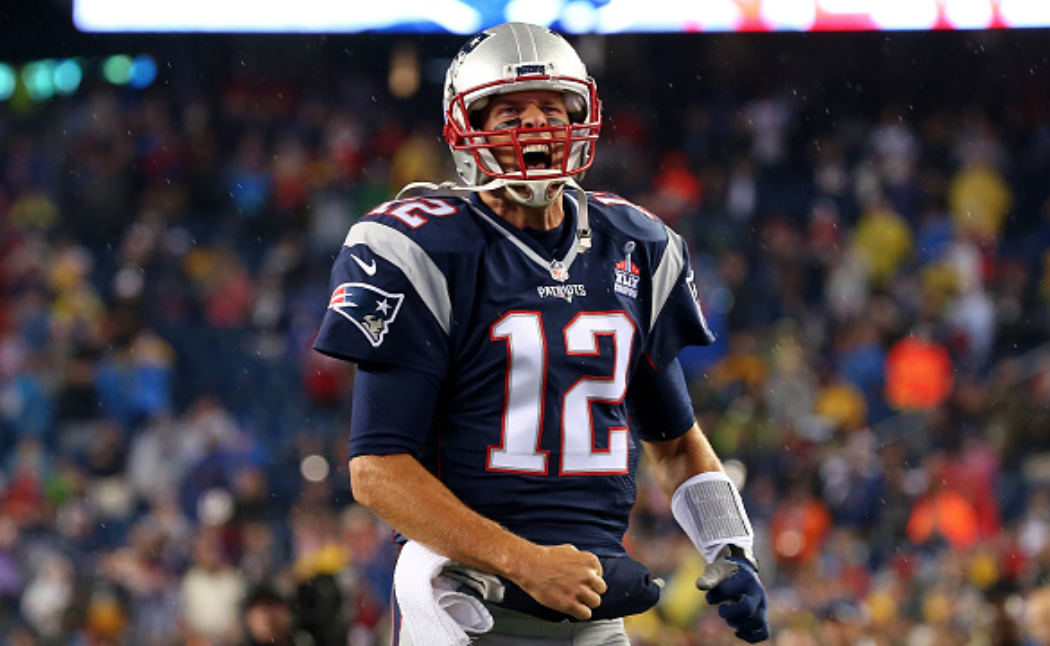
    People think it’s hard to turn 40, but Tom Brady makes it look easy.

    He’s fast, lean, and appears to be in the best shape of his life. Doesn’t hurt that the man was born with specific gifts that have enabled him to perform at top levels throughout his NFL career. Make no mistake about it; Tom Brady makes his age bracket look good.

    The real problem is turning 41 — when 40 no longer scares you — and those damn Christmas cookies look so tasty. Also, you still think you can drink and run 10 miles without doing those tedious dynamic warmups to prevent injuries. And, if you’re injured, you can ignore it.

    Trust me. I know this life firsthand.

    To Tom Brady’s benefit, he’s historically exemplified three components of being a naturally talented human being. First, he has inherent abilities. There’s commitment to individual excellence. And he possesses a personality that encourages others around him to do their best.

    Talent isn’t fancy. Gifted people are born with skill, they sacrifice short-term pleasure for long-term results, and they motivate others around them to also try.

    But, when talented people get scared, they behave in groundless ways to shore up their natural skills. They surround themselves with sycophants and gurus who tell them what they want to hear. They also veer from their regular forms of motivation and try to motivate you with marketing instead of character and proven results.

    Right now, Tom Brady is fighting with his boss, Bill Belichick, about a dodgy personal trainer and business partner who gives out sham medical advice. Alex Guerrero is banned from the Patriots’ plane and the sideline. Also, he’s not allowed to train any additional new NFL players at Gilette Stadium.

    Brady doesn’t need Alex Guerrero, but, when you’re scared of getting older and afraid of a diminishing legacy, you do all kinds of crazy things to make yourself feel younger and relevant. Diets. Detoxes. Supplements. Fear keeps you focused on yourself and your earthly body instead of remembering that your words and actions, not your body, are an inspirational role model for others.

    So, I weirdly feel for Tom Brady. Sure, he exemplifies NFL privilege. He’s protected by an offensive line that never lets an opposing team put him on his ass. Referees understand that his franchise has value and saddles the other team’s defensive players with a ton of penalties. Plus his team cheats.

    But getting older sucks if you let it, and, right now, that dude is running scared.

    Wish Tom Brady would stop fixating on his body — and pivot from crazy diets and ridiculous personal trainers — and begin to weigh his words, actions, and character. He could continue to fight back against the unknown oblivion of mortality with money, or he could show men all over America how to age with balance, keep your body in mind in peak condition, and be a force for good in this world.

    Talented people know that turning 41, and even 43, will kill you on the inside unless you’re focused on something other than your body. Hope Tom Brady gets the memo soon. Otherwise, this decade will be tough for him.

  • Drive on the Left-Hand Side of the Road in New Zealand

    Drive on the Left-Hand Side of the Road in New Zealand


    Nobody taught me how to drive on the left-hand side of the road in New Zealand. I drove from Auckland to Taupo to Napier via Rotura. Then I went from Christchurch to Mt. Cook to Queenstown. The only time I wasn’t driving was when I took a coach and two boats to Doubtful Sound.

    You don’t need an exclusive drivers license when you’re an American. Just show up, sign over your life, and try not to kill anybody.

    Here’s how I taught myself.

    1. Read the rules of the road. I have never read the rules of the road in America, but I went to the NZ Transport, which is like the nation’s DMV, and learned about one-lane bridges and roundabouts. It was the single smartest thing to prepare myself for a 550-mile road trip. Download the driving brochure.

    2. Watch videos. I went to the CamperMate RV website and watched videos on YouTube that reiterated the rules of the road while showing me what it would look like to drive on the left-hand side of the road. I also learned some useful tips. First, the yellow line should always be at the driver’s door. The second, it’s essential to talk yourself through turns. Say things aloud like, “Look left, turn right.”

    3. Rent a car with lane-assist. I was mentally prepared to be killed in a head-on collision. While driving left, I hung out too far on the left-hand side of the left lane (meta) and nearly side-swiped my car a few times. The lane departure warning system singlehandedly kept me steady in my path and warned me if I started to veer too far right or left. Get it on your regular car!

    4. Minimize distractions. I’m a horrible driver in America. I’m heavy on the brake, my speed is inconsistent, and I can’t drive and talk. I am the driver who makes you want to puke. I’ve taught several members of my family to drive, and now they all have my bad habit. So, I turned off the radio for the entire trip and drove in silence. Other than my GPS, I had no distractions and enjoyed the scenery. Being mindful of my driving meant that it was slow and steady.

    5. Take breaks. New Zealand is beautiful. You can stop 100 times before you get to the super-awesome-amazing destination on your map. Don’t be in a rush to go anywhere and you lessen the likelihood that you’ll die.

    6. Sleep before you drive. I didn’t jump into the car after traveling for 24 hours, either. I took two days to acclimate to Auckland before hitting the road. The single biggest reason why people die? Fatigue. Don’t be one of those drivers who can’t keep her eyes on the highway but pushes forward, anyway.

    I had a fabulous time in New Zealand. I saw so much of that country, and, yet, barely any of it. Can’t wait to go back. Hope I can continue my legacy of driving past the Lord of the Rings nostalgia without stopping, ha! I love being a tourist, but that’s not my jam.

  • Nobody is Throwing HR Under a Bus

    Nobody is Throwing HR Under a Bus

    harassment summit

    I live in a bizarre world.

    I worked in human resources. Have my own #MeToo career stories from fellow HR professionals. Appearing as a featured speaker at a Workplace Harassment conference where I’m trying to have a candid conversation with HR professionals about our collective role in failing to protect employees. And now I’m getting angry email messages from HR practitioners who wonder why I’m picking on them.

    “It’s not helpful to throw HR under the bus.”

    Listen, it is easy to throw HR under a bus. Too easy. I could drink a bottle of champagne, take some Ambien, sleep for twelve hours, roll out of bed in a medicated fog, skip my morning coffee and still eloquently throw HR under a bus. However, it’s not my job to be disrespectful to the HR profession. It’s not even my hobby, although the champagne and Ambien part sounds like some middle-aged fun.

    My job is to help HR teams reconcile some essential truths and focus on what’s next. But we can’t move forward unless we admit that we’re historically bad on harassment. All kinds. We don’t know the law, we don’t truly understand risk, and we acquiesce power to “leadership” and claim that we have no control because we are too scared to take a stand.

    Also, many HR teams aren’t emotionally or intellectually rigorous enough to understand the nuances of harassment. Nobody is asking you to believe all claims outright and fire people on the spot. But if someone came to you and said the bathroom is on fire, you’d take them seriously and have a look. Can’t you apply that same tiered-thinking to harassment?

    I could complain about what’s wrong with HR and harassment for days. We need a public reckoning. But I’m also ready to talk about #whatsnext. We can change our thinking, listen to stories more carefully, and even use existing tools and technology — from Excel to Outlook to cybersecurity platforms that flip digital forensics on its head and try to search for employee incidents before they happen — to do our jobs better and get ahead of future harassment claims.

    If you work in HR and love it, you have to embrace the good with the bad. Nobody is throwing HR under a bus, but it’s time to admit that the #MeToo movement is an indictment of human resources. So, we must do better. We can do better. It starts with HR. Hope to see you at the Harassment Summit in January.