Tag: influencer

  • Reinvention With ‘80s Icon Tiffany

    Reinvention With ‘80s Icon Tiffany

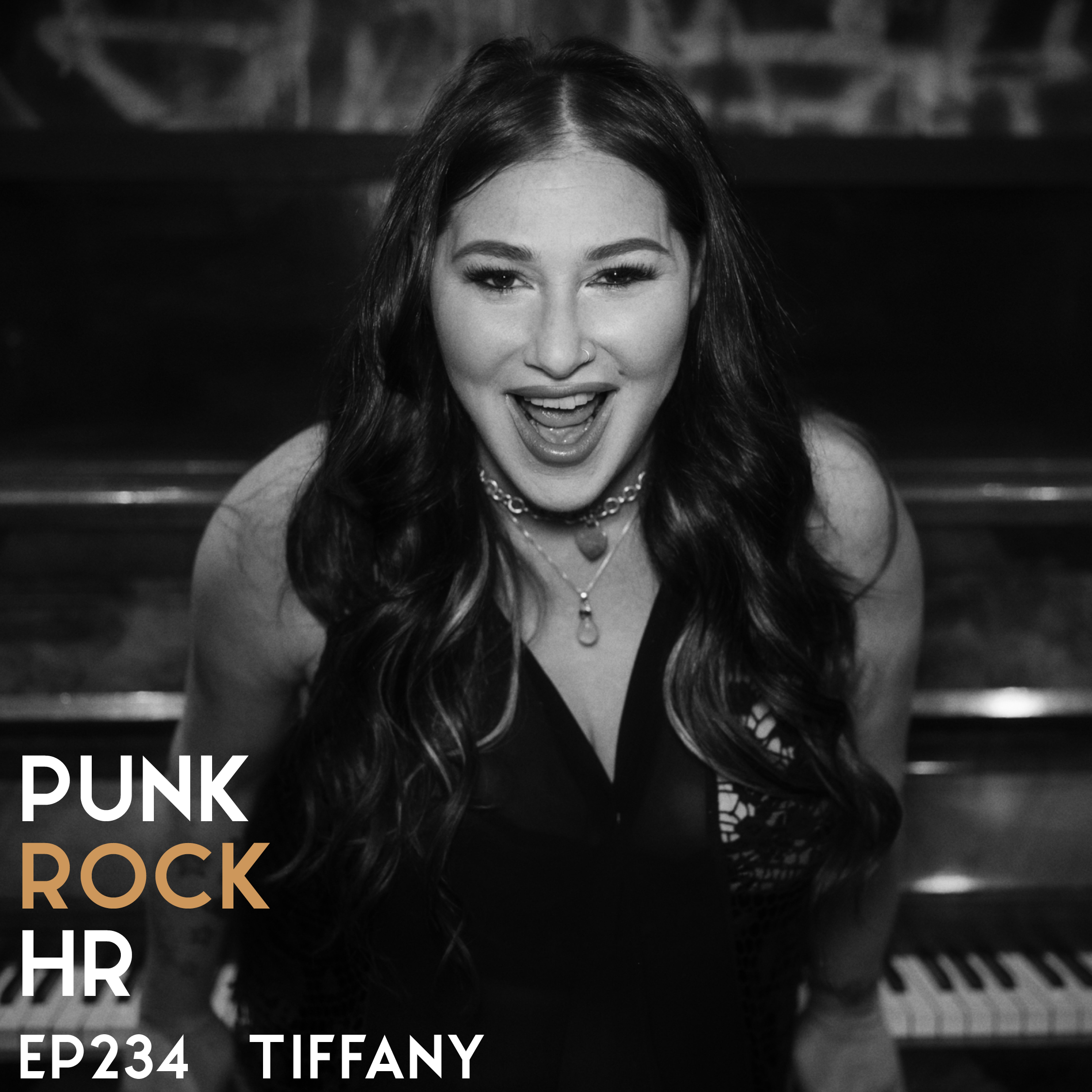
    We’re taking a break from HR and stepping back into the ‘80s! In this week’s episode, I’m co-hosting the show with Vadim Liberman, and our guest this week is singer, songwriter and actress Tiffany, known for her hit song “I Think We’re Alone Now.” Tiffany became an icon then, and her songs are still featured today in films, shows and more.

    Decades later, Tiffany is still singing, and she’s also a songwriter with a new album called “Shadows,” which will be released on Nov. 25, 2022. Vadim is co-hosting with me because he is an ‘80s cultural historian, a fan of all pop divas and just so happens to be my former boss.

    In this episode, we are talking to Tiffany about her life as a teen pop star, how she went from singer to singer-songwriter, connecting with multiple generations through her music and finding her sound.

    Punk Rock HR is proudly underwritten by The Starr Conspiracy. The Starr Conspiracy is a B2B marketing agency for innovative brands creating the future of workplace solutions. For more information, head over to thestarrconspiracy.com.

    Growing From Singer to Singer-Songwriter

    It’s been 35 years since the release of “I Think We’re Alone Now.” Back then, Tiffany worked with a group of incredible writers with whom she remains in touch today. She learned a lot from them and knew she wanted to do what they did.

    Today, she’s accomplished that as a singer-songwriter in Nashville. “My biggest thing, I think for me, was to become a valid songwriter,” Tiffany shares. “To write my own songs, and I wanted to tell my story, and I wanted to be like the idols that I look up to, like Stevie Nicks and Joni Mitchell, Bob Dylan and Bruce Springsteen.”

    Tiffany enjoys sitting with the writers who wrote for her all those years ago. She also knows how much the industry has changed and how the way you get income has changed. Now it’s about touring and being online. Social media is relatively new to Tiffany, but she also discovered its potential during COVID quarantine when she started sharing her cooking. That’s turned into Let’s Food with Tiffany.

    During the early part of COVID, Tiffany found a way to honor her loved ones by sharing her grandmother’s recipes through social media. And while she’s still learning more and more about the platforms, she’s found a fantastic community and more passion. Tiffany also has an online boutique called Radical Reds.

    “I love that human connection with fans, but I’m learning about social media, about branding, and about the other ways that you can make a living,” Tiffany says.

    Embracing a Multigenerational Fan Base

    From shows like Netflix’s “Stranger Things” and “Glow,” people of all generations have been embracing music from the 1980s of late. These classic songs, including Tiffany’s, have seen a resurgence in popularity.

    Tiffany has a loyal fan base but is adding people of all ages who interact and connect through her music.

    “I have 20-somethings going, ‘I think we’re alone now. What’s that about? Oh, OK. Oh, that girl’s kind of funny.’ …. They’re not my age group, but they like the song,” Tiffany says. “And I have lots of teachers out there wearing my T-shirts, ‘Children Behave,’ which has its own little life, which I get a kick out of.”

    Finding Her Sound

    Most artists stick to their niche and don’t necessarily branch out. Tiffany’s early music was centered in pop, but her heart lay with rock and roll.

    Making a genre change can be disruptive to fans, but Tiffany believes that for your art to be good, you have to be willing to take the risk. “If it’s not real, it’s not gonna be fun. You’re not gonna wanna continue to do it,” Tiffany says.

    That doesn’t mean she wasn’t worried about alienating her fan base. Tiffany knew what it was like to record music that she didn’t enjoy singing, but she did it for her fans. Now, she wants to do more for herself.

    “You have to stand by the integrity of the music,” she says. “It has to be right. No matter what you’re doing. If the music isn’t good, that’s your problem.”

    [bctt tweet=”‘If it’s not real, it’s not gonna be fun. You’re not gonna wanna continue to do it.’ — Tiffany, singer-songwriter and actress. Tune in to the latest episode of #PunkRockHR!” via=”no”]

    People in This Episode

    Tiffany: Instagram, Twitter, Facebook, Official Website

    Vadim Liberman: LinkedIn, Twitter

    Full Transcript

    Laurie Ruettimann:

    This episode of Punk Rock HR is sponsored by The Starr Conspiracy. The Starr Conspiracy is the B2B marketing agency for innovative brands creating the future of workplace solutions. For more information, head on over to thestarrconspiracy.com. Hey everybody, I’m Laurie Ruettimann.

    Vadim Liberman:

    And I’m Vadim Liberman.

    Laurie Ruettimann:

    And you’re listening to this week’s Punk Rock HR with guest host Vadim Liberman and guest Tiffany who sang the song most people know from the ’80s “I think We’re Alone Now.”

    Vadim Liberman:

    Yeah. And decades later, Tiffany continues to make music and has a new album coming out. It will be really interesting to hear about how she’s evolved from a teen icon to become the artist she is today.

    Laurie Ruettimann:

    Well, Vadim, you’re co-hosting with me today because you are an ’80s cultural historian, a fan of all of these pop divas, and also my boss.

    Vadim Liberman:

    Oh, come on, everybody. Look, if you know Laurie, you know that there ain’t no bossing her around. But seriously, if you’re interested in having a little fun today and getting to know more about a musician and her job, sit back and enjoy this episode of Punk Rock HR with Tiffany Darwish, better known as Tiffany.

    Laurie Ruettimann:

    We are so pleased to have you here. I’m Laurie Ruettimann. This is my friend, Vadim Liberman, my co-host. We’re just pleased that you’re here today, and Vadim is what we would call a strong fan. So I’ll let him start with the questions. How does that sound?

    Tiffany Darwish:

    Awesome, sounds great. Thank you.

    Vadim Liberman:

    All right. I am a fan. This is so exciting for me. I cannot even tell you. Let me just get into it, Tiffany. Let me get you a hard-hitting question right away. I’m legitimately curious, it’s been, I know you know this, 35 years since you came out with your first album. I’m wondering, how is making music today different from in 1987, not just for you, but in general?

    Tiffany Darwish:

    Oh, it’s a lot different. It really is. I was just talking to someone earlier and they were saying, “I think we’re alone, I think we’re alone. It’s major, and it’s got all these streams and Spotify and all that.” I’m like, “Yeah, I didn’t write it.” I don’t receive any money from the publishing. Some of the writers from the early albums are my friends now because I’m a songwriter now living in Nashville. My biggest thing, I think, for me was to become a valid songwriter, to write my own songs. And really, more because I want to tell my story and I wanted to be the idols that I look up to, like Stevie Nicks and Joni Mitchell and Bob Dylan and Bruce Springsteen. Again, living outside of Nashville was a big deal for me to cross into that and really be taken serious. But I’m with some of the songwriters now that are still my friends. We’re sitting having glasses of wine, talking shop, which is cool because I was 14 when we first started together. Now it’s like I’m one of them, which is cool.

    They’re telling me the songs that they wrote on my album, that they went and bought a house with just off of those cuts. Even if they weren’t a hit, just being on the album itself generated a lot of income to them that as a songwriter, they’re publishing. They were able to cash that in and make a good living. Now, if you have 100,000 streams on Spotify, to the writer, I might be able to buy wine or ice cream, a little dinner. I don’t know. It’s just so different. You can’t really make a living off that, if you will. It still goes back to live touring. I think now, really, the education I’m receiving, because I’m still a newbie, is social media. Building that brand, if you will, showing the other sides of yourself, which actually for me is very freeing.

    I love it, actually. I’m able to do my cooking club, Let’s Food With Tiffany. That’s what kept me sane in COVID, sharing that with my fans. I missed my family like we all did. We missed our friends, we missed all of that. Unfortunately, my family mostly passed away. So it really took me in a direction that was a downward spiral. I really got depressed and felt no stability. What’s going to happen? I just wanted to talk to my mom and my dad, although they knew nothing of what the new world or what was happening. Nobody had experienced that before. But just having them there, I would’ve felt comforted, but they weren’t.

    So I started cooking my grandma’s recipes and then sharing them with fans and connecting. I felt like their spirit was there with me. By reminiscing, I felt the love, if you will. That’s how Let’s Food started to happen. But since then, it was like, well, don’t put these fun things away now that COVID is workable, if you will. We’re starting to get a life back and working within the new norm or the new world, if you will. We still have our challenges, but why am I putting these tools away? They’re an asset to me. They’re a way for me to bond with other people.

    Now we’re doing Let’s Food with Tiffany, I’m doing cookbooks. I also have my Radical Reds Boutique online, where I do shopping with ladies and all the funky finds that I find. I used to have a Tiffany’s Boutique actual clothing store here in Nashville. So I kept all of my stock. I thought, well, this is useful. I can shop with fans, I can cook with fans. Now we have the new music out, and now we’re able to tour again. That’s what I really do. I’m primarily a touring artist. I’m a live artist. It’s great to be able to be out to do shows. I never took it for granted, and certainly don’t now. I love that human connection with fans. But I think, again, I’m learning about social media, about branding, and about the other ways that you can make a living, if you will, off of these other opportunities.

    Laurie Ruettimann:

    Tiffany, I love the evolution of your career. First and foremost, you’re an artist. You’re a writer, you’re a creator. I just wonder what your fans are like these days. How have they evolved over the years? Have your early fans followed your journey from pop star icon to mogul, which is what you are now?

    Tiffany Darwish:

    Thank you. Well, yes, they have followed. I love my fans. We’ve been in it, like I said, 35 years. It’s like, “Ah, what?” I think that I’m connecting with people again on different levels. Now the new music, having that punk, pop, kind of rock base, there’s a lot of people going, “What? Tiffany’s doing what? I want to see this, hold on.” Then they come to a live show and the best thing that I get is, “I didn’t know you could do that. I didn’t know you sang like that. Girl, I didn’t know that you really liked rock music. Girl.” Whatever it is, it’s like, that’s awesome. They’re a new fan. I have “I Think We’re Alone Now,” that’s always spinning. That’s part of my world that I’m always grateful for. Ending up in an umbrella academy or on a commercial somewhere.

    I was just in a McDonald’s commercial in the U.K, which again, I have 20-somethings going, “I think we’re alone now.” What’s that about? Oh, okay. Oh, that girl’s kind of funny. Then they’re checking out the Radical Reds, or they’re checking out something or any other experience. They’re not my age group, but they like the song. I have lots of teachers out there wearing my T-shirts, Children Behave, which has its own little life, which I get a kick out of. So you just have to work these things. I think it’s great that I have such a multi-level platform of fans of all different ages, from all different types of upbringings and mindsets, all around the world. That was something I was given when I was young, being a worldwide pop star, if you will. It’s something I don’t want to let go of.

    So finding these different avenues to connect with people, I think that’s what social media has done. It can be overbearing, especially for a non-techy like me. But then it really can be freeing, where you could just pop on there and talk about your day. Engage with people and connect with them in a heart way, sometimes. It has nothing to do with music, but you’re of like mind. You’re telling your stories and they’re telling you, and it’s a human experience. I love that. I’m trying to use it in a positive way, all these new wonderful avenues that we can use.

    Vadim Liberman:

    I loved hearing about this evolution and how social media allows you to connect better with fans these days. I’m curious though, a lot of artists do get stuck artistically, and I’m thinking that comes from a fear of losing fans, losing fame. Which is like losing their jobs. And so I’m wondering, has there ever been a point where you’ve thought about that? When you are looking to record new music, going into a new direction, let’s say, do you ever worry, “Uh-oh, what if I alienate this group of fans? What if I lose fans, what happens?”

    Tiffany Darwish:

    I’m sure I have, but you’ve got to do you. I think if it’s not real, it’s not going to be fun. You’re not going to want to continue to do it. I’ve done things before that people go, “This is what you got to do.” I’m miserable and it’s not me. My fans are like, “I could tell you really didn’t like that.” You’re not going to fool them.

    There’s been times I’ve recorded songs to put on albums that my producer wanted to record in the past, and I really don’t like them. I don’t enjoy singing them, frankly. I do it because of the fans, but it’s just not my thing. It’s a balance, really. I think the current album is a perfect example of that. Tiffany wants to do what? More rock-based stuff. Where’s this coming from? Isn’t she the girl from the mall? Isn’t she a one-hit wonder?

    I think most of my fans who’ve continued to be in Tiff World knew this was coming. With “Color of Silence,” and how you hear me talk and all the differences — knowing my background and what music inspired me, it’s not such a far stretch. But if you didn’t know, you’re like, “What is happening here?” I couldn’t really worry about that. I had to do what was right for me. I had to do what I knew was the next breakthrough for me. I was given the opportunity to work with people who wanted to support that and bring the best out of me.

    Because yes, I was somebody prior to doing “Shadows” or even “Pieces of Me,” that was saying, “Well, I tried the rock thing before, or the pop-rock thing before.” We start that way, and then it gets watered down to where it’s just pop because everybody knows that’s an easy sell. Then my heart gets broken and it’s just fluffy crap that I really didn’t want to do, and I don’t release it. So I’ve got a lot of that in the archives. Then to have the right people who went, “Who said you couldn’t do that? You just have to do it.” You have to stand by the integrity of the music. It has to be right, no matter what you’re doing.

    If the music isn’t good, that’s your problem. So is the song good? Did we write a valid song? Is the production great? Okay, now, let’s find the right tribe. I’m very lucky that my fans, from my pop fans to my gay fans, to some of the younger fans, I love you. I love you. They all have come to “Shadows” now and they’re all, “I like it. I like it for you. I get it. I rally around you and I am supportive of this new album and this new sound.”

    What I think we’ve done right on this album is, although it has a rock edge, it has an ’80s fun to it. It is grounded and based in ’80s sound, if you will. Little rock ’80s, little Pat Benatar, little Go-Go’s, a little Ramones, a little Blondie, little Tiffany, with modern production. There’s something about ’80s music that I think even the young generation is finding — it makes you happy. I don’t know what it is about it, but it does. I know for me, I reminisce.

    Laurie Ruettimann:

    Well, I’m really curious. You’re clearly very proud of this album, and we are so excited. Can you tell us about one song that you’re the most proud of and why you love it?

    Tiffany Darwish:

    Oh, you’re going to make me pick one. I think this album is about the light in the dark of our life, our emotions. That’s why it’s called “Shadows.” The new vinyl that’s coming out is like a pop-up, and it shows all of that. It’s kind of origami, if you will, very interactive. It’s a two-sided vinyl, and it has the uptempo songs, which again, are more punk-pop. The ballads on the album are really grounded. They’re my life, they’re my therapy. I went through a lot of things before COVID. Divorce, on and on, the death of family. A lot of different things that I write about on this album.

    My favorite song would probably be “Bed of Nails.” It was like, “What Tiffany writes ‘Bed of Nails?’ What does that mean?” And it is, it’s just a song about that time being so miserable, being so grief-stricken, being so sad. It’s not like you want somebody else to be unhappy, but you do want somebody to understand you. You want them to get down in the pit with you, if you will, and get that. Get where you’re coming from because a lot of times we go, “Oh, just be happy. Just have a glass of wine, go shopping, this and that.” Sometimes you have to lay with your emotions and sometimes you have to be able to grieve or be angry. You don’t stay there, but you allow that, if you will.

    You go, “OK, I’m human, and there’s a reason why I’m angry. There’s a reason why I’m sad. There’s a reason why I’m feeling alone.” Let’s address that, and let me feel that. Let me work through that and not be ashamed of it. Not put a quick fix on it, if you will. That’s what “Bed of Nails” is about.

    The actual vocal on the track was a one-take. Very happy about that. It was recorded late at night, and I only had one time to do this scratch vocal before we called it at night. I just went in there and killed it. This song goes from the next level to the next level. I call it my Meatloaf, if you will. His songs were operatic, they were this big rock opera. The level kept going and going and going, all the music behind it. As a vocalist and as a lyricist, you kind of like, “How do I keep it interesting? How do I not over sing?” I went in there and sang with passion. It was supposed to be a scratch vocal so I could just be free and try things. I hadn’t even sang the song completely on the mic. Whatever came out was really true emotion. I’m very proud of that song, from the lyrics down to the performance, and that we got in one take.

    The next day we tried to go in and recreate it, and it was complete crap. That was the take, that was the mindset. That was all of me giving everything. Probably a little bit of that — I wasn’t familiar with that, so there was an urgency in some of it, this momentum, if you will, when I gave that vocal. But some of our greatest performances are like that. We missed sound check and there’s nothing, all the ducks in line are not happening today. It’s absolute crap. We prepared. My hair isn’t curled, and I didn’t have time. I’ll go out on stage, and those are the best shows sometimes. So you never know. I’m really proud of that one.

    Vadim Liberman:

    As I’m listening to you talk about this and stuff that you said earlier, it really makes me think how when you were 14 years old and you were that teen icon — I could be wrong, but I can’t imagine, maybe because you didn’t have that life experience yet at that point. But I can’t imagine this kind of music coming out of you at that time. I get the sense that you really did grow into yourself as a musician. I’m wondering though, back then, when you were 14, if you could have looked to right now, 2022, what did you picture your career would look like at that age, for right now?

    Tiffany Darwish:

    That has always been a question that I never knew how to answer. I always thought it was heavy. At 16,  “Where do you see yourself in 10 years?” I’m like, “Alive would be good, happy would be another.” I’ve never been somebody that, even though I’m an L.A. girl, I’ve never been somebody, “Well, I want a big house and I want this.” I just wanted to be happy. I just wanted to continue to do my music. I wanted to be a valid artist. I wanted to be a lyricist. I wanted to be the best Tiffany I could be. That’s still happening, but I’m here in the game. I think I’ve fulfilled that. Where are you going to be in the next 10 years? I took time off to raise my son. I’ve been very lucky that I’ve been able to have a personal life and a career. To come back into it and now regain that momentum, not a lot of people can do that. So I’m very, very, very, very grateful. Very lucky.

    Laurie Ruettimann:

    Well, Tiffany, we have one final question for you, and I’ll let Vadim ask it. But I want you to think about all the musicians you admire in this world. People you stalk, people you love, get that in your mind. Vadim, what is your final question?

    Vadim Liberman:

    I want to know, if you could pick anyone to do a duet with — besides me, obviously — who would it be?

    Tiffany Darwish:

    Well, vocally, there’s a lot of different levels here. I would love to work with Bruce Springsteen because he is a great songwriter. I went and saw a show. He’s multi-talented, and it was an amazing show as a performer. So meeting him would be amazing. I would love to work with Stevie Nicks, of course, because she’s my go-to, my everything. Then, vocally, to maybe do a duet with somebody, as a male artist, I sing a lot to a little Bryan Adams. We could rock a track together. I think our voices would be great. I love Bryan Adams, of course. I love his music. He makes me happy. His songs just take me back, and I love it. We were just rocking it out in the car the other day, and I was singing. I was like, “Yes, that sounds good.” There’s a lot of people that you hope to sing with, but you just don’t know if your voices are going to be compatible.

    Same thing with, you go into the L.A. things. You go to these events and everybody’s like, “Ooh, you’re going to be around.” Well, you don’t know if you’re going to get on with that person or not. You can’t really predict that. I’m always somebody that, you hope when you walk into an experience or you walk into one of these parties, that whoever’s meant to be, will be. It’d be great to be friends with such and such, but if you don’t get on, you can’t force that.

    But then sometimes I just find the best people and it’s great. Lisa sends me happy birthday. I’m a big, huge fan, and we’re friends. I see her all the time on some of the shows that we do and in passing. I still trip, because I was rocking that in my room. I never would’ve thought that she’d be somebody that’s like, “Hey mama, how are you doing? Happy birthday, girlfriend.” I’m like, “This is cool. I love this.”

    On and on and on with these amazing artists who’ve influenced me. Stevie Nicks, the last time I saw her said, “How are you? How’s your music? Are you still —” I was like, “What is happening here?” I try not to nerd out, but I was like, she took the time to ask me about my music and how I’m doing. It’s such an inspiration. I love that.

    Laurie Ruettimann:

    Oh, Tiffany. Well, it’s been a real joy to learn a little bit about what you’re doing today, about your new album. If people want to find you online and reconnect or buy that new album, where should they go?

    Tiffany Darwish:

    TiffanyTunes.com, that’s all things Tiff World. Follow me on Let’s Food with Tiffany, guys for cooking clubs, cookbooks and cooking experiences. Yeah, TiffanyTunes.com. I think the album comes out on November 25 for the street date. Live shows to follow after that. Tiffanytunes.com is where the madness is, My Tiff World, and come be a part of it for sure.

    Laurie Ruettimann:

    Well, we’re super-pleased to have you, and Vadim, close us out.

    Vadim Liberman:

    So Tiffany, this was so great. By the way, I want a quick tidbit from you. I’m going to be in Nashville next week. What’s one spot that you can tell me, ‘You cannot miss this’?

    Tiffany Darwish:

    What do you want to do? You want to see live music, you got to go to Broadway, then, of course. You got to do that. That’s all my friends down there, hooting and hollering and playing good music. That’s what Nashville’s known for. Urban Grub for food.

    Vadim Liberman:

    I just want to go out and get wasted and dance.

    Tiffany Darwish:

    Well, that would be Broadway. But Urban Grub, check out Urban Grub for food, for sure. It’s one of my favorite places. It’s all in-house, all their meats, they smoke all their meats. It’s good, good, good, good. Love, love, love. That’s where you’ll find me if I want to go and have a comfort meal. It’s a great place.

    Laurie Ruettimann:

    Well, thanks again for being a guest today, Tiffany. It was really fun to catch up.

    Vadim Liberman:

    Thank you.

    Tiffany Darwish:

    Awesome, guys. Thank you.

    Laurie Ruettimann:

    Hey everybody. I hope you enjoyed this episode of Punk Rock HR. We are proudly underwritten by the Starr Conspiracy. The Starr Conspiracy is the B2B marketing agency for innovative brands creating the future of workplace solutions. For more information, head on over to thestarrconspiracy.com. Punk Rock HR is produced and edited by Rep Cap with special help from Michael Thibodeaux and Devon McGrath. For more information, show notes, links and resources, head on over to punkrockhr.com. Now, that’s all for today and I hope you enjoyed it. We’ll see you next time on Punk Rock HR.

  • Amplifying Black and Brown Voices With Zach Nunn

    Amplifying Black and Brown Voices With Zach Nunn

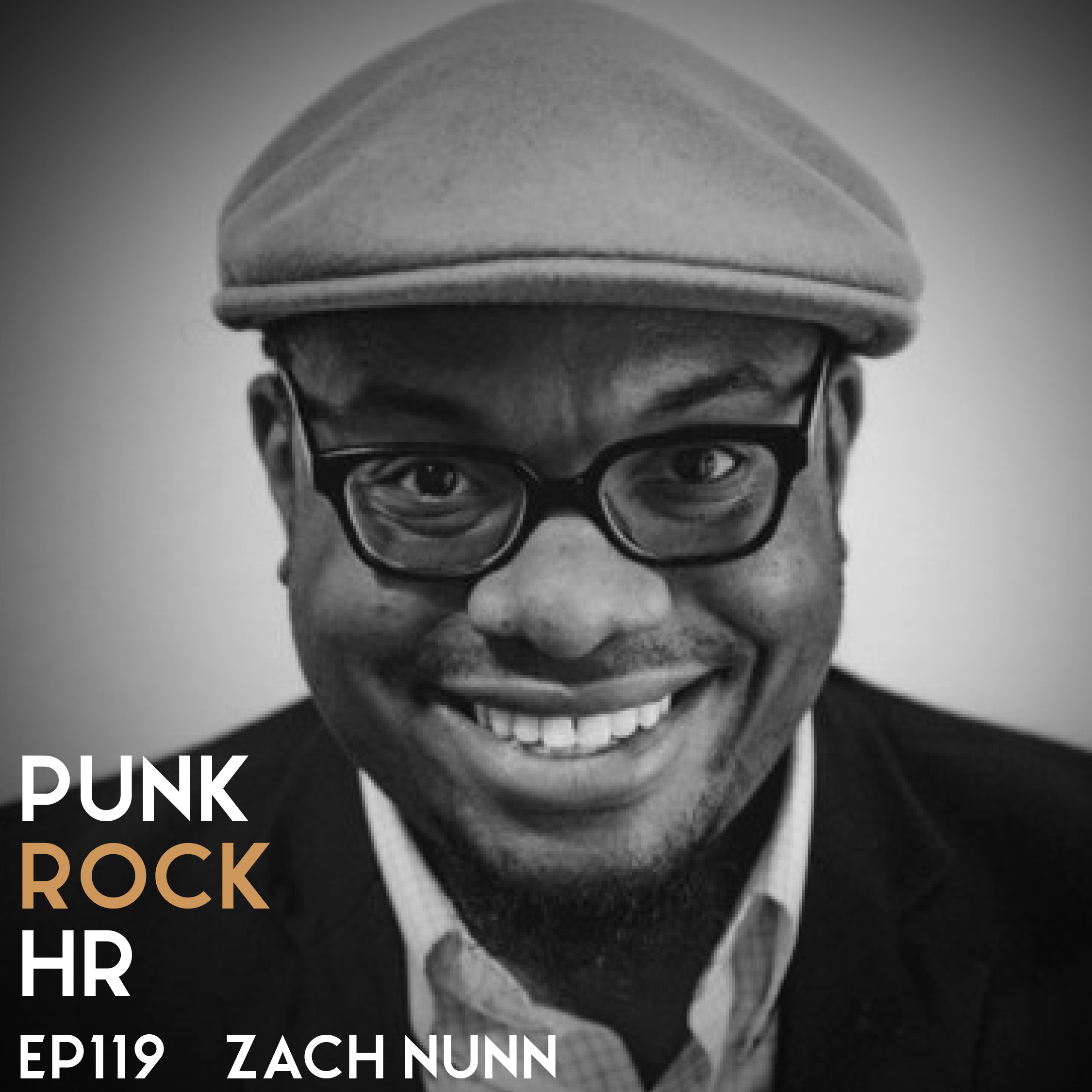
    Zach Nunn is a change management consultant and one of the co-founders of the podcast and movement Living Corporate. The goal of that platform is to tell Black and Brown stories related to the world of work. You think you’ve heard good conversations about diversity, inclusion, equity, and belonging, but you have not heard Living Corporate.

    On the Living Corporate podcast, Zach and his team talk to all kinds of people and have honest conversations. They talk about things that aren’t normally discussed at work — or even in diversity inclusion programs. It is a terrific podcast that everybody needs to download and take a few minutes to listen to.

    In the episode, Zach shares about the work he is doing. He explains why it has become his goal to create platforms in spaces that amplify and center Black and Brown voices at work. He has a perspective that causes him to speak with authority and answer the questions many of us are asking, especially regarding what we can do to help right now. Listen in for another conversation on big ideas to do things differently.

    Living Corporate is a Movement

    Living Corporate works towards making their content available to anyone and everyone, “And so our team is incredible because so when we talk about Real Talk in a Corporate World, it’s not just about having these long-form conversations. We want to create options for people who may not have the time to listen to a 45-minute conversation. What does it look like to create career tips, and simple career tips, and then medium-sized career conversations?”

    Zach isn’t doing the work alone and is proud of his team. “Tristan Layfield is a resume and career consultant. And so Tristan has a show every Thursday called [“TAP In with Tristan”]. He’s literally talking about like, here are some basic things around resume, networking, career management.”

    “Latesha Byrd is an executive career and leadership coach, diversity and inclusion coach. And she is phenomenal. So she’s talking about equity, really networking, getting the bag. She does quite a bit. And her platform continues to grow.”

    “Amy C. Waninger is the CEO of Lead at Any Level. And so she’s a public speaker, an educator, a coach. She’s really focused on inclusive leadership behaviors. So she has a book called “Network Beyond Bias,” which is phenomenal.”

    “It’s really pivoted and pointed to white leaders, thinking about, what does it really looks like to examine your network and move beyond some of the biases, both conscious and unconscious, to extend and engage Black and Brown folks, LGBTQ or slash queer folks, trans, nonbinary folks? What does it look like to really have an intersectional and an inclusive network? Because if your network is inclusive, then you’re going to be able to effect change and really drive a more inclusive world.”

    Restructuring HR

    When I listened to the Living Corporate podcast, I had two thoughts. The first is similar to what Zach says: What got you here won’t get you there. So all of these individuals in positions of power have clearly been complicit or just blew it, and it’s time for them to step out of the way. They’re not the ones who are going to deliver on social justice, on racial equality, on inclusion, all of that.

    I also thought that we have these systems in place, and does it make sense to just de-center ourselves and seed power, or do we need to burn this to the ground? Do we need to burn HR to the ground? And this is a conversation I’ve been having for a very long time. It’s like the thesis of my work. But if what got us here won’t get us there, isn’t that really the institution of HR? It’s the institution of corporate America. Burn it the F down.

    On what Zack learned early on in his career, “I started with a large retail company, and I was an HR manager. And I remember having these very altruistic visions of what my job really entailed, when in fact, those were big-box retailers. So HR’s job was to follow the binder. And that binder was, as I look back now. Because I was 20, yeah, I was 20 at the time, so that binder was really created by lawyers to mitigate risk in every capable way. … That binder, which you are instructed to follow to the letter, was not really built for any type of justice or equity or even accountability, for that matter. It was built from the lens of risk management.”

    “When I think about HR today, I think that continues. And I think that HR is so, it’s empowered. So I’m not trying to demonize the space. I just think in a lot of ways they kind of operate as the police. They’re kind of like the police of an organization.”

    “So human resources, they’re really fangless because of the power dynamics. So again, they become an executor of whatever the company’s will is. So they work very hand in hand with legal. Very rarely will you hear HR, if at all, really come out and be like, ‘Hey, you did this person wrong, and we’re going to fix this,’ unless we notice there’s a crazy lawsuit pending. But if that happens, then typically, HR backs out, legal steps in, and you’re getting some type of package.”

    Amplifying Black and Brown Voices by Providing Resources and Capital

    I’m just a middle-aged lady in Raleigh, N.C. So I don’t have any answers in this world, but I know that through listening to the Living Corporate podcast and surrounding myself with other smart and idea-oriented people. I asked Zach about this moment in time and what he wanted us to know about him, his community, and what others can do to help.

    “I think people need to understand that Black and Brown people in this moment do not need your advice. We need your things. OK? OK. I’m going to say it one more time. Black and Brown people do not need your advice. We need your things.

    “So there’s a concept right now, there’s kind of like an underlying attitude right now that like, what we need to do right now is invest in programs and things that essentially educate Black people. And education is great. And if you look at it, it’s not radical, nor is it new to Black culture or Black communities to introduce education.

    “We actually are very passionate about education, so much so that we create our own colleges. What Black people do need, as opposed to being told what to do, is to have the resources and access and capital that you have to do the things that you do.”

    “If you’re asking like, what can you do in this moment? What is it you can really do tangibly? It’s about what can you give? What can you give up? What can you share? For you, when I say you, I mean the generalized you, not you, Laurie. For you to give me something, it could just be as much as you just forwarding my brand deck to your contact at Apple or introducing me to your friend who works at Google. And that one thing alone, that’s you sharing a bit of your capital, your access. It goes so far. It goes so, so far.

    “So that’s the one charge I want to leave with everyone who’s listening to this is like, we don’t need your advice. We need your things.”

    [bctt tweet=’Diversity and inclusion ‘needs to so fundamentally change that you may as well use the language ‘dismantle’ because how it’s structured today is still about maintaining power and control.’ ~ Zach Nunn. Hear more on Punk Rock HR.” via=”no”]

    KEY TAKEAWAYS

    DO WE NEED TO DEFUND THE ENTIRE INSTITUTION OF HR?

    It is the institution of HR and corporate America that has gotten us here: a country riddled with racism. The job description of HR professionals is simply to follow the guidelines in a binder, put together by lawyers to mitigate risk. It wasn’t built for justice, equity, or accountability. HR operates like the police of an organization. Just like there are nice people who happen to be police, there are nice people who happen to be in HR. However, the function and structure of human resources are bent towards protecting the company. Because of this, there is no way we can continue with the system, these technology platforms, and these policies and expect a different result. To make any progress, we have to dismantle it.

    HOW CAN WE KEEP THIS ANTI RACISM MOVEMENT FROM BECOMING ANOTHER CYCLICAL THING AND MAKE IT A TRUE RECONSTRUCTIVE MOMENT?

    There’s a cycle where marginalized people get rights, there is whitelash, and then they lose those rights. This cycle has occurred since reconstruction, explaining why the Civil Rights Movement was all about fighting for rights colored people should have had a hundred years prior. Even though we are in a post-racial society, we are still talking about black equity and civil rights like we talked about them in 1964. In order to make this a true reconstructive moment, we have to break the patterns we’ve followed for years. We must start instituting radical changes that last.

    WHY IT IS CRUCIAL FOR WHITE PEOPLE TO BE GIVING OUR CAPITAL?

    Black and brown people do not need the advice of white people. They need their things. Instead of telling them what to do, white people need to be providing them the access and capital that they have to do the things that they do. Black people just don’t have the same access to capital, be it financial, social, or something else.

    People in This Episode

    Full Transcript

    Zach Nunn:

    So I personally think that diversity and inclusion, as it stands today, is done. This moment shows that, save these shining North Stars as an industry, it has failed. Dr. Pamela Newkirk, when we had her on a couple of weeks ago, we talked about this. And she wrote an entire book and did a ton of qualitative and quantitative analysis on the fact that this space has not “moved the needle” when it comes to true equity or justice. And so my hope in the de-centering of the white folks as they de-center themselves, that there’s a radical re-imagining of what it really means to do this work. And if that means that we change the name or whatever, I don’t care. It needs to so fundamentally change that you may as well use the language “dismantle” because how it’s structured today is still about maintaining power and control.

    Laurie Ruettimann:

    Hey, everybody. I’m Laurie Ruettimann. Welcome to a special summer edition of Punk Rock HR. All summer long, we’ll be bringing you encore episodes of Punk Rock HR that I absolutely love. We’ve re-edited them, remixed them, we’ve made them a little fresh, but the conversation is really important. So, if you’ve missed the episode the first time around or you heard it but you want to hear a fresh take, sit back and enjoy this special summer encore edition of Punk Rock HR.

    Hey, everybody. I’m Laurie Ruettimann. welcome to Punk Rock HR. Today’s guest is Zach Nunn. He’s a change management consultant and one of the co-founders of a podcast and a movement called Living Corporate. If you haven’t heard that podcast, stop what you’re doing, pause this podcast, and head on over to iTunes, Stitcher, Spotify, wherever you get your shows, and download Living Corporate today. It is terrific.

    The goal of that platform is to tell Black and Brown stories related to the world of work. And I’m here to tell you that you think you’ve heard good conversations about diversity, inclusion, equity, and belonging, but you have not heard Living Corporate and you have not heard Zach. You listen to Punk Rock HR for big ideas to do things differently and I think I’ve delivered that today. So sit tight and I’ll be right back with more Zach Nunn and Punk Rock HR. Hey, Zach. Welcome to the podcast.

    Zach Nunn:

    What’s going on, Laurie? How are you doing?

    Laurie Ruettimann:

    Oh my God. It’s been a long time coming. I’m glad you’re here.

    Zach Nunn:

    You know what? I’m glad we’ve finally been able to connect. How are your kittens doing?

    Laurie Ruettimann:

    Oh, they’re good. Well, we had four and we’ve adopted out now three. We’re down to one. Do you want a kitten, Zach?

    Zach Nunn:

    So here’s the thing. Emotionally, I’m very vulnerable and I could easily take a kitten, but I’m not ready to take a kitten. I already have a whole daughter. So I want to focus on getting her maybe to the point where she can take care of a kitten, and then we’ll get a kitten.

    Laurie Ruettimann:

    Well, you’re a smart man. You’ve got your priorities aligned. And I’m so glad you’re here because there are so many good things to talk about in the world, about the work that you’re doing. But let’s start off with the big picture, because people come on Punk Rock HR because they have big ideas and they’re doing great work in the world. So when you describe what you’re doing in the world right now, what is it?

    Zach Nunn:

    So look, my goal is to create platforms and spaces that amplify and center Black and Brown voices at work. That’s what I’m excited about doing. And I do that through my job as a Big Four consultant. Now, Big Four are accounting firms, but I’m not an accountant. I’m more like in the change management or transformation, leadership development, more on the people side. But I also pursue that passion, or that vision, that purpose to my own platform called Living Corporate.

    Laurie Ruettimann:

    So tell us a little bit about Living Corporate.

    Zach Nunn:

    All Right. Cool. So look, before I talk about Living Corporate, I got to talk a little bit about my story because my story helps to inform why Living Corporate is a thing.

    Laurie Ruettimann:

    Oh God. Please. Yeah. In fact, that’s why you’re here.

    Zach Nunn

    So background, both sides of my family are from Mississippi. In fact, I can trace my paternal side of the family to a small plantation in Mississippi called Shuqualak, Miss. And so Shuqualak, back in the 1800s, was a very booming town. Because just economically, it was centered around this plantation, the Nunn plantation. And so it was a cotton plantation, and then transitioned more into manufacturing for World War I. But anyway, that’s as far back as I know my family goes, which is like 1850-something. So on my dad’s side of the family, that’s them. I’m a second generation reader on my dad’s side. My dad taught my grandfather how to read. That was part of him. My dad and my Uncle Clancy. Uncle Clancy and Ed, my dad, taught my grandfather how to read to help him get a promotion at a job in John Deere, actually, when he moved from Mississippi to Illinois.

    So that’s my dad’s side. Then on my mom’s side, I’m the first man to start and graduate from a four-year university. So my cousin, Chris, what’s up, man? He’s the first man to graduate from college, but he started at a junior college, and then he finished at Jackson State, and I’m the first man to start and finish at a four-year university. So the background and the reason I’m sharing this is because I want to give context as to when I graduated from college, I graduated from college, the University of Houston, go Coogs, I graduated a year early, and I didn’t really have a lot of people in my family who could help me navigate the corporate world. Of course, they could talk to me about “do the best you can,” and I got wisdom, but I didn’t get people talking to me about how to navigate these invisible rules of these majority-white spaces.

    And so I had to learn all that on my own, and I picked that up through putting myself out there. “Hey, can you be a mentor? Hey, can you help me? Hey, can you sponsor me?” Not halfway knowing what all these things meant and being turned down several, several times or, if I wasn’t wholly turned down, maybe I’d get a nugget of wisdom here, a nugget of wisdom there. And so I kind of piecemeal-ed all that together over eight years of a career so far. So I’m a manager, again, in consulting. I’ve had a pretty decent career, and I’ve been able to do some really cool things. And I would say I’m progressing as I should progress as I look across my cohort, just terms of age and whatever. And all this stuff is relative, but you know what I mean. I’m doing well. I’m doing moderately well.

    But I had to ask myself, Laurie, like, “OK, what does it look like for people that look like me and who share my story? Because my story is not very rare. What does it look like to create a platform or create access to the real-talk conversations I’ve been blessed to have on a platform that’s free?” And that’s Living Corporate. Living Corporate, our tagline is “Real Talk in a Corporate World.” We talk to all types of people. So I’m going to shoutout a couple of people, just as an example of the type of folks we talk to. So we’ve interviewed Dr. Robin DiAngelo, author of “White Fragility.” We’ve interviewed Dr. Pamela Newkirk, who’s the author of “Diversity, Inc.” We’ve interviewed Michael C. Bush, who’s the CEO of Great Place to Work. We’ve interviewed God-is Rivera, who is the global director of culture and community at Twitter.

    We’ve interviewed leaders from Facebook and Google and Accenture. We’ve interviewed Janet Pope, who’s the leader of diversity and inclusion of North America for Capgemini. We’ve interviewed a lot of different people, elected officials, activists. We’ve talked to DeRay McKesson. We’ve talked to Howard Bryant from ESPN. We’ve talked to a lot of different people and fairly big names with significant brands around them, and we’re having conversations that are really authentic about navigating these spaces. And we do it through understanding their stories, and asking them the pointed questions, and having those conversations that frankly you’re just not going to have at work, you’re not going to have even in your diversity and inclusion program. So you’re just not going to have these types of conversations that we’re having.

    Laurie Ruettimann:

    Well, I want to talk about those conversations, but I want to talk about the “we,” because you are not alone at Living Corporate. So who joins you? Who’s having those conversations with you?

    Zach Nunn:

    So who’s having those conversations with me? Yeah. So we have a team. And first of all, a side note, you’re doing a great job. I appreciate you letting me talk, and wax, and then you come in and make sure I stay where you want me to go. That’s really good.

    Laurie Ruettimann:

    No, no, no, I mean, I’m a podcast host. But honestly, I get in the way of my guests all the time. But I do want to know more about your team because I think, first of all, getting a podcast out every week like you do, and sometimes multiple times a week, takes a village. So who’s doing it with you?

    Zach Nunn:

    Yeah. So that’s a really good point. Yeah. We drop actually three episodes a week, every single week. We have not missed in a year and a half.

    Laurie Ruettimann:

    Oh my God. That’s such hard work.

    Zach Nunn:

    Yeah. Well, it is. And so our team is incredible because, so when we talk about Real Talk in a Corporate World, it’s not just about having these long-form conversations. We want to create options for people who may not have the time to listen to a 45-minute conversation. What does it look like to create career tips, and simple career tips, and then medium-sized career conversations? And so that’s where we have the rest of our team. So we have Tristan Layfield, Tristan Layfield is a resume and career consultant. And so Tristan has a show every Thursday called Tristan’s Tips. And so he’s literally talking about like, here are some basic things around resume, networking, career management.

    Laurie Ruettimann:

    I loved his one on LinkedIn and how it’s time. Don’t let your LinkedIn profile go. Really good.

    Zach Nunn:

    Yes. Listen, shout out to Tristan. He does phenomenal work. He’s an overall great person, and he’s a great podcaster, and he has wonderful insights. And so that’s Tristan. And so then on Saturdays, we do this thing where we switch up. So we drop one episode every Saturday, but we switch up between either The Linkup with Latesha … And so that’s Latesha Byrd. Latesha Byrd is an executive career and leadership coach, diversity and inclusion coach. And she is phenomenal.

    So she’s talking about equity, networking, getting the bag. She does quite a bit. And her platform continues to grow. She’s graced us by being a part of our team. And so we’re really thankful for her. And so she talks a little bit, she talks more of those like maybe 15-, 20-minute episodes and they’re different, shorter topics. So think about Tristan’s Tips, but extended a little bit longer. And sometimes Latesha will also be talking directly to executives and stuff. So think about that, almost like a shot in the arm. It’s very good content from that perspective.

    Laurie Ruettimann:

    I like it. Like a daily vitamin or a weekly one. Yeah.

    Zach Nunn:

    Yo, I like that. Yeah. Like a daily vitamin. And so she shares a Saturday. So basically, she drops two episodes a month. And then you have Amy C. Waninger. Amy C. Waninger is the CEO of Lead at Any Level. And so she’s a public speaker, an educator, a coach. She’s really focused on inclusive leadership behaviors. So she has a book called “Network Beyond Bias,” which is phenomenal. It’s really pivoted and pointed to white leaders, thinking about, what does it really look like to examine your network and move beyond some of the biases, both conscious and unconscious, to extend and engage Black and Brown folks, LGBTQ/queer folks, trans, nonbinary folks? What does it look like to really have an intersectional and an inclusive network? Because if your network is inclusive, then you’re going to be able to effect change and really drive a more inclusive world.

    Zach Nunn:

    And so her work, what she talks about on Living Corporate is, she has a show called See It to Be It. So, See It to Be It, it’s like, she’s talking to Black and Brown professionals, and she’s having these very interesting technical discussions with these people. So it’s a real talk about their job. And so like the idea of like, you can’t be what you can’t see. She’s interviewing newscasters and underwriters and lawyers and media professionals. And she’s literally talking to them about the nuances of their job, and she’ll also talk about what it looks like or what it means to be them with their identity in their job.

    And so all of that comes together with the help of Aaron DiCaprio, who is our producer and manager. He does all the admin work. I mean, he is the connective tissue. If you want to talk about a glue guy, that’s Aaron. He’s phenomenal. In fact, he’s probably going to take whatever, all this stuff … because you know how we do it behind the scenes. You take this content and we’re going to promote it and stuff. Aaron’s going to be the one that loads this all into the queue and makes sure it gets promoted. He’s a beast. So it’s that team. And then we also have Sheneisha. Sheneisha is another host and she’ll come on and she’ll do some of those longer-form Tuesday conversations. And then we have Ade. And so Ade is also a host. And so she does a lot of those one-on-one conversations too. So it’s a pretty extensive team and we do a lot of work. And to your point, it takes a village, and I’m just really proud.

    Laurie Ruettimann:

    Zach, I was just amazed at how deep the talent is on your bench.

    Zach Nunn:

    Yeah.

    Laurie Ruettimann:

    This is more than just a podcast. It’s a community, it’s a movement. And I think that’s what really struck me when I first learned about Living Corporate and discovered what you’re all about. It’s not just a weekly podcast where you’re talking about diversity and inclusion and HR. You’re really hitting work, power, politics, money, systems — all the things that make the world work or not work. So this is bigger than just HR.

    Zach Nunn:

    I just, I appreciate you. I appreciate you. First of all, your voice is great.

    Laurie Ruettimann:

    Oh my goodness.

    Zach Nunn:

    And then you’re saying all these pleasant things about me and my platform. I just feel warm and fuzzy inside. So I just want to thank you for that.

    Laurie Ruettimann:

    You’re making me blush. All right. Enough of that. I’m amazed at the level of conversation because podcasting is such a weird art form where you only get like 30 or 40 minutes. And oftentimes, the conversations are superficial. And you guys … I mean, we’re rated mature for a reason. You guys are talking about some real shit over there. Yeah, I mean, there’s no other way to say that. Thinking about the one podcast, the episode that you did a couple of weeks ago, and I know you probably know the one I’m talking about, where you asked white D&I professionals to get the hell out of the way. You want to talk about that episode?

    Zach Nunn:

    Yeah. And I don’t know if I said it like that. But yeah, I mean, that was the sentiment so I can own that. That’s fine. Yeah. So look, I think, here’s the thing, it was. .. So for context and background again, because I love stories, but this matters, is that I did not know George Floyd personally, but he and I had very close networks. So when he was in Houston and he was doing ministry, the same people that they showed of him — there was a picture of George Floyd, where he has his arms wrapped around some people and he has a Bible in his hand. So all of those people in that picture with George Floyd, I knew them. I know them personally. I still talk to all of them right now. Some of them were and are my mentors.

    And so when I was recording the content about just this moment — because all of a sudden, it felt like to me, everyone just opened their eyes and could see the reality of what Black and Brown folks, specifically in this moment, Black people have been living with for 400-plus years. And so what was challenging for me at that time was like, OK, first of all, I have these people who have claimed to know this space and know this work, all of a sudden have all this new language that they didn’t want to say before. Now they’re using it around racism and white supremacy. And then I have people who have either harmed me in the past or been unwilling to have frank conversations with me about race, now reaching out to me to one, either ask for my advice and try to leverage my thought leadership for whatever thing that they have going on, or give me some really weird, empty platitude like, “I’m standing with you. My heart is with you.” And I’m like, “What does all that mean?”

    And so I recorded it. And I’m thankful that I did, I recorded it in a point of exhaustion, Laurie, because it’s like, what are we actually doing? And the reality is the fact that so many corporations are still scrambling for what it means to really engage and center Black lives, I think that that means there’s been large institutional failures of what we typically consider our diversity and inclusion initiatives. And I think that, in this moment, the reason why I said that about, I think I said, “de-center yourself,” I said that because if we’re really talking about making some true changes and really engaging this particular people group, 

    it’s obvious that those who have been in power have failed to do so. Because if they hadn’t been failing to do so, there wouldn’t be such a strong uptick in people and all these external contractors getting hired, and all these folks getting exposed, and executives and former leaders suing their companies. This moment points to the fact that we need to do something different, and the time has long passed for us to do something different. So please, move out of the way, seed your power, use your access to help amplify somebody else who actually is passionate about the work and has the expertise of their lived experience, plus the passion around the space to do something about it. And I still feel that way.

    Laurie Ruettimann:

    Yeah. I can hear it in your voice. When I heard your podcast, I had two thoughts. The first is similar to what you just said, what got you here, won’t get you there. So all of these individuals in positions of power have clearly been complicit or just blew it, and it’s time for them to step out of the way. They’re not the ones who are going to deliver on social justice, on racial equality, on inclusion, all of that. But I was also thinking we have these systems in place, and does it make sense to just de-center ourselves and seed power or do we need to burn this to the ground? Do we need to burn HR to the ground? And this is a conversation I’ve been having for a very long time. It’s like the thesis of my work. But if what got us here won’t get us there, isn’t that really the institution of HR? It’s the institution of corporate America. Burn it the F down.

    Zach Nunn:

    You know what? Yeah.

    Laurie Ruettimann:

    How do you react to that?

    Zach Nunn:

    Well, first of all, I mean, this is why I wanted to have you on Living Corporate to talk about this very thing. I do have challenges with HR as an institution. And I think I said… I didn’t get into the details, but I started with a large retail company and I was an HR manager. And I remember having these very altruistic visions of what my job really entailed, when in fact, those were big box retailers. So HR’s job was to follow the binder. And that binder was, as I look back now… Because I was 20, yeah, I was 20 at the time, so that binder was really created by lawyers to mitigate risk in every capable way. It wasn’t really built … That binder, which you are instructed to follow to the letter, was not really built for any type of justice or equity or even accountability for that matter. It was built from the lens of risk management.

    And so when I think about HR today, I think that continues. And I think that HR is so, it’s empowered. So I’m not trying to demonize the space. I just think in a lot of ways, they kind of operate as the police. They’re kind of like the police of an organization. So the police — I’m not about to get in some conversation about defunding the police, even though the police need to be radically defunded. But I am going to talk about the fact, functionally,, the police are really like an enforcement force. They do not provide resources and aid, and they are the extension of, and the enforcement of larger systems at play. And so when you think about human resources and not, again, just like there are great police, there are good, nice people who happen to be police, there are nice people who happen to be in human resources. But the function and structure of human resources is bent towards protecting the company. And this is very common knowledge. This is not a Black thing or a Brown thing.

    Laurie Ruettimann:

    No, yeah. And dude, I think you’re being generous, actually. And I really feel as if taking someone who’s Brown or Black or queer and saying, “Here, operate in this traditional D&I role that reports up to the chief people officer,” is just setting yet another individual up for failure. And I’ve been toying with writing this article actually called “Defund HR.” And so this is so top of mind for me because there is absolutely no way we can continue with this system, with these technology platforms, with these policies, and expect a different result. I mean, it’s just insane. And I think we get the HR we deserve, or at least the people who are in power want. And in order to make any progress, we’ve really got to dismantle it. So I’m glad to hear that this resonates with you.

    Zach Nunn:

    No, well, it does. So here’s the thing. So human resources, they’re really fangless because of the power dynamics. So again, they become an executor of whatever the company’s will is. So they work very hand-in-hand with legal. Very rarely will you hear HR, if at all, really come out and be like, “Hey, you did this person wrong and we’re going to fix this,” unless we notice there’s a crazy lawsuit pending. But if that happens, then typically, HR backs out, legal steps in, and you’re getting some type of package.

    Laurie Ruettimann:

    But Zach, I don’t mean to interrupt, but to your point earlier about white people de-centering themselves from D&I, does it even matter, or do we need to radically overhaul D&I?

    Zach Nunn:

    So I personally think that diversity and inclusion, as it stands today, is done. This moment shows that, save these shining North Stars, as an industry, it has failed. Dr. Pamela Newkirk, when we had her on a couple of weeks ago, we talked about this. And she wrote an entire book and did a ton of qualitative and quantitative analysis on the fact that this space has not “moved the needle” when it comes to true equity or justice. And so, my hope in the de-centering of the white folks as they de-center themselves, that there’s a radical reimagining of what it really means to do this work. And if that means that we change the name or whatever, I don’t care. It needs to so fundamentally change that you may as well use the language “dismantle” because how it’s structured today is still about maintaining power and control.

    So you think about the fact that there’s been cycles of this. There’s a corporate professional pattern of this too, where marginalized people get rights, and then there’s “whitelash,” and then they lose those rights, then they get the rights, and then they lose them. And so that cycle has happened since reconstruction, which is why the civil rights movement was us just fighting for rights that we technically should already have had 100 years before that. And so when you think about corporate, why is it that it follows the same patterns? Why is it that we’re talking about Black equity and civil rights the same ways that we talked about it in 1964? 

    I thought that we were a post-racial society. We have Barack Obama in office, but now we have a new regime, we have all these rollbacks, and those rollbacks extended into the corporate space. And then, we’re not even going to talk about SHRM, their complicity and position in this space, and how they haven’t really stepped up, the hashtag @fixitSHRM, and the access and power that they have that they choose not to use. And so it follows these patterns. So then the question for me is just like, “OK, what does it really look like for this not to be another cyclical thing and to really be a true reconstructive moment?” That’s where my curiosity goes.

    Laurie Ruettimann:

    Yeah. Mine as well. The easy thing to do would be for me to write an article called “Defund HR.” I can write that in my sleep. But the hard thing to do, and the thing that is getting in my way of writing it is, what’s next? What is next? Because it’s really not about HR. It’s about the world of work. It’s really about the world.

    Zach Nunn:

    Right.

    Laurie Ruettimann:

    And I mean, what the hell do I know? I’m just a middle-aged lady in Raleigh, North Carolina. So I don’t have any answers at all in this world, but I know that through listening to your podcast and surrounding myself with other smart people, other people have really good ideas. So I’m really grateful that you came on the podcast today to talk a little bit about what you do. And what else do people need to know about you, Zach, in this moment, and your community, and what you’re doing? I mean, you’re raising a daughter, you’re working. I mean, you’ve got a lot going on. If people are curious and want to learn more, what’s new and interesting in your world?

    Zach Nunn:

    So what’s new and interesting is definitely the fact that I have a daughter. Her name is Emory Jean Nunn. She is going on 4 months old. And I have a lovely, beautiful life partner, who is my wife, named Candis Gabrielle Price-Nunn. And we are struggling beautifully together through this new normal in a new normal, with a child, working from home during the global pandemic.

    Laurie Ruettimann:

    God bless you, man, yeah. I mean, I’ve got kittens, and it’s complicated enough. You’ve got somebody who needs you night and day.

    Zach Nunn:

    Right. Right. But I’m thankful. So that’s about me. And that’s really my life, that’s my whole world. I think about my identity as rooted in my faith in God and me being a family man. I really just, that’s what I want to be. Now, what people can do? OK. So check this out, Laurie, I’m looking at your … you got the official badge on Twitter, you have all these followers on LinkedIn, you have a great network. And I think about the kind of people that you talk to and the people that you reach, and I would imagine I’m talking to a lot of white folks right now, or that’s a large part of your audience. I think people need to understand that Black and Brown people in this moment do not need your advice. We need your things. OK? OK. I’m going to say it one more time. Black and Brown people do not need your advice. We need your things.

    So there’s a concept right now, there’s kind of like an underlying attitude right now, that what we need to do right now is invest in programs and things that essentially educate Black people. And education is great. And if you look, it’s not radical nor is it new to Black culture or Black communities to introduce education. We actually are very passionate about education, so much so that we create our own colleges. What Black people do need, as opposed to being told what to do, is to have the resources and access and capital that you have to do the things that you do. So I’ve been doing this networking thing, and I’ve been talking to people about the platform. When I show people Living Corporate as a platform, Laurie, people go, “Oh my God. You don’t just have an idea. You have a whole thing.” I’m like, “Yes,” and like, “I’m not the only person.”

    That’s a common story of Black folks in America, that we don’t actually need people to show us how to do things. A lot of us are scrappy and put things together, and frankly, are much further ahead than our counterparts. What we don’t have is the same access to capital, be it financial or social, for it to blow up and grow. And so when I say, I don’t need your advice, I need your things, what I mean is I need you to help me either by connecting me to somebody, either donating to Living Corporate. There’s a donate button, that’s what I need. I need you to actually put something on the line for me.

    If you’re asking like, what can you do in this moment? What is it you can really do tangibly? It’s about what can you give? What can you give up? What can you share? For you, when I say you, I mean the generalized you, not you, Laurie. For you to give me something, it could just be as much as you just forwarding my brand deck to your contact at Apple or introducing me to your friend who works at Google. And that one thing alone, that’s you sharing a bit of your capital, your access. It goes so far. It goes so, so far. So that’s the one charge I want to leave with everyone who’s listening to this is like, we don’t need your advice. We need your things.

    Laurie Ruettimann:

    Love it. I think you’re going to find that this audience is really receptive to that. I mean, people who listen to Punk Rock HR aren’t your typical corporate lackeys. I can say that definitely about this audience. But the other thing is they embrace big ideas like universal basic income. They embrace big people. They embrace big movements. They want the big ideas. So I love your challenge. I love your ideas. I love your messaging. And I’m so glad that we’re connected, Zach. And again, if people want to connect with you, of course, they can go to Living Corporate. Anywhere else that you want to send them? LinkedIn, Twitter, any of your favorites?

    Zach Nunn:

    You know what? Go to the website, man. Go to living-corporate.com, OK? Living-corporate.com. Please say the dash.

    Laurie Ruettimann:

    Hey, everybody. I hope you enjoyed that episode of Punk Rock HR. Whether you’re new to it or you heard it before, everything you need is always in the show notes, and you can find them  at laurieruettimann.com/punkrockhr. Now, I hope you’re having a great summer, and it was an honor to spend some time with you today. Thanks again for listening and we’ll see you next time on Punk Rock HR.

  • Negotiating Your Worth with Ching Valdezco

    Negotiating Your Worth with Ching Valdezco

    My guest today is Ching Valdezco. She’s a global learning consultant with Exec-Comm and helps leaders and teams learn to communicate, influence and negotiate effectively. I met Ching several years ago at a conference in San Jose, and the audience (myself included) was absolutely wowed by Ching’s tips and tricks on how they could successfully negotiate their worth. It was a real pleasure to connect with her once again and hear her share truly insightful information on how you can begin sharpening your negotiation skills today.

    March is Women’s History Month, and all month long, Punk Rock HR is bringing you conversations with women who are fixing the world of work. In this episode, listen to my conversation with the negotiating goddess herself, Ching Valdezco.

    Focus on Others

    Some of us might imagine that negotiation involves the act of convincing someone else to do exactly what it is that we want. But this couldn’t be further from the truth; negotiation shouldn’t be a selfish act at all. “You are a more effective communicator and influencer when you can focus less on yourself and more on others,” says Ching. Figuring out the needs and motivations of the other party is key to a successful outcome for both parties that makes them want to work with you again.

    This also means striking a balance. Focusing on others in a negotiation doesn’t involve selling yourself short and adapting your needs to theirs. “What it means is, can you understand what motivates that other person?” she says. “What do they care about, and how can you find a way to give them what they need so that they, in turn, will help you get what you want?”

    Focusing on the other person also involves bringing your strengths to a negotiation. Being nice isn’t a weakness, and you don’t have to put up a tough facade in order to influence others. “If you put people at ease, that means people will want to work with you,” says Ching. “It usually also means that you’re pretty good at setting a positive climate.”

    Ask the Right Questions

    As you prepare to enter into a negotiation, the most important thing is to arrive with a clear understanding of what your goals are. Ching acknowledges that this part doesn’t necessarily come easy. “What’s most important to us is the toughest part,” she says. “If you’ve done your homework ahead of time, and you understand yourself, [then] you understand what’s important to you. That helps you strategize about what you need to ask for, what you would hope to get, what you’re willing to settle for.”

    Once you’ve done the groundwork, the next thing to add to your negotiation skills toolkit is knowledge about how to ask the right questions. Ching emphasizes remembering that negotiations are conversations. “It’s a two-way dialogue,” she says.

    An example she gives involves negotiating a salary with your employer. As you’re going through the hiring process, they’ll ask you questions about your work history and desired salary. That’s an opportunity to ask the right questions to leverage yourself and negotiate the compensation that you’re worth. She says, “You might ask a question back about how they see you fitting in that role or what value they see you bringing. And that takes a conversation to a very different place than just talking about the raw numbers.”

    Eliminate the Stress of Negotiation

    Let’s face it, the act of negotiating isn’t an inherently enjoyable task. Ching talks about how the stress can have detrimental effects if you aren’t careful. For instance, if you’re negotiating your salary and anxiety takes over during the back-and-forth, you may be less focused on agreeing on that final number and more so on getting it over with and exiting the conversation.

    Ching provides us with some useful tips to overcoming this type of stress and seeing negotiation in different terms:

    1. Reframe your mindset. You can change how you view “negotiating” in the first place. Instead of thinking of it as an intensely personal and aggressive task, consider it to be an “information gathering exercise.” Ching says, “It’s the art of understanding what the other person cares about and uncovering as much information as you can.”
    2. Practice. According to Ching, you don’t have to start right out of the gate with a heavy salary negotiation. As you grow and learn to perfect your negotiating skills, start small. “Maybe you could call your bank and negotiate your credit card fees,” she says. By entering into negotiations in situations with relatively low stakes, you create a less stressful opportunity to see what works for you and what doesn’t.

    Want to learn more? Watch this video of Ching’s workshop “Negotiating Effectively for Senior Leaders” to see her go into more detail about the ins and outs of becoming a master negotiator.

    Gain an even more in-depth understanding by signing up for Dynamic Interactions, an interactive class that will help you sharpen your personal negotiation skills and navigate difficult conversations better. The class takes place on June 9 from 10 a.m. to 5 p.m. ET. Use code PODCAST to receive $50 off.

    People in This Episode

  • The Power of Investing In Yourself and Your Well-Being

    Punk Rock HR is underwritten by Headspace for Work.

    Today I want to talk about my experience at Pfizer. That’s right, I’m talking about the global drug company, my former employer, and the place where I decided to end my career in human resources. 

    When I worked there, I was truly surrounded by people who made a big deal out of nothing and fought constantly over things that were unimportant and unrelated to patient care and well-being. These people really thought of themselves as performing at a very high level, but the output was very mediocre. 

    However, the truth is I was mediocre too. I wasn’t bringing my best to work every single day. Instead of pursuing my ideas, being a leader, going back to school to get my MBA, or even launching my career as a writer, I just stayed in that job. I thought I didn’t need those people but just needed to collect a paycheck. 

    Had I had the courage to fix my own employee experience, I would have made my life and the lives of other employees better. Instead, I was just stuck in a state of learned helplessness. 

    As the days turned into weeks, and the weeks months, and the months years, I sat in this job and grew increasingly disconnected from friends, colleagues, and even from myself. I was depressed, isolated, and suffered from insomnia. The only thing that soothed me was food, leading to even more problems as weight packed on quickly. 

    Eventually, however, I had a realization that companies put themselves first. If I wanted to fix work and my attitude toward it, I had to be like Pfizer and play a bigger, better game. I had to consider my long term interests, invest in my future, and put myself first. 

    The one way you can make it in life is through investment. Invest your money and invest your energy. If you want something bad enough, reallocate your budget to go and get it. 

    Back when I worked at Pfizer, I had a sense that if I wanted to do something great in this world, I needed to get a handle on my well being. For me, that meant addressing my size and my health. 

    At the time, I wasn’t thinking about goals. I was merely thinking about survival. All of that negative activity was permanently changing my body and it can do the same to you if you don’t invest in improving your well-being. 

    You don’t have to do exactly what I did, but the problem for so many of us is that we’re not doing anything at all. We’re not investing in ourselves and putting ourselves first. So, whatever your goal is, whatever will reboot your life and gives you another chance at happiness, get after it.

    I’m talking about these topics—and the specific steps I took towards investing in my well-being, including a weight-loss surgery in Mexico—in my weekly newsletter. I’m also sharing a video to help you think about your week ahead. You can sign up here.

  • Making Work Human

    Punk Rock HR is underwritten by Headspace for Work.

    There is so much technology out there to help with HR. However, if you focus on which of those technologies help bring humanity into the workplace, the list is pretty short.

    Derek Irvine is the Senior Vice President of a company that is working to fix this issue. This company is Workhuman. Their technology scales what many people want but quickly forget about. It reminds you to do those things that you want to do and provides an opportunity for amplification with a social feed where you can actually do those things. 

    Derek is also the author of the new book, Making Work Human. Derek and his co-author believe that by building a sense of belonging, purpose, meaning, happiness, and energy for every employee, you’ll create a profound connection between your organization and its goals. They wrote Making Work Human to provide you with everything you need to get there.

    When I talked with Derek, I asked him what themes stood out in the book. He said, “you’ll particularly discover… three really powerful words that we focus upon with our clients. And those really powerful words… are thanking each other a lot, talking to each other very authentically and frequently, and celebrating together… In our 20 years of experience doing this, we’ve discovered that if you focus on those three {words}, you do really successfully at bringing more humanity into your workplace.”

    I’m talking about these topics—and more on how you can make work human in your own organization— in my weekly newsletter. I’m also sharing a video to help you think about your week ahead. You can sign up here.

  • Betting On You: Well-Being and Tijuana

    Betting On You: Well-Being and Tijuana

    Punk Rock HR is underwritten by Headspace for Work.

    In this last episode of 2020, I’m going to be talking about Pfizer. That’s right, I’m talking about the global drug company, my former employer, and the place where I decided to end my career in human resources.

    Back in 2012, Mitt Romney made the statement that corporations are people. At the time, I hated it because I loved Barack Obama. But, in retrospect, he was right. Companies are made up of people–good, bad, and indifferent. Just because you have a bad experience at a company doesn’t mean that reflects the company’s overall sentiment or culture.

    Today I’m discussing my own experience at Pfizer. I’m taking you through some of my deepest struggles and eventual realizations about what I had to do to create the life I wanted. I learned that if I wanted something bad enough, I had to be willing to invest in it and I want to share that same message with all of you today. Tune in to hear how I went from being miserable in a corporate job I hated to pursuing my dream to fix work.

    In this episode you’ll hear:

    1. My biggest struggles throughout my time working in human resources at Pfizer.
    2. When and why I decided to end my career there for good.
    3. The problem with not investing in ourselves.
    4. All about my experience getting lap band surgery in Mexico.
    5. Why it is so critical to do whatever it takes to improve our well-being.

    Key Takeaways

    Laurie, what were your biggest struggles throughout your time working in human resources at Pfizer?

    When I worked at Pfizer, I was truly surrounded by people who made a big deal out of nothing and fought constantly over things that were unimportant and unrelated to patient care and well-being. These people really thought of themselves as performing at a very high level, but the output was very mediocre. However, the truth is I was mediocre too. I wasn’t bringing my best to work every single day. Instead of pursuing my ideas, being a leader, going back to school to get my MBA, or even launching my career as a writer, I just stayed in that job. I thought I didn’t need those people but just needed to collect a paycheck. Had I had the courage to fix my own employee experience, I would have made my life and the lives of other employees better. Instead, I was just stuck in a state of learned helplessness. As the days turned into weeks, and the weeks months, and the months years, I sat in this job and grew increasingly disconnected from friends, colleagues, and even from myself. I was depressed, isolated, and suffered from insomnia. The only thing that soothed me was food, leading to even more problems as weight packed on quickly. Beyond that, I was traveling all over and constantly hustling across an airport or trying to catch a taxi. It was all increasingly complicated as my size and my endurance degraded.

    When and why did you decide to end your career in HR at Pfizer for good?

    I had a realization that companies put themselves first. If I wanted to fix work and my attitude toward it, I had to be like Pfizer and play a bigger, better game. I had to consider my long-term interests, invest in my future, and put myself first. The first step towards doing this for me was questioning the story I told myself. I asked if I really was stuck in this job and what benefits I would gain from continued employment there? I asked myself if I could make some short-term sacrifices and improve my long-term options if I stayed in my career in the trenches of HR? I asked if it was worth the physical and emotional toll on my body? I asked myself what I really dreamed of doing with my life and what I could do in six months to change it? When I asked and answered those questions, a bigger version of my life emerged. I realized that with a little bit of money put in the right places, I could be anything I wanted to be. So, I decided to go for it.

    Why is it so critical to invest and do whatever it takes to improve our well-being?

    The one way you can make it in life is through investment. Invest your money and invest your energy. If you want something bad enough, reallocate your budget to go and get it. Back when I worked at Pfizer, I had a sense that if I wanted to do something great in this world, I needed to get a handle on my well-being. For me, that meant addressing my size and my health. At the time, I wasn’t thinking about goals. I was merely thinking about survival. All of that negative activity was permanently changing my body and it can do the same to you if you don’t invest in improving your well-being. You don’t have to do exactly what I did, but the problem for so many of us is that we’re not doing anything at all. We’re not investing in ourselves and putting ourselves first. So, whatever your goal is, whatever will reboot your life and gives you another chance at happiness, get after it.

    Resources From this Episode

    Laurie on Instagram

    Laurie on LinkedIn


    Work with Laurie

    Betting on You: How to Put Yourself First and (Finally) Take Control of Your Career


  • Build Inclusive Cultures

    Punk Rock HR is underwritten by Headspace for Work.

    As I’ve said before and will say again, there are a lot of problems with corporate America today. The hiring process is extremely broken and the way companies view their employees is hurtful. A lot of work needs to be done in order to build inclusive cultures in place of the hierarchical ones that currently exist.

    Madison Butler works with leaders in corporate America to help remedy this problem. She is a human resources professional, a recruiter, a talent acquisition leader, and someone who is very passionate about startups. Madison speaks her mind and is unapologetically herself, no matter the negativity that persists around her.

    In our recent conversation, I asked Madison what the work is that needs to be done in corporate America. She explained that a lot of the work includes self-awareness. We have to be self-aware enough to figure out where we are off track. 

    So, as a leader, first figure out what your own biases are. This will be uncomfortable at first and will require you to have hard conversations with yourself and others. 

    A lot of companies don’t want to get to that point. They want to only talk about what’s warm and fuzzy. But that’s not the work. Madison says, “the actual work is peeling back these layers and having these uncomfortable conversations to really talk about what is inherently going wrong in your organization and what you need to do to change those things.”

    I’m talking about these topics—and more on changing the way HR is done to create inclusive cultures— in my weekly newsletter. I’m also sharing a video to help you think about your week ahead. You can sign up here.

  • Making Work Human with Derek Irvine

    Making Work Human with Derek Irvine

    Punk Rock HR is underwritten by Headspace for Work.

    My guest today is Derek Irvine. Derek has been in the human resources business for a long time, helping companies just be more human and more civil to one another. Today, he holds the position of Senior Vice President for the company Workhuman.

    Derek is also the author of the new book, Making Work Human. Derek and his co-author believe that by building a sense of belonging, purpose, meaning, happiness, and energy for every employee, you’ll create a profound connection between your organization and its goals. They wrote Making Work Human to provide you with everything you need to get there.

    I’ve known Derek for a long time. He was talking about making work human far before it was trendy. So if you’re interested in hearing from the pioneer of the work human movement, tune into my conversation with Derek.

    In this episode you’ll hear:

    1. All about Making Work Human and why Derek wrote it.
    2. Why we should always be thanking and celebrating essential workers.
    3. The role of technology in making work human.
    4. Why storytelling is so important, especially right now.
    5. What writing a book does for your business.
    6. What human resources leaders will learn from his book.
    7. What he learned about himself as he wrote this book and throughout COVID-19.
    8. How the stress of this season is impacting his own organization.
    9. All about resilience and how it appears in his book.

    KEY TAKEAWAYS

    WHAT IS MAKING WORK HUMAN ABOUT AND WHY DID DEREK WRITE IT?

    Making Work Human is really a story about Derek’s clients. It lays out everything that the world’s most admired companies that he has worked with have been successfully doing to bring more humanity into the workplace. The book contains multiple case studies about how those companies have been on a journey with Derek and his company. A big theme of the book is the top three words Derek emphasizes with the companies he works with. Those three words are authentically, frequently, and celebrating together. They have found that if you focus on those three words, you’ll successfully bring more humanity into your workplace.

    WHAT ROLE DOES TECHNOLOGY PLAY IN MAKING WORK HUMAN?

    There is so much technology out there to help with HR. However, if you focus on which of those technologies help bring humanity into the workplace, the list is pretty short. Workhuman’s technology, however, scales what many people want but quickly forget about. We all have a wish-list of the things we did more, such as appreciating and thanking others. However, as the day goes on, we forget to do these things. The technology at Workhuman helps by reminding you to do those things that you want to do. It also provides an opportunity for amplification with a social feed where you can actually do those things. Finally, this technology is so powerful because it allows companies to look at the data afterward. They can examine the networks, the connections, and the soft skills that are being exhibited as people are engaging in thinking, talking, and celebrating. 

    WHAT DOES RESILIENCE MEAN, ESPECIALLY IN THIS CURRENT SEASON IN AMERICA?

    Resilience means exercising the muscle of whatever it is you want to develop in your life. For example, if you want to start thanking, talking, and celebrating in your organization, you have to exercise the muscle of connection-building in the workplace. This takes resilience, but it is what keeps relationships strong.

    Resources from this episode:

    Laurie on Instagram

    Laurie on LinkedIn

    Read more from Laurie

    Work with Laurie

    Making Work Human: How Human-Centered Companies are Changing the Future of Work and the World

    Workhuman

    Derek on LinkedIn


  • Build Inclusive Cultures with Madison Butler

    Build Inclusive Cultures with Madison Butler

    Punk Rock HR is underwritten by Headspace for Work.

    Today’s guest is Madison Butler. She is a human resources professional, a recruiter, a talent acquisition leader, and someone who is very passionate about startups. However, the reason that she’s on my podcast today is that no matter where she goes, Madison is unapologetically herself. Her self-confidence shines through no matter where she is, whether in real life or on social media.

    Madison speaks her mind even in the face of death threats. That’s right–Madison gets death threats from people in HR on LinkedIn. But even in the face of all that relentless negativity, Madison still believes in people. She still believes that human resources has a role in making the world a better place.

    All of that explains why I love Madison. I admire her so much and I know you will, too. So sit back and enjoy this conversation with my dear friend, Madison Butler.

    In this episode you’ll hear:

    1. Why we need to fix how corporations view people.
    2. The work Madison is doing within startups to change the world.
    3. How she defines the work that needs to be done in corporate America.
    4. Her reaction to HR professionals taking charge of DNI initiatives.
    5. What those of us who are disgusted by the performative behavior of corporate America can do.
    6. What Madison is experiencing and feeling as she interacts online.
    7. How to know what a company is really like when you apply to work there.
    8. How the interviewing and hiring processes are broken.
    9. Why metrics are a bad way to take the pulse of an employee’s job performance.
    10. Why Madison is doing the work that she is doing.

    KEY TAKEAWAYS

    WHAT IS THE WORK THAT NEEDS TO BE DONE IN CORPORATE AMERICA?

    A lot of the work includes self-awareness. We have to be self-aware enough to figure out where we are off track. So, as a leader, first figure out what your own biases are. This will be uncomfortable at first and will require you to have hard conversations with yourself and others. A lot of companies don’t want to get to that point. They want to only talk about what’s warm and fuzzy. But that’s not the work. The actual work is peeling back the layers of your organization, talking about what is inherently going wrong in it, and figuring out what you need to do to change those things.

    HOW CAN I KNOW WHAT A COMPANY IS REALLY LIKE WHEN I APPLY TO WORK THERE?

    Ask good questions. For example, ask what the company did for their employees to support them during COVID. Ask how they supported their black employees during Black Lives Matter. Ask what they did to support their employees during the wild election season. When you ask questions like these, the company won’t easily be able to lie. Additionally, if you only speak to those you will report to, you may be misled. They may seem amazing in the interview but be completely different on your first day. So w ask to also speak with someone who would be on your team. 

    HOW ARE THE INTERVIEWING AND HIRING PROCESSES BROKEN?

    In interviews, we talk too much about the organization and the job. We treat the person interested in the job as if they are just a job description. Instead, we should be spending a lot of time in interviews talking about who they are as a human. Of course, we should check a few things to make sure the person is a good fit for the role. But there needs to be much more time spent focusing on the interviewee as a human being.

    Resources from this episode:

    Laurie on Instagram

    Laurie on LinkedIn

    Read more from Laurie

    Work with Laurie

    Madison on LinkedIn

    NY Times Article on Black LinkedIn


  • Friday Forward with Robert Glazer

    Friday Forward with Robert Glazer

    Punk Rock HR Episode 138:

    Punk Rock HR is underwritten by Headspace for Work.

    My guest today is Robert Glazer. He’s the founder and CEO of a company called Acceleration Partners. But he’s also the author of one of my favorite newsletters, Friday Forward. 

    Robert has made the 52 most impactful stories from that weekly email into an incredible book. Friday Forward the book will give you the inspiration you need to reach your goals, lead others, and ultimately fix work.

    Whenever somebody is struggling or down about their job, I like to give them books. They help them think through their experiences and get help from others. Friday Forward is one of those books that you could offer one of your friends in a similar situation.

    If you’re looking for different ideas or a different playbook about your job, or if you have friends who need that, tune into this conversation with Robert.

    In this episode you’ll hear:

    1. How the transition to remote work has impacted women.
    2. What Robert’s book is all about and where the inspiration for it came.
    3. Some of the stories that stuck with him from the book.
    4. Why he writes.
    5. How the trend of open-sourcing the good stuff is growing.
    6. What surprised him about writing this book.
    7. Why the marketing side of writing a book is so difficult and what to do about it.
    8. Important lessons from Friday Forward about the world of business

    KEY TAKEAWAYS

    HOW HAS THE TRANSITION TO REMOTE WORK IMPACTED WOMEN?

    It has impacted caregivers the most. For most families, that is the woman. With kids at home, there’s nothing they can do. They start out trying to be flexible, but then eventually start to experience client issues and dissatisfaction. It is very stressful for them to juggle everything on their plate. 

    WHAT IS ROBERT’S BOOK ALL ABOUT AND WHERE DID THE INSPIRATION CAME FROM?

    Friday Forward started as just a note to his team a few years ago. He had done a lot of leadership work around improving your morning routine by thinking positively right when you wake up. He couldn’t find any good positive books people could read, so he began looking at the stories he had compiled over the years. He would send them to his team every Friday. Eventually, people started sharing those stories outside of the organization. He opened it up so anyone could signup to receive them, a couple of people wrote articles about it, and five years later, 200,000 people in 60 countries get that email every morning. This is what ended up leading him to write the book Elevate and then Friday Forward. You don’t have to read it cover to cover, but can read one or two stories a day.

    HOW IS THE TREND OF OPEN-SOURCING THE GOOD STUFF GROWING?

    This trend is the reason why we almost have a COVID vaccine in nine months. The medical community has shared everything and really opened itself up. Social media and personal branding have definitely given people who want to open-source their work more of a platform to do it. People are realizing that it’s one thing to talk about something in theory or in the classroom. It’s another thing to share something that someone is actually doing. 

    WHY IS THE MARKETING SIDE OF WRITING A BOOK SO DIFFICULT AND WHAT CAN I DO ABOUT IT?

    Anyone can publish a book, but it’s really hard to have authority or impact from it. Authors have to realize that it should be hard to do anything that is worth doing. If you believe that your content needs to get out there, you will do what needs to be done to make that happen. The key to remember is that it has to be a selfless endeavor. You have to believe that your message can change your industry, practice, or whatever else you want to impact. Don’t write a book so everyone will know you’re smart. That will be clear as day and people won’t want to help you.

    Resources from this episode:

    Laurie on Instagram

    Laurie on LinkedIn

    Read more from Laurie

    Work with Laurie

    Robert’s Friday Forward

    Friday Forward: Inspiration & Motivation to End Your Week Stronger Than It Started

    Robert on LinkedIn