Month: May 2023

  • Connect & Grow: Carlos J. Rios

    carlos j riosI’d like to take this moment to introduce you to someone I’ve enjoyed working with since the early days of my blogging journey: Carlos Rios.

    We’ve shared the stage and had many insightful conversations over the years, and I can safely say that he has made a significant impact in Human Resources.

    Carlos, who identifies with the pronouns he/they, is a formidable HR leader, people strategist, and talent whisperer. His journey spans over fifteen years and is filled with enriching experiences and strategic roles, from recruiting and HR generalist positions to tackling diversity and inclusion, learning, and development portfolios. His repertoire extends to both small and large organizations across the media, technology, and entertainment industries, and it’s fair to say that he successfully delivers transformative strategies on human capital initiatives.

    The firstborn of Puerto Rican parents, Carlos is bilingual. Additionally, he has a keen understanding of Latin American HR matters, which, coupled with his MA in Industrial-Organizational Psychology, provides him with a unique perspective on workplace dynamics.

    Carlos has shown prowess in devising and developing people strategies for over 500 US-based employees in his latest endeavor as the Human Resources Director at Nordstrom. This includes supporting a CMO transition, a new Digital Marketplace initiative, and building a robust talent management and succession plan. His work at Nordstrom also involves leading change management and organizational redesign efforts, catering to the evolving operational models of the company.

    Before Nordstrom, Carlos was a part of R/GA, where he served on the Global HR Leadership team and contributed significantly to their Global HR strategy. His innovative HR technology solutions and the launch of the New Hire Orientation experience to foster inclusion and productivity are worth noting.

    Carlos has also shared his expertise with Universal Music Group, DIRECTV Latin America, Verizon, Gibsons Restaurant Group, and Heidrick & Struggles. In each of these roles, he has demonstrated his commitment to promoting positive employee relations, supporting career development, and shaping organizational design.

    With a track record for designing and facilitating workshops to drive Employee Engagement, Development, Compliance, and Inclusion, Carlos has continuously demonstrated his unique approach to HR. His emphasis on the importance of people strategy and HR’s role in business outcomes is something that all professionals can learn from.

    If Carlos inspires you, I invite you to connect and grow with them. Visit their website at www.carlosjrios.com and learn from their experiences and insights. You might find the inspiration you need to transform your HR journey.


  • Leading HR into 2030: Challenges, Opportunities, and Preparations

    Portrait of African American businessman looking at camera standing in modern office with his workplace in background

    Human Resource Management continues to push through a pivotal era where expectations are higher than ever before. The emergence of disruptive technologies, evolving demographics, a newfound emphasis on mental health, and the paradigm shift towards a flexible, diverse workforce are dramatically reshaping the HR role.  Here are some of my ideas about the core challenges HR professionals will face by 2030, the implications of these challenges, and the strategies necessary to navigate these changing landscapes effectively.

    Core Challenges and Their Significance

    What are some core challenges for HR, and what’s the significance of addressing this now versus later?

    Artificial Intelligence (AI) and Automation

    AI and automation are poised to transform the workplace. McKinsey predicts that by 2030, up to 30% of hours worked globally could be automated. This disruption necessitates HR professionals to be proficient in AI tools for recruitment, training, and employee engagement, all while managing the human impact of such changes.

    Workforce Demographics

    The U.S. Bureau of Labor Statistics projects that one in four American workers will be 55 or older by 2024. And emerging leaders from marginalized communities are no longer willing to wait and seek growth opportunities, necessitating more inclusive policies and practices. So, by 2030, the convergence of workforce demographics will present significant opportunities for interacting and leading our organizations into the future.

    Remote Work and Digital Transformation

    The remote work trend is expected to persist in elite jobs. Furthermore, Gallup data show that onsite work is a relic of the past. The shift necessitates an ongoing rethink of office spaces, leases, and vendor relationships. It also pushes HR to collaborate with the Facilities and Finance departments and IT security leaders to keep people safe and productive.

    Data Privacy and Security

    As HR processes become increasingly digital, safeguarding employee data becomes paramount. A PwC survey reveals that 85% of consumers won’t engage with a company if they’re concerned about trust and/or its security practices. In addition to legal repercussions, a data or payroll breach can significantly damage an employer’s brand, employee trust, and morale.

    Employee Well-Being and Mental Health

    You can’t turn on the news without hearing about a human epidemic of despair. The World Health Organization estimates that depression and anxiety cost the global economy $1 trillion annually in lost productivity. Moreover, the increase in loneliness and “deaths of despair” post-pandemic pushes employers to reexamine their relationships with employees and how they support mental health.

    Skills Gap and Reskilling

    Rapid technological advancement necessitates continuous learning and development programs. The World Economic Forum estimates that by 2025, 50% of all employees will need reskilling, highlighting the importance of upskilling and learning initiatives, including those for AI and automation.

    Sustainability and Corporate Social Responsibility (CSR)

    A study found that 78% of Americans want companies to address critical social justice issues. Do I believe that? Possibly. Companies may discover difficulty attracting top talent if they don’t get on the bus and prioritize CSR. (Well, that’s my hope.)

    Gig Economy and Flexible Work Arrangements

    By 2027, the majority of the U.S. workforce will freelance, according to a study by Upwork. This shift underscores the need for HR policies that accommodate a more fluid workforce. Historically, HR has favored full-time workers due to perceived stability, but this needs to change to attract top freelance talent.

    Diversity, Equity, and Inclusion (DEI)

    McKinsey’s research found that companies in the top quartile for racial and ethnic diversity are 35% more likely to have financial returns above their respective national industry medians. Embracing diversity is not just the right thing to do; it can also bring significant business benefits. By championing diversity, HR professionals can drive innovation, productivity, and profitability.

    Rapid Regulatory Changes

    A Society for Human Resource Management (SHRM) report revealed that 84% of employers said they needed more guidance to understand and manage the impact of laws and regulations. As a result, HR must continually stay updated on rules and laws and understand their intersection with work, power, politics, and money. This understanding will help HR act as stewards of employee experience and employer risk mitigation.

    Preparing for the Future

    To meet these challenges head-on, HR professionals must start today. Various resources and platforms exist that can aid in this journey.

    AI and Automation: Resources such as LinkedIn Learning and even Google offer courses on AI and automation, enabling HR professionals to gain the necessary proficiency.

    Workforce Demographics: Inclusive policies can be learned and developed through seminars, webinars, and conferences facilitated by organizations such as HRCI.

    Remote Work and Digital Transformation: HR professionals can make a case for a permanent shift to remote work by leveraging data that illustrates its benefits, such as increased productivity and lower operational costs.

    Data Privacy and Security: Numerous online platforms offer training on privacy laws, protocols, and best practices. Also, state chapters and local SHRM councils present on these topics often. 

    Employee Well-being and Mental Health: Companies can partner with third-party mental health professionals to provide support without violating privacy or overstepping boundaries. Here’s an excellent place to start.

    Skills Gap and Reskilling: Companies can collaborate with edtech platforms like LinkedIn Learning for employee training and invest in internal upskilling initiatives.

    Sustainability and CSR: HR can encourage employee participation in CSR initiatives and communicate these efforts through company-wide newsletters and meetings. Here’s an excellent place to start.

    Gig Economy and Flexible Work Arrangements: HR professionals should work with procurement to establish thoughtful, fair, and transparent freelancer contracts and benefits that mirror some of the critical cultural and financial touchpoints offered to more traditional workers. 

    DEI: While hiring managers and leaders play a significant role in fostering DEI, HR must ensure that DEI is ingrained in all processes, from recruitment to performance evaluations. 

    Rapid Regulatory Changes: HR can stay updated on regulatory changes by reading blogs and subscribing to newsletters from legal firms and governmental websites.

    HR 2030 is Now

    HR’s role in shaping the future of work cannot be understated. The strategies we implement today will have long-lasting impacts on our organizations and employees. In navigating these challenges, HR can transition from traditional operational functions to strategic leadership, driving their organizations into the new era of work. It’s daunting, but you’re not afraid of the future. On the contrary, it’s time to start because 2030 will be here faster than you think.


  • Pivoting to Your Purpose With Liz Vaccariello

    Pivoting to Your Purpose With Liz Vaccariello

    My guest for this bonus episode is my friend Liz Vaccariello. Liz is the former editor-in-chief of some of the world’s most popular publications, including Reader’s Digest, People and Parents magazine. She’s also the former editorial director at Dotdash Meredith, the largest digital and printer publisher in the U.S. — and parent company of some of Liz’s former publications.

    In this conversation, Liz and I discuss how she pivoted her career to align with her purpose, the challenges of building trust over Zoom and what it really means to be a writer and editor. 

    Liz has over 25 years of experience in the publishing industry. But this year, she left Dotdash Meredith to set out on her own — choosing to pursue writing that helps brands that are improving people’s lives.

    Punk Rock HR is proudly underwritten by Betterworks. The world’s most dynamic organizations rely on Betterworks to accelerate growth by supporting transparent goal setting, enabling continuous performance and learning from employee insights. Betterworks is on a mission to help HR leaders make work better. Discover how they can help you by visiting www.betterworks.com.

    How the Pandemic Changed Work and Self

    Countless people reevaluated their lives during the pandemic, including how they balanced work with the rest of their lives. Many, including Liz, went so far as to leave their jobs in pursuit of work that better aligned with their values. 

    When the pandemic began, Liz was the editor-in-chief of Real Simple, which helps readers simplify their homes and lives. The sudden shift to spending more time at home not only changed people’s lives but also the focus at Real Simple.

    “We talked to advertisers, and we were like, ‘Look, home is where it’s at,’” Liz says. “There’s chaos in the world. There’s political chaos, as well as pandemic chaos. And so all of the pieces of the Real Simple brand were able to be of greater value during the pandemic.”

    The pandemic also sparked a change in Liz. Getting out on daily walks was part of that shift in perspective. “I became even more attached to seeing beautiful things in the world,” she says. “It’s really about seeing the world’s a beautiful place, and I want to see more of it, and I want to see it with the people I love.”

    Liz eventually decided to take this approach to her work, writing more about what she values, such as lifestyle, travel and wellbeing. 

    “The pandemic changed all of us in so many ways, and that’s one way that it changed me,” she says. “It’s not that I didn’t want to go back to an office; it’s ‌just that what I wanted to spend my days thinking about and writing about and editing changed.”

    Why Building Trust in Virtual Meetings Is Difficult

    Remote work has many benefits, notably the flexibility for people and the ability to align work to their lives instead of the other way around. But Liz sees a huge drawback to remote work: “You can’t build trust over a screen.”

    Being on screen is more performative than face-to-face interactions, Liz says, and there’s also big differences in how we present ourselves.

    “For example, a junior employee does not know, nor am I going to tell the junior employee, that the fact that they’re on their Zoom, not even looking at the screen twirling their hair … they would never behave that way in a meeting,” Liz says.

    Being in person doesn’t mean lack of flexibility or consideration. Liz likes to model the behavior she wants to see in her team, and she finds that’s much more difficult when people aren’t connecting in real time and in the same space. And with junior employees, in particular, they might not have much knowledge of how to show up at work — they especially need that guidance.

    The Essence of Writing and Editing

    Writing and editing are two distinct jobs, and each must work in partnership to support each other through to the finished product. When working with brands, for example, Liz hones in on the brand’s goals. 

    “It’s important for me to listen to the company or the brand, learn what their vision is, what project that I’m undertaking, what are their goals, and then bring my expertise and my opinion to it,” Liz says. “But I first, really listen to what their needs are, interface that with the marketplace, and then execute. So you have to take ego out of both things.”

    People in This Episode

    Liz Vaccariello: LinkedIn, Instagram, Twitter

    Transcript

    Laurie Ruettimann:

    Punk Rock HR is sponsored by Betterworks. The world’s most dynamic organizations rely on Betterworks to accelerate growth by supporting transparent goal setting, enabling continuous performance and learning from employee insights. Betterworks is on a mission to help HR leaders make work better. Discover how they can help you by visiting betterworks.com today.

    Hey everybody, I’m Laurie Ruettimann. Welcome back to Punk Rock HR. My guest this week is Liz Vaccariello. She’s the former editor-in-chief of brands you know like Real Simple magazine and Reader’s Digest and even People Magazine. And she’s now pivoted and on her own, working on really great writing, editing and brand projects that focus on telling stories around wellbeing and health and travel and parenting and, really, just being human.

    On today’s show, we talk about that, what it’s like to pivot, what it’s like to find your truth and be closer to what you want to do in this world — and how to do it, and how to make it all happen, and maybe some of the crazy missteps along the way. So if you’re interested in a conversation with someone who clearly loves writing, loves editing, loves telling stories, and is doing it and has done it at all different stages of her life while being a caregiver and parenting and a wife and a working woman in Manhattan, well, sit back, and enjoy this fun and wide-ranging conversation with my friend Liz Vaccariello on this week’s Punk Rock HR. 

    Hey, Liz, welcome to the podcast.

    Liz Vaccariello:

    Oh, I am so happy to be here. It’s so nice to talk with you, Laurie.

    Laurie Ruettimann:

    Oh, Liz, we’ve just been connected over the internet for many years, so it’s fun to do this in real life. So before we get started, why don’t you tell everybody who you are and what you’re all about.

    Liz Vaccariello:

    Who I am and what I’m all about, it’s like you have to come up with the 20 words that are in your bio for Instagram. What do you choose? Mother, wife, editorial person is what I wrote for the last couple of years, and then writer has snuck back into the bio in recent times. I have been an editor-in-chief at some of the world’s most prestigious magazine brands. I have just been so privileged to — I’ve been editor-in-chief of Reader’s Digest. Globally, Prevention — the health and the natural cures of that brand were incredible. And then, most recently, Parents and Real Simple and finally People for about six months last year. I helped people do some transition work, and then in September, I was editorial director of Dotdash Meredith, which owns Real Simple and People.

    And when we turned the corner into the new year, I was ready. I had been thinking about what I wanted to do. Editorial director is a love of all 42 brands that Dotdash Meredith owns, and it’s a wonderful title, and it’s a wonderful job. You get to sort of talk and be sort of matrixed with all the editors in chief, but I like to run things, I like to make things, and I wasn’t sure that I was adding much value to the company because I’m at my best when I am — my sort of personal mission statement had always been that I want to be the creative force behind and face of a brand that improves people’s lives. 

    And I’d always been able to do that because I love to go on TV, but only if I’m talking about a story that has information that’s helpful. Over the course of my career, where they’re like, “You’re so good on camera, why don’t you work on developing this TV show?” And the producers are writing everything and you’re standing there with a microphone. No good, no fun, no good. My energy is all wrong. I’m a very, I think, authentic person and unless I truly care deeply about something, can’t bring it.

    So I like to make stuff. So I decided to start my own business and to go out on my own and to leave the meetings behind, leave the executive strategy, and the PowerPoint decks, and write stories about things that interested me. There’s no sort of novel in me. There’s no memoir that I’m emotionally capable of talking about at this point. And so I’m writing for websites for major brands. I’m doing mainly travel, wellness, beauty and parenting teenagers. Those are the things I know right now. And I also wrote a story for — this is, I guess, in the wellness space — I wrote a story on dogs and longevity, aging and all of the funding and research behind the senior care of dogs. So interesting.

    Laurie Ruettimann:

    Well, that’s a big umbrella of things you’re interested in. And the two key themes that I hear the core of this are writing and editing, making other people’s ideas, sing, shine all for the greater good of moving the world forward. I mean, that’s kind of the theme that I’m picking up on. And I want to talk a little bit about both writing and editing because being a creator right now is like, everybody’s a creator. My 13-year-old niece considers herself to be a creator. I wonder what it takes to truly be a writer, to truly be an editor. What is at the essence, not only of those jobs, but of those callings?

    Liz Vaccariello:

    There’s one thing that reaches across both things, being a writer and being an editor. And frankly, writing and creating and making something up from scratch is the harder of the two jobs.

    Laurie Ruettimann:

    Yeah. I think so.

    Liz Vaccariello:

    That metaphor of like you’re at the typewriter and the blood on the paper, right?

    Laurie Ruettimann:

    Yeah. And maybe my question is wrong. I mean, some would say writing and editing are completely different skill sets. So writing takes this visceral thing that you have within you and takes the courage to get it out, and an editor makes it shine. Writing is thinking, and editing is polishing, maybe, I don’t know. What do you think about that?

    Liz Vaccariello:

    I think the thing that’s in common with both things is you have to be a good listener. So if you’re a college student — I would always tell college students who want to be journalists — don’t necessarily worry about the journalism degree. Get a liberal arts degree, be a curious person, have a wide range of interests. That’s what will serve you well as a journalist. And so when you’re an editor and you’re a writer, if you’re a writer and it’s nonfiction, you have to be listening to the person you’re interviewing. You can’t be thinking of your next question because you might cut off the conversation in mid-important point. 

    So you have to be a good listener. And same with editing, if you’re taking on a project for another company, another brand, right? I’m a hired gun at this point. It’s very important not for me to have the vision, but for me to listen to the company or the brand, what is their vision, what project that I’m undertaking, what are their goals? And, of course, bring my expertise and my opinion to it, but to really listen to what the needs are, interface that with the marketplace, and then execute. So you have to take ego out of both things, I think writing and editing. 

    And for the sake of this conversation, I would say, I’m going to talk about nonfiction writing. I’m going to talk about reporting because nonfiction — and non-memoir writing, I’m doing some work with some writing groups where it’s a writing prompt. It’s very personal and you’re writing your own truth, but that’s just for me on the side. It’s really important to be focused on what the truth is and the best way to tell the story. You read these writing books, so that’s Strunk & White, and I devour that kind of stuff, and that you have to kill your darlings. And so it’s fun to put on my own editor hat when I’m writing. Yes, these two paragraphs about your dog, Liz, are very interesting, but ultimately they’re not important to the main point, and it doesn’t serve the reader. 

    Laurie Ruettimann:

    I find it so fascinating that you talk about removing the ego because for so many people in this world of content creation, video creation, idea creation, it’s ego first, and they want to tell their truths and they want to interject their politics. And I think all of that is very noble, and I don’t know that we can ever remove ourselves from the things we’re working on. I think that’s a nice stoic idea, but I don’t know that it’s realistic. And actually, some ideas may be better served from our passions. But right now, this idea that I’ve got a truth and I’ve got a story to tell and it’s really important that I interject it is part of the whole narrative of content creation. So I wonder what your thoughts are about that, and is there any good to that?

    Liz Vaccariello:

    Such a great question. And it really depends on the niche or the category that you’re working in. If you’re a political journalist and you’re on a certain network that demands you have a point of view, or you’re in late night, the evening hours, which demands that you have a point of view, that’s one thing. It’s the line between self-promotion — because you have to sort of put yourself out there now to be a content creator, you have to bang your own drum and toot your own horn. And I wrote this and it’s fabulous, and look at this important person I just had dinner with and all that stuff. 

    It’s fascinating to me, since I’ve stepped away from a media brand temporarily or maybe forever, how quiet my own social media has gotten. I feel like when I was the editor-in-chief of Real Simple and I was at the Kitchen and Bath show, I was everywhere and taking pictures with the head of innovation at Frigidaire, and it was just all of it, almost because I was excited for the reader and for the brand I was putting on that face of the brand hat.

    And now I have this real sense of no one cares you have dinner with, and it just makes you sort of look like you’re trolling for likes or something. I don’t see the value anymore. It’s more about I want to make the thing. I’d rather have a nice coffee with the source of a story or a nice Zoom with somebody who I’m interviewing, and have it be a genuine conversation or have that reporter-subject role be valid rather than make it a social media moment. So that’s been an interesting transition for me. I think when you’re talking about lifestyle categories, like health and parenting and travel, to a certain extent, that authenticity, your personal reaction to a beauty product or a place or a sense of awe, it’s something you’re seeing in nature, that’s valid. That can be part of the story. But you very quickly will take yourself out of it to deliver the facts and to deliver the information, particularly in an age where much content is digital and so needs to be short.

    Laurie Ruettimann:

    Absolutely. Well, I’m thinking about the pivot that you’ve just gone through in your own career — working for these prestigious brands, these amazing brands, and now really being the face of your own company but still trying to align your mission, your values with the things you want to do. You’re focused on health, if I’m not mistaken, travel, wellbeing, parenting, animals, and I find that these are the things we’re all focused on during the past three years. You’re focused on a very human element that we’ve all been kind of immersed in, if we’ve been lucky during the pandemic. So talk to me about what it’s been like for you during the pandemic to make your own pivot and to realign to some of these core messages that I think, actually, have been in your life wherever you’ve worked. Now, they’re forefront, right?

    Liz Vaccariello:

    During the pandemic, I was editor-in-chief of Real Simple. It’s “which of my children.” I love every single brand I’ve ever led for a different reason and in a different way. So people always ask, “What’s your favorite magazine that you ever worked for?” But Real Simple had my heart because of its ethos about simplifying. Not necessarily that it’s about decluttering closets, which it’s very much a part of, that’s its mission, but it was about simplifying, and it’s about the home in many ways. And the pandemic had forced all of us to focus our metaphorical homes. 

    So literally, the spaces around us, which allowed us to — we were all repainting the wall behind us that we were seeing on Zoom and all of that sort of thing. But everything came into the home. Fitness came into the home. And I actually took that opportunity at Real Simple to pivot Real Simple during the pandemic. We talked to advertisers, and we were like, “Look, home is where it’s at. There’s chaos in the world. There’s political chaos, as well as the pandemic chaos.”

    And so all of the pieces of the Real Simple brand were able to be of greater value during the pandemic. So it was very interesting. So I find that as we’ve emerged from the pandemic, there’s been a values reset around the world among Americans, among women in particular, if I can be so bold as to say that, or among caretakers, parents — maybe that’s a better word than women. What matters is our people and our family, our pets, our neighbors, our community, the beauty of nature. I remember just leaning into the sight of watching the trees change over the course of that year, as I would take my walks over that pandemic year. And I was more mindful during those walks because I was watching the beauty of the world unfold in front of me.

    So I became even more attached to seeing beautiful things in the world. It’s really about seeing — the world’s a beautiful place, and I want to see more of it, and I want to see it with the people I love. So that’s where the travel comes in. So the pandemic changed all of us in so many ways, and that’s one way that it changed me. It’s not that I didn’t want to go back to an office, it’s just that what I wanted to spend my days thinking about and writing about and editing changed. And if it didn’t have those values, I didn’t want to do it.

    Laurie Ruettimann:

    Well, and you’ve made this really interesting choice. You’ve pivoted towards those values, towards those things you love, but that comes at a cost. And even when you’re privileged and you have some privilege, you still have to make choices. And so you’ve given up, for example, managing people for good or for bad. Some would say that’s great, and some would say, “No, I miss that energy,” and we can talk about how you feel about that. But you’ve given up directly managing people and you’ve given up that big corporate job that you had. And I just wonder, has it been worth it so far?

    Liz Vaccariello:

    I miss the people. I have a client, one of my major clients is Organic Spa Media, and so they have an annual bookazine coming out in October, so I’m getting to know all of their writers and I’m assigning it. So I have sort of a team in that small role that I’m playing during part of my week, and connecting with and learning about that industry as I go on to leading a daylong event for them, and I’m getting to know all the experts.

    And I was very good at and loved connecting with employees and peers, but also my team, that team building. I do miss it, but it got very, very difficult, and the nature of it changed during the pandemic, the Zoom nature of it. And even after we came back, it never again was all 40 people in the office every day where I could make sure I was having that face time or that hallway smile to the copy editor I might not have a meeting with kind of thing. 

    So I felt as if that part of things, it was OK. So it was OK. As extroverted as I seem, I’m also very much an introvert. I enjoy the quiet hours, the — first of all, the ability to set my own schedule, and I can set aside two hours to write in my journal or to work on the story that’s due next week. I can just spend an entire afternoon doing that. And I find that energizes me more than I ever would’ve believed it would.

    Laurie Ruettimann:

    I really appreciate the fact that you brought up the changing nature of the workforce in the post-pandemic world because one of the things I hear from managers time and time again is that they’ve come back to the office, but they don’t, to your point, have everybody in the office at the same time. And the ability to develop trust and to create commonality, and familiarity, and to even do something reciprocal or kind for people or to surprise people on their team has been diminished because we’re not all together. 

    And yet there’s tension in that because so many of us live better lives with flexibility in the ability not to have to go to the office. Maybe we’re on a three-and-two schedule or a four-and-one schedule, but whatever it is for people, they benefit from having a little bit more autonomy in their lives. And so I actually appreciate hearing from you as someone who managed people, the benefits of the flexibility, but also some of the cost that comes with that. That’s a real cost, right?

    Liz Vaccariello:

    Very real cost. Very real cost. You can’t build trust over a screen.

    Laurie Ruettimann:

    I want to know why can’t you build trust over a screen.

    Liz Vaccariello:

    Because there’s something performative about it. As much as I’m trying not to look at myself right now and look at you, you’re like looking at yourself, you’re wondering, how am I coming off? There is a self-editing that happens, and maybe it’s because that I’ve always had kind of a performative part of my career. I have to public speak, I have to turn up my energy for TV. But a meeting where you are looking at the faces around the room and you’re looking at the body language, I think as a manager, I am very in tune with how I’m coming across to the team. So that’s very difficult, that takes work.

    For example, a junior employee does not know, nor am I going to tell the junior employee, that the fact that they’re on their Zoom, not even looking at the screen, twirling their hair, that I’m seeing that body language. They would never behave that way in a meeting. There’s a lack of, “I’m not connecting with that person in any way.” And then if I call on them on the Zoom, they’re like, “Oh, oh.” And it’s almost a surprise tactic.

    Laurie Ruettimann:

    Yeah, to check if they’re paying attention.

    Liz Vaccariello:

    Yeah, paying attention. It’s just become so loaded. And there’s just really, as a team builder, I like to model the behaviors that I want to see on my team. So I always made a point when I was at Parents, for example, or when my children were young, I would tell people that I’m leaving now because I have to relieve my nanny, so that they see me coming and going. They see that it’s okay to take an afternoon to go get your hair blown out if you can’t work it out, because we’re not taking attendance here. And that kind of seeing the behavior, seeing me connecting, seeing me talk to other people, jumping in on a conversation, having an opportunistic laugh, you just can’t make that happen on Zoom. Just too stiff.

    Laurie Ruettimann:

    So insightful. And your point around junior employees was so interesting to me because you’re right, people coming into the workforce barely know how to work, let alone how to present themselves in an in-person meeting, let alone how to perform. And I think that word is right, on Zoom, in a way that communicates attention, but also gives them permission to take notes or to pay attention to an animal in the room. I mean, it’s all very complex, and they have to get work done. The mechanism to teach people how to work is decreased or lessened with Zoom. I love that. I think that’s really interesting, and no one has talked about that on my podcast, so I really appreciate you bringing that insight here today. That’s amazing.

    Liz Vaccariello:

    Well, you’re welcome.

    Laurie Ruettimann:

    Thank you. Thank you. Thank you. Well, as we start to wrap up the conversation, I really want to focus on what’s next for you because you’ve talked about writing stories around wellness, travel, health, parenting. What are you excited about in the next couple of months?

    Liz Vaccariello:

    I have 18-year-old twins who are starting at the University of Arizona.

    Laurie Ruettimann:

    Together. That’s beautiful. That’s really beautiful.

    Liz Vaccariello:

    In August. I think that, Laurie, that’s maybe part of what’s been going on with me the last six months. What is my life going to be? I will have an empty nest immediately, and I will have little chickities who are a five-and-a-half-hour flight away, so it’s going to be empty. So I’m looking forward to just being around during those final months that they’re here. It’s prom, it’s graduation, but I also have a lot of traveling on the books because of this new role. So I’m going on a bear safari in British Columbia. I’m going to Santa Fe on a road trip in New Mexico with my mom. I’m really going to lean into some of those experiences and then lean into the writing.

    Laurie Ruettimann:

    Oh, that’s amazing. Well, I’m really grateful for your time today. It was fun just to talk about the world of writing, editing, the world of Liz. And if people want to follow you and your bear safari, even though you don’t want to troll for likes. I mean, that’s not what this is all about.

    Liz Vaccariello:

    Share my joy.

    Laurie Ruettimann:

    Right, right. I mean, one of the really beautiful things is that you’re open to connecting with people over the internet. That’s how we met. I sent you my book. I mean, it’s just so fabulous. So if people want to follow you and read your stories, where can they go?

    Liz Vaccariello:

    Well, it’s Liz Vaccariello, V-A-C-C-A-R-I-E-L-L-O, on both LinkedIn and Instagram. Those are the two platforms that I’m most active on.

    Laurie Ruettimann:

    Amazing. We’ll include all of that in the show notes. People can go there for the URLs. And I just want to say thanks again for being so generous with your time, coming on.

    Liz Vaccariello:

    Well, Laurie, I really feel the power of your work and your energy out there in the world of work. As you know, I’ve been a fan for a long time, so this is a privilege for me that you wanted to chat with me.

    Laurie Ruettimann:

    Oh my goodness. Well, thanks again for being a guest on the show.

    Liz Vaccariello:

    Thank you.

    Laurie Ruettimann:

    If you’re interested in learning more about today’s show, you can visit punkrockhr.com. There you’ll find show notes, links, resources, and all the good stuff. Now, that’s all for today. Thanks for joining us, sharing this episode and leaving thoughtful comments on Instagram and LinkedIn. We appreciate your support this and every week on Punk Rock HR.

  • Corporate Drinker: Breaking Labels and Unmasking True Potential

    CORPORATE DRINKER FRIDAY

    I know that Adam Grant broke up with MBTI, but it would do everyone some good to break up with introversion and extroversion.

    Who Are Introverts and Extroverts?

    In our journey towards self-understanding, we often cling to labels that we believe define us. Labels such as ‘introvert’ or ‘extrovert’ have found their way into our personal and professional lives, influencing how we perceive ourselves and others. But are these labels truly aiding our growth and understanding? Or are they limiting our perception of someone’s full potential?

    In the professional world, casual labels like introversion and extroversion are frequently tossed around at networking events, team-building exercises, and even during performance evaluations. The danger of this practice is twofold. First, it risks oversimplifying complex individuals into neatly packaged labels. Second, it can create self-imposed boundaries, making us feel compelled to behave in a certain way to live up to these labels.

    What’s worse is that these labels can never capture our full potential or the richness of our personalities. Swiss psychiatrist Carl Jung, who originally introduced the concepts of introversion and extroversion, saw these as two ends of a spectrum upon which we all exist. He emphasized that no one is entirely an introvert or an extrovert; instead, we all exhibit a blend of both to varying degrees.

    It’s also important to remember that these labels are just theories — not really rooted in actual science, despite what people at Ivy League schools tell you — and may cause harm. For instance, many who see themselves as introverts might resort to ‘liquid courage’ at networking events to seem more outgoing. At the same time, so-called extroverts might use alcohol to calm their social anxieties to create quieter, more intimate moments with colleagues. In that way, the dichotomy of introversion/extroversion is just an avoidance tactic that sidesteps the journey toward building better relationships.

    A Label is a Mask

    In Jung’s work, he wrote about ‘persona’ — the mask or role we present to the world to meet the demands of social interactions. When we resort to these masks, we’re not expressing our authentic personalities but are instead showing a version that we believe is acceptable to others.

    We must look beyond these categories and masks to harness our potential and build genuine relationships at work. Here are a few ways to do so:

    1. Respect Individuality: Remember that everyone is more than an ‘introvert’ or an ‘extrovert.’ Each individual has unique experiences, skills, and perspectives to offer. So let’s try to understand and value diversity rather than boxing people into categories.
    2. Challenge Labels: Be brave enough to remove your self-imposed label and encourage others to do the same. Initiate conversations that allow them to express their thoughts, ideas, and feelings without fear of judgment.
    3. Promote Genuine Interactions: Instead of relying on masks (or using alcohol to help connect), encourage natural interactions that might be awkward initially but could eventually turn into fun. Real strength comes from being comfortable with who we are, not who we think others want us to be.
    4. Embrace the Journey to Feeling Balanced: Jung’s goal was to encourage individuals to acknowledge and integrate the various parts of their personality (individuation), not to lean heavily on one aspect. Encourage this journey at your workplace. Foster conditions where people feel empowered to exhibit their most comfortable selves in your presence, not just their introverted or extroverted side.

    My next book, Corporate Drinker, aims to foster workplaces that promote genuine understanding and respect for individuality, free from the constraints of limiting labels. I think our true potential lies not within labels—like introvert or extrovert—but within our willingness to be brave, grow, and integrate all aspects of ourselves.

    That’s what Corporate Drinker is all about. Hope you sign up for my newsletter and follow my book-writing journey! 

  • The Future of HR: Become A Partner Through Learning & Development

    The role of Human Resources has evolved considerably in the past three years thanks to hardworking people like you who push through the noise and put people at the heart of business operations.

    We’re past the point where HR is seen as a support function. Even the most cynical C-suite leaders would concede that human resources is a partner instrumental in driving business growth and success. 

    Let’s continue this momentum. 

    The Strategic Implications of HR’s Focus on Learning & Development

    One critical area where HR can significantly contribute to a company’s prosperity is through a strong focus on organizational skill-building and learning & development (L&D). It’s 2023, and we know this much: business success correlates to how HR fosters a continuous learning culture, transforming it from a cost center to a value-adding, revenue-generating unit.

    How do we get there? 

    Productivity Enhancement: Skilled and knowledgeable employees can perform their roles more effectively, leading to improved productivity and quality of work.

    Talent Attraction and Retention: Companies emphasizing L&D attract high-quality talent and achieve better employee retention rates.

    Fostering a Culture of Learning: Businesses win when HR promotes continuous learning, encouraging adaptability, creativity, and innovation.

    Future-Proofing the Organization: By investing in L&D, HR ensures that the organization remains competitive in a rapidly evolving business landscape.

    Leadership Development: L&D initiatives, including leadership training, are crucial in succession planning and organizational stability.

    Employee Engagement: Investing in employee development leads to higher engagement levels, resulting in improved business outcomes.

    Reduced Costs: Adequate training and development can decrease costs associated with poor performance, employee turnover, and recruitment.

    Compliance: HR ensures employees receive the necessary training to maintain regulatory compliance, thus avoiding potential legal repercussions.

    Revenue Generation: HR can directly impact revenue generation by aligning L&D initiatives with business goals. Skilled employees can create better products, provide superior service, identify new market opportunities, or streamline processes to reduce costs, thus contributing directly to the bottom line.

    Want to Learn More?

    In an era where talent has become a primary competitive differentiator, the role of HR is more critical than ever. By focusing on skill-building and L&D, HR can transition from a cost center to a strategic partner that adds value and directly contributes to revenue generation. 

    The transformation paves the way for an organization to navigate future challenges quickly and confidently. In addition, HR’s proactive role in nurturing a culture of learning serves as a powerful catalyst for innovation, growth, and sustainable success.

    You are HR. You transformed HR from a support function to a strategic partner. As a result, companies can leverage the full potential of their human capital, driving meaningful change and fostering a vibrant, growth-oriented organizational culture. 

    The future of work belongs to those organizations that value their people, invest in their development, and harness the transformative power of HR. But, in reality, the future of work belongs to you.

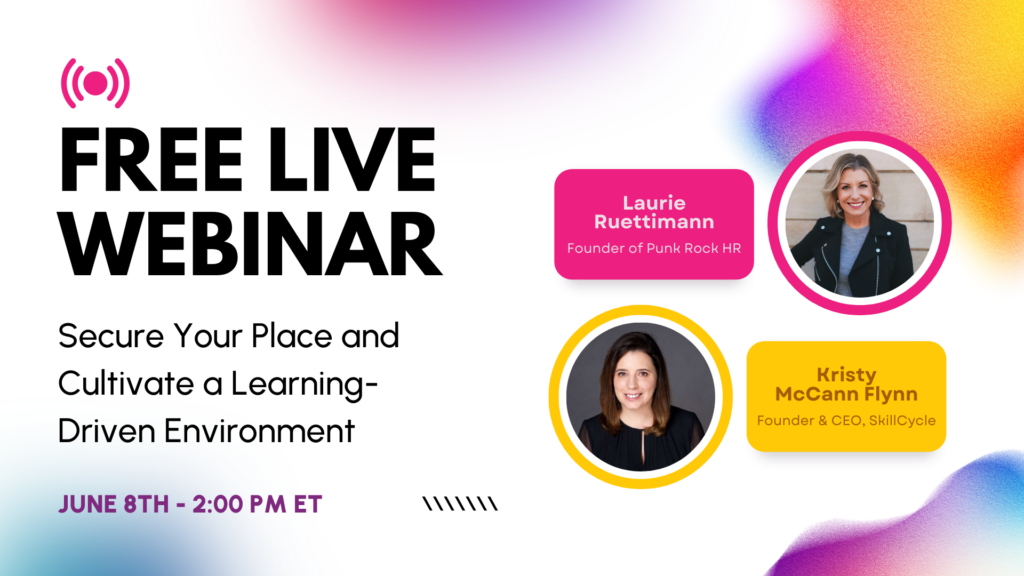
    Want to hear more about the future of HR? Join me and Kristy McCann Flynn from SkillCycle for a webinar to help you align with the future of work. We’re on a quest to cement your leadership status and create a workplace culture that upholds authenticity, trust, and fairness. Mark the date. It’s not an appointment with destiny or anything, but it’s worth signing up.


  • Connect & Grow: Paul Wolfe

    Connect & Grow: Paul Wolfe

    I’m thrilled to introduce you to my friend, Paul Wolfe, the former SVP/Head of HR at Indeed, who guided the company’s growth from a few hundred to over 12,000 employees, all while championing culture, employee engagement, and diversity.

    Paul continues to shape the HR field as an author, board member, and venture advisor, advocating for a ‘Human First’ leadership approach. In addition to all that trailblazing work, I’m a gigantic fan of his vlogcast.

    I’ve spent some time with Paul in real life and on Zoom, and I’m touched by how he recognizes the accomplishments of others and is quick to praise people for their strengths. He’s a genuine, thoughtful, and completely kind human being who is definitely someone you should know.

    Hope you enjoy the interview!

    Here’s Our Interview

    LR: Welcome, Paul. Your reputation as a Human First Leadership Advocate precedes you. I’m eager to learn about what led you down this path. What inspired you to start this journey, and how do you promote this philosophy in the workplace?

    PW: My inspiration comes from over two decades of experience in the HR sector with companies like Match.com, Conde Nast, and, most recently, Indeed. The challenging COVID era brought into stark focus a fundamental truth that I had been aware of throughout my career: beyond our titles and complex management theories, we are all Human Beings First.

    Leaders who create and participate in an environment where individuals feel valued, seen, heard, and safe being themselves foster a more engaged and loyal workforce.

    I’ve chosen to promote this philosophy through my book, “Human Beings First – Practices for Empathetic, Expressive Leadership,” by advising companies at various stages of development, acting as a board member through my 52 Humans vlogcast, and speaking at conferences and organizations. I want to inspire leaders to transform their workplaces by introducing more empathy and humanity in their day-to-day actions.

    LR: That’s fascinating. Can you tell us more about the empathetic, expressive leadership principles outlined in your book “Human Beings First”?

    PW: Absolutely. In my book, I introduce eight principles of empathetic leadership: Reflect, Share, See, Listen, Care, Connect, Help, and Protect. At the core of all these principles is viewing employees as human beings with beautifully diverse, complex, and challenging lives.

    Leaders must understand that their employees could be dealing with many personal challenges, from caring for an aging parent, coping with grief, and mental health challenges, to raising kids. In doing so, leaders can embody empathy and vulnerability. Also, leaders must remember that they are also human beings first. If they show up authentically, they’ll cultivate deeper connections with their teams, resulting in a more engaged, loyal workforce and a culture of psychological safety.

    LR: You’ve been open about your struggles with mental health during the COVID pandemic. How did sharing this experience with your co-workers at Indeed impact your leadership style and the company’s culture?

    PW: Yes, I was diagnosed with OCD in 2005, and the pandemic forced it to manifest in different ways. I struggled to find the proper medication, and during that period, I wasn’t always at my best during meetings or sessions with my team.

    In August 2020, I decided to share my ongoing struggles with OCD in my weekly email to the team. The response was overwhelming. I received over 400 messages from employees showing care, support, and sharing their experiences with mental health. This episode made me realize the power of vulnerability. It allowed us to take another step toward normalizing the conversation around mental health.

    LR: How can leaders create an environment that values and appreciates their employees’ full selves and fosters personal and professional success?

    PW: Leaders can create such an environment by prioritizing open and honest communication, providing opportunities for personal and professional growth, embracing work/life integration, offering flexible work arrangements, recognizing and rewarding employees for their contributions, and promoting a culture of inclusivity and belonging. By doing so, they can foster a workplace that supports employee well-being, development, and success while creating a positive and productive work environment.

    LR: What role does shared vulnerability play in building workplace cultures based on authentic connection and purpose-led performance?

    PW: Absolutely, Laurie. When individuals are open about their struggles, fears, and mistakes, it fosters an environment where everyone can be their authentic selves without fear of judgment or retribution. In addition, this openness promotes stronger relationships, improved communication, and a more collaborative and supportive work environment, all of which lead to better performance and outcomes.

    LR: Where do you envision the HR industry in 5 years?

    PW: I hope the HR industry recognizes that many of the processes we’ve relied on for decades aren’t necessarily the best fit for our current or future workforce. We need innovative disruption of these tried-and-true processes to evolve how we support our employees, handle grievances, manage performance, and more—all through a human-first lens. The goal is to create a workplace where people feel genuinely valued and seen, where their voices matter, and where they can bring their full selves to work each day.

    Connect & Grow

    If you liked my interview with Paul, please connect on LinkedIn and check out his new book and vlogcast. I’m a big fan of his work, and I know you will be, too!

  • Recognizing the Warning Signs of a Layoff

    Collage of different ethnics young people over colorful stripes isolated background confuse and wonder about question. Uncertain with doubt, thinking with hand on head. Pensive concept.

    Are you about to be laid off?

    The short answer is possibly. Job security is a luxury and an illusion. Economic fluctuations, industry downturns, and company restructurings are contributing to the uncertainty, making it critical for every professional to be aware of potential warning signs of a layoff. It’s not a pleasant topic to think about, but understanding these indicators can give you the time to prepare, reassess, and plan your career trajectory.

    SPOT THE SIGNS

    Here are some signs that might suggest that you’re potentially facing a layoff:

    Consultants have invaded: New faces in the office and unfamiliar names in meetings can sometimes signify impending organizational changes.

    Random requests roll in: Being asked to produce seemingly meaningless reports that your boss finds suddenly important can be a red flag.

    Your boss or HR is unusually interested in what you do: If you’re asked to document your processes, train colleagues on your tasks, or create a role manual, take note.

    PTO is scrutinized: Increased scrutiny over your time off could indicate impending layoffs.

    Your workload expands: Increased chatter about productivity and efficiency could mean the company is trying to do more with less.

    Your workload decreases: If your tasks have been reduced or reassigned, it might indicate your role is being phased out.

    Lack of clear future projects: A potential red flag is not having future projects lined up or planned projects being put on hold.

    Exclusion from meetings and decision-making processes: Being excluded from important meetings or email threads could mean you’re being phased out.

    Unusual performance reviews: Increased negative feedback or a less-than-stellar annual review could signal trouble despite your consistent performance.

    Changes in the company’s financial health: If the company is reporting losses, poor earnings, or industry downturns, layoffs could be looming.

    Merger or acquisition chatter: Mergers and acquisitions often lead to redundancy of roles, which can signal layoffs.

    Sudden cost-cutting measures: Cutbacks on supplies, benefits, perks, and cancellation or downscaling of company events could indicate financial stress.

    While none of these signs alone definitively mean you’re about to be laid off, they do suggest change is afoot. It’s better to be prepared and proactive in case of such events.

    PUT YOURSELF FIRST

    Job security can be unpredictable, especially in challenging economic times. However, by understanding potential warning signs of a layoff, you can use the extra time to prepare, strategize, and plan your next career move effectively.

    Now’s the time to put yourself first and expand your professional network within your industry. Participate in industry groups, attend virtual events, engage in online forums, and reconnect with former colleagues. Don’t shy away from seeking mentorship or even considering a career coach. Building and nurturing your network is crucial, as it often paves the way for unforeseen opportunities. 

    After all, as the saying goes, “It’s not just what you know, but who you know.”

    You know me, and I’m telling you the time to prepare is now.


  • What Job Seekers Need to Know With Jeannine K. Brown

    What Job Seekers Need to Know With Jeannine K. Brown

    My guest on this episode of Punk Rock HR is Jeannine K. Brown. She is the Founder and CEO of Everyday Lead and the author of the book “Unstuck and Unstoppable.” Jeannine and I discuss the state of the job market, what job seekers should be doing and what to look for in a psychologically safe workplace. We also discuss how her book is helping professionals accelerate their careers. 

    Jeannine is an accountant by trade and started her career working for the Alabama Department of Revenue before moving into public accounting and, eventually, starting her professional development consultancy, Everyday Lead. There, she helps companies retain talent over the long term through “training and development, executive coaching and DEI strategies.”

    One of Jeannine’s biggest influences is her mother, who loved her co-workers and employer. And that’s driven Jeannine in her work. 

    “What I’ve been on a pursuit to do the majority of my career is just trying to find love and joy everywhere that I’ve been connected to — any institution, organization or corporation, including our clients,” Jeannine says.

    Punk Rock HR is proudly underwritten by Betterworks. The world’s most dynamic organizations rely on Betterworks to accelerate growth by supporting transparent goal setting, enabling continuous performance and learning from employee insights. Betterworks is on a mission to help HR leaders make work better. Discover how they can help you by visiting www.betterworks.com. 

    The State of the Job Market 

    The headlines tend to focus on layoffs, but there are still plenty of openings and opportunities in today’s job market. But how do job seekers know where to look? Jeannine says to start by examining your job role and how you can stay current on the skills, processes and technologies you need. “So if you are let go or if you decide to leave, you can find a place to go very quickly,” she says.

    Meanwhile, Jeannine believes that most employers do want to improve retention by figuring out what workers want. In particular, they’re to understand the youngest professionals — those ages 22 to 30

    “They’re a purpose generation. They want to be connected to the work. They want to be connected to you as their manager and their boss,” Jeannine says. “They want to have this kind of family-type relationship with the people in the workplace, but they want to do it all from home.”

    Creating a Psychologically Safe Environment for Ideation

    For teams to create and innovate, they need to feel psychologically safe — a term coined by Dr. Amy Edmondson, who’s also been a guest on Punk Rock HR. Jeannine’s work heavily focuses on encouraging and guiding organizations toward creating psychologically safe environments. 

    “Psychological safety is the ability to show up on a team and have open, honest discourse to disagree, to question, to admit mistakes without personal threat or jeopardy to yourself or losing your job,” she says. “It’s an effective means to really get people to really be their full selves at work.“

    Psychological safety is about individual relationships, but ideally it’s part of the culture, modeled by executive leadership and filtering down to all levels.

    “We start with the executives in exploring the conversations of psychological safety,” Jeannine says, “because there’s an assumption with them, often, that they forget what it’s like to be a staff, to be younger in their career or even be middle manager, when they believe that anyone can speak up because they give them permission. But we know that that is not true.”

    Developing the Skills to Accelerate Careers

    Jeannine’s book “Unstuck and Unstoppable” is a guide to help professionals leverage their value and accelerate their careers. It’s a passion project for Jeannine, who noticed how many people were focusing on technical skills and not enough on the “wraparound” skills that could propel their careers forward. 

    By “wraparound” skills, Jeannine is referring to a person’s ability to effectively communicate their value in the workplace. “Unstuck and Unstoppable” is grounded in people’s real experiences, struggles and aspirations.

    “What we wanted to do was make it practical. It’s not a book based on scientific research and hundreds and hundreds of surveys,” she says. “It’s actual strategies that I use to navigate my career in public accounting and that we use when we’re coaching women and men to get promotions. We focus on retaining people at their companies that they currently work for.”

    Jeannine has seen firsthand how the concepts in her book help people.

    “Every person that we’ve seen that applies these processes and ideas, they get promoted within their organizations,” Jeannine says. “They get increased compensation, more responsibility, and they feel more confident and more valued at work.”

    People in This Episode

    Jeannine K Brown: LinkedIn, Instagram, Everyday Lead, Unstuck and Unstoppable

    Transcript

    Laurie Ruettimann:

    Punk Rock HR is sponsored by Betterworks. The world’s most dynamic organizations rely on Betterworks to accelerate growth by supporting transparent goal setting, enabling continuous performance, and learning from employee insights. Betterworks is on a mission to help HR leaders make work better. Discover how they can help you by visiting betterworks.com today.

    Hey everybody, I’m Laurie Ruettimann. Welcome back to Punk Rock HR. My guest today is Jeannine K. Brown. She is the CEO of Everyday Lead and the author of the book “Unstuck and Unstoppable.” Jeannine is on the podcast today just to share her overview of what it’s like to be a job seeker in today’s market. What do job seekers need to pay attention to? What are the trends? And more importantly, how can you not be a job seeker and maybe find new and interesting opportunities within your organization?

    We also talk what it’s like to be a hiring manager, and how to retain people internally, and what you should look for when you’re out there looking for people and candidates and a breath of fresh air in the marketplace. So if you’re interested in a really great conversation about the world of work and the world of looking for a job, well, sit back and enjoy this chat with Jeannine K. Brown on this week’s Punk Rock HR.

    Hey Jeannine, welcome to the podcast.

    Jeannine K. Brown:

    Hi, Laurie. Thanks for having me.

    Laurie Ruettimann:

    Well, sure. I’m so glad you’re here. You’ve had this really amazing career journey, and you’re so helpful to tens of thousands of people, and I thought we can get started by talking about your origin story. Who are you? What are you all about?

    Jeannine K. Brown:

    I’m Gloria’s daughter. That’s what I always say. So I’m that first, and that’s how I spent the first 18 years of my life identifying with her. And it brings me so much joy to mention her because my mother loved her job. She loved the people she worked with, and she loved the organization, the company she worked for. And so that’s what I’ve been on a pursuit to do the majority of my career, just trying to find love and joy everywhere that I’ve been connected to — any institution, organization, or corporation, including our clients. And so my origin story started in Milwaukee, Wisconsin, and I’m an accountant by trade. Went to college for accounting, started my career in state government and then onto public accounting, and that’s what I’ve been doing.

    Laurie Ruettimann:

    Wait, wait. Do you still have a passion for public accounting?

    Jeannine K. Brown:

    I have a passion for the profession. So, I don’t practice anymore. But I am deeply rooted in the accounting and finance profession, working with public accounting firms, and sitting on boards related to the industry. So, deeply rooted. I just can’t see myself leaving. My people are there.

    Laurie Ruettimann:

    Well, I like a person who knows people and knows numbers and knows math. I think you bring that to the table. Why don’t you talk about the work you’re doing today? What’s your career journey like today?

    Jeannine K. Brown:

    So today I am the CEO and founder of a consulting firm called Everyday Lead. We are a professional development consultancy, and we help companies retain talent from college to retirement who love what they do in the companies they work for. And we do that through training and development, executive coaching and DEI strategies.

    Laurie Ruettimann:

    So you clearly like that job. You’re clearly talented at that job, and it gives you an overview of the economy from early careerists all the way through people who are mature in their career journey. So tell me, what’s the economy like out there right now? How are job seekers doing?

    Jeannine K. Brown:

    It’s interesting because CEOs, we are in group texts, I was in a group text this morning, and we were talking about layoffs. A large public accounting firm was just announcing that they’re doing about 3,000 layoffs. And the conversation went from, “Yeah, that’s an issue, but there are still a lot of job requisitions open out there.” So I think it’s a matter of your company might be laying off, but there are opportunities.

    One, to identify something within your company. Then, how do you stay at the forefront of employment in the company that you’re with, that you really enjoy working for? But then how can you stay abreast of where your profession is going — around skills and identifying the skills that are necessary. So if you are let go or if you decide to leave, you can find a place to go very quickly.

    When I look at the economy, that’s how I’m looking at it, from the vantage point of talent and how talent can move very quickly. And then the vantage point of hiring, the corporations hiring and how they can find great talent and bring them into their organizations or keep them and retain them.

    Laurie Ruettimann:

    Job seekers and workers are naturally cynical these days. They’ve been through a lot, a lot of ups and downs. And two things come to mind. Number one, there is this belief out there that many requisitions are open, but they’re open for show. They’re not open for truly filling.

    And then the second thing is that a lot of job seekers and employees believe that a company would rather pull talent externally into the company rather than promote from within. So what do you think about those two cynical, maybe realistic, sort of points of view?

    Jeannine K. Brown:

    They’re good points of views and I’ll say yes, no and depends.

    Laurie Ruettimann:

    Fair. And also the straight easy answer. Yeah.

    Jeannine K. Brown:

    Yeah. So I don’t think there is an easy answer to that. I hate to believe that companies would put out requisitions for roles that actually do not exist or are not open. I don’t think they really have the time for that. Am I going to hire somebody to do something like that? But I do think there’s an opportunity for companies to still continue to collect, create a pipeline of potential and future workers, and maybe they do that.

    Laurie Ruettimann:

    And that, I think, is what the concern is, that the requisition is open and that they don’t want to lose the headcount, but they’re not really serious about hiring. So I get it. Companies don’t have time to play games, and I like that perspective. 

    What about this idea that organizations would rather get talent externally than promote from within?

    Jeannine K. Brown:

    I don’t think they would rather do that, but I think sometimes they’re forced to. I think there’s an opportunity for companies to bring in new ideals. If someone has spent 10 years in financial services at a large bank, and now there’s another organization that’s coming, and they want to bring in those insights? And I think that’s what a lot of maybe, talent, they’re not looking at it from that perspective. So I think there’s a perspective of, “Hey, we want to bring in new ideas. It’s going to challenge, bring in new innovations, new ways to be creative and approach our market, our customers and clients.” And so that’s why they do that.

    I think this is also an opportunity for talent to constantly and consistently be in the marketplace, learning new things, being exposed to new conversations and ideas outside of their industry. So if I’m in the health care industry, I should go to a finance conference. If I am in the biomedical industry, let’s go to health care, go to another type of conference. And then I can be in the workplace talking about these new ideas, concepts, new technologies so that I can continue to be a value add within my existing organization.

    Laurie Ruettimann:

    Well, I’m definitely down with the trend of continuous learning. I think that’s one of the most important things we’ve actually discovered out of the pandemic that you do right by you and your family and your future by investing in your learning. And a lot of people took the time when they were at home to take online courses, go to LinkedIn Learning. I saw that happening, and I love that trend.

    I wonder, do you see any other trends in the marketplace right now, either from companies or job seekers or careerists, that are interesting to you? What’s cool out there? What do you see happening in the economy?

    Jeannine K. Brown:

    I think the biggest trend right now is ChatGPT.

    Laurie Ruettimann:

    Yeah. Oh, yeah.

    Jeannine K. Brown:

    Artificial intelligence is impacting how people get knowledge and how they respond to their customers. And I want to put a disclaimer out there, Laurie. I am not an expert. I’m like everybody else. I’ve been watching it on “60 Minutes.” I use it.

    Laurie Ruettimann:

    Oh, good old “60 Minutes.”

    Jeannine K. Brown:

    I use it and I’m learning it. We’re trying to figure out how to use it to serve our clients and even to make us smarter and faster at what we do. And so I think that’s one of the biggest trends right now. I think employees should be able to and can use that in ideation and looking at possibilities of what they can do and how they can work better, faster, smarter, together individually as individual contributors, as hiring managers and as teams.

    Laurie Ruettimann:

    I have a girlfriend who was just laid off from her job in human resources. In that industry, the profession of HR has been incredibly affected by layoffs. It’s ironic, because just a year ago, we were the saviors of an organization, right? Now they’re laying us off right and left. But what was fascinating to me is, we started talking and I said something about ChatGPT, and she said, “What’s that?”

    So we think it’s a trend, and I think you’re right, it is a trend. But I wonder what the discovery rate is on it because I think it’s kind of low. I think it’s not permeating into the average worker’s life just yet.

    Jeannine K. Brown:

    I think there are a lot of people who are just not deeply rooted in technology on a day-to-day basis of their careers or their lives. They’ve shunned it. They don’t think it’s important, and it’s not a generational thing. It’s not like the boomers or the Xers that are still in the marketplace are not doing‌ it. It’s throughout.

    I did a post about it on my Facebook page, and I asked how many people were using it. And like you said, there were a lot of people like, “I’ve never heard of that. What is that? What are you talking about?” And I didn’t give an explanation. I was like, “How many of you are using ChatGPT?”

    So people aren’t, but this is the differentiating factor, I think, with people who continue to add value in their organizations. They stay involved in these conversations around new technologies. They’re either the whistleblower: “Hey, it’s coming.” Or they’re the gatekeeper and trying not to use it, but I don’t think we can get away from it.

    Laurie Ruettimann:

    I wonder if you’ve had the opportunity to just teach anybody ChatGPT, like my girlfriend who was like, “What’s that?” I said, “Well, why don’t you go on there and create an account. It’s free, and ask it for the perfect margarita recipe.” She came back. She’s like, “Oh my God.” So I wonder if you had any of those moments.

    Jeannine K. Brown:

    I’ve had those moments. I was at a conference in February, and I was at a table. The women at the table had never heard of it. It was men and women at the conference, I just happened to be at the table with all women. And none of them had heard of it. I pulled out my computer and showed them, and I just put in there, “Hey, give me 10 topics that I could do social media posts on.” And they were blown away.

    Laurie Ruettimann:

    It’s crazy. It’s so fun to see people have that moment. It reminds me of when I had my first moment of discovering Twitter or getting on LinkedIn, and I was so excited for it. And all these years later, almost 20 years later, I’m like, “Oh, dang. These social media platforms stink.”

    I wonder if there’s going to be this moment 20 years from now where we’re like, “Oh, I’m so sick of generative AI.” I don’t know. What do you think?

    Jeannine K. Brown:

    We might. It’s interesting as humans, how quickly we become exhausted by things that can actually make our lives better and communicate, but I think anything that’s misused — so I think the thing with social media is that now we realize that people really do think like that. And so I think if we can keep it as a tool that makes us smarter, makes us better and faster, more productive in what we do, both in our individual lives. How can I bring people into my home and give them a great experience with a great margarita recipe, but at the same time, how can I make my teams more efficient? How can we manage our meetings a little bit better using technology? And I think it’s important for us to stay on top of these new, evolving ideas in the workplace.

    Laurie Ruettimann:

    Well, just as job seekers have to focus on continuous reinvention, like learning, growing, thriving. I think companies are trying to some extent to do that. They want to keep and retain workers. I do see still an exodus of people leaving companies. Like to your earlier point, people still quit their jobs. They still leave. They still bet on themselves.

    I’m just wondering, are companies thinking about employee retention? And if so, what are some of the challenges and what are some of the things they’re doing?

    Jeannine K. Brown:

    I think companies are thinking about employee retention. They might be focusing more heavily on the incoming pipeline. How do we get younger workers, and we appeal to them? I think the biggest challenges that they’re dealing with in that generation that’s post-college, maybe 22 years old to 30, is really retention and trying to understand that worker. What’s important to them, and not having envy, jealous or malice toward how they want to show up in the workplace and what’s important to them.

    They’re a purpose generation. They want to be connected to the work. They want to be connected to you as their manager and their boss. They want to have this kind of family-type relationship with the people in the workplace, but they want to do it all from home.

    Laurie Ruettimann:

    Yeah, they do.

    Jeannine K. Brown:

    So that’s one of the bigger challenges that I hear a lot. What I encourage our companies to do is to invest in their employees. And I love the fact that you used that earlier. People were investing in themselves by taking courses. When an employee feels as if the company is making an actual tangible investment in them, their development, their wellbeing, they are more likely to stay with the organization. Because we know individuals do not leave their company, they leave their manager.

    Laurie Ruettimann:

    Well, that’s 100% true. And I think about this younger generation of workers, and they, you know, born for the most part at the very end of the 20th century, the beginning of the 21st century. And they have seen a weird version of capitalism, maybe a better version of capitalism, who knows? But they’ve seen promises that we care about you, bring your whole self to work, be authentic. But they’ve also seen layoffs. They’ve been told you can work from home, and now they’re being told, “No, no, no, no, no. There’s no collaboration at home. You got to get back in the office.” 

    And frankly, it’s got to be super-confusing for them. And also super-confusing for hiring managers who really don’t enact culture. They enact microcultures, but they don’t own the broader company culture. I think it’s confusing for younger workers, hard for hiring managers. I just wonder what the solve is for that. Because we’ll say, “Oh, it’s about transparency, and it’s about communication.” But how many hiring managers are going to be like, “I don’t effin’ know. Just show up. We’ll work on it together.” I think it’s just a miasma of confusion, but I don’t know. Do you have a reaction to that?

    Jeannine K. Brown:

    I do. I think we need to be honest and clear, and then be willing to come back and say, “You know what? We thought about remote work. We’re not realizing it in the way that we expected it.” And I think that’s OK because, like I said, this generation — and everybody — wants honesty. I think if we can in a community at work, solve the problem — what happens is our more senior leaders are trying to solve the problem outside of communication with their staff that’s responsible for delivering. That’s where the disconnect is, because the more senior leader is leaning back onto what worked for them 20, 25 years ago.

    Laurie Ruettimann:

    And feel like it’s their privilege to be able to do that, as well. Like, “I’m a senior leader. I got here for a reason, so I’m just going to do more of what I know.” I think these younger workers are like, “Stop it, please.”

    Jeannine K. Brown:

    Our team is remote. Because they’re all younger than I am and work faster than I do and come up with great ideas, I ask them, what did they want? They want to continue to do remote work. But every other month or every six to eight weeks, they want us to come together as a team, spend time together talking about ideas and what’s going on for the next business cycle, if it’s the next eight weeks, the next quarter, because that’s where they feel most connected through ideation. They don’t want to execute in a conference room. They want to ideate together. And I appreciate that.

    Laurie Ruettimann:

    Well, and in order to ideate, you need a psychologically safe environment. And you talk about this, you write about this. You are a true thought leader in this space. So tell me a little bit about psychological safety and how it applies to the workforce today.

    Jeannine K. Brown:

    So psychological safety, I wish it was a concept that I had come up with, like the actual words and the study. But we have to credit Amy Edmondson for that. And the work that she did at Harvard and with Google around what’s important to teams to be more innovative and creative and more profitable, and it’s psychological safety. And psychological safety is the ability to show up on a team and have open, honest discourse to disagree, to question, to admit mistakes without personal threat or jeopardy to yourself or losing your job. It’s an effective means to really get people to really be their full selves at work. To contribute at high levels, to call out bias and unfair treatments within a process that is supportive and to create high-performing teams where all people can thrive and feel a sense of belonging in the workplace.

    Laurie Ruettimann:

    Amy Edmondson was a guest years ago on Punk Rock HR. And offline, I asked her, and I wish I would’ve had this recorded, “Hey, do you think there are psychologically safe workplaces? Or is it just psychologically safe relationships? Because I think a workplace is too broad. It’s the relationship.” She said, “It is the relationship, but it’s also the workplace.” I’m like, “Eh.” Because you can have a manager where you have a psychologically safe relationship or even a director, but maybe you can’t have it in the broader company. I don’t know, where do you fall on that? It’s a weird and quirky take, but I will die on this hill.

    Jeannine K. Brown:

    I think it’s both. And the reason is, and how we execute it. We start with the executive leaders when we talk about psychological safety. And we get an opportunity to educate them on how to do it and the why behind it, and focusing on high-performing teams. Because we know that high-performing teams are diverse, inclusive, free from bias and free — I will put in air quotes — and psychologically safe.

    So we start with the executives in exploring the conversations of psychological safety because there’s an assumption with them often that they forget what it’s like to be a staff, to be younger in their career or even be middle manager, when they believe that anyone can speak up because they give them permission. But we know that that is not true. And then we move into the middle managers, because that’s where all the real information about your culture lies.

    Laurie Ruettimann:

    You know Jeannine, I’m a job seeker. I’m like, “Where’s that psychologically safe workplace? Because it’s not where I am.” I wish we had a list of companies that were ranked and rated, because I think people generally don’t know what companies have a psychologically safe culture. Can you name a company? Do you know six?

    Jeannine K. Brown:

    I cannot name one company, even after we’ve done the training that we’ve done. Because companies don’t slow down often long enough to really practice this and make sure that the entire ecosystem of their organization is doing the same thing. That direct, open and honest means the same thing for everyone throughout the entire 12,000-plus employees. And so I think it’s a concept that we want to continue to talk about. It’s something we want to continue to educate organizations and hiring managers on and focus on the benefits of that.

    Because if you do have a psychologically safe space, then you don’t have to worry about these HR issues. They constantly slow down work, and they cost us money in lawsuits when people leave. And then also cost us our brand on platforms like Glassdoor and Twitter when your employees are talking bad about your company and your leadership.

    Laurie Ruettimann:

    100%. You know I’m a job seeker, and I’m like, “All right, there’s no list of psychologically safe work environments.” What do I ask when I go on an interview? How do I test this and make sure that I’m not jumping from one toxic company to another?

    Jeannine K. Brown:

    You got to be really direct with the hiring managers, and don’t feel, again, that you’re going to lose something. I would ask them, “What does ideation look like?” So do something soft because people want to talk about, “Oh yeah, we get together and we do all of these things.” And then I would ask, “What does discourse look like in your organization? How do you feel when people are disagreeing? Who manages and mediates a disagreement in a team meeting?” And then I would ask, “Hey, do you allow people to disagree with you? How do you feel about that?”

    Laurie Ruettimann:

    Oh, I love those questions. Those are good dating questions, too.

    Jeannine K. Brown:

    What? I almost said, “Amen.”

    Laurie Ruettimann:

    I love that so much. Well, we want to hear more about your amazing book, “Unstuck and Unstoppable.” So I want to know what inspired you to write it and what readers can expect when they pick it up at Barnes & Noble or Amazon or wherever they get their books at — hopefully a small business. That’s my dream. But what can they expect from your book?

    Jeannine K. Brown:

    Thank you for bringing up the book. It is my passion project. And what inspired me to write the book was I recognized that a lot of men and women, but particularly women, focus so much on mastering the technical aspects of their profession. So being a great accountant, being a great nurse, bringing all of these different things, but they were missing the wraparound skills that really help you accelerate your career. And I was traveling around speaking at women’s leadership summits and brunches, and I was watching how people were taking notes. I thought they were going to be eating the French toast, and they were just taking vigorous notes of the topics and coming up and saying, “I’ve never heard anyone talk to me. Never say this about me. Never tell me how, and give me an actual process of how to communicate my value in the workplace where I feel comfortable and I don’t feel like I’m bragging.”

    And so I wrote the book for that reason. The response has been amazing and overwhelming. And what we wanted to do is make it practical. It’s not a book based on scientific research and hundreds and hundreds of surveys. It’s actual strategies that I use to navigate my career in public accounting and that we use when we’re coaching women and men to get promotions. And again, we focus on retaining people at their companies that they currently work for.

    And every person that we’ve seen that applies these processes and ideas, they get promoted within their organizations. They get increased compensation, more responsibility, and they feel more confident and more valued at work. And so it’s a passion project, and it goes back to how I introduce myself. It makes me focus on how much my mother loved her company, her career and the people she served in that work. That’s what I think people get when they finish the book and they apply the techniques.

    Laurie Ruettimann:

    Gloria sounds like an amazing woman, a wonderful mother, and I’m so glad you’re here today to talk about all this good stuff. Very helpful, very practical. If people want to figure out who you are and how to work with you, can you recommend your best website? And do you accept invites on LinkedIn?

    Jeannine K. Brown:

    We do accept invites on LinkedIn. We also accept them on Instagram, as well. But you can reach me and my team on our business website at everyday-lead.com.

    Laurie Ruettimann:

    Well, amazing. We’ll include all your good stuff in the show notes. And once again, I want to say thanks again for being a guest on Punk Rock HR.

    Jeannine K. Brown:

    Thank you, Laurie. It’s been a blast.

    Laurie Ruettimann:

    If you’re interested in learning more about today’s show, you can visit punkrockhr.com. There you’ll find show notes, links, resources and all the good stuff.

    Now, that’s all for today. Thanks for joining us, sharing this episode and leaving thoughtful comments on Instagram and LinkedIn. We appreciate your support, this and every week, on Punk Rock HR.

  • Corporate Drinker: A Reflection on Alcohol in the Workplace

    Want to learn about my new book? It’s called “Corporate Drinker.”

    I’ve been in HR for over 25 years. I’m old enough to see how trends ebb and flow. Right now, everybody is talking about work and alcohol.

    Back in the day, alcohol and the workplace were intertwined. Farmers quenched their thirst after a hot day. Factory workers shared a pint as a bonding ritual or even a precursor to unionization. Executives wielded their power over a drink, sales reps entertained clients over long lunches, and even personnel managers escaped the office (and its annoying employees) to grab a slice of pizza and a cold beer. Work drinkin’ held a spot on our collective calendars.

    However, by the mid-1990s, the tide shifted. Workplace drinking lost its appeal—not due to decreased networking or team building—but because corporate productivity and efficiency took center stage. As the wildness of the ’80s gave way to stricter company policies, the focus moved from corporate abundance to scarcity. Personnel was rebranded as HR. Attention was turned to reducing health and benefits costs, implementing sexual harassment training, and introducing concepts like affirmative action and inclusion, even though nobody would take that seriously for decades. As a result, drinking at work became riskier. Sure, the powerful continued to indulge, but the era of three-martini lunches for directors and middle managers was essentially over.

    Despite these changes, the transformation of alcohol in the workplace was superficial. So, “Corporate Drinker” explores alcohol’s intricate relationship with the workplace, its historical and global role, and its impact on employees. Some workers love knocking back margaritas and bottomless mimosas with colleagues. Others have rich, complex lives outside their jobs and prefer to go home and enjoy time away from the office. However, to this day, drinkers have more opportunities than non-drinkers. For all the work we’ve done on inclusion and belonging, this shouldn’t be possible. But tell that to Chad, who’s rounding up a crew to hit the dueling pianos bar on a Tuesday night.

    The book also underscores how alcohol affects individual work performance. I question why companies invest heavily in inclusion, wellness programs, and harassment training only to undermine these efforts with alcohol-fueled events. It’s impossible to perform optimally and create psychologically safe work environments when alcohol exacerbates power differentials and impairs judgment with only just one drink.

    I’ll acknowledge my biases as an HR leader with nearly three decades of experience. I’ve had a drunk employee ask me if he’d qualify for workers’ compensation if he slipped and fell at a holiday party, only to see him sit down at a table and look for an opportunity to slip and fall. But I know most people will never develop an alcohol use disorder, and banning drinking outright is extreme. Plus, I like to drink champagne with my fellow HR ladies and tell horror stories from our time in the trenches.

    Still, the implications of alcohol consumption at work demand a balanced consideration. Workers are adults; we hire them to solve problems in exchange for a paycheck. However, they bring their complete selves to work—trauma and all. That’s why “Corporate Drinker” prioritizes fostering responsible corporate behavior and healthy workplace cultures. Leaders must look beyond the happy hour, boozy holiday parties, and informal after-work cocktail hours as the primary means of promoting team cohesion, collaboration, and innovation. Encouraging employees to be self-leaders with individual accountability—and then to go home and focus on their well-being outside work—can lead to happier and more productive individuals.

    And the book also delves into the specific challenges that remote workers face, explores policies to address alcohol use disorder, and shares narratives of professionals who have chosen to limit or eliminate alcohol from their lives and how it’s negatively impacted their career progression.

    I’ve been around long enough to have watched people return from lunch and barf in the bathroom. Fine, okay, that was me. And I have seen the workplace transform in admirable ways. But sometimes, it feels like everything old is new again. People are returning to the office. Managers are trying new ways to include younger workers in team activities. And conferences in cities like Orlando and Las Vegas are back with wild abandon. Yet, for all the talk of inclusion and belonging, many of us are right back where we started: drunk with our colleagues, misbehaving, and saying stupid shit we later regret.

    It is exhausting, and I’m sick of it. I prefer to write about anything other than insensitive corporate leaders, lecherous managers, and co-workers who drink too much because of toxic corporate cultures and end up racking up DUIs and jail time. Enabling a culture of corporate drinkers is bad for business. Being a corporate drinker is a depressing, helpless state that negatively impacts your professional career, personal relationships, and overall well-being.

    So, “Corporate Drinker” concludes with a strong call to action, urging leaders to evaluate how alcohol intersects with the workplace. By transitioning from an alcohol-dependent culture to a more inclusive workspace, organizations can meet the moment with their employees and meet the challenges of modern times.

    That’s what this is all about. Are you interested in learning more? Then, here’s your next move: Sign up for my Sunday newsletter and watch for more #CorporateDrinker book and podcast news!

  • Overcoming Sales Mistrust: How I Learned to Embrace Sales Principles

    Used car sign at a pre-owned auto dealership. With supply issues, used and preowned cars are in high demand.

    As a cash-strapped college junior in the summer of 1995, I dreamt of studying abroad in London and attending graduate school. I was torn between becoming a lawyer or a professional writer. At one point, I even considered pursuing a JD and an MFA to use my skills in the media and entertainment industries.

    Back then, my boyfriend and I could barely afford rent, let alone my lofty aspirations. So, I took to the streets of Big Bend Boulevard in Webster Groves, MO, and applied for jobs at every small business, bank, daycare, and sturdy building with a front door.

    I stumbled upon a car dealership hiring receptionists and filled out a paper application. The team seemed intrigued by the scruffy, visibly poor alt-looking girl standing before them. They bombarded me with questions about music and bands before a salesman finally took my application and suggested I take their personality assessment.

    Desperate times call for desperate measures, so I agreed. After completing the test, a 30-something sad dad in khakis returned with an offer: “We’ll hire you today, but only if you agree to sell cars.”

    I hesitated, reminding him that I was a college student. He was like, “Really? Is that going somewhere?” 

    In retrospect, he had a point. So, I went back to my college and talked to every administrator, alumni professional, professor, and career coach I could find. Eventually, someone helped me land a summer internship in the HR department of a candy factory. And while the math didn’t add up for graduate school, I was determined to make my undergraduate education pay off.

    That’s how my HR career began. And to this day, I’m still trying to determine if the investment paid off.

    HR Hates Sales

    My skepticism of sales professionals didn’t end in 1995; it continued for years until I left HR.

    Why was I so suspicious of those who just wanted to help? Part of it was learned behavior. Boomer HR ladies seemed to despise sales professionals even more than they loathed technology back then. For some reason, they’d sooner embrace Saddam Hussein than shake hands with someone selling them job ads or emerging employee technology.

    People’s mistrust of sales professionals often stems from negative past experiences, stereotypes, or misconceptions. Some of the main factors that contribute to this mistrust include:

    • Aggressive tactics: Overly push or high-pressure sales tactics can make customers uncomfortable and feel coerced. Such techniques lead to the perception that sales professionals care more about closing deals than addressing the actual needs and concerns of the customers. 

    • Dishonesty: Some salespeople may exaggerate the benefits of a product, downplay its drawbacks, or make false promises to secure a sale. Customers feel deceived and lose trust in sales professionals when they discover the truth. Focus on commission: Sales professionals often work on commission, which can sometimes incentivize them to prioritize their financial interests over the customers’ needs. It creates mistrust, especially when customers feel they are being sold something they don’t need or want. 

    • Stereotypes: Popular culture and media often portray salespeople as manipulative, slick, or insincere, which can contribute to the general mistrust of sales professionals. While this stereotype doesn’t apply to all salespeople, it can still negatively impact their reputation. 

    • Lack of product knowledge: A salesperson needs a deep understanding of their product or service. If they don’t have it, they can’t provide accurate or complete information to customers. It leads to dissatisfaction and mistrust if the customer feels misled.

    Sales professionals are visible, verbal, and ever-present, which can work both for and against them when dealing with potential leads who have had negative experiences.

    Sales Doesn’t Help Itself

    Historically, the language sales professionals use has been less than inclusive and customer-centric. Some examples of problematic sayings include:

    • Always Be Closing”: While focusing on closing deals is necessary, this saying can encourage pushy or aggressive sales tactics. Building relationships with customers and understanding their needs is essential, rather than only focusing on the sale. 

    • “The customer is always right”: This saying can lead to a lack of boundaries and unrealistic customer expectations. While making customers happy is essential, setting reasonable expectations and maintaining professional integrity is also crucial. 

    • “Fake it till you make it”: This saying may encourage dishonesty or a lack of authenticity. Building customer trust is critical, and being genuine and honest is a better approach. 

    • “It’s a numbers game”: While the more prospects you approach, the higher your chances of success, this saying can lead to a focus on quantity over quality. Building meaningful relationships and targeting the correct prospects are crucial for long-term success. 

    • “You can sell ice to an Eskimo”: Sorta racist, no? The saying implies that salespeople can manipulate anyone into buying anything. In reality, successful salespeople identify genuine needs and provide solutions that benefit their customers. “

    • No doesn’t always mean no”: This saying can be problematic because it can encourage salespeople to push too hard or to ignore a customer’s objections or concerns. While it’s true that some initial “No’s” can be overcome with additional information, persistence, or addressing concerns, there are times when a “No” genuinely means the customer is not interested or the product isn’t a good fit. 

    Many of those sayings still make my skin crawl, and I haven’t worked in human resources for fifteen years. 

    Everything is Sales

    I have a new take on this topic now that I’m older. While claiming that “everything is sales” might be an exaggeration, sales principles and skills apply to various aspects of life. Sales involve communication, persuasion, negotiation, relationship-building, and problem-solving, all valuable skills in many contexts.

    Here are a few examples of how sales skills can be applied in different situations:

    • Job interviews: When applying for a job, you are essentially “selling” your skills, experience, and personality to the potential employer. Feels gross, but persuasive communication and showcasing your value are crucial to securing a job offer. 

    • Personal relationships: Building and maintaining personal relationships involve effective communication, trust, and understanding, all skills that sales professionals (and HR ladies like me) must grasp. 

    • Advocacy: Whether you’re trying to promote a cause, fundraise for charity, or garner support for a project, you’re essentially selling your ideas and goals to others. 

    • Negotiation: In various aspects of life, people often find themselves in situations where they need to negotiate—for example, when buying a car, discussing a salary, or resolving conflicts. Sales skills, such as persuasion and effective communication, can help achieve a favorable outcome. 

    • Marketing and promotion: Sales skills are crucial in promoting products, services, or ideas to a target audience, even if there is no direct monetary exchange involved. 

    It’s too bad that nobody taught me that many aspects of life involve principles and skills commonly associated with sales. In fact, my growth as an HR leader would’ve been stronger with a background in car sales. Nevertheless, developing these skills at any stage in a career can contribute to success.

    Do I Still Hate Sales?

    You might wonder if a secret part of me still detests sales. Truthfully, I never really hated it. Instead, I was more intimidated and felt insecure about my knowledge gap, which led me to react strongly as an HR professional. Being highly verbal and impulsive, I formed opinions with little depth, which was my reality for many years.

    And when I started my own business, I remained cautious of people and companies with well-established sales processes. How could they be so good at something that seemed so mysterious and somewhat sketchy? My wariness primarily stemmed from my insecurities about dealing with naturally gifted individuals.

    Over the years, however, as a business owner, I’ve studied sales books and conversed with professionals about their problem-solving and communication skills. As a result, I now recognize that I have much to learn from them.

    I’m a lifelong learner, albeit a slow one, but I’m determined to improve. If you, too, lack sales skills or harbor suspicion toward those trying to solve problems, it’s time to let go of those reservations and level up. The world is waiting for your big idea. Don’t get in your own way like I did.