
Category: Podcast

  • Pivoting to Your Purpose With Liz Vaccariello

    Pivoting to Your Purpose With Liz Vaccariello

    My guest for this bonus episode is my friend Liz Vaccariello. Liz is the former editor-in-chief of some of the world’s most popular publications, including Reader’s Digest, People and Parents magazine. She’s also the former editorial director at Dotdash Meredith, the largest digital and printer publisher in the U.S. — and parent company of some of Liz’s former publications.

    In this conversation, Liz and I discuss how she pivoted her career to align with her purpose, the challenges of building trust over Zoom and what it really means to be a writer and editor. 

    Liz has over 25 years of experience in the publishing industry. But this year, she left Dotdash Meredith to set out on her own — choosing to pursue writing that helps brands that are improving people’s lives.

    Punk Rock HR is proudly underwritten by Betterworks. The world’s most dynamic organizations rely on Betterworks to accelerate growth by supporting transparent goal setting, enabling continuous performance and learning from employee insights. Betterworks is on a mission to help HR leaders make work better. Discover how they can help you by visiting www.betterworks.com.

    How the Pandemic Changed Work and Self

    Countless people reevaluated their lives during the pandemic, including how they balanced work with the rest of their lives. Many, including Liz, went so far as to leave their jobs in pursuit of work that better aligned with their values. 

    When the pandemic began, Liz was the editor-in-chief of Real Simple, which helps readers simplify their homes and lives. The sudden shift to spending more time at home not only changed people’s lives but also the focus at Real Simple.

    “We talked to advertisers, and we were like, ‘Look, home is where it’s at,’” Liz says. “There’s chaos in the world. There’s political chaos, as well as pandemic chaos. And so all of the pieces of the Real Simple brand were able to be of greater value during the pandemic.”

    The pandemic also sparked a change in Liz. Getting out on daily walks was part of that shift in perspective. “I became even more attached to seeing beautiful things in the world,” she says. “It’s really about seeing the world’s a beautiful place, and I want to see more of it, and I want to see it with the people I love.”

    Liz eventually decided to take this approach to her work, writing more about what she values, such as lifestyle, travel and wellbeing. 

    “The pandemic changed all of us in so many ways, and that’s one way that it changed me,” she says. “It’s not that I didn’t want to go back to an office; it’s ‌just that what I wanted to spend my days thinking about and writing about and editing changed.”

    Why Building Trust in Virtual Meetings Is Difficult

    Remote work has many benefits, notably the flexibility for people and the ability to align work to their lives instead of the other way around. But Liz sees a huge drawback to remote work: “You can’t build trust over a screen.”

    Being on screen is more performative than face-to-face interactions, Liz says, and there’s also big differences in how we present ourselves.

    “For example, a junior employee does not know, nor am I going to tell the junior employee, that the fact that they’re on their Zoom, not even looking at the screen twirling their hair … they would never behave that way in a meeting,” Liz says.

    Being in person doesn’t mean lack of flexibility or consideration. Liz likes to model the behavior she wants to see in her team, and she finds that’s much more difficult when people aren’t connecting in real time and in the same space. And with junior employees, in particular, they might not have much knowledge of how to show up at work — they especially need that guidance.

    The Essence of Writing and Editing

    Writing and editing are two distinct jobs, and each must work in partnership to support each other through to the finished product. When working with brands, for example, Liz hones in on the brand’s goals. 

    “It’s important for me to listen to the company or the brand, learn what their vision is, what project that I’m undertaking, what are their goals, and then bring my expertise and my opinion to it,” Liz says. “But I first, really listen to what their needs are, interface that with the marketplace, and then execute. So you have to take ego out of both things.”

    People in This Episode

    Liz Vaccariello: LinkedIn, Instagram, Twitter

    Transcript

    Laurie Ruettimann:

    Punk Rock HR is sponsored by Betterworks. The world’s most dynamic organizations rely on Betterworks to accelerate growth by supporting transparent goal setting, enabling continuous performance and learning from employee insights. Betterworks is on a mission to help HR leaders make work better. Discover how they can help you by visiting betterworks.com today.

    Hey everybody, I’m Laurie Ruettimann. Welcome back to Punk Rock HR. My guest this week is Liz Vaccariello. She’s the former editor-in-chief of brands you know like Real Simple magazine and Reader’s Digest and even People Magazine. And she’s now pivoted and on her own, working on really great writing, editing and brand projects that focus on telling stories around wellbeing and health and travel and parenting and, really, just being human.

    On today’s show, we talk about that, what it’s like to pivot, what it’s like to find your truth and be closer to what you want to do in this world — and how to do it, and how to make it all happen, and maybe some of the crazy missteps along the way. So if you’re interested in a conversation with someone who clearly loves writing, loves editing, loves telling stories, and is doing it and has done it at all different stages of her life while being a caregiver and parenting and a wife and a working woman in Manhattan, well, sit back, and enjoy this fun and wide-ranging conversation with my friend Liz Vaccariello on this week’s Punk Rock HR. 

    Hey, Liz, welcome to the podcast.

    Liz Vaccariello:

    Oh, I am so happy to be here. It’s so nice to talk with you, Laurie.

    Laurie Ruettimann:

    Oh, Liz, we’ve just been connected over the internet for many years, so it’s fun to do this in real life. So before we get started, why don’t you tell everybody who you are and what you’re all about.

    Liz Vaccariello:

    Who I am and what I’m all about, it’s like you have to come up with the 20 words that are in your bio for Instagram. What do you choose? Mother, wife, editorial person is what I wrote for the last couple of years, and then writer has snuck back into the bio in recent times. I have been an editor-in-chief at some of the world’s most prestigious magazine brands. I have just been so privileged to — I’ve been editor-in-chief of Reader’s Digest. Globally, Prevention — the health and the natural cures of that brand were incredible. And then, most recently, Parents and Real Simple and finally People for about six months last year. I helped people do some transition work, and then in September, I was editorial director of Dotdash Meredith, which owns Real Simple and People.

    And when we turned the corner into the new year, I was ready. I had been thinking about what I wanted to do. Editorial director is a love of all 42 brands that Dotdash Meredith owns, and it’s a wonderful title, and it’s a wonderful job. You get to sort of talk and be sort of matrixed with all the editors in chief, but I like to run things, I like to make things, and I wasn’t sure that I was adding much value to the company because I’m at my best when I am — my sort of personal mission statement had always been that I want to be the creative force behind and face of a brand that improves people’s lives. 

    And I’d always been able to do that because I love to go on TV, but only if I’m talking about a story that has information that’s helpful. Over the course of my career, where they’re like, “You’re so good on camera, why don’t you work on developing this TV show?” And the producers are writing everything and you’re standing there with a microphone. No good, no fun, no good. My energy is all wrong. I’m a very, I think, authentic person and unless I truly care deeply about something, can’t bring it.

    So I like to make stuff. So I decided to start my own business and to go out on my own and to leave the meetings behind, leave the executive strategy, and the PowerPoint decks, and write stories about things that interested me. There’s no sort of novel in me. There’s no memoir that I’m emotionally capable of talking about at this point. And so I’m writing for websites for major brands. I’m doing mainly travel, wellness, beauty and parenting teenagers. Those are the things I know right now. And I also wrote a story for — this is, I guess, in the wellness space — I wrote a story on dogs and longevity, aging and all of the funding and research behind the senior care of dogs. So interesting.

    Laurie Ruettimann:

    Well, that’s a big umbrella of things you’re interested in. And the two key themes that I hear the core of this are writing and editing, making other people’s ideas, sing, shine all for the greater good of moving the world forward. I mean, that’s kind of the theme that I’m picking up on. And I want to talk a little bit about both writing and editing because being a creator right now is like, everybody’s a creator. My 13-year-old niece considers herself to be a creator. I wonder what it takes to truly be a writer, to truly be an editor. What is at the essence, not only of those jobs, but of those callings?

    Liz Vaccariello:

    There’s one thing that reaches across both things, being a writer and being an editor. And frankly, writing and creating and making something up from scratch is the harder of the two jobs.

    Laurie Ruettimann:

    Yeah. I think so.

    Liz Vaccariello:

    That metaphor of like you’re at the typewriter and the blood on the paper, right?

    Laurie Ruettimann:

    Yeah. And maybe my question is wrong. I mean, some would say writing and editing are completely different skill sets. So writing takes this visceral thing that you have within you and takes the courage to get it out, and an editor makes it shine. Writing is thinking, and editing is polishing, maybe, I don’t know. What do you think about that?

    Liz Vaccariello:

    I think the thing that’s in common with both things is you have to be a good listener. So if you’re a college student — I would always tell college students who want to be journalists — don’t necessarily worry about the journalism degree. Get a liberal arts degree, be a curious person, have a wide range of interests. That’s what will serve you well as a journalist. And so when you’re an editor and you’re a writer, if you’re a writer and it’s nonfiction, you have to be listening to the person you’re interviewing. You can’t be thinking of your next question because you might cut off the conversation in mid-important point. 

    So you have to be a good listener. And same with editing, if you’re taking on a project for another company, another brand, right? I’m a hired gun at this point. It’s very important not for me to have the vision, but for me to listen to the company or the brand, what is their vision, what project that I’m undertaking, what are their goals? And, of course, bring my expertise and my opinion to it, but to really listen to what the needs are, interface that with the marketplace, and then execute. So you have to take ego out of both things, I think writing and editing. 

    And for the sake of this conversation, I would say, I’m going to talk about nonfiction writing. I’m going to talk about reporting because nonfiction — and non-memoir writing, I’m doing some work with some writing groups where it’s a writing prompt. It’s very personal and you’re writing your own truth, but that’s just for me on the side. It’s really important to be focused on what the truth is and the best way to tell the story. You read these writing books, so that’s Strunk & White, and I devour that kind of stuff, and that you have to kill your darlings. And so it’s fun to put on my own editor hat when I’m writing. Yes, these two paragraphs about your dog, Liz, are very interesting, but ultimately they’re not important to the main point, and it doesn’t serve the reader. 

    Laurie Ruettimann:

    I find it so fascinating that you talk about removing the ego because for so many people in this world of content creation, video creation, idea creation, it’s ego first, and they want to tell their truths and they want to interject their politics. And I think all of that is very noble, and I don’t know that we can ever remove ourselves from the things we’re working on. I think that’s a nice stoic idea, but I don’t know that it’s realistic. And actually, some ideas may be better served from our passions. But right now, this idea that I’ve got a truth and I’ve got a story to tell and it’s really important that I interject it is part of the whole narrative of content creation. So I wonder what your thoughts are about that, and is there any good to that?

    Liz Vaccariello:

    Such a great question. And it really depends on the niche or the category that you’re working in. If you’re a political journalist and you’re on a certain network that demands you have a point of view, or you’re in late night, the evening hours, which demands that you have a point of view, that’s one thing. It’s the line between self-promotion — because you have to sort of put yourself out there now to be a content creator, you have to bang your own drum and toot your own horn. And I wrote this and it’s fabulous, and look at this important person I just had dinner with and all that stuff. 

    It’s fascinating to me, since I’ve stepped away from a media brand temporarily or maybe forever, how quiet my own social media has gotten. I feel like when I was the editor-in-chief of Real Simple and I was at the Kitchen and Bath show, I was everywhere and taking pictures with the head of innovation at Frigidaire, and it was just all of it, almost because I was excited for the reader and for the brand I was putting on that face of the brand hat.

    And now I have this real sense of no one cares you have dinner with, and it just makes you sort of look like you’re trolling for likes or something. I don’t see the value anymore. It’s more about I want to make the thing. I’d rather have a nice coffee with the source of a story or a nice Zoom with somebody who I’m interviewing, and have it be a genuine conversation or have that reporter-subject role be valid rather than make it a social media moment. So that’s been an interesting transition for me. I think when you’re talking about lifestyle categories, like health and parenting and travel, to a certain extent, that authenticity, your personal reaction to a beauty product or a place or a sense of awe, it’s something you’re seeing in nature, that’s valid. That can be part of the story. But you very quickly will take yourself out of it to deliver the facts and to deliver the information, particularly in an age where much content is digital and so needs to be short.

    Laurie Ruettimann:

    Absolutely. Well, I’m thinking about the pivot that you’ve just gone through in your own career — working for these prestigious brands, these amazing brands, and now really being the face of your own company but still trying to align your mission, your values with the things you want to do. You’re focused on health, if I’m not mistaken, travel, wellbeing, parenting, animals, and I find that these are the things we’re all focused on during the past three years. You’re focused on a very human element that we’ve all been kind of immersed in, if we’ve been lucky during the pandemic. So talk to me about what it’s been like for you during the pandemic to make your own pivot and to realign to some of these core messages that I think, actually, have been in your life wherever you’ve worked. Now, they’re forefront, right?

    Liz Vaccariello:

    During the pandemic, I was editor-in-chief of Real Simple. It’s “which of my children.” I love every single brand I’ve ever led for a different reason and in a different way. So people always ask, “What’s your favorite magazine that you ever worked for?” But Real Simple had my heart because of its ethos about simplifying. Not necessarily that it’s about decluttering closets, which it’s very much a part of, that’s its mission, but it was about simplifying, and it’s about the home in many ways. And the pandemic had forced all of us to focus our metaphorical homes. 

    So literally, the spaces around us, which allowed us to — we were all repainting the wall behind us that we were seeing on Zoom and all of that sort of thing. But everything came into the home. Fitness came into the home. And I actually took that opportunity at Real Simple to pivot Real Simple during the pandemic. We talked to advertisers, and we were like, “Look, home is where it’s at. There’s chaos in the world. There’s political chaos, as well as the pandemic chaos.”

    And so all of the pieces of the Real Simple brand were able to be of greater value during the pandemic. So it was very interesting. So I find that as we’ve emerged from the pandemic, there’s been a values reset around the world among Americans, among women in particular, if I can be so bold as to say that, or among caretakers, parents — maybe that’s a better word than women. What matters is our people and our family, our pets, our neighbors, our community, the beauty of nature. I remember just leaning into the sight of watching the trees change over the course of that year, as I would take my walks over that pandemic year. And I was more mindful during those walks because I was watching the beauty of the world unfold in front of me.

    So I became even more attached to seeing beautiful things in the world. It’s really about seeing — the world’s a beautiful place, and I want to see more of it, and I want to see it with the people I love. So that’s where the travel comes in. So the pandemic changed all of us in so many ways, and that’s one way that it changed me. It’s not that I didn’t want to go back to an office, it’s just that what I wanted to spend my days thinking about and writing about and editing changed. And if it didn’t have those values, I didn’t want to do it.

    Laurie Ruettimann:

    Well, and you’ve made this really interesting choice. You’ve pivoted towards those values, towards those things you love, but that comes at a cost. And even when you’re privileged and you have some privilege, you still have to make choices. And so you’ve given up, for example, managing people for good or for bad. Some would say that’s great, and some would say, “No, I miss that energy,” and we can talk about how you feel about that. But you’ve given up directly managing people and you’ve given up that big corporate job that you had. And I just wonder, has it been worth it so far?

    Liz Vaccariello:

    I miss the people. I have a client, one of my major clients is Organic Spa Media, and so they have an annual bookazine coming out in October, so I’m getting to know all of their writers and I’m assigning it. So I have sort of a team in that small role that I’m playing during part of my week, and connecting with and learning about that industry as I go on to leading a daylong event for them, and I’m getting to know all the experts.

    And I was very good at and loved connecting with employees and peers, but also my team, that team building. I do miss it, but it got very, very difficult, and the nature of it changed during the pandemic, the Zoom nature of it. And even after we came back, it never again was all 40 people in the office every day where I could make sure I was having that face time or that hallway smile to the copy editor I might not have a meeting with kind of thing. 

    So I felt as if that part of things, it was OK. So it was OK. As extroverted as I seem, I’m also very much an introvert. I enjoy the quiet hours, the — first of all, the ability to set my own schedule, and I can set aside two hours to write in my journal or to work on the story that’s due next week. I can just spend an entire afternoon doing that. And I find that energizes me more than I ever would’ve believed it would.

    Laurie Ruettimann:

    I really appreciate the fact that you brought up the changing nature of the workforce in the post-pandemic world because one of the things I hear from managers time and time again is that they’ve come back to the office, but they don’t, to your point, have everybody in the office at the same time. And the ability to develop trust and to create commonality, and familiarity, and to even do something reciprocal or kind for people or to surprise people on their team has been diminished because we’re not all together. 

    And yet there’s tension in that because so many of us live better lives with flexibility in the ability not to have to go to the office. Maybe we’re on a three-and-two schedule or a four-and-one schedule, but whatever it is for people, they benefit from having a little bit more autonomy in their lives. And so I actually appreciate hearing from you as someone who managed people, the benefits of the flexibility, but also some of the cost that comes with that. That’s a real cost, right?

    Liz Vaccariello:

    Very real cost. Very real cost. You can’t build trust over a screen.

    Laurie Ruettimann:

    I want to know why can’t you build trust over a screen.

    Liz Vaccariello:

    Because there’s something performative about it. As much as I’m trying not to look at myself right now and look at you, you’re like looking at yourself, you’re wondering, how am I coming off? There is a self-editing that happens, and maybe it’s because that I’ve always had kind of a performative part of my career. I have to public speak, I have to turn up my energy for TV. But a meeting where you are looking at the faces around the room and you’re looking at the body language, I think as a manager, I am very in tune with how I’m coming across to the team. So that’s very difficult, that takes work.

    For example, a junior employee does not know, nor am I going to tell the junior employee, that the fact that they’re on their Zoom, not even looking at the screen, twirling their hair, that I’m seeing that body language. They would never behave that way in a meeting. There’s a lack of, “I’m not connecting with that person in any way.” And then if I call on them on the Zoom, they’re like, “Oh, oh.” And it’s almost a surprise tactic.

    Laurie Ruettimann:

    Yeah, to check if they’re paying attention.

    Liz Vaccariello:

    Yeah, paying attention. It’s just become so loaded. And there’s just really, as a team builder, I like to model the behaviors that I want to see on my team. So I always made a point when I was at Parents, for example, or when my children were young, I would tell people that I’m leaving now because I have to relieve my nanny, so that they see me coming and going. They see that it’s okay to take an afternoon to go get your hair blown out if you can’t work it out, because we’re not taking attendance here. And that kind of seeing the behavior, seeing me connecting, seeing me talk to other people, jumping in on a conversation, having an opportunistic laugh, you just can’t make that happen on Zoom. Just too stiff.

    Laurie Ruettimann:

    So insightful. And your point around junior employees was so interesting to me because you’re right, people coming into the workforce barely know how to work, let alone how to present themselves in an in-person meeting, let alone how to perform. And I think that word is right, on Zoom, in a way that communicates attention, but also gives them permission to take notes or to pay attention to an animal in the room. I mean, it’s all very complex, and they have to get work done. The mechanism to teach people how to work is decreased or lessened with Zoom. I love that. I think that’s really interesting, and no one has talked about that on my podcast, so I really appreciate you bringing that insight here today. That’s amazing.

    Liz Vaccariello:

    Well, you’re welcome.

    Laurie Ruettimann:

    Thank you. Thank you. Thank you. Well, as we start to wrap up the conversation, I really want to focus on what’s next for you because you’ve talked about writing stories around wellness, travel, health, parenting. What are you excited about in the next couple of months?

    Liz Vaccariello:

    I have 18-year-old twins who are starting at the University of Arizona.

    Laurie Ruettimann:

    Together. That’s beautiful. That’s really beautiful.

    Liz Vaccariello:

    In August. I think that, Laurie, that’s maybe part of what’s been going on with me the last six months. What is my life going to be? I will have an empty nest immediately, and I will have little chickities who are a five-and-a-half-hour flight away, so it’s going to be empty. So I’m looking forward to just being around during those final months that they’re here. It’s prom, it’s graduation, but I also have a lot of traveling on the books because of this new role. So I’m going on a bear safari in British Columbia. I’m going to Santa Fe on a road trip in New Mexico with my mom. I’m really going to lean into some of those experiences and then lean into the writing.

    Laurie Ruettimann:

    Oh, that’s amazing. Well, I’m really grateful for your time today. It was fun just to talk about the world of writing, editing, the world of Liz. And if people want to follow you and your bear safari, even though you don’t want to troll for likes. I mean, that’s not what this is all about.

    Liz Vaccariello:

    Share my joy.

    Laurie Ruettimann:

    Right, right. I mean, one of the really beautiful things is that you’re open to connecting with people over the internet. That’s how we met. I sent you my book. I mean, it’s just so fabulous. So if people want to follow you and read your stories, where can they go?

    Liz Vaccariello:

    Well, it’s Liz Vaccariello, V-A-C-C-A-R-I-E-L-L-O, on both LinkedIn and Instagram. Those are the two platforms that I’m most active on.

    Laurie Ruettimann:

    Amazing. We’ll include all of that in the show notes. People can go there for the URLs. And I just want to say thanks again for being so generous with your time, coming on.

    Liz Vaccariello:

    Well, Laurie, I really feel the power of your work and your energy out there in the world of work. As you know, I’ve been a fan for a long time, so this is a privilege for me that you wanted to chat with me.

    Laurie Ruettimann:

    Oh my goodness. Well, thanks again for being a guest on the show.

    Liz Vaccariello:

    Thank you.

    Laurie Ruettimann:

    If you’re interested in learning more about today’s show, you can visit punkrockhr.com. There you’ll find show notes, links, resources, and all the good stuff. Now, that’s all for today. Thanks for joining us, sharing this episode and leaving thoughtful comments on Instagram and LinkedIn. We appreciate your support this and every week on Punk Rock HR.
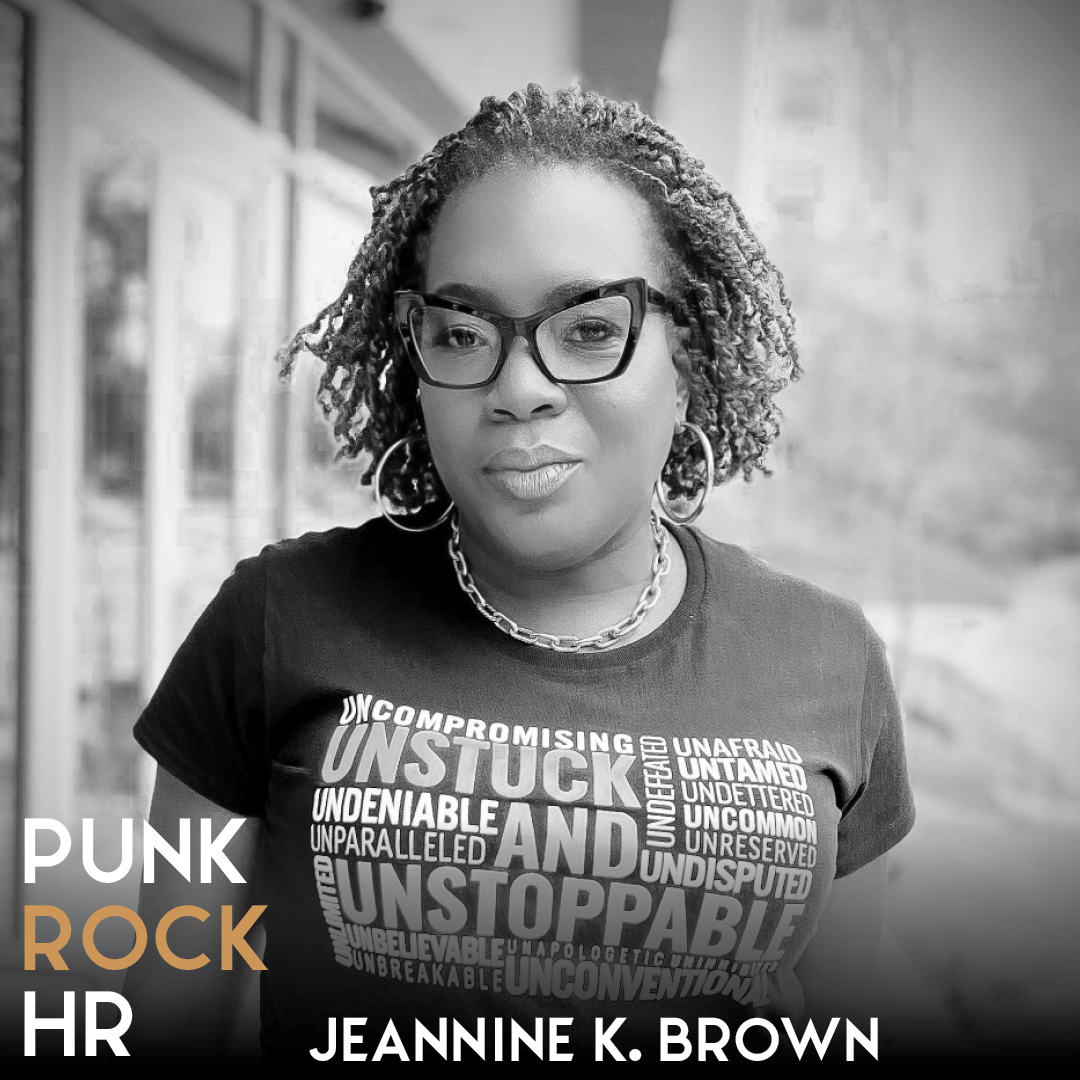
  • What Job Seekers Need to Know With Jeannine K. Brown

    What Job Seekers Need to Know With Jeannine K. Brown

    My guest on this episode of Punk Rock HR is Jeannine K. Brown. She is the Founder and CEO of Everyday Lead and the author of the book “Unstuck and Unstoppable.” Jeannine and I discuss the state of the job market, what job seekers should be doing and what to look for in a psychologically safe workplace. We also discuss how her book is helping professionals accelerate their careers. 

    Jeannine is an accountant by trade and started her career working for the Alabama Department of Revenue before moving into public accounting and, eventually, starting her professional development consultancy, Everyday Lead. There, she helps companies retain talent over the long term through “training and development, executive coaching and DEI strategies.”

    One of Jeannine’s biggest influences is her mother, who loved her co-workers and employer. And that’s driven Jeannine in her work. 

    “What I’ve been on a pursuit to do the majority of my career is just trying to find love and joy everywhere that I’ve been connected to — any institution, organization or corporation, including our clients,” Jeannine says.

    Punk Rock HR is proudly underwritten by Betterworks. The world’s most dynamic organizations rely on Betterworks to accelerate growth by supporting transparent goal setting, enabling continuous performance and learning from employee insights. Betterworks is on a mission to help HR leaders make work better. Discover how they can help you by visiting www.betterworks.com. 

    The State of the Job Market 

    The headlines tend to focus on layoffs, but there are still plenty of openings and opportunities in today’s job market. But how do job seekers know where to look? Jeannine says to start by examining your job role and how you can stay current on the skills, processes and technologies you need. “So if you are let go or if you decide to leave, you can find a place to go very quickly,” she says.

    Meanwhile, Jeannine believes that most employers do want to improve retention by figuring out what workers want. In particular, they’re to understand the youngest professionals — those ages 22 to 30

    “They’re a purpose generation. They want to be connected to the work. They want to be connected to you as their manager and their boss,” Jeannine says. “They want to have this kind of family-type relationship with the people in the workplace, but they want to do it all from home.”

    Creating a Psychologically Safe Environment for Ideation

    For teams to create and innovate, they need to feel psychologically safe — a term coined by Dr. Amy Edmondson, who’s also been a guest on Punk Rock HR. Jeannine’s work heavily focuses on encouraging and guiding organizations toward creating psychologically safe environments. 

    “Psychological safety is the ability to show up on a team and have open, honest discourse to disagree, to question, to admit mistakes without personal threat or jeopardy to yourself or losing your job,” she says. “It’s an effective means to really get people to really be their full selves at work.“

    Psychological safety is about individual relationships, but ideally it’s part of the culture, modeled by executive leadership and filtering down to all levels.

    “We start with the executives in exploring the conversations of psychological safety,” Jeannine says, “because there’s an assumption with them, often, that they forget what it’s like to be a staff, to be younger in their career or even be middle manager, when they believe that anyone can speak up because they give them permission. But we know that that is not true.”

    Developing the Skills to Accelerate Careers

    Jeannine’s book “Unstuck and Unstoppable” is a guide to help professionals leverage their value and accelerate their careers. It’s a passion project for Jeannine, who noticed how many people were focusing on technical skills and not enough on the “wraparound” skills that could propel their careers forward. 

    By “wraparound” skills, Jeannine is referring to a person’s ability to effectively communicate their value in the workplace. “Unstuck and Unstoppable” is grounded in people’s real experiences, struggles and aspirations.

    “What we wanted to do was make it practical. It’s not a book based on scientific research and hundreds and hundreds of surveys,” she says. “It’s actual strategies that I use to navigate my career in public accounting and that we use when we’re coaching women and men to get promotions. We focus on retaining people at their companies that they currently work for.”

    Jeannine has seen firsthand how the concepts in her book help people.

    “Every person that we’ve seen that applies these processes and ideas, they get promoted within their organizations,” Jeannine says. “They get increased compensation, more responsibility, and they feel more confident and more valued at work.”

    People in This Episode

    Jeannine K Brown: LinkedIn, Instagram, Everyday Lead, Unstuck and Unstoppable

    Transcript

    Laurie Ruettimann:

    Punk Rock HR is sponsored by Betterworks. The world’s most dynamic organizations rely on Betterworks to accelerate growth by supporting transparent goal setting, enabling continuous performance, and learning from employee insights. Betterworks is on a mission to help HR leaders make work better. Discover how they can help you by visiting betterworks.com today.

    Hey everybody, I’m Laurie Ruettimann. Welcome back to Punk Rock HR. My guest today is Jeannine K. Brown. She is the CEO of Everyday Lead and the author of the book “Unstuck and Unstoppable.” Jeannine is on the podcast today just to share her overview of what it’s like to be a job seeker in today’s market. What do job seekers need to pay attention to? What are the trends? And more importantly, how can you not be a job seeker and maybe find new and interesting opportunities within your organization?

    We also talk what it’s like to be a hiring manager, and how to retain people internally, and what you should look for when you’re out there looking for people and candidates and a breath of fresh air in the marketplace. So if you’re interested in a really great conversation about the world of work and the world of looking for a job, well, sit back and enjoy this chat with Jeannine K. Brown on this week’s Punk Rock HR.

    Hey Jeannine, welcome to the podcast.

    Jeannine K. Brown:

    Hi, Laurie. Thanks for having me.

    Laurie Ruettimann:

    Well, sure. I’m so glad you’re here. You’ve had this really amazing career journey, and you’re so helpful to tens of thousands of people, and I thought we can get started by talking about your origin story. Who are you? What are you all about?

    Jeannine K. Brown:

    I’m Gloria’s daughter. That’s what I always say. So I’m that first, and that’s how I spent the first 18 years of my life identifying with her. And it brings me so much joy to mention her because my mother loved her job. She loved the people she worked with, and she loved the organization, the company she worked for. And so that’s what I’ve been on a pursuit to do the majority of my career, just trying to find love and joy everywhere that I’ve been connected to — any institution, organization, or corporation, including our clients. And so my origin story started in Milwaukee, Wisconsin, and I’m an accountant by trade. Went to college for accounting, started my career in state government and then onto public accounting, and that’s what I’ve been doing.

    Laurie Ruettimann:

    Wait, wait. Do you still have a passion for public accounting?

    Jeannine K. Brown:

    I have a passion for the profession. So, I don’t practice anymore. But I am deeply rooted in the accounting and finance profession, working with public accounting firms, and sitting on boards related to the industry. So, deeply rooted. I just can’t see myself leaving. My people are there.

    Laurie Ruettimann:

    Well, I like a person who knows people and knows numbers and knows math. I think you bring that to the table. Why don’t you talk about the work you’re doing today? What’s your career journey like today?

    Jeannine K. Brown:

    So today I am the CEO and founder of a consulting firm called Everyday Lead. We are a professional development consultancy, and we help companies retain talent from college to retirement who love what they do in the companies they work for. And we do that through training and development, executive coaching and DEI strategies.

    Laurie Ruettimann:

    So you clearly like that job. You’re clearly talented at that job, and it gives you an overview of the economy from early careerists all the way through people who are mature in their career journey. So tell me, what’s the economy like out there right now? How are job seekers doing?

    Jeannine K. Brown:

    It’s interesting because CEOs, we are in group texts, I was in a group text this morning, and we were talking about layoffs. A large public accounting firm was just announcing that they’re doing about 3,000 layoffs. And the conversation went from, “Yeah, that’s an issue, but there are still a lot of job requisitions open out there.” So I think it’s a matter of your company might be laying off, but there are opportunities.

    One, to identify something within your company. Then, how do you stay at the forefront of employment in the company that you’re with, that you really enjoy working for? But then how can you stay abreast of where your profession is going — around skills and identifying the skills that are necessary. So if you are let go or if you decide to leave, you can find a place to go very quickly.

    When I look at the economy, that’s how I’m looking at it, from the vantage point of talent and how talent can move very quickly. And then the vantage point of hiring, the corporations hiring and how they can find great talent and bring them into their organizations or keep them and retain them.

    Laurie Ruettimann:

    Job seekers and workers are naturally cynical these days. They’ve been through a lot, a lot of ups and downs. And two things come to mind. Number one, there is this belief out there that many requisitions are open, but they’re open for show. They’re not open for truly filling.

    And then the second thing is that a lot of job seekers and employees believe that a company would rather pull talent externally into the company rather than promote from within. So what do you think about those two cynical, maybe realistic, sort of points of view?

    Jeannine K. Brown:

    They’re good points of views and I’ll say yes, no and depends.

    Laurie Ruettimann:

    Fair. And also the straight easy answer. Yeah.

    Jeannine K. Brown:

    Yeah. So I don’t think there is an easy answer to that. I hate to believe that companies would put out requisitions for roles that actually do not exist or are not open. I don’t think they really have the time for that. Am I going to hire somebody to do something like that? But I do think there’s an opportunity for companies to still continue to collect, create a pipeline of potential and future workers, and maybe they do that.

    Laurie Ruettimann:

    And that, I think, is what the concern is, that the requisition is open and that they don’t want to lose the headcount, but they’re not really serious about hiring. So I get it. Companies don’t have time to play games, and I like that perspective. 

    What about this idea that organizations would rather get talent externally than promote from within?

    Jeannine K. Brown:

    I don’t think they would rather do that, but I think sometimes they’re forced to. I think there’s an opportunity for companies to bring in new ideals. If someone has spent 10 years in financial services at a large bank, and now there’s another organization that’s coming, and they want to bring in those insights? And I think that’s what a lot of maybe, talent, they’re not looking at it from that perspective. So I think there’s a perspective of, “Hey, we want to bring in new ideas. It’s going to challenge, bring in new innovations, new ways to be creative and approach our market, our customers and clients.” And so that’s why they do that.

    I think this is also an opportunity for talent to constantly and consistently be in the marketplace, learning new things, being exposed to new conversations and ideas outside of their industry. So if I’m in the health care industry, I should go to a finance conference. If I am in the biomedical industry, let’s go to health care, go to another type of conference. And then I can be in the workplace talking about these new ideas, concepts, new technologies so that I can continue to be a value add within my existing organization.

    Laurie Ruettimann:

    Well, I’m definitely down with the trend of continuous learning. I think that’s one of the most important things we’ve actually discovered out of the pandemic that you do right by you and your family and your future by investing in your learning. And a lot of people took the time when they were at home to take online courses, go to LinkedIn Learning. I saw that happening, and I love that trend.

    I wonder, do you see any other trends in the marketplace right now, either from companies or job seekers or careerists, that are interesting to you? What’s cool out there? What do you see happening in the economy?

    Jeannine K. Brown:

    I think the biggest trend right now is ChatGPT.

    Laurie Ruettimann:

    Yeah. Oh, yeah.

    Jeannine K. Brown:

    Artificial intelligence is impacting how people get knowledge and how they respond to their customers. And I want to put a disclaimer out there, Laurie. I am not an expert. I’m like everybody else. I’ve been watching it on “60 Minutes.” I use it.

    Laurie Ruettimann:

    Oh, good old “60 Minutes.”

    Jeannine K. Brown:

    I use it and I’m learning it. We’re trying to figure out how to use it to serve our clients and even to make us smarter and faster at what we do. And so I think that’s one of the biggest trends right now. I think employees should be able to and can use that in ideation and looking at possibilities of what they can do and how they can work better, faster, smarter, together individually as individual contributors, as hiring managers and as teams.

    Laurie Ruettimann:

    I have a girlfriend who was just laid off from her job in human resources. In that industry, the profession of HR has been incredibly affected by layoffs. It’s ironic, because just a year ago, we were the saviors of an organization, right? Now they’re laying us off right and left. But what was fascinating to me is, we started talking and I said something about ChatGPT, and she said, “What’s that?”

    So we think it’s a trend, and I think you’re right, it is a trend. But I wonder what the discovery rate is on it because I think it’s kind of low. I think it’s not permeating into the average worker’s life just yet.

    Jeannine K. Brown:

    I think there are a lot of people who are just not deeply rooted in technology on a day-to-day basis of their careers or their lives. They’ve shunned it. They don’t think it’s important, and it’s not a generational thing. It’s not like the boomers or the Xers that are still in the marketplace are not doing‌ it. It’s throughout.

    I did a post about it on my Facebook page, and I asked how many people were using it. And like you said, there were a lot of people like, “I’ve never heard of that. What is that? What are you talking about?” And I didn’t give an explanation. I was like, “How many of you are using ChatGPT?”

    So people aren’t, but this is the differentiating factor, I think, with people who continue to add value in their organizations. They stay involved in these conversations around new technologies. They’re either the whistleblower: “Hey, it’s coming.” Or they’re the gatekeeper and trying not to use it, but I don’t think we can get away from it.

    Laurie Ruettimann:

    I wonder if you’ve had the opportunity to just teach anybody ChatGPT, like my girlfriend who was like, “What’s that?” I said, “Well, why don’t you go on there and create an account. It’s free, and ask it for the perfect margarita recipe.” She came back. She’s like, “Oh my God.” So I wonder if you had any of those moments.

    Jeannine K. Brown:

    I’ve had those moments. I was at a conference in February, and I was at a table. The women at the table had never heard of it. It was men and women at the conference, I just happened to be at the table with all women. And none of them had heard of it. I pulled out my computer and showed them, and I just put in there, “Hey, give me 10 topics that I could do social media posts on.” And they were blown away.

    Laurie Ruettimann:

    It’s crazy. It’s so fun to see people have that moment. It reminds me of when I had my first moment of discovering Twitter or getting on LinkedIn, and I was so excited for it. And all these years later, almost 20 years later, I’m like, “Oh, dang. These social media platforms stink.”

    I wonder if there’s going to be this moment 20 years from now where we’re like, “Oh, I’m so sick of generative AI.” I don’t know. What do you think?

    Jeannine K. Brown:

    We might. It’s interesting as humans, how quickly we become exhausted by things that can actually make our lives better and communicate, but I think anything that’s misused — so I think the thing with social media is that now we realize that people really do think like that. And so I think if we can keep it as a tool that makes us smarter, makes us better and faster, more productive in what we do, both in our individual lives. How can I bring people into my home and give them a great experience with a great margarita recipe, but at the same time, how can I make my teams more efficient? How can we manage our meetings a little bit better using technology? And I think it’s important for us to stay on top of these new, evolving ideas in the workplace.

    Laurie Ruettimann:

    Well, just as job seekers have to focus on continuous reinvention, like learning, growing, thriving. I think companies are trying to some extent to do that. They want to keep and retain workers. I do see still an exodus of people leaving companies. Like to your earlier point, people still quit their jobs. They still leave. They still bet on themselves.

    I’m just wondering, are companies thinking about employee retention? And if so, what are some of the challenges and what are some of the things they’re doing?

    Jeannine K. Brown:

    I think companies are thinking about employee retention. They might be focusing more heavily on the incoming pipeline. How do we get younger workers, and we appeal to them? I think the biggest challenges that they’re dealing with in that generation that’s post-college, maybe 22 years old to 30, is really retention and trying to understand that worker. What’s important to them, and not having envy, jealous or malice toward how they want to show up in the workplace and what’s important to them.

    They’re a purpose generation. They want to be connected to the work. They want to be connected to you as their manager and their boss. They want to have this kind of family-type relationship with the people in the workplace, but they want to do it all from home.

    Laurie Ruettimann:

    Yeah, they do.

    Jeannine K. Brown:

    So that’s one of the bigger challenges that I hear a lot. What I encourage our companies to do is to invest in their employees. And I love the fact that you used that earlier. People were investing in themselves by taking courses. When an employee feels as if the company is making an actual tangible investment in them, their development, their wellbeing, they are more likely to stay with the organization. Because we know individuals do not leave their company, they leave their manager.

    Laurie Ruettimann:

    Well, that’s 100% true. And I think about this younger generation of workers, and they, you know, born for the most part at the very end of the 20th century, the beginning of the 21st century. And they have seen a weird version of capitalism, maybe a better version of capitalism, who knows? But they’ve seen promises that we care about you, bring your whole self to work, be authentic. But they’ve also seen layoffs. They’ve been told you can work from home, and now they’re being told, “No, no, no, no, no. There’s no collaboration at home. You got to get back in the office.” 

    And frankly, it’s got to be super-confusing for them. And also super-confusing for hiring managers who really don’t enact culture. They enact microcultures, but they don’t own the broader company culture. I think it’s confusing for younger workers, hard for hiring managers. I just wonder what the solve is for that. Because we’ll say, “Oh, it’s about transparency, and it’s about communication.” But how many hiring managers are going to be like, “I don’t effin’ know. Just show up. We’ll work on it together.” I think it’s just a miasma of confusion, but I don’t know. Do you have a reaction to that?

    Jeannine K. Brown:

    I do. I think we need to be honest and clear, and then be willing to come back and say, “You know what? We thought about remote work. We’re not realizing it in the way that we expected it.” And I think that’s OK because, like I said, this generation — and everybody — wants honesty. I think if we can in a community at work, solve the problem — what happens is our more senior leaders are trying to solve the problem outside of communication with their staff that’s responsible for delivering. That’s where the disconnect is, because the more senior leader is leaning back onto what worked for them 20, 25 years ago.

    Laurie Ruettimann:

    And feel like it’s their privilege to be able to do that, as well. Like, “I’m a senior leader. I got here for a reason, so I’m just going to do more of what I know.” I think these younger workers are like, “Stop it, please.”

    Jeannine K. Brown:

    Our team is remote. Because they’re all younger than I am and work faster than I do and come up with great ideas, I ask them, what did they want? They want to continue to do remote work. But every other month or every six to eight weeks, they want us to come together as a team, spend time together talking about ideas and what’s going on for the next business cycle, if it’s the next eight weeks, the next quarter, because that’s where they feel most connected through ideation. They don’t want to execute in a conference room. They want to ideate together. And I appreciate that.

    Laurie Ruettimann:

    Well, and in order to ideate, you need a psychologically safe environment. And you talk about this, you write about this. You are a true thought leader in this space. So tell me a little bit about psychological safety and how it applies to the workforce today.

    Jeannine K. Brown:

    So psychological safety, I wish it was a concept that I had come up with, like the actual words and the study. But we have to credit Amy Edmondson for that. And the work that she did at Harvard and with Google around what’s important to teams to be more innovative and creative and more profitable, and it’s psychological safety. And psychological safety is the ability to show up on a team and have open, honest discourse to disagree, to question, to admit mistakes without personal threat or jeopardy to yourself or losing your job. It’s an effective means to really get people to really be their full selves at work. To contribute at high levels, to call out bias and unfair treatments within a process that is supportive and to create high-performing teams where all people can thrive and feel a sense of belonging in the workplace.

    Laurie Ruettimann:

    Amy Edmondson was a guest years ago on Punk Rock HR. And offline, I asked her, and I wish I would’ve had this recorded, “Hey, do you think there are psychologically safe workplaces? Or is it just psychologically safe relationships? Because I think a workplace is too broad. It’s the relationship.” She said, “It is the relationship, but it’s also the workplace.” I’m like, “Eh.” Because you can have a manager where you have a psychologically safe relationship or even a director, but maybe you can’t have it in the broader company. I don’t know, where do you fall on that? It’s a weird and quirky take, but I will die on this hill.

    Jeannine K. Brown:

    I think it’s both. And the reason is, and how we execute it. We start with the executive leaders when we talk about psychological safety. And we get an opportunity to educate them on how to do it and the why behind it, and focusing on high-performing teams. Because we know that high-performing teams are diverse, inclusive, free from bias and free — I will put in air quotes — and psychologically safe.

    So we start with the executives in exploring the conversations of psychological safety because there’s an assumption with them often that they forget what it’s like to be a staff, to be younger in their career or even be middle manager, when they believe that anyone can speak up because they give them permission. But we know that that is not true. And then we move into the middle managers, because that’s where all the real information about your culture lies.

    Laurie Ruettimann:

    You know Jeannine, I’m a job seeker. I’m like, “Where’s that psychologically safe workplace? Because it’s not where I am.” I wish we had a list of companies that were ranked and rated, because I think people generally don’t know what companies have a psychologically safe culture. Can you name a company? Do you know six?

    Jeannine K. Brown:

    I cannot name one company, even after we’ve done the training that we’ve done. Because companies don’t slow down often long enough to really practice this and make sure that the entire ecosystem of their organization is doing the same thing. That direct, open and honest means the same thing for everyone throughout the entire 12,000-plus employees. And so I think it’s a concept that we want to continue to talk about. It’s something we want to continue to educate organizations and hiring managers on and focus on the benefits of that.

    Because if you do have a psychologically safe space, then you don’t have to worry about these HR issues. They constantly slow down work, and they cost us money in lawsuits when people leave. And then also cost us our brand on platforms like Glassdoor and Twitter when your employees are talking bad about your company and your leadership.

    Laurie Ruettimann:

    100%. You know I’m a job seeker, and I’m like, “All right, there’s no list of psychologically safe work environments.” What do I ask when I go on an interview? How do I test this and make sure that I’m not jumping from one toxic company to another?

    Jeannine K. Brown:

    You got to be really direct with the hiring managers, and don’t feel, again, that you’re going to lose something. I would ask them, “What does ideation look like?” So do something soft because people want to talk about, “Oh yeah, we get together and we do all of these things.” And then I would ask, “What does discourse look like in your organization? How do you feel when people are disagreeing? Who manages and mediates a disagreement in a team meeting?” And then I would ask, “Hey, do you allow people to disagree with you? How do you feel about that?”

    Laurie Ruettimann:

    Oh, I love those questions. Those are good dating questions, too.

    Jeannine K. Brown:

    What? I almost said, “Amen.”

    Laurie Ruettimann:

    I love that so much. Well, we want to hear more about your amazing book, “Unstuck and Unstoppable.” So I want to know what inspired you to write it and what readers can expect when they pick it up at Barnes & Noble or Amazon or wherever they get their books at — hopefully a small business. That’s my dream. But what can they expect from your book?

    Jeannine K. Brown:

    Thank you for bringing up the book. It is my passion project. And what inspired me to write the book was I recognized that a lot of men and women, but particularly women, focus so much on mastering the technical aspects of their profession. So being a great accountant, being a great nurse, bringing all of these different things, but they were missing the wraparound skills that really help you accelerate your career. And I was traveling around speaking at women’s leadership summits and brunches, and I was watching how people were taking notes. I thought they were going to be eating the French toast, and they were just taking vigorous notes of the topics and coming up and saying, “I’ve never heard anyone talk to me. Never say this about me. Never tell me how, and give me an actual process of how to communicate my value in the workplace where I feel comfortable and I don’t feel like I’m bragging.”

    And so I wrote the book for that reason. The response has been amazing and overwhelming. And what we wanted to do is make it practical. It’s not a book based on scientific research and hundreds and hundreds of surveys. It’s actual strategies that I use to navigate my career in public accounting and that we use when we’re coaching women and men to get promotions. And again, we focus on retaining people at their companies that they currently work for.

    And every person that we’ve seen that applies these processes and ideas, they get promoted within their organizations. They get increased compensation, more responsibility, and they feel more confident and more valued at work. And so it’s a passion project, and it goes back to how I introduce myself. It makes me focus on how much my mother loved her company, her career and the people she served in that work. That’s what I think people get when they finish the book and they apply the techniques.

    Laurie Ruettimann:

    Gloria sounds like an amazing woman, a wonderful mother, and I’m so glad you’re here today to talk about all this good stuff. Very helpful, very practical. If people want to figure out who you are and how to work with you, can you recommend your best website? And do you accept invites on LinkedIn?

    Jeannine K. Brown:

    We do accept invites on LinkedIn. We also accept them on Instagram, as well. But you can reach me and my team on our business website at everyday-lead.com.

    Laurie Ruettimann:

    Well, amazing. We’ll include all your good stuff in the show notes. And once again, I want to say thanks again for being a guest on Punk Rock HR.

    Jeannine K. Brown:

    Thank you, Laurie. It’s been a blast.

    Laurie Ruettimann:

    If you’re interested in learning more about today’s show, you can visit punkrockhr.com. There you’ll find show notes, links, resources and all the good stuff.

    Now, that’s all for today. Thanks for joining us, sharing this episode and leaving thoughtful comments on Instagram and LinkedIn. We appreciate your support, this and every week, on Punk Rock HR.

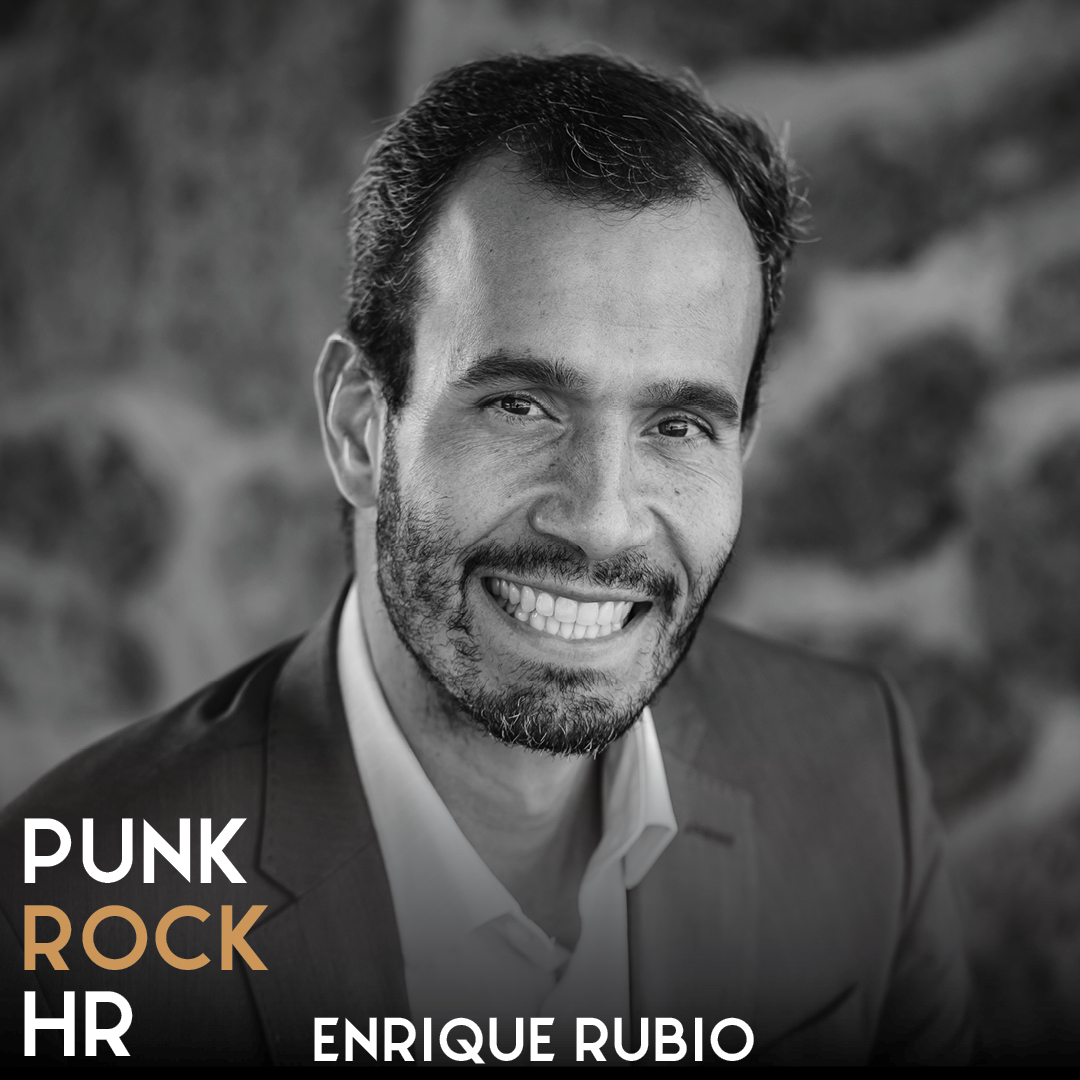
  • Why HR Leaders Are Business Leaders With Enrique Rubio

    Why HR Leaders Are Business Leaders With Enrique Rubio

    My guest for this episode is a dear friend: Enrique Rubio, founder of Hacking HR. In this conversation, Enrique and I discuss how he got started in HR, why HR leaders shouldn’t overinvest in technology, and why a shift in mindset can help HR leaders see themselves as business leaders.

    Enrique started his career as an electronic engineer before shifting to HR. In 2017, Enrique founded Hacking HR to bring the world of HR and technology together. 

    But over time, Enrique realized that the Hacking HR community wasn’t primarily focused on this combination of tech and HR. He’s evolved the mission of Hacking HR to explore topics such as culture, diversity, mental health, and well-being — with technology as a secondary focus.

    Punk Rock HR is proudly underwritten by Betterworks. The world’s most dynamic organizations rely on Betterworks to accelerate growth by supporting transparent goal setting, enabling continuous performance and learning from employee insights. Betterworks is on a mission to help HR leaders make work better. Discover how they can help you by visiting www.betterworks.com.

    The Origin Story: Combining Tech and HR

    Enrique didn’t plan to go into HR, and it took a negative experience — getting fired — to pique his interest. When that firing occurred, he asked for an explanation from the HR practitioner, whom he considered a friend. But the HR representative wouldn’t provide any information

    Enrique asked, “What is HR?” and set out to learn more. “I discovered the possibilities of HR to do better and more. I said, ‘Well, maybe this is an interesting space for me to get into,’” he says.

    Enrique’s first HR role was in HR tech, combining his two big professional interests. What he’s learned in the years since is that HR, just like any other job in a company, doesn’t have to be perfect. Everyone makes mistakes.

    “The reality is that, yes, I’ve seen great HR people not getting it right all the time,” Enrique explains. “But what they have is something really awesome, which is, they just come forward and say, ‘I made a mistake, and I’m sorry for this.’”              

    Remaining Human-Centric With HR Tech

    HR tech has exploded in popularity over the past ten years, and it seems like there’s a new HR tech product every month that promises to improve processes. Many HR departments are excited to get new software but risk overinvesting in the wrong things.

    Enrique says that companies too often rely on ‌tech to solve problems instead of implementing tech to empower employees. He shares an example of an HR leader who acquired a tech solution to support mental health in the organization. The problem was that only 10% of employees used it.

    “I think HR has to be very, very savvy to have deep conversations about the role of technology in the workplace, and what it is meant to do, and engage with other champions in these conversations in the organization,” he says.

    To avoid overinvesting in tech, Enrique suggests that HR practitioners have deeper conversations about technology’s role in the workplace, especially with managers and front-line employees. Figure out what they need to be more efficient and what technology supports their work.

    “You have to make sure that your processes are right, and then you have technology,” he says. “Once again, technology’s the last step in the process.”

    HR Leaders Are Business Leaders

    Enrique sees too many HR professionals view themselves as separate from the business — as if there are HR leaders and business leaders. Too many HR pros are in the mindset of having to fight for a seat at the table, even when they’re already there. HR leaders are business leaders, and they need to change their mindset. That starts with believing that HR is a “value-creating, revenue-generating function” rather than a cost center.

    “You have to believe that you are creating value for people and the organization,” he says. “That you are solving problems; that you are a business leader, and then you find out how to make it happen.”

    At Hacking HR, Enrique helps reinforce this idea in everything the community does, including the recent HR: The Trailblazer event. In fact, he argues that HR has a uniquely powerful and insightful view of the business.

    “We are sitting at the intersection of people operations and business operations, and that’s a unique vantage point that we have in there,” Enrique says. “You have marketing, sales, IT, finance people, very engaged in their own kind of technical field, in their own daily technical grind. We see what they’re doing, but we also see what’s happening everywhere else with the people in our organizations and hopefully with the people across our industry.”

    People in This Episode

    Enrique Rubio: LinkedIn, Twitter, Hacking HR Website, Hacking HR LinkedIn

    Transcript

    Laurie Ruettimann:

    Punk Rock HR is sponsored by Betterworks. The world’s most dynamic organizations rely on Betterworks to accelerate growth by supporting transparent goal setting, enabling continuous performance and learning from employee insights. Betterworks is on a mission to help HR leaders make work better. Discover how they can help you by visiting Betterworks.com today.

    Hey everybody, I’m Laurie Ruettimann. Welcome back to Punk Rock HR. My guest today is Enrique Rubio. He’s the founder of Hacking HR and a dear friend who likes to stir things up and think big about the world of human resources, so that’s what we’re talking about today. We’re talking about processes, technologies, community and how HR can truly be seen for the business leaders that they are.

    Enrique has an engineering framework that he brings to the discussion, which I think is very interesting, and he also is an advocate for research-based approaches in the world of human resources. So, if you’re like me, show me the money, how does this all come together? How does it work? How should it work, and how can we do better? Well, sit back and enjoy this conversation with Enrique Rubio, the founder of Hacking HR on this week’s Punk Rock HR.

    Hi, Enrique. Welcome to the podcast.

    Enrique Rubio:

    Laurie, thank you so much for having me. I’m excited about the conversation.

    Laurie Ruettimann:

    Well, it’s a pleasure to speak to you again. It’s been a minute. So, for all of those who don’t know who you are and what you’re all about, can you tell us a little something about the world in which you live?

    Enrique Rubio:

    Yeah, absolutely. Well, my name is Enrique Rubio, and I am the founder of a global community of HR people called Hacking HR. I created this community at the end of 2017. My original mission with this community was to bring a little bit closer the worlds of HR and technology. I have those two backgrounds. I am an HR practitioner, and I am an electronic engineer so I worked in both areas. And I wanted to bring those two worlds together but over time, I discovered that even though technology is important, it’s not what was becoming my main driver or the main driver of the community that I was trying to create.

    So ever since, we have evolved, and now we actually talk more about the stuff that is not technology, like culture, diversity, mental health, wellbeing — and we talk a little bit about technology. So, completely flipped this on its head. That’s who I am, and I created this community just because I believe in the power of HR to become a business leader.

    Laurie Ruettimann:

    I’m thrilled to have you here, and I’m actually surprised when I met you because you are an optimist, and I don’t know how you do it. Because number one, being a community builder means you’re in the weeds, right? You’re in the trenches. You’re actually doing the work of connecting people. Furthermore, you’re doing it around the world of human resources, which has never been fraught with more challenges than right now. So, how do you retain your optimism in this crazy world of HR?

    Enrique Rubio:

    I think it’s like running, right? I know this will resonate with you because you also are a runner. I’m a competitive runner, and people ask me all the time, “Do you always want to run?” and the answer is no, I don’t always want to run. Some days I don’t want to run, but I just get out the door and I get it done because if I think too much about it, I don’t do it. What drives me to go out the door when I don’t want to run is the discipline to get it done rather than the motivation to get it done.

    So, it’s the same principle here. Am I motivated? Am I optimistic every day? No, I am not motivated and I am not optimistic every day about work or about HR, but I just get done what I need to get done because I am disciplined about the community that I’m trying to create because I believe in it. So, I keep my eyes on the prize and in the day to day — kind of like being in the weeds, like you said before, in the day-to-day grind — I know some days are awesome, some other days are like, “Fuck, man. I mean, why do people have to make this so hard?”

    But then I think, “All right, doesn’t matter what happens today. You’re building, you’re building. One day at a time. You’re building, you’re building.” That keeps me very disciplined. So, it’s more than being optimistic every day. It’s keeping my eyes on what I ultimately want to accomplish and knowing that the strength of that kind of purpose will get me going through the days in which I am not necessarily motivated or optimistic, but I try to be mostly motivated and optimistic in every other day.

    Laurie Ruettimann:

    You definitely are. I wonder if you can make the case for us why HR matters now more than ever and why it’s important and why even when it’s tough, we should stick with it, we should believe in it. Because as you know, Enrique, I want to burn it all down and rebuild it. So, why don’t we burn it down? Why should we continue to invest in it?

    Enrique Rubio:

    Yeah. Well, I think everything is about people. I’ve been thinking about this for a long time. I think everything is about people. That’s why I got into HR in the first place. I love technology, by the way. Part of my background — I am an electronic engineer, like I mentioned before, and I worked for many years in telecommunications, just technology, but still, I believe everything is about people.

    Laurie Ruettimann:

    Why did you get into human resources? I don’t think I’ve heard that origin story, and I’ve known you for a long time.

    Enrique Rubio:

    Two things, right? It’s driven by me, but at the same time, I fell into it. I had a very negative experience with HR, well, many of them, but one of them was very negative. I got fired from a job a long time ago, many, many years ago, and the person from HR, whom I considered to be my friend, didn’t have an explanation for me of why this was happening. It was just a small family company. I said, “Not only should this person have kind of interceded for me in this case, not only because I’m her friend, but because it was the right thing to do, and they didn’t do it.” All I thought about was like, “What is this HR thing, anyway? Let me just find out more about this HR thing.”

    I discovered what HR does. I discovered the possibilities of HR to do better and more. I said, “Well, maybe this is an interesting space for me to get into.” As I was thinking about that, I got a job offer doing HR tech work, combining my two backgrounds — sort of my passion for just getting into HR and applying to jobs in HR, but also my technology background. Well, the rest is history, right?

    I mean, I got into HR, I started in the intersection of technology and HR, and now I do all of these things, but that’s how I got into HR. So, the epiphany came from a negative experience and realizing, “Wow, HR doesn’t have to be this. HR can be more than this.” That’s why I got into this.

    Laurie Ruettimann:

    Yeah. That certainly makes sense to me. I didn’t understand that you had had this negative experience, which I think is even more authentic, right? You’ve had the experience of HR at one extreme, and you believe in the possibilities of what it could be. Have you seen good HR in your experience anywhere?

    Enrique Rubio:

    Yeah, there are very good HR people. When I say HR, I don’t mean they get it right all the time, but that’s OK, because we don’t have this expectation from anybody else. I mean, nobody would expect any CEO, any person in sales, any person in marketing, any person in IT, any person in finance to get it right all the time.

    I don’t know, by the way, why the hell did we create in the world this expectation that HR has to get it right all the time, right? But the reality is that, yes, I have seen great HR people not getting it right all the time, but what they have is something really awesome, which is, they just come forward and say, “Man, I fucked it. I made a mistake, and I’m sorry for this.” We learned, and we set up the guard rails so that this doesn’t happen again, and we just continue. Tomorrow, we will do it better.

    So, they admit when something goes wrong, they realize that people may have been hurt in many different ways by their mistakes, and we just move on. So to me, yes, there are great HR people out there, but especially what makes them great is not not making mistakes, is realizing the power they have to just say, “I messed it up, and I want to do it all over again with now the lesson learned in my portfolio. Now I have that extra tool in my toolbox, and I promise that I won’t do it again.”

    Now you get on the other extreme of that, which is ironic, the people who get the HR thing right, but they suck as individuals. They are awful people. They may be great at processing transactions, they may be great at paying people, they may be great at having an awesome relationship with the CEO, but when you want to talk to them, they don’t hear you, they don’t have your back, they don’t recognize their mistakes, et cetera, et cetera, et cetera. So, they can be technically good, but they are not exactly what I define as a great HR person.

    Laurie Ruettimann:

    I think there’s this third category of HR professionals who struggle in that they forget that they’re HR people, and they come from a certain proud stock of history, and they overinvest in technology. They almost are ashamed of where they came from, and they’re like, “I’m not like the other HR people. I’m now into tech.” Or, “I’m now into finance.” I think there’s something really sad about that. People who are embarrassed of their legacy, embarrassed of their roots in human resources, and I’m sad for them because I think I was that for a long time. I’m like, “Oh, those other people over there are terrible, but I’m great.” 

    I see that now so often in this elite level of human resources professionals. They don’t even want to be called HR. They’re business partners or they’re people operations, and there’s just a weird level of shame that kind of exists. I don’t know. Have you seen that out there on LinkedIn or in communities, and what do you think about that?

    Enrique Rubio:

    That makes me think of — stereotypical, but sort of the example that I’m going to use — of how somebody like Mark Zuckerberg, one of the richest persons in the world, he dresses with a T-shirt. Yeah, it may cost $2,000, but it’s a T-shirt and a pair of jeans and sneakers. Then you find somebody who doesn’t have that much money, or money at all, and all these gold chains and rings and the most expensive shoes in the world and the Louis Vuitton whatever. I don’t even know much about those things, by the way.

    Laurie Ruettimann:

    Trying to look the part. Yeah. Yeah.

    Enrique Rubio:

    Yes. Trying to set themselves apart on the outside looking like something that it’s not what we value in them, but maybe what happens is that they don’t, perhaps, believe in the real value they bring to the table, and they need to create all this fake personas, all this fake image about what they are or who they are. They bring all this technology, and they say, “Look how fancy I am for bringing this company or that company.” And we do this — let me give you actually one example of this, Laurie. I talked to this HR leader once about the technology, which I’m not going to mention that he was using, for something about mental health. 

    I asked him, “Are people using your mental health tech for the purposes that it was supposed to be implemented?” He said, “No. Probably about 90% of the people are not using it.” I said, “Well, that means that the technology means shit then, because if you have it in there and nobody’s using it, why do you have it in the first place?” They were like, “Well, we thought it was the technology brand name behind it and people trusted it and blah, blah, blah.”

    It’s kind of like a similar case in here, right? You think about people wanting to implement technology, and technology is to enhance what we should be doing, but it’s not to replace sort of the bottom line of what it is that we should be doing.

    Laurie Ruettimann:

    Well, I love that thinking because, so often, we can see it in our daily lives, right? We go to the grocery store and we go to the self-checkout and the self-checkout’s not working. What they’ve designed is technology and oriented people around it instead of thinking about people and implementing technology to make us get in and out of the grocery store faster, right? But how often do technology companies feel empowered to be consultants and leaders and guides, right? They want to solve with tech instead of solving at the human level.

    Enrique Rubio:

    That’s another KPI. Yeah. That’s another KPI.

    Laurie Ruettimann:

    Yeah. Yeah. Yeah. But how do we change this model?

    Enrique Rubio:

    Well, first of all, we need to look at what venture capitalists are investing in and how they’re measuring this success, right? We know success for them means how much money you’re making. The more you’re making, the more successful you are. Then we go to cases like the one that I mentioned before, of this leader telling me 90% of people are not using the tech for mental health in our company.

    So, that means that the real change that could have happened didn’t actually happen. At the end of the day, what’s happening here, you just implemented technology, you sold it, you have the money in your pocket, but it didn’t make any change. So, how do we do this? I think HR has to be very, very savvy to have deep conversations about the role of technology in the workplace, and what it is meant to do, and engage with other sort of champions of these conversations in the organization.

    Going back, actually, I want to mention something here, Laurie, to the supermarket sort of example, which is fascinating by the way. Yes, I want to go faster. I like to be generally in the checkout line by myself, but I like the experience in a supermarket. I like to walk around and see things and touch things and whatnot. 

    There were these people, I think it was in Sweden or Finland, I can’t remember, and their local supermarket, or their local grocery stores, they automated part of the thing and now they have self-checkouts and less cashiers. So, when they interviewed the people in this town, which were mostly elderly people in the town, a retirement community, they said, “Now, you know what? I can do that, and I can go faster, but I miss having the conversation with the cashier. You’re just talking about our days.” Right?

    All I’m thinking is, the tech succeeded, but nothing really changed in the bottom line. Actually, ended up making it worse for the people who wanted to have a different experience out of their interactions with cashiers and not just going through their self-checkout.

    So, the same thing applies here, right? You want to do something about mental health. Is it enough to bring an app that connects people with a potential coach? I don’t think so. I don’t think that’s enough. You have to have better conversations, you have to understand better to make sure that your processes are right, and then you have technology. Once again, technology’s like the last step in the process.

    Laurie Ruettimann:

    Well, I love this example of mental health and mental wellbeing, and I just want to stick with it for a moment because I’m thinking about technology in this space. Years ago, the EAP was disruptive. The EAP was innovative, and at its height, the EAP has a utilization rate of 15% in most organizations. Everybody goes to the medicalized processes, but they don’t use the EAP, and back in the day, that was revolutionary.

    Not even in wellbeing, but I wonder if there’s technology out there that looks really flashy right now that, five or 10 years from now, we’re going to go, “Well, that was stupid.” Do you have any predictions in HR about anything we’re doing in terms of tech where we’re hyping something and we’re like, in the future, we know it’s going to be dumb?

    Enrique Rubio:

    I think a lot of the things that we do ‌with technology, they go through that. Especially in the last few decades, they go through this hype cycle. Oh, like ChatGPT for example, which is the new thing. ChatGPT-4, which is videos and images, blah, blah, blah. There’s just gigantic hype. Everybody wants to be in ChatGPT, and everybody’s using it. I think that in three, four, five years from now, maybe even less, we’re going to be like, “All right, now it’s mainstream.”

    What we’re going to find out is that Google, for example, will be punishing SEOs created by ChatGPT. Now we’re going to be rehiring the creative people that were supposed to be partially replaced by these automated systems. We’re going to be hiring them again to either check what ChatGPT is doing or to rewrite it or to write it from scratch altogether because we’re finding out that as we do technology, there are these hypes about technology. We create some guard rails that then prevent the full realization of the potential of that technology the way it was thought about in the first place. So, I think maybe everything that we’re doing with technology right now has an element of hype. Maybe I am wrong, but I think we’re going to see ChatGPT and all other technologies sort of in the same way.

    Laurie Ruettimann:

    I love where this conversation is going because I’ve been thinking a lot about people analytics and data analytics. Because before the pandemic, that’s all people could talk about like, “Oh, let’s strengthen people analytics and let’s hire data analysts.” Then during the pandemic, we forgot about that and we’re like, “We want to get more human. We want to tell stories.” As if the two are mutually exclusive.

    So, I just wonder in a couple years from now, if we’ll have kind of a reckoning around data and analytics and go, “God, we got that whole conversation wrong, and here’s what we’re going to do instead.” I mean, that was just one thing that was so crucial, so important, so full of hype, and now nobody is talking about people analytics, right? Upskilling, reskilling, new skilling, that was a big thing, too, during the pandemic. Nobody is talking about new skilling anymore. That had a cycle of six months. So, I don’t know. I mean, it’s just fascinating to me.

    Enrique Rubio:

    You know what happens, and this is one of the things that I don’t like about HR by the way, but it’s not something that I don’t like about HR as in HR people and practitioners, it’s something that I don’t like about the field of expertise that we called HR. There’s no real research about HR. There’s no real scientific rigorous research on HR. What happens, and you find it in these so-called gurus and experts in the HR space, all they end up doing is they send out a survey and they ask — the same HR people they are trying to change — they are asking them what do they think the future will look like? They collect all these responses and 11,000 people, 20,000 people, that’s what they say by the way, whatever it is, say that it’s 50,000 people in HR currently. They say, “Well, I think next year’s going to be all about people analytics.”

    You’re asking that question to the very person who is not using people analytics today, doesn’t know yet the power, for example, of people analytics, and you’re asking them what they think the future will look like. These experts put out a research saying, “The future of HR is people analytics.” That is not research, that is not science. That is a survey that you packed in a beautiful report and now you’re putting it out.

    Now you get other fields of expertise where there’s science, there’s behavioral economics, psychology, neuroscience applied to sales, to marketing, even to technology, and they are putting a lot of money into those fields because they want to truly understand customer experience, whatever it is. Then they translate that into actionable insights but not necessarily because they’re asking people what the future will look like, but because they are assessing from a scientific point of view what it could look like. 

    I don’t feel that’s happening — not just that I don’t feel, it’s not happening in HR — and that to me is very, very dangerous. Very dangerous, because we continue to listen to the same people telling us the same story.

    Laurie Ruettimann:

    Do you have any theories as to why? Because I think one of the reasons why we don’t have evidence-based HR practices is because HR is a big hodgepodge of a lot of different duties, responsibilities, philosophies, ways of operating, and there’s no real, just from the start, concise definition of what’s included in the world of human resources.

    So then, how can you create these fields of expertise and create rigor around these domains if HR is defined differently from one consulting firm to one pharmaceutical company to one manufacturing organization. There’s no consistency in even understanding what it means. I think that’s because HR is one big compromise at many organizations, but I don’t know. You tell me. Why don’t we have any rigor?

    Enrique Rubio:

    I’m going to say probably that’s a valid reason, and I think definitely it has something to do with the lack of rigorosity in HR. But, at the same time, perhaps there’s another component which is “the show me the money” component. Are we a cost center or are we a revenue- or value-generating function? Of course, I know the answer to that. I know the answer is we are value-creating, revenue-generating function.

    Laurie Ruettimann:

    Yeah, where? Where are we?

    Enrique Rubio:

    We are not there yet. So, in the spectrum between being a cost center on the lower end of the spectrum, and on the other end of the spectrum, a highly valuable, highly revenue-generating function, I think we are way before the half point in that spectrum. So, as long as a business leader or researchers or academics or scientists don’t see that we can make a difference, that we can make money for those organizations, I don’t think there’s going to be a lot of investment in us. And I will continue to see the same “gurus,” experts talking about the same things that they have been talking about for so many years.

    Laurie Ruettimann:

    What’s so interesting to me, and I think it’s just indicative of our industry in general, is that we talk about business leaders and we talk about HR professionals as if they’re separate. Talk to me a little bit about this. And how do we bridge the gap and make those HR professionals at least see themselves as the business leaders that they really are?

    Enrique Rubio:

    Yeah. Well, I’m going to begin by answering that question with something that I’ve been saying more recently because I think now I’m in a place where, given the community that I built, perhaps my voice is more respected than when I started doing this. You have some of this — I want to go back to some of this, what experts have said. They present operational frameworks for HR and they say, “Well, this is the newest operational framework. This is the newest operational system. This is the newest of ways of methodologies for HR to work on and blah, blah, blah.” 

    I value that, don’t get me wrong. I say, “All right, this is cool to have.”But you know what’s never going to change? Those operational frameworks or systems or models will never change the value that we add if we continue to keep the same mindset. Because what can happen is, you have the most advanced operational model in the world. As an agent practitioner, you continue to see your own work as a transactional work. So what’s going to end up happening is that that framework, you will turn it into a transaction because you cannot deliver its full value.

    So what do I think needs to happen? There’s a pre-step that none of these people talk about, and I talk a lot about this in what I do in Hacking HR, which is we need to change our mindsets. We need to believe that we are business leaders with a people hat. That we are business leaders that are resolving complex business challenges with people solutions. Just believing in that, even if you don’t know how to do it yet, it doesn’t matter, but if you believe that that’s true, then the way you approach your work, the way you approach your relationships, the way you build your influence, the way you tackle a challenge changes completely.

    Then, only then, can those operational models make a little bit more sense, but you have to have that pre-step already kind of embraced, meaning you have to believe that you are not just an HR person running payroll or hiring or firing or enforcing policy. You have to believe that you are creating value for people and the organization, that you are solving problems, that you are a business leader, and then you find out how to make it happen. But this pre-step has not happened — I’m going to say, overgeneralizing here, it hasn’t happened for most people in HR yet. That click, that mental flipping the switch hasn’t happened yet.

    Laurie Ruettimann:

    Hundred percent agree, and I think that may be the value of what you provide, at least some of the value with Hacking HR. You have a community where people are beaten down every day and told “You only do HR,” and the power of a community like yours is that people can come together and get language, get reinforcement, get data if they can, or at least hear other stories from people who are operating as business leaders with people expertise, but I don’t know. Tell me, what else does Hacking HR do to help reinforce that notion that you’re a business leader?

    Enrique Rubio:

    We talk a lot about it, all the time, in everything we do. Just a couple of weeks ago, we had an event, a weeklong event called HR: The Trailblazer, and it’s sort of the fundamental behind that event, which is the second time that I do it, by the way. I did it last year, too. It was the idea that HR can be, has the potential to be — we’re not there yet — but we have the potential to be the leaders that are marking the way forward for people, for organizations into what some people call the future of work. Some others call it the new reality of work, some others call it the now of work. Whatever you call it, I feel, and I believe, that we can be those leaders leading the path forward.

    Why do I believe that we have that potential? Because we’re sitting in sort of in a unique and extraordinary position. We are sitting at the intersection of people operations and business operations, and that’s a unique vantage point that we have in there. You have marketing, sales, IT, finance people, very engaged in their own kind of technical field, in their own daily technical grind. We see what they’re doing, but we also see what’s happening everywhere else with the people in our organizations and hopefully with the people across our industry.

    So if that is true, then we can connect a number of dots and say, “Hey, you know what? In five years from now, our industry seems to be going in this direction. This is what we need to be doing today to get ready for what’s going to happen in five years from now.” Do we have what’s needed to have that vision to connect those dots? I don’t think we have that yet. I think it’s a work in progress, but that’s why I said before, it begins by you believing as an HR professional that you have that power, that potential, and only then can you move on to think about operational frameworks and strategies, blah, blah, blah, in a different kind of light. But that’s the beginning, to me, and that’s what we’re doing with Hacking HR.

    Laurie Ruettimann:

    Well, as we wrap up the conversation, I want to ask you one question, because this is something I hear in my own world. People will say to me, “Laurie, it’s great that you think you know the world of human resources and you think the world of work, but you’re not consulting anymore, and you’re not a business partner. You’re not out there in the trenches.” 

    My answer to that is, “Fuck consulting. What consultant never changed the world?” So I no longer consult, mostly because I don’t like listening to people take my advice and then not seeing them do anything with it. I found that to be very frustrating. So Enrique, I know you don’t consult right now, so can you talk to me a little bit about that, and how do you make sure that you stay connected to the world of work?

    Enrique Rubio:

    Yeah, absolutely. Well, the hundreds of conversations that I have all the time with the people who are on the trenches. I was on the trenches, as well, and takes me back, by the way. Don’t think that I’m throwing so much dirt on top of all these experts and gurus in the HR space. But, to me it’s very hard — 

    Laurie Ruettimann:

    No, that’s me. I’m doing that.

    Enrique Rubio:

    Yeah, no. I know, but you know what happens? It’s very hard for me to believe that somebody puts out all this research and, having never been in HR, to think that it’s possible for them to understand whether these ideas can become real or not. I have been in HR, I have been on the ground, I have been on the trenches, so I know how hard it is to say, “Oh yeah, believe in your power to become a trailblazer.” 

    But I know that when you go to the real world, everybody’s so freaking busy that they don’t have the time to even think of them as becoming these trailblazers. But the way I approach this is just by having these conversations and listening to people. What are they spending most of their time on? How can we be of support to them? What are some of the things where they need the most amount of help? Then what I do is, I take all those conversations and all those stories, and I try to combine them with my own vision about what HR could be. 

    Again, you go back 120 years ago, and the quote attributed to Henry Ford saying, “If I had asked people what they wanted, they would’ve set a faster horse instead of a car.” If you ask people today in HR, what do they want? Maybe they want to do faster transactions, faster payroll or faster hiring and firing, whatever it is. I’m thinking, yeah, but no. That’s within the box where you’re operating now. If I think more holistically with a different vision, there’s a lot more that I want to bring to the table.

    So, I combine those stories, what people need today, with what I think we should be doing. And I try to find — never a middle ground because I am not going to sacrifice what we do for transaction. People send me emails like, “Hey, you don’t have anything about policy in your workplace, in your platform.” Nor will we have anything about policies in our platform. Not that I don’t think that’s important, it is, but that’s not what I want to do. That’s not what I want to focus on. Go to SHRM to do that. I mean, that’s what they do. If you want something more progressive, more forward-thinking, more about the promise of the real kind of HR, come to us. So, that’s how I manage it.

    Laurie Ruettimann:

    I love that. We need you out there dreaming. We need you on that wall. We need you protecting us and really pushing us to grow in this industry. Enrique, I’m just so glad we’re friends, and I’m glad you spent a little bit of time with me today. If people want to learn more about you, your community, how do you connect with people? Where do you send them?

    Enrique Rubio:

    They just go to my LinkedIn profile, Enrique Rubio. I post a lot of stuff. They can go to the Hacking HR LinkedIn page, as well. We put a lot of content out all the time, so just follow us.

    Laurie Ruettimann:

    Amazing. We’ll make sure we have all that information in the show notes. On behalf of just everybody out there, thank you for the work that you do. Most of all, Enrique, thanks again for being my friend and a guest on this week’s Punk Rock HR.

    Enrique Rubio:

    Thank you, Laurie. Thank you so much for inviting me. It was fun. Thank you.

    Laurie Ruettimann:

    If you’re interested in learning more about today’s show, you can visit PunkRockHR.com. There you’ll find show notes, links, resources, and all the good stuff. Now, that’s all for today. Thanks for joining us, sharing this episode and leaving thoughtful comments on Instagram and LinkedIn. We appreciate your support, this and every week, on Punk Rock HR.

  • Decoupling Your Purpose and Worth From Work With Lexi B

    Decoupling Your Purpose and Worth From Work With Lexi B

    My guest for this episode is Lexi B, a tech veteran, professional speaker, and the founder and community builder of Sista Circle: Black Women in Tech. Lexi and I discuss how she learned to “strategically scream,” which helped her find her voice, the importance of knowing your worth outside work, her “why” and her LinkedIn Live series.

    Lexi didn’t go to college thinking about tech, as she majored in communications and Spanish. But soon after graduating, Lexi got a job as an engineering program manager “and then really just started building my career, figuring out the things that I do like on a day-to-day basis, the things that I don’t like on the day-to-day basis,” she says, “but also, most importantly, how I will be treating myself and how I expect others to treat me at work.”

    Today, Lexi is the employee experience lead at Upside, a retail tech company. But beyond her day job, she’s dedicated to helping companies support their workforces through four pillars: “that the people that I work with are seen, heard, valued and paid equitably.”

    Punk Rock HR is proudly underwritten by Betterworks. The world’s most dynamic organizations rely on Betterworks to accelerate growth by supporting transparent goal setting, enabling continuous performance and learning from employee insights. Betterworks is on a mission to help HR leaders make work better. Discover how they can help you by visiting www.betterworks.com. 

    Learning to ‘Strategically Scream’

    Lexi identifies as a Black woman with roots in the American South. In her first tech job, Lexi was often the only woman and only Black person in the room — and oftentimes was also the youngest.

    Across these identities, Lexi constantly heard from colleagues that no one else was in the room like her. These interactions helped Lexi realize that she had to advocate for herself to thrive in her career. Doing that effectively was an evolving process. 

    “So I was hollering at work. It probably was not the best way to handle things, but I was just trying to be heard,” Lexi shares. “And then I would find people who wanted to mentor me and say, ‘I hear you. You got to stop screaming this way. This is how you strategically scream.’”

    Learning to “strategically scream” led ‌Lexi to embrace “freedom fighting” — for herself and others. This led to her asking the head of her department for funding to create a program that connected college graduates like herself. The success of this program helped Lexi see the importance of advocacy and creating a sense of belonging. 

    “It was the first time as well, where I realized that closed mouths don’t get fed,” she says. “And more often than not, me asking for $10,000 to motivate the 22- to 23-, 24-year-old population at my company isn’t a lot of money for a company. It’s an easy effort to keep us somewhat happy.”

    Consciously Uncoupling and Knowing Your Worth

    “Strategic screaming’ doesn’t always work. So what do you do then, especially when people try to pass something off as just the way business works? Lexi wants people to understand that “business is intrinsically personal.” And sometimes, that means moving on to protect yourself and your bank account.

    “I was at my first job for four and a half years, and it was learning and unlearning these practices,” Lexi says. “It was learning and unlearning that, ‘Oh, so I just don’t have to fight anymore. I can just go someplace else.’ And to be very transparent. I didn’t know that for a long time.”

    A LinkedIn message from a recruiter helped Lexi understand her value — and how people outside the organization viewed her.

    “I knew that I did stuff. I knew there were words on my LinkedIn that sounded good,” she explains. “But no one ever pieced together those pieces to say, ‘You say you like to do this and you say you’re good at this. If you add those two things together, I think you’d be great at this job.’ No one did that at my job, and this random woman in Chicago, she did that.”

    While she didn’t get that job, the experience helped Lexi focus on moving on in her career. “My value is not here. You don’t see my value. So I’m just going to consciously uncouple and go to another place that may see my value and grow me,” she says.

    Embracing Her “Why” 

    Everyone has a “why” that motivates them. Lexi’s is very specific.

    “I am a creative person in nature. I want to be able to create things where there’s an intersection of literal arts and activism,” she says. “I want to have amazing conversations like this one on a daily basis of ‘Why do we act the way that we act, and how can we unlearn those things?’”

    One way Lexi is achieving her “why” is through her six-week LinkedIn Live audio program. Lexi has intimate, candid conversations about careers, purpose, and topics that aren’t being discussed enough. 

    “The live show is a weekly one-hour show with a thought leader or someone who does phenomenal work in their space,” she says. “We’ll talk about a theme and a lesson that they would talk about with their friends or their kid, or with someone they’re close to, but on a public stage.”

    People in This Episode

    Lexi B: LinkedIn, Twitter, Instagram, Sista Circle: Black Women in Tech

    Transcript

    Laurie Ruettimann:

    Punk Rock HR is sponsored by Betterworks. The world’s most dynamic organizations rely on Betterworks to accelerate growth by supporting transparent goal setting, enabling continuous performance, and learning from employee insights. Betterworks is on a mission to help HR leaders make work better. Discover how they can help you by visiting Betterworks.com today.

    Hey, everybody. I’m Laurie Ruettimann. Welcome back to Punk Rock HR. My guest this week is Lexi B. She’s a tech industry veteran who has worked at some major organizations, some brands that you know and you use, but she’s also someone who thinks critically about the world of work, and that’s what we’re talking about today. Lexi brings all of her experiences, all of her ideas, all of her interactions to the podcast today and gives us a lesson on how we can think about the world of work a little differently. So if you’re interested in meeting someone new, someone cool, someone who is really breaking barriers in the world of work, well, sit back and enjoy this conversation with Lexi B on this week’s Punk Rock HR.

    Hey, Lexi. Welcome to the podcast.

    Lexi B:

    Thank you. How are you?

    Laurie Ruettimann:

    Well, I’m thrilled you’re here. That’s how I’m doing. And for those who don’t know who you are and what you’re all about, could you maybe tell us the Lexi B origin story?

    Lexi B:

    Yes. So I’m Lexi B. I was born and raised in St. Louis, Missouri, which is a big part of my life. Came out to the Bay Area to go to college and accidentally stumbled into the tech industry. That was not the goal, Laurie, in any capacity, but if you want to make the ancestors laugh, tell them your plans. And so started working in tech as an engineering program manager at 22, not knowing what any of those things were, while also just navigating the adulting process, which I do not think that we discuss enough in this world about how difficult that is. And then really just started building my career, figuring out the things that I do like on a day-to-day basis, the things that I don’t like on the day-to-day basis, but also, most importantly, how I will be treating myself and how I expect others to treat me at work.

    And so I’ve worked at many companies, a lot of them huge consumer brands, in various places, whether it’s employee engagement or legal policy, trust and safety, engineering, but really this foundation of making sure that the people that I work with are seen, heard, valued and paid equitably. Because I believe that if all those four pillars are there, then we can do actually anything, because anything can be taught.

    Laurie Ruettimann:

    You’re an optimist, you’re a dreamer, but I would also imagine that you’ve learned some hard-fought lessons in your career, especially being a woman and a woman of color in the tech industry. So wait, before I give those labels to you, how do you identify yourself?

    Lexi B:

    I identify myself as a Black woman whose roots are based in the American South. My ancestors were enslaved West African bodies that came over to the United States. And I say that so honestly and so militantly because, first and foremost, Black is not a monolith, and especially in the United States, I think that many times people assume that we are. My husband is Nigerian, so he and I have a different perspective and angle of what Blackness is and how it relates to society, which is a beautiful thing. So that’s how I identify myself.

    Laurie Ruettimann:

    Well, and also being a woman isn’t a monolith, either. I mean, it’s not like a statement that applies the same way to everybody who identifies as a woman. And I think that’s just also an interesting perspective that you bring. You work at this intersection, and you work in the tech industry, and if I may just reveal what’s on your LinkedIn profile, you have worked for one of the most controversial tech companies in the past 25 years. 

    You worked at Twitter, so that’s right at the intersection of a hotbed of topics around identity, race, gender, sex, national origin, religion, all of this is being discussed in Twitter, outside of Twitter, but Twitter’s at the ecosystem of that right now.

    Lexi B:

    Twitter itself is a fantastic platform. I remember interviewing for Twitter, and they said, “Why do you want to work here, because this is a crazy place? Why would anyone want to work in this crazy place?”

    Laurie Ruettimann:

    It was crazy before the current administration. Yes, yes. 

    Lexi B:

    Yes. This was years before the current administration. It was crazy then. And I told them, I said, “I want to be part of figuring out how to continually have a town hall, how to continually allow people to speak their truth and speak it in a way that is not violent towards other people, but they can say what they want to say.” 

    I also think that this idea and the platform itself is so transformative. We are in a part of our lives as a society that things literally no longer happen without Twitter. I remember the World Cup, and it was happening right as this new regime was happening at Twitter, and inside the company, it said, “Can we literally support the World Cup?” We were having conversations with multiple teams and entities because they were like, “So how is this going to work?” And the fact that you’re having those conversations, the fact that when I was there having conversations with political entities of like, “Yo, you can support the number of tweets that are going to happen during this election because Twitter can’t crash.”

    When I was growing up, elections still happened, but nobody was leaning on Twitter. And to be at a company where you innately knew that if this thing did not work tomorrow during this very major election, a political election for ABC company, it could actually have huge negative consequences to the fairness of that election. And that is wild and crazy and so fascinating at the same time.

    Laurie Ruettimann:

    Yeah, I mean, you have really seen a lot in your esteemed career, and I find that interesting because now one of the ways that you identify yourself is as a freedom fighter. So can you tell me what that is? What does that mean to you?

    Lexi B:

    I can also give you some background to that. When I joined the tech industry — and just to reiterate, tech is all that I know, so when I literally was 22, three weeks out of undergrad, just joining a job —

    Laurie Ruettimann:

    Yeah, yeah. Wait, what’d you study in undergrad?

    Lexi B:

    I was a communications and Spanish major.

    Laurie Ruettimann:

    Of course, of course you were. Did you like theater, as well, because that’s perfect for the tech industry as well?

    Lexi B:

    I did a lot of theater growing up, actually. I did a lot of musical theater growing up. And it’s funny to me how my musical theater background definitely directly helps me more at work than sometimes my Spanish degree.

    Laurie Ruettimann:

    I believe that. I believe that. Yes.

    Lexi B:

    So I joined this industry. I don’t necessarily, in my opinion, think of it as tech yet, because I’m just like, “I don’t know what’s going on, but I need to get paid to pay rent. Let me see how I do the thing.” And it was a very stark awakening of my position and all of my identities, really just hitting at once for the first time in my life. Being the only Black human in the room, being the only woman in the room, and many times being the only Black woman in the room, I remember distinctly realizing my age, because when you’re an undergrad, you’re for the most part around the same age. When you were in elementary school, primary school, high school, you were all part of the same age group. And so going to work and having comments to me like, “Oh my gosh, my daughter’s your age.” And it was like, “OK, but what does that mean?”

    Laurie Ruettimann:

    Do you identify with a particular generation? Are you Gen X? Are you millennial?

    Lexi B:

    I’m technically a millennial. Being in this world where there was no one who was also like me, and in many ways being told every day that there was no one in this room who was like me. And so I realized very early on that in order for me to survive in my career — forget learning how to do my job, which is important — I’m going to have to learn how to advocate for myself because there is no way that I can do this and actually learn how to do my job but not advocate for myself without either A, getting fired, because people will change the narrative that is not true. Or B, myself just burning out and having a mental breakdown because I feel like no one hears me. So I just started screaming.

    Laurie Ruettimann:

    I mean, screaming is the right thing to do, and you’re also doing it early in your career in the absence of really helpful LinkedIn Learning courses or online training or people coming in and really doing some great training through the diversity department. So none of that existed when you emerged into the workforce, so you were really a trailblazer in doing this. So how does that move from being a trailblazer to being a freedom fighter?

    Lexi B:

    What happened was I started doing things that I thought would help me, and my grandmother used to always say, “A hit dog will holler.” And so I was hollering at work, Laurie, and probably not the best way to handle things, but I was just trying to be heard. And then I would find people who wanted to mentor me and say, “I hear you. You got to stop screaming this way. This is how you strategically scream.”

    And then what I did, I’ll never forget, I was at my first company, and I went to the head of engineering one day, who happened to work down the hall from me, who barely knew who I was. And I said, “I want $10,000 to build a new college grad program so all of us new college grads can meet each other.” And he said, “Why is that important?” And I told him, I said, “I’m tired of being in rooms and thinking that I’m the youngest person by a generation who works at this company. And I’m aware that I’m not because I see random people in the hallway that look my age.” And then we have this weird side eye and head nod. “But I want you to pay for me to meet them because I can’t be safe and seen in this environment if I don’t have people that are my age, and we can talk about things because we don’t know what we’re doing.” And he wrote the check.

    And that was the first time that I realized, “Oh, so freedom fighting is this all-encompassing, not only figuring out what I need but then also requiring people to give it to the masses.” And so I started this social new college grad program, and we had a speaker series, and I kept asking for more money, and Laurie, they just magically gave it to me. So it was the first time, as well, where I realized that closed mouths don’t get fed. And more often than not, me asking for $10,000 to motivate the 22- to 23-, 24-year-old population at my company is not a lot of money for a company. It’s an easy effort to keep us somewhat happy.

    And what happened with that was then, building relationships with high-ranking people at the company and starting to really build my career based on the things that I wanted to do and getting to know people and starting to fill in those gaps of, “Oh, this is what I’m missing that you refuse to give me.” And I always tell people like, “Do not crack open a door for me because I will bulldoze through that door.” And when I got that $10,000 check to start that programming, they cracked open the door. 

    And I said, never again will I be in a situation where I feel silent because I’m not getting what I need. I’m going to ask for it. I’m going to require it. And if you say no, I’m just going to go get it from someone else because it’s my life that I have to live. It’s not your life, it’s my life. And so how can I freedom fight for other people who are missing those gaps as well, and may or may not know how to strategically get what they want in corporate spaces?

    Laurie Ruettimann:

    I find this concept of strategic screaming so fascinating because, in certain areas, this is going to work, right? You modulate your request, you try to make a business case, but you’re still you, and you still bring all of that to it. And I think, in other situations, you could strategically scream your head off, you can mask, you can code switch, you can do all the things you need to do, and you’re still not going to make a dent. So how do you fight against that pervasive pushback that a lot of people are feeling? How do you make sure it doesn’t erode your sense of worth, your self-esteem? How do you guard against taking it personally?

    Lexi B:

    So number one, business is personal because it’s about our money. And I always tell people that. I’m like, “Whoever said business wasn’t personal, they lied.” Business is intrinsically personal because my bank account is very personal, and I have yet to work for someone, regardless of color, creed or where they come from, where their bank account is also not personal to them. So business is very personal.

    I am the kind of person, I’ve been very fortunate to have a lot of mentors and people in my life that just love on me and give me so much advice. And all of them have always told me, you will know when you’re done fighting, when it’s not working, because you can go someplace else. And that is very, very big, and that is very hard to understand. And I think that capitalism doesn’t want people to know that. But this is a two-way street. And there have been many times in my career where I have fought, I have tried, and the definition of chaos is doing the same thing in assuming you’re going to get the same result. At a certain point in time, in order for you to preserve your worth, right? Because if you continue trying to fight and it has the same result that is oppressing you, at some point you’re like, “Am I crazy? Maybe I’m the wrong one.”

    Laurie Ruettimann:

    Yeah, my friend Minda Harts calls that trauma. Yeah, yeah.

    Lexi B:

    Minda Harts! I love Minda Harts. 

    Laurie Ruettimann:

    Oh, God, amazing. Yeah.

    Lexi B:

    She’s fantastic. That is the trauma. And so I think after my first job, I was at my first job for four and a half years, and it was learning and unlearning these practices. It was learning and unlearning that, “Oh, so I just don’t have to fight anymore. I can just go someplace else.” And to be very transparent. I didn’t know that, Laurie, for a long time.

    In those four and a half years that I was at that company doing all this great freedom fighting work for new college grads, I was also suffering because I felt as though my career was being stifled. Nobody was listening to me, no one was giving me opportunities to do great work. And also nobody was taking me into a conference room and saying, “This is what you’re good at.” 

    And what happened was a pivotal moment I will never forget. It was November 2015, and I got a LinkedIn message from a Black woman who was a recruiter at another company based in Chicago, and she said, “We should talk. I would love to talk about a new job.” And Laura, you never say no to a LinkedIn message.

    I found a conference room away from my desk, and we had a 20-minute conversation, and it took this random human to tell me my worth. I didn’t know my worth. I knew that I did stuff. I knew there were words in my LinkedIn that sounded good. I don’t know. But no one ever pieced together those puzzles to say, “You say you like to do this, you say you’re good at this. If you add those two things together, I think you’d be great at this job.” No one did that at my job, and this random woman in Chicago, on a phone call for 15 minutes, she did that, and she invited me to interview, and she flew me to Chicago for the interview. And guess what? I did horrible at the interview, and I didn’t get the job, but that’s not the point.

    The point was is that this is now December 2015. I remember being at home for Christmas with my parents, and my dad said, “So what are we doing?” And I looked at him and I said, “I don’t know what I’m going to do, but this woman in Chicago said, I’m good at something.” And even though I didn’t get this job, January 2016, y’all about to see a different Lexi because someone just told me that all these skills that I know that I have and all the things that I like to do, they puzzled it together. And so since she did that, it’s a wrap. And I came in 2016 as a new person and started looking for a new job because I was like, “My value is not here. You don’t see my value. So I’m just going to consciously uncouple and go to another place that may see my value and grow me.”

    Laurie Ruettimann:

    It’s real interesting when I talk to individuals who are millennials, right? I’m Gen X, and there’s always this link, intentionally or not, between work and worth. And I think, for me, it took me aging a little bit to realize that capitalism holds no place for me, and no matter how hard I work, I cannot tie my worth to my job. And yet I need to work, right? I’m not born of wealth, and I don’t have a silver spoon, and nobody’s just writing me a check. But I had to find a way to understand that nobody was going to tell me anything about this world. In fact, they were going to purposely put obstacles in front of me so that they could build up their own bank accounts, and they can build up their own self-worth through viewing it through work.

    And I say this with all the privileges that I have, right? So I just wonder, are we ever going to get to a place where work is going to be this promised land where we can work at the intersection of purpose and meaning, where we can do great things and still be human? Because I think if that’s the place we’re trying to go, my God, Lexi, we’re never going to get there. We’re never going to get there. Capitalism is not going to allow for it. But with all of that being said, what’s your take on that?

    Lexi B:

    Yeah, capitalism is king. So number one, I am a realistic optimist —

    Laurie Ruettimann:

    OK, yeah.

    Lexi B:

    — if we’re going to get more complex about it. I think that we can get there, but it really starts within us. I think that we really have to dismantle these capitalistic ideologies — that all of us have by the way, that are ingrained in us even when our parents didn’t want that to happen. I always tell people, “Capitalism seeps in when you go home for a major holiday, and that one uncle says, ‘Hey, Laurie, so how’s the job? I told all my friends at the bingo club that you work for X company’” That’s capitalism. Your elder, who you love and who loves you, so he is not saying this to oppress you on purpose, basically just told you that he told all of his friends that your worth is baked into you working for this company that all his friends know about. And that’s how it starts.

    For us to dismantle that idea, for us to be able to walk around the world and do great work with purpose, everyone has to learn what their worth is, and they have to know how to communicate that. A lot of people that I mentor, I always tell them, “Most people are not working at these companies because this is their lifelong goal, this is their dream.” Most people aren’t even dreaming. We have been kidnapped of dreaming from capitalism. What happens when we require people to dream? What happens when we tell adults the same story like we tell 5-year-olds? Like when you have a 5-year-old like, “What are you going to be when you grow up?” And your 5-year-old’s like, “I want to be an astronaut, baker, ballerina.” And you’re like, “Yes.”

    But then when you become 22, if you give the same answer, people look at you like, “That’s not real.” But what happens if that can be real? What happens if we start mentoring people and decoupling where they work and how much money they make with “What do you want your life to look like?” Great. OK. Based on what you want your life to look like, this is how much money it needs to get to that feet of the mountain, and this is how much work it requires. Does that still sound good to you? Fantastic. How can we make that happen for you? How can we make sure that you’re working at a company that gets you to that? Because there’s many companies out in the world. How about we strategically pick the company that actually aligns with that dream?

    Laurie Ruettimann:

    That’s interesting that you describe it that way, because I think that’s very realistic. There are limitations in our society, and in that way, capitalism is also about scarcity. There’s a binary. You have to make a choice. I would love a world where someone could dream about being a caregiver. Someone could dream about working with animals and not having to worry about, “Can I make rent?” or, “Can I pay for my health care?” But I also want people to just dream of art. We don’t do enough of that. And I think if we did more of that, we actually may get better engineers, better programmers, better pharmacists, but we just focus on the skills-based economy that we rob people of their ability to be creative. And so I like where you’re going with all this, but I don’t know, I’m still really depressed, Lexi, about capitalism.

    Lexi B:

    So Laurie, I am innately depressed about capitalism. Let’s be very clear. I am very sad all the time, and I’ll be taking this jovially, but to be very honest, I am a product of capitalism. My ancestors were the free labor to build this capitalist society. So I always tell people, like, “My existence is the trauma of capitalism.” So I’m definitely not a fan. I love how you said, “I want a world where people dream about art and dream about color and dream in music and in rhythm and in rhyme,” because I do agree with you. What if that was prioritized? You would actually build better stuff.

    Laurie Ruettimann:

    Yeah, a hundred percent. You’d get people who could design, who could think, who can see the forest for the trees. You could get all of the things that we’re trying to do through teaching to a stink and test like how our society is structured. So I think we’re aligned, and I understand why our dear common friend Nick Morgan introduced us, and you’ve really stressed the importance of people understanding their why and what happens if they don’t understand their why. So I’m going to ask you something. Do you know your why right now?

    Lexi B:

    I do know my why. I joke with people all the time, and I say, “My why is to be Black, blessed, lotioned and left alone.” And though it comes off as a jovial thing, it’s actually very true. I want to be able to wake up and be able to create because it soothes me. I am a creative person in nature. I want to be able to create things where there’s an intersection of literal arts and activism. I want to have amazing conversations like this one on a daily basis of “Why do we act the way that we act, and how can we unlearn those things?” That’s my why. And so what I’m doing currently in my career is I am actively finding places and spaces and managers that I can do that in my day-to-day work while doing my actual deliverables, because the mortgage check is due every first of the month, Laurie.

    Laurie Ruettimann:

    Mine is due today. I just wrote that check today. So I mean, it’s real.

    Lexi B:

    See, there is a [inaudible 00:21:54]

    Laurie Ruettimann:

    But I mean, your dream doesn’t sound jovial. It sounds divine. It sounds luscious. It sounds deserved, quite honestly. We all deserve that just by being born. This idea that somehow we have to work and prove our worth is so grating and so nauseating to me at this point in my career. So I’m glad we have individuals like you who are out there fighting the good fight. And you currently share your message on LinkedIn in the audio spaces. Tell me more about that.

    Lexi B:

    Yes, so I currently have this LinkedIn audio live show that was accidentally concepted. Last year, I was part of the LinkedIn Creators program, which is a six-week program where LinkedIn requires you to create intentional content three times a week. I never considered myself a content creator. I was always the person that didn’t say much, and then something hit the news and I was like, “Oh, we got to talk about this.” And then I would just go into my hole and talk to my friends about it. And so when I got into this program and it required me to do this, I started thinking about the kinds of things I want to talk about.

    Laurie, when I look at my career and I look at not the companies that I worked for or the work that I did, when I think about what actually propelled me to be successful in that moment, it wasn’t the work, it wasn’t the company, it was that one coffee chat or one conference talk in a conference room with this one person who told me the truth. I have been very blessed and fortunate to have people in my life that have loved me so much, they have told me the truth — and not in a negative way, in a loving way.

    I remember this guy named Mark in my first company, and he saw that I was flailing at program management because, remember, I didn’t know what it was. And he took me to lunch one day, and he said, “Listen, this is what you’re going to do. You’re going to do this, you’re going to do this, you’re going to do this, then you’re going to send it to me, and I’m going to grade it, and we’re going to do this until you can get A-pluses every single week.”

    It’s those kind of conversations. It’s the conversation that I had with another person when I was at another company, where something was going on in the conference room, and it was very racist and very misogynist, and you could tell from my body language this wasn’t OK. And that person pulled me aside and said, “It’s not OK, but this is how you’re going to handle it for the long term because this person, for whatever reason, is loved by leadership. So you yelling at them and saying they’re racist is actually not going to help you, but this is how we’re going to do this so you can actually get what you need and just not work with this person ever again.” 

    And it’s those conversations that have actually made me successful. And so I wanted to find a way of how can we take those intimate one-on-ones, that I think a lot of people have with their mentors that no one discusses publicly, and how can we make them public?

    So the live show is that weekly one hour with a thought leader or someone who does phenomenal work in their space, we’d love to have you join. And we’ll talk about a theme and a lesson that they would talk about with their friends or with their kid, or with someone they’re close to, but on a public stage. And it’s like, “Let’s get to the real, get the root. What is this lesson? How did you actually learn this lesson? Because we know that you learned it in a probably traumatic, difficult way. And why is this lesson really, really important? How do we humanize the experience of moving up in your career?”

    Laurie Ruettimann:

    Well, Lexi. This is absolutely something we will include in the show notes. I’m so excited to share this story and to share your LinkedIn audio conversations with the audience here at Punk Rock HR. And I’m just so grateful to Nick Morgan that he’s like, “You know who you need to have on your podcast? You need to have Lexi B.” And dang it, he is absolutely right. So thanks again for joining us today on the show.

    Lexi B:

    Thank you.

    Laurie Ruettimann:

    If you’re interested in learning more about today’s show, you can visit punkrockhr.com. There you’ll find show notes, links, resources, and all the good stuff. Now, that’s all for today. Thanks for joining us, sharing this episode, and leaving thoughtful comments on Instagram and LinkedIn. We appreciate your support this and every week on Punk Rock HR.

  • Creating a Culture of Performance Enablement With Betterworks’ John Schneider and Michelle Gouldsberry

    Creating a Culture of Performance Enablement With Betterworks’ John Schneider and Michelle Gouldsberry

    Are you looking to improve your organization’s performance management and drive the business forward? If so, you’ll want to hear from my guests today: Betterworks Chief Marketing Officer John Schneider and senior content marketing manager Michelle Gouldsberry.

    In this conversation, we’re talking about Betterworks’ research, including its State of Performance Enablement report. John and Michelle share the motivation for this research, the findings they’re most excited about and how HR leaders can make work better with performance management.

    The Motivation for This Report

    Betterworks’ modern performance management software helps companies support transparent goal setting, enable continuous performance and learn from employee insights. Betterworks advocates for rethinking the world of work and HR so that they are more effective and efficient. One area that especially needs rethinking is employee performance.

    “When we talk about performance enablement, the concept is we’re flipping the script on it overall,” John says. “We’re trying to enable people to perform at their best, and we believe that people come out of the box as human beings wanting to do that.” 

    Betterworks wanted to look past what people should have done based on past performance and more on ‌support and development — in other words, performance enablement. John and the team quickly realized that there wasn’t enough detailed data to help HR leaders establish this concept of performance enablement. Betterworks needed to find that data and share it.

    The State of Performance Enablement report “isn’t about talking just to Betterworks customers. It’s a broad-based, random survey including the U.S. and the U.K., and it’s people that are 18 years of age and older,” John says. “And we try to balance for gender and age, so we try to get a really broad swath of individuals coming from different perspectives.”

    Managers Need Help to Develop Great Teams

    Improving employee engagement starts with enabling managers. However, Betterworks finds that most managers don’t get the support they need. Almost all managers want to do a good job, but they often lack the coaching know-how or don’t understand the company’s core values well enough.

    And what do employees want most from managers? “Career development and coaching,” John shares. “It wasn’t about their performance feedback and things of that nature, and so that really gets to the point about what HR can do to wire that relationship between managers and employees.”

    Employees also want to feel that they’re being fairly evaluated, although many don’t trust their organizations on this front. “If you have processes that are perceived by the employee as being biased or unfair, what’s going to happen? They’re going to feel that they’re not valued, they’re not cared for,” Michelle says. “They’re going to be less trustful, and that’s when they start disengaging. The productivity goes down, you get the quiet quitting.”

    HR’s Role in Driving Performance in the Business

    Despite the very real trends of quiet quitting and other causes of turnover, Betterworks found that 75% of employees would rather stay put — if they knew there was value in doing so. 

    “The grass is not always greener on the other side if — and it’s a big if — they feel that they’re being treated with fairness and care by their current employer,” Michelle says, “and they’re being given real opportunities for professional growth and advancement in their current roles.”

    To improve performance within organizations, it’s up to HR leaders to take the initiative. Look for opportunities to improve the business through better processes, technology and training. If you’re a chief HR officer, get in the ear of the CEO. “Who else in the C-suite can really be the voice of the customer but also advocate for the business’ objectives to be achieved?” John says.

    “I couldn’t be more optimistic about the role of HR,” John adds. “If they frame their careers as business enablers, they’re empowered to have an impact on not just the performance of employees, but ultimately what drives the business.”

    Even as HR advocates for performance enablement at the highest levels, they also need to give managers the help they need. 

    “I think it’s really critical to develop formal supports and training programs for the managers so that they can be the effective levers in the organization that you need them to be, and so they don’t feel that they’re on their own and always stressed out,” Michelle says. 

    People in This Episode

    John Schneider: LinkedIn

    Michelle Gouldsberry: LinkedIn

    Transcript

    Laurie Ruettimann:

    Punk Rock HR is sponsored by Betterworks. The world’s most dynamic organizations rely on Betterworks to accelerate growth by supporting transparent goal setting, enabling continuous performance and learning from employee insights. Betterworks is on a mission to help HR leaders make work better. Discover how they can help you by visiting Betterworks.com today.
    Hey, everybody. I’m Laurie Ruettimann. Welcome back to Punk Rock HR. My guest today is John Schneider and Michelle Gouldsberry from Betterworks. John is the chief marketing officer and Michelle manages content, and they’re on the podcast today talking about research that Betterworks conducted around traditional performance management practices — and really the way to move that forward and create a culture of performance enablement. 

    Now, if you work in human resources, you manage teams, you manage managers, you know the crazy chaos that accompanies many organizations around performance management. And you think to yourselves, “Why can’t this be better?” And in the research that Betterworks has conducted, they’ve really done a full-scale understanding of what’s happening in the world of work and what people need to hear from leaders, from managers, in order to stay and to do great work.

    So if you’re really looking for a path to motivate, retain, develop the best and brightest workers in your organization, well, sit back and enjoy this conversation with Michelle Gouldsberry and John Schneider about the research on performance management and performance enablement. That’s what we’re talking about on this week’s Punk Rock HR. 

    Hey, everybody. I’m so excited to host this special edition of Punk Rock HR. Today, I have two amazing guests from Betterworks, and I’m going to start by asking the first guest to introduce themselves. 

    So John, can you say hello and tell us who you are and what you’re all about?

    John Schneider:

    It sounds great. Thank you, Laurie. My name’s John Schneider. I’m the CMO of Betterworks. I’ve been on board for almost a year and a half now. It’s a fantastic company focused on HR professionals and helping them. I’m very excited about talking to you today, and I come from sunny San Diego.

    Laurie Ruettimann:

    Ooh, very nice. Well, we are joined by your colleague, Michelle. Michelle, why don’t you tell us who you are, what you’re all about and maybe where you’re joining us from today?

    Michelle Gouldsberry:

    Well, I am joining you from the metropolis of San Jose, California, and I am the content marketing manager, so I handle all the content strategy and tactics for Betterworks, and I have been there since July and I absolutely love it.

    Laurie Ruettimann:

    Well, I’m pleased to have you both here. Betterworks is an amazing sponsor. I know you’re an advocate for really rethinking the world of work and the world of human resources, and you’ve been prompted to do some research around the field of both performance management and performance enablement. So John, maybe we can start with you. What motivated to do this research and what is this research?

    John Schneider:

    Yeah, absolutely. And you mentioned a performance enablement. To frame it overall, the point of view that’s been very strong within Betterworks since its founding is this notion that the traditional processes — that are all backwards-looking and compliance-driven HR processes around how you evaluate somebody’s performance — not only does not effectively boost performance, but it actually can hinder it. So when we talk about performance enablement, the concept is, we’re flipping the script on it overall. We’re trying to enable people to perform at their best, and we believe that people come out of the box as human beings wanting to do that, so it’s all a question of support and development as opposed to, “Did you do exactly what you were supposed to do seven months ago according to what you could in your old performance system?” So that’s a little bit of the framing there.

    And when we’re looking at the notion of this type of a report, I didn’t see something this precise. I see the Gallup high-level stats, but then I don’t see the detail. And so what this report has, and it is over 2,000 respondents. It isn’t about talking just to Betterworks customers. It’s a broad-based random survey including the U.S. and the U.K., and it’s people that are 18 years of age and older, and we try to balance for gender and age, so we try to get a really broad swath of individuals coming from different perspectives. And the only other qualifier is that we look for people that work at companies that are a thousand or more employees. 

    And so we did it a year and a half ago, and now we’re doing it another year, because it actually turned out to be a very valuable report. Lots of people accessed it, so that’s why we’re here again.

    Laurie Ruettimann:

    Well, I love it. Michelle, you’re a natural storyteller, and I wonder, what did you discover in the research and what surprised you?

    Michelle Gouldsberry:

    So I would say what surprised me most is that, despite what we hear about quiet quitting, rage applying, any number of things that seem to get spun up become their own firestorm and then they become real. And despite all that, what we found in the report, which really surprised me, was that 75% of employees actually would prefer to stay and grow where they are planted, in their roles. So that’s an opportunity for businesses to look at how to improve the employee experiences so that employees have more reasons to stay than to go. And everyone is worried about retention in this market. 

    I mean, that’s not to say that things like quiet quitting and job-hopping are not a thing. They’re happening. 40% of people in our survey are still considering leaving their companies in 2023 according to the findings, but people are not necessarily looking for the next best thing. The grass is not always greener on the other side if — and it’s a big if — they feel that they’re being treated with fairness and care by their current employer, and they’re being given real opportunities for professional growth and advancement in their current roles. 

    When the survey’s employees ranked fairness is their top concern for a good employee experience, and when we asked them what would cause them to leave, or alternatively, what would they stay for? Internal career advancement was number two. Pay was number one. Pay is always far and away the number one —

    Laurie Ruettimann:

    Right.

    Michelle Gouldsberry:

    — but career advancement was number two, and that had come up from last year. So I think we’re getting out of that pre-pandemic malaise and employees are motivated, and they’re refocusing on the things that they used to focus on before we all went through this horrible cathartic experience of the pandemic.

    Laurie Ruettimann:

    I’m fascinated by that number, the number of how many people would stay in their current organization, especially if given the opportunity to develop their careers. And I wonder, John, what’s the message for HR professionals in that statistic alone? What should they take away from that?

    John Schneider:

    It’s funny because a year and a half ago, when we did the last study, something very supportive of this notion was that we found that when people were quiet quitting and leaving the company, they would say positive things about their company. They’re not even upset with the company itself, and so I think that the message is that, from an HR perspective, we know that a lot of them are reporting that HR is making changes. They are doing things, but somehow the entire connection is not there. 

    HR professionals, first of all, should not be shy to disrupt things. If they know something is not working around the employee experience specifically, they need to make bold decisions, no one else can do it for them, and the idea of being cautious or reserved or incremental doesn’t always get the job done. The HR leaders in general, the ones I see that are highly effective, tend to be very data-driven and they mix voice of the customer and the data.

    So when they go to the C-suite, they talk to their CEO when they’re trying to implement a big change. The way they need to rally people is both on the rational logic and also on the qualitative and personal side of the equation. No one else is positioned to answer those types of questions. To me, that’s the exciting part of this whole thing. Who else in the C-suite can really be the voice of the customer but also advocate for the business’ objectives to be achieved? Nobody can marry those two forces together, and if you only do it from partial portions, you’re not going to get the whole equation done, so those are just a few of the recipes that I think are really important in terms of how they would do something about it.

    Laurie Ruettimann:

    Michelle, I saw you nodding your head. Did you want to get in there?

    Michelle Gouldsberry:

    Yeah. To that, I would just add that the CEO should want their HR leader at the executive table, having a role in the strategic business decisions. Now, the CEO is looking at very big-picture issues around business resilience, inflation, supply chains, labor shortages, the potential for a recession, the agility to pivot as the competitive landscape evolves. Plus, they’re also looking at, of course, at the issues of attracting and retaining talent and hybrid and remote work, and the effect of that on productivity, but they’re really focused on a lot of other issues.

    But it’s the CHRO who is laser-focused on what is going on at the people level and who understands the impact of these potential business issues and decisions on the employee. So it’s the CHRO who can help the CEO link the strategic business issues with the people aspect to enable a workforce that is engaged and willing to go the extra mile. That’s why HR needs to be front and center with the CEO. One of the things that is said by our CEO, Doug Dennerline, and our VP of transformation, Jamie Aitken in their upcoming book, which is called “Make Work Better,” is that the CHRO is really your team of rivals and your team of teams all in one.

    Laurie Ruettimann:

    Well, I love that perspective. And now that you’ve had this research, and you’ve done your exploration of the top-line stories and the themes and all of that, if we were to splash some headlines on The New York Times for work, what are the headlines from the research? What do you want people to know? And John, maybe we can start with you.

    John Schneider:

    The first one that I would bring up is, if you’re talking about helping employees to be more engaged, more successful in their jobs, you really don’t have to look that much further than how well you enable your managers. And if you think of it, obviously, that’s pretty obvious. Managers are essentially the linchpin of any successful performance enablement program. They’re the ones that talk to the employee on a regular basis, but the report definitely shows that we do not do enough for the manager. 

    And so, employees today don’t need to be told what to do. I mentioned that notion — employees do come out of the box wanting to achieve and have impact. It’s only an ineffective organization that makes them not feel that way, and so helping employees thrive means supporting them, not micromanaging them. And there were two interesting sub-statistics to this: One would be the most important thing employees wanted out of a manager was career development and coaching. It wasn’t about their performance feedback and things of that nature, and so that really gets to the point about what HR can do to wire that relationship between managers and employees — frequent conversations structured around thoughtful questions that can help them to better facilitate the success of that employee. 

    We often talk about flow of work. Where is this actually happening between the manager and employee in which they need to offer advice or suggestions or create follow-up? It’s not going to be something where they watch a video and then, three months later, they come back into a performance review and discuss what they can do. It’s at that moment of kinetic energy where the employee really needs something to feel effective. Did the manager deliver on the coaching that helped them be more effective? And that’s what creates the bond between the employee and manager, an inseparable bond, and we all know it. That manager that really helped us in our career, that’s what we’re describing, is the person who actually was there for you at the time you needed it, and they weren’t punitive. They weren’t backward-looking. They wanted the person to grow to the next level. And so, big headline, we need to do so much more for our managers.

    Laurie Ruettimann:

    Well, that’s a huge headline and it just makes me reflect back on my own strengths and weaknesses as a leader, and also about all of the people that I’ve dealt with throughout my career who have been amazing or have been deficient as managers. And I just wonder, in this moment right now, if there is anything you can say to a manager, “Hang on, hang tight. The cavalry’s coming,” what are the optimistic messages we can give to managers to let them know we care and we have their back? Do you have any advice for them, John?

    John Schneider:

    I think absolutely. I mean, I think that it starts with the manager’s manager. Again, another person that is often not particularly well-equipped. It’s the hardest job in the entire company when you’re promoted to manage managers. Now, not only do you have the expertise that got you the promotion, but now you have to become a coach of coaches. That is a skill set, and I think the thing that the cavalry has to start with, have you even given your managers the guidebook on shared values that are lived by the C-suite and everyone down in ways in which a manager or the manager of managers feels like they have a gut instinct around the right decision just because of the values?

    And again, just like an employee trusts them, managers want to do the right thing, too. It’s not any different than employees want to do the right thing. They come out of the box. Well, managers may not know how to coach, but being put in that position, there’s very few managers out there that are put in that position that don’t try to develop a team. They want to, they just may literally not know how to do it.

    Laurie Ruettimann:

    Well, I like your optimistic turn on all of that. And I wonder, Michelle, if you have a top-line headline from the research that really moved you that you would love to share with us, as well?

    Michelle Gouldsberry:

    I’ve got a couple. So fairness really matters to the employee. That was what was No. 1 important to them in their work experience. So therefore, if you have processes that are perceived by the employee as being biased or unfair, what’s going to happen? They’re going to feel that they’re not valued, they’re not cared for. They’re going to be less trustful, and that’s when they start disengaging. The productivity goes down, you get the quiet quitting. It’s not rocket science. And then they eventually look elsewhere. Maybe they’re passive at first, then they’re purposely looking. 

    So you can do things in HR. You can implement programs like programs to improve wellness, programs to improve benefits, things that provide flexibility, and those are all great, but they’re initiatives. What are the big levers that influence employee experience? And what we found is, if we’re talking about bias and all the sentiments around that that I was just mentioning, what employees were saying was, well, less than one in three thought that performance review process, the performance management process was completely fair.

    The other two-thirds think it’s either somewhat biased or completely biased. So if I as an employee think, “I’m not getting a fair shake from my manager because maybe he hasn’t talked to my colleagues and gotten the feedback, even though I’m working cross-functionally with them, or he or she is asking me to talk about something I did nine months ago. I mean, I can barely remember what I did a week ago. And if that’s what they’re judging me on is the past, and maybe the goals weren’t clear, I’m going to feel it’s unfair, and then I start to disengage.” 

    So to me, figuring out those things in your workplace that are huge levers of fairness and all those other related employee sentiments that then affect productivity and engagement and retention — all the things that the business cares about. Go look at what is really not working in your workforce. Ask people, do the surveys. Go talk to your stakeholders. In HR, your stakeholders are really — I mean, they’re your executives, but primarily, they’re your employees. So interview your employees, go on a listening tour, do surveys, say, “Hey, what’s working? What’s not? Why isn’t it working? What would you like to see done differently?” And figure out where those big holes are and where the big levers are on moving that employee sentiment. Because wellness programs are great, but maybe if you change the performance management structure so that you’re enabling employees rather than judging them for their past efforts, maybe that would’ve had a bigger impact.

    Laurie Ruettimann:

    Well, here’s where I see the link between culture and fairness, because if your employees perceive your performance management process to be unfair, that is a leading indicator that they perceive a lot of things to be unfair within your organization. So broken performance feedback almost always to me, as an HR consultant, correlates to broken culture. I don’t know. What do you think about that, Michelle?

    Michelle Gouldsberry:

    I would have to agree because the performance enablement plan should come out of the values of the company, and the values of the company should be attached to culture, as well.

    John Schneider:

    And then you have a further problem, which is when fairness is not present, it erodes trust. And anytime you’ve ever been in an environment where the culture does not have trust built in, that means that the majority of employees are looking at the half glass empty all the time. You’re guessing the CEO’s behavior to be wrong. You are not trusting your HR professionals. And I won’t give the stat — you have to read the report — but it’s not great, this trust level in HR, so goes the view of everybody in the organization.

    Do you even trust your manager? If you don’t feel like the cards are stacked fairly, how do you trust anything that you’re doing? And so it’s a hard thing to break. Be bold, be disruptive. And you know what we see with our customers and HR leaders is, even if you make a mistake, people will forgive you for it. Employees aren’t there to be punitive back at HR or other leaders. What they want to see, they want transparency and humility. They want to know that you’re trying, and if something has gone wrong, if you’re listening and you try to correct it, you get more credit than having ever tried before. So shyness isn’t going to get the job done with these things.

    Laurie Ruettimann:

    That certainly makes sense. Michelle, any final thoughts on top line headlines? Anything we might have missed, anything that comes to mind?

    Michelle Gouldsberry:

    Yes. Following through on what John was saying earlier about coaching the managers and enabling the managers, they’re critical to internal career growth and development, which as we said earlier is No. 2 on the employee’s list of reasons why they would look elsewhere, or alternatively, why they would stay. So if the manager’s the primary enabler for the employee, and if managers need to be better equipped with the right tools and resources to coach for career development, then there’s also a tie that this gets to caring. So if I, as the employee, am asked by my manager, “Hey, what do you aspire to do in your career? What would you like to achieve? What are you thinking about?” And I explain what that is, and then my manager says, “Hey, let’s build that into your performance plan and monitor your progress.”

    Well, then I, as the employee, am not only going to feel like they are caring about my career development, and I’m going to get the career development and the advancement I want, I also feel that the manager is watching out for me. I feel that I’m cared for. I feel that what I do is valued and matters, so that gets to all those softer sentiments around, “I’m putting in as the employee, and I’m expecting back. I expect people to care and respect me, and if I get that advancement, then I feel like this organization wants me there. I feel that sense of inclusion and belonging,” and all these are tied together.

    Laurie Ruettimann:

    Yeah. That certainly resonates with me. John, as I think through the research, and I think through what you’ve shared with me today, I wonder what some key takeaways are for human resources leaders. What are some things that they could do tomorrow, in the next 30 days, in the next 60 days, to really get us on track and start to think about performance enablement as a way to move the organization forward? So what’s a key takeaway for HR? What can they do with this understanding of where performance is going in the future?

    John Schneider:

    Absolutely. I mean, first I would say, I couldn’t be more optimistic about the role of HR. If they frame their careers as business enablers, they are empowered to have an impact on not just the performance of employees, but ultimately that drives the result of the business. So I want to start there because, if you don’t have the frame of mind, then you’re not going to start out right.

    The other thing is you don’t know what the next big disruption is or challenge, but when you see the program that needs improvement, it goes back to the employee experience comment. If you’re unrelenting in your quest to make employee experience better, you have to look at all the three dimensions, and so I would say you have to break down the people, the process, technology. And put it on a whiteboard or whatever you have, and honestly answer it to yourself, “Are these working cooperatively or is one weaker than the other?” Because it’s a hard job, but you have to look at all three, and you have to be advancing them towards the same purpose. If you leave one of those pillars down, you won’t get across the finish line.

    Laurie Ruettimann:

    Yeah, That’s well said. Michelle, how about you? What are your thoughts on what HR can do to help move the organization forward and to really tackle some of these issues that we’ve discussed today?

    Michelle Gouldsberry:

    To me, the first thing is to, I think I mentioned it earlier, is to go on a listening tour with their stakeholders. Find out what’s working, what’s not, what processes and systems they find helpful, what ones work against them, and why. And as part of that listening tour, you’re also doing surveys to better understand the weaknesses. And then coming up with a plan of action that you carry out and you measure, and you continually improve upon, and you communicate what you’re doing to your employees and why you’re doing it. You’re really trying to move the needle on the experience for them. The other thing that I would say is, managers are so key — and I was reading a statistic from the Workforce Institute at UKG that 46% of managers want to quit in the next year because they are stressed out. That is a huge percentage.

    HR needs to come in and figure out how to rescue these managers, how to help them be managers. And Josh Bersin said the other day in a webinar, being a manager is a completely different skill set. And it is a huge responsibility. And doing it right doesn’t come to most people naturally. It takes mentoring. It takes formal training so that the manager is not learning and hit-and-miss on the job and it’s three years hence before they really become a good manager, and they’ve not really been helping their people in the three years previous. So I think it’s really critical to develop formal supports and training programs for the managers so that they can be the effective levers in the organization that you need them to be, and so they don’t feel that they’re on their own and always stressed out.

    Laurie Ruettimann:

    Well, if Josh Bersin says it, it must be true, so I’m absolutely down with that. You’ll never hear me disagree with Josh Bersin. As we wrap up the conversation, I’m wondering, John, if you can share with us an example of one customer of Betterworks because you work with many, you’re very proud to work with them, who’s absolutely nailing it on performance enablement, someone who really could be a pillar that we could study as a case study on how to do it right.

    John Schneider:

    Yeah. I mean, you could look no further — the conversation with Josh Bersin was actually with one of our customers, Rivian. And Ben Putterman joined him in one of our — you can get it on our resources section of our website, it’s called a People Fundamentals Webinar. It’s a series we do, and Ben really goes into the core of how he handled explosive growth in terms of the number of employees at Rivian, going from small population to capable of what they are now producing, which is one of the leading electric vehicles. I would say that I would put them pretty much at the top in terms of how he addresses it and has a winning culture.

    Laurie Ruettimann:

    I love that as a resource. We’ll make sure to include that in the show notes. And Michelle, anybody come to mind for you?

    Michelle Gouldsberry:

    I was going to say Rivian, too, but another one I would say is University of Phoenix, because they had a very traditional performance management process. And they decided to do away with that, make it very transparent, make it more often. And they’re really focused on the conversation element in order to build the trust, so they have, I think, quarterly conversations with their employees to talk about what they’re working on, what they want to see done differently. And it has done a lot for their culture to build that sense of trust and authenticity in the organization.

    Laurie Ruettimann:

    Well, really great examples. I’m so pleased to learn about the research around performance enablement, the future of performance management, how HR can build trust in an organization, the role of culture. I mean, we talked about so much today. John, where can we find this research? Where can we go?

    John Schneider:

    Yeah. It’s free and available, betterworks.com, so that’s where you can grab it.

    Laurie Ruettimann:

    Great. And if people want to connect with you, John, learn more about who you are and what you’re all about, where can they go to learn more about you?

    John Schneider:

    John@betterworks.com. I keep it really simple.

    Laurie Ruettimann:

    Yeah, you do. Well, Michelle, how about you? If people want to connect with you, are you on LinkedIn, what’s the best way to find you?

    Michelle Gouldsberry:

    I am on LinkedIn. If you can figure out how to spell my last name, it is also Michelle.Gouldsberry@betterworks.com. So find me on LinkedIn, or send me an email, either one is fine.

    Laurie Ruettimann:

    Well, I want to thank you both for being guests today. John, Michelle, it was a real pleasure to talk to you about the future of work and fixing it for other people. Thanks again for being guests.

    John Schneider:

    Thank you, Laurie.

    Michelle Gouldsberry:

    This was fun.

    Laurie Ruettimann:

    This episode of Punk Rock HR was brought to you by Betterworks. When work is better for people, companies thrive. If you’re interested in learning more about today’s show, you can visit punkrockhr.com. There you’ll find show notes, links, resources, and all the good stuff. Now, that’s all for today. Thanks for joining us, sharing this episode and leaving thoughtful comments on Instagram and LinkedIn. We appreciate your support. This and every week on Punk Rock HR.

  • Moving the World Forward Through Conversations With David Glasgow

    Moving the World Forward Through Conversations With David Glasgow

    When it comes to having conversations about identity, diversity, and justice, there’s one thing everyone has in common — we don’t want to say the wrong thing. Fortunately, my guest on this episode, David Glasgow, can help with that. 

    David is the executive director at the Meltzer Center for Diversity, Inclusion and Belonging at the NYU School of Law. He’s also the co-author of the new book “Say the Right Thing: How to Talk About Identity, Diversity, and Justice.” In our conversation, David and I explore why people fear having ‌tough conversations, the mistakes they commonly make and how we can recover from them. 

    David and his co-author, Kenji Yoshino, wrote their book to help people overcome their fear of saying the wrong thing so they can show up as allies. 

    Punk Rock HR is proudly underwritten by Betterworks. The world’s most dynamic organizations rely on Betterworks to accelerate growth by supporting transparent goal setting, enabling continuous performance and learning from employee insights. Betterworks is on a mission to help HR leaders make work better. Discover how they can help you by visiting www.betterworks.com.

    Why People Fear Tough Conversations

    Identity, diversity and justice are three topics increasingly discussed at work, in school and throughout our society. They’re harder to avoid or ignore than ever.

    “In schools, universities, even as young as preschool now, some people are getting lessons on diversity and inclusion issues and getting exposed more and more to diversity issues,” David shares. 

    Being exposed to these discussions is frightening to some people. They might worry about saying the wrong thing or getting caught up in “cancel culture.” Meanwhile, many people in younger generations want these conversations to happen — including at work.

    “I think that the generational divide is creating challenges now, as well, because we have five generations all working together in the same workplaces for the first time,” David says. “So there’s a lot of friction.”

    4 Common Mistakes People Make in Difficult Conversations

    We all make mistakes. The key is whether we understand and learn from them. With difficult conversations, David lists four ways that people negatively react:

    • Avoid: This occurs when people move away from conversations, go silent, distract themselves with another activity or don’t share their input. 
    • Deflect: This occurs when people change the subject to avoid the topic at hand. They try to reframe the conversation as being about something else, like the speaker’s tone. 
    • Deny: This is when people put up walls, refusing to accept what’s being said or proposed.
    • Attack: This is when people make things personal. They use insults, sarcasm or other negative behaviors to shut down conversations.

    Stopping yourself from making these mistakes starts by changing your mindset. In the book, David talks about fixed mindsets versus growth mindsets. People with a fixed mindset often think of the worst possible outcome around conversations of identity. An alternative way to approach these conversations is with a growth mindset, where even mistakes are opportunities to learn. 

    “Part of the reason why we devote a whole chapter to that topic is that we hope that readers will see themselves in those examples and identify areas where maybe they are prone to engaging in these mistakes,” David says.

    How Corporate America Can Take Ownership

    Mistakes around conversations of identity, diversity and justice in corporate America happen way too often. There’s a lack of vulnerability around these conversations, so when there’s a mistake, the resulting apologies don’t sound sincere. No one is taking ownership for what happened and how the mistake will be remedied.

    A good apology contains the four R’s: recognition, responsibility, remorse and redress. David breaks down what each of the four R’s look like:

    • Recognition: This is when you recognize the harm done. Apologies often fall short of the recognition standard because they’re conditional. An example of this is, “I’m sorry if I offended you.”
    • Responsibility: This represents accepting accountability for causing the harm. This means offering apologies without qualifications like “but.” An example of a qualified apology is, “I’m sorry, but I didn’t mean it.”
    • Remorse: This requires expressing contrition for what’s happened, without distraction. An example of questionable remorse shared by David was an apology by celebrity chef Mario Batali issued an apology after sexual harassment claims were made against him — but the apology also advertised a recipe. 
    • Redress: This means backing up your apology with action. Sometimes, people want to issue an apology and move on without fixing the harm done. “It’s a commitment to engage in best efforts to not do that again, maybe even check in with the other person later,” David says.

    Apologies are important for corporations as much as they are for people. Without good apologies, businesses can’t repair the harm they’ve done to customers or other stakeholders, and they might even make the problem worse. 

    “The apology really begins the process of longer-term repair,” David says.

    People in This Episode

    David Glasgow: LinkedIn, Twitter, Meltzer Center

    Transcript

    Laurie Ruettimann:

    Punk Rock HR is sponsored by Betterworks. The world’s most dynamic organizations rely on Betterworks to accelerate growth by supporting transparent goal setting, enabling continuous performance and learning from employee insights. Betterworks is on a mission to help HR leaders make work better. Discover how they can help you by visiting betterworks.com today.

    Hey everybody, I’m Laurie Ruettimann. Welcome back to Punk Rock HR. My guest today is David Glasgow. He’s the executive director at the Meltzer Center for Diversity, Inclusion and Belonging at NYU School of Law. He’s also the co-author of the new book “Say the Right Thing: How to Talk About Identity, Diversity, and Justice.” And David is on the show doing that. 

    Today we’re talking about identity, diversity, justice, and also how to make sure you come to these conversations in your workplace with the right attitude, the right spirit and how to recover when they don’t necessarily go the right way. So if you’re interested in learning about some of the most common mistakes that people make in conversations around identity and how to decenter yourself and actually approach this in the spirit of relationship and moving the world of work, and the world in general, forward, well, sit back and enjoy this conversation with David Glasgow on this week’s Punk Rock HR.

    Hey David, welcome to the podcast.

    David Glasgow:

    Thank you so much for having me.

    Laurie Ruettimann:

    Sure, it’s my pleasure. Listen, I’m so excited to talk about who you are, what you’re all about and your new book. So why don’t you briefly introduce us to everything that is David Glasgow.

    David Glasgow:

    Sure. So my name’s David Glasgow. I’m originally from Australia and trained as a lawyer. And then I moved over into this field of diversity, equity, and inclusion, and now work with my co-author and colleague, Kenji Yoshino, at the Meltzer Center for Diversity, Inclusion and Belonging at NYU School of Law. And so we work with a lot of organizations and also with people within the law school on advancing inclusion and inclusive cultures, and that led us to write this new book, “Say the Right Thing.”

    Laurie Ruettimann:

    So tell us a little bit about your book. What’s it all about, who’s it for?

    David Glasgow:

    This book is really for anyone who’s terrified of saying the wrong thing in conversations about issues of identity and diversity. So if you think about really the full spectrum of conversations about race, gender, LGBTQ issues, disability, any of the identity issues that we’re all struggling with and grappling with right now, this book is for people who want to show up as good allies, want to participate in efforts to advance inclusion, but find themselves often withdrawing from those efforts because they fear getting it wrong. And we saw this happening so much in our work that we felt we needed to write a practical guide for people so that they could overcome their fears and learn how to say the right thing in these conversations

    Laurie Ruettimann:

    Why do you think we’re finding it harder and harder to have these conversations? Because the time is right to have these conversations. And yet, to your earlier point, there’s tension. People with good intentions are scared, and we actually need them leaning in now more than ever. So why is it so difficult?

    David Glasgow:

    I think there’s a few reasons. So one is that these conversations are just becoming a lot more ubiquitous everywhere you turn. So there’s no escape from them anymore. I think a lot of people felt, in the past, if you wanted to avoid having these conversations, you could. Whereas now in workplaces, people are talking much more about issues of bias and of diversity inside organizations. In schools, universities, even as young as preschool now, some people are getting lessons on diversity and inclusion issues and getting exposed more and more to diversity issues.

    And then, of course, in the media, you can’t really open a homepage of a newspaper these days without seeing discussions and debates, whether it’s issues around so-called critical race theory or LGBTQ rights or any issues of gender equity. They’re all splashed all over the newspapers, which means we’re all talking about them around the water cooler or at family barbecues — really everywhere we turn.

    So the inescapability of it is one point. I think another huge challenge is generational. So a lot of younger people who are entering workplaces — we spoke with a corporate leader when we wrote this book who said, “One of the challenges that I’m experiencing is that a lot of people from Generation Z are coming into my workplace and they’re saying, ‘Let’s have forums about the white supremacy in this organization.’ And a lot of the older people in the organization react to that and are like, ‘What on earth are you talking about?’ Because they think of that as being really extreme forms of racism.”

    I think that generational divide is creating challenges now, as well, because we have five generations all working together in the same workplaces for the first time. And so there’s a lot of friction, I think, that that generates.

    Laurie Ruettimann:

    It’s interesting that you brought up the different generational tensions that we face. Because one of the things that I’m so struck by is that while Generation Z is coming into the workforce and wants to have these conversations that feel provocative, this is also a generation that doesn’t know how to work together because they have not worked in a physical work location for the most part, for most of their career. So talk to me about the role of the pandemic in creating fraught conversations and adding to the level of tension.

    David Glasgow:

    It’s a great question because —we actually came up with the idea for this book and started writing it only a few months into the pandemic, when all of the protests around Black Lives Matter and all the social activism really hit a peak. And I think that those things are related to each other. I think the time was ripe for those big protest movements, but I also felt like people had time. Not everyone, I’m a parent of young children, I had less time than ever during the pandemic. But I think a lot of people did have time to really take a step back and reflect on what’s important in life, how we ought to be living as a society, what had been going wrong for a long time. And so I think the pandemic really made people pay attention to these extremely difficult topics of identity, diversity, and justice.

    Sometimes, for the first time, a lot of allies flooded into movements that really had never participated in a lot of these conversations before. And so I think that’s created an issue. I think also just the mode in which we speak to each other has changed because a lot of people became chronically online. I certainly did. And we even considered in the book writing a chapter on how to have these conversations on social media. We ultimately abandoned the chapter because we just gave up and said, “Oh, these conversations are awful on social media. I don’t know how to fix them.”

    Our encouragement is really, if you’re going to have a conversation about something really heavy like this, maybe get off the platforms that encourage clicks and dunking and actually have that nuanced face-to-face conversation. And so I think that’s created a challenge from the pandemic, as well, is that we’re engaging with each other in conversation in a different format, some of which are not especially healthy or productive for these kinds of conversations.

    Laurie Ruettimann:

    Well, that makes sense. I wonder if you could share with us some of the common mistakes that people make in conversations around identity. What are some examples?

    David Glasgow:

    So we divide the common mistakes into four categories, which we call avoid, deflect, deny and attack. So we shorten that to ADDA.

    So avoid is what it sounds like, which is I run away, I literally leave the room or I go silent. I look at my phone, or I don’t really share what I think.

    Deflect is where I change the subject of conversation. So you bring up some issue of identity with me, and instead of engaging with you on that topic, I make it about your tone. So I might say something like, “Well, Laurie, you have a good point, but I don’t appreciate the way that you put it just now.” Or I make it about my good intentions or my good moral character. So I say, “Well, I didn’t mean it that way, or I grew up in a diverse neighborhood, or I’m in an interracial marriage.” And so it then becomes all about me rather than about the issue that you raised with me.

    Deny is where I just put up a wall, and I reflexively oppose whatever it is that you tell me. I just say you’re wrong, no questions asked. We differentiate that from disagreement because, obviously, it is OK to have legitimate, respectful disagreements, but denial is where I just shut you down and say that you’re wrong.

    And then attack is where I make it personal. So I might insult you, or use sarcasm, or eye-rolling, that kind of behavior to really shut you down in that way.

    And so those we see as the four most common conversational traps. And part of the reason why we devote a whole chapter to that topic is that we hope that readers will see themselves in those examples and identify areas where, maybe, they are prone to engaging in these mistakes. I certainly count myself in that, as well. I’m an avoidance guy, but I think a lot of people might find themselves in some of these four categories.

    Laurie Ruettimann:

    I’m struck by that because I at different points in my life as an ally, as someone who cares about this, have used sarcasm, or have deflected, or have avoided, depending on where I was in my personal journey. I resonate with all four of those. I just wonder if you can share some stories from the book or if you have stories that people have just shared with you after reading the book where they get super-vulnerable and they’re like, “Holy crap. I now see myself a little bit differently.”

    David Glasgow:

    Sure. And so a personal example for me is when — we talk about in the book a conversation that I had with a group of high-powered professionals of color, and I was the only white person in this conversation and also the youngest person in the conversation. But they had come to me and to my colleague to talk about how they should approach an upcoming meeting with senior colleagues in their profession to advance diversity and inclusion. And they wanted my advice on how they should approach the conversation. 

    I remember saying to them something along the lines of, “Oh, well. Those leaders are happy to talk with you because you’re nice.” I thought I was just saying something. It was an off-the-cuff comment, but immediately in the room, they cringed, and one of them said to me, “David, we are respected in our industry because we are really accomplished and we’ve achieved a lot. We’re respected for our talents and abilities. We’re not respected because we are nice.”

    I immediately felt incredible guilt. I also felt a bit of self-pity because I thought, “Oh, they’re misinterpreting me. I didn’t mean it like that. Of course, they’re highly accomplished.” But as I said, it really went into a guilty kind of feeling because I immediately saw what I had said, which is it came across as, “Here’s this young white guy telling a bunch of older people of color that they’ve got a nice tone and that’s why people like them.” And so I ended up wallowing in a lot of that guilt. I think this illustrates a lot of what’s so difficult about these conversations because it is a form of deflection that I’m paying much more attention to my own feelings and licking my own wounds than I am in engaging in the actual conversation with these individuals.

    But it just goes to show I think how deeply uncomfortable these conversations can be for people who are trying to show up and do the right thing and say the right thing, because I then felt like I had been a terrible ally and I had let people down.

    Laurie Ruettimann:

    That leads me to, I think the broader question of, what is one supposed to do? Well, and that’s a question of privilege and a question that only certain people can have the right to ask. But there are so many individuals who have said to me along the journey, “I’m afraid to say anything, or I’m afraid to say the wrong thing because I don’t want to get canceled,” which is the most annoying thing to hear. But I also want to validate that. as well. “Yeah. OK, I hear you.” But I don’t have a real good response to that.

    So what do you tell people when they start to go down that self-indulgent rabbit hole of cancel culture?

    David Glasgow:

    We have our chapter in the book about resilience, where we talk about the importance of really grounding yourself emotionally for these conversations. Because we think that’s just such a foundational skill of recognizing the fear that you’re experiencing and then processing that fear in a mature and helpful way. So just to highlight a couple of strategies that we talk about there.

    One is that we borrow from the social psychologist, Dolly Chugh, who has written about a fixed mindset and a growth mindset and how they show up in these conversations. I’m sure many of your listeners are familiar with the basic distinction from the psychologist Carol Dweck’s work between a fixed mindset where you think that your talents and abilities are innate. And if you’re not good at something, you probably will never be good at it, versus a growth mindset, where you apply effort and realize that you can learn and get better at something with practice.

    Now, Dolly Chugh points out that in this arena of conversations about identity, we tend to get stuck in a fixed mindset because the consequences of failure seem so great. If I make a mistake when I’m playing the piano, I don’t think that makes me a terrible person. I just think I need to practice and do better next time. If I make a mistake in this arena, as you say, I’m going to think, “Oh my goodness, I’m going to get canceled, or I’m going to hurt someone I care about. But either way, it’s going to be catastrophic. I’ve become a racist, or a sexist, or a homophobe,” or whatever it is. So we point out, and Dolly Chugh points out, it’s really critical to pause and try to apply that same growth mindset that you would apply to other areas of your life to this one.

    If you find yourself engaging in self-talk like, “I’m just not good at pronouns,” which a lot of people say. You would add the word “yet” to that and say, “I’m not good at pronouns yet, but if I practice them, I can get better over time.” So that’s triggering your mind to engage in more of that growth mindset-oriented way.

    And then another strategy that we talk about is naming and reframing your emotions. Oftentimes in these conversations, we feel incredibly uncomfortable, but that arrives as a nameless dread. Whereas if we pause and identify what emotion you’re experiencing — and the foremost common ones we talk about are fear, anger, guilt, and hopelessness — if you actually pause and say, “You know what? I think I’m feeling fear right now.” You can then reframe that emotional experience and ask yourself, “Is there a more productive way of thinking about this so that I’m not wallowing in my own fear?”

    If you find yourself saying, “I’ve got an opinion, but if I share it, everyone’s going to cancel me.” That’s a very fear-based response. Try to reframe that into something like, “People might criticize me for this, but I’ll share my views respectfully, and I can handle the criticism.” That’s a much more productive, less fear-based way of engaging in a conversation.

    Laurie Ruettimann:

    I also think there’s a real lack of vulnerability around the fact that people will make mistakes and people may say the wrong things. And so, one of the struggles that I know many in corporate America have had is a real misunderstanding of how to apologize and take ownership, and actually move forward. So do you have any recommendations on, in the moment, how to apologize, how to take ownership and how to move forward?

    David Glasgow:

    Absolutely. So we think that apologies contain four elements of recognition, responsibility, remorse, and redress, so the four R’s of an apology. And I think if you keep those four Rs in your head when you’re crafting an apology, you’re well on your way.

    Recognition is about recognizing the harm. A lot of times people fail at this element by using the word “if.” They’ll say, “I’m sorry if I offended you. I’m sorry if you’re upset. I’m sorry if you take it that way.” And what those formulations all do is make it seem like the harm is uncertain that you didn’t actually really do anything wrong. It might just be the problem is that the other person’s reaction to what you said. So try to avoid those formulations.

    Responsibility is taking personal responsibility for causing the harm. Here a lot of people make the mistake of using the word but. So people might say, “I’m sorry, but I was stressed. I’m sorry, but I didn’t mean it. I’m sorry, but I’m not a racist.” And in all of those examples, you’re acknowledging the harm that you caused, but you’re trying to distance yourself from it by suggesting that you are not personally responsible for it. So famously, of course, the comedian Roseanne Barr, when she wrote a racist tweet, her defense the next day was, “I’m sorry, but it was 2:00 in the morning, and I was Ambien tweeting.” That’s a good example of a but apology because it was, “Well, yeah, I’m sorry for what I did, but also the medication made me post this online.” That’s an extreme example, but I think all of us engage in those kind of half-apologies from time to time.

    Then there’s remorse, which is just expressing sincere contrition for what you did. A terrible example of someone failing at that was the celebrity chef Mario Batali, who wrote an apology for sexual harassment. And then at the bottom of the apology, he said, “P.S., if you want a recipe for pizza dough, cinnamon rolls, here’s a nice recipe.” And so, of course, that calls into question the sincerity of the apology when you’re adding a cinnamon roll recipe to your apology. And so there’s no form of words that communicates remorse, exactly, but it’s really, all things considered, are you sincerely communicating your regret for what you did?

    And then finally redress, and this is backing up your apology with action. A lot of the reason why people don’t like apologies is because they are all talk and no action. And so, redress is really important to show the other person by taking tangible steps to repair the harm. If you’ve said sorry to someone, it’s a commitment to engage in best efforts to not do that again — maybe even check in with the other person later, how am I doing on that, to make sure that you recognize that the apology does not end the conversation. The apology really begins the process of longer-term repair.

    Laurie Ruettimann:

    I love all of those examples on how to really formulate a better relationship with the person that you have harmed. And I think that’s what we’re talking about. But so often people get caught up in this idea, maybe, because of social media, that one mistake is career-ending. From my experience, Louis C.K. didn’t make one mistake. He made a series of mistakes, a lifetime of mistakes. He didn’t demonstrate any of those skills that you just mentioned in his apologies, and then went on to double down on that behavior. I just think so many times, many of us conflate our own experiences with that of a crazy celebrity. It’s the social media that gets in the way of the true understanding of the relationship. I don’t know. What do you think about that?

    David Glasgow:

    Yes, I agree that social media is a kind of particularly difficult environment for having these conversations. I think people forget sometimes that a lot of real-life conversations are very different from what’s going on in social media. So for example, just within the law school where I work at NYU, if you look only at what’s covered on social media, you would think, “Oh my goodness, this is going to be a hotbed of everyone canceling each other and screaming at each other and what have you.” 

    Whereas actually, if you talk to our students, they’re wonderful. They’re extremely thoughtful, they’re able to have nuanced conversations, bring different ideas to the table, and it’s always just such a joy to engage with our students in these conversations. And so I think, again, social media can tend to bring out a particularly toxic form of communication in most of us. Some of us can rise above it, but I certainly find it very difficult to engage productively in social media conversations.

    I do think it underscores the importance of having these conversations with people face to face and not anchoring so much on the fact that there’s a mob of people attacking someone online. Because it’s unlikely in your day-to-day life, if you are having a conversation around conference room table with your colleagues, that 20,000 people are all going to mob you and attack you and drive you out of the organization. More likely if you handle it well, if you handle it with sensitivity and respect and appropriately in the way that we talk about in the book, you should be able to have a productive conversation and a way forward.

    Laurie Ruettimann:

    That’s a lovely way, though, that you describe the law school where you work, where people engage with one another. They care about one another, they generally show one another respect. There is such a conversation happening that’s probably not grounded in reality about what it’s like to be on campus these days.

    You touched on it, but can you talk a little bit more about whether or not people are really as angry as they seem on the news?

    David Glasgow:

    It’s one of those situations where it can be hard to get a pulse of the median person. Because, as usual in the media, the media likes to highlight conflict, and they like to highlight extreme positions. I think in any environment, and certainly on campus, you are going to get student activists from different ends of the political spectrum who do like to stoke controversy and create the drama that the media tends to fixate on.

    Some of that, I have to say, is good. I don’t like the idea that a lot of the more extreme forms of activism should be squashed, and this is a terrible thing. Because that’s how social progress often happens, is that people speak out about injustice in a way that is confrontational and makes people feel uncomfortable. I welcome a lot of that. But I will say that the average student, in my experience, is exactly how I described before — which is, despite the media headlines, the average student comes to a law school like NYU really eager to learn, and to expand their own mind, and to engage in conversation with professors and with each other around complex issues.

    That’s something that I really value about working for NYU is being surrounded by so many thoughtful people.

    Laurie Ruettimann:

    That’s lovely to hear. As we start to wrap up the conversation, I’ve been thinking about what these conversations look like when they go right, and the potential of change to happen in our world when we nail these conversations, when they feel good, when people walk away really feeling heard and understood, and they’ve learned something.

    Can you speak to that a little bit? What is the power? What is the potential, and what does it look like?

    David Glasgow:

    Yeah, it’s a great question because part of the reason we came to this book in the first place is that my co-author, Kenji Yoshino and I, we are both gay men. And we had an experience as many gay individuals do, growing up where we had both the good and the bad of coming out and talking about our own identity — where people reacted poorly to that and then people reacted well. We remember every single one of those conversations, even though they happened a long time ago. I think that speaks to the power of these conversations is that you may think that you’re just engaging in a random conversation with someone, but that other person might remember that conversation for decades to come. That’s the impact that conversations can have on people, which is at some level terrifying because it’s, “Oh my goodness, something I say now can impact someone for decades.”

    But I also think it speaks to how transformative they can be. Because a big part of it is, “Does this person feel heard and respected and seen by me?” We have a chapter in the book about curiosity, the importance of really approaching these conversations with humility, understanding that there’s a lot of things that you don’t know and that the other person brings to the conversation. 

    I think when these conversations are done well, the other person can walk away from it thinking, “Wow, I really felt heard in that conversation. I really felt like that other person saw what I was trying to say and recognized me for who I am.” I think that that can be incredibly life-changing for people, especially when they’re coming to you in a state of vulnerability. Because these conversations are so vulnerable for people. There’s so much fear.

    We’ve been talking a lot about the fear on the side of the person who worries that they’re going to get canceled. It’s so important to remember that there’s such fear on the other side of these conversations, as well — where people fear that they’re going to get shut down, that they’re going to get ignored, that they’re going to get retaliated against for opening up themselves and some vulnerable part of themselves to a person who may be more powerful than they are, a manager and so forth. So I think showing as a leader, or even just as a colleague or friend, that when someone is vulnerable and opens themselves to you, that rather than meeting that with a avoid, deflect, deny or attack behavior, you are meeting that with true openness, curiosity, listening, empathy. That can be extremely transformative in people’s lives.

    Laurie Ruettimann:

    Well, thank you for reminding us of the bravery of those who come to us and raise issues, raise questions, want to talk about their identity. That is fraught with complicated possibilities, and I think those individuals more and more need to be recognized for the courageous, brave people that they are. So thank you for doing that.

    David Glasgow:

    Oh, absolutely. I 100% agree.

    Laurie Ruettimann:

    Well David, I’m so excited for people to read your work, to connect with you, to just check in with your ongoing research. If people want to find more about you or the book, where should they go?

    David Glasgow:

    The book is called “Say the Right Thing,” so you can just type that into Google and you’ll find it at any retailer. And then if you want to follow our work, we work at the Meltzer Center, so M-E-L-T-Z-E-R. If you just type in Meltzer Center into Google, you should find us and follow us online, as well.

    Laurie Ruettimann:

    I love that. We’ll make sure we share all of that in the show notes. I just want to say thanks again, and please share my best with Kenji. It was really great to have you as a guest today on Punk Rock HR.

    David Glasgow:

    Oh, well, thank you so much. It was a pleasure speaking with you.

    Laurie Ruettimann:

    If you’re interested in learning more about today’s show, you can visit punkrockhr.com. There you’ll find show notes, links, resources, and all the good stuff.

    Now, that’s all for today. Thanks for joining us sharing this episode and leaving thoughtful comments on Instagram and LinkedIn. We appreciate your support, this and every week on Punk Rock HR.

  • Paving the Way For Transgender Equality in Corporate America With Mary Ann Horton

    Paving the Way For Transgender Equality in Corporate America With Mary Ann Horton

    My guest on this episode of Punk Rock HR is Dr. Mary Ann Horton, a transgender activist and the author of the book “Trailblazer: Lighting the Path for Transgender Equality in Corporate America.” We talk about her amazing career, how she advocated for one of the corporate world’s first transgender equality workplace policies, her book and her advice to HR leaders looking to be more inclusive.

    Mary Ann has worked with many Fortune 500 companies to improve their HR policies and be more inclusive of the transgender community. She shares her advice for applying her strategies to your organization.

    Punk Rock HR is proudly underwritten by Betterworks. The world’s most dynamic organizations rely on Betterworks to accelerate growth by supporting transparent goal setting, enabling continuous performance and learning from employee insights. Betterworks is on a mission to help HR leaders make work better. Discover how they can help you by visiting www.betterworks.com.
    Pioneering Transgender-Inclusive Language in Corporate America

    In 1997, Mary Ann was working at Lucent Technologies and had started to come out at work. She noticed that the HR department already had equal opportunity (EO) policies protecting gay and lesbian employees. 

    “They touted that as a feature that sexual orientation was in the nondiscrimination policy, and I wanted that, too,” Mary Ann says. “So I asked Lucent, ‘Would it be possible to include transgender-inclusive language in the EO policy?’”

    Lucent officials took months to respond, but the response was positive. Lucent had a request of its own: “If we did include transgender language in our EO policy, what language would we use in order to be as inclusive as possible?” 

    Mary Ann consulted with activist friends and proposed that Lucent use the wording “gender identity characteristics and expressions.” Gender identity is “one’s internal sense in their self about whether they’re a man or a woman or possibly a nonbinary person, somewhere in between,” Mary Ann says. Gender expression refers to how other people see an individual socially. 

    With Lucent’s backing and that specific language in place, the company amended its nondiscrimination policy on Oct. 28, 1997, with transgender-inclusive language. Mary Ann went further, persuading Lucent to also add coverage for transgender people in the company’s health care plan. 

    While those moves were revolutionary at the time, they’re relatively common now at large companies. “62% of Fortune 500 companies include transgender health benefits in their EO policies,” Mary Ann says. “And I think, the last I saw, it was 92% of the companies include trans language in their nondiscrimination policies.”

    Focusing On The Needs of the Business     

    HR and other leaders play an important role in prioritizing diversity, equity and inclusion within organizations and in normalizing the work experience for all employees, including transgender people. 

    “If you’ve never met a trans person before, then you might have images in your head that come from controversial figures on the right or from whatever,” Mary Ann says. “But we don’t all have fangs and fishnets. We’re just regular boring people. Once you meet a real trans person, we’re just a part of the great diversity of the world.”

    Every employee just wants a safe place to work and contribute. “Once I learned that my role is to focus on the needs of the business, then I do that,” Mary Ann says. “I focus on the needs of the business, and management appreciates that. And I do it in a kind way that helps my co-workers, too, and my co-workers appreciate that I can help solve the problems of the business.”     

    After her time at Lucent, Mary Ann helped other large corporations adopt similar policies, including Apple, IBM, Xerox and American Airlines. Eventually, as the movement picked up, she could take a job at San Diego Gas & Electric, focus on her job “and enjoy living in paradise without having to do all the trans activism anymore.”

    Her book is the culmination of those decades of work — and her personal journey. “it’s a very nontraditional story, because I was coming out in the workplace long before I transitioned to full time,” she says. 

    Years of giving seminars and workshops showed her that people appreciated ‌personal stories, and that led her to write her memoir. “In part, it’s a coming-of-age story that tells how I learned myself to be a transgender woman very, very gradually,” she says.         

    How HR Can Support Transgender Employees Now

    The best way to become more inclusive as an organization is by living that example, starting with corporate leadership and HR. 

    “If management supports a particular trans person, either full-time in the new role or part-time in the new role, and says, ‘This person has my full support, and get on with your job and don’t mess with the person,’ then it’s going to happen,” Mary Ann says.

    Companies looking to become more inclusive and diverse have a lot of leeway in the policies they set, as long as they follow federal law. And there’s help beyond just the law.

    “You can look at OSHA, you can look to the EEOC, you can look at best practices in your industry, in human resources, and you can look at the Human Rights Campaign’s Corporate Equality Index,” Mary Ann says. HR leaders should also look to outside resources, conferences and workshops that help them connect with other HR professionals and LGBT+ experts who can help companies support their employees. 

    “Whenever a decision is being made by a business, if the people making that decision are as diverse as possible, you’ll get better decisions made,” Mary Ann says. “So you want all kinds of diversity, and that includes LGBTQ+.”

    People in This Episode

    Mary Ann Horton: LinkedIn, Book: “Trailblazer: Lighting the Path for Transgender Equality in Corporate America“

    Transcript

    Laurie Ruettimann:

    Punk Rock HR is sponsored by Betterworks. The world’s most dynamic organizations rely on Betterworks to accelerate growth, by supporting transparent goal setting, enabling continuous performance, and learning from employee insights. Betterworks is on a mission to help HR leaders make work better. Discover how they can help you by visiting Betterworks.com today.
    Hey everybody, I’m Laurie Ruettimann. Welcome back to Punk Rock HR. My guest today is Dr. Mary Ann Horton, a transgender activist and the author of “Trailblazer: Lighting the Path for Transgender Equality in Corporate America.” In today’s show, we talk about Mary Ann’s amazing career as a computer scientist — very esteemed, very successful, she was such a badass — and her work in really setting forth a path that had never been done before. She helped to author some of the earliest transgender equality policies in corporate America.

    I was thrilled to have this conversation to learn more about Dr. Horton’s history, to learn about her work in corporate America with big Fortune 500 companies, and how that can apply to you in your organization. And, most importantly, just to hear her origin story and where life has taken her. So if you want to meet a truly badass individual who is fixing work for so many people across America, well, sit back and enjoy this conversation with Mary Ann Horton on this week’s Punk Rock HR. 

    Hey, Mary Ann. Welcome to the podcast.

    Mary Ann Horton:

    Thanks, Laurie. It’s great to be here.

    Laurie Ruettimann:

    Well, I’m so pleased to have you. And listen, as we get started, I always invite people to tell me their origin stories, so why don’t we do that? Why don’t you tell me who you are and what you’re all about?

    Mary Ann Horton:

    Hi everybody. My name’s Mary Ann Horton. I am a transgender woman. I have a history of, as a transgender activist, working with large companies, Fortune 500 companies, to improve their HR policies to be inclusive of transgender people. I was involved with Lucent Technologies back in 1997 when they became the first Fortune 500 company to include trans-inclusive language in their nondiscrimination policy. So it’s been an exciting ride.

    Laurie Ruettimann:

    Yeah, yeah. You come at your life story a lot of different ways, and you’ve written a memoir, and we’re going to talk about that. But you’ve got a background that’s very technical, so can you tell us a little bit about your technical background?

    Mary Ann Horton:

    Sure. Professionally, I’m a computer nerd, pretty much hardcore. I have a PhD in computer science from UC Berkeley, and I was there from 1978 to 1981, which was a very exciting time because we built technology that the internet is based on. So I had a small hand in building tools that people use every day. And I’ve made my living professionally as a computer scientist, and that’s been great for me. But in addition to some rather cool technical accomplishments, I’ve been working as a transgender activist, so I tend to be a little bit badass on both sides.

    Laurie Ruettimann:

    You are. Badass is the right word. But wait, we need to talk about something that you were definitely involved in, which is the email attachment. Tell me more about that.

    Mary Ann Horton:

    Well, when I was a grad student at Berkeley, email was just flat files with a command line interface, and you couldn’t send binary files. And that mostly didn’t matter, because all of our files were flat files, but it got to the point that I needed to send binary files around. So I wrote a little tool that would encode binary files into text files that were slightly bigger, and used that to email them. That was in 1980. And it turns out, that became the standard format for the email attachment later on. So people ask who invented the email attachment, and a lot of people say I did.

    Laurie Ruettimann:

    Amazing, amazing. I don’t know. Is that a blessing or a curse? I’m not sure.

    Mary Ann Horton:

    It’s kind of fun. It’s my little 15 minutes of fame in the techy world.

    Laurie Ruettimann:

    Yeah, there you go. There you go. Well, you’ve got this technical background and you’ve got a career that’s this amazing esteemed professional career, and a lot of people would say, “That’s enough. I’m good. I’ve got one job.” But you’ve got multiple jobs. The second job that you’ve identified is as an activist. Can you tell us a little bit more about that?

    Mary Ann Horton:

    Well, sure. When I started to come out in the workplace back in 1997 with Lucent, I was really intrigued that the gay and lesbian people were protected by the corporate EO policy. They were allowed to come out at work without fear of being fired because sexual orientation was in the policy. And I wanted to come out because — it turned out that coming out is really important. And I learned a lot from them that when you spend your time in the closet, you’re spending energy hiding part of who you are, and that energy takes away energy that you could be using for something productive.

    So the gay men and the lesbians were bragging, almost, about how, when they came out of the closet because they were allowed to, their productivity at work got better, and their job performance got better, and that was a really good thing for the company. So they touted that as a feature that sexual orientation was in the nondiscrimination policy, and I wanted that, too. So I asked Lucent, “Would it be possible to include transgender-inclusive language in the EO policy?”

    My request went through mysterious channels up to our director of diversity, and then the question came back a few months later, “Well, if we did include transgender language in our EO policy, what language would we use in order to be as inclusive as possible?” And I thought, “Wow, what a great question to ask.” I know when an opportunity is presented, and I didn’t know the answer to that, but I consulted some activist friends of mine. And the answer that came back, after a little bit of wordsmithing, was, “Gender identity characteristics or expression.” 

    So I passed that up and a few months later, Rich McGinn signed into policy, on October 28, 1997, the new Lucent EO nondiscrimination policy that protected discrimination based on gender identity characteristics or expression.

    Now, I should explain those terms, what they mean. Gender identity is one’s internal sense in their self about whether they’re a man or a woman or possibly a nonbinary person, somewhere in between. Gender identity primarily protects transsexuals and nonbinary people who want to live full time in some gender role that’s different than their sex assigned at birth. Gender expression is also a widely used language, and that refers to how other people see you socially. So that can reference your hairstyle, your makeup, your clothing, your body language, all sorts of things like that. Your name, for example, your pronouns, those are part of gender expression. 

    The third part is gender characteristics. And gender characteristics are medical conditions, usually at birth, that cause a person’s biology to be somewhere between male and female. And there are a whole lot of very medical-sounding conditions like androgen insensitivity syndrome and hypospadias and pseudohermaphroditism and all kinds of things like that. You almost have to be a medical professional to understand them.

    The interesting thing there is that the gender characteristics language has faded from current HR policy. And usually, you’ll see today that language put in the EO policy will say, “Gender identity or expression,” and they leave out “characteristics.” But if you talk to the intersex society, and I would urge anyone in HR who’s looking at their EO policy and their wording to talk to the Intersex folks about this, they are currently requesting the language “sex characteristics” be put in EO policies, separate from “sexual orientation,” and separate from “gender identity and expression.” 

    interact.org is a great source if you wanted to contact Intersex activists and find out what they’re thinking. I don’t mean to speak for them, but they’re an important group, too.

    Laurie Ruettimann:

    I was just thinking as you describe what it was like to go through this experience in 1997, that there were all sorts of ways that the world worked back then, and I was very new to the workforce in 1997. But in early 1998, we had the rise of Newt Gingrich, here in America, and Monica Lewinsky and all of that. And sex was very titillating, and it was very binary in the way that we talked about it. We talked about affairs and all of these moral characteristics, and here you are being an activist, being an early trailblazer, so to speak, in this world, in this conversation. So what was that like for you? Did you feel safe? Did you feel supported? Did you encounter resistance? What was your life like back in 1997?

    Mary Ann Horton:

    Well, it was very scary at first. Coming out of the closet, the first few times you do it, can be really scary. And when I came out to my boss, I was a wreck sitting at his desk talking to him, and he pushed a box of Kleenex across the desk for me so that I could cry into it when I was choking up. But he was great, he was very supportive. My work group was very supportive. Most of Lucent was wonderful. 

    The only problem that I ran into in the workplace was that, before my first day at work coming out as Mary Ann, someone made an anonymous complaint to HR saying, “If that person uses the women’s restroom here, I’m going to file a complaint about an unsafe workplace.” And suddenly, there was this flurried meeting on a weekend between all sorts of people. Corporate security was there, HR was there, our LGBTQ employee workplace group was there, management was there, medical was there. Everybody but me was there at this meeting, deciding what restroom I was going to use.

    Laurie Ruettimann:

    I would imagine that that experience happens today in 2023.

    Mary Ann Horton:

    I think we’re past restrooms now in the workplace, although with some of the red states, you never know what they’re going to come up with these days. They’re already trying to mandate a bill in Oklahoma that would forbid insurance coverage of anything related to a transgender person, which sounds unconstitutional and anti-commerce and anti-freedom to me, but there’s movement back in the other direction. But for the most part now, restrooms are not a big deal. Locker rooms are starting to get touchy, and locker rooms are a touchy issue for everybody anyway.

    Laurie Ruettimann:

    Locker rooms are generally terrible and not a great place for anybody, no matter your identity. So here you are in 1997, you’ve had this experience of helping Lucent really shape policy around being more inclusive, creating an environment that’s welcoming for all employees. Where does that go from there in your professional journey?

    Mary Ann Horton:

    Well, I was able to work, at the time I hadn’t transitioned full time, so I was able to work some of the time as Mark and some of the time as Mary Ann. And since I was working four days a week from home anyway, because I was in Columbus, Ohio, and my work group was in the Chicago area, then it didn’t really make that much difference. But people were great about accommodating me, about using the right pronouns when I came into work in one role or the other. The process of coming out very quickly became routine for me, and I got to be very good at it. I developed quite a bit of courage, and the fear went away.

    We very quickly got over the restroom issue. Initially, I was told that I had to walk a quarter-mile to the medical restroom, which was a single-occupancy restroom. But after a couple of years, we got the policy changed that a trans person should use the restroom corresponding with the gender they’re currently presenting. And I want to add to this, there is fear in the workplace even today about nonbinary or gender-fluid people in the workplace. There’s pretty good support for a person who wants to transition permanently, and starting on a particular day, the transition day, they have a new name, new pronouns, new appearance, they use the new restroom and so on. And they’re pretty good about that.

    But there’s fear among some HR people about, what’s been disparaging, we refer to as “flip-flopping” and what today we would call, “gender-fluid.” And I’ve got to tell you, I’ve been there. I’ve been in a Fortune 500 company, and I was gender-fluid. Sometimes I came in as Mark, sometimes I came in as Mary Ann, in 1998. The company had no problem with it. The issues that I faced were the exact same issues that any transsexual that goes full time faced. 

    There was nothing in particular that was different about being part-time. I just had to get used to sometimes people using the wrong name or the wrong pronouns because they weren’t sure how I was presenting that day, especially if it was on the phone or by email, they couldn’t tell. So I had to suck that up. But other than that, it was fine. And there’s no reason to fear a nonbinary person coming. I’ve been there. Those who say something cannot be done should get out of the way of those of us who are doing it.

    Laurie Ruettimann:

    Well, I’m really curious about that, because that’s 1998, and you’re having those conversations with HR professionals, but they are still happening today. So if you encounter a human resources professional who has some concerns about someone expressing themselves in a gender-fluid way, what practical advice do you have for them besides, “Get out of the way,” which is a great piece of advice, but how do they make sure that they’re being inclusive but also expressing their concerns in a way that they feel heard, as well? How does that conversation go?

    Mary Ann Horton:

    Well, as an HR person, you want to support your employees. You want all your employees to be as productive as possible in their job without controversy. And most large corporations have a culture of inclusion and diversity. And the management, in particular — management is very important, people don’t get promoted into management if they don’t support diversity and inclusion. So if management supports a particular trans person, either full time in the new role or part time in the new role, if management supports the person and says, “This person has my full support, and get on with your job, and don’t mess with the person,” then it’s going to happen. And support from, especially from that big boss, whoever the local person is that everybody really listens to — that powerful boss one or two levels up locally that they see every day — if that person expresses their support, then the rank and file will express support, too. And people may spend 20 minutes coming in to meet the new person and going, “Oh, that’s what she looks like now. OK, fine.” And then, very quickly, it’s like, “OK, it’s no big deal anymore. Let’s get back to work.”

    Laurie Ruettimann:

    That message around “Let’s get back to work,” I think it’s lost in the conversation. We get hung up on some of the drama, some of the performative aspects, and really we center ourselves as straight hetero people, and we think we’re the main character of the story. But I think once we have that experience, and we move forward and we get back to work, it really sets the tone for the culture moving forward. And I just wonder where we got lost. Why don’t we focus on the work in a lot of these conversations? Why are we still getting caught up in some of the histrionics and the drama here?

    Mary Ann Horton:

    Well, if you’ve never met a trans person before, then you might have images in your head that come from controversial figures on the right or from whatever. But we don’t all have fangs and fishnets. We’re just regular boring people. Once you meet a real trans person, we’re just a part of the great diversity of the world. There’s nothing particularly unique about us. We’re no different than a gay person or a Black person or a woman in a role that’s been traditionally assumed by a white male, and we’re just as capable of doing the job. And if we’re supported by our management and positioned to thrive in a company, then we will perform well.

    One of the big revelations that one of my bosses shared with me one time — he had just been outsourced to a company that was servicing Lucent, and that was a really big blow morally to him. And he said, “Every day, I come into work and I ask management, “What do you want me to do today? Do you want me to solve the business’s problems? Do you want me to sweep the parking lot? What do you need me to do?” And whatever it is, I do it and I go home, and I laugh my way to the bank.” 

    Focusing on the needs of the business is so important, and that’s been my success story through the years. Once I learned that my role is to focus on the needs of the business, then I do that. I focus on the needs of the business and management appreciates that, and I do it in a kind way that helps my co-workers, too. And my co-workers appreciate that I can help solve the problems of the business.

    Laurie Ruettimann:

    You mentioned fishnets, and Mary Ann, I have to tell you, back in 1995, when I was an HR intern, I showed up at work in fishnets and Doc Martens, and I got sent home.

    Mary Ann Horton:

    Yeah. I would say, certainly back then, fishnets weren’t appropriate for the workplace. And I don’t know that that’s changed.

    Laurie Ruettimann:

    No.

    Mary Ann Horton:

    I don’t know that fishnets are appropriate for anywhere.

    Laurie Ruettimann:

    I thought I looked cute, and apparently that’s not proper business attire. So I learned that lesson well myself, as Laurie Ruettimann, the little punk rock HR girl, so yeah. 

    Why don’t we talk a little bit about your book, because that’s what really drew me to our conversation. You’ve written this terrific book. Well, why don’t you tell us a little bit about it?

    Mary Ann Horton:

    Sure. I’ve done a lot of transgender 101 seminars, hourlong workshops, over the years. And a big part of that is when I take 20 minutes, and I tell my personal story. And it’s an interesting story, it’s a very nontraditional story, because I was coming out in the workplace long before I transitioned to full time. And at the ends of these stories, people told me that was the best part. They really appreciated it. It was nice to have the language explained and the pronouns explained and all that, but the best part that they appreciated was my personal story. 

    So I had enough people ask for more about my personal story, that when I finally retired, I decided it was time to write it all down. It became a bucket list thing for me. So I wrote my memoir, it’s called, “Trailblazer: Lighting the Path for Transgender Equality in Corporate America,” and I’ll hold it up to the radio microphone so your viewers could hear me holding up my book.

    Laurie Ruettimann:

    Well, we do have video capability, and also we can snap a photo and certainly send it out, but we’ll include a link to your book in the show notes. But tell us a little bit about some of the main points of your story that you want people to hear.

    Mary Ann Horton:

    In part, it’s a coming-of-age story that tells how I learned myself to be a transgender woman very, very gradually. I was a late bloomer. Most trans people will tell you that they knew from their earliest age that they’re in the opposite gender role, but I had no clue anything was different until I was 9 years old. Then I started being interested in the clothes. And then, by the time I was 30, I started being interested in more than just the clothes, I wanted to present full time as a woman some of the time. And it wasn’t until I was 45 that I started seriously finding myself needing to transition to full time. So I was a very slow learner, and I lost two marriages because of this gradual transition from a man to a woman.

    But also, coming out in the workplace gave me the opportunity to be an activist. And I spent time first working with Lucent to improve their nondiscrimination policy, and then to persuade them to include transgender health benefits in the company health plan. Because up until that time, it was routine to have an exclusion clause that said, “We do not cover anything related to a sex change,” that had become standard language in benefits policies. 

    And that’s being phased out now because I was able to do some research to show — that PhD in computer science background came in handy — I was able to do a survey and do the cost analysis and figure out that the added cost per insured was about 17 cents a year, which was 0.004% of the total cost, so it’s basically round-off error. And that’s been confirmed in subsequent studies that it’s essentially a round-off error. So today, 62% of companies, 62% of Fortune 500 companies, include transgender health benefits in their EO policies. And I think the last I saw, it was 92% of the companies include trans language in their non-discrimination policies.

    So I started that movement, going first with Lucent, then I started networking with other companies, convinced Apple to do it in 1998. In 2000, Lucent spun off Avaya and Agere, and they inherited the policies. And then, I started networking with IBM and Xerox and Chase and American Airlines, and they included it as well. And by 2002, it had picked up and was included in Human Rights Campaign’s Corporate Equality Index. And that’s a very attractive carrot for most large companies. They want that 100% score in the HRCCEI. So to get that 100% score, you need to have the trans-inclusive language in the EO policy, and you need to have the trans-inclusive benefits in the health plan. So a lot of companies are doing that, 62% of them.

    It got to the point that I could stop waving the flag for that and just focus on what would the cost be to add it, so I did the research. And it got to the point where, when I moved from Ohio to San Diego in 2007 to work for San Diego Gas & Electric — which is a great company with great inclusive policies, by the way — that I found in California, all the important work has been done. Not in Ohio — like in Ohio, where there’s still a lot of work to do in Ohio, it’s becoming a red state. But in California, the important work’s been done, so I got to sit back and focus on my day job with SDG&E, keeping the hackers out of the electric grid, and enjoy living in paradise without having to do all the trans activism anymore.

    Laurie Ruettimann:

    Well, you had this amazing journey, and you have this book that’s out now. And also, do I understand that it’s been performed live?

    Mary Ann Horton:

    Yes. That was one of the exciting things. The International Memoir Writers Association in San Diego has an annual event they call the, “Memoir Showcase,” where you do a short piece that’s about a chapter, and they commission a professional actor to perform that live in front of an audience in La Jolla, which is a very nice part of San Diego. So I submitted the first chapter of my book, the intro chapter, which was the first day I spent as a woman. That’s quite a story because it was a very white-knuckle adventure. I was very scared.

    Laurie Ruettimann:

    Please tell us a little bit more about the first day you spent as a woman, because you’ve teased us out with this story. So tell us a little bit more, and get us excited about the book and the chapter and how it felt to see it performed live.

    Mary Ann Horton:

    Well, the story begins with me having just put my two kids to bed. My wife has gone off to study to be an EMT at her friend’s house, and I’ve put the kids to bed. I’m alone. I’ve started to accumulate a small stash of women’s clothes, so I’m trying them on in the bathroom, and her headlights come into the driveway, and I rush to do a quick change, and I can’t quite do it, and she catches me. And this leads to marital strife. It leads to me deciding to take a day that I’ve got scheduled at a conference in Phoenix, to blow off the first day of the conference to go to a mall, buy a bunch of women’s clothes and get a makeover done, and spend that entire day as a woman in order to experience it and see how it felt.

    So I went through that day, and at first it was very scary. I’m going out into a mall, and there’s all these retired people walking around getting exercise at 10 o’clock in the morning, and I’m the big attraction because I’m like nothing they’ve ever seen, especially with no makeup and a Fred Flintstone beard face.

    Laurie Ruettimann:

    Oh my goodness.

    Mary Ann Horton:

    So the makeover definitely helped, and I felt a lot more relaxed. And by the end of the day, I wasn’t exactly sure what to expect. But I went back to my hotel and I took all the makeup off, took off all the clothes, and I checked in with myself, and I asked myself, “How was it?” And the word that came to mind was, “Boring.” It wasn’t this big exciting rush that I’d been expecting, it was just really boring. So I threw all the clothes away, and I went back to face the music at home. But what I didn’t realize is that I’d chosen the wrong word. 

    A couple of years later, after I had more experience spending time fully as a woman, what I found out that was the right word would’ve been, “Relaxing.” I was much more relaxed as a woman than I ever was as a man. That was a real light bulb moment for me.

    Laurie Ruettimann:

    Absolutely. Well, what did it feel like to have your story told on stage?

    Mary Ann Horton:

    Oh, it was wonderful. They chose this amazing professional actor, a man, and he went on looking and acting like a man with a male voice telling this story of, at this particular time, I was a man. And the story of this man who’s scared, shaves off his mustache and goes out in the world and is just petrified at what’s going to happen. And he did this amazing performance in front of several hundred people in this auditorium at La Jolla. It’s been videoed, I hope to see the video sometime soon. It was a writer’s event. It wasn’t just mine. There were 10 different stories they submitted, I think, a couple of hundred short stories were submitted, and mine was one of the 10 that was chosen.

    Laurie Ruettimann:

    What an honor.

    Mary Ann Horton:

    They were all really, really excellent stories, and I highly recommend the Memoir Showcase to anyone who’s looking for a wonderful evening of entertainment, because those were some powerful stories, and I was really, really excited to have mine as one of them.

    Laurie Ruettimann:

    Well, as we start to wrap up the conversation, I think about the human resources professional in Ohio or in Indiana or even in my state, North Carolina, who is looking to move their organization forward. And I wonder what lessons you could give to them, what words of wisdom you can share having done all of this work as an activist, but also as a consultant, as a partner to human resources teams, who are really committed to being inclusive and delivering on that promise to all employees.

    Mary Ann Horton:

    Well, corporate America gets to decide the policies that they’re going to have within their own company. And even if there are rumbles in the legislature about maybe what’s happening in schools or what’s happening in sports teams, corporations have a lot of latitude, especially if you have your own property with your own restrooms that you can set the policy for. 

    So you can set your policies, and as long as they’re in compliance with federal law, and federal law really is the big driver, state law is a factor, but federal law overrules it. So you can look to OSHA, you can look to the EEOC, you can look to best practices in your industry, in human resources, you can look to the Human Rights Campaign’s Corporate Equality Index. There are a lot of excellent resources out there.

    There is a conference called Out & Equal Workplace Advocates that meets every year and focuses on LGTBQ corporate inclusion, and they are a wonderful resource for anyone who’s looking to set their policies to network with other HR professionals, with other LGBTQ workplace employee resource groups, and to learn how to do it best. And states all around the country, I can’t speak to the foreign international community, but all around the United States, in all 50 states, there are corporations based that want to be successful at business. And they are most successful at business when they embrace diversity. Because whenever a decision is being made by a business, if the people making that decision are as diverse as possible, you’ll get better decisions made. So you want all kinds of diversity, and that includes LGBTQ.

    Laurie Ruettimann:

    Absolutely. Well, Dr. Horton, Mary Ann, ma’am, I’m so glad that you were able to join us for a fun conversation, an interesting conversation, and one that I think I personally enjoy, just because I love hearing about a fellow writer seeing their story on stage. What an amazing journey. Thank you for writing the book, and thank you for being a guest on Punk Rock HR.

    Mary Ann Horton:

    Well, thank you for having me.

    Laurie Ruettimann:

    If you’re interested in learning more about today’s show, you can visit punkrockhr.com. There, you’ll find show notes, links, resources and all the good stuff. Now, that’s all for today. Thanks for joining us, sharing this episode, and leaving thoughtful comments on Instagram and LinkedIn. We appreciate your support this and every week on Punk Rock HR.

  • Creating Opportunities For Tech Career Growth With Karoline Saffi

    Creating Opportunities For Tech Career Growth With Karoline Saffi

    My guest for this episode is Karoline Saffi, chief people officer at Mission Cloud. Karoline and I discuss how HR can become more transparent, how Mission Cloud is creating tech career growth opportunities, and the importance of being agile and open-minded in HR today. 

    Karoline has worked in HR for many years at companies such as DreamHost and Gimbal. She even left the corporate world for a while before coming back and eventually joining the Mission Cloud team. Ultimately, what attracts Karoline to HR is the opportunity to make a difference in people’s lives. 

    “Even when I didn’t have a very clear vision of what my career should look like over time, I was fortunate to be connected with people who had that idea and kind of pushed me along the way,” Karoline says.

    Punk Rock HR is proudly underwritten by Betterworks. The world’s most dynamic organizations rely on Betterworks to accelerate growth by supporting transparent goal setting, enabling continuous performance and learning from employee insights. Betterworks is on a mission to help HR leaders make work better. Discover how they can help you by visiting www.betterworks.com.

    Transparency in Work and Tech

    HR professionals take a softer, more human approach to the job than decades ago. As employee priorities change, HR needs to be more empathetic and transparent if it truly wants to be people-first. Karoline attributes this shift to technology advancements that increase the flow of information — including HR’s ability to communicate about compensation. 

    “You want to know how much you should be getting paid, how much we’re willing to pay for your job, what is the salary range?” she says. “Let’s talk about it. Let’s help you understand where you fall within the range and why.”

    This type of transparency aligns with Mission Cloud’s purpose as a managed services provider and cloud consulting company that works closely to connect clients with Amazon Web Services. 

    “When people think about tech, I think they make it be this unattainable thing, like you will never understand it,” Karoline says. “And that’s not what it is. It’s in everything that we do every day. It’s in the websites that you use, it’s in the applications on your phone, and it’s all learnable.”

    And the company isn’t just transparent with its customers, but internally, too. Mission Cloud is defined by six core values, and it’s not just for show. There’s a values advisory committee that reports into the senior leadership team.

    Mission Cloud’s Commitment to Cloud Literacy 

    Cloud engineering is a crucial need for Mission Cloud,  but there’s not enough people trained in this specialty. That’s something the company hopes to change with its Cloud Literacy Commitment program. The initiative seeks to raise awareness of opportunities in the field and get more people to become cloud professionals.

    “When you are a little kid in school and they ask you what you want to be when you grow up, you’re probably thinking a fireman or a doctor or whatever it might be. There are other options,” she says.

    The biggest goal for Mission Cloud is to develop a talent ecosystem, even if not all of the people affected end up working for the company. 

    “We’re out there sponsoring people to get their certifications, just to come and listen to us talk about the cool things that we do,” Karoline says. “And then if they are interested, they can join our internship program or they can join our apprenticeship program.”

    This effort isn’t just about getting more people into cloud engineering and related fields, but also about expanding the diversity of the pool of talent.

    “There isn’t a lot of diversity in tech that comes naturally. I think it’s something that only happens with intention and when you’re deliberate about the way that you make hiring decisions, or even the people that we put through our evolution program. We just have to try to do this intentionally and deliberately,” Karoline says.

    Flexibility as the Future of HR

    To be an HR leader today requires you to be agile, open to change and willing to adapt. 

    Karoline experienced this firsthand when her team wanted to implement specific software. Despite everyone’s best efforts, the software didn’t work in practice. Rather than continuing to struggle, Karoline gave the team permission to abandon the effort — without repercussions. 

    The employee “was super-happy because she was like, ‘Oh my gosh, I thought you’re going to fire me or something,’” Karoline says. “I’ve felt that before where people tell me, ‘You better make it work.’ And it’s like, ‘If it’s not going to work, it’s not going to work.’ Let’s just be up front with it.”

    HR also needs to become more flexible in how work is organized. This is especially important for ‌working mothers and other people who can be great employees but might need nontraditional job structures.

    “Does the job need to look like how it looked before or can it look a little bit different? Can it happen at different times? Does it have to be one full job? Can it be broken up into different pieces?” she says. “I think having that flexibility is something that everyone is going to be forced to do.”

    People in This Episode

    Karoline Saffi: LinkedIn

    Transcript

    Laurie Ruettimann:

    Punk Rock HR is sponsored by Betterworks, the world’s most dynamic organizations rely on better works to accelerate growth by supporting transparent goal setting, enabling continuous performance, and learning from employee insights. Betterworks is on a mission to help HR leaders make work better, discover how they can help you by visiting Betterworks.com today.

    Hey everybody, I’m Laurie Ruettimann. Welcome back to Punk Rock HR. My guest today is Karoline Saffi. She’s the Chief People Officer at Mission. On today’s show, Karoline and I talk about the world of human resources, her origin story, what she does for a living, and why she’s passionate and optimistic about the world of work. 

    I talk to a lot of human resources professionals, and the one thing I appreciate is when someone is honest and candid and really direct about what’s working and what isn’t in the world of work. And Karoline is that. She talks about how people have power, about how companies need to get on the bus and about where the world of work can go if everybody starts working together to embrace change. It’s really a fun conversation. I really enjoyed Karoline, and I don’t know that I say that about many HR leaders. 

    So if you’re interested in a fun and energetic conversation with a really terrific human resources leader, sit back and enjoy this chat with Karoline Saffi on this week’s Punk Rock HR.

    Hey Karoline, welcome to the podcast.

    Karoline Saffi:

    Happy to be here. Thank you for having me.

    Laurie Ruettimann:

    Well, sure. I like to say that every superhero has an origin story, especially HR superheroes. And I know that you’ve got a storied career in this world of work. So why don’t you tell us who you are and what you’re all about?

    Karoline Saffi:

    Yeah, so I’ve been working in HR for — I haven’t done the math. I don’t know, maybe 15, 20 years. It’s been a long time, and I fell into it. It wasn’t something that I had planned to do over the course of my life. Even out of high school, I was working for one of my parents’ friends. They had an accounting business, and they helped me get connected to this company, and they needed help with payroll. And then that introduced me to this whole world of employment. And then from there, just moved up and just tried different jobs. I’d left working corporate and then came back to it, tried a bunch of different things.

    But at the end of the day, I think it really attracted me because I could make a difference in people’s lives. And so that has just organically happened over time, and I’ve been very fortunate to have connected with people who have supported me. Even when I didn’t have a very clear vision of what my career should look like over time, I was fortunate to be connected with people who had that idea and kind of pushed me along the way.

    Laurie Ruettimann:

    So tell us what you do to earn a paycheck right now. What are you doing?

    Karoline Saffi:

    Yeah, so right now I lead the people and culture team at Mission Cloud. That includes everything from talent acquisition, talent development and talent experience. So we don’t use a traditional HR wording — just to get away from the sometimes negative connotation, the department that has you fill out forms and fires you. It is just more than that. So we really wanted to focus on what is it that we do and we focus on the experience of the people that we work with and the people that we support, to have a good experience. And this comes at the very beginning when you’re looking for a job to all the way to the end of your time with Mission. And we’re actually very happy about that. Even when people go on to beyond Mission, we think of them as our alums that learned a lot along the way and spread the word about what a good workplace can look like.

    Laurie Ruettimann:

    Oh, I love that. Well, you said something interesting a moment ago that you’re interested in the human story. You’re interested in helping out, of being of service. And it makes me think, when I started in HR 20 years ago, they used to tell me, “You like people? Go be a teacher. You want to help people out? Go be a real estate agent.” That softer, human side of HR was not in vogue. And we’ve done a 180 in the past two decades, and now we’re like, “Oh yeah, yeah. We like people now.” Do you think this is going to stick?

    Karoline Saffi:

    It has to stick. It has to stick because people are the ones doing the jobs. And so I think what has changed a lot over the last few decades is technology. And I think that maybe, a few generations ago, it was easier for a person to not know any better, about things that they’re entitled to or better opportunities in other locations. But we have things like the internet and social media, and you can very easily find out. Now we saw — I follow someone on TikTok, the salary transparency. She goes around, asks people, “What do you make?”

    I love that. So now people know this is what you can make. New laws are being put into place where we are forced to be transparent. I’ve always tried to be transparent. We haven’t always had the software to make it easy. But it’s always been an open door. You want to know how much you should be getting paid, how much we’re willing to pay for your job, what is the salary range? Let’s talk about it. Let’s help you understand where you fall within the range and why. There’s a lot of things that I think people don’t necessarily know, that they’re entitled to know, that we can help with.

    Laurie Ruettimann:

    Yeah, makes sense. There is this feeling, and we can talk about this, that, “Oh, that’s nice of you to be so pro-people. You’re in tech, you almost have to be.” So first, tell us what Mission Cloud does, and tell me are you forced to people just because the market is making it hard for you right now?

    Karoline Saffi:

    I get to like people. So our goal is to reinvent the world through cloud services. We are a managed services provider and cloud consulting company. We work with AWS, and we help people accomplish their mission. It’s actually one of our core values, focused on their mission. There’s a lot of different ways that can play out, and we have a lot of different ways where we can support people to do that. I think that’s what’s the cool thing about this. When people think about tech, I think they make it be this unattainable thing, that is like, you will never understand it. And that’s not what it is. It’s in everything that we do every day. It’s in the websites that you use, it’s in the applications on your phone, and it’s all learnable. A lot of people can even learn it on YouTube. So I think we just need to make it a little bit more accessible to people to understand, what are the things that we’re doing and how they can be a part of it, too.

    Laurie Ruettimann:

    So you’re in this amazing world of tech and I was joking, “The market makes you have to like people.” And actually that’s not true because right now, tech is going through a reckoning of its own and trying to figure out, how do we staff? How do we look to the future, especially with these large language models and generative AI and all that stuff that’s trendy right now? So OK, the tech industry is having this reckoning. What does that mean for all the good stuff that we talked about like wellbeing and diversity, inclusion, equity and belonging?

    Karoline Saffi:

    Yeah, I think it’s actually an opportunity for us to make a difference. So we have a program which we call our Evolution program, and it’s tied to our cloud literacy commitment. You talked about how do we get people in these roles? We learned that very early on. Our company is a little bit over five years old, so we’re still a baby, but we’re growing very quickly, and that was hard. Sometimes, just getting people to apply for a job is not going to be — It’s not that easy. And so recruiting isn’t the only solution. We also have to build people. And so from an early time, we invested in talent development, and what does that look like? And the cloud literacy commitment to us was a commitment to spread awareness that this is an opportunity, that this is a possibility of a job that you could have. When you are a little kid in school and they ask you what you want to be when you grow up, you’re probably thinking a fireman or a doctor or whatever it might be. There are other options that you may not know.

    Laurie Ruettimann:

    For sure. Yeah, there’s HR. Come on, join the — (laughing)

    Karoline Saffi:

    (Laughing) There’s HR, there’s a project management job. There’s a bunch of different things that you could do. There’s a billing analyst. There’s a lot of exciting things that you could be doing that you just don’t know that exist out there. So our commitment was — it’s a little bit more focused around cloud engineering, primarily because that’s the place where it’s a little bit more difficult to find people. So we want there to be more cloud professionals, even if it’s not at Mission. We’re out there sponsoring people to get their certifications, just to come and listen to us talk about the cool things that we do. And then if they are interested, they can join our internship program, they can join our apprenticeship program. And we can get someone from intern to full time in six months internally, through education efforts that we have proven over time, as well as with other partners that we have.

    Laurie Ruettimann:

    Well, I was just thinking, so you’ve got this amazing commitment to growing and creating the next generation of cloud engineers. I don’t know that universities know that. So I’ll just tell you: I had a conversation with the interim dean of the humanities department at my alma mater. And she was like, “Yeah, we’re going to graduate all these kids with creative writing degrees,” and they don’t know that they can go into marketing. And she was looking for a solution, and the solution is partnerships. The solution is outreach. The solution is being curious not just about academia, but being curious about the way the world of work works. And I just wonder, why doesn’t that happen more often? Because we need these kids to go into engineering, we need them to go into product marketing, into sales. Not everybody can be a poet, or you can be a poet and do both.

    Karoline Saffi:

    Yeah, I think it’s starting to get better. That is something that we’re constantly looking to improve, is the number of partners that we have. Some of them are colleges and universities, and we do try to target places that have a high volume of underrepresented demographics of people, because that is something that we also struggle with. There isn’t a lot of diversity in tech that comes naturally. I think it’s something that only happens with intention and when you’re deliberate about the way that you make hiring decisions, or even the people that we put through our evolution program. We just have to try to do this intentionally and deliberately. Otherwise, it’s just not going to happen on its own, unfortunately. I would love by human nature for us to evaluate everybody equally and not have all of these biases. But that’s just not the way it works.

    And so I think that’s somewhere where my team and I can help. Even just calling attention to things that people are doing that may not necessarily be inclusive. And also just being open to more communication internally. We have a very open approach to communication within the team, very transparent. And also we take a lot of feedback. So our own employees hold us accountable if they’re seeing something that is going off track, whether it’s a customer that we’re working with, someone that we’re considering taking an investment from or even a policy that we’re putting in place. I think it’s just having that open heart and open mind to see that maybe we could do things a little bit differently or that we’re not considering a certain perspective.

    Laurie Ruettimann:

    I like the word you used, intentionality, being intentional. And I think, of course, that makes so much sense dring challenging economic times, during a downturn — that’s when the rubber meets the road. Can you continue to be intentional? And I know you can at Mission Cloud. But just in general, the world of HR, can we continue the forward progress— or, even, will we when times are tough and we have to get scrappy?

    Karoline Saffi:

    Yeah. Well, even at Mission Cloud, it’s hard. I actually met with our values advisory committee. It’s a committee that we have. They’re the protectors of our core values. They serve an advisory function to the senior leadership team. They keep us accountable and honest on anything that is related to our core values and if we’re going off track. And they actually had the same question. They’re like, “Is there a cultural shift? Are we living according to our core values?”

    And as we talked about things, all of the things that came up were anxieties over economic downturn. They’re hearing all these layoffs. And it’s distinguishing the stresses of what’s going on in the world versus if we’re making a decision that maybe is not going to be super-favorable. Maybe raises aren’t going to be what we wish they would be at the time that we thought they were going to be. But that is when you lean into your culture and your core values. That’s what they’re for. They’re not just here for the good times. If that was the case, that would be super-easy, and everybody would do it. But it’s through those difficult moments that you can really prove that something is the right thing to do and the right thing to hold dear.

    Laurie Ruettimann:

    A couple of years ago, God, it was a while ago, I saw a professional speaker on stage offer someone in the room a hundred-dollar bill if they could name their company’s values. And I’d seen them do it a couple of times, and people struggled to do that. So I just wonder, we were just talking about company values. Can you name yours?

    Karoline Saffi:

    Yeah. So we have “embrace life,” and that is about work-life harmony, because obviously there’s never going to be a perfect balance. This is how we address things like our focus on home, at work, and in the community, how we give back to our community. We have “focused on their mission,” and that is intentionally a little bit like, “Who’s they?” And they are our customers. We like to think of us as mission control for the astronaut. The astronaut that walks on the moon gets all the glory, but they didn’t do it alone. There’s a whole team of experts behind the scenes, and that’s us. So we’re always focused on what our customer’s mission is. 

    “Be inclusive.” So that is about being inclusive of different people, different perspectives, and fostering a collaborative spirit. We need to work well together. We are a fully distributed team. And so that means that things don’t always happen as naturally as they would if you were in an office. And so you need to be able to work well with others. That’s just a thing that needs to happen if you’re going to work here. “Accountability and action.” So that’s all about building trust. If you say you’re going to do something and you don’t do it, I’m going to feel like I need to be watching you like, “Did she do it? What’s going on? I can’t really trust you.” And so if we are all accountable to the things that we committed to, and we do it with a sense of urgency, it builds a level of trust. And that’s not just with peers, but also with our customers and with our partners. 

    It’s embrace life … “continuous growth.” So that’s about having a growth mentality. So we strive to always learn more, be better as professionals, as a company. We add new competencies to our roster as a company all the time. We’re always getting new certifications. And we support each other in that journey of having a growth mindset. 

    And then “strive for excellence,” so that’s the last one. We have six. Strive for excellence is all about having that energy that you have when you kick off a project. You’re very excited, you’re going to conquer the world, you’re going to get it done right. And you’re going to do it excellently. And so we always want to strive for excellence and do better with a can-do attitude.

    Laurie Ruettimann:

    Oh my god, Karoline, I’m so glad I didn’t give you the hundred-dollar challenge.

    Karoline Saffi:

    Where’s my money?

    Laurie Ruettimann:

    I know. It’s on the way. Definitely look for it in the mail. I’m so glad you talked about a growth mindset because we talked about the program to really encourage cloud engineers. But a growth mindset is for everybody. And I know during the pandemic, we talked a lot about upskilling, new skilling, reskilling, and we don’t really talk about that anymore. But man, learning is at the core of everything. If you’re not learning, you’re not growing. It’s real important to thrive in this world. So tell me about your commitment to upskilling and to really making sure that people are always striving to learn at Mission Cloud.

    Karoline Saffi:

    Yeah. Well, we never stop talking about it. We talk about it all the time. And not just with cloud engineering. We have our leadership badge program. Some people find a passion for leading others, and so we support that, for sure, and have a structured program around that to support people that are interested in doing that. And sometimes, people will join the leadership badge program and find it’s not for them, and that’s cool, too. Sometimes it’s a different path that we have to take, and we support that. I think people aren’t always given the freedom to think that they can change their mind. And I think we should all be free to change our mind and not be dinged for it, like, “If you’re not going to succeed in this, you’re in or you’re out.” I think it’s like, “Cool, let’s find the right seat for the right person.”

    Laurie Ruettimann:

    Absolutely. Well, I like this idea, too, that we can embrace failure, and if it’s in an environment where people are supportive and striving for excellence, is it even really failure, or are you just pivoting? It’s not that big of a deal. So I love that idea, that you can learn, you can grow, and you can change your mind. Have you changed your mind on something, Karoline, lately? I’m curious about that.

    Karoline Saffi:

    Yeah, I keep telling myself that this isn’t permanent in the sense of I’m not locked down to this. I’ve always been fascinated by humans and history and why we do the things that we do. And for a while, I thought maybe I would be, I don’t know, an archeologist or something cool where I could just learn more about the past and how that influences us today. But then I’m here. Next year, maybe I’ll be doing something else.

    Laurie Ruettimann:

    I just meant have you changed your mind on any trends or issues, but I like that you want to be an archeologist. That’s amazing. I think that’s super-fun.

    Karoline Saffi:

    I change my mind all the time. In fact, I challenge people to change my mind all the time. I may have something that I believe is the right way to do it, and I may have the evidence that is leading me to believe that. But I’m always open to having a conversation or even a debate about why a different way might be right. And I’ve been known to have my mind changed, and I think we should all be that way.

    Laurie Ruettimann:

    I think about my own trajectory in human resources, and I don’t think I had enough leaders who were willing to do that. Did you have a leader who made it OK for you to do that or that you’re modeling? Or are you doing it in spite? Because I do plenty of things. I wish I would’ve had somebody to tell me it was OK to fail. And so I’m really big on embracing failure. So I wonder maybe if that’s why you’ve changed your mind.

    Karoline Saffi:

    I do it because I want people to let me do it. I’ll give you an example. Someone on my team wanted to implement some software. She did all her due diligence. She figured out, “This is it.” Everyone says this is the best thing. We got into it. It wasn’t cheap, and it took a very long time to implement. And then once we had it implemented, we found that in practice, it just was not friendly from an administrative perspective, and it was causing more headaches than it was helping. 

    I think for a while, she felt like, “This has to work” — that “I suggested this and we’ll lose all this money. What will happen if this doesn’t work out?” And I told her, “If it doesn’t work out, let’s just do something else.” There’s no reason to keep doing something just because either we committed to it or because everyone else said it’s the best. Maybe it’s the best for them, but it’s not the best for us. Let’s do it our own way. She was super-happy because she was like, “Oh my gosh, I thought you’re going to fire me or something.”

    I tried to think of that, and I’ve felt that before where people tell me, “You better make it work.” And it’s like, “If it’s not going to work, it’s not going to work.” Let’s just be up front with it. Why stay in this relationship with this piece of software that is not working more than we need to be? So I don’t know.

    Laurie Ruettimann:

    That is such a good example. And also now I want to know the software.

    Karoline Saffi:

    Oh my gosh, no. I’ll tell you from private.

    Laurie Ruettimann:

    Oh my gosh, these are the real HR secrets here on Punk Rock HR. I love it. Well, as we start to wrap up the conversation, I wonder where you see the HR industry going. Are you optimistic? Are you encouraging young professionals to go into human resources? Or are you like, “Well, we got some work to do”?

    Karoline Saffi:

    Yeah, no, I definitely mentor some people. I’m part of different HR groups. I think it’s good to talk to other people that are in the industry because you feed off each other and you learn the things that are possible. Sometimes you didn’t even know that something was possible. I think that even though there are difficulties, even like what is happening in tech right now, I think we can’t go backwards. So fostering continuous growth, even beyond Mission Cloud, is going to be something that you just can’t put the genie back in the bottle. 

    I think a focus on mental health and wellness and just accepting the fact that we spend a very large part of our day at work and therefore, work needs to take that into consideration. How flexibility — in the fact that, if we want more women in the workforce, we need to be more flexible, especially with mothers and people who need time to be able to go and do that “embrace life” thing, where sometimes you just need to step away and focus on home, and then sometimes you’ll be back. 

    And just rethink the job. Does the job need to look like how it looked before, or can it look a little bit different? Can it happen at different times? Does it have to be one full job? Can it be broken up into different pieces? I think having that flexibility is something that everyone is going to be forced to do. I think employees have power, and they should know that. And people change sometimes when they’re forced to change. And if employees don’t put up with situations that are not beneficial, eventually, employers are forced to change. It may not be right away, but at least a dialogue can begin.

    Laurie Ruettimann:

    Well, I’m so excited that you are on the podcast today. What a fun and energetic conversation. Very optimistic about human resources. I’m so thrilled about that. It balances out my cynicism, so thank you for that. If people want to connect with you, where should we send them?

    Karoline Saffi:

    The best place would be LinkedIn.

    Laurie Ruettimann:

    Yeah? Are you a big LinkedIn fan?

    Karoline Saffi:

    I’m on there regularly, and I post very regularly.

    Laurie Ruettimann:

    Good. Well, we’ll see you on LinkedIn. We’ll make sure to include it in the show notes. And I want to thank you again for being a guest today on Punk Rock HR.

    Karoline Saffi:

    Thank you. Thank you for having me.

    Laurie Ruettimann:

    If you’re interested in learning more about today’s show, you can visit punkrockHR.com. There you’ll find show notes, links, resources, and all the good stuff. Now that’s all for today. Thanks for joining us, sharing this episode and leaving thoughtful comments on Instagram and LinkedIn. We appreciate your support, this and every week, on Punk Rock HR.

  • Evolving Performance Management for a Better Workforce With Betterworks’ Doug Dennerline And Jamie Aitken

    Evolving Performance Management for a Better Workforce With Betterworks’ Doug Dennerline And Jamie Aitken

    Performance management is getting a much-needed upgrade to performance enablement. Instead of emphasizing past performance, performance enablement looks toward the future, gives employees the tools and resources they need to excel, and aligns employee potential with business goals. 

    To tell us why this evolution matters, I’m thrilled to welcome back to the podcast Betterworks CEO Doug Dennerline and Vice President of HR Transformation Jamie Aitken. They’re about to publish a book on this concept called “Make Work Better: Revolutionizing How Great Bosses Lead, Give Feedback, and Empower Employees.”

    In this episode, we discuss why they wrote the book, why traditional performance management needs to evolve, and why managers are essential to this transformation.

    Punk Rock HR is proudly underwritten by Betterworks. The world’s most dynamic organizations rely on Betterworks to accelerate growth by supporting transparent goal setting, enabling continuous performance and learning from employee insights. Betterworks is on a mission to help HR leaders make work better. Discover how they can help you by visiting www.betterworks.com.
    Rethinking Performance Management

    Improving performance management is a big task because it requires thinking differently about the role of technology and the role of people in improving performance. Inertia is difficult to overcome, even when companies know better.

    “We’ve been looking at the world and really been struggling with why so many companies realize that the HR processes around performance management are broken, they don’t work, don’t change performance, yet they still do them. It’s a 100-year-old process,” Doug says

    Traditional performance management is a hierarchical, compliance-based approach that looks backward rather than forward. Performance enablement, by contrast, encourages HR and managers to be more supportive and communicative with employees — giving them feedback they can actually use in real time.

    If performance management is about belated feedback, think of performance enablement as “feed forward — the notion that, in a career conversation, I’m asking you, ‘What is it that you want to do next? How can I help you? What obstacles can I help get out of your way?’” Jamie says.

    The type of feedback your organization gives also affects your ability to hire, as job candidates want to know how you help people grow.

    “One of the questions you should be asking in your interview process is, ‘How are you going to manage my performance? What are the ways that you’re going to support my career growth?’” Jamie says. If these companies say they do traditional annual or semiannual reviews, that’s a red flag.

    The CEO-CHRO Role in Performance Enablement

    Adopting performance enablement requires organizations to transform, and that starts with the CEO and chief HR officer working well together. 

    “A really important aspect of success is what I call a CEO who understands that people are the most important asset inside of an organization,” Doug says. “You can’t achieve any goal without your people helping you do that.” In turn, the CHRO must be willing to deliver hard truths to the CEO about the leadership team’s ability to drive this transformation. 

    Betterworks experienced this when working with the University of Phoenix. The CEO there wanted to see change and called for a more transparent culture. While Betterworks assisted with this transformation, the university had to do the hard work of earning buy-in and enthusiasm. 

    “When it’s done right, it’s clearly got sponsorship from the top, but the transformation is created in such a way that the organization doesn’t feel like it’s something that’s been done to them but rather done with them and for them,” Jamie says. 

    Not every company takes the same path to performance enablement and goal transparency. Doug shares how Colgate kept its goals private initially. “Then a few courageous people published them. And people go, that’s kind of cool, look at their goals, look what they’re working on. And so over the course of time, they just got more and more adoption,” Doug says.

    Managers Are Essential for Change

    Managers are the linchpins of organizations, and they have so much pressure on them in terms of managing people, doing their own work and executing the organization’s strategy. Jamie admits that it’s easy for HR to get excited about big plans and forget to think about how to get people managers comfortable. 

    While performance enablement emphasizes regular, ongoing conversations between managers and workers, it can actually be less of a burden than a lengthy annual process. And the repetition has other benefits — what Jamie calls “frequency builds competency,.

    “At first, maybe you’ll be a little awkward. Over time, it becomes more natural. And suddenly you are becoming, you’re growing into that coach/talent manager that we’re all hoping that they will be,” Jamie continues.

    In their upcoming book, Doug and Jamie address the importance of consistently connecting with managers. When they’re engaged throughout the change process, there’s a greater chance for success. 

    “Setting goals once a year is pretty outdated these days in terms of having to be agile as an organization and change strategy on the fly,” Doug says. “What you find is those people that are the change agents, that are leaders in the organization, that are managers, and you engage them first to help build the process. And then have them be the advocates internally for the change that you have put them through.”

    People in This Episode

    Doug Dennerline: LinkedIn, email

    Jamie Aitken: LinkedIn, email

    Their book:  “Make Work Better: Revolutionizing How Great Bosses Lead, Give Feedback and Empower Employees”

    Transcript

    Laurie Ruettimann:

    Punk Rock HR is sponsored by Betterworks. The world’s most dynamic organizations rely on Betterworks to accelerate growth by supporting transparent goal setting, enabling continuous performance and learning from employee insights. Betterworks is on a mission to help HR leaders make work better. Discover how they can help you by visiting Betterworks.com today.

    Hey, everybody, I’m Laurie Ruettimann. Welcome back to Punk Rock HR. My guests today are Jamie Aiken and Doug Dennerline of Betterworks. They’re on the show today because they’re about to publish a new book called “Make Work Better. Revolutionizing How Great Bosses Lead, Give Feedback, and Empower Employees.”

    In my conversation with Jamie and Doug today, we talked about performance management and how it’s actually transforming into something called performance enablement. And how by rethinking this whole performance enablement process, you can drive business results that you can actually change the lives of your workforce.

    You listen to Punk Rock HR because you want big, bold, interesting ideas in the world of work, and today’s show absolutely delivers. So if you want to rethink performance management and actually enable your workforce to change, well, sit back and enjoy this conversation with Doug Dennerline and Jamie Aiken of Betterworks. Hey Jamie, welcome back to the podcast.

    Jamie Aiken:

    Hey, Laurie. Nice to see you again.

    Laurie Ruettimann:

    Yeah, you, too. And Doug, you’re here, as well.

    Doug Dennerline:

    I am. Thanks so much for having us again.

    Laurie Ruettimann:

    Yeah. Well, I’m so pleased to have you both join us because you’ve got a new book coming out called “Make Work Better. Revolutionizing How Great Bosses Lead, Give Feedback, and Empower Employees.” So Doug, last time you were on the podcast, you gave us kind of a sneak peek on the fact that you were writing the book. Why don’t you just give us a refresher — why’d you write this book, and why now?

    Doug Dennerline:

    Yeah, it’s interesting, Laurie. I’ve had a kind of an interesting career having been a leader of a sales organization with 6,000 people in my organization at Cisco. And having an HR business partner and doing all those processes you need to do in a big company around performance reviews and ratings and bell curves and all those interesting things, to ending up being a CEO that builds HR software at SuccessFactors and now Betterworks, and being able to see what different companies do or don’t do with these technologies.

    And so, Jamie and I know each other from SuccessFactors, and I brought her to work for me there as a person who’s from the HR space. And we’ve been looking at the world and really been struggling with why so many companies realize that the HR processes around performance management are broken, don’t work, don’t change performance yet they still do them. And it’s a 100-year-old process. So we decided to write a book and poke organizations to say, “We get to see these companies that we sell this software to have these amazing results when they go through this change management process,” and poking people to be brave enough to go do that. And that was really the motivation.

    Laurie Ruettimann:

    I love that. Jamie, when I think about a book around performance management and really performance enablement, that’s a pretty big topic. So who’s the book for?

    Jamie Aiken:

    Well, I would say certainly, it’s a shoutout to all of my HR peeps because I think we’ve sort of been stuck in the, to a certain extent, the “this is the way it’s always been done.” And so I’m calling for courage to challenge that notion, but it’s also for business leaders.

    Because I think, more and more, great leaders are being called upon to be much more people-centric and much more empathetic in the way that they lead. I would say it’s those two, in particular. But I would also suggest it would be a great read for somebody who’s just entering the workforce because they also could be catalysts, they could also be champions of change.

    And in fact, I think one of the things we mentioned in the book is, as an employee, one of the questions you should be asking in your interview process is, “How are you going to manage my performance? What are the ways that you’re going to support my career growth?” And if the answer is, “Oh, well, we have this process that we’ve been doing for — the classic traditional once or twice a year,” I’d keep walking.

    Laurie Ruettimann:

    No, I would run.

    Jamie Aiken:

    Right.

    Laurie Ruettimann:

    Well, I love that. So if you can crystallize the main message of the book, and I’ll give you both a chance to do this. Doug, let’s start with you. What’s the main message of the book? What’s the thesis?

    Doug Dennerline:

    The thesis is, it’s time to move to something that is more modern, that meets the needs of today’s workforce, that’s lightweight, it’s check-ins, it’s being invested. We’re really trying to flip the whole idea, Laurie, that it’s not this HR-driven process that everybody is forced to do, but it’s actually seen as a benefit to the individual contributor and the manager. Because they’re now invested in something that’s helping them perform better, achieve more, get to where they want to be in the organization. And then showing a road map for companies on how you get from where you are to where you need to be.

    Laurie Ruettimann:

    Jamie, what do you think the main message of the book is? I know Doug is your co-author and so eloquent, and I think you joked around in the last episode that you share a brain.

    Jamie Aiken:

    It’s going to get to the point that I’m going to mention, which is this idea of creating a partnership or an alliance between business and HR, CEO and CHRO. And during the writing of the book, I was talking to an awful lot of my HR peers about, “What were situations where you thrived, and when were you thwarted?”

    And almost universally the message came back that when we thrived, we were actually step by step walking with the CEO, being called on for counsel, feeling comfortable and courageous enough to challenge business direction, and be involved in achieving the business through the people.

    So I think it’s really important that HR leaders have that type of relationship. And almost to our point previously, as somebody who is going into an interview for a leadership role in HR, the questions there would be, “Who do I report into?” And if I’m hearing anything other than the CEO of the organization, run, don’t walk, but move on.

    Laurie Ruettimann:

    Well, Doug, it’s so important that we talk about the role of the CEO because there is a sense of urgency, I feel, with performance management. And oftentimes that sense of urgency is felt with the average individual contributor because it’s so terrible. But let’s make the case why the time is now for CEOs and CHROs and CTOs and chief legal officers, all of them, to care about performance management. Why now?

    Doug Dennerline:

    I think it’s super important. Laurie, if you look at what’s going on in the world right now, we’ve all seen a number of people being laid off, especially in tech. And if you want to attract and retain the people that you now have, you need to give them processes that help them grow. And so I think that’s one reason it needs to happen now.

    But to Jamie’s point, a really important aspect of success is when what I call a CEO who understands that people are the most important asset inside of an organization. You can’t achieve any goal without your people helping you do that. And you pair that person with a CHRO or a chief people officer who I call has a seat at the table, and I know HR uses that term, as well. But what do I mean by that?

    It means that they’re curious about the business. They understand the strategy of the company. They can hold a mirror up to the CEO and say, “Your leadership team, these four people on your team don’t have the skills to get you where you need to get what your strategy is, and you need to make some changes. And here’s the skills of the people that you need to bring into the organization.” 

    And be brave enough to have that conversation. And candidly, earn the right to have that conversation because they understand the strategy. And when those two people pair up, we have seen many times over, Jamie and I and all these people we sell our stuff to, these companies thrive in that environment.

    When the CEO stands up and says, “You know what? Here’s the changes we’re going to make. They’re going to be hard. You’re going to do it, and here’s the benefit of it, and here’s what we hope to get the results from that are, and we’ll share the change with you, but we’re going to go there.” And a lot of times it’s the CEO going, “Hey, head of HR, go make that change. Good luck.” Then people come complain later, and it never works out.

    Laurie Ruettimann:

    Well, Jamie, I see you nodding your head, and one of the things I love about this book are the case studies. This book is packed full of them. And maybe you can share an example of when it’s gone right? Because we all know these HR horror stories, right? These performance management horror stories, but what have things gone right, Jamie? What have you seen that you liked?

    Jamie Aiken:

    Well, I’ll cite a particular example, and I’m sure Doug has many stories as well. University of Phoenix would be one that, I would say, is a bold and courageous story. The new CEO came in and said, we need to change the culture where we need to become much more transparent in order to drive forward with the strategies that we’re trying to achieve. So it showed up in a bunch of different ways.

    Of course, they brought Betterworks in to create the environment where conversations, connection and trust were starting to be built up within the culture, in the fiber of the culture. But they did an awful lot of other interesting things, as well. And I think, when it’s done right, it’s clearly got sponsorship from the top, but it’s also built into — the transformation is created in such a way that the organization doesn’t feel like it’s something that’s been done to them but rather done with them and for them. So that’s a story I really like to talk about.

    Laurie Ruettimann:

    Well, I love that example. And I know Doug, there’s a story in your book about Colgate, if I’m not mistaken. So can you talk a little bit about Colgate and why that was so important to put in the book?

    Doug Dennerline:

    If you think about who Colgate the company is, it’s been around — package goods company — for a hundred years. And they realize that they need to track and find talent just like every other organization. And in order to find those amazing people, they realized they had a bunch of processes that were not well-liked at all, didn’t change performance. And so they went in with a really nice approach.

    They basically said, “We’re going to buy these products, we’re going to let you the organization determine at what pace you want to implement these and at what scale.” So we like our goal application to be transparent and public and make them available for everybody to see. Well, their culture wasn’t ready for something, for everybody to publish everybody’s goals for everybody to see.

    So they made them private to start with. And then a few courageous people published them. And people go, that’s kind of cool, look at their goals, look what they’re working on. And so over the course of time, they just got more and more adoption and more and more adoption for lightweight check-ins for goal setting with their managers.

    And now, it’s adopted throughout the organization. And if they’ve seen the results of it, there’s more confidence in leadership, there’s better understanding of the company strategy. The engagement scores have climbed pretty dramatically. And so it’s had a really positive impact on them.

    Jamie Aiken:

    I think it’s a key element to transformation. Gone are the days where you can bring a tech in to solve a human problem. Right? So yes, it’ll give you the tools, but you have to be very thoughtful about the change that you are bringing and the speed in which you do it. And every organization’s going to have a different level of appetite and consume that innovation over time. And when you think about it, the adoption is almost like turning a volume on a stereo.

    Over time, what are we looking to change in the first year, in the second year, in the third year? And by having more frequent conversations, you’re building that competency and that organizational capability over time. So gone are the days where we would think “go live” means everything is miraculously different, that we know how that story ends. So I’m proud to say that we take a lot of care and focus around making sure that adoption happens in a meaningful way for our customers.

    Laurie Ruettimann:

    These phrases like “adoption” and “go live” are really scary, and they’re especially scary to managers, who are like, “Oh my goodness, I’ve got to manage my own job that I’m doing, help my people achieve what they need to achieve, manage morale, manage expectations. And by the way, you want me to go live and adopt something on Tuesday? This is insane.” 

    So I was really struck in the book by how we, as human beings, tend to overlook managers, yet they are the linchpin, the cornerstone of success to so much of this. So Jamie, talk to me about the role of managers, and why do we overlook them all the time?

    Jamie Aiken:

    First, I’ll put my hand up and say, I’ve made that mistake earlier in my career, as well. We would sit as earnest HR practitioners in a conference room and design a process and think, this is going to be fantastic. And suddenly everybody is going to be talent managers and do all this.

    And then we’d sort of huck the process over the fence to the organization and sit back bewildered that nothing changed. Well, we weren’t doing what we needed to do to help people managers understand and help them build that competency over time on what that really takes. Right? So one of the things that I really like is this notion of frequency builds competency.

    And so we’re not actually asking people to do more. The effort of the traditional performance management on average takes five hours on average for a manager to complete the process. So that’s a heavy burden for a manager. What we’re suggesting instead is do those same kinds of conversations and give that feedback, encouragement, career growth, all of those discussions, do them frequently over the course of the year, as opposed to once or twice a year.

    And that whole notion of frequency builds competency. At first, maybe you’ll be a little awkward. Over time, it becomes more natural. And suddenly you are becoming, you’re growing into that coach/talent manager that we’re all hoping that they will be. Because frankly, managers are the big ambassador of change when it comes to this type of transformation.

    Laurie Ruettimann:

    Yeah. Doug, I see you nodding your head. You’ve seen it in your career. Right? So talk to me about your passion for managers, and how do we get it right with them moving forward?

    Doug Dennerline:

    It’s so important. We’re actually having a lot of internal dialogue on this front right now, too, Laurie, to even build more intelligence into our platform, aim specifically at the manager to lead them down a path that helps them understand, “Hey, you haven’t spoken with Susan in two weeks. You should have this conversation with her based upon the data we have in the product.”

    But what we tend to find is, and thank goodness for this, is whenever we sell to an organization, there tends to be a few managers who go, “I cannot wait to put a new process in place because I hate the old one.” Setting goals once a year is pretty outdated these days in terms of having to be agile as an organization and change strategy on the fly.

    And so what you find is those people that are the change agents, that are leaders in the organization, that are managers, and you engage them first to help build the process and then have them be the advocates internally for the benefit to the change that you have put them through. But the real change is — and we were bold enough in the book to say, you know what, this feels a little bit like to me at a point in time when people like Borders books stuck with brick and mortar when the web came around, and they didn’t pivot their strategy. And so our stuff helps you be agile and helps you do what you need to do with an organization to pivot whoever you need to pivot to whatever they need to do to attack the problems of today, not something you set nine months ago.

    Laurie Ruettimann:

    Gosh, that’s so interesting. And you do begin the book with the story of Borders, right? And how they just could not compete with Amazon. And it makes me think, Borders got wiped out pretty quickly, but it’s taken a hundred years to wipe out the old way of doing performance management.

    So Jamie, I just wonder, are we wiping it out? Are we getting rid of the old way of doing goals and talking to people? Is there a new way on the horizon or are we just getting excited again, and it’s going to go nowhere? I hope you’re going to make me positive and not cynical with this answer.

    Jamie Aiken:

    Oh, no. I don’t think we should be cynical at all. Well, No. 1, transformation is, I have spent my career drawn to transformation because to me that’s where innovation lies. And if you think about what employees are asking for now, as opposed to even 10 years ago or five years ago, they want feedback.

    They want to be having conversations about what their career growth is. So we need to provide an avenue, an environment, a safe place where they feel like they can have those conversations. I don’t think you’re going to tamper that down. In fact, it’s getting louder. The calls for that kind of environment are louder.

    So I guess, then the question is, are we bold enough in leadership to actually pay attention? And we keep going back to this notion of walk. People are starting to vote with their feet, and so I think, hopefully, there’ll be enough innovators out there that say, “Yes, it’s time. Let’s just blow this up and do it the right way with performance enablement.” But I think that they will have attrition issues at some point that will shock them into making that change, or they’ll be brick and mortar.

    Doug Dennerline:

    If you look at a curve, an adoption curve for a new process, we’ve spent the 10 years that we’ve been a company building an application that lets people do this the way that we think it should be done, which is very different than once a year or twice a year. Lightweight, easy to do, 15 minutes per person, a quarter, maybe 15 minutes’ feedback from manager. So very lightweight compared to what we do today. 

    And look who we’re selling to, we’re selling to either companies like Colgate who realize that, and they are an early adopter in this case, but high-tech, financial services, these are the people who are adopting these new processes and putting the organizations through these changes because they are always early adopters. The first to take tech, the first to take the web. 

    And now we’re going to get to Main Street, which is where everybody goes, “Wow, look at all the success they’re having over there.” You get momentum where you make it to Main Street for everybody. And I think we’re right at that technology adoption curve where people are going to have to move because all those millennials in our workforce, 75% of them, are not going to tolerate a once-a-year look-back situation.

    Jamie Aiken:

    Think about it this way, you and I are co-workers, and we’re working on a project together. And I want to give you feedback, but I’m in Slack, because that’s usually where I live. If I’m able to give you feedback or recognition in Slack, and it gets picked up in the background. As opposed to, once a year, you might send out asking for feedback from me and other people on the project team, and I think, “Oh gosh, what was it that we were working on?”

    And then I have to get out of where I’m at — Slack, Outlook, whatever — go into a separate system, enter in some data that’s probably — my memory isn’t as great as the next guy’s. But you know what I’m saying? If it’s in the moment, then that becomes a lot more natural and a lot richer and robust in terms of timely feedback.

    Laurie Ruettimann:

    Yeah. Don’t ask anybody to put feedback into a Microsoft Word document anymore.

    Doug Dennerline:

    Exactly.

    Laurie Ruettimann:

    That happens, but it’s not helpful, and it’s not even realistic. It’s interesting, even the language you’re using around performance is moving the market forward. It’s challenging people. You don’t say performance management, you say performance enablement, and I love it. And I just wonder, can we define that for the audience? Jamie, Doug, who wants to take a crack at that?

    Jamie Aiken:

    Well, I’ll go first. I mean, if you think about performance management, at the heart of it is this hierarchical managing of the performance, right? So right off the bat, it feels very heavy, it feels very old school, feels like something that, well, there’s a lack of trust in it. So performance isn’t going to happen unless you manage it. And we know that it’s a very compliance-based process.

    If you think about performance enablement, what does that open up? That suggests that I’m giving feedback, but I’m also giving what we call “feed forward” — the notion that, in a career conversation, I’m asking you, “What is it that you want to do next? How can I help you? What obstacles can I help get out of your way?” It has a completely different shift or vibe to it as it relates to what we’re doing to provide support and growth for employees.

    Laurie Ruettimann:

    Makes sense. Doug, what’s your take on that?

    Doug Dennerline:

    Whether we like it or not, command to control as a management style is long gone. The best managers in the world lead with empathy. And the conversation is not about how did you perform, but say, “Let’s have a conversation for the next 90 days. What are those important things you’re working on for the company, and what are the couple things that we want to work on together to get you to where you want to be in the organization and grow yourself? And let’s agree on what those are, and let’s look at attainment of those goals over the course of time. And if you’re not attaining them, let’s have a conversation. Is there some roadblocks that I can help remove for you?”

    So it’s more about helping somebody accomplish and giving them a platform to enable than it is around managing their performance. To me, that’s why it’s such a silly system to think I’m smart enough to come once a year, sit down and write on a piece of paper how you performed in a meeting, in a month, in a week, in certain circumstances. It is so biased based, it’s just pathetic.

    Laurie Ruettimann:

    Yeah, it’s over. I like that. We’re killing it and moving on to the next phase of interaction at work. I mean, I’m so excited about this book. I wonder as we start to wrap up the conversation, when someone closes the book, they’re done with it, what’s one or two things you want them to absolutely remember? And Jamie, we’ll start with you. What do you want them to be thinking about when they’re done with that final chapter?

    Jamie Aiken:

    Well, here’s the persona that I would conjure up. I would conjure an HR leader who, perhaps, has been thwarted in these efforts before and is encouraged and has courage to say, “You know what? We can’t do this anymore. And I know how to do it, and I know how to approach it, and I’m ready to march into the CEO’s office and say, ‘We’re going to blow this up and do this better.’”

    Laurie Ruettimann:

    And Doug, what about you?

    Doug Dennerline:

    For me, I really hope that a bunch of CEOs read this and realize that they have been tolerating processes inside of their businesses that they don’t need to. And to be brave enough to sit down with somebody, a leader or their HR leader, and say, “Hey, let’s go do what they’re saying to do in this book, and look at the results of all these organizations that have done it. It seems like they’re doing a lot better than we’re doing and the people how they feel about our company. And so let’s go be brave enough to make a change.”

    Laurie Ruettimann:

    I love it. It’s a call to action for performance enablement. That’s amazing. Well, listen, I’m so pleased that you both were brave and bold enough to write a book. A collaborative book is no joke. It’s a journey. And we will make sure to include a link to the Amazon page in the show notes. And Jamie, Doug. Let’s start with you, Jamie. If people want to get in touch with you, what’s the best way to reach you?

    Jamie Aiken:

    Jamie.Aiken@betterworks.com.

    Laurie Ruettimann:

    We will make sure to have that.

    Doug Dennerline:

    Doug@betterworks.com. And you can pre-buy the book now on most of those channels, on Amazon or all the other websites where you would buy a book online.

    Laurie Ruettimann:

    Look at you, you’re doing the marketing, you’re doing the PR, you’re doing it all, Doug. You’re not just a CEO. You’ve got it all down. Well, Jamie, Doug, it was really great to see you again, and thanks again not only for being a guest today, but also sponsoring the Punk Rock HR podcast, and congratulations on writing your book.

    Doug Dennerline:

    Thank you, Laurie.

    Jamie Aiken:

    Thanks, Laurie.

    Doug Dennerline:

    Good to see you.

    Laurie Ruettimann:

    This episode of Punk Rock HR was brought to you by Betterworks. When work is better for people, companies thrive. If you’re interested in learning more about today’s show, you can visit punkrockhr.com. There you’ll find show notes, links, resources, and all the good stuff. Now that’s all for today. Thanks for joining us, sharing this episode and leaving thoughtful comments on Instagram and LinkedIn. We appreciate your support. This and every week on Punk Rock, HR.

  • Punk Rock HR Podcast Returns: Insightful Conversations Begin April 3, 2023!

    Punk Rock HR Podcast Returns: Insightful Conversations Begin April 3, 2023!

    The wait is nearly over!

    Punk Rock HR, your go-to podcast dedicated to the ins and outs of transforming work, is making a comeback on April 3, 2023. Sponsored by Betterworks for the quarter, we’re excited to bring fresh episodes filled with insightful discussions, innovative ideas, and practical advice tailored for HR professionals and business leaders alike.

    Get ready for engaging conversations with some of the industry’s brightest minds, including CEOs, best-selling authors, and influential HR leaders.

    Here’s a sneak peek at a few of our outstanding upcoming guests:

    Doug Dennerline & Jamie Aitken

    Join us for an insightful conversation with Doug Dennerline, an experienced CEO in the HR tech space, and Jamie Aitken, a distinguished HR thought leader specializing in talent management and employee engagement. They’ll discuss the future of HR and technology’s crucial role in its development. Plus, they’ll preview their new book, “Make Work Better: Revolutionizing How Great Bosses Lead, Give Feedback, and Empower Employees.“

    Enrique Rubio

    We’ll chat with Enrique Rubio, founder of the Hacking HR community and a key figure in the HR tech space. Enrique will emphasize the importance of staying ahead in HR and embracing cutting-edge innovations.

    Karoline Saffi

    Karoline Saffi, an HR expert passionate about organizational psychology and inclusive workplaces, will share her thoughts on cultivating a diverse and supportive work environment while promoting a healthier workplace culture.

    Dr. Mary Ann Horton

    Dr. Horton, a trailblazing author and computer scientist, helps organizations implement inclusion programs focused on transgender employees. We’ll explore the power of data in driving inclusion and how empathy and understanding can revolutionize workplace dynamics and boost employee satisfaction.

    Lexi B

    In this episode, I’ll talk with Lexi B, a tech freedom fighter at the crossroads of essential workplace conversations. Lexi B and I will delve into her origin story and why business is always personal. This chat promises to be a fun one!

    David Glasgow

    David Glasgow and I will discuss his best-selling book, “Say the Right Thing: How to Talk About Identity, Diversity, and Justice,” and his vision for a work environment that embraces challenges, fosters diversity, and enables creativity and productivity.

    Liz Vaccariello

    Editor-in-Chief and journalist Liz Vaccariello shares her unique perspective on storytelling, the power of effective communication in forging strong workplace relationships, and her journey to success.

    Carlos Escobar

    Join our engaging conversation with Carlos Escobar, a seasoned HR leader specializing in change management, employee development, and organizational development. Carlos and I will examine the successes and shortcomings of corporate America during the pandemic. Spoiler alert: We got COVID at about the same time after running a half-marathon together.

    Punk Rock HR podcast is back, better than ever, and boasts a lineup of top-tier guests eager to share their knowledge and expertise. Mark your calendars for April 3, 2023, and prepare to dive into captivating conversations that challenge your thinking and inspire fresh ideas in human resources. Whether you’re an avid HR professional or a leader committed to creating better work environments, the Punk Rock HR podcast is your go-to source for stimulating discussions and practical insights. Don’t miss out – subscribe now on iTunes, Spotify, or any other platform and join us on this rousing journey!