Tag: future of work

  • Fixing Collaboration in a Remote Work Culture With Gregory Ng

    Fixing Collaboration in a Remote Work Culture With Gregory Ng

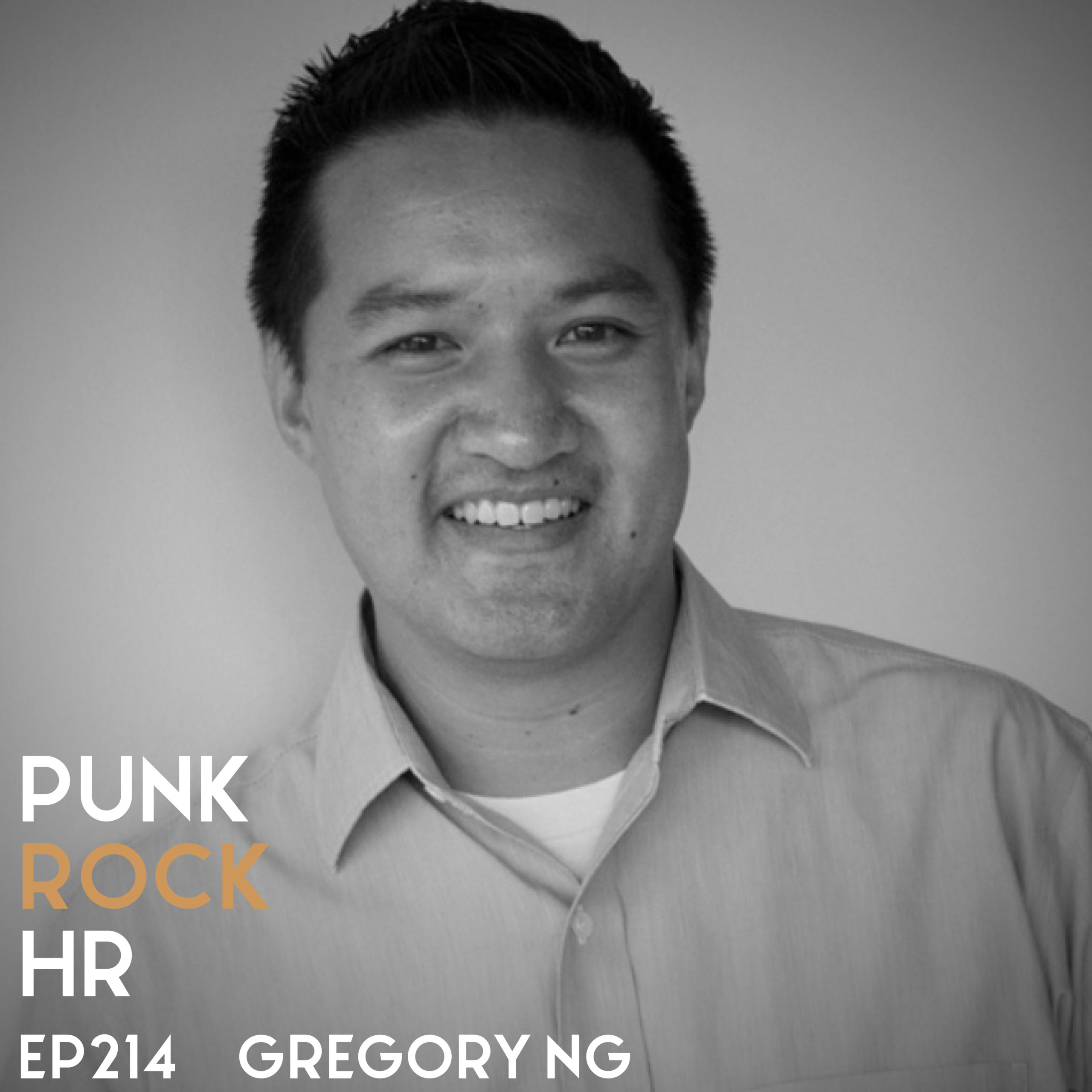
    My guest today is Gregory Ng. He is a longtime friend and the CEO of Brooks Bell, a digital agency based in the Triangle region of North Carolina. In this episode, we’re talking about the pandemic and its impact on people, how to truly build a people-first organization and how to think differently about work-from-home culture.

    One of the cool things about Greg is that, as a CEO, he has numerous opportunities to make and change policy. He’s been thinking a lot about how to bring people together in this weird hybrid environment and wrote about it on LinkedIn. And it was that LinkedIn post that prompted me to invite him to this episode.

    Greg is a lifelong learner who loves to help his community make a positive impact in the world. I can say firsthand that this is true.

    Greg considers himself a marketer, among other things, and believes everyone has marketing within them. “I’m a designer, I’m a content creator, I’m a marketer, I’m a business person. But we’re really all, in my opinion, in the business of understanding each other and understanding better ways to communicate.”

    Punk Rock HR is proudly underwritten by The Starr Conspiracy. The Starr Conspiracy is a B2B marketing agency for innovative brands creating the future of workplace solutions. For more information, head over to thestarrconspiracy.com.

    What Does Moving Forward Look Like?

    2022 for many companies feels like they want to return to before the pandemic, to 2019 — as if people were on an extended vacation and now it’s time for real work to resume. But that’s simply not the case.

    Right now, the focus is about reopening offices, and while Greg and his team are getting the band back together, it’s not a strict return-to-office policy. Greg has office space, but he’s also not setting a traditional return-to-office policy, and with good reason.

    “For the rest of my life, what happened during 2020, ’21, early ’22, continuing, will make its mark on the way I am as a human being. I can’t just forget the last two years and say, “Let’s go back to 2019,” and companies shouldn’t either,” he shares.

    When you look at companies pushing for people to come back to the office, it’s less about culture but about financial need. It’s about utilizing the office leases they can’t get out of rather than considering people’s wellbeing.

    “Those decisions come from a place of distrust and rooted strictly on bottom line. Here’s the reality. We’re paying our lease. We’re paying for empty cubes and seats. We just renewed our lease, by the way,” Greg says. “And the reason why is because I believe that there is a reason to have a physical space for people to gather. I also believe that we can be very efficient, collaborative and build a new type of culture with team members that are in person together and not in person together.”

    Bringing People Together Remotely

    Greg’s evolution as a CEO is inspiring. He’s taken a creative approach to building community through collaboration and realizing that connection comes in many forms.

    “We’ve made a commitment to fly all of our remote employees and bring in all our team together quarterly,” he explains. These quarterly gatherings are optional, however, for remote and local employees.

    Before the pandemic, Brooks Bell had one remote employee. But now, almost a third of the company is working remotely. Greg went through a process of trying to understand how he could make these remote employees could feel a part of their culture. One approach Brooks Bell uses is “magnet activities,” and I was curious what those are.

    “Magnet activities are activities that attract people to want to come and participate, knowing full well that it’s optional than to say, ‘You must come.’ So, that’s the first thing, flying everyone quarterly to meet as a team,” Greg explains. “And there’s many different layers to that, too. There are absolutely very important meetings and information that we’re sharing together, but there’s also time to socialize and not just do work, but just exist and form bonds.”

    Budgeting for Collaboration

    Greg understands that getting people together is great, but “work also takes other shapes and forms.” It’s about understanding how to do that with remote employees in various locations.

    “We’ve built a budget for each one of our remote employees, a $5,000 travel budget per year, that they can use whenever they want for wherever they want, as long as they’re using it to visit or collaborate with another team member,” he says.

    The positive response has been great. Greg’s excitement for this creative approach has grown, especially with the positive reception with employees and outside the company. But these policies are just the start of a larger cultural shift.

    “Our culture is not about our core team at Raleigh headquarters and then everyone else, nor is it about each person individually. It really is about us collectively as a whole,” Greg says. “So how do I ensure that the playing field gets leveled a little bit? That’s one way to start, and much more to come.”

    [bctt tweet=”‘For the rest of my life, what happened during 2020, ’21, early ’22, continuing, will make its mark on the way I am as a human being.’ ~ @GregoryNg, CEO at Brooks Bell. Tune in to the latest episode of #PunkRockHR!” via=”no”]

    People in This Episode

    Full Transcript

    Laurie Ruettimann:

    This episode of Punk Rock HR is sponsored by the Starr Conspiracy. The Starr Conspiracy is the B2B marketing agency for innovative brands creating the future of workplace solutions. For more information, head on over to thestarrconspiracy.com.

    Hey everybody, I’m Laurie Ruettimann. Welcome back to Punk Rock HR. My guest today is Greg Ng. He’s a longtime friend and the CEO of Brooks Bell. They’re a digital agency based here in the Triangle of North Carolina. And on today’s podcast, we’re talking all about the pandemic, the impact on people and how to truly build a people-first organization.

    The cool thing about Greg is that, as a CEO, he has all kinds of opportunities to really make and change policy, and he’s been thinking a lot about how to bring people together in this weird hybrid environment. He’s written about it on LinkedIn, and that’s what prompted me to invite him on today’s show. So if you’re interested in creative ways to get people to collaborate, new ways to think about working from home and what it’s like to just manage and navigate through this crazy time, well, sit back and enjoy this conversation with Greg Ng on this week’s Punk Rock HR.

    Hey Greg, welcome to the podcast.

    Greg Ng:

    Thanks for having me.

    Laurie Ruettimann:

    Oh, so good. Listen, it’s been a decade or more since I’ve seen you in real life, and we live in the same dang area. What is up with that?

    Greg Ng:

    It’s crazy. It’s crazy. But that’s the power of social media, and it’s the power of shared connections. So, I feel like we haven’t been in the same room, but I feel like I still know you.

    Laurie Ruettimann:

    Well, at some point, we must have crossed like at the Shake Shack or at the mall or something, and we just didn’t notice one another. This town is too small. So for those people out there who don’t know who the heck you are, even though I’m fangirling all over you, why don’t you tell everybody who you are and what you’re all about?

    Greg Ng:

    Sure. My name is Greg Ng. I’m the CEO of Brooks Bell. We are a consultancy here in Raleigh, North Carolina. I am a lifelong learner, dad, traveler, amateur photographer, and I just love being a part of a great community here in North Carolina and hopefully inspiring others to do what I believe is a very important thing, which is to make a positive impact in the world. So, that’s what I live for.

    Laurie Ruettimann:

    Well, all of that I can say firsthand is true. We met through the community, a community of marketers, which is that really your primary domain? Would you call yourself a marketer?

    Greg Ng:

    I would call myself a marketer. I believe marketing is really in everyone. I’m a designer, I’m a content creator, I’m a marketer, I’m a businessperson. But we’re really all, in my opinion, in the business of understanding each other and understanding better ways to communicate. So for that reason, yes, marketer.

    Laurie Ruettimann:

    Well, in this community of creative professionals, of entrepreneurs, of just free spirits, we connected through volunteerism. You were very passionate about Movember. Can you tell everybody what that is?

    Greg Ng:

    Yeah. Movember is a great cause that concentrates on men’s health. It was an organization that was started many, many years ago. And when we first met, I was trying to kick off the local community here in the Raleigh-Durham area. The key is men grow facial hair in the month of November to raise awareness.

    Laurie Ruettimann:

    Well, they try. They try.

    Greg Ng:

    They try. I’m one of those people that tried. Super-awkward-looking, but awkward for a reason. It’s a great topic-starter and one that’s important to raise awareness for health reasons.

    Laurie Ruettimann:

    Well, back then I barely knew you and you were like, “Come on, let’s do this telethon. Join me for an hour.” I’m going to livestream it to all six people who were on the internet back then. And we’re going to talk about frozen food, and we’re just going to have a really good time for an hour. When I think about you, Greg, I think about volunteerism. Have you always been involved in not-for-profits or community endeavors like that? Was that something that you’ve done throughout your life, or is this a recent adult thing?

    Greg Ng:

    Certainly things I’ve done my entire life. I believe in giving what you can, how you can, to anyone. It’s not necessarily, per se, to a specific organization or cause. And I believe that that has over the years manifested into very specific things like with Movember, with our local food bank, with a lot of other great organizations. So I would say yes, but I would also say we’re never finished. So, maybe I have a history of it. I’m constantly looking for other ways to give back, either on a one-on-one level or to an organization.

    Laurie Ruettimann:

    Well, I asked this question because I want to talk about the pandemic. For someone like you, who is so involved in the community, who leads an organization, who has a big job, who is just involved with your children, as well, we hit March of 2020, and shit shuts down. So you’re new to your job, five months in, and you’re trying to figure out how to deal with your fam and make sure they’re safe and keep yourself safe. Meanwhile, you’ve got a business to run, an organization to lead, people to inspire. You’ve got to clear a path so people can do their jobs, basically, as a CEO. What was that like?

    Greg Ng:

    Scary. Scary again. Scary again. I felt that there were a lot of knowns, and there were a lot of unknowns. The knowns for us is that we had a great team with great momentum who collaborated well. The unknowns was how do we continue to collaborate? How do we ensure that our team is taken care of? We made a decision early on — one, to be very transparent with what we know and what we don’t know. Two, to be very decisive in terms of policy, if you will, to make sure that our team felt supported. As an aside, I feel like a lot of companies say throwaway lines of saying that they’re people-first. Inevitably, they’re not. They’re profit-first. And we are both.

    I don’t believe that it’s people over profit, and I don’t believe it’s profit over people. I believe that being empathetic, taking care of your people leads to profit. Those are conjoined. So really early on, we made the decision very specifically to be employee-first. And what did that mean? It meant like when you have an employee who has to be a full-time mom, teacher and team member, how can we best provide there?

    Laurie Ruettimann:

    Yeah. So what’d you do?

    Greg Ng:

    We created a fully flexible work schedule. So we doubled down on saying, “Look, we’re not clock watchers. We’re not a 9 to 5 shop. You are here because you add a valuable piece to our team. Let us understand what you need. We’ll work together on what the team needs, and let’s figure it out together.” So, that’s where we started.

    Laurie Ruettimann:

    So did you lose anybody in those early days? Because there are stories from my friends in leadership and human resources where particularly working moms, but not just working moms — caregivers, parents of all kinds — just said, “I can’t. Even with the flexibility you’re offering, I just can’t. I need to opt out.” So did you lose anybody at your organization for that reason?

    Greg Ng:

    Yeah, for sure. For sure. We lost a ton of people, actually, for many reasons. If you look back all the way from March 2020 to now, we’ve lost employees for a lot of different reasons. Some because of the unknown and the stress and the hassle and the mental health and the current demands of our existing clients with less resources, because it was then harder to hire back. We lost in what many call the Great Resignation. I saw more correctly stated as the Great Reevaluation.

    Laurie Ruettimann:

    Yeah, or just the great swap, where people are swapping out one job for another, and nothing changes in their lives.

    Greg Ng:

    Yeah. I view that as a great opportunity. I don’t believe in permanent switches. I don’t believe in when someone leaves a job, that’s forever. It may be forever. But I believe in, really, how do we address people at a human level? So I wish them the best. I support them the most that I can. And I hope that they find the right place. And in some cases, maybe the right place, they’ll decide, is to come back and join us. We’ve seen the whole gamut.

    Laurie Ruettimann:

    Yeah. Have you had any boomerang employees at this point who have left and come back? Because there’s so many anecdotal stories out there of people going, “Oh snap, I left this job. I thought I was going to get something else. Turns out I didn’t get it. And I miss my old colleagues. I miss my friends. And what I really needed was a break and maybe a raise.” So have you had anybody come back?

    Greg Ng:

    You know, I’m a boomerang myself. So, certainly I’m of the mindset that those boomerang relationships can be great under the right circumstances. We just hired a person back who did not leave us during the pandemic but was a former employee from many, many years back. The answer is yes, not necessarily those who have left us in the last couple years.

    Laurie Ruettimann:

    Well as we’re starting to evolve in this world of work, we’re getting out of 2000, out of 2021, into 2022, it’s interesting because many companies are now itching to get the workforce back — as if they were on some sort of extended vacation and now it’s time for the real work to get started. So 2022 is all about return to office and like return to 2019, if you ask me. So what are you doing at Brooks Bell? Are you getting everybody back together, getting the band back together in the office?

    Greg Ng:

    That’s an interesting question because I do believe, yes, we are getting the band back together, but not nearly like what I think a lot of people portray or say as return to office. Our return-to-office policy is that there is no return-to-office policy, forever. For a number of reasons. Let’s start with a more personal reason. For the rest of my life, what happened during 2020, ’21, early ’22, continuing, will make its mark on the way I am as a human being. I can’t just forget the last two years and say, “Let’s go back to 2019,” and companies shouldn’t, either. When I talk to other leaders who talk about their return-to-office policy, if I really ask the question more times than they want me to ask, the real answer is they have a lease they can’t get out of. They have a justification that they need to make that there are butts in the seat.

    Laurie Ruettimann:

    100%. And they have a lease with a friend who owns the commercial real estate. That’s often the case. That to me is so frustrating. On top of that, those executives are still working from home themselves many times. It drives me crazy, Greg. It drives me crazy.

    Greg Ng:

    Yeah, it’s horrible. Let’s call it for what it is. Those decisions come from a place of distrust and rooted strictly on bottom line. Here’s the reality. We’re paying our lease. We’re paying for empty cubes and seats. We just renewed our lease, by the way. And the reason why is because I believe that there is a reason to have a physical space for people to gather. I also believe that we can be very efficient, collaborative and build a new type of culture with team members that are in person together and not in person together.

    Laurie Ruettimann:

    So what’s the case for keeping the lease and keeping the space if there’s no official return-to-office policy? I get what you’re saying. Your philosophy is, we’re going to figure it out. We can collaborate. We can figure out this hybrid post-COVID work environment together. But why hang onto the real estate?

    Greg Ng:

    Hanging onto the real estate because it still feels like home. Hanging onto the real estate because let’s acknowledge that there are people who draw energy from being with others, and there are people that don’t. So for the same reason why we wouldn’t move all hybrid is the same reason why we wouldn’t say, “Everyone, come into the office.” So I don’t know what the future will bring after this next lease renewal comes up, whether we will be in the same space or not. But what I do know for sure is we will have a space to meet.

    I enjoy my flexibility as much as others do, but I also really, really over-romanticize the idea of five days a week, seeing people walking down the hall, chit-chatting with them. But I also acknowledge that I have teammates that don’t, they don’t want that. So how can I continue to promote balance, a healthy relationship with our colleagues and our friends and family and ourselves, while also then saying, “Here is my dictate to how you work”? It doesn’t match.

    Laurie Ruettimann:

    No, it certainly doesn’t. And I love the evolution that you’ve had as a CEO, from someone who is new in the role and really wanting to make that connection, to understanding that connections can come in a variety of ways. One of the reasons why I asked you to join me on the podcast today is because I read on LinkedIn that you’re taking an approach to really create a community of collaboration. You’re encouraging people to get together. And I don’t want to steal your thunder and your really great idea. Why don’t you tell us about it?

    Greg Ng:

    Sure. Before 2020, we had one remote employee.

    Laurie Ruettimann:

    Oh God, that poor employee, by the way, was probably like, “What the hell? Think of me sometimes.” Right?

    Greg Ng:

    Exactly. And here’s the thing. He was a remote employee because he used to live here and work here in our office, and he decided for life reasons to move to a different location. And we say, “You’re great. We want you still here.” So we made all these exceptions for him to work remotely, and we did a horrible job of it. He stayed because he is a great person, and he loved what we did, and he had that connection. He has since moved on to a great job that he loves, and that’s great for him.

    But now we have almost a third of our team remote, and that’s not even including those that live in the Raleigh-Durham area that could go to the office. They’re in different states. So I went through a whole thought process of, well, how can we make them feel a part of our culture? And I incorrectly thought it was about the office space, and it really isn’t. It’s about the people trusting, believing in each other, seeing each other, going deeper than just a “how is your weekend?” precursor to a status meeting.

    Laurie Ruettimann:

    Yeah, or deeper than a staff happy hour, which drove me crazy during COVID. I can’t tell you how many times people were saying, “Well, my company wants us to get us together for a happy hour.” And what about the people who don’t drink? What about the people who have stuff to do? Are they not to be included because they have to educate their children during the happy hour? So I’m glad you were thinking beyond that superficial. So, where did you end up?

    Greg Ng:

    So, where we ended up is we made a commitment to our team. We started it this year, because quite frankly, in 2019, there were still some concerns about people traveling, both individually and me as representing our leadership. But we’ve made a commitment to fly all of our remote employees and bring in all our team together quarterly. We did our first one in February. We did our Q2 one just a couple weeks ago. It is completely optional. If someone feels like they want to participate remotely, they can. If they feel like they don’t want to fly or travel, even if they live down the street from our office, totally can. We’re spending more time on “magnet activities” instead of mandatory.

    Laurie Ruettimann:

    Wait. What’s that?

    Greg Ng:

    So, magnet instead of mandatory. Magnet activities are activities that attract people to want to come and participate, knowing full well that it’s optional, than to say, “You must come.” So, that’s the first thing, flying everyone quarterly to meet as a team. And there’s many different layers to that too. There are absolutely very important meetings and information that we’re sharing together, but there’s also time to socialize and not just do work, but just exist and form bonds.

    Laurie Ruettimann:

    The idea of flying in employees on a quarterly basis is awesome, but a lot of companies hear that and think, I don’t have the money for that, or there’s no way. Or that kind of planning is going to take away from business operations because you’re not just creating an experience for people in the room. You’ve got to be thoughtful around people who are joining you virtually, almost creating two experiences. And that sounds expensive from both a currency perspective and a time perspective. So did your team have concerns about that? I mean, are you budgeting for that now differently, because that is a huge organizational investment?

    Greg Ng:

    Guess what? It is expensive from a time and a money standpoint, and it’s worth it. We do budget for it. We’ve budgeted for every quarter. We budget it when we hire a new employee because it matters. Because again, we say we are a people-first company, and I can’t stand it when people say they’re people-first and everything they do and act upon is anything but being people-first. It is the most important thing we can do is to invest in our team, because we’re nothing without them. And we are a professional services organization.

    Time is money, but guess what? It’s reaping benefits. There’s a feeling of just tremendous camaraderie and momentum and trust. And we are not even close to being finished. We absolutely have problems that we still sort through, but it starts with just a belief structure that we want to do great work together. That’s why. Would we get better bonuses, better profit? Absolutely. And in its place, we would have less trust. We might have someone who lives in some random state that doesn’t feel a part of anything.

    Laurie Ruettimann:

    So item number two that you’re focused on, I mean, you’re bringing everybody together, but you’ve gone a step beyond that. So why don’t you tell us about that?

    Greg Ng:

    Yeah. So, that’s great to bring everyone together. Love it, love seeing everyone, love building those bonds, but work also takes other shapes and forms. So how do you then reconcile when you have a remote employee that has someone maybe that reports to them in a different state, or a special project with a client or groups of teams from different states that need to get together?

    So we’ve built a budget for each one of our remote employees, a $5,000 travel budget per year, that they can use whenever they want for wherever they want, as long as they’re using it to visit or collaborate with another team member. I’m very excited about the reception it has gotten by our team. I’m very excited by the reception it’s gotten by those who have read my LinkedIn posts and things like that.

    To me, it is just the start. It is a shift in the way in which I believe our culture is. Our culture is not about our core team at Raleigh headquarters and everyone else, nor is it about each person individually. It really is about us collectively as a whole. So how do I ensure that the playing field gets leveled a little bit? That’s one way to start, and much more to come.

    How do we make sure that those who live in North Carolina who don’t want to come into the office [who] need a better place to work and be effective? How do we ensure that they truly take time off? Because we have unlimited PTO, by the way. And, of course, huge — everyone complains about unlimited PTO. “Oh, it’s so self-serving,” and all of that. How do I fight against that? Because I believe fundamentally unlimited PTO is the right thing.

    Laurie Ruettimann:

    Heck yes. You fight against it by taking it, Greg. I think that’s the answer. So you’ve got to be the change you want to see in your organization. So, get out there and take more photos at sporting events, and go and hike like you do. You take these magnificent trips out into nature, and you post about it. You’re not shy about that at all.

    Greg Ng:

    Yeah. Thanks. I believe that it starts with me. My team needs to hear me say the words, “Please take the time you need. Please value your mental health, your balance. Please spend time with your kids. They’re only getting older. Please spend time with your family.” It’s one thing for me to say that. It’s far another to say it, and then they see an email coming in from me at 10:30 at night or on the weekend. Or the worst — I hate this, I know a lot of people do it, a lot of my friends and colleagues do it, where they’re like, “I’m on vacation, but I’m just covering off a couple emails from the beach.” I hate it.

    Laurie Ruettimann:

    Yeah. It’s obnoxious. Yeah. Agree, agree.

    Greg Ng:

    Take your vacation. So I show that to them.

    Laurie Ruettimann:

    But this type of environment, where you’re thinking about where people work and you’re trying to get them together, is great for me because I believe in the hyper-personalization of work. I think we get a better work product out of people when we design a unique experience for them. But again, a lot of people think it’s expensive. So I love the way that you’re thinking about short-term costs versus long-term revenue-generating opportunities or profitability. You’re thinking long term instead of short term. That’s what I’m hearing from you, correct?

    Greg Ng:

    It is. I think that there’s a dark side to that statement that I will throw out there, and maybe I’m not interpreting it correctly, because when I hear people say that, the next statement tends to be “because it’s cheaper to retain an employee than it is to hire a new one.”

    Laurie Ruettimann:

    Well, I would never say that because I don’t think of people as commodities, and I think your work is not your worth, but I think you’re right. It begs the question, can you really operate a progressive people-first organization in this moment we have of late-stage capitalism? I mean, you’re trying. You’re trying to find that alternative way, but we don’t necessarily know that people-first practices lead to greater profitability. At this point, it’s kind of unproven, but I love the fact that you’re trying.

    Greg Ng:

    Yeah. Well, I appreciate that. You’re right. Do I have hard facts over generations to show that? No, of course not. But this is what innovation is about, because going with the gut is what I’m going with. Why? Because I’m human, and it makes me feel more human. Because it makes me feel good to know that my team feels valued, they feel balanced. And again, I hope I’m not painting a super-rosy picture. We still have many, many challenges to overcome on an individual and a company way to make sure that those extremes don’t fall into traps. But it feels right.

    And guess what? We are profitable. So it’s not like we’re making these expenses and putting ourselves in a hole. We are already seeing the unit economics play out. How do we just ensure that we continue to value and prioritize the things that, in my opinion, matter, which is a third of our lives together, if not more? How do we ensure that it’s worth it, that we love what we do and love the people we do it with?

    Life is way, way too short there. And we’ll have team members who, maybe that’s too squishy for them, and that’s OK. But I believe it’s my No. 1 role as CEO to establish who we are as an organization and let other people self-select — self-select in or self-select out, but don’t be wishy-washy about it.

    Laurie Ruettimann:

    Well, I love that. As we start to wrap up the conversation, I just wonder what’s up for the rest of 2022 and 2023 for you as a leader. What are you thinking about? What, maybe, is one of the problems you’re trying to tackle? And where is Brooks Bell headed? What’s new, what’s exciting for your organization?

    Greg Ng:

    Yeah. So we’re doing some really interesting work now. How we work with clients really comes down to the idea of knowing more about your customers. We build insight-driven organizations. What does that mean? I mean, it means that organizations have a better understanding of how to learn from their customers, their segments, their end users. And, inevitably, that’s what we do internally, as well, is get a better understanding of what makes us tick and what makes us do the things that we enjoy doing.

    And we’re seeing the market really susceptible to that. Companies have learned that brand affinity, for example, is very important. People very much have relationships with companies. How do you capitalize on that? Again, be empathetic, understand the needs of humans, be real, help to navigate all the unknowns, and that’s what we help companies do. And we’ve seen some great success for that.

    Laurie Ruettimann:

    Well Greg, I’m glad your answer wasn’t we’re doubling down on TikTok.

    Greg Ng:

    Oh no, no.

    Laurie Ruettimann:

    Good. Good for you. People who love TikTok, enjoy that. Just take that and run with it. Well Greg, it was awesome to see you again and hang out. Thanks again for joining me on Punk Rock HR and talking a little bit about your COVID journey.

    Greg Ng:

    Thanks for having me. It’s great to see you.

    Laurie Ruettimann:

    Hey everybody, I hope you enjoyed this episode of Punk Rock HR. We are proudly underwritten by the Starr Conspiracy. The Star Conspiracy is the B2B marketing agency for innovative brands creating the future of workplace solutions. For more information, head on over to thestarrconspiracy.com. Punk Rock HR is produced and edited by Rep Cap, with special help from Michael Thibodeaux and Devon McGrath. For more information, show notes, links and resources, head on over to punkrockhr.com. Now that’s all for today and I hope you enjoyed it. We’ll see you next time on Punk Rock HR.

  • Modernizing the Learning Experience with Sean Stowers

    Modernizing the Learning Experience with Sean Stowers

    In this episode of Punk Rock HR, I’m joined by Sean Stowers, CEO and chief learning officer of WeLearn. Sean is a part of the creative team of learning professionals on a mission to build better humans through learning.

    In this conversation, Sean and I discuss his belief in modernizing the learning experience to be more relevant, beautiful and engaging for all professionals. “I’m a great person to sit with and talk about the challenges that you’re trying to solve and to figure out, is learning really the right thing?” Sean shares. “And if it is the right thing, how do we go about solving that learning challenge in a really novel way?”

    I thoroughly enjoyed this talk because if you’re learning, you’re growing, and if you’re growing, you’re thriving — and that’s what life is about.

    Punk Rock HR is proudly underwritten by The Starr Conspiracy. The Starr Conspiracy is a B2B marketing agency for innovative brands creating the future of workplace solutions. For more information, head over to thestarrconspiracy.com.

    Blast From the Past

    I’ve taken my fair share of training courses. In many of them, the backgrounds are brown and taupe, people are rocking the shoulder pads, and it just looks outdated. In reality, many of them are stuck in the ’90s, and while that was an iconic era, these training courses are lacking in their appearance.

    My first thought was that training has a lack of funding, which is true, but Sean says that also it comes down to how things are done. “I think, number one, is there are a lot of organizations that are kind of stuck in doing things the way that they’ve always done it,” he says. “I do think that the past two years, two and a half years, is starting to break that up, and people are starting to go, ‘Wait, we can do things differently.’”

    This change in mindset has led to a shift in funding, especially as more affordable options become available for recording trainings. While the financial aspect is improving, staying stuck in the past won’t help modernize learning in your workforce. That’s why Sean and his team are determined to help these companies break away from the mold.

    “I just think a lot of organizations stay kind of stuck in their lane and aren’t always sure how to break out and try something new,” Sean says. “And what we’re trying to do and in our messaging is to find the people that are looking to break out of that, and they’re starting to find us, and we’re having great conversations.”

    Bringing Learning Into the Now

    WeLearn is a learning and workforce development company that is on a mission to modernize how we learn in the workplace. Remember, many internal training courses haven’t changed in years, which affects how employees retain information they’re being taught. Sean and his team are working to create better, more effective learning experiences.

    “What we do is in creating really beautiful custom content experiences, predominantly that are digital. And so we believe that learning can be modern, beautiful, engaging and relevant,” he says. Sean and his team strive to make the content better and more beautiful to create a better experience.

    “Beautiful in terms of its functions as the modern web experience function for you as a user, but actually also beautiful in terms of the art and the visuals and how that evokes emotion and tells a story,” he says.

    Sean is working to create training videos that people will sit through without clicking ahead. “We often joke that we are on a mission to kill the ‘back’ and ‘next’ button. So we believe in using modern principles of modern web experience to bring learning to life,” he says.

    Investing in the Future

    All HR professionals must think differently about learning strategy and investment, including in aligning it with diversity, equity, inclusion and belonging efforts. Learning and DEIB budgets are often separated from each other, but Sean explains it’s essential to understand that both work together.

    “When you do think about learning and development, we seek to make sure that the learning that we develop, the visuals that we develop, that every learner sees themselves in it,” he says. “So we work very hard to ensure visually that there is representation in the solutions that we develop for our clients. I think we can be that bridge.”

    Sean and his team take the time to incorporate DEIB and learning principles when working with clients, but he also emphasizes the importance of investing in mental health and wellbeing with your learning strategy. Companies need to provide strong employee assistance programs, but they also need to provide a safe way into those offerings.

    “I think the thing about investing in training in those ways makes it OK for the conversation to happen in the organization,” he says.

    [bctt tweet=”‘What we do is in creating really beautiful custom content experiences, predominantly that are digital.’ ~ @seanstowers, CEO and chief learning officer at @WeLearnls. Listen in to the latest episode of #PunkRockHR to learn more!” via=”no”]

    People in This Episode

    Full Transcript

    Laurie Ruettimann:

    This episode of Punk Rock HR is sponsored by The Starr Conspiracy. The Starr Conspiracy is the B2B marketing agency for innovative brands creating the future of workplace solutions. For more information, head on over to thestarrconspiracy.com.

    Hey, everybody. I’m Laurie Ruettimann. Welcome back to Punk Rock HR. My guest today is Sean Stowers. He’s the CEO and chief learning officer of WeLearn. He’s part of a creative team of learning professionals that are on a mission to build better humans through learning. In today’s conversation, I talked to Sean about how he believes that learning can be beautiful, relevant, engaging and modern. You know I love that because if you’re learning, you’re growing, and if you’re growing, you’re thriving — and that’s what life is all about. So join me today as I talk to Sean about learning and more on this week’s episode of Punk Rock HR.

    Hey Sean, welcome to the podcast.

    Sean Stowers:

    Hey Laurie, thanks for having me.

    Laurie Ruettimann:

    Oh my God, no problem. I’m excited you’re here. Before we get started, why don’t you tell everybody who you are and what you’re all about?

    Sean Stowers:

    Sure. My name is Sean Stowers, and I am the CEO and founder of a company called WeLearn. We are a learning and workforce development company. And really what that means is I get up every day and go to work with a bunch of people that I love to work with and do really cool stuff. And all of that is in the service of building better humans through learning.

    Laurie Ruettimann:

    Oh, that’s awesome. Well, listen, I believe in continuous learning. I believe, as you know, when you’re learning, you’re growing and when you’re growing, you’re thriving, and that’s the point of life. But before we start talking about your platform, your organization, I know that you haven’t always felt like you were working at your best, you were learning. So what was your life like before you became a founder and a CEO?

    Sean Stowers:

    I’ve been in the learning space since the late ‘90s, and I started at IBM. And, at that time when IBM was making their pivot into services, I actually often say, I learned everything I could learn about selling services at IBM. And from there, I went to work for a global publishing company. I liken it to working for the evil empire, except I was with the Rebel Alliance on Endor with the Ewoks. And you know what? I think, to be honest, I had both some of the best professional development, professional experiences there, and honestly, some of my worst. I liken some of my time there to kind of watching what happens when a star dies inside of an organization, which is kind of crazy. But [I] certainly recognize that I wasn’t probably my best self at certain times there and, certainly towards the end of my tenure there, recognized that yeah, you know what? There had to be a better world.

    Laurie Ruettimann:

    Well, I love the story because there’s humility in there, there’s a recognition that you learned things the hard way. Your passion is learning. And so all of us in this world who want to help people learn often focus on opportunities and professional development, but I’m struck by how the most impactful moments of learning for me have been through the school of hard knocks. Like, I learn things the hard way. So before we talk about the future of learning, talk to me about learning through failure, because really, I don’t know if there’s another way.

    Sean Stowers:

    Yeah. You know what? I love that question. And I will share one of the learning through failure that I had, and I think it was one of the first times I was given the responsibility of interviewing candidates to come in and join our organization. And we were interviewing candidates, and we were working in an organization where it was all hands on deck. Everyone kind of pitched in to do the work. And the feedback came back to me where I was told I couldn’t interview candidates anymore because I was stressing the candidates out because I was portraying a lack of work-life balance. And my response was, “But I’m only telling them what it takes to do the job that I’m doing every day.” But it was like this interesting moment where you kind of are getting this feedback going, “Hey, you’re not portraying what we want you to tell people the job is.” And so I think it was then I began to realize that honesty is sometimes not always valued, and you have to be aware of that.

    The other kind of point of failure that I learned from pretty early in my career was the nebulous “you have communication issues” during performance evaluations. And having three years in a row of that and kind of asking questions about that and not getting any sort of great feedback on what that meant other than, there’s someone in the company that doesn’t like you who’s being very vocal about it, which is kind of an interesting point. So those are two places where, I think, failure and having negative feedback really set me out to kind of go, how do I do this differently? How do I show up differently? How do I make sure that I’m communicating effectively?

    Laurie Ruettimann:

    You know, it’s so funny that you talked about communication issues because, who is born a natural communicator, right? And I also have been told that I’m not the greatest conversationalist. A couple years ago, I heard that, which prompted me to want to get better at it, which is why I started this podcast. I wanted to get curious, ask better questions, learn how to talk to people. But I also realize that sometimes feedback is terrible, and feedback comes with an agenda, right? So you don’t always learn from that negative feedback that you get at work.

    Sean Stowers:

    I will share with you, when I was going through my transformation from being an employee of someone else to being founder, I had a great opportunity to go through coaching with a former client of mine. One of the things that she really encouraged me to do was go out and talk to people that worked with me, that were working for me, about who I was as a leader. It was really interesting because I had to sit in my discomfort of feedback and intimate feedback before I  went and had those conversations. And I had to go out, and I selected three people — and people who had both really great working experiences with me, but also knew me when I wasn’t necessarily my best — and had to ask for very specific feedback about who I was as a leader.

    And it was very interesting because I had to sit in my discomfort for what that act of asking for feedback was and saying to my friends and my colleagues like, “Hey, I need you to be really honest with me because this is part of who I need to become as a leader moving forward.” And thankfully, it was approached with a ton of love and trust and honesty, but it was also a lesson of sitting in your discomfort with something, which sometimes is really that reflection — that sitting in your discomfort is really important to learning and making it stick.

    Laurie Ruettimann:

    Oh, for sure. You know, I think about the journey from working for other people to working for yourself, and I think it’s smart that you went out and got a ton of feedback to make that entrepreneurial journey, but why you? Why did you think that you could start a learning company?

    Sean Stowers:

    Because there’s a ridiculously low barrier of entry to do it. Let’s just be honest, there’s a ridiculously —

    Laurie Ruettimann:

    Why not you? I guess, is the answer.

    Sean Stowers:

    Yeah. There’s a ridiculously low barrier of entry to do it. You know what? When I was in high school, I thought I was going to be a politician. I thought I was going to run for office. And you know what I love about learning and what I do is I get to help people, and that’s the foundation of this. And you know what? I’m a student of this profession. I love everything about it. Most of my career has been spent on the business development side.

    Sean Stowers:

    I often joke, I am not an instructional designer, but I play one on TV. I think I am a great learning strategist. I’m a great person to sit with and talk about the challenges that you’re trying to solve and to figure out, is learning really the right thing? And if it is the right thing, how do we go about solving that learning challenge in a really novel way? I think I’m super-great at that. And I say that as someone who, by the way, doesn’t have a college degree, but has spent the better part of my career doing exactly this. And so I think that’s “why me?” But again, there’s a ridiculously low barrier of entry to do this. There’s that, too.

    Laurie Ruettimann:

    Same thing to being a podcaster. Come on, you know it’s not all that hard. Well, let’s talk a little bit about WeLearn. Tell me what it is and what problem it’s trying to solve.

    Sean Stowers:

    So we’re a learning and workforce development company, and really the heart and soul of what we do is in creating really beautiful custom content experiences, predominantly that are digital. And so we believe that learning can be modern, beautiful, engaging and relevant. And I think a lot of times as employees, we know when we show up to that course, we know the course that’s developed internally, we know the course that’s developed by the vendor. Typically, the difference is you get a little better stock art from the vendor than you do in the internal course. And you know what? I think we set out to say, “that experience has got to be so much better than that.” And so we often joke that we are on a mission to kill the ‘back’ and ‘next’ button. So we believe in using modern principles of modern web experience to bring learning to life.

    Laurie Ruettimann:

    So is that what you mean by beautiful? Because you’re right. I mean, when I think about a training course, I do think of “back” and “next.”

    Sean Stowers:

    Uh-huh.

    Laurie Ruettimann:

    Yeah.

    Sean Stowers:

    So beautiful, yes, beautiful in terms of it functions as the modern web experience function for you as a user, but actually also beautiful in terms of the art and the visuals and how that evokes emotion and tells a story. So for us, it is not uncommon for us to do something really cool. Like, we have a client where we Easter-egged the client’s tattoo into the course, and it may only make a difference to that one person, but they see themselves in that course.

    Laurie Ruettimann:

    Yeah. So why do you think training has been so stuck in the ‘90s, even though we’re no longer in the ‘90s, because if we were, I would be younger, right? But when I take a lot of training courses, it looks brown and taupe, and people are wearing shoulder pads, and not in a retro kind of cool way. So why is stuff stuck back in the ‘90s? Is it just money?

    Sean Stowers:

    Yeah, I think it’s a couple of things. I think, number one, is there are a lot of organizations that are kind of stuck in doing things the way that they’ve always done it. I do think that the past two years, two and a half years, is starting to break that up and people are starting to go, “Wait, we can do things differently.”

    I think that in some cases, some of the media, the ability to develop media, the cost of developing video has gone down and ultimately, what’s acceptable in terms of video. So now, you and I could do this sort of conversation, record this as a training piece, do a little bit of editing, and put this out there. And it’s not the beautiful studio-produced video, but this is totally acceptable. I think that some of the costs and strategies for producing media are coming down, and so I think that some of those things are going to change. But I just think a lot of organizations stay kind of stuck in their lane and aren’t always sure how to break out and try something new. And what we’re trying to do and in our messaging is to find the people that are looking to break out of that, and they’re starting to find us, and we’re having great conversations.

    Laurie Ruettimann:

    So when you work with your client, are you partnering with executives? Are you partnering with heads of divisions, or are you working with chief learning officers? Because there’s such an interesting way to get at the heart of a learning strategy, right? You can do it internally, you can outsource some of it, you can buy some of it, you can build it on your own. So I just wonder, how do you work with your clients?

    Sean Stowers:

    So, all of the above, and what I would say is our clients come from both corporate America and then also from the association space, so member-based organizations. So we’re working with, in some cases, the chief learning officer, the head of education, the head of professional development. In other cases, we’re being brought in by a CHRO or a CLO to talk about strategy. I think one of the things that we try to think about with the strategy is there’s a lot of options for folks to go out and find learning strategy. We tend to think that we are more actionable and perhaps a bit more affordable than some of the other options.

    Laurie Ruettimann:

    Oh, you’re not just out there making suggestions that nobody can afford and that are totally unreasonable? I’m shocked. I’m shocked to hear this.

    Sean Stowers:

    Well, I think you’ve probably had this experience where you go to some of the — let’s just say bigger firms — where you can ask them all the same questions, and you’re basically going to get the same information back with just varying degrees of pretty PowerPoint deck. I think that we recognize that not every organization can afford that or wants that

    Laurie Ruettimann:

    If I work in human resources and I’m a chief people officer, are there specific things I ought to be thinking of for my learning strategy in 2022 and beyond? What’s required and what’s nice to have?

    Sean Stowers:

    Yeah. So I think that there are some things for me that are really beginning to emerge, that I think the investment in learning in these areas need to be thought about differently. I think DEI — diversity, equity, inclusion, and belonging — needs to be thought about differently. It needs to have a solid investment. It needs to have real investment in the learning solution. While you may have a head of DEI and belonging, learning has a seat at the table in funding and developing those solutions and ensuring that they get out. And it cannot be, “we are going to fix, insert whatever group we’re trying to address the lens of diversity through, and we’re going to provide programming.” So I think diversity, equity, inclusion, and belonging, something that we have to invest differently in.

    Laurie Ruettimann:

    You’re right. I think often, we’ve got a sliced-off diversity inclusion, equity, belonging function. Then we have a sliced-off learning function and never the two shall meet. Do you operate as a bridge between the two? Is that something that you do often?

    Sean Stowers:

    We would like to see ourselves doing that. I think one of the ways that we do that in our own way, and I think this is something when you do think about learning and development, we seek to make sure that the learning that we develop, the visuals that we develop, that every learner sees themselves in it. So we work very hard to ensure visually that there is representation in the solutions that we develop for our clients. I think we can be that bridge.

    The other one, I think, is mental health and wellbeing. I just think that there’s a lot of organizations post-pandemic [that] really realize this. Mental health and wellbeing, I think that’s one. And then, I think this idea of burnout and resiliency — and by the way, we have a great partner, a former chief people officer who has created a program for burnout and resiliency, because as she described, she was having her own mental health crisis and basically couldn’t find resources for herself because she was not an alcoholic or drug addict.

    And again, here’s the thing, you take a step back and you can go, “Well, hey, we provide an EAP for that.” Sure. And if someone can find that EAP and navigate the website and maybe talk to someone who thinks they can help, that’s one thing. But I think the thing about investing in training in those ways makes it OK for the conversation to happen in the organization. The EAP to me feels too punitive. Like, I don’t want to call that because what if someone finds out that I called? What happens to my job?

    Laurie Ruettimann:

    Sure, or your point about navigating the complexities of the EAP is something that we’ve talked about on Punk Rock HR. And I think there’s a time and a place for calling the EAP, but if there’s an online learning module to help you with burnout, to help you with having difficult conversations, to help you with navigating the world of caregiving, why wouldn’t we offer that as a complimentary offering to the EAP? It’s not “either or,” it’s “all of the above.”

    Sean Stowers:

    Absolutely. So I see those as three really big things that learning organizations should really be focusing on.

    Laurie Ruettimann:

    You know, one of the things that I think learning organizations ought to also be focusing on is gratitude. This is something that’s been on my mind for years. And so there’s all this energy in the space about gratitude, recognition that’s been going on even pre-COVID, but to really help people understand that gratitude doesn’t just make work better, it makes life better. So talk to me a little bit about gratitude.

    Sean Stowers:

    First of all, I love that because it’s one of our north star values here, and we tend to say thank you to each other a lot and thank you to our clients and be thankful for the work. The point about teaching gratitude inside of organizations is exactly right. Because I think that, too often, we get into this mindset of, why I’m not going to say thank you to someone? They’re just doing their job. That mentality — and I’ll give you a real example about this.

    In another part of my professional life, we had this rockstar kick-ass development team, and I just knew that it was important to recognize members of the team. And I would send feedback to the senior leader over this team, and the response that I would always get, it wasn’t this, “Hey, I’m going to forward this onto the team and let them see that, hey, you’ve given this feedback.” Which wasn’t what it was about for me, but I never saw that it went, but I would always get this response back going, “Well, they were doing their jobs.” And I’m like, “Wow!” That to me is so fundamentally off of who I am as a human being, and I just would never understand it. And so I think that if we begin to teach this idea that you can express gratitude to individuals, to teams, as a way of supporting this great culture of people, I think that’s so huge because it’s so important to us and to the point that we don’t work for people that we don’t think have gratitude.

    Laurie Ruettimann:

    Well, I mean, that’s the beauty of being an entrepreneur. And I also, as you were talking about gratitude, one of the things I was thinking about is that this idea of learning is so important as it relates to gratitude, but a lot of different topics, because what we teach at work can be brought home. And for many of us, we were not — I was not raised in a culture of gratitude in my house. And so learning about gratitude, I think has made me a better sister, a better partner, a better wife in this world. Recognizing that you say thank you even for the basic things in this world, just because it’s important to say thank you. It’s been a game-changer for me. So it’s not just gratitude, but the other things that I’ve learned at work and been able to take home have just been life-changing. So I don’t know what you think about that.

    Sean Stowers:

    I think that corporate learning can be a great strategy for those of us who weren’t always raised right.

    Laurie Ruettimann:

    Yeah.

    Sean Stowers:

    I relate. There are things in my life. I think I was raised right, but there are things in my life where I go, “You know what? I’ve learned this in my professional life, it carries over to home.” And so I totally agree with that. Well, here’s the thing: I think in so many things that we teach, communication skills, negotiation skills — I will say, I once heard from a former boss that the best class of negotiation was having a 2-year-old because they have no concept of losing. It is “what I want” and that’s all that matters. But I do think that there is so much of what we teach inside of organizations that does carry over to personal lives. So I totally agree.

    Laurie Ruettimann:

    Amazing. Well, as we start to wrap up the conversation, I’m real curious about what’s next for WeLearn because you’ve created a beautiful platform, you’re out there, you’re interacting with clients and prospects, talking about the future of learning. What does 2022 and 2023 look like for your organization?

    Sean Stowers:

    That’s a great question. I think that we are going to continue to grow, take on really interesting novel projects and that, ultimately, that the organizations that we work with are going to be positively impacted by what we bring to the table, both in terms of the solutions that we deliver, by our philosophy — again, rooted in generosity — and our ability to bring beauty and learning together.

    Laurie Ruettimann:

    That’s really great. Well, I’m so happy for all of your success. I’m excited about your trajectory and I’m grateful you are a guest today. If people want to learn more, Sean, where should they go?

    Sean Stowers:

    Great question. So I’m on Twitter. So I’m Sean Stowers on Twitter. We are also WeLearnLS on Twitter, and then our website is welearnls.com.

    Laurie Ruettimann:

    We’ll make sure we have all that good stuff in the show notes. And again, thank you for being a guest today. It was a real pleasure.

    Sean Stowers:

    Laurie, thank you for having me. This was a great time. Thank you.

    Laurie Ruettimann:

    Hey, everybody. I hope you enjoyed this episode of Punk Rock HR. We are proudly underwritten by The Starr Conspiracy. The Starr Conspiracy is the B2B marketing agency for innovative brands, creating the future of workplace solutions. For more information, head on over to thestarrconspiracy.com.

    Punk Rock HR is produced and edited by Rep Cap with special help from Michael Thibodeaux and Devon McGrath. For more information, show notes, links and resources, head on over to punkrockhr.com. Now, that’s all for today and I hope you enjoyed it. We’ll see you next time on Punk Rock HR.

  • Creating a Psychologically Safe Workplace with Sara Martin

    Creating a Psychologically Safe Workplace with Sara Martin

    My guest today is Sara Martin. She’s the CEO of WELCOA, the Wellness Council of America. WELCOA is one of the country’s most respected resources for building high-performing, healthy workplaces. In this episode, Sara and I talk about creating a psychologically safe workplace, about work and families, how stories impact us, and where the future of work and living are headed.

    In this incredible conversation, Sara talks about her work at WELCOA and how they create diverse, equitable, psychologically safe and healthy workplaces. You’ll also hear her talk about her passion for employees.

    If wellness, wellbeing and a discussion about whether workplaces can truly change interest you, this conversation can answer some of your burning questions.

    Punk Rock HR is proudly underwritten by The Starr Conspiracy. The Starr Conspiracy is a B2B marketing agency for innovative brands creating the future of workplace solutions. For more information, head over to thestarrconspiracy.com.

    WELCOA’S Mission to Incorporate Wellbeing at Work

    Many workplace leaders talk about bringing your whole self to work, finding purpose in your work and “creating environments that allow you to thrive and flourish,” Sara says. But those are lofty things to ask of employees. WELCOA has tried a different focus with helping employees while defining wellbeing in a way that most people aren’t.

    “What we’re really talking about is basic human needs. And for WELCOA, those are needs that we think that work an impact,” Sara shares. “So there’s other needs that people have — spiritual and otherwise — that may not really be something that the employer can really make an impact in. But for us, it’s about, beyond physical health, having those needs met that really allow you to meet all the goals that you have for yourself.”

    Your wellbeing goes beyond “summer Fridays” and nap pods at work. Most people will look at wellbeing as an end goal or a marker in life, but Sara disagrees. “It’s not something that you’re always trying to achieve; it’s something that’s walking alongside you, your wellbeing,” she says. Anyone is able to tap in or out of their wellbeing because it’s a personal space created by individuals —not by organizations.

    WELCOA provides members with training and other resources to improve their wellbeing strategies. Sara shares that there is software and other tools that people can buy that address wellbeing, but WELCOA’s mission goes deeper. “What we ultimately do is help professionals in the HR and broker communities understand how to weave wellbeing into the fabric of how they do business, or how their clients do business, and ensure that their wellness spend is well spent,” she says.

    Leading Change in the Workplace

    Some companies haven’t fixed their bad cultures and yet are trying to solve their workforce’s wellbeing problems. That raises the question, “Who is speaking truth to power?” The fact is, businesses can’t blame a lack of wellbeing on employees when the organization isn’t creating a psychologically safe work environment.

    Sara encourages leaders to have the tough discussion about whether their workplace is psychologically safe. “One of our big fears, one of the things that keep me up at night, is the people that have been leading the strategic work are often in the HR space, and they don’t have that direct line to leadership,” she says. “And leaders aren’t coming to them and asking for their help in solving these problems. And the reality is, they have the solution, but leaders are going to have to give them a wider scope of influence to get that work done.”

    No one understands the gap in wellbeing at an organization more than wellness managers and  coordinators. At small companies, that source of knowledge could be HR generalists. Leaders might have a sense of the wellbeing gap but often lack a full perspective. At WELCOA, Sara and her team try to help leaders move forward with the right information. “We try to help arm them with the data, and we do a lot of benchmarking across the thousands of organizations we work with,” she says.

    “When they get that opportunity, they can say, ‘It’s not necessarily me — the Wellness Council of America is benchmarking these organizations, and they found that when CEOs do these six things, performance across the other benchmarks increases by this amount.’”

    Psychological Safety in Work, Life and Beyond

    There is a global conversation occurring about quality of life and putting life first instead of work. These conversations are essential in society today, and when Sara is working with clients and members, she is looking for every aspect that can hinder progress.

    She explains, “We are generating resources and training and skill-building around our members, the people doing this work, also understanding that there are societal factors — health inequity, racial disparities, growing economic divides — that we have to be honest and say, they keep some people from the resources that they need for basic survival.”

    Psychological safety is a priority in WELCOA’s operations and offerings. “Every single training that we’ve built for the year is around psychological safety, trust and positive cultures for those things. And we think that’s a good baseline for moving forward,” Sara shares.

    Quality of life isn’t limited to the workplace, and it’s not something that can be siloed. “We are really trying to help our members understand that link between safety and security and dignity and, ultimately, the wellbeing goals that they thought were the most immediate goals,” Sara shares. “And we’re saying, the future of work is going to require that we might need to go back to a point of departure and solve some basic other needs first.”

    [bctt tweet=”‘We are really trying to help our members understand that link between safety and security and dignity and, ultimately, the wellbeing goals that they thought were the most immediate goals.’ ~ Sara Martin. Tune in to the latest episode of #PunkRockHR!” via=”no”]

    People in This Episode

    Full Transcript

    Laurie Ruettimann:

    This episode of Punk Rock HR is sponsored by The Starr Conspiracy. The Starr Conspiracy is the B2B marketing agency for innovative brands creating the future of workplace solutions. For more information, head on over to thestarrconspiracy.com.

    Hey, everybody. I’m Laurie Ruettimann. Welcome back to Punk Rock HR. My guest today is Sara Martin. She’s the CEO of WELCOA, the Wellness Council of America. WELCOA is one of the nation’s most respected resources for building high-performing, healthy workplaces. In this conversation today, you’ll hear Sara talk about that, creating diverse, equitable, psychologically safe and healthy workplaces, but you’ll also hear her talk about her passion for employees.

    This is an awesome conversation where Sara and I talk about work and families, and how stories impact us, and more importantly, where the future of work and living are headed. So if you’re interested in wellness and wellbeing, and you’re curious about a discussion whether or not workplaces can truly change, well, sit back and enjoy this fun and interesting conversation with Sara Martin from WELCOA.

    Hey, Sara, welcome to the podcast.

    Sara Martin:

    Great to be here, Laurie. Thank you for having me.

    Laurie Ruettimann:

    Well, I’m pleased you’ve joined us to talk about my favorite topic, which is wellbeing. But before we get started, why don’t you tell everybody who you are and what you’re all about.

    Sara Martin:

    So I’m Sara Martin. I am the CEO of the Wellness Council of America, WELCOA. And I’m all about this work because I grew up being absolutely terrified of work because I watched it ruin the lives of the adults that I loved the most. And so I thought as an 18-year-old bright-eyed, bushy-tailed, world in front of her woman, I thought to myself, could my job be fixing work so that I’m less afraid of it? And that’s how we got here.

    Laurie Ruettimann:

    Well, that’s a huge journey that you’ve undertaken. And at 18, how prescient that you thought work was making people sick and that you wanted to fix it. Can you tell us a little bit more about how it was affecting the people you love?

    Sara Martin:

    I think it was mostly my dad, although both of my parents were impacted in some way. I watched him already be someone that really struggled with purpose in his life, and I watched how the job that he was in really perpetuated that lack of purpose. The culture was really toxic, it scapegoated him and it made him feel like a nobody. And that was really tough for him, it ultimately led him to really drink a lot more than he should have and he became, well, really dependent on alcohol, and really bonded with it as a stand-in for that purpose he was losing from work. And that really translated over time into worse substance-abuse issues with cocaine.

    And his life deteriorated, spiraled out of control. He lost his job, his family and his home, and his freedom for a little while. And all of that was happening when I had to declare a major in college. And so I just thought, this can’t be what work looks like, and this is not going to be my life. So that’s why I went to school for the psychology of work, which is what my graduate program was, industrial psychology. And did some research in graduate school on cultures that perpetuate that kind of deterioration: alcohol, tobacco, other drug use. And found out, when I got into the wellness world, I started working for a health plan, that this world was doing it egregiously wrong, and it would not have avenged my dad, what we were doing. And so my work since realizing that has been asking people to dream bigger about this thing.

    Laurie Ruettimann:

    There’s so many questions to ask. But I’m real curious, do you think your dad’s story would’ve been different with a different work environment? Or do you think he was just wired a little differently?

    Sara Martin:

    He had a really tragic childhood, so it wasn’t like everything was stacked in his favor from the beginning. But his catchphrase used to be, “if I had fill-in-the-blank, then I would really feel like somebody,” or “if I could do that job or show up like that guy, I would really feel like somebody.” And I think that we have to be honest about the fact that we spend 90,000 hours of our lives at work and it’s defining of how we see ourselves. And I don’t know that it would’ve been wholly redemptive in all the areas of his life, but I do believe that it contributed to the downfall.

    Laurie Ruettimann:

    Our stories are very similar that way, and I’ve written about this extensively. I mean, you’re moving me to tears here. I have often wondered, not only with my own dad, but just family members, friends, colleagues who have had similar experiences, if that statement, “If only I would’ve been promoted, if only they would’ve taken me seriously,” was really about something else. And even if you gave something like that to my dad — because my dad maybe once or twice in his career had been promoted — didn’t really seem to solve the problem.

    I want to establish whether, and maybe it’s a chicken and an egg discussion, is it work or is it life that needs to come first? Or maybe there’s no choice that needs to be made, maybe they’re the same thing.

    Sara Martin:

    I think that we ask a lot of lofty things of our employees. What you’re saying is — and I really appreciate, Laurie, this pushing in on this conversation and how it intersects with your story as well. It’s reminding me of that whole “bring your whole self to work” argument. And at WELCOA, it’s like we’ve been talking a lot about this. These are really lofty things we’re asking of our employees, like find purpose in your work, bring your whole self to work, creating environments that allow you to thrive and flourish.

    And we need to be honest with ourselves that maybe that isn’t what employees need at all. To exactly your point, we just need to first do no harm. Have we created an environment that meets basic human needs, allows people to feel respected? Do they have dignity? And do they have 40% net disposable income? Can they actually afford their lives because of our compensation structure? And if we can just do that stuff, then maybe yours and my conversation, or at least the one about wellbeing, becomes a lot less interesting. Which, ultimately working for a nonprofit, I would love that, I would love to put ourselves out of business.

    Laurie Ruettimann:

    Well, I certainly wish you nothing but the best of luck with that. I think your mission, though, is so timely, maybe we can talk a little bit about WELCOA’s specific mission and also how the organization defines wellbeing. So what is it that you do? And what is wellbeing?

    Sara Martin:

    So the way that we define wellbeing is across seven aspects, and we can find them on our website. But what we’re really talking about is basic human needs. And for WELCOA, those are needs that we think that work can impact. So there’s other needs that people have that, spiritual and otherwise, that may not really be something that the employer can really make an impact in. But for us, it’s about, beyond physical health, having those needs met that really allow you to meet all the goals that you have for yourself.

    It’s not something that you’re always trying to achieve, it’s something that’s walking alongside you, your wellbeing. And any point you can tap into it. It’s always available to you, that’s something that our COO Maggie Gough always talks about. It’s not something the organization can paint a picture for you to help you understand. It has to be very personal to you.

    So for WELCOA, what we do is provide evaluation training resources. We have 4,000 member organizations nationwide. Their impact spans 13 million employees, so we have quite an impact, or ability to make an impact. And we use real business data to bring our members that resource, those trainings and recommendations for their wellbeing strategies.

    And so we like to say, there’s a lot of things you can go out and buy when it comes to wellbeing. And I think a lot of people think about that when they think about — I’m going to go do wellbeing, they think, what do I need to buy, tech platform, or an app, or a coaching service for my people? We work with those folks to help them figure out what to build and how to speak to the buyers of their product. But what we ultimately do is help professionals in the HR and broker communities understand how to weave wellbeing into the fabric of how they do business or how their clients do business, and ensure that their wellness spend is well spent.

    Laurie Ruettimann:

    Well, when I think about the wellness spend, you’re right though, that much of it goes to technology. Can you talk about that space, that industry? Because a lot of people now associate a platform or an app or whatever with wellness, instead of the way it used to be, which just a couple years ago was yoga or a 5K, and before that it was weight loss and smoking cessation. So what’s the role of tech right now?

    Sara Martin:

    Well, the reality is, for most companies, if you have 1,000 employees as the bottom threshold, you have one full-time dedicated person who’s thinking about wellness. And if you have less than 1,000 employees, you have half or less of one. It’s someone in HR who is doing multiple things, and one of them happens to be wellness.

    So when you have a problem to solve, you have to go out and buy something, very often, to help you solve it, whether it be a resource or data collection tool, or what have you. I think what people get mixed up in is they don’t understand, one, what the goals are for their wellbeing strategy first, what their leaders are expecting, what other collaborative tools they have across their organization that they could leverage to go ahead and start making some grass-roots kinds of changes, solve the problem first. A sense for what cultural barriers exist that might be standing in the way.

    And so what we often see is while there are really amazing HR tech vendors out there, and there’s a lot of them, and that industry keeps growing and it gets very confusing and really overwhelming. We see that we are overlying on those vendors when what we need to do is understand, first, what our goals are, and then figure out what we might want to plug in from a resource perspective to help us meet those. And the vendors want that, too. The vendors don’t want to be over-relied on. You can only do so much.

    So we often say, so many companies think that to do wellness means to buy a wellness vendor service or platform and drop it on top of their shitty culture, and then expect wonderful things to happen. And the wellness vendor isn’t successful, and the company isn’t successful, and ultimately they want to fire their wellness vendor and hire another one. But what they don’t realize is they’re not optimized to deliver on wellbeing for their people. And that’s what WELCOA does. We help them figure out whether they’re optimized. And then we help them figure out if they need to go buy something, and if so, what to buy to help them meet their needs. And we’re completely agnostic in that space, we don’t benefit from any of those decisions.

    Laurie Ruettimann:

    It’s fascinating to me on a lot of levels that companies are trying to solve wellbeing problems when they do have these shitty cultures. So who is speaking truth to power? Who is having that tough conversation with the CHRO or CEO, saying, “there’s no way, this is not going to happen, the problem is you, the problem isn’t your sweaty, out-of-shape workforce that you like to blame,” right? The problem is that you don’t create a psychologically safe work environment. Who has that conversation?

    Sara Martin:

    It’s a really difficult conversation to have. And one of our fears is that right now, in the midst of this disruption from the past two years, leaders have really actually awakened to a new awareness of both the value and the breadth of what workplace wellbeing is. They may be asking more questions or they are more curious. But it’s a crucial time in the industry. And one of our big fears, one of the things that keeps me up at night, is the people that have been leading the strategic work are often in the HR space, and they don’t have that direct line to leadership. And leaders aren’t coming to them and asking for their help in solving these problems. And the reality is, they have the solution, but leaders are going to have to give them a wider scope of influence to get that work done.

    But I can guarantee that no one in the organization knows more about what is standing in the gap between employees and their wellbeing than your wellness manager or your wellness coordinator — or even, in a smaller company, that HR generalist who initially had this work thrust on them but has since become quite a high-acumen professional in this space. And we say to them, this is your moment, they were made for this moment.

    So what we try to do, to really directly answer your question, Laurie, is we try to help arm them with the data, and we do a lot of benchmarking across the thousands of organizations we work with. So if they get that opportunity — and we’re doing everything we can right now to help them elevate in that way — when they get that opportunity, they can say, “It’s not necessarily me. The Wellness Council of America is benchmarking these organizations, and they found that when CEOs do these six things, performance across the other benchmarks increases by this amount.”

    And by the way, I’ve already written your communication structure, here’s some ideas, I have some questions for you. And we have facilitation guides around all of that. So we can help them get there and get that audience. But right now, the majority of the army of people who are doing this work are not in the thought leadership space to be able to impact at the highest level of the organization, which is a concern that we have.

    Laurie Ruettimann:

    I would imagine that the training materials that WELCOA provides to HR generalists, business partners, CHROs have changed over the past two years. Can you tell me how they’ve changed and what they look like right now?

    Sara Martin:

    So we have this really powerful analytics tool called the Well Workplace Checklist that already you can plug in what your goals are, and it spits out to you specific recommendations as those goals evolve. And so, in some regard, we were really well-positioned at the beginning of the pandemic, even though no one really knew how things were going to change. We had a tool that took in what your biggest goals were, your biggest problems were, and gave you meaningful ideas. And then that is a living, breathing application. So as data inputs go in, the benchmarks automatically change. So you can see in real time how others’ programs are also shifting.

    To respond, which I think is really valuable, philosophically, we were really bold in our messaging strategy and our resource creation strategy. For decades, our industry has been giving people life rafts in the form of a wellness program, where I’m drowning and my employer throws me a life raft, and that’s going to attempt to help me recover my wellbeing. And it’s like we’re a bunch of Holden Caulfields catching employees in the rye before they fall off the cliff. And I think a better question might be, why do so many of our employees need life rafts? Or an even better question is, who’s upstream throwing my employees in the river?

    Laurie Ruettimann:

    That I think is the ultimate question, right? Why are they getting in the water in the first place? That’s insane. And as much as I think WELCOA is so needed, I think there’s just this global conversation right now that we’re having around the quality of life and being life first, instead of work first. And what does that mean? And how do we earn income? And all of these conversations are so important. So while you’re focused on your clients and your members today, what are you thinking about when it comes to the future of work and the future of living?

    Sara Martin:

    Exactly to your point, we are generating resources and training and skill building around our members, the people doing this work, also understanding that there are societal factors, health inequity, racial disparities, growing economic divides that we have to be honest and say, they keep some people from the resources that they need for basic survival.

    And we believe that this is not a completely separate body of work — this problem that is in the broader climate that you’re describing — than the work of reshaping the organizations that are part of putting barriers on people and keeping them from reaching their full potential. So for us, even in the near future, we are really trying to help our members understand that link between safety and security and dignity and, ultimately, the wellbeing goals that they thought were the most immediate goals. And we’re saying, the future of work is going to require that we might need to go back to a point of departure and solve some basic other needs first.

    Laurie Ruettimann:

    Well, you do so much research in the world of work, the world of living, right? Just the way we exist. And I am so cynical, that’s just my POV in this world. But I know you must find some real optimistic trends about people, the way they interact, what they hope, what they dream for. So what are you optimistic about in your industry?

    Sara Martin:

    I have two things that I’m most optimistic about. And one I referenced briefly, but I’ll just restate in slightly different terms. I think that the fact that people are having really nuanced, open, curious conversations, they’re asking more beautiful questions — e.e. cummings always said, I always quote, “Always the more beautiful answer who asks the more beautiful question” — about what it means to be well at work and what the organization’s role is in getting there. And the disruption of the pandemic was exactly what we needed to blow up the medicalized paradigm of what wellbeing is. And now we just need to be ready to chart a course forward. So that makes me optimistic.

    I think the other thing that makes me optimistic is that WELCOA has the capability of when we understand what’s working well. We were actually just evaluated by a third-party organization, the Returns on Wellbeing Institute, and they wanted to know what’s working well and what seems to be common amongst the companies that are platinum-level well-workplace awardees. And they did find some trends. And so what makes me excited about that, because I love doing the work, is now that we know what those trends are, we can help more organizations optimize to there. And we have 4,000 organizations who are listening that can impact 13 million employees’ lives. So it’s not everyone, we have not tapped our total available market, but that can make a huge change for a large percentage of employers and employees. That makes me optimistic.

    Laurie Ruettimann:

    So I love your language, because when you talk about organizations, you also are employee-centric. And I would be remiss if I didn’t applaud you for that and call that out, and wonder if that’s intentional, if that’s something that you do with great purpose, or if that’s just in your DNA. Organizations are people. Because a lot of times when I speak with leaders of associations, they’re very focused on members being an individual state or a company. And you always bring it down to the employee. Is that a choice?

    Sara Martin:

    It’s a pretty intentional pendulum swing for our industry that was built — at least as it exists today, WELCOA predates this — but our industry as it exists today was built on this idea that employees are broken and if we can fix them, then we’ll have better organizational outcomes. And so if we don’t start talking about the role that an organization has on its people, and what their obligation is to its people, then ultimately what the positive outcomes — close loop back to the organization — will be as a result of doing that, then we’re never going to actually make an impact on employee wellbeing. So I think that’s one reason.

    And then maybe my bleeding-heart secondary reason is just that it disarms people. When I tell the story of my dad, I always start my keynotes that way very often because people don’t want to hear from the Wellness Council of America. You know what I mean?

    Laurie Ruettimann:

    I do.

    Sara Martin:

    They want to hear that there is a human element that they can impact, and they want to see themselves in their work, and they want to see themselves in my work. And that’s been a great strategy to help onboard people to what the mission of our organization is and help them see it more beautifully.

    Laurie Ruettimann:

    Well, I have one final question, because what you do for a living is so intertwined with your life story and your DNA, right? So I know this from my own life experience, I’ve had to find almost like a third path where I’m doing something else other than working and talking about my family of origin, right? I have to go volunteer, I have to spend time with cats, I have to exercise. What do you do to maintain good mental health in your own wellbeing? Because that’s got to be so important for you.

    Sara Martin:

    I get up early, I swim, I love to swim laps early in the morning, I love to write or meditate. And I’ve learned more and more, especially through the pandemic that if I am not plugged into my community, I’m not well. So increasingly, I’m trying to find more ways to plug in. I’m also, though, to your question at the beginning about work to live or live to work, I am a live-to-work person. And so if I’m having a bad day and I’ve screwed up my self-care, often work will bail me out. Which I’m very grateful for. I think that’s a privilege that I have.

    Laurie Ruettimann:

    Well, Sara, it’s always a pleasure to get to hang out with you, to get to see you. What’s up next for you? What’s on your mind? Where are you going? What are you thinking about? What’s top of mind for you?

    Sara Martin:

    We are really excited that after so many years of not being able to bring people together in a physical space, that we have a safe plan to resume our physical summit this year. And a lot of our energy and thought process right now is going into designing breakthrough solutions that we can share with our members when we can all get back together, it’s going to be a homecoming, and really help them.

    I think people are still curious, and I think people are still courageous, and we are, too. And so if we can all get together in a space, we’re going to be in Chicago, August 29 through September 1, at the Fairmont downtown. And we’re going to be talking about how to deliver more effectively on exactly what you and I were just talking about: pay equity, psychological safety, mental health, better cultures, diversity, equity, inclusion, belonging, and then bringing some really powerful voices to our stage to do that. So we’re really excited.

    And we’re going to keep on this track of helping our members understand safety. Every single training that we’ve built for the year is around psychological safety, trust and positive cultures for those things. And we think that’s a good baseline for moving forward.

    Laurie Ruettimann:

    Well, I like a leader who knows what she wants in this world, and you are laser-focused on it. I’m so honored that you came on the podcast. It was great to see you. And we will make sure we have all your good stuff in our show notes. So thanks again for being a guest.

    Sara Martin:

    Thank you, Laurie, for having me. It was great to speak with you.

    Laurie Ruettimann:

    Hey, everybody. I hope you enjoyed this episode of Punk Rock HR. We are proudly underwritten by The Starr Conspiracy. The Starr Conspiracy is the B2B marketing agency for innovative brands creating the future of workplace solutions. For more information, head on over to thestarrconspiracy.com. Punk Rock HR is produced and edited by Rep Cap, with special help from Michael Thibodeaux and Devon McGrath. For more information, show notes, links and resources, head on over to punkrockhr.com. Now that’s all for today, and I hope you enjoyed it. We’ll see you next time on Punk Rock HR.

  • Get Your Career in Shape with Dr. Candace Steele Flippin

    Get Your Career in Shape with Dr. Candace Steele Flippin

    My guest today is Dr. Candace Steele Flippin. She is a communications executive, a TEDx speaker and the author of the fantastic book Get Your Career in SHAPE: A Five-Step Guide to Achieve the Success You Need, Want, and Deserve. Dr. Candace and I talk about her game-changing career framework, the generational changes in work and the three questions everybody needs to ask themselves about their career.

    Dr. Candace helps Acuity Brands use technology to make the world better. She is a research fellow at Weatherhead School of Management at Case Western Reserve University, where she studies how women who are Generation X, millennials or Generation Z can get the most out of their careers while bridging the gaps between the different generations.

    Many people are thinking about what’s next in their careers. If this sounds like you, this conversation can help you plan out the next steps.

    Punk Rock HR is proudly underwritten by The Starr Conspiracy. The Starr Conspiracy is a B2B marketing agency for innovative brands creating the future of workplace solutions. For more information, head over to thestarrconspiracy.com.

    Generational Changes Are in Motion

    Dr. Candace noticed, as a communication leader, that there was a clash of the generations in the workplace. Every article that she saw in the media was negative, but she genuinely wanted to understand what was happening with this phenomenon, so she went back to school to learn more about it.

    In her research, Dr. Candace discovered that in the year 2030, there is going to be significant generational changes in the workplace. The biggest shift is that “the youngest baby boomers would be eligible to retire.” That doesn’t mean they all will, as some people retire early and some people can’t or don’t want to retire at 65.

    However, Dr. Candace shares that “since there were so many baby boomers compared to Gen X, I thought it might be an opportunity, and others thought, to accelerate career development for groups that had historically been overlooked, women in leadership, people of color.”

    Baby boomers have been in positions of power for decades. But too often, baby boomers hold on to these positions for dear life instead of expanding the pool of opportunity. The model of scarcity is built in leadership in work and can be difficult to challenge. However, Dr. Candace believes that many boomers are more than willing to share in these opportunities.

    “I actually believe there are a lot of really great baby boomers who are wonderful role models and mentors. I have been the beneficiary of that,” she says. Either way, 2030 will change the makeup of the workforce and create an opportunity for genuine change ⁠— or expanding on the change already occurring with boomers exiting the workforce as part of the Great Resignation.

    While these changes are not fully apparent in today’s workforce, younger generations still need to start developing and preparing themselves for the opportunities.

    Prepare Yourself for These Changes

    The time to prepare is now, and many professionals are doing just that. And as we’ve seen in the Great Resignation, people aren’t afraid to look for opportunity in other places.

    If you’re struggling to find opportunities to grow and move up, then “you have to make some tough choices about what you’re going to do with your career,” Dr. Candace shares. She suggests three questions that you should be asking yourself in that moment.

    1. “Do you have the career you need?”

    “Ask yourself, does the career, the role that you’re in, allow you to pay your bills, have a lifestyle that you want … give you the freedom and flexibility to do the things that are important to you?” Dr. Candace says.

    2. “Do you have the career you want?”

    This question takes the first question a step further. “Is this the profession that you’re doing that you went to school for? Does this profession allow you to follow your passions? Is it something that you’re curious about and you’ve wanted to explore? Does it give you that fulfillment?”

    3. “Do you have the career you deserve?”

    “Have you checked the boxes you were told you needed to check?” Dr. Candace asks. ”Have you spent the time to get the certification, the training, the degrees, the network, all those things that if the world were fair and equitable, you should have that career, along with the compensation and all the things that come with it.”

    Getting Your Career in SHAPE

    Your career takes time, intentionality, hard work and care. It doesn’t happen overnight, but Dr. Candace has written a book that will give professionals a framework to understand their path and where they need to go.

    Dr. Candace explained her SHAPE framework. “It turns out that there are five things that are statistically significant that correlate to career self-efficacy, career success.” Doing these things can give you a better shot at success.

    • Strong financial foundation. “I learned from my own experience that if you don’t have a strong financial foundation, you will not take risks.”
    • Hard work. “What I’ve found in my research is that it’s not the hard work that trips women up. It’s the fact that they’re not aligned with the person evaluating their hard work.”
    • Advocate for yourself. “Speaking up. Making your opinions and your thoughts, and your strategies known. Bragging better about your work. And if that’s difficult for you, finding people to advocate for you while you’re working on coaching yourself up.”
    • Perseverance. “Mistakes are gifts. And so you have to build a great support network for yourself and fortify yourself so that you’re able to manage those flows well, and don’t go it alone.”
    • Educate. “You should practice being a lifelong learner. So you’re staying curious, you’re bringing new knowledge and skill sets to your role.”

    Dr. Candace’s book can help us get our careers in shape and obtain the career we want, need and, most importantly, deserve.

    [bctt tweet=”‘You should practice being a lifelong learner. So you’re staying curious, you’re bringing new knowledge and skill sets to your role.’ Tune into the latest #PunkRockHR episode with @CSteeleFlippin to learn how to get your career in shape!” via=”no”]

    People in This Episode

    Full Transcript

    Laurie Ruettimann:

    This episode of Punk Rock HR is sponsored by The Starr Conspiracy. The Starr Conspiracy is the B2B marketing agency for innovative brands, creating the future of workplace solutions. For more information, head on over to thestarrconspiracy.com.

    Hey everybody. I’m Laurie Ruettimann. Welcome back to Punk Rock HR. My guest today is Dr. Candace Steele Flippin. She’s a communication executive, a TEDx speaker and the author of the great book “Get Your Career in SHAPE: A Five-Step Guide to Achieve the Success You Need, Want, and Deserve.” In today’s conversation. Dr. Candace and I talk about her game-changing career framework, and we also cover the three questions everybody needs to ask themselves about their career. So if you’re like everybody else and really thinking about what’s next for yourself in 2022 and beyond, well, sit back and enjoy this conversation with Dr. Candace Steele Flippin.

    Hey, Dr. Candace. Welcome to the show.

    Dr. Candace Steele Flippin:

    Thank you so much for having me. I’m excited to talk to you, finally.

    Laurie Ruettimann:

    Well, I’m excited as well. Listen, we’re going to talk about your amazing book and your body of knowledge. But before we get started, why don’t you tell everybody who you are and what you’re all about?

    Dr. Candace Steele Flippin:

    I am a communications executive, and I help Acuity Brands, which is the company I work for, use technology to make the world better. I’m also a research fellow at the Weatherhead School of Management at Case Western Reserve University, where I study how women who are Gen X or millennial or Gen Z can get the most out of their careers.

    Laurie Ruettimann:

    Well, I am very much Gen X, which is why I was so excited to get you on the show. Yeah. So let’s talk a little bit about your research. Let’s start right there. You’re focused on women. What makes you do what you do?

    Dr. Candace Steele Flippin:

    So I had actually both a personal and a professional connection. I’m a Gen X right there with you. I often say we are like the Jan Brady of the generational discussion. There are the baby boomers who get a lot of attention, millennials who get a lot of attention, and no one seems to talk about us. We’re special, too. As a communications leader, I started to notice ⁠— this was probably about 15 years ago⁠ ⁠⁠— I started to notice a clash in the workplace, and the way it happened was very interesting.

    One day, one of my colleagues, who happened to be a baby boomer, came into my office. He wanted to meet with me. I thought at the time he wanted to talk about this major product launch that we were doing. Turns out he closes my door, and he’s like, “OK, I can’t take it anymore. My team is driving me crazy. They’re asking me all these questions. They’re challenging what I’m doing. They’re not doing exactly what I say.” And then, tell me more, and it turns out he was talking about millennials. Later that week, several of my mentees, who happened to be millennials, came into my office and they closed the door, like, “OK, Candace, what is happening here? How many times do I have to teach people how to do basic technology?”

    They were like, “And all these face-to-face meetings …” And it was really interesting. So I was curious. And so I started researching, and everything that I saw in the media was negative, was about this clash. And so I went back to school to study the phenomenon, to understand how I could build a bridge.

    Along that journey, I discovered that the year 2030 was going to be this magical year that a lot of things were going to happen. And one of them was that the youngest baby boomers would be eligible to retire. Now, we know most people don’t hit 65 and retire. Some happen before, some happen later. But the idea is that it would be retirement-eligible. And since there were so many baby boomers compared to Gen X, I thought it might be an opportunity, and others thought, to accelerate career development for groups that had historically been overlooked, women in leadership, people of color. I’m a woman, I’m black, and so I thought it would be really interesting to see what could be done to accelerate the number of women moving into these roles. And that is where my work started.

    Laurie Ruettimann:

    Well, Dr. Candace, we can’t get to 2030 fast enough. If you feel me on this, these baby boomers have been in positions of power now for decades, for a generation. And I feel, instead of expanding the pool of opportunity and really bringing people along with them, many baby boomers — and this may just be my own fragmented way of seeing leadership — have held these positions with their cold hands and have not let go. And it’s like, “Come on already. Move out of the way.” So I love that you’re focused on careers and helping women and people of color and other marginalized groups really move forward. But how can they move forward when leadership is really built on this model of scarcity? There are only so many positions available, and these baby boomers, they won’t let go.

    Dr. Candace Steele Flippin:

    So a couple things. I actually believe there are a lot of really great baby boomers who are wonderful role models and mentors. I have been the beneficiary of that. So I’ll put that out there. And then, also the numbers are working in our favor. Part of the Great Resignation, lots and lots of baby boomers are retiring, so there’s room. And I often say, you could be a leader at any age. So until the role comes, you can start developing yourself to get ready.

    Now, to answer your question, people who may be holding on. Well, you can keep certain roles as long as you’re still doing a good job … but more opportunities are going to start to open up. As the workforce continues to grow, as we start continuing to see these low unemployment rates, there is opportunity, and we know that workers will vote with their feet. So if they don’t see opportunity in their current circumstance, they will look for that opportunity other places, or they will create their own. They’ll start their own businesses. And with the gig economy, they’ll think differently. And then this brain trust of knowledge may not even show up in a traditional workplace. So I think it’s in everyone’s best interest to continue to grow.

    And if you are in a place where you just don’t see that upward movement — I’ve been there in my past — you have to make some tough choices about what you’re going to do with your career. And I have three questions about that.

    Laurie Ruettimann:

    Well, tell us a little bit more about those three questions and where we get started with that journey.

    Dr. Candace Steele Flippin:

    First question, do you have the career you need? Ask yourself, does the career, the role that you’re in, allow you to pay your bills, have a lifestyle that you want or you need to live, give you the freedom and flexibility to do the things that are important to you? Question number one, do you have the career you need?

    Laurie Ruettimann:

    Is having the career you need a right or a privilege?

    Dr. Candace Steele Flippin:

    Well, I’m an optimist, so I’m going to say it’s your right.

    Laurie Ruettimann:

    Yeah, yeah, I think so. But as a career coach, someone who gets a lot of inbound conversation around how unhappy people are, I’m not sure how I would answer that question myself, because I feel like so many people are locked into careers that — or maybe not the right careers for them, but they’re good at it. Right? They feel like they’re limited, and they don’t feel like they have a lot of options to move and move out of that position. Does that make sense to you?

    Dr. Candace Steele Flippin:

    And that’s realistic. I say careers are journeys. You do have choice. And so that takes me to my second question: Do you have the career you want? So that takes that first question to the next level, right? Is this the profession that you’re doing that you went to school for? Does this profession allow you to follow your passions? Is it something that you’re curious about and you’ve wanted to explore? Does it give you that fulfillment?

    Laurie Ruettimann:

    I love that. And I love this idea that that’s possible. And I know that’s what you’ve gone to school for. That’s your body of work. That’s really what you’re passionate about. What’s question number three?

    Dr. Candace Steele Flippin:

    Do you have a career you deserve? Have you checked the boxes you were told you needed to check? Have you spent the time to get the certification, the training, the degrees, the network — all those things that, if the world were fair and equitable, you should have that career, along with the compensation and all the things that come with it.

    Laurie Ruettimann:

    A career journey is not something that happens overnight, right? And so I know you’ve written this amazing new book to help people ask and answer those questions and to give them a framework to really help them understand where they are and where they need to go. So tell us about your new book.

    Dr. Candace Steele Flippin:

    So my new book is called “Get Your Career in SHAPE: A Five-Step Guide to Achieve the Success You Need, Want, and Deserve.” And the reason why I framed it that way is because I did a study — I did actually multiple studies over a number of years that include thousands of women. And as a part of that research, I was trying to understand what gets in women’s way, and there’s a body of work called self-efficacy. And self-efficacy is all about our belief that if we do something, like if we start on a task, that we’re going to be successful. And if we believe we’ll be successful, we will pursue it. But if we don’t, we won’t try.

    And the way it shows up in women, and this may be something that those who are listening have experienced, someone taps you on the shoulder for a new job opportunity, and you immediately say, “Well, but …” And you start listing all the things that you can’t do. “I don’t have enough training. I haven’t been in this job long enough.” You look at the job description, you look at your resume. It’s not 100%, so you say no. That is very common among women.

    Men, however, will look at the job. They see the word “the” — “Oh, I can read ‘the.’ I can be the CEO.” They’re like, right on. They have very high self-efficacy when it comes to careers. And so what I want in my research is to kind of help women get higher self-efficacy. And it turns out that there are five things that are statistically significant that correlate to career self-efficacy, career success. But if you do these things, you’ll have a better chance for career success.

    Laurie Ruettimann:

    Well, I love a good acronym, and you’ve got a great one in SHAPE. So let’s talk about getting your career in SHAPE. And the first one is save. What’s that all about?

    Dr. Candace Steele Flippin:

    It’s about creating a strong financial foundation. I learned from my own experience that if you don’t have a strong financial foundation, you will not take risks. And women more often than not are the primary breadwinners in their households.

    Laurie Ruettimann:

    Wait, is that true?

    Dr. Candace Steele Flippin:

    Yes. Over 50% of women in my studies and other studies show that they are the primary breadwinners in their household. And if they’re not a primary breadwinner, they are a significant or major contributor to the lifestyle that they’re enjoying. And so a lot of women will feel, because of that high financial dependence, they don’t want to take a risk by starting something new because their families are counting on them.

    Laurie Ruettimann:

    I understand that having a good financial framework is the launching pad for an amazing career. The next one is H. What does H stand for?

    Dr. Candace Steele Flippin:

    Hard work. And intuitively, we all know that you have to work hard. But what I’ve found in my research is that it’s not the hard work that trips women up. It’s the fact that they’re not aligned with the person evaluating their hard work. So sometimes they’re either not doing enough, or they’re doing too much, or they’re doing low-value work, but they never have the conversation with their manager to say, “How do you feel about my performance? How am I doing? What more should I be doing? What should I stop doing?” to make sure that you’re on the same page.

    And here’s how it plays out. You’re working really hard and you don’t get tapped for the promotion, and you stay late, and you did these things, and you go to your manager and say, “I don’t understand. Why did that person get that promotion and I didn’t. I stay late. I do these things.” And they say, “Well, you are working hard, but you’re not very efficient. That person goes home at six o’clock every day. They manage their time better.” Or, “Yes, you did all those things. But you know what? I only wanted you to do one. You’re not really a good time manager.” Or they just may say, “Yes, we appreciate that, but you never really voiced it,” which takes me to the next one on the list. But it’s really about, hard work is subjective. Hard work is subjective. Be in line with the person who’s evaluating you.

    Laurie Ruettimann:

    I wonder if managing up becomes a difficult task when you don’t feel like you have that self-efficacy. Right? Is there just something about being a woman in our society that makes it really difficult to manage up in a corporate framework? Is anything tied that way?

    Dr. Candace Steele Flippin:

    I think part of it has to be attributed to how you were coached from a career perspective, maybe how you were raised. Women are rewarded for being silent and being in the background. Women who speak up and who are assertive and stand out aren’t rewarded for that, and studies show that women unfortunately get looked down upon for that. It’s not characterized for women the same way that it’s characterized for men. But it doesn’t mean you shouldn’t do it.

    Laurie Ruettimann:

    Well, and that takes us to the next letter in your acronym, which is A for advocates. So tell us more about that.

    Dr. Candace Steele Flippin:

    Yes. Speaking up. Making your opinions and your thoughts and your strategies known. Bragging better about your work. And if that’s difficult for you, finding people to advocate for you while you’re working on coaching yourself up. There’s a trade-off for speaking up, but I say that if you choose to silence yourself, then you don’t even get a chance to be a part of the conversation because you’ve opted your own self out.

    Laurie Ruettimann:

    Well, I certainly love that. And it just reminds me of how hard it is to advocate for yourself. But your next letter, P, tells us a little bit more about that. So what does that stand for?

    Dr. Candace Steele Flippin:

    That stands for perseverance, so persevere. They’re going to be highs in careers, they’re going to be lows. That’s just the way things go. And most people learn best from their mistakes. Mistakes are gifts. And so you have to build a great support network for yourself and fortify yourself so that you’re able to manage those flows well. And don’t go it alone. It also means finding healthy ways to manage your stress. It also means being open to get feedback so that you can be better, and to make yourself vulnerable to feedback so that you can put yourself in the best place to stick something out. And then finally, it means if it’s not working out, you got to leave. You can’t keep yourself in harm’s way if there’s no [inaudible 00:14:20] mobility and you can’t move. And that’s a part of perseverance, I believe, as well.

    Laurie Ruettimann:

    Well, Dr. Candace, we often write about what we know. So how do you know about perseverance?

    Dr. Candace Steele Flippin:

    In my book, I talk a lot about my personal challenges in my career. People look at me in one way, and they think that it was a series of boxes that I checked to become an executive bestselling author. But no, I learned through the school of hard knocks, and some of mine had to do with things such as finding out that a co-worker who objectively had a much smaller book of business than I did, but was making 30-something percent more than I was. And first and foremost, I wasn’t angry at him because I said, “Good for him. You go get yours. Now I’m going to go get mine.”

    And I went and met with the leader of that practice to have a conversation. I never brought him up. I just talked about my situation and I was very honest, and I said, “It occurs to me that my compensation does not match my contributions. And I’m sure, just like me, you get calls from recruiters every week, but I want to stay here. These are my prime earning years, and so I have to maximize my potential. So we need to talk about reevaluating my compensation.”

    Now, what I don’t say in my book is what she said to me. Now, let me just set the scene here. At that time, my book of business, I think was maybe $7 million. His book of business was half a million dollars. He was making over 35% more than I was, and was complaining about how less of a salary he was making, so he wasn’t even happy.

    Laurie Ruettimann:

    Man. Talk about being your own advocate in the wrong way.

    Dr. Candace Steele Flippin:

    So in my mind, back then in my career, that was a slam dunk for me. But here’s what she said, “Candace, I was well into my 40s before I was making the kind of money you’re making right now. And I am sure your friends don’t make anywhere near the amount of money you’re making.” And so I said to her, “Well, first, I can’t speak to how you manage your career. I can only talk to you about how I’m trying to manage mine. And among my friends, I am the least well-paid. So if you want to pay me what my friends are making” — because my friends are entrepreneurs, they’re surgeons, they’re attorneys, their business leaders — I’m like, “Seriously, if you want to pay me what they’re making, I will take that every day/ but they don’t work here. I want to talk about my compensation.” And she said, “I’ll see what I can do.” So we’re talking about perseverance. So I took her at her word, and I let her try to work it out. She did not. And so I left.

    I wasn’t bitter because I to myself, “OK, I’m going to do the best I can. I’m going to give them an opportunity.” I pulled my support circle of friends together to kind of fortify me because I was optimistic and I thought that it was going to at least be matched, his salary. But it didn’t happen. And I remember when I was leaving, and I do talk about this in my book, a leader at that practice — you know how when you leave a company, something people want to meet with you? So she pulls me into her office and she says to me, “I knew you couldn’t make it here.” And I just looked at her and I said, “I am so proud of my accomplishments.” And then I listed all of them.

    I had a $5 million book of business. Less than a year, I grew it to a $7 million book of business. I did this, this, this, this, this, this, this ad nauseam. And I said, “And I’m going to take everything that I did here and learned here into my next role. I’m super-proud of what I’ve done here and I hope that you are, too.” And the irony of that is I ended up being their client years later.

    Laurie Ruettimann:

    Such a small world. And I think about how people talk about microaggressions, but these are macroaggressions. These are just totally abhorrent behaviors. But I love an anecdote in your story where you talk about taking what you’ve learned and moving forward, right? And that’s the last letter in your acronym of SHAPE, to get your career in shape. It’s E. So tell us what E stands for.

    Dr. Candace Steele Flippin:

    Educate. It’s interesting, in my research, there were a number of women who said the thing that held them most back in their career was the fact that they had a lack of education or training or certification or that degree. They strongly attributed their ability not to move forward by their decision not to pursue their education. And I would say that, in some cases, you don’t need an advanced degree to move. In some cases, you absolutely do. But in all cases, you should practice being a lifelong learner. So you’re staying curious, you’re bringing new knowledge and skill sets to your role.

    Whether you’re at a company for a short time or for your entire career, be a lifelong learner, because what it sets you up for is building your self-efficacy that you can learn. So if something comes up and you’re thinking about your resume and that job description, you may say, “Well, you know what? It’s 50/50 or 70/30, but you know what? I’m a good learner. I can pick that up. I have a track record of learning new things. I’m curious. I got this.” And so that’s why I highly recommend that women become lifelong learners and commit to that.

    Laurie Ruettimann:

    Well, we’re going to get our career in shape, right? That’s our 2022 goal. We’re all going to pick up copies of your book. I guess my question is, “And then what?” We get our careers in shape. What does that look like for women, for people of color? How are we living? How is life different?

    Dr. Candace Steele Flippin:

    You’ll be able to clearly answer the three questions. Do you have the career you need? You have a strong financial foundation. You know how to get aligned with the person evaluating. You know how to use your voice when you need to and how to. You know how to tough it out. And you have a background of lifelong learning. So you should be able to say, “Hmm, right now I have the career I need” or “You know what? I’m going to go get the career I want. And if I’ve done these things, I’m going to be in a situation where I can get the career I deserve.” That’s how you know.

    Laurie Ruettimann:

    So Dr. Candace, I wonder what your upcoming year is like. You’ve written this amazing book. You’re out promoting it. What’s next for you?

    Dr. Candace Steele Flippin:

    I want to get over a million women to be able to answer those three questions. I want them to have simple frameworks so that they can do this for themselves. This is an amazing time in the workforce for not only mobility, but it’s also a great time in the workforce for people to position themselves to stay long term with an employer and set themselves up for success. And so that’s what I’m doing. I’m doing more studies to help women have practical tips and tools to be able to do this speaking with amazing people, like yourself, to get the word out, because I believe doable. And this is the season for us to get it done.

    Laurie Ruettimann:

    Well, I’m definitely ready to enjoy the fruits of this season. So thanks again for being a guest today on Punk Rock HR.

    Dr. Candace Steele Flippin:

    It was great. Thank you so much.

    Laurie Ruettimann:

    Hey everybody. I hope you enjoyed this episode of Punk Rock HR. We are proudly underwritten by The Starr Conspiracy. The Starr Conspiracy is the B2B marketing agency for innovative brands creating the future of workplace solutions. For more information, head on over to thestarrconspiracy.com. Punk Rock HR is produced and edited by Rep Cap with special help from Michael Thibodeaux and Devon McGrath. For more information, show notes, links, and resources, head on over to punkrockhr.com. Now, that’s all for today and I hope you enjoyed it. We’ll see you next time on Punk Rock HR.

  • Megatrends in HR with Karina Monesson

    Megatrends in HR with Karina Monesson

    My guest today is Karina Monesson. She’s a writer, speaker and the senior manager of human insights, research and advisory, at UKG, the Ultimate Kronos Group. Karina joins us to talk about her research into megatrends, specifically gray-collar workers. In this episode, we talk about who these workers are, how they contribute to the economy and why we need a megatrend of gray-collar workers to help with economic growth in the U.S. and globally.

    Karina spends a large amount of her time researching significant trends affecting the HR industry and the world of work. She looks into how these trends affect different verticals, as well as HR professionals and their employees, and comes up with solutions to help maximize investment in people and technology. 

    In this conversation, you’ll hear from someone really passionate about expanding our understanding of how work gets done.

    Learn more about Karina’s research and the topics we’ve covered in this episode.

    Punk Rock HR is proudly underwritten by The Starr Conspiracy. The Starr Conspiracy is a B2B marketing agency for innovative brands creating the future of workplace solutions. For more information, head over to thestarrconspiracy.com.

    Who Is a Gray-Collar Worker?

    Karina and her colleagues are looking past the current trends and common thought leadership content. Instead, she’s looking for the topics and trends that people aren’t talking about today but will be soon. UKG focuses on finding those key takeaways, understanding what is underneath and learning how to get people talking about it. 

    This is exactly what she is doing when she talks about gray-collar workers. It’s not a mainstream term, even if it has been around since around 2006. Last year, during a research initiative called the Megatrends campaign, Karina and her team were researching the top trends affecting work in the long term. But it wasn’t long before they realized that while everyone was talking about remote work and hybrid work, a huge segment of the workforce couldn’t participate in these trends.  

    This segment included essential workers, but more research revealed to Karina and her colleagues that not all of these workers could be classified as essential. Yet they also couldn’t work from home. “There is a significant and growing portion of the workforce that don’t really fit into the blue-collar category or the white-collar category, but rather they’re in this gray area,” she said.

    These workers typically have significant technical skills and are skilled in other areas, but they struggle to gain notice amid the larger workforce. “Gray-collar workers are basically, to put it as simply as possible, they are the forgotten and overlooked segment of the workforce that nobody is talking about yet,” Karina shares.

    A gray-collar worker could be a lab technician or field engineer, for example, because “they’re required to be on-site. They don’t have the ability to work from home,” Karina said. “As a result, they have a very unique skill set and very unique needs compared to the rest of the workforce.”

    Issues Within the Community

    The only way that I’ve heard the phrase “gray-collar worker” is in reference to people over the age of 55. And in doing my own research, many of those workers are older than 55, which is an exciting finding that Karina agreed with. 

    She found that these workers “are in huge demand and that the need for them is growing. Because so many of the people that fit into this category are older workers that are nearing retirement, we have this very rapidly expanding need and a very anemic talent pipeline.”

    Highly technical roles have been some of the most complex for employers to fill during the pandemic, especially as their value within the job market skyrocketed almost overnight. And as more of these workers reach retirement age, employers face the challenging task of looking to younger generations to fill in. 

    “We really aren’t attracting enough young blood into it, essentially, and too many people are retiring,” Karina said. “The reason that we see this workforce growing so significantly is the fact that because they have this hybrid skill set where they’re required to be on-site. These are roles that are very challenging to automate.”

    Attracting and Retaining These Workers

    There isn’t one profile that covers every gray-collar worker. There can be workers with $100,000 in student loans, someone like a lab technician, or other types. There also isn’t one solution to attracting and retaining these workers because of the diverse jobs on the market.

    While it may seem like we are screwed with the mismatch between talent demand and the talent pipeline, Karina assures us that’s not the case. “I think we just need to be a little bit more intentional and perhaps a little bit more innovative about our efforts to attract people into these roles.”

    Many gray-collar roles require advanced degrees to move forward, but other roles don’t require any college degree, Karina says. “Incoming up with some solutions, we really tried to hit on maybe like the top four areas, and we’ve tried to get a little bit fancy with our marketing, and we called them the four R’s.”

    These four R’s are as follows: 

    • Rebranding: “To make them more attractive.” The notion of rebranding work is long overdue.
    • Rethinking: “We definitely need to rethink whether college degrees are really necessary in a lot of these roles.” Many jobs do not require college degrees, so there’s a need to change the narrative and expand access.
    • Reskilling: It’s important to take on new skills, and one way to do that is through apprenticeships. “Apprenticeships are quite a bit more common in many areas of Europe and around the world. But here in the U.S., we really don’t think of them.” Upskilling is a big part of this point, too! 
    • Retaining: Employees-employer relationships are radically different today. “Employers are really having to step up their game to treat this segment of the workforce, in particular, with a lot of the same respect and investment that has been gifted to white-collar workers but oftentimes left out of this whole segment of the workforce.”

    Right now, gray-collar workers want the flexibility they haven’t had, especially during the pandemic. Karina’s research shows how employers can make that happen, especially when they focus on the four R’s.

    [bctt tweet=”‘Gray-collar workers are basically, to put it as simply as possible, they are the forgotten and overlooked segment of the workforce that nobody is talking about yet.’ Tune in to the latest episode of #PunkRockHR to learn more about these workers!” via=”no”]

    People in This Episode

    Full Transcript

    Laurie Ruettimann:

    This episode of Punk Rock HR is sponsored by The Starr Conspiracy. The Starr Conspiracy is the B2B marketing agency for innovative brands creating the future of workplace solutions. For more information, head on over to thestarrconspiracy.com.

    Hey, everybody. I’m Laurie Ruettimann. Welcome back to Punk Rock HR. My guest today is Karina Monesson. She’s a writer, a speaker and a workforce researcher who comes to us from UKG, the Ultimate Kronos Group. Karina’s on the show today to talk about her research into gray-collar workers. And that’s what we talk about: Who they are, how they contribute to the economy, and why we need more of them for economic growth in America and around the world.

    If you’re interested in someone who’s really passionate about expanding our understanding of how work gets done, well, sit back and enjoy this really fun and interesting conversation about gray-collar workers with Karina Monesson. 

    Hey, Karina, welcome to the podcast.

    Karina Monesson:

    Hi, Laurie. Thank you so much for having me today.

    Laurie Ruettimann:

    Well, I’m pleased you’re here, as always. Repeat guest, so that’s an honor held by, I don’t know, a handful of people. Congratulations on that.

    Karina Monesson:

    Always a pleasure.

    Laurie Ruettimann:

    Well, why don’t you get us started by telling everybody who you are and what you’re all about?

    Karina Monesson:

    I’m Karina Monesson, and I’m the senior manager of human insights, research and advisory, at UKG. Basically, my job is really cool. I feel very blessed that I spend a lot of my time researching some of the major trends that are impacting the industry and the world of work in general and looking at exactly how this is impacting different verticals, how this is impacting different HR professionals and also their employees, first and foremost, and coming up with ideas and solutions to really help maximize the investment in people and technology.

    Laurie Ruettimann:

    I think it’s fascinating that people get paid to research. Like that’s a thing, right? I mean, what does that even mean? You get paid to look at stuff on the internet. What is research?

    Karina Monesson:

    That’s basically what it is, yes. And of course, we do. We do a lot of primary studies, as well, but yes. Actually it’s funny that you mentioned that, because once upon a time I told my mom, “I couldn’t believe that people were actually paying me to be a writer.” Because I was like, “They realize that I can just look this stuff up online and come up with a different point of view, right?” And she said, “Well, yes, Karina, but not everybody can do that. And so that’s what makes you special.”

    Laurie Ruettimann:

    Aww, that’s exactly right. I think the really beautiful thing about your job is that you’re looking at trends, you’re looking at ideas, and you’re translating it, right? You’re almost like the Rosetta Stone for UKG customers and people beyond that. Because your research is out there for everybody to read, you’re really helping people to understand how to fix work. So that’s pretty cool. Your mom is right. You’ve got a good job, and only you bring your unique perspective to it.

    Karina Monesson:

    Exactly. The thing that’s interesting, I think, about the work that I get to do with my colleagues and I, is that with a lot of these trends and a lot of the thought leadership that you read out there, it becomes sort of an echo chamber. Really, my job is looking for these things that people aren’t talking about yet, but they will be soon. Attempting to kind of read through the lines and to figure out, OK, this is what everyone’s talking about. What does this actually mean? What are the key takeaways here?

    And then also, what do we see happening kind of underneath all of this that nobody’s actually talking about yet? And how can we start getting this to be the topic of conversation and really leading the charge?

    Laurie Ruettimann:

    Well, you’re doing that here today by talking about something that I don’t think anybody’s really talking about, which is gray-collar workers. What the heck is that? What’s that all about?

    Karina Monesson:

    Okay. Gray-collar workers are basically, to put it as simply as possible, they are the forgotten and overlooked segment of the workforce that nobody is talking about yet. Just to kind of backtrack a little bit, I was focusing on the gray-collar worker and kind of realizing that there’s this forgotten segment. [It] came from us taking a look at essential workers, because we realized —  this was for a huge research initiative that we had last year called our Megatrends campaign, where we look at the top three to five trends that are impacting industries long-term like, the next three, five years. Again, that people aren’t talking about yet. A lot of the research that we were doing was looking at white-collar workers, obviously this transition to remote work, and then this discussion of hybrid work.

    But then we realized that everyone’s kind of been talking about remote and hybrid as if this is something that is feasible for everyone. And in reality, there’s this huge segment of the workforce, namely essential workers, right? That’s who we’ve been talking about when we have been talking about these people during the pandemic. These very critically important roles that never had the opportunity to work safely from their homes during the height of the pandemic.

    And they were really on the front lines serving all of us with very little investment, quite frankly, putting their lives at risk. We started really diving into this essential worker. And as we were doing that, we realized that there were quite a few people that didn’t quite fit “essential worker” category, but they also didn’t have the ability to work from home, either.

    We really started diving deep into this and realized that there is a significant and growing portion of the workforce that don’t really fit into the blue-collar category or the white-collar category, but rather they’re in this gray area. We came up with the term, or we thought we came up with the term gray-collar workers. We looked into it, and sure enough, this is something — it’s a moniker that came out, I think, it was 2006 was the first time that we could find it.

    It’s something that people have talked about before, but it’s definitely not mainstream. It’s something that hardly anyone is actually thinking about. And what’s important about this segment of the worker is that their needs are different, because their expectations are different. To answer your initial question, right: Who is this gray-collar worker? A lot of the times, these are people that have highly, highly technical skills. They’re very skilled workers.

    They’re not what you would think of as a traditional blue-collar worker at a factory, where they’re just doing something very manual that can be easily automated, but they require a physical presence. They’re required to be on-site. They don’t have the ability to work from home. As a result, they have a very unique skill set and very unique needs compared to the rest of the workforce.

    Laurie Ruettimann:

    You know, Karina, I think it’s really interesting that we’re talking about gray-color workers, because the only way I had ever heard that phrase before was in reference to people over the age of 55. But when I look at this marketplace that you’re talking about — the gray-collar workers that are kind of a blur between white- and blue-collar, essential or non- essential, but have to be physically located in a building, in an office, in a factory, wherever they are, in a lab, right?

    They often are over the age of 55. That’s actually an overlap there. The term is flexible, it’s multifaceted, but I love the way that you’ve defined it. What else is interesting about this worker?

    Karina Monesson:

    I think you actually hit the nail on the head of one of the things that’s most interesting about this type of worker, and that is that they are in huge demand and that the need for them is growing. And because so many of the people that fit into this category are older workers that are nearing retirement, we have this very rapidly expanding need and a very anemic talent pipeline. We’ve actually seen throughout the course of the pandemic that these highly technical roles are the hardest to fill for employers, right?

    Their value has kind of skyrocketed overnight. Unfortunately for this gray-collar workforce, we really aren’t attracting enough young blood into it essentially, and too many people are retiring. The reason that we see this workforce growing so significantly is the fact that, because they have this hybrid skill set where they’re required to be on-site, these are roles that are very, very challenging to automate.

    Laurie Ruettimann:

    Well, let’s get down to brass tacks and talk about job titles. Who’s a gray-collar worker? I’ll go first: lab tech. Did I nail it?

    Karina Monesson:

    Absolutely. A lab tech is a perfect example. Another really great one that I like to bring up is health care workers, because I think that it’s very easy to understand that you would probably consider a doctor or a nurse as a blue-collar worker, but they’re obviously not white-collar workers, either. And that’s a pretty prime example. Another one would be field engineers, even teachers, robotics technicians. There’s really quite a few different roles that fall under this category.

    Laurie Ruettimann:

    Well, I think it’s definitely myth-busting, because you could have $100,000 in student loans or more and be part of this gray-collar workforce, or you could be somebody who draws blood and be part of this, as well. The profile already is challenging to wrap our arms around. You mentioned that there’s an anemic talent pool, but there’s not like one solution to attract, train and retain this workforce because the jobs are so diverse.

    What’s the world to do if we need more gray-collar workers and the talent pipeline’s anemic? Are we just screwed, Karina? Is that what you’re telling me?

    Karina Monesson:

    No, I definitely wouldn’t say that we’re screwed. I think we just need to be a little bit more intentional and perhaps a little bit more innovative about our efforts to attract people into these roles. I think that you did hit the nail on the head. Many of these roles are highly, highly skilled and require many advanced degrees in order to participate.

    And then at the same time, many of them are opportunities that you don’t need a college degree for. In coming up with some solutions, we really tried to hit on maybe, like, the top four areas, and we’ve tried to get a little bit fancy with our marketing and we called them the four R’s, right? 

    The first one is rebranding them to make them more attractive. I think that that’s obviously probably more applicable for some roles like robotics technicians. Or fields that probably represent roles that used to be blue-collar roles but have just advanced due to the rapid digitalization of the workforce to a point, now, where we still have quite a few factory workers, but they’re not necessarily doing the same jobs that they did 15, 20, 30 years ago. They become a lot more technical. We’re really battling a bias against anything other than white-collar work is what it really comes down to.

    Laurie Ruettimann:

    This idea of rebranding though is so incredibly important because I think just the notion of rebranding work is long overdue. And for so many years, we were told that, number one, you should go to college. And number two, you should marry your passion with your career. And there’s so much really interesting, good work out there that could support a family, that can help you attain your dreams outside of your career, and that can pay a six-figure salary even, that isn’t dependent on that old branding. That’s the first R. What’s the second?

    Karina Monesson:

    Well, the second one is rethinking, and I think the biggest rethink here is rethinking degree requirements, because obviously degree inflation has become pretty rampant. Just a little side story. I thought it was really interesting to, again, dive into the data here. I realized that following the financial crisis — 14 years ago at this point — that was really when some of this degree inflation took off.

    Employers started using a college degree as almost a way to weed out potential candidates because they had so many people that were desperate for work. But the problem now is that we’re in the complete opposite end of that spectrum. We definitely need to rethink whether college degrees are really necessary in a lot of these roles. The beauty of it is that most of these gray-collar roles — well, I can’t necessarily say most, but quite a few of them — really don’t require any advanced schooling, and the skills and the experience learned on the job are much more important.

    Laurie Ruettimann:

    I love the idea of rethinking a college education, except I have my own story around college where it was the differentiation that brought me out of working class to middle and upper middle class in my own lifestyle, in my own story. I think the danger is that you tell someone, “OK, you don’t need to go to college,” but they never quite find that gray-collar career pathway that gives them the opportunity for continuous uninterrupted employment and financial prosperity. Does that make sense?

    Karina Monesson:

    It does, Laurie, and that’s actually something that my team and I discussed at length, as well as the potential implication on DEI&B, because we know that a lot of diverse people tend to seek advanced degrees because it’s a way to kind of carve out space for them. Whereas if they didn’t seek those advanced degrees, we know that they do not have the same likelihood of securing some of these higher roles, of higher salaries and things like that. We really did want to be cognizant of that.

    And as part of our thought leadership on this, we also wanted to make sure that we are also rethinking challenges to seeking college degrees. What can organizations do to make it easier for more of their people to seek advanced degrees or to seek degrees in general, as well as really looking for these opportunities to level the playing field? Because, absolutely, going to college is something that absolutely has played a really critical role in helping many individuals rise up and escape some of that.

    And that’s exactly why we see so many parents really pushing their children to go to college and to pursue these white-collar industries. What we really did want to showcase here is the fact that many of these roles that don’t require college degrees, or at least shouldn’t, are very successful roles. Oftentimes you can earn six figures in quite a few of them. We really did want to have both sides of the coin there. Because you’re right, it’s a very complicated issue.

    Laurie Ruettimann:

    I think about these gray-collar jobs, and they’re so perfect for someone like my youngest brother, Eddie. Eddie is a millennial, young millennial, and dropped out of college. Didn’t know what he wanted to do and ended up going to a factory where he earned $35 an hour to cut steel. They gave him all of this leadership training, all of this management education.

    They actually gave him money to go back and finish his degree in psychology, and now he’s thinking about going back and getting a master’s degree in psychology. And it’s because he was right place, right time, knew somebody who said, “You know what? I know it sounds weird to go work in a factory, but it’s really different than you understand and what you would expect.” He said yes, and they said yes to him, and he’s supporting two children now.

    There is definitely a way to see this as the future of work, and it’s not a choice between a career and college. You can almost do both. I like that, rethink.

    Karina Monesson:

    What a beautiful case study of how to do this right.

    Laurie Ruettimann:

    Wait, he did plenty wrong. I mean, he’s my brother, right?

    Karina Monesson:

    Him and all of us, Laurie. But I think, too, just the fact is that the learning platforms and the learning opportunities and the opportunities to really just prepare yourself for a variety of different industries, a variety of different roles, has never been richer. I could go out today and, for free, train myself to become a data analyst, to become working with SEO or all of these other digital platforms. And that’s true in the white-collar world, and it’s also true in the gray-collar and blue-collar world.

    I think having more of a conversation about the fact that college doesn’t have to be the only route to success, the only route to a six-figure income. Is it a great route? Absolutely. But we really do need to be talking about the fact that there’s a lot of other avenues and a lot of other ways to train yourself for those avenues too that don’t saddle you with debt for the next 20-plus years.

    Laurie Ruettimann:

    Well, I want to hear more about the other R’s, but I do want to tell you, friend of the show,  Lindsey Pollak, who has been a guest as well, often talks about how she would just like to go to school and audit classes. Education is wasted on youth sometimes. All these classes we took on, like, French philosophy that were like requirements or even American history, but like the deep dark spots of American history, you don’t appreciate that when you’re 19 or 20 years old.

    And when you’re 46 or 47, you’re like, “Oh yeah, I want to learn about that.”  Lindsey Pollak, I know, is definitely down with rethinking the college experience. All right, give me the third R. What’s the third R?

    Karina Monesson:

    All right. The third R is reskilling, right? It’s the perfect segue here. Reskilling really worked for our marketing tactic, but upskilling would be probably even more applicable here. Reskilling and upskilling, both.

    Laurie Ruettimann:

    Well, wait, what’s the difference?

    Karina Monesson:

    Well, reskilling, the way that we’re the looking at it, is really taking on new skills, whereas upskilling would be almost more like continual education. Doing a very similar job to the job that you’ve been doing in a similar industry and just adapting as the technology adapts, whereas reskilling would be switching courses essentially.

    Laurie Ruettimann:

    Karina, I know that one thing that’s in the report and that people in your ecosystem are passionate about is apprenticeships. What the heck is an apprenticeship? Is it the same thing as an internship? How do you use the word “apprenticeship”?

    Karina Monesson:

    Apprenticeship is something that — you more think of it like my sister-in-law, she’s a woodworker. She is doing an apprenticeship right now with a senior woodworker who is literally taking her in. She’s working full-time, 40 hours a week, under the tutelage of this expert woodworker. She’s making money. She’s earning a livable wage, while also learning the tools of the trade alongside an expert in her field.

    That is essentially a perfect example of an apprenticeship, but it’s something that we don’t really see very often in many other areas of the workforce. This is actually kind of unique to the U.S. Apprenticeships are quite a bit more common in many areas of Europe and around the world. But here in the U.S., we really don’t think of them. Internships, as you mentioned, are a lot more common, but those are very short-term, oftentimes unpaid — which is a whole nother conversation — college students specifically, right?

    So here, again, we’re talking about giving opportunities to those who are in college likely pursuing white-collar [careers]. Thinking about looking for opportunities to really bring in apprenticeships or something like that where it’s giving real-world skills, real-world training in a very applicable way, but it’s not like you’re not working yet, right? You are working. You are earning a livable wage, but you’re also just growing your skill set with time.

    Laurie Ruettimann:

    Well, I love this idea of reskilling, and it doesn’t necessarily have to be on the internet taking a course. It could be on the job, in the real world, where you’re actually making money, because that tends to be the impediment anyway for so many people who stay in a job they don’t enjoy or that doesn’t provide them enough income, but they don’t know what else to do, right? They can’t take time off, switching careers. But having an active path like an apprenticeship makes it much more accessible to enter the gray-collar workforce. I love that. What’s the fourth R?

    Karina Monesson:

    The fourth R is retaining. I know that we could probably spend hours and hours talking on this topic, but this is something that I feel like is being talked about extensively right now anyways. Basically, bottom line here is that employees have much different relationships with employers than they ever have before, and they’re demanding more.

    What it’s taking to retain your people in all areas, but especially in this gray-collar workforce where, again, their value has skyrocketed, and they know that they are very, very challenging to replace right now, and they’re oftentimes using that to their benefit, as they should. Employers are really having to step up their game to treat this segment of the workforce, in particular, with a lot of the same respect and investment that has been gifted to white-collar workers but oftentimes left out of this whole segment of the workforce.

    Laurie Ruettimann:

    There was all this effort a couple years ago around retaining white-collar workers by giving them dry cleaning or letting them freeze their eggs. I mean, these are terrible perks. Already I’m like, “I’m out. I’m going to the gray-collar workforce.” We bestowed all of these quirky benefits on people to try to get them to stay. What do gray-collar workers want, do you know?

    Karina Monesson:

    Really right now, one of the biggest things that gray-collar workers want — in addition to a high salary, of course. That’s always going to be number one, and I think anytime we say that it’s anything but that, we’re kidding ourselves. They also really want flexibility. Because if you think about it, these are the workers who have been watching the rest of us, again, work from the safety of our homes for the past two years.

    And now we’re having these conversations about, “I don’t ever want to go back to work, or I don’t ever want to go back to work in the same capacity.” These are fields that obviously are more challenging to provide flexibility for. Many of these are shift workers. If they’re not working on-site, then somebody else needs to be there. What we’ve seen through our research is that they’re really hungry for flexibility, and there are lots of ways that employers can provide that.

    Laurie Ruettimann:

    Well, the argument from some of my HR brethren is there’s no flexibility for shift work. There’s no flexibility for people who work at the Gap. I’m like, wait a second, it’s the Gap. You could be five minutes late to the Gap. It’s all right. But there’s no flexibility for someone who is scheduled to be on-site at a specific period of time. Because they have flexibility in their start time, it impacts other people. Tell me how we can rethink flexibility. What does that even mean then?

    Karina Monesson:

    Well, I think probably the easiest example here — if we’re not talking about changing and providing a lot more autonomy to people in terms of their scheduling and things like that — the easiest win right here would be something like autonomous shift-swapping, where you’re giving your employees the opportunity to shift shifts with each other without needing a manager approval. And obviously, there are times when that wouldn’t be a viable solution, like if it’s going to trigger overtime or something like that.

    But in the majority of cases, if you have two people that have the same skill set, the same roles, it shouldn’t need a manager approval for them to switch their shifts. That’s a tongue-twister right there.

    Laurie Ruettimann:

    It sure is. Can’t we just automate that? Like create some certain parameters within a time and accounting system or a payroll system to make sure that there are specific rules? And as long as two individual workers adhere to those rules, it’s fine. And if not, it could be elevated through automation to a manager, not having a manager breathe down your neck, right?

    Karina Monesson:

    Exactly. There are absolutely tools like that. We have some within UKG, and it’s something that not only is a huge win for the employees, because they suddenly have a lot more autonomy and control over their own schedules, but like you said, it’s a lot easier for the manager, too, because that’s one more thing off of their plate that they don’t need to be worrying about.

    Laurie Ruettimann:

    Well, I like this idea of creating almost a culture of flexibility. Maybe not in the same way you would for white-collar workers, professional workers, but definitely within this gray-collar sphere, you could just let people be the bosses of their own lives a little bit more. Isn’t that what we all want? That’s what I’m hearing from you, Karina. Let people work. Get out of their way.

    Karina Monesson:

    That’s exactly, exactly what it comes down to. Let people work and also let them live their lives.

    Laurie Ruettimann:

    Oh my God, there you go. There’s the Punk Rock HR philosophy right there. Well, I’m so excited that you’re on this research. It’s really important that you’re talking about the gray-collar workforce. Anything else you want us to know about this specific segment of our population? I understand it’s only 10 to 15% of the current workforce, but it’s growing. Is that right?

    Karina Monesson:

    Yes, that’s absolutely right. I think part of a reason for that is because, like I said, these are roles that are very difficult to fully automate, and we’ve seen so much rapid digitalization of the workforce during the pandemic that the research is telling us that a lot more roles are going to continue to be automated. These roles are protected. And on top of that, as we mentioned, health care is a very huge segment of this workforce. We all know that that’s just going to continue exploding in time.

    Laurie Ruettimann:

    God love anybody who takes care of another human being. Boy, that is challenging, COVID or not. People are complicated. I want to protect and nurture this workforce. Especially because if we’re all lucky, we age, and we become part of the health care system, right? This is a reverential, important part of our economy. We should love these health care workers, not abuse them. Yeah, I’m with you on that.

    Karina Monesson:

    Exactly. We’re all starting to pay the price and see what happens when we don’t.

    Laurie Ruettimann:

    If people want to learn more about the gray-color workforce or what’s happening in the segment of the economy, where can they go?

    Karina Monesson:

    Yes. We have quite a few resources at our UKG website: white papers, webcasts, the whole gamut.

    Laurie Ruettimann:

    Well, we’ll make sure to include a link in our show notes, as always. And Karina, if people want to connect with you, what’s the best way to do that?

    Karina Monesson:

    Please reach out to me on social. I’m Karina Lynn S on Twitter and Karina.Monesson on Instagram if you like yoga and food and babies.

    Laurie Ruettimann:

    Oh, who doesn’t like all that? Come on, that’s a magic combination. Well, Karina, as always my friend, thanks again for being a guest today on Punk Rock HR.

    Karina Monesson:

    Thanks for having me, Laurie.

    Laurie Ruettimann:

    Hey, everybody. I hope you enjoyed this episode of Punk Rock HR. We are proudly underwritten by The Starr Conspiracy. The Starr Conspiracy is the B2B marketing agency for innovative brands creating the future of workplace solutions. For more information, head on over to thestarrconspiracy.com. Punk Rock HR is produced and edited by Rep Cap, with special help from Michael Thibodeaux and Devon McGrath.

    For more information, show notes, links and resources, head on over to punkrockhr.com. Now, that’s all for today, and I hope you enjoyed it. We’ll see you next time on Punk Rock HR.

  • The Reverse Mullet with Lance Haun

    The Reverse Mullet with Lance Haun

    Welcome to a bonus episode of Punk Rock HR! In this special episode, my guest is Lance Haun, vice president of market insights at The Starr Conspiracy and one of my oldest friends. 

    This episode comes from a webinar where we talked about an exciting concept — the reverse mullet. Lance describes a traditional mullet as “business up front, party in the back.” A reverse mullet is what happens when you prioritize the employee experience before everything else.  

    This concept can be embraced by everyone, whether you work in human resources, marketing, sales, or hold positions such as an executive leader or a business owner. So if you are ready to learn how to grow into a reverse mullet and how it can impact social good, this episode is for you.

    If you want to take a deeper dive into what a reverse mullet is, then check out my previous episode on the topic with The Starr Conspiracy’s Bret Starr.

    Want to watch the entire webinar with me and Lance? Sign up now to watch the full webinar and conversation!

    Punk Rock HR is proudly underwritten by The Starr Conspiracy. The Starr Conspiracy is a B2B marketing agency for innovative brands creating the future of workplace solutions. For more information, head over to thestarrconspiracy.com.

    What Is the Vision of Your Company?

    Most businesses are structured with the business first or in the front. Employees are somewhere in the back. That’s what you might call, as Lance does, a mullet approach. 

    The reverse mullet turns that around and puts employee experience first — an approach that helps companies meet the needs of employees and get to where they ought to be. But to implement a reverse mullet in a traditional mullet organization, simply swinging around the mullet can be incongruent with your company’s values and operating structure, not to mention cause some whiplash.

    This concept is a significant shift, so it’s best to grow into it. The first step, Lance says, is “having a really strong vision for what your organization is.” 

    Lance adds, “If you think about what you want to do as an organization — not what you want to do as a CEO, what you want to do as an organization — I think having a strong vision there is super-helpful.” Having a strong vision helps greatly with the next step: communication. 

    Switching to a reverse mullet isn’t about emphasizing productivity goals, or profitability. In all honesty, Lance says, employees don’t care about that stuff unless they are “a major institutional shareholder, or if I’m a CEO whose pay is dependent on those numbers.” Employees instead want to know how this change will improve their work experience.

    “A lot of the things that we see people start with is just creating a communication plan that’s about talking about the ideal employee experience that leads to high productivity, for example.”

    Democratizing the Workforce

    Let’s say you flipped the mullet around, and now your organization wants to build a new structure, starting with communication. This isn’t something high-level executives can just build out by themselves. Many companies involve their employees in the new democratization of work. One way is by creating a decentralized autonomous organization (DAO).

    DAOs can be defined as organizations that make decisions by consensus and don’t reserve power for executives alone. Lance shares that there are many good things about this concept, including employee input and the consideration of “what sort of management tax do we want to put on our entire organization?” 

    Through democratization, businesses can communicate with their workforce and understand how employees benefit from proposed changes. Lance says it’s about asking, “What kind of decision-making power do people want? What’s the important things? And what’s the non-important things?”

    The Reverse Mullet for Social Good

    Now, let’s pretend you’re working to build a new structure and a different culture at work. No company can single-handedly solve racism, sexism, and transphobia, But what leaders and companies can focus on are the things they can control. 

    Starting smaller can be very effective, Lance shares. Maybe instead of saving the world, you work on saving pets. Or you try to create better employee experiences because it’s within your control.

    “I think the best place to start is employees, enabling them, listening to them about the issues they care about and then supporting them,” he says. “I think, in really focused ways, rather than trying to just spread money everywhere, spread effort everywhere. I think finding some of those focused areas where you can make a difference.” 

    Listen to customers, employees, partners, etc., to understand their current experiences and the experiences they hope to have. “I think there’s also a role here in thinking about how you use outsource partners, contractors, freelancers … because employees are going to see how you treat an outsource partner,” Lance says.

    Russia’s war against Ukraine is an example. The Starr Conspiracy has partners and friends in the country. And while they can’t solve the biggest issues there, Lance says, they can still help take care of those people.

    In short, embracing the reverse mullet means that, “for every organization, you’ve got an opportunity to make an impact on social good.” And for now, that is the best that we can do.

    [bctt tweet=”‘I think the best place to start is employees, enabling them, listening to them about the issues they care about and then supporting them,’ ~ @thelance of @StarrConspiracy about the reverse mullet. Tune in to the latest episode of #PunkRockHR! ” via=”no”]

    People in This Episode

    Full Transcript

    Laurie Ruettimann:

    This episode of Punk Rock HR is sponsored by The Starr Conspiracy. The Starr Conspiracy is the B2B marketing agency for innovative brands creating the future of workplace solutions. For more information, head on over to thestarrconspiracy.com.

    Hey, everybody. I’m Laurie Ruettimann. Welcome back to a bonus episode of Punk Rock HR. My guest today is Lance Haun. He’s the VP of market insights at a company called The Starr Conspiracy. Lance also happens to be one of my oldest friends. And on today’s episode, we talk about a really cool concept called the reverse mullet. I don’t want to spoil it for you. And you heard me correctly, the reverse mullet. But do me a favor and head on over to laurieruettimann.com/podcast to see Lance in a mullet wig. 

    Now, this concept called the reverse mullet, it applies whether you work in human resources and marketing, sales, you’re an executive leader, you’re a business owner. It’s the thing that happens when you prioritize the employee experience. So without further ado, sit back and enjoy this conversation with my good friend, Lance Haun, king of the reverse mullet.

    Lance Haun:

    I’m Lance Haun. I’m vice president of market insights here at The Starr Conspiracy. Been in the industry for a long time. It feels longer every time I do one of these webinars. But work on research and insights for The Starr Conspiracy, work as a columnist, do stuff like this, speak, do webinars, write, all that good stuff. It’s been an adventure.

    Laurie Ruettimann:

    Where are you based?

    Lance Haun:

    I’m based in Vancouver, Washington, just outside of Portland. How about yourself, Laurie?

    Laurie Ruettimann:

    Well, everybody, I’m Lauri Ruettimann. I’m a writer, speaker and just bon vivant, just a charming lady in the world of human resources. And I have a book called “Betting on You.” But more importantly, I am a friend of The Starr Conspiracy, passionate about the messaging that they do on work tech. And I’m coming to you live today from St. Louis, Missouri, in the home of Steve Smith, where I was doing a keynote. And Steve, my friend, [crosstalk 00:02:31].

    Lance Haun:

    Yeah, one of our partners.

    Laurie Ruettimann:

    Yeah, Starr Conspiracy. Loaned out his computer. So Lance, I feel like I’m on brand for this discussion about [crosstalk 00:02:39].

    Lance Haun:

    Totally. You’re in St. Louis, I think they got some mullets there.

    Laurie Ruettimann:

    I think so. So let’s talk about just table stakes. What the hell?

    Lance Haun:

    Why are we talking about mullets?

    Laurie Ruettimann:

    Yeah. What is that?

    Lance Haun:

    Doesn’t make sense. So really quickly, let’s talk about a regular mullet. So the mullet, business up front, looks good from the front, party in the back. Our friend Vadim rocked one. I think he’s still rocking one. I don’t know. He’s —

    Laurie Ruettimann:

    Yes, saw him the other day. Yeah.

    Lance Haun:

    Yeah. Does he still have the pink tips or —

    Laurie Ruettimann:

    No. He’s gone corporate.

    Lance Haun:

    That’s tough. That’s the party in the back. So it’s business up front, party in the back. You get the long hair. Sometimes you can perm it. There’s lots of different styles with the regular bullet. A reverse mullet is party up front, business in the back. So when we talk about this, we talk about most businesses are set up like a mullet, where you’re putting the interest of your shareholders, customers, and then maybe employees towards the back. The good stuff is in the back, things that are good for employees, things that are good for customers, shareholders. We’re all business up front. And so, what we’re going to be talking about today is why we should reverse that. We should put the party up front. We should be worried about the business towards the latter half of this. So it doesn’t look good. Obviously, look like Cousin It with the hair in front of you. But you can really look at it that way. Basically, that’s what we’re going to talk about today. We’ll go deep into that. That’s why we’re talking about mullets. That’s why I’m wearing this ridiculous wig.

    Laurie Ruettimann:

    Well, Lance, first of all, I want to see you and your daughter in a photo in that wig. So just put that on. The context is really important, because the world is on fire. Things are crazy. We’ve got stuff going on in Ukraine. And people are still bitching, moaning and complaining that you can’t find talent. Give me the context of what’s going on. Why would a reverse mullet make sense and even matter in this moment?

    Lance Haun:

    Yeah, it’s a good point. We’ve seen a lot of this stuff about how nobody wants to work anymore. You see the signs. I drive around my neighborhood and I see signs out all the time. “Hey, work for us. We pay $15 an hour, pay $20 an hour,” those sorts of things. But then you see when you actually go through this process — and you’ve seen a couple articles on this. One person who did, he applied for 50 positions, got a response from one. Do we really have a crisis at this point? Are we in a talent war? Are we using those terms again? Think we could look at the world right now, you could see that something’s really broken.

    And I think we used to talk about this a lot as human resources professionals. We talked about low engagement scores. We talked about dissatisfaction at work. We talked about turnover. We don’t have just one canary in a coal mine. We have thousands of them now, millions of them, that are quitting their jobs every single day. Tens of thousands, hundreds of thousands of people are quitting their job every day. And people have told us for years what makes them dissatisfied with work. And what’s locked them in in the past was just there’s not a lot of opportunities to do anything about it. But I think one of the things we see now is that they’re acting on it. They’re quitting, they’re ghosting, they’re shit-talking your employment brand online, because you make them upload the resume first and then you make them fill out all the same shit again. Legitimately just boycotting brands, not just from an employment perspective, also from a customer perspective.

    Now they’re posting memes on Reddit boards, like [r/recruitinghell] and [r/antiwork]. There are all kinds of things out there. There’s definitely a turn in what’s happening out there in the world. And something has to change. I think we’ve seen a lot of passive action. We’ve had a lot of people hope that, “Maybe this is just going to be temporary, or maybe I don’t have to do anything about this right now, but just ride this out. And hopefully unemployment will stabilize, and people will stay longer, and we’ll just go back to normal.” I don’t think that’s happening.

    Laurie Ruettimann:

    Lance, I think about the reverse mullet and if we swing it around, we’ve got the party in the front and we can meet the needs of the employees where they are to get our organizations to go where they ought to be. But if you swing that mullet around, number one, you can get whiplash, and number two, it could also be incongruent for your organization. So I just wonder, any quick thoughts if you’re in a forward-facing, traditional mullet organization, where do you even start? You got to grow your hair out. That’s the thing, cut your bangs. It’s detrimental, and then you got to start the process all over again. So how do you grow your hair out? How do you grow in that reverse mullet?

    Lance Haun:

    Well, okay. A couple different things. I think the pitch isn’t just, get a new HCM solution.

    Laurie Ruettimann:

    When does that ever solve anything?

    Lance Haun:

    Just get worked in, you’ll be fine.

    Laurie Ruettimann:

    Totally.

    Lance Haun:

    Come on. A couple different things here I’ll go over. One, I think is having a really strong vision for what your organization is. So I think if you think about what you want to do as an organization — not what you want to do as a CEO, what you want to do as an organization — I think having a strong vision there is super-helpful. If you’re in HR or you don’t have access, that’s not a great place to start though, because it’s a long initiative if you don’t already have something in place. One area to think about is communication. A lot of it is not trickery, it’s just thinking about, how do you create that environment where employees want to excel?

    You hear a lot of CEOs talk about, “We get productivity goals. We got to hit this number of widgets produced, or we’re not going to be profitable.” Instead of that — so if you think about, “What do I care if the profit is 10 cents or 9 cents?” It doesn’t matter, unless I’m a major institutional shareholder, or if I’m a CEO whose pay is dependent on those numbers. As an employee, do I care about that stuff? Not so much. So a lot of the things that we see people start with is just creating a communication plan that’s about talking about the ideal employee experience that leads to high productivity, for example. So switching this around, you can say, “We do want high productivity. We do want to create widgets. That’s part of running a business. We got to be realistic. We want to make money. We want shareholders to make money, too.”

    Laurie Ruettimann:

    [crosstalk 00:08:06] plans with that mullet. Come on now.

    Lance Haun:

    Yeah, exactly. Don’t want to get that — but let’s do this in the employee experience. So let’s take this back here. Let’s create a safe environment for each other. We know that safe environment — we’ve dealt with safety issues, both of us in our HR career. We know how detrimental, how expensive those are, how it shuts down a plant for hours or days when you have a safety incident, for example. That’s one way that an employee’s incentives are very well-aligned with the organization’s incentives. So you say, “Hey, let’s create a safe environment for everybody. Let’s finish the work in front of us before moving to the next. Let’s make sure that we’re finishing the job. Let’s make sure we’re delivering high-quality goods,” because what we find is most employees don’t want to work for a crappy company making crappy products. They want to work for a good company making good products.

    And so, if you talk about making quality product, you talk about taking it one step at a time. Those things are, I think, really powerful stuff, and people care about that stuff. And I think changing your language, I think people say, “You’re just switching the words around. Who cares?” But I think it changes how people think about the challenges that you’re having as an organization.

    Laurie Ruettimann:

    All right. So we’ve flipped the mullet around. We’ve reversed it. We’re trying to build this new organization. We start with communication. And we have a vision for our workforce. And it’s not top-down. We involve them, we speak [crosstalk 00:09:21].

    Lance Haun:

    That’s right.

    Laurie Ruettimann:

    Right. So can you talk to me a little bit more, because there are all these movements out there that really interesting organizations are doing to get their employees more involved in the actual democratization of work to reverse them. So what does that look like?

    Lance Haun:

    Yeah. It’s a crazy world out there. So you look at DAOs. You and Bret talked about this on your podcast. And I think he does a really good job of talking about that. There’s a lot of those movements taking place here. And I think part of doing that — I’m not necessarily endorsing DAOs, by the way. I think there’s lots of good things. I think there’s also thoughtfulness about, what sort of management tax do we want to put on our entire organization? Again, goes back to a type of employee experience that people want whenever they do. What kind of decision making power do people want? What’s the important things? And what’s the non-important things? I don’t think we need to have people weighing in on the payroll provider. As long as it’s —…

    Laurie Ruettimann:

    But Lance —

    Lance Haun:

    You can.

    Laurie Ruettimann:

    The key is to ask and involve your employees. [crosstalk 00:10:12]

    Lance Haun:

    That’s right. Yeah.

    Laurie Ruettimann:

    To have that communication. So I love it. All right. So we reversed the mullet, and we’ve talk about the benefit to employees. More communication, potentially more democratization. What about with our customers? Because I think that’s a process of explaining that you’re operating your organization differently, or is it? Do they even care?

    Lance Haun:

    No. I think this is, it’s really an alignment of incentives. We don’t have to tell people that we’re a reverse mullet organization, although we’re out there evangelizing it, but you don’t have to tell people that. You just have to operate that way. And the ways that organizations will operate that way, it just becomes apparent in the way that they’re interacting with your people. I always like the example, there’s a dive bar down the street from my — the people there are great. People know each other’s name. It’s a “Cheers” vibe, but it’s not that classy. You could tell that they’re unencumbered by worrying about profit of their employer. Their employer’s going to be fine, because they’ve got regulars, they’ve got people they interact with. They have a Christmas party every year where a lot of their customers don’t necessarily have families around the area. They bring people that they know are shut-ins to this Christmas party. 

    And so, I think it’s one of those things where, again, it’s not a piece of software. It’s not necessarily even a big, huge management shift. If you’ve got the right idea, it becomes very apparent to your customers very quickly that you’re an employee-centered organization. And I think you want to support those companies, right? I think especially now. When you look at the world and everything that’s happening, you want to support your local organizations. You want to support organizations that are taking care of their people rather than companies that aren’t.

    Laurie Ruettimann:

    For sure. All right. So we’ve got a system here where we’re reversing mullet for employees. Customers don’t even know it, except maybe they know it because life is better. They enjoy being with you more, shopping with you more, interacting with your employees, who look happier. Totally on board. What about executives and boards of directors who are like, “No, we’re in charge.” What do you do with your CEO in a reverse mullet organization? What do you do with the chair of your board? What happens to those dudes? And I choose dudes intentionally.

    Lance Haun:

    Yeah, they’re mostly dudes. You can’t pat them on their head, say, “Yeah, you’re still in charge. You’re still …”

    Laurie Ruettimann:

    But they [crosstalk 00:12:12] who are in charge. Their names are on the [crosstalk 00:12:15].

    Lance Haun:

    Absolutely.

    Laurie Ruettimann:

    Where do they go? What do they do in a reverse mullet organization?

    Lance Haun:

    I think one of the things that we see, some organizations I think are doing this really well is — this is a long transition. So it’s not something you just pull the cord on. Convincing a CEO that this is the right move, that it’s going to be actually, it’s going to be OK for them is big. It’s also part of the societal change here that I think I should mention. I think 100 X — CEOs getting 100 X more salary than the average employee is not sustainable in anything. Unless we want to start pulling out guillotines and doing that sort of thing to these guys. But I think we can’t sustain that. You don’t have to make it that stark for CEOs, but you have to say, “Look, change is coming. We want to be successful. We want to have a durable, long-lasting future as an organization. What does that look like?” 

    You have to be really thoughtful about how you approach this with CEOs, because they got to their position because they’re very good at disseminating information, taking control, taking care of big issues like that is part of their bread and butter. They’re smart. They can decipher what’s going on in the world. And so, also, not talking down to folks. And saying, “Look, this is real. I think it really is a stepped approach. Here’s some steps that we could start going that direction.” And knowing that if you’ve got a really honest CEO, someone who could show a little transparency or vulnerability, they can also say, “This is part of our journey. We’re not going to get it right 100% of the time.” The Starr Conspiracy, we don’t always get it right. But I think the commitment to it and steps is the way to do it. Not just because it maybe pulls that out, draws it out long enough for them to maybe say, “Maybe we go back to normal at some point. Maybe we go back to the regular mullet at some point,” but because it’s a big shift, like you said. It is like growing out a mullet. It’s cutting those bangs off. It’s going to be a big change.

    Laurie Ruettimann:

    Well, all right. So we’ve got CEOs who are there for a reason. And we’ve got to work with them to let them know, “We know you like being a CEO. Things may change, but don’t worry. We’re not going to cut your heads off.” Or to flip the mullet around. I think about social good as this final piece. What is the outcome for that? Because a lot of people would say we’re too far gone. It’s difficult to build a planet. These are big problems, bigger than companies can solve. No company can solve for racism, sexism, transphobia. Too big. What do you want a company to do?

    Lance Haun:

    Well, why not focus on what they can control? Just like individuals, we talk a lot about, what are we doing in our local community? What can we control? So for example, you’re not trying to save the world, but maybe you’re trying to save pets, save the lives of pets and trying to find places for them to live. I don’t think it has to be a huge thing. It has to be things within your control. And employee experience is within every organization’s control. You look at where you can start there. I think the best place to start is employees, enabling them, listening to them about the issues they care about and then supporting them, I think, in really focused ways, rather than trying to just spread money everywhere, spread effort everywhere. I think finding some of those focused areas where you can make a difference.

    And I think we see this happen in a lot of different ways. So one, you look at something like Ukraine, what’s happening there with Russia’s invasion. The Starr Conspiracy is not going to solve that issue, but we can take care of some of our partners and friends there. Bret has done a bunch of posts about these, if you haven’t seen it, on LinkedIn. But we’re going to get body armor to our friends there in Ukraine. And that’s something we can do. That’s something we can control. We can’t get rid of Putin as an organization. I don’t think anybody can, honestly. But we can make a difference when we listen to our communities, when we listen to our customers, employees, when we listen to our broader community. That suggestion came from one of our outsource partners.

    And so, I think there’s also a role here in thinking about how you use outsource partners, contractors, freelancers, because I think that makes a difference, too, because employees are going to see how you treat an outsource partner. We know a lot of people in the HR tech space use Ukraine outsource partners and developers and people that live there. Some large organizations are actually based or founded in Ukraine. And so, making sure we don’t do the same mistake that we did with COVID, which is basically as soon as they might pull everything out of there like, “Sorry, you’re an outsource partner. That’s part of the risk. Goodbye.” Rather than doing that, thinking about what sort of positive impact can we do. And I think that’s the most meaningful thing we could do. I think if you get larger, you can do larger things. But I think for every organization, you’ve got opportunity to make an impact on social good.

    Laurie Ruettimann:

    I’m going to ask you straight away, are you pulling my leg or do you really think the reverse mullet can fix work? Because, Lance, I’m effing passionate about that. And a lot of gimmicky things come and go like, “Oh, this piece of software is going to fix work. This idea, being vulnerable — buying a BrenĂŠ Brown book is going to fix work.”

    Lance Haun:

    Absolutely.

    Laurie Ruettimann:

    BrenĂŠ Brown. But she has not fixed work yet. So reverse mullet, is that going to do it?

    Lance Haun:

    I think so. I’m really passionate about it, because it’s a bigger idea than just a piece of software or a book or something that is a one-off thing. And it’s something that’s evolving. And I think it’s sort of a — what I think about it as an ethos, or something that you could point to the North Star and you could say, “In every decision I’m making …” If we are thinking about a payroll system, what kind of payroll system is going to meet the needs of our employees the best? I think you can make a lot of decisions based off that matrix. And I also think it’s flexible, too. The needs of some employees and some industries are going to be different than others. So we look at this as a professional services organization, but what a great employee experience looks like in a manufacturing organization is really different, but it could still be successful.

    So I think it’s one of those things where I don’t think it’s gimmicky. I think we could call it whatever we want. I like the reverse mullet, but we could call it whatever we want. But that employee-centered experience, I think is a really durable idea. Maybe it doesn’t fix work for everybody, but maybe it fixes work for enough people to look around and say, “Well, I’m going to look around at some ships that are sinking and some ships that are doing really well. And I’m probably going to try to find a way to get on the ones that are doing really well.” And that’s one thing where I feel pretty good about capitalism is, that, if we let employees make decisions about where they want to work, if we enable those pieces, that’s one of those invisible hands that everybody loves to talk about. That is actually impactful. If you don’t have availability of talent, if people just figure out that you’re a shitty place to work for, your talent supplies eventually dries up.

    Laurie Ruettimann:

    Well, Lance, it’s been really fun to hang out with you today.

    Lance Haun:

    Yeah.

    Laurie Ruettimann:

    Mullets to talk about, employee-first organizations. And if people want more information, they can head on over to thestarrconspiracy.com. And we hope that you’re going to lean into this reverse mullet. We hope that —

    Lance Haun:

    Getting rid of my regular one right here. Gone.

    Laurie Ruettimann:

    And for Lance —

    Lance Haun:

    We’re getting rid of the mullet.

    Laurie Ruettimann:

    For Lance Haun, I’m Laurie Ruettimann. And thanks again. Don’t forget to check us out at thestarrconspiracy.com. Bye, everybody.

    Lance Haun:

    Thanks, y’all.

    Laurie Ruettimann:

    Hey, everybody. I hope you enjoyed this episode of Punk Rock HR. We are proudly underwritten by The Starr Conspiracy. The Starr Conspiracy is the B2B marketing agency for innovative brands creating the future of workplace solutions. For more information, head on over to thestarrconspiracy.com. Punk Rock HR is produced and edited by Rep Cap with special help from Michael Thibodeaux and Devon McGrath. For more information, show notes, links and resources, head on over to punkrockhr.com. Now that’s all for today and I hope you enjoyed it. We’ll see you next time on Punk Rock HR.
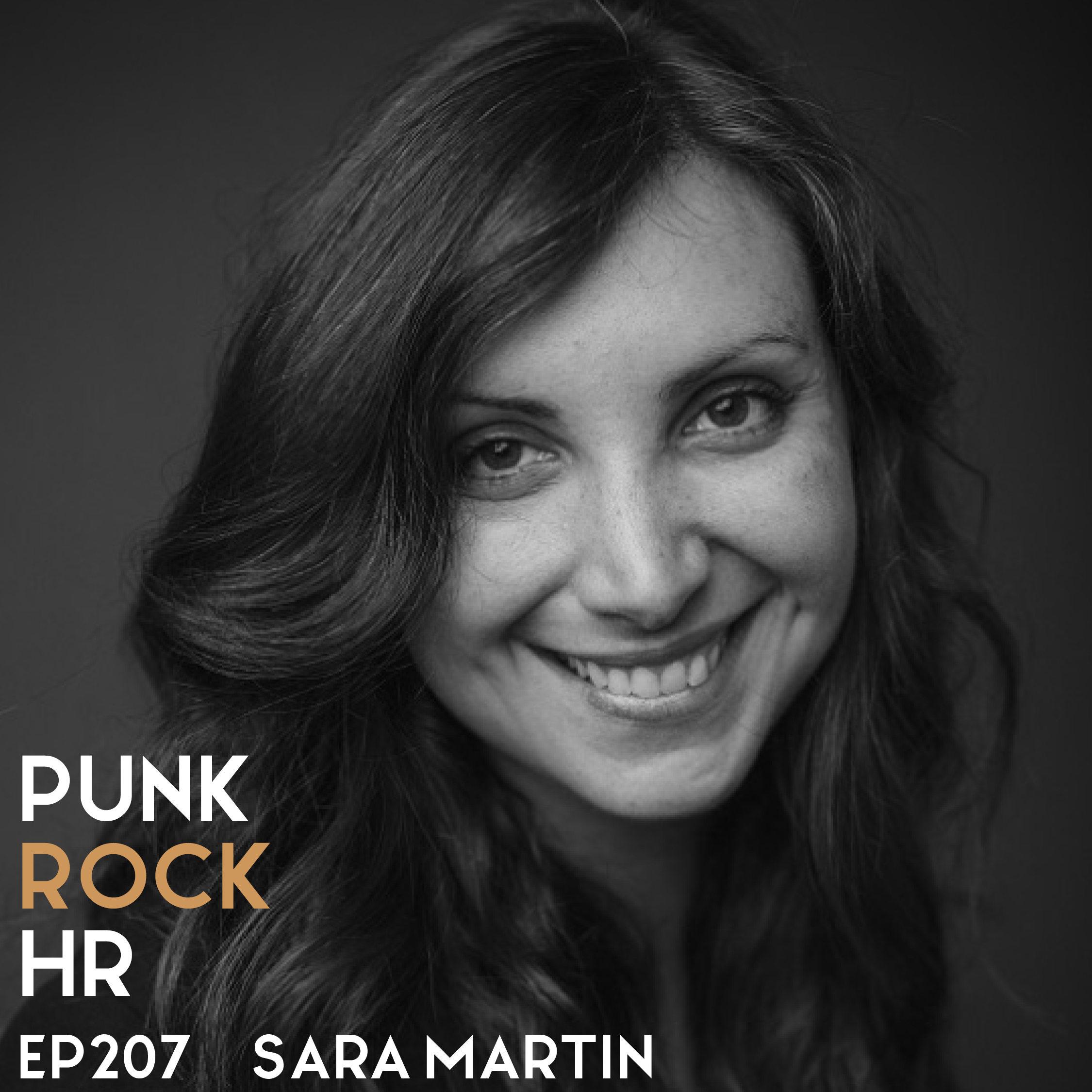
  • The Longevity Project with Ken Stern

    The Longevity Project with Ken Stern

    Back in the day, people only lived until they were 50 or 60 years old. Their paths were pretty much the same. Be born, possibly get an education, and definitely go to work. For the lucky ones, they’d retire.

    The map of living has fundamentally changed as people live longer, some to 100 and beyond, causing us to think about longevity — at work and in life. My guest today knows a thing or two about the evolution of longevity.

    Ken Stern is a podcaster and media executive who hosts Century Lives in conjunction with the Stanford Center on Longevity. This research center is described by Ken as “the world’s leading think tank on the impact of longevity on our lives.” Launched by a psychology and political science professor, Laura Carstensen, it’s all about changing the conversation surrounding longevity to how we reinvent our entire course of life with the “notion that longevity really begins at birth,” Ken says.

    Ken cares deeply about longevity, but it’s the overall notion that has pulled him in. “What I love about the topic is that it encompasses everything, and one of the interesting things that got me into this thing was the notion that we’re a much longer-lived society than we used to be,” he shares.

    If you are interested in talking about aging, work, meaning and purpose for people, then this episode is for you.

    Punk Rock HR is proudly underwritten by The Starr Conspiracy. The Starr Conspiracy is a B2B marketing agency for innovative brands creating the future of workplace solutions. For more information, head over to thestarrconspiracy.com.

    The New Map of Life

    The Stanford Center on Longevity does research on how work, geography, education and family structures influence our longevity. And this has been a central topic on season one of Ken’s podcast, Century Lives. It’s led to and helped formulate the center’s The New Map of Life initiative.  

    “The New Map of Life is the culmination of decades worth of work at Stanford about how to live longer, happier lives and more productive lives. It actually started with a challenge,” shares Ken. He says that Carstensen, the center’s founder, talked about the need for us to rethink how we live for years until she finally took the step to get people to rethink their lives — create The New Map of Life initiative. 

    The program looks at “all the segments of health care and work and retirement and how we organize our communities, which is a big challenge,” Ken says. “And the first report on it came out last fall, but it’s going to be an ongoing project as they work to describe it. Our role is to turn that into a little bit of a podcast form.”

    The Future of Work and Longevity

    When I think about my long-lived life and the life I want to have, I honestly don’t want to think about work. In Century Lives, Ken wants to challenge the common perspective of thinking about the long term. 

    “Most people who think about longevity in work think about longer careers,” he says. People live longer, meaning they’ll work longer, which isn’t all that appealing. And that’s why in season two, Ken wants to refocus the concept to make it less intimidating.

    “So the season of this podcast to really focus, how do you really invent careers so that idea is not scary? It’s actually ennobling and attractive to people, and how can they have multiple careers and ones that don’t kill them along the way?” Ken explains. The podcast season starts with young adults coming out of college and entering the workforce.

    Purpose Without Burnout 

    For me, contributing and being productive wherever we are for 50-plus years sounds exhausting, especially when it comes to how we treat our bodies, physically and mentally, in today’s world. I don’t think the modern lifestyle and body are built for a 60-year career without experiencing burnout. This plays against the idea of longevity for our jobs and future of work, and Ken explains that the perspective is different for everyone.

    People on the younger side of the workforce have a very similar outlook when it comes to retirement — they want to sleep late because they expect to be tired after a long career. However, that’s not the case for people in the older age groups. Ken explains, “If you talk to people who are 50, 60, 70, they’re not thinking about sleeping late. They’re thinking about, ‘How can I still have a purposeful life?’”

    It’s about looking for meaning and purpose in all parts of our journey. “So I think it’s not about our bodies breaking down. It’s about, how do you find purpose in all different stages of your life? And having enough time over the course of 50 years that your body doesn’t break down and you can still have that,” he says. 

    The future of work and our career longevity depend on several factors. Still, following the best research and advice, we must acknowledge the purpose of every milestone. “We think about health span, not just lifespan. So you get a health span that allows you to be productive and purposeful well into your 80s or 90s or someday, even beyond,” Ken says.

    [bctt tweet=”‘One of the interesting things that got me into this thing was the notion that we’re a much longer-lived society than we used to be.’ ~ @kenpstern. Tune into this episode of #PunkRockHR!” via=”no”]

    People in This Episode

    Full Transcript

    Laurie Ruettimann:

    This episode of Punk Rock HR is sponsored by The Starr Conspiracy. The Starr Conspiracy is the B2B marketing agency for innovative brands creating the future of workplace solutions. For more information, head on over to thestarrconspiracy.com.

    Hey everybody. I’m Laurie Ruettimann. Welcome back to Punk Rock HR. Back in the day, people lived to be 50 or 60 years old. They were born, maybe they got an education, they definitely went to work, and if they were lucky, they retired. Now, people live to be 100 years old or longer, and the map of living has fundamentally changed.

    My guest today is Ken Stern. He’s a podcaster and media executive who hosts the show Century Lives in conjunction with Stanford Center on Longevity. In this season of Century Lives, Ken is going deep into the world of work and exploring what it means to have a career when you live to be 100 years old. How do they do it in Finland? How do they do it in Iceland? What do kids today think about their careers and what they’ll be doing in 50 or 60 years? That’s what Ken is exploring.

    So if you’re interested in topics like aging and work and meaning and purpose, well, I invite you to sit back and enjoy this conversation about the future of work with Ken Stern. 

    Hey Ken, welcome to the podcast.

    Ken Stern:

    Hi Laurie. Nice to be here with you.

    Laurie Ruettimann:

    I’m super-pleased you’re here. Listen, why don’t we get started by having you tell everybody who you are and what you’re all about?

    Ken Stern:

    So I’m Ken Stern. I’m the host of a podcast called Century Lives from the Stanford Center of Longevity, and I write and think and talk to people about the impact of longevity on our lives and our society.

    Laurie Ruettimann:

    Why do you care about longevity?

    Ken Stern:

    Well, I care about it for a number of reasons. What I love about the topic is that it encompasses everything, and one of the interesting things that got me into this thing was the notion that we’re a much longer-lived society than we used to be. The lifespan has largely doubled in the last 150 years, but we still operate as if our lives are much shorter.

    Some of the rules of society: The retirement age of 65 was invented by Bismarck in 1880 when he was trying to figure out how not to pay people pensions. The idea that we get all of our education in the first quartile of life doesn’t make a lot of sense when you’re going to have 40-, 50-, maybe even 60-year careers. So, I love thinking about these topics and talking to people about these topics.

    Laurie Ruettimann:

    Ken, why don’t you tell us a little bit about your podcast?

    Ken Stern:

    So it’s called Century Lives, it’s from the Stanford Center of Longevity. The Center of Longevity is the world’s leading think tank of the impact of longevity on our lives. We launched it in January. Season one was about what we call the New Map of Life — just how do you reimagine society across all these different segments in light of longer life. Season two, which comes out in May, it’s all about the future of work in light of longer life. I’m super-excited about that topic.

    Laurie Ruettimann:

    I know you’re intertwined with Stanford and have a great relationship with them, so tell us a little bit more about it.

    Ken Stern:

    So the podcast, actually, that I host is their podcast. So I’ve been working with them on podcasts and other things for a couple years. The Stanford Center on Longevity was launched by a psychology and political science professor at Stanford named Laura Carstensen about 12 years ago, and the group that has really tried to change the conversation about longevity to one about aging and the challenges of aging to one about how do we reinvent our entire course of life? With the notion that longevity really begins at birth. If you really want to think about healthy productive century-long lives, you have to think about the entire life course in new ways.

    Laurie Ruettimann:

    Why do you tell us a little bit about the future of work and why you took that on as a topic for season two of your podcast? Because when I think about my long-lived life and the life I want to have, I don’t want to think about work, but you tell me, why did you want to tackle the concept of work?

    Ken Stern:

    Well, it starts with the question, which is most people who think about longevity in work think about longer careers. So when I start talking to people about, hey, in the future, maybe not me, because I’m a little bit on the old side, but my son might need to have a 40-, 50-, 60-year career. That makes people [want] to push me off the top of a building, because that idea is not particularly appealing. And I understand that.

    So the season of this podcast to really focus, how do you really invent careers so that idea is not scary? It’s actually ennobling and attractive to people, and how can they have multiple careers and ones that don’t kill them along the way? And that’s the topic we try to tackle. Starting with kids coming out of college. So the season starts with kids at Stanford, Stanford Podcast, them embarking on their 50-year career, and will go all the way through older workers and the new retirees.

    Laurie Ruettimann:

    So before we talk about all that, I just wonder if we can stop for a second and answer this question: Is the notion of a career an old-fashioned idea? Because if I recall the language on the Stanford website and I’ve listened to your podcast. There are three structures to our lives: the idea of being born, and being educated in the early part of our career, and then retirement. That’s an old way of thinking. And the work you’re doing today with Stanford is all about the new way of living in the new way of work.

    Ken Stern:

    So we’re used to thinking of a career as almost a continuous thing, and we already know that’s changing. So one of the people we interviewed has written a book called “The Squiggly Career.” So it’s not up and to the right, it’s all over the place. Average person will have 25 different jobs and three different careers. And if it makes sense, it’s going to be needed to be broken up by education and caregiving and time off to recharge. So that unbroken —

    Laurie Ruettimann:

    Or also illness or age, or —

    Ken Stern:

    Exactly.

    Laurie Ruettimann:

    — all sorts of things that get in the way of living and thriving.

    Ken Stern:

    Mental health breaks, just the known unknowns. Donald Rumsfeld was famous for saying the known unknowns. I don’t know what’s going to happen in that 50 years or 60 years. Something unexpected it’s going to happen.

    Laurie Ruettimann:

    Ken, I’ve got to be honest with you. For me, it feels like this idea of contributing and being productive wherever we are for 50 or 60 years — well, it sounds exhausting, especially the way we treat our bodies today. So maybe we can start there because I don’t think the modern lifestyle and the modern body is really built for a 60-year career. I don’t know if I feel like I can do another eight- or 10-hour day in 20 years. I’m not sure I’m built for that. So you tell me, what does the future of work look like and what did you discover as you were doing your reporting?

    Ken Stern:

    So that question looks very different depending on who you ask. So if you ask people on the younger side, 25, 30, what do they think their retirement looks like? They will answer, “I want to sleep late.” Because they view, like, “50 years, I’m going to be exhausted and tired.” But if you talk to people who are 50, 60, 70, they’re not thinking about sleeping late. They’re thinking about, “How can I still have a purposeful life?”

    So I think it’s not about our bodies breaking down. It’s about how do you find purpose in all different stages of your life? And having enough time over the course of 50 years that your body doesn’t break down and you can still have that — we think about health span, not just lifespan. So you get a health span that allows you to be productive and purposeful well into your 80s or 90s or, someday, even beyond.

    Laurie Ruettimann:

    Ken, I approach this topic as a 47-year-old who feels tired all of the time, but I’m American. And I think, boy, this lifespan of mine, it’s taxing. But you go and report on work and lifespans in countries other than here in America. And I would imagine that lifespan and health span and education differ greatly based on geography. So can you talk to us about that?

    Ken Stern:

    Yeah. So in the run-up to season two, we’re doing special episodes on different work cultures. So we start with Iceland, which is the first country formally go to a less-than 40-hour workweek and talk to people who use that extra time just to recharge or take care of family or do things that help them really have a well-rounded life. We talk a lot about work-life balance, you got to adjust the hours. This week it’s Finland, and the notion of radical flexibility from where you work, what hours you work, and give you time to approach work differently.

    And the next one, which I think in some ways the most interesting, is Singapore, which along with Japan is the longest-lived society. And they’re tackling that question of, OK, people are going to work longer, but they need to work differently. So they still have a retirement age of 62 or 63. But after that, the government encourages reemployment, but in different work in a way that allows them to have life flexibility that’s important and appropriate to that age. So finding that right balance. Other countries are very intentional about it in ways that we aren’t in the United States. But I think you can learn a lot by listening to what other countries are doing, what other companies are doing.

    Laurie Ruettimann:

    Do you take a radical position in this season on what the future of work should look like? Do you plan a flag? Do you say what it should be? And more importantly, what it shouldn’t be?

    Ken Stern:

    I hope so. We’re still producing it. So that is to be determined because, truthfully, we’re still doing reporting, but I think the answer is yes. I mean I think it starts with a notion that you’re not going to have a happy, productive 40-, 50-year life if all you’re doing is working and there’s no time for other things that are important and there’s no space. It’s a current thing to say, but historically it’s a very un-American thing to say. Max Weber in [“The Protestant Ethic and] the Spirit of Capitalism” really pervades how we think about work. But if you’re going to have that work-life that fits into 100-year life, it’s going to be a very different work world, which is hopefully one we describe.

    Laurie Ruettimann:

    So call me crazy, but I don’t think you can have a long-lived life if all you do is work. And I’m a little concerned about that, because I’m in the world of human resources right now. And we are trying to have a conversation around progressive people practices and conscious capitalism and treating people well. But I know that a lot of it is talk, and some of the tenets of progressive people practices, well, they’re actually antithetical to profit and profitability and revenue.

    So I think there’s this natural tension in the system, and it feels nearly impossible to live a life that’s long and well-lived and also work in a capitalistic society. And the people who are doing it really well, well, those are the people who are born at third base. And I just wonder if we can actually live the long lives that you talk about and still have the system that we have. Don’t we need to light it on fire?

    Ken Stern:

    So I’m going to start off by at least questioning the issue of a trade-off between hours of work and productivity. That’s a long discussion. I mean the 40-hour workweek was challenged before Henry Ford put a flag in and said, “This is what we’re going to do.” It was challenged, like, “how could you lose profits and have people work less?” And it was productivity studies that showed that at 40 hours, people actually were more productive than they were at 50 hours. And what Iceland has found, or at least arguing, that it’s going to be the same at 36 — people are more productive when they have more time and are better-rested.

    I think that notion of a trade-off has to be — it’s not a trade-off. It’s necessarily real. I mean, one of the things John Maynard Keynes, the greatest capitalist economist, predicted that his grandchildren would only work 15 hours a week because they would trade productivity gains for more leisure time. And it hasn’t happened — literally for his grandchildren, NPR interviewed them. But I think that’s got to happen. I mean, it’s the nature of capitalists. We got to buy a little more leisure time for us to be effective over longer lifespans.

    Laurie Ruettimann:

    Well, I don’t disagree with that. And I also think there’s this emerging conversation around basic income or guaranteed minimum income that makes sure people aren’t working themselves to the ground, and they aren’t falling behind, and they can do other things and create a long-lived life. So while we’re at it, what is it that makes someone have a long-lived life? I mean, we’re dancing around it. We’ve talked about the importance of structuring work so that people can live a long-lived life, but what are the criteria?

    Ken Stern:

    So there are a lot of different factors that affect, often at childbirth. So there’s a geography of long-lived life to begin with. So I live in Washington, D.C. And if you have the good fortune to be born in Georgetown, you lived to 94. And if you had the bad fortune of being born in Anacostia, you lived to 67. So things happen early, and it’s access to good foods and stable families and education. All those matter in terms of what — early on, whether you’re going to have that long-lived life. And that’s an investment that we should be thinking about.

    But more than that, it’s lifelong learning. For people who are active mentally, schooling doesn’t start and end at high school or college. They continue to be mentally engaged — which is why work actually matters to lifelong health — and almost invariably do better. And the other thing that actually is family. So we often assume — the health span is often tied to income, but it’s also tied to family structure. And if you have strong networks and strong family structure, multi-generational families that take care of each other tend to be longer lived. So a lot goes into health span and living well.

    Laurie Ruettimann:

    So all of that research that’s being done at Stanford that you about in the first season of your podcast, really formulates this New Map of Life. So I want to make sure that we describe that. Can you tell us what the New Map of Life is?

    Ken Stern:

    So the New Map of Life is the culmination of decades worth of work at Stanford about how to live longer, happier lives and more productive lives. It actually started with a challenge. So Laura Carstensen, who I mentioned earlier, who founded the Center on Longevity, has been talking about these issues. We need to rethink how we live — for quite a number of years. It’s her research she’s been thinking about.

    And after a while, some of her colleagues and funders and partners said, “Well, that’s great that you’re talking about it. We need to rethink it. Why don’t you do it?” That was born the New Map of Life project, which is how do you [rethink] all the segments of health care and work and retirement and how we organize our communities, which is a big challenge. And the first report on it came out last fall, but it’s going to be an ongoing project as they work to describe it. Our role is to turn that into a little bit of a podcast form.

    Laurie Ruettimann:

    Well, and this conversation around rethinking work and making sure that we’re aligning all of the different aspects of our lives to a better way of living. This conversation is so important and so prescient right now, because everybody’s talking about the Great Resignation. So I just wonder, what are your thoughts on the Great Resignation and where does that fall in with season two of the podcast?

    Ken Stern:

    So the Great Resignation is in many ways an unexpected accelerant of a lot of these trends around work about the fight for work-life balance. The idea of remote work, which was fairly foreign in the US — very commonplace in a place like Finland — but very foreign in the US until now. And I think it’s brought to a head a lot of these issues that people have been talking about, which is like, “how do you redesign work in a way that makes sense over longer life?” And all of a sudden there’s a real-life public experiment in that. 

    And it’s proved, I think, that some of the things that people speculated about could really help people, in terms of remote work and more flexible hours — that they could be trusted with it — is actually proven true in real life. And the question, I think, is a natural experiment: It continues as companies clamor to bring people back to work, or is it a moment in time that we all remember at some point as like, “Oh, that’s how it worked for those two years.”

    And I think from our perspective, as we do our report on this: If the pandemic hadn’t happened, we’d be describing how people worked during the pandemic. More flexible work, the fight for work-life balance, the fight for flexible work hours, the fight for caregiving opportunities and the need for more learning opportunities. All those happened during the pandemic, and the question of whether those are sustainable or not.

    Laurie Ruettimann:

    I think one of the really interesting things about the Great Resignation is that it’s forcing a conversation around power and whether or not people will even come back to work and their expectations of what work will look like. And I wonder if you have an opinion right now about that shift in power between workers and employers, and what’s happening on the ground, not just in professional business environments, but in health care and retail and all sorts of industries around the world.

    Ken Stern:

    I have no idea how it’s going to shake out. I can make a prediction, but it’s a coin flip for me. I hope it works out that what employers asking for — so there are a couple of things that are happening. One of which is, it’s “Take This Job and Shove It,” the old Johnny Paycheck song. A lot of the Great Resignation is about bad bosses, in the notion that I can find — either because I can walk down the street to another job and find it, a better job, or through technology, I have access to a world of jobs that didn’t exist before. But it’s mostly about labor shortages, and that gives workers powers to claim a work situation that is better for them and better for their families. I think labor is probably more cyclical in that upper hand that labor has right now might pass, but I hope not, because it’s been out of whack the other way for way too long.

    Laurie Ruettimann:

    I have this working theory that it’s not a Great Resignation. It’s a Great Talent Swap. Doesn’t matter the openings. There were openings before COVID, and there are going to be job openings now and for time in memoriam. But people are just flopping around from one job to the other, and they’re not really truly aligning themselves with their values, with their goals. They’re not really taking the time to think about what they want in their careers, and they’re just swapping out one terrible position for another. And I mean, maybe something is happening with their paycheck, but they’re definitely not moving ahead emotionally. They’re not moving ahead and working at that intersection of purpose and meaning. They’re just swapping out one experience for the other. So I wonder if you have any thoughts on that or any reflections or any insights.

    Ken Stern:

    So I think that’s largely right, but not exclusively right. So I think there’s a bunch of different things going on. I think the biggest thing is, the fact people are looking for a better job and the hope that the grass is greener, which is not always true. But there are a lot of early retirements as older workers find it hard to reintegrate into the workforce, which is a long term

    Laurie Ruettimann:

     — wait, are those early retirements or are they almost forced retirements?

    Ken Stern:

    And that’s a good question. I think it is — most of them are probably retirements forced by circumstance. And there is, I think, people leaving the workforce for caregiving and things like that, for sure. But the one thing I would say, I’m 58. So I’ve had resumes and I’ve looked at resumes for decades now. I think one thing has changed for sure. If I saw the resume of someone who had 10 jobs in a decade in the past, I would’ve just said, “There’s something wrong with that person. They can’t hold a job.” I think that has changed. The idea of declining job tenure. There’s changes in expectations to how long you’re supposed to be a job. So I think some of the job-hopping reflects society and that’s OK. It’s OK for you to look for a better job, circumstances for you and your family, which I hope is a good thing.

    Laurie Ruettimann:

    Yeah. I hope so, as well. Well, I’m super excited for season two of the podcast. And if there’s one thing you want to leave our listeners with, what do you want them to know about the upcoming season that you’re excited about?

    Ken Stern:

    So this is more about me and I hope about your listeners, as well. I’m excited about going out and talking to actual workers. So it starts with, we have a lot of professors and experts and they’re great, but the conversations that I love is, starting with episode one, which is talking to kids at Stanford about what that career looks like and with their faculty adviser and how wrong they are. But that’s the privilege of youth … We’re going to go to Kentucky and talk to blue-collar workers about their future of work. We talk to older workers, and that’s really the fun thing, is actually hearing real stories that, I think, really demonstrate and illustrate what the future of work hopefully can look like. And hopefully, at the end of the day, we can come back and answer your question and say, “yes, we put a flag in the ground, and this is what the future of work needs to look like.” So to hear about the podcast, they should go to, well, either wherever they get their podcast, Apple or Spotify, or to longevity.stanford.edu.

    Laurie Ruettimann:

    Perfect. Well, Ken, it was a pleasure talking to you today. I hope you come back and let us know how things shake out for the future of work.

    Ken Stern:

    I’d be thrilled to do it. Great talking with you, Laurie.

    Laurie Ruettimann:

    Hey everybody. I hope you enjoyed this episode of Punk Rock HR. We are proudly underwritten by The Starr Conspiracy. The Starr Conspiracy is the B2B marketing agency for innovative brands creating the future of workplace solutions. For more information, head on over to thestarrconspiracy.com. Punk Rock HR is produced and edited by Rep Cap with special help from Michael Thibodeaux and Devon McGrath. For more information, show notes, links, and resources head on over to punkrockhr.com. Now that’s all for today and I hope you enjoyed it. We’ll see you next time on Punk Rock HR.

  • The Diversity Movement with Donald Thompson Jr.

    The Diversity Movement with Donald Thompson Jr.

    My guest on this episode is Donald Thompson Jr., co-founder and CEO of The Diversity Movement, a full-service DEI consultancy with specialized technology. They have built a community and a team that includes business strategists, nationally recognized TEDx speakers and certified diversity executives. 

    Donald and I talk about things that organizations do right and wrong when talking about DEI, go deeper into his organization and discuss how he walks the talk as a diverse and inclusive leader every day. I love Donald not only because he’s a North Carolina neighbor but also because he’s got a smart view on the intersection of diversity, equity, inclusion, belonging and technology.

    “[E]verything that needs to be addressed doesn’t need dynamite. You don’t have to blow up the room to make a change in a positive way.” Donald declares. So, if you’re interested in a realistic and helpful conversation that’ll help leaders take real action during Black History Month and beyond, sit tight and listen to this episode of Punk Rock HR.

    The Starr Conspiracy

    Punk Rock HR is proudly underwritten by The Starr Conspiracy. The Starr Conspiracy is a B2B marketing agency for innovative brands creating the future of workplace solutions. For more information, head over to thestarrconspiracy.com.

    Does your company have a Reverse Mullet? Join Laurie Ruettimann and The Starr Conspiracy’s VP of Market Insights Lance Haun for a free webinar to learn about a Reverse Mullet and why companies should adopt this ethos. Don’t miss out and register today!

    What is The Diversity Movement?

    When we hear the word “diversity,” many people automatically associate it with race, but diversity means more than race. DEI encompasses a range of areas, including disability, generational, geography, gender, sexual orientation and, of course, race.

    Donald says that when we think about all the aspects that make individuals unique and truly amplify them within the business, that is what diversity, equity and inclusion is all about at its highest level. “We set out as The Diversity Movement to create a team of business leaders that can link diversity, equity, inclusion to the financial outcomes of an enterprise,” he says.

    This approach has made them the leading marketplace in the industry. They’ve had significant growth within the last 12 months by creating a micro-video collection totaling “over 500 three- to five-minute vignettes on DEI topics” to assist on the learning journey. However, The Diversity Movement didn’t stop with the videos. It has built a digital learning space and utilized artificial intelligence tools to answer typical DEI questions through mobile applications. This enables organizations to support their portfolios with analytics “so that the leaders understand what the sentiment in their organization really is, not what they think it is,” Donald says.

    Challenges That Are Slowing Progress

    Diversity has become a hotter topic within the world of work, but it can be challenging to stay optimistic. Leaders and professionals must be intentional about what they are doing, but it can be tough to see change and be optimistic when people are “set in the narratives that pull us apart,” Donald says.

    Historically, this comes back to how much it costs to instill these practices, and many organizations have found it cheaper to stay in the negative narrative. “There’s money in negativity. And when there’s money in something, that means there’s going to be a bunch of it, whether it’s media, whether it’s politics, what have you. And so that is something to where we are pushing a positive message uphill,” he shares.

    That is the reality in which we live, but it’s essential to understand that change doesn’t happen with the snap of our fingers. Changing the narrative involves continuous and intentional work while being open to other ideas.

    “The way that I think about it is very simple: If someone’s critical, my goal is to move them to curious. If somebody is curious, then I want to move them to engage. But we’re not trying to take somebody from curious to engagement in one step. We’re just trying to create an expansion of ideas,” Donald states.

    Leaders Taking Initiative

    So how do you start? When it comes to utilizing The Diversity Movement, the people who buy its products have different behaviors depending on the number of people within the organization. 

    Donald shares that, with smaller organizations, the CEO is hands-on in developing and implementing DEI strategies. While for bigger organizations, these processes are handled more often by HR leaders or DEI teams solely focused on bringing more diversity into the organization.

    These are the areas Donald and his team sell to while emphasizing the importance of education being a top priority. “Diversity, equity, inclusion is a very personal initiative for leaders because you have to be open to talk about what’s not working on getting to the other side of what the future state should be,” Donald says. “And so that means we provide a lot of free education, whether it’s our website or our free webinars, so you get to know our team.”

    [bctt tweet=”‘Everything that needs to be addressed doesn’t need dynamite. You don’t have to blow up the room to make a change in a positive way.’ ~ @DonThompson_Jr, co-founder and CEO of @diversitymvmt. Tune in to #PunkRockHR to learn more about Donald’s work!” via=”no”]

    People in This Episode

    Full Transcript

    Laurie Ruettimann:

    This episode of Punk Rock HR is sponsored by The Starr Conspiracy. The Starr Conspiracy is the B2B marketing agency for innovative brands creating the future of workplace solutions. For more information, head on over to thestarrconspiracy.com.

    Hey, everybody. I’m Laurie Ruettimann. Welcome back to Punk Rock HR. My guest today is Donald Thompson Jr. He’s the co-founder and CEO of The Diversity Movement. They are a full-service DEI consultancy with really special technology and a community in place, and a team that includes business strategists, nationally recognized TEDx speakers and certified diversity executives. On today’s show, Donald and I talk about the things that organizations do right and the things they get wrong when talking about DE&I. We also go deep and talk about his own organization and how he walks the talk as a diverse and inclusive leader. I love Donald not only because he’s a neighbor with me here in North Carolina, but because he’s got a smart take on that intersection of diversity, equity, inclusion, belonging and technology. So if you’re interested in a realistic and super helpful conversation, especially during Black History Month, well, sit tight and enjoy this conversation with Donald Thompson Jr. 

    Hey, Donald. Welcome to the show.

    Donald Thompson:

    Thanks for having me. Super-excited to be here.

    Laurie Ruettimann:

    Well, I’m pleased to have you, neighbor, colleague, all the good things. Why don’t you tell us all who you are and what you’re all about?

    Donald Thompson:

    My name is Donald Thompson. I like to introduce myself as the son of a football coach. That means I enjoy teams, competition, and try, fail and adjust is kind of part of my DNA. From a business standpoint, I’m the co-founder and CEO of The Diversity Movement, and we help folks productize their diversity, equity, and inclusion journey. So we have tools from micro videos to digital learning to mobile applications that really help HR leaders systematize a DEI program.

    Laurie Ruettimann:

    So, Donald, I think I heard you say, “Try, fail and learn.” What’s that all about?

    Donald Thompson:

    Well, one of the things that when we think about ourselves or I do as a corporate athlete, right, that means mistakes are OK as long as you learn from them, right? It’s not the mistake, it’s really the progression of improvement. And if you improve a little bit in each outcome, then you’re going to be pretty amazing at what you put your mind to. If I have any superpower, it’s the fact that I don’t let mistakes become the fuel. I let the learning from the mistakes become the fuel for my future success.

    Laurie Ruettimann:

    Well, I really love that and appreciate that. I’m someone who only learns by failure, as most of us do. But I think there’s this tendency right now in our corporate cultures and maybe in society at large to be really afraid of making mistakes, yet people make mistakes all the time, right? So can you talk a little bit about that tension and how you see that manifesting in the workplace?

    Donald Thompson:

    As much as we talk about autonomy and broadening the tent for decision making, we’re still in a society that values hierarchy. And you’re still trying to please your boss. You’re still trying to look good for shareholders or investors. And so there is a tension between being innovative and trying new things and really understanding how to emotionally internalize failure. It’s really about courage and safe space, it’s two things that are really, really important. Anywhere I’ve worked with a leader, I’ve grown my career where I was able to exemplify courage. But that leader gave me the safe space to be accountable but to learn from that failing is where innovation lives. And the reason that folks find it so tough in this day and age is there’s so much tension around saying the perfect words, around all the things that separate us. We’re all kind of walking on eggshells these days. And it’s really unfortunate quite frankly, because that limits the enthusiasm and the energy we can put in our work, because we’re always kind of looking over our shoulder a little bit.

    Laurie Ruettimann:

    Well, I hear that from my friends and colleagues who are at work. They’re afraid of saying the wrong thing, or someone has said the wrong thing and they’re afraid of voicing that and having a conversation for concern around backlash and career implications. Who goes first? How do we get to the heart of this?

    Donald Thompson:

    Oh man, there’s a thing that I will say. And I’ll use a really quick story where you can be firm and gracious. So I was in a meeting and this was several years ago, and I’ll be really brief, when I wasn’t a CEO. I wasn’t a leader. I wasn’t an investor. I was an up-and-coming emerging person within a company. And so the fear and the temperature is a little different. And I heard somebody say something that wasn’t appropriate in a corporate boardroom. And they used the term “Indian giver.” And so at that moment you have to decide, do we say something now? Do you take it offline? Do I just let it go because it’s not my place? And so, in that moment, I had to exemplify courage and say, and I made it firm, but gracious.

    And I said, “John,” just for lack of a better name to use, to protect any privacy. “That’s not the way I remember that term, even though I’m not amazing in history.” And then the room went silent. And John said, “Don, can we take this offline to apologize? And I’d like to chat with you after.” And I said, “Absolutely.” But in that moment, I decided not to be over the top with it because that’s also not necessarily professional in every situation. But also, I needed to level set that something was said that wasn’t appropriate, and it needs to be dealt with at some point. A lot of times who goes first is we’ve got to give ourselves the room as leaders, and a lot of folks on your listening audience or leaders, to not let things go that need to be addressed. That everything that needs to be addressed doesn’t need dynamite. We don’t have to blow up the room to make change in a positive way. And that’s something that I think is super-important.

    Laurie Ruettimann:

    Well, I love the way this conversation kicks off because I know that you’re passionate about so many things, leadership development, diversity and inclusion, right? Just the next crop of leaders in general, right? This new and burgeoning movement of workers who are growing up in the world of COVID. So let’s get started by talking about what you’re currently doing today. Tell us all about your organization.

    Donald Thompson:

    And thank you for that space. I really appreciate it. So The Diversity Movement, and one of the things when you hear the word diversity, I try to help people along. It’s more than just race. I talk to folks about the kaleidoscope of DEI. Disability, generational, geography, and yes, race, gender, sexual orientation. But when we think about all of the things that make people unique and amplify those things for the better good of the business, that’s how I describe diversity, equity, inclusion at a very, very high level. We set out as The Diversity Movement to create a team of business leaders that can link diversity, equity, inclusion to the financial outcomes of an enterprise.

    And that’s why we’re winning in the marketplace. We’ve grown from zero to 95 clients in the last 12 months. We are unique in that we have productized the DEI journey, meaning we have a portfolio of micro-videos that have over 500 three- to five-minute vignettes on DEI topics that can go into the learning journey. We have digital learning and courseware, but we also have mobile applications, AI tools to answer questions for people so that the DEI leader doesn’t get bogged down in answering the same basic questions over and over again. And then we underpin that product portfolio with analytics so that the leaders understand what the sentiment in their organization really is, not what they think it is.

    Laurie Ruettimann:

    Well, I like how you tie it to results. I mean, I don’t need someone to tell me that there’s a business case for people being decent human beings, right? I don’t need that, but so many organizations want to tie their diversity, equity and inclusion and belonging efforts into financials. So tell me, what is the case? And do we really need to make the case in 2022?

    Donald Thompson:

    The thing in 2022 is not making the case for “why,” but people are struggling with the “how to.” Managers are inundated with these new things that they have to learn. But they grew up in the organization as a rockstar engineer, a rockstar sales professional, a CFO that the numbers are just right and the forecasting for the business is on point. And now we’re asking those same leaders to understand belonging, to understand the emotive component of things that they weren’t equipped to do. So the “how to” means we have to create mentoring opportunities in the flow of work, so to speak, where we are giving people the opportunity to learn how to give better feedback in an inclusive leadership way, right?

    Because that’s what leaders do, they give feedback. It is how to create mentorship and sponsorship in an inclusive way, because that’s what leaders do. It’s not that we need just more talent. It’s, how do you create a resume and a recruiting process that broadens the tent? So we’re very focused in 2022 on the “how to,” because the “why” is what most everyone is talking about. But the “how to get it done” is I think the missing component.

    Laurie Ruettimann:

    Yeah. How to get it done. And then I guess how to pay for it is the other equation out of this. So when you sell into an organization, who’s buying your product? Who do you work with?

    Donald Thompson:

    So it is a couple of different personas. It’s the CEO when it’s a business that’s usually under about 500 folks. That individual is still leading in a very hands-on way. When it’s an organization 500-plus, now you’re talking into learning and development, your HR leader. And some folks do have a diversity, equity, inclusion team, depending on their size, their scale and readiness. And those are kind of the functional areas that we sell into. The thing that we describe is that we educate first and the sales process becomes more natural. Diversity, equity, inclusion is a very personal initiative for leaders because you have to be open to talk about what’s not working to get to the other side of what the future state should be. And so that means we provide a lot of free education, whether it’s our website, our free webinars, so you get to know our team. And then when you trust us, then you’ll ask us questions. When you ask us questions, you’ll evaluate us. Once you evaluate us, then we can talk about how to do business.

    Laurie Ruettimann:

    Well, I’m really fascinated by the creation of a tool, whether it’s a mobile tool or an AI tool, that really lightens the load of diversity, equity and inclusion officers, right? These are generally African American women who are bogged down answering the same questions over and over again. So how are you lightening their load?

    Donald Thompson:

    So what we found, to really zero in that demographic, is they’re spending 10 to 15% of their time on those basic DEI questions, and they’re not able to really track it and scale. So our AI tool basically has compiled the top 1,000 questions and not only given those answers, but then links to very specific resources that they can refer folks to. So we’ve basically taken individual questions that we’ve learned, research that we’ve done, and we basically have created a chief diversity office in a box. And that’s whether it’s white papers, videos, podcasts or through our AI tool. And people like it very much.

    Laurie Ruettimann:

    So Donald, you know I have to ask you some of those top questions that these diversity officers are fielding. Humor me, what are some questions that they get over and over again?

    Donald Thompson:

    “Is DEI a fad?” is one of the ones that they get over and over again, because there’s a resistance to learning something new. And so the way we answer that question, quite frankly, is not necessarily even from a racial perspective, but from a demographic shift of our society as a whole. We’re becoming a more multicultural country. More and more people are being educated at higher and higher levels from all different types of ethnicities. There’s not a way to avoid it. I think about it like this. 20, 30 years ago, people were saying, “Is rap music a fad?” And now it is one of the most dominant cultural movements for business, for entertainment, across the world. And so whether or not it’s a fad is not the question, is it going to move from a fad to a trend to a part of our daily business fabric? And that’s how we talk about that one question, but we get that a lot.

    Laurie Ruettimann:

    I love it. All right. One more question.

    Donald Thompson:

    So another one that we get quite frankly is, “Where do I fit in if I’m a middle-aged white professional in this DEI movement?” And that question comes from a place of a couple of different elements. Number one, it’s a little bit of fear because quite frankly, when I talk to leaders and business folks that fit in that demographic, they’re a little tired of being the villain in the room in every meeting. I get why it is. But if we’re trying to motivate a group of people to move a dialogue forward, then we can’t talk about inclusion and create exclusion in the same conversation and expect to go forward. And so we try to have the conversation to where not only is everybody included in it, but we look at points of view of the majority, even while we’re looking at the underrepresented folks that need to have their moment, as well.

    Laurie Ruettimann:

    I don’t know how you stay optimistic doing the work that you do, because you can get some pretty cynical, dark questions I would imagine. And you might also see organizations that get in their own way of making progress. So what are some of the things that slow an organization down on their DE, and I journey?

    Donald Thompson:

    So one of the things I’ll speak to, and then I’ll answer the question, is I am a pretty significant optimist. But there are days that are tough because people are set in the narratives that pull us apart. There’s money in negativity. And when there’s money in something, that means there’s going to be a bunch of it, whether it’s media, whether it’s politics, what have you. And so that is something to where we are pushing a positive message uphill. And that’s the reality of it. The second component to your question is, as we look at evolving this dialogue, we’re not looking to change everyone at once. The way that I think about it is very simple: If someone’s critical, my goal is to move them to curious. If somebody is curious, then I want to move them to engaged. But we’re not trying to take somebody from curious to engagement in one step. We’re just trying to create an expansion of ideas.

    Laurie Ruettimann:

    Yeah, I get that. I mean, I love the analogy you made to Sisyphus and rolling that boulder up a hill because that can be pretty daunting. But if you do it slowly, a couple of inches at a time, I can see how you would make some progress in this journey. That makes sense to me. You mentioned that there’s budget for negativity. And I see that in this world. I also see that there’s budget for good in a lot of large enterprises, a lot of large organizations. But sometimes there’s not budget in the small companies that need this most. So if you’re an organization with fewer than a hundred people, or you’re an entrepreneur, and you’re interested in taking your team, your organization on this journey, how do you get started?

    Donald Thompson:

    So one of the things that I would recommend very specifically to your audience is go to thediversitymovement.com and get inundated with our free content. For example, let me be very specific. We are in Black History Month right now. And if you’re a small organization without a DEI team, go to thediversitymovement.com and we have a free, very detailed guide about how to introduce this programming into your organization. We’re simply here to help, because our mission certainly has to do with monetization, but it also has to do in good in the world. So we have a lot of free content for that small-business leader, number one.

    And then number two, and this is really important. We’re scaling out a program that will be launching in March, and so hit us up if you’re interested in being part of the beta, to where we’re building a membership program specifically for small- and medium-sized businesses. So that for $10,000, you can join one of our cohorts. You can have access to our best practices. You can have one-on-one coaching, unlimited email and phone support, because we refuse to leave anyone behind that wants to do more and better in this DEI journey.

    Laurie Ruettimann:

    I wonder why you do what you do. Everybody has an origin story. What’s yours?

    Donald Thompson:

    So my origin story is, obviously you can’t see me, but I am a Black man. And I’ve been very fortunate, and I have privilege. Privilege is not based on your color. It’s based on your circumstance and your experience. I grew up in a family with two parents. I was very fortunate to get a great education. I have had a lot of experiences. And my origin story leads me that I’ve got to give back. My responsibility with any success that I’ve had is to now do something with this moment in time to where I can make a major difference that will be global in its effect.

    One of the things I’ll give you an example is, I was on the phone with folks, just today, with folks from four different countries. Talking about how to create DEI from a global perspective, because it’s just not something that’s affecting us in North America. It is now something that we’re rethinking as a society as a whole. And so that origin story of David versus Goliath, always about, how do I help the underdog slay the giant? And that sums up kind of who I am and what I want to do both now and in the future as best I can.

    Laurie Ruettimann:

    Well, I love that you’re slaying the giant as an entrepreneur, as a tech innovator. I mean, I think all of that’s very cool. There’s so many times when I interview individuals who start a company and build software to solve a problem, and they don’t solve it within their organization. I can’t tell you how many times I talk to a tech entrepreneur who’s passionate about employee engagement, and his own employees hate that company. So I just wonder, what’s your team like? And what are you doing to ensure that you live your values and you walk your talk at your own organization?

    Donald Thompson:

    I love the question. Appreciate the accountability layered into that question. It’s awesome. I’ll give you an example of something we did today. So we took an hour and 30 minutes with our staff. We’re a small team, about 20 folks. And we had a mental health professional come in and talk about how to de-stress your work-life balance, and basically create integration. So every two weeks we try to model that learning mentality, number one. Number two, we take feedback, and I’ll give another example. So before the holidays, we had a team meeting, a team Zoom call, and I asked each one of our team members to tell us something that we’re not doing right. And I got a lot of comments.

    Donald Thompson:

    Right? I got a lot of comments. But we’re addressing each one of those comments one by one. And we have a team meeting on the 24th where I will give that feedback on those comments, number two. And then number three, like any organization, when you have turnover, we listen to the folks that love what we’re doing. And then we listen to the folks that didn’t have an amazing experience for some reason. And there’s learning in both. To have a great organization means to have an authentic one. And that means everything’s not perfect on every day. But you got to get better from it so you don’t keep repeating the same mistakes. And those are some of the things that are kind of embedded in our culture, with a few specifics to give the audience some examples.

    Laurie Ruettimann:

    Well, I love where you’re going with this because not only are you trying to model an example of what it means to be a modern-day leader within your own organization, but you’re teaching it. And you’re trying to really reach down to organizations that may or may not have the necessary budget to acquire technology, right? So you’ve got your program starting up in March. I mean, these are all amazing endeavors. As we start to wrap up the conversation, what do you want to leave the audience with knowing about you, your movement, your tech, and what you’re trying to accomplish in this industry?

    Donald Thompson:

    Innovation lives where people come together to collaborate with a purpose. And so wherever you sit in the DEI journey, join our newsletter, sit in on some of our webinars. Before we even talk about a purchase or buying decision, I just encourage people to get to know us. And even if you take that good idea and implement it, just give us feedback on how it worked out, because there’s so much work to do. We’re just quite frankly, finding the partners, the clients and customers that align with our vision and our tools, but we need to learn from each other. And those shared experiences are really, really important in an area where change is really, really rapid. And so that’s how I would encourage people to engage with us.

    Laurie Ruettimann:

    I love it. I was just thinking as you were talking, I believe there are such things as dumb questions. But I love where the conversation went because you’re really encouraging kind of a candor around this dialogue and people to be brave and bold and to get educated.

    Donald Thompson:

    That’s exactly right. And I think the final thing that I would add is we’re also a great place to ask that question that you don’t know where else to turn, because we’re not in the judgment business, we’re in the solution business. And we’re just trying to provide answers, perspectives, insights or somewhere to research for those that are seeking. And that’s what brings us together with the folks that choose to work with us in a powerful way.

    Laurie Ruettimann:

    Well, Donald, once again, can you give us your website where everybody can find you?

    Donald Thompson:

    Thediversitymovement.com is where you can find us from a corporate standpoint. And I’m very active, Donald Thompson on LinkedIn. And so love to engage with folks and really open to quick questions and different things. I know how to call the ball when people have asked their 10th question. All right, you got to pay. But if you’ve got one or two questions or different things, hit me up. Let’s have a dialogue. Let’s make the world better together.

    Laurie Ruettimann:

    Love it. Amazing. Thanks again for being a guest today.

    Donald Thompson:

    Thanks for having me. I really appreciate it.

    Laurie Ruettimann:

    Hey, everybody. I hope you enjoyed this episode of Punk Rock HR. We are proudly underwritten by The Starr Conspiracy. The Starr Conspiracy is the B2B marketing agency for innovative brands creating the future of workplace solutions, for more information, head on over to thestarrconspiracy.com. Punk Rock HR is produced and edited by Rep Cap with special help from Michael Thibodeaux and Devon McGrath. For more information, show notes, links, and resources, head on over to punkrockhr.com. Now that’s all for today, and I hope you enjoyed it. We’ll see you next time on Punk Rock HR.
  • What the Heck is with SHRM? with Joey Price and Lars Schmidt

    What the Heck is with SHRM? with Joey Price and Lars Schmidt

    Today, my guests are Joey Price and Lars Schmidt, good friends of the show who you may have heard on past episodes. Today, they are here to talk about my favorite subject—what the heck is going on with SHRM?! For those not in the know, that’s the Society of Human Resource Management. They fired off a tweet that made many people unhappy just in time for Black History Month. 

    In this episode, we discuss that tweet, the future of work and human resources, and where an association like SHRM fits into the evolving HR space. This conversation is between three friends passionate about human resources and the esteemed institution SHRM. Still, we are honest about the reverence and disappointment that we hold for them. 

    So if you are ready to hear an honest take on the ups and downs of loving an organization like SHRM and what the heck is going on, then sit back, relax, and enjoy this fun conversation.

    The Starr Conspiracy

    Punk Rock HR is proudly underwritten by The Starr Conspiracy. The Starr Conspiracy is a B2B marketing agency for innovative brands creating the future of workplace solutions. For more information, head over to thestarrconspiracy.com.


    SHRM…What Did You Do?

    When it comes to SHRM, we HR people all have a “more love than hate relationship” with the organization. 

    A hashtag that says #FixItSHRM was recently created, referring to a recent tweet released by SHRM featuring a graphic focused on improving DEI at work. Unfortunately, the photo used severely lacks diversity. To make matters worse, this incident happened right at the start of Black History Month. 

    This incident isn’t the first time, either. Similar issues with the organization were brought up in the past. However, the most recent tweet still holds a certain shock level for many people—including Joey, “It did surprise me that it’s 2022, of all the things we’ve gone through in the past few years about diversity and the reasons why diversity is on the forefront for a lot of minds and a lot of employers, for the largest body of HR to get it wrong, that was surprising.”

    Lars shared a similar sentiment. While he doesn’t hate SHRM, he is “incredibly disappointed by them.” 

    DEI has been at the forefront for many companies. With the rise of social injustice and discrimination in the workforce, people want to see organizations genuinely put in the effort to change. “For the field of HR who has been through so much in the last two and a half years to have a “governing body” that just doesn’t seem to put in the effort, is just incredibly disappointing,” Lars shares. 

    It all boils down to relevance. Unfortunately, SHRM has not shown they are up-to-date with modern HR teams and functions. Because of this, Lars believes that “they’ve lost a whole generation of operators that they’ll never get back,” disappointing HR professionals working to create actual change.

    Getting Criticism on Criticism

    SHRM has half a million member HR professionals in its ranks and is profitable for the first time in years. They are hitting all of the benchmarks for success. So when they see criticism online, their first thought is to criticize that criticism. But that approach begs the question, “Is all of this is necessary?” 

    More and more organizations are stepping up to become a venue where HR professionals can connect, share, and grow in the ways they want and need. SHRM is no longer the only resource available to HR professionals. “SHRM might say that a tree is falling in Twitter and is not making a sound, but the industry is saying otherwise. And I think the topics that are being covered in places like Lars, what you’re covering and your cohorts, and Laurie, what you’re doing on your show, are topics that we aren’t seeing SHRM cover. We’re not seeing analytics, AI, agile HR. We’re not seeing those sorts of things that are really what business leaders are looking for from HR,” Joey says.

    The world of HR is changing, and SHRM’s tweeting incident seems to suggest that the organization isn’t in tune with the macro conversations currently happening in the HR space. “The world of work is changing, and HR has an opportunity to directly shape and influence what this looks like,” Lars explains. “We’re building kind of a new post-industrial revolution era of work, and we’re still getting articles on SHRM about dress code. Yes, that might be petty of me to kind of call them out on that, but I remember that came out in Q4. It was just like, how out of touch are you talking about tattoos at work?”

    While many voices in the Twitter-verse tweet out different sentiments of criticism, there is truth to what they are saying. “We may be voices in Twitter, and they may say what they’ll say, but I think we’re onto something, and where there’s smoke, there’s fire. And again, we all love SHRM. So we want to see it win. It’s an institution. It’s not just the people in it; it stands for something. It means something. Just want to see it relevant in the years to come,” Joey says.

    What Can Be Learned

    SHRM has an opportunity to learn and grow, but that can’t happen without first changing the dialogue and putting diverse voices within the organization. 

    “I don’t think they’ve got the right voices steering where they’re going. I think that again, there’s a huge population, particularly on the leading modern, progressive wing of HR, that has nothing to do with SHRM. And so even if they were speaking to SHRM, SHRM’s certainly not listening to them,” Lars shares.

    While putting new voices into the organization will help drive change, listening to what others are saying can create a modern future for the organization. “SHRM prides itself on being the voice of HR. And I think right now, it should be the ears of HR. Listening to what folks on Twitter are saying, what industry is saying about HR,” Joey says.

    SHRM’s efforts to listen to what people are saying means connecting with them without just brushing off the criticism. “It would really be reaching out to some of those leaders who are on the cutting edge, bring them in for round tables, maybe evaluate board positions and content ideas and see what can be done to guide the conversation as opposed to being reactionary to it,” Joey says.

    [bctt tweet=”‘SHRM prides itself on being the voice of HR. And I think right now it should be the ears of HR’- @joeyvpriceHR. Listen in to hear Joey and @Lars’ thoughts on the recent SHRM tweets on #PunkRockHR!” via=”no”]

    People in This Episode

    Full Transcript

    Laurie Ruettimann:

    This episode of Punk Rock HR is sponsored by The Starr Conspiracy. The Starr Conspiracy is the B2B marketing agency for innovative brands creating the future of workplace solutions. For more information, head on over to thestarrconspiracy.com.

    Hey everybody, I’m Laurie Ruettimann. Welcome back to Punk Rock HR. My guests today are Joey Price and Lars Schmidt. They are friends of the show. They’ve been on episodes before, and we will have all of their contact information in the show notes. But they’re on today to talk about my favorite subject; what the heck is going on with SHRM? That’s the Society of Human Resource Management. And to kick off Black History Month, SHRM put out a tweet that a lot of people didn’t like. And so we talk about that on today’s episode, along with the future of work, the future of human resources and where an association like SHRM fits in.

    What you’re about to hear is a conversation between three friends who absolutely love human resources. We are nerds for it. And you’re also going to hear our love for the esteemed institution that is SHRM. Baked in this conversation is affection and real reverence, and also disappointment. And it’s an honest take about the ups and downs of loving an organization like SHRM. So like I do every week, I want to invite you to sit back and enjoy this really fun conversation with Joey Price and Lars Schmidt where we ask and answer, what the heck is going on at SHRM? Hey guys, welcome to the podcast.

    Lars Schmidt:

    Hey Laurie. Good to be here.

    Joey Price:

    What’s up, Laurie? Hey, Lars.

    Lars Schmidt:

    Joey, good to see you on, man.

    Laurie Ruettimann:

    Oh my God. I’m so glad to have you both here. Listen, we’re going to talk about all things interesting to the human resources community, but we’re going to start with my awesome parking spot today outside of Costco. Did you guys see that online? It was one of the best parking spots I’ve ever had in my life. Joey, I know you saw it.

    Joey Price:

    I did. I did. I liked it on Twitter. I wanted to hear the story about it when we hopped on the pod. So you got to catch us all up.

    Laurie Ruettimann:

    Well, I can’t remember Shakespeare, but I can remember some of the best parking spots I’ve had in my life. And I pulled into Costco today, and it was right there, right by the carts. Right by the front door. And I went, oh my God, this is so epic. It beats the parking spot that Ken and I got at the Chinese lantern festival in 2018, which is also epic. I’m serious. I remember these boss spots. So I don’t know. Am I crazy, Lars? Do you ever remember good parking spaces?

    Lars Schmidt:

    I don’t, but I do know that you can never go to Costco again because you can’t beat that. You’re retired. You’re done. Your Costco trips are over.

    Joey Price:

    It’s all downhill from here.

    Laurie Ruettimann:

    That’s true. That’s true. I should go out and buy a lottery ticket. That’s my feeling. And then I went to Torchy’s Tacos and also got an awesome spot. So I am on cloud nine. I almost don’t want to talk about this topic today, but we have to do it. We have to talk about what the heck is wrong at SHRM. So which one of you wants to give the backstory on SHRM? Why are people pissed off at that organization? Who wants to get started?

    Joey Price:

    Maybe there’s a disclaimer here to go out is I think we all have more of a love relationship than a hate or a what the crap’s going on relationship with SHRM. And we’re just using a platform to share our thoughts for those who will listen and maybe bring some awareness so we can bring change. My thing with #FixItSHRM, or I guess that’s the hashtag that people are using on what’s going on right now, is we jumped out of the gate with Black History Month in a very, not so great way. There was a graphic that came up, and it was all about how to improve DEI at work, inclusivity at work, and there’s no diversity in the photo in the stock image. It was all white people.

    Laurie Ruettimann:

    So Black History Month, this is happening. But you know, Joey, it’s not like this is new. Issues with SHRM have been brought about online for many years. I don’t know. Did it surprise you when you saw that?

    Joey Price:

    What surprised me is that it’s 2022 as the leading body for HR and all things work, and this is how we’re jumping out of the gate. Whoever created the graphic, approved it, ran it, saw it up for 24 hours and didn’t do anything about it until they took it down. It leads me to believe that maybe there aren’t the appropriate reflection of diversity within that social media department, or the diverse voices in there don’t have the power, influence or authority to say, hey, I think we messed this up, or we might mess this up. So it did surprise me that it’s 2022, of all the things we’ve gone through in the past few years about diversity and the reasons why diversity is on the forefront for a lot of minds and a lot of employers, for the largest body of HR to get it wrong, that was surprising.

    Laurie Ruettimann:

    Lars, what do you think about all that?

    Lars Schmidt:

    I certainly wouldn’t say that I hate SHRM at all. I’m just incredibly disappointed by them. And the disappointment is endless. It’s like the incident to kick off Black History’s Month. It wasn’t surprising because they’ve been careless with how they’ve messaged so many things. I remember even going back following in the near aftermath of George Floyd’s murder two years ago, and they put out a statement that was really blue lives matter-y in the context. Didn’t say anything about supporting the needs of black employees. It talked about police and how they’re on the front lines. And it was so tone-deaf for the moment. And so for me, I hold them to account because the field would be better served if they did better, if they cared, if they listened, if they seem to really be making an honest attempt to make changes and take this feedback to heart that they’re getting.

    And yeah, people will come at them on social media, but it’s because they’re just pissed. They’re just so disappointed that yet again, it’s another misstep and another misstep. And for the field of HR, who has been through so much in the last two and a half years, to have a “governing body” that just doesn’t seem to put in the effort, is just incredibly disappointing. So I think that that’s a feeling that a lot of people have. And really, ultimately, it’s the point where relevance is a big question, and I just don’t don’t know how relevant they are to modern HR teams, to modern HR functions. I personally don’t know anybody in my network who goes to their events, goes to their conferences. They’re just not a part of that conversation, and they haven’t tried to be. And so I think they’ve lost a whole generation of operators that they’ll never get back.

    Laurie Ruettimann:

    Well, I want to push back from moment because the argument is if a tree falls in the forest or on Twitter, does it really make a sound? And SHRM will say, well, we’ve got what? Half a million HR professionals on our rolls and we’ve got money, and we’re profitable for the first time in a billion years, and look at us, we’re great. And they almost see the criticism online as disingenuous and also from a ragtag group of bloggers like it’s 2009. People who don’t know what they’re talking about and who are basically talking to themselves in an echo chamber. So I don’t know. What do you guys think about that criticism of the criticism?

    Joey Price:

    I think what we’re seeing is a lot of other organizations stepping up to become the place that HR pros gather and where HR pros learn. I can rattle off at least three or four names of HR vendors who are building very successful communities of HR pros, of building successful communities of not only, hey, learn our tool, but also learn the industry. And obviously, there are competing certifications and questions about the relevancy of certifications, to begin with. So SHRM might say that a tree is falling in Twitter and is not making a sound, but the industry is saying otherwise. And I think the topics that are being covered in places like Lars, what you’re covering and your cohorts, and Laurie, what you’re doing on your show, are topics that we aren’t seeing SHRM cover. We’re not seeing analytics, AI, agile HR. We’re not seeing those sorts of things that are really what business leaders are looking for from HR.

    And so, it’s not to say that they can’t mobilize their strategy to cover those things. But it’s just not top of mind right now. So we may be voices in Twitter, and they may say what they’ll say, but I think we’re onto something, and where there’s smoke, there’s fire. And again, we all love SHRM. So we want to see it win. It’s an institution. It’s not just the people that are in it. It stands for something. It means something. I just want to see it relevant in the years to come.

    Laurie Ruettimann:

    I don’t know, Lars. What do you think about that? And I do want to say, the criticism of the criticism to me is a bit disingenuous. So I bring that point of view to this, but I don’t know. Where do you stand?

    Lars Schmidt:

    I think Joey raised a great point around some of the kind of macro conversations and trends that are happening in HR right now. We are in such a pivotal moment for not just HR but the world of work. The world of work is changing, and HR has an opportunity to directly shape and influence what this looks like. We’re building kind of a new post-industrial revolution era of work, and we’re still getting articles on SHRM about dress code. Yes, that might be petty of me to kind of call them out on that, but I remember that came out in Q4. It was just like, how out of touch are you talking about tattoos at work? [crosstalk 00:09:12].

    Laurie Ruettimann:

    Well, wait a second now. And I do want to push because for many practitioners out there, they are still dealing with some of these “bread and butter” issues around tattoos and appearance, not understanding how they speak to the larger issues around bias and all the isms, but that’s another story for another day, but they’re dealing with it. So SHRM serves its members, and it’s almost like this ecosystem exists because that’s what the members are asking for. So is it SHRMs fault?

    Lars Schmidt:

    I think it goes back to something you said earlier around by SHRM’s measure of their own success. They’ve never had more members. They’ve never had more revenue. That’s what they’re about. And if that’s your barometer for success, absolutely, they’re very successful. I hold them to a different standard. I would like to see them charting the conversations around HR’s role in this new world of work. And to me, they’re advocating that, and that is a huge let down for the industry. And so again, it’s like everybody has their own litmus test of what do you consider successful? And by those standards, they’re very successful. I measure them differently. And by my standards, they’re falling short. I’m sure they don’t care that they’re falling short of my standards, and that’s fine, but that is why I tend to hold them to account and call them out on things like that Black History Month post because they just should do better. It’s embarrassing.

    Some of the stuff that they put out…it’s just embarrassing for the field. It just shows no intent, no care. And especially in some of these topics that are delicate topics that are deeply meaningful to many people and should be advocated heavily by this governing body, for them to come out with that and leave it hanging out there for 24 hours before they deleted it. Again, it’s a small symbol, but it’s reflective of a much bigger issue.

    Laurie Ruettimann:

    Yeah. I feel you on that. You know, there is something that I just want to stick with for a second around this notion of criticism because, on the one hand, SHRM wants to dismiss it as just a bunch of rogue people who don’t want to pay their dues, who hang out on the internet all day long. I have started thinking about it in a different way. It’s very easy to jump on Twitter and criticize, and it’s hard to actually do the work.

    And I remember Malcolm Gladwell talking about the Arab Spring, and one of the things that pushed people out into the streets was the fact that governments in Tunisia and Egypt shut off the internet. And when they cut off mobile phone access, people had no choice but to get out and to mobilize. And change for a brief moment started to happen in those countries. And I just wonder what y’all think of people who jump on the fix-it SHRM hashtag but don’t do the work. And frankly, I see it in myself. I’m always asking myself, am I fair? Am I just jumping on a bandwagon, or do I mean what I say, and am I acting on it? So I don’t know. Do either one of you have any thoughts on this?

    Lars Schmidt:

    When you talk about broad usage of a hashtag, that could be anybody. I’ll take it back to its origin. It was started by Victorio, and when he created it, it came from a place, much like I said, I don’t hate SHRM. I’m just deeply disappointed. I want them to do better. Victorio wanted them to do better. He wanted them to demonstrate ethical leadership, and he held them to account. And I think that for people who have that same view, the actions that are shown time and time again tend to be deeply disappointing, and people want to express that.

    And again, I’m not well-versed in everybody who uses the hashtag. But a lot of the conversations that I’ve seen are people who are actually trying to push for change. And they’re trying to elevate conversations that need to be elevated. They’re trying to create dialogue around the topics that HR practitioners need to be talking about and thinking about. And so I think that does come from a place of not just throwing a hashtag and criticizing because it’s easy, but the people who I see who are often using it are people who are out there doing the work and trying to make a difference for this field because they have a passion and affinity for the field.

    Laurie Ruettimann:

    Well, we talked a little bit about a potential future state for SHRM that’s involved in the conversation around the future of work. What does that optimal state look like, and can we get there? We certainly have a leader in place who has a POV of that organization, but no leader is forever. And hopefully, the institution will continue to grow and thrive. So I don’t know, Joey. What does the future of work and the future of SHRM look like to you?

    Joey Price:

    SHRM prides itself on being the voice of HR. And I think right now, it should be the ears of HR. Listening to what folks on Twitter are saying, what the industry is saying about HR. It’s great to have conversations about dress codes and tattoos, but the tactical things that are going to drive organizations forward don’t just stop at, are you doing a virtual holiday party or not? So it would really be reaching out to some of those leaders who are on the cutting edge, bring them in for round tables, maybe evaluate board positions and content ideas and see what can be done to, as Lars said earlier, guide the conversation as opposed us to being reactionary to it.

    We’re in a space now where there’s no bigger topic among executive leadership than people. And that’s at the small business level, that’s at enterprise, that’s in government. People is the number one topic that folks are talking about. And so having more depth to the conversation that’s coming out and not just for the purpose of content, keeping up with the content churn, is something that would be important. So I think just listening to what folks are saying and figuring out how to be on the forefront of the conversation about the future of work.

    Laurie Ruettimann:

    I like it. Lars, what are you thinking?

    Lars Schmidt:

    Wow, it’s tough to follow that. I think Joey nailed it in his points. The only thing that I would kind of wonder…I love Joey’s idea about not being the voice of HR but being the ears of HR, but I don’t think they’ve got the right voices steering where they’re going. I think that again, there’s a huge population, particularly on the leading modern, progressive wing of HR, that have nothing to do with SHRM. And so, even if they were speaking to SHRM, SHRM’s certainly not listening to them. They’re not connected in any way. They’re just moving on, and they’re gravitating towards some of these other new communities and grassroots communities. Whether it’s the roots of a place like HR Open Source or Hacking HR or HR Evolution, kind of seating the community-oriented roots, I think those are coming up everywhere now. And you’re seeing those overseas, you’re seeing them here.

    When you look at the evolution of HR, we’ve moved away from some of these silo black box ways of thinking that everything’s proprietary. We don’t share anything. We’re embracing open source at scale now. And so you’re so many people just taking it amongst themselves to create their own peer groups where they’re sharing, and they’re passing leads, and there’s no paywall, nobody cares about revenue or subscribers. I don’t know how you will ever take those people and then say, no, SHRM has something for you. I think that that whole population is lost.

    Laurie Ruettimann:

    You know, when I worked at The Starr Conspiracy, my colleague Brett Starr taught me that associations were created as a mechanism to sell things to people. So whether it’s the NRA or the Chamber of Commerce, or the National Candy Association, the association may exist to lobby and do work around legislation. That certainly happens. But it mostly exists to sell these people things. And so I wonder if we’re even being honest about why SHRM exists. And going forward, I don’t know. What do y’all think of that model? Had you heard that before?

    Lars Schmidt:

    It gives an indicator of what the motivators are. And again, they’re not a charity. But you can be revenue-based and profit-based and still have charitable components to how you operate and how you think. My big break with SHRM happened at the beginning of the pandemic when I was building out some open-source coronavirus support resources because I realized we’re in a once-in-a-generation thing that nobody’s ever been through, and literally, lives are dependent on HR getting this right. And they had resources behind their paywall that they wouldn’t open. And they said, no, these are for paid members only. And at that moment, I was like, okay, I’m done. If ever there is a moment to kind of set that profit approach and driver to the side and do what’s best for the industry and society, that was it. If you can’t meet that moment, I have no faith that the current institution can meet any of these broader moments that we’re facing right now.

    Laurie Ruettimann:

    Well, Joey, as we start to of wrap up the conversation, I know you’re focused on the future of work, and you’re having amazing conversations. You’re doing great things in the world of human resources, supporting businesses. Tell me, are you optimistic about the future of HR, and what do you want people to know about the work you’re doing right now?

    Joey Price:

    I’m very bullish on the future of HR and, more importantly, the future of people. I think the more that we lean into the human element of work, the greater outcomes that we’ll see, not only in our work product but the relationships that we have with one another. The whole conversation of DEI, the whole conversation of equity, the whole conversation of better work engagement has to do with how we’re treating people. And I think that as we pursue growth, success, agility, as we pursue the future of work and what’s changing, it’s going to be important that we get these relationships right and we get performance management right. And we have those conversations, not just, can someone show up with tattoos or can they show up with a dress code? So the future of work is very strong, very positive. There’s a big need for HR because we’re the referees of the future of work, but we’re also the coaches too. So having that unique vantage point for the worker in the HR space is exciting.

    Laurie Ruettimann:

    Well, Lars, take us out. What are you thinking about work, HR, life? Where’s your head at these days, and does any of it relate to SHRM?

    Lars Schmidt:

    I’m incredibly excited. I’ve never been more excited about our opportunity to have a lasting and transformative impact on-again, reshaping the world of work. This isn’t just. Can you do stuff remotely? Can you do this? This is how we work, where we work when we work. How we prioritize things like mental health, how we embed building inclusive and equitable organizations throughout our people systems. All of the people operating systems, all of that, these are seismic things that are happening, and they’re changing, and we are on the front lines of all of this. So I’ve never been more bullish. To Joey’s point, you’ve defined it for me so I can repeat it again. I’ve never been more bullish on the future of our field.

    SHRM will have a role in it, of course. They’re a force. They’ll continue to be a force. They’re not necessary in the future that I’m envisioning in terms of that leading edge. The HR sector is very broad, and there’s some people at the leading edge, and there’s some people that are still working under constructs of a decade ago, and that’s reality. And so, I think they will continue to serve a population that maybe isn’t in a position to kind of really shape that leading edge. But I don’t know that we need them to chart that new path. I think there’s plenty of people doing that. There’s plenty of organizations. There’s plenty of grassroots areas doing that. And I’m excited to watch that evolve.

    Laurie Ruettimann:

    Well, I’ll just wrap this up by saying that my dream for SHRM is to be a bridge. Not everybody has the privilege or the budget or the opportunity to work in leading-edge organizations or to be exposed to really brilliant ideas. And wouldn’t it be great if SHRM could adopt more of a learning model versus an advertorial model where they’re just selling a magazine, selling a conference, selling vendor space? So that’s my hope for SHRM, and that’s my dream for that organization. And I’m really glad you were both here today to talk about them, and I’m sorry it took a really terrible graphic about Black History Month to bring us together to have this conversation. But I’m glad we did it. Joey, if people want to find more out about you and your new podcast, tell them where they can go.

    Joey Price:

    Yeah. You can follow me online at joeyvpricehr. I’ve got a new podcast. We’re about 13 episodes in called while We Were Working. It’s practitioner advice of things that we’re seeing while we’re working and while you were busy. So, consultative advice as well as topics that you need to know. And you can reach out to my organization at jumpstart-hr.com.

    Laurie Ruettimann:

    Well, we’ll have all of your good stuff in the show notes. And Lars, you’re HR famous. You’re famous. So people know who you are and what you’re all about, but where do they go?

    Lars Schmidt:

    Oh boy, everything’s at amplifytalent.com. So you could just go there. I’m on Twitter @Lars if you want to engage there. But check out Joey’s new podcast. I’m excited to do that too.

    Laurie Ruettimann:

    Yeah, I think that’s great. Well, guys, thanks for being guests on Punk Rock HR.

    Lars Schmidt:

    Thanks, Laurie.

    Joey Price:

    Thanks, Laurie.

    Lars Schmidt:

    See you, Joey.

    Joey Price:

    See you.

    Laurie Ruettimann:

    Hey, everybody. I hope you enjoyed this episode of Punk Rock HR. We are proudly underwritten by The Starr Conspiracy. The Starr Conspiracy is the B2B marketing agency for innovative brands creating the future of workplace solutions. For more information, head on over to thestarrconspiracy.com. Punk Rock HR is produced and edited by Rep Cap with special help from Michael Thibodeaux and Devon McGrath. For more information, show notes, links and resources, head on over to punkrockhr.com. Now that’s all for today, and I hope you enjoyed it. We’ll see you next time on Punk Rock HR.

  • Be Your Own HR

    People think HR is there to help workers, no matter how often you tell them otherwise. 

    It’s not like employees are stupid. Intellectually, they know HR is there to do two things: Pay people and protect the company from lawsuits. Everything else is fake-work created by an industry of consultants who realized that a bigger and more complicated HR department could be the gateway to additional products and services. 

    Have you got a bloated and complicated people operations team? Then, you need our solution!

    So, if HR isn’t there to protect employees, who is? 

    The answer, my friends, is you.

    That’s my belief, and I wrote all about it in my book, “Betting On You: How to Put Yourself First and (Finally) Take Control of Your Career.” Want a better experience? Don’t look to HR for answers. Be your own HR!

    But what does it mean to be your own HR? Well, I have some ideas.

    Look for Work Like a Professional

    Treat your job search like a part-time job and interview prospective employers first to avoid future problems. That means researching your dream companies, being brave and connecting with leaders at those organizations on LinkedIn, and boldly stating, “I want to work for you.”

    Then, go old school. Connect face-to-face (or Zoom) with people who can recommend connections. Be brave about asking for introductions to influential leaders and hiring managers. Sure, you can get another job on a job board. But to be your own HR, it means getting off the treadmill of life and avoiding the same old problems you’ve had at every other job. 

    Remember: If you select the right job, you won’t need to run to HR and complain about your problems. 

    Onboard Yourself Like a Boss

    Think about the best job you’ve ever had (if you had such a job). Chances are your first 90 days were fun. You laughed a lot, got to know people and made many friends. Your goals were clear, the company was supportive, and you spent those days taking care of business without thinking about politics, infighting or drama. Let’s make sure we do that again.

    Ask yourself: How can I get to know my colleagues before day one? If your company doesn’t formally introduce you to your colleagues, get curious on LinkedIn and look them up. Try to learn something personal about them.

    Learn about cultural norms at your company by searching on Glassdoor and Indeed, or ask your new manager how people unwind. What does the team celebrate? What does everybody hate? 

    Or proactively connect with IT ahead of time, so your new laptop and phone are ready to go. You’d be surprised how many big companies still wait until your first day to get the ball rolling, so ask your manager how you can be tech-ready on day one and be available for quick calls or tech deliveries. 

    Pay Attention to Everything About Your New Company 

    Set up a Google alert and spy on your company, boss, CEO and even the HR leader or recruiter who hired you. Keep an eye out, from the moment you join the organization, for opportunities to talk with your new team about hot-button issues, challenges and industry stories. You’ll also be aware of challenges or organizational changes before you start. 

    Take Accountability for Your Learning and Development 

    When you’re learning, you’re growing. When you’re growing, you are thriving. So, stop waiting for an invitation from your new manager to learn. The cavalry isn’t coming. They are too busy figuring out the Great Resignation for themselves to worry about you, sadly. 

    Be a Slacker 

    It is just another way of saying that you get weird if you over-invest in your job. The best research from Harvard Business School trumpets the benefits of having hobbies and a big, wonderful life, then bringing that happiness into the workplace — not deriving satisfaction from work and expecting your personal life to be better.

    Use the Premortem 

    The best employees are great at managing conflict, taking risks and interviewing internally for new jobs before exploring a new company, So, before you do anything inherently risky, ask yourself, “How will this fail?” Then set a timer for one minute and brainstorm how things can go wrong. When the timer is up, look at your list. You have given yourself a gift. Fix those glitches, and you improve your chance of success by over 30%.

    Know When to Leave, but Don’t Leave Too Soon 

    No job is permanent. Everything ends. Please don’t make a big deal out of it. Try being professionally detached and treat your employer like a client. Have you finished the job? Is there more to do?

    Don’t quit a job before having another job lined up. I can’t say that enough. And remember that nobody cares about your feedback on the way out. Always lie during your exit interview.

    Wait, one more thing: Ask for severance. 

    (Again, my book teaches you how.) 

    Be Your Own HR Today

    The HR cavalry is not coming to save you. They work for the company, not you. Want a better career and life? The secret is to reclaim the power back from HR and permit yourself to take action.

    You fix work by making one brave choice, then another and then another until you see improvements in your daily life. And you fix work when you put yourself first, take control of your career, and act as your own HR department. Because God knows you can’t always trust your local HR team to do the right thing.