Month: July 2020

  • Mentorship Friday: Looking for Work in a Pandemic with Cameron Sackett

    Mentorship Friday: Looking for Work in a Pandemic with Cameron Sackett

    Punk Rock HR Mentorship Friday:

    Cameron Sackett is a recent graduate of the University of Michigan who is looking for his first full-time job right now in marketing or social media management. Cameron is not just a young adult entering the workforce but is facing searching for a job in the middle of a pandemic.


    I first met Cameron when he was in middle school. Now, we have known each other for over 10 years. I wanted to bring him on to have a conversation on what he’s looking for in a job, how he’s doing it, and what it’s going to take to get him into the workforce.

    This episode isn’t a workforce generational discussion. Instead, Cameron and I talk about life stages and what he is looking for at this period in his life. He has some keen insights and lessons for all of us. Whether you work as a leader or a human resources professional, you’ll want to listen in to this great conversation with Cameron.

    In this episode you’ll hear:

    1. Cameron’s unconventional college journey and how his worldview has changed during his time in college.
    2. What it’s like looking for a job in the midst of a pandemic.
    3. How his dad’s career in the human resources and recruiting industry has been a blessing and a curse.
    4. His excitement and concerns about the future of work.
    5. The line between politics and the workplace.
    6. How to manage your social media profile while job hunting.
    7. How to build connections on social media without revealing too much.


    Resources from this episode:

    Cameron on LinkedIn

    HR Famous Podcast

    Laurie on Instagram

    Laurie on LinkedIn

    Read more from Laurie

    Work with Laurie


  • The Future of Business Conferences

    Many of us have questions about how speakers are doing and what the future of live events will look like. We are so unsure about what it means to have a conference in an age when you can’t stand within six feet of someone.

    Lauren Davis was a marketer, community organizer, and record store owner. Her real claim to fame, though, is that she does social media for conferences speakers like me. She helps speakers really connect with their audiences in a different way.

    Lauren also has all kinds of wisdom and smart ideas about the world of connection and community. She is all about community in a virtual world. 

    When I asked her about the current uncertain state of conferences, she said, “I think right now, as speakers, it’s a really good time for you to have severe empathy for the people planning the conferences, but it’s also a good time for conference organizers to have severe empathy for the speakers, because all of the speaker’s income is gone.” 

    She emphasized that conference organizers have lost everything they’ve put all their hard work into. Speakers have also lost so much in that their entire source of income has been taken away. Each of us must put ourselves in other people’s places and ask what we can do to make it better for them.

    I also had the chance to ask her about her predictions for the future of conferences. However, the reason that this season is so hard for us is that we don’t know what’s going to happen. We can predict and plan if we have the foresight, but in reality, none of us know much. What we can do is continue creating content, take things in little chunks at a time, and keep moving forward. 

    Because of the unprecedented season the world of live events is in, there has been a push towards virtual events. Many are being put together on the fly just for the sake of having a virtual event. However, the hosts and thought leaders behind these events need to consider what will be highly relevant to their audience in the next few months. The topic doesn’t have to be directly related to COVID-19 but should be relevant to the things people are struggling with right now. There are so many opportunities for innovation and problem solving that need to be harnessed and worked into relevant themes explicitly for the audience we’re serving. 

    There are also ways to create a connection with the audience in virtual events. Firstly, the shorter the better. Additionally, try to provide opportunities for the attendees to collaborate with one another and to get involved in the conference.

    I’m talking about these topics—and more on the future of business conferences— in my weekly newsletter. I’m also sharing a video to help you think about your week ahead. You can sign up here.


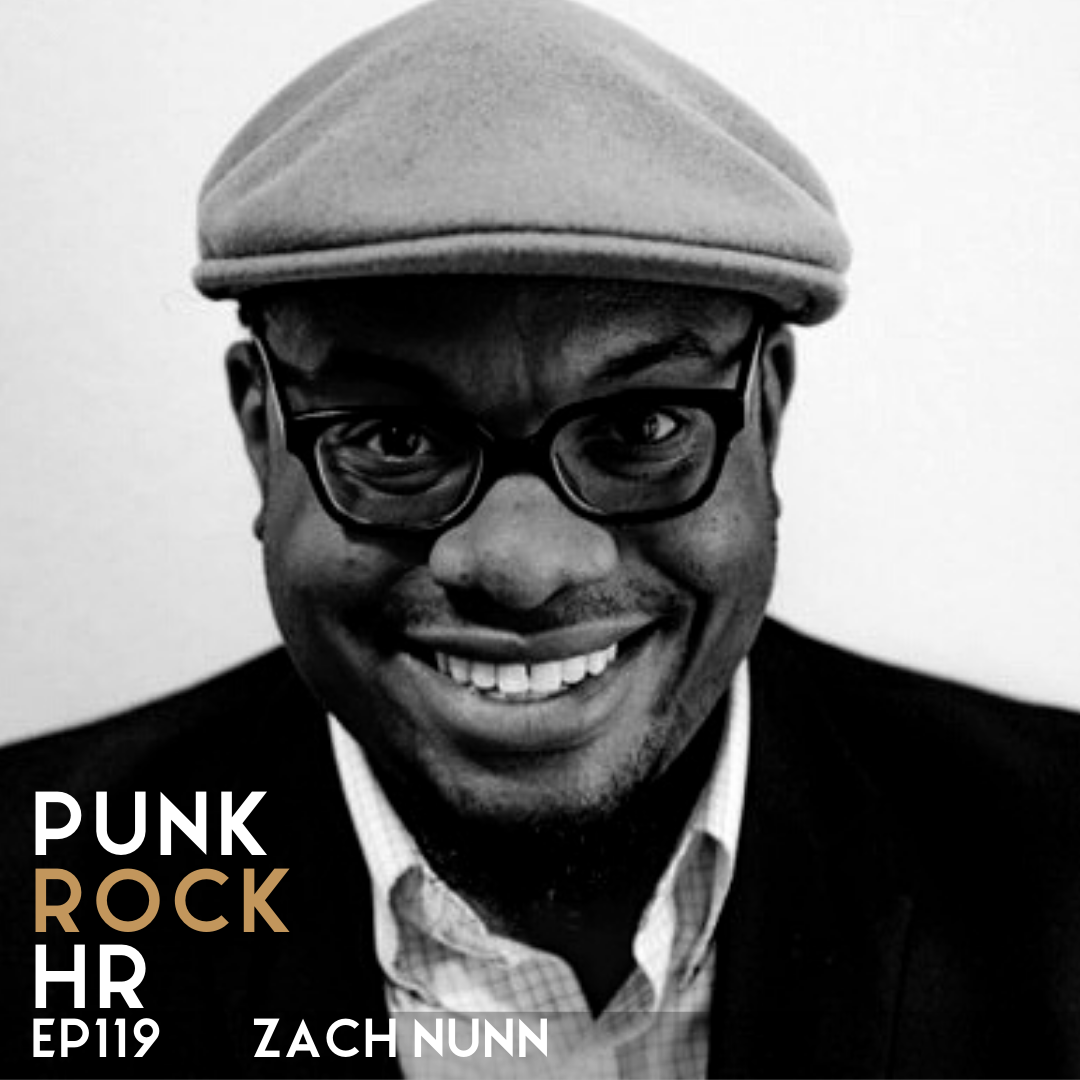
  • Amplifying Black and Brown Voices with Zach Nunn

    Amplifying Black and Brown Voices with Zach Nunn

    Punk Rock HR Episode 119:

    Zach Nunn is a change management consultant and one of the co-founders of the podcast and movement Living Corporate. The goal of that platform is to tell black and brown stories related to the world of work. You think you’ve heard good conversations about diversity, inclusion, equity, and belonging, but you have not heard Living Corporate. 


    On the show, Zach and his team talk to all kinds of people and have real conversations. They talk about the types of things that aren’t normally talked about at work or even in diversity inclusion programs. It is a terrific podcast that everybody needs to download and listen to.

    In the episode, Zach shares about the work he is doing. He explains why it has become his goal to create platforms in spaces that amplify and center black and brown voices at work. Zach has a perspective that causes him to speak with authority and provide answers to the questions many of us are asking, especially regarding what we can do to help right now. Listen in for another conversation on big ideas to do things differently.

    In this episode you’ll hear:

    1. Zach’s story and how Living Corporate came to be.
    2. The team of people who helps make Living Corporate happen.
    3. Why Zach confronted white DNI professionals on the podcast.
    4. A healthy perspective on the need to defund HR.
    5. How to keep this antiracism movement from becoming another cyclical thing and make it a true reconstructive moment.
    6. Why it is crucial for white people to be giving our capital.


    Resources from this episode:

    Zach Nunn on LinkedIn

    Living Corporate podcast

    Living Corporate

    Laurie on Instagram

    Laurie on LinkedIn

    Read more from Laurie

    Work with Laurie


    [cm_form form_id=’cm_5f51539d3fb5e’]


  • Creating a Culture of Trust

    Being a leader during uncertain times takes unique skill and perseverance. We can’t continue doing things the same way we’ve always done them when circumstances change around us. Leadership is a skill that must be constantly developed and improved.

    JeVon “JT” McCormick knows this well. He is the CEO of Scribe Media, a publishing company that helps authors write, publish, and market their books. More importantly, he is someone with an incredibly interesting backstory. 

    JT recently wrote a piece that appeared on CNN.com and went viral. It was all about remote working and how the workspace should look in this unprecedented season. 

    JT says, “the piece was written because I believe it’s a dynamic combination of remote and in the office. Some of our best work comes when we’re together collaborative, having the culture, being able to speak to each other, being able to get up from your desk and just walk over to the other desk or the other conference room and having a conversation straight off the cuff…I’m not saying that remote is bad. I’m saying it’s a combination of remote and office space. That should be the future.”

    Truly, binary thinking is toxic. We can’t assume that there are only two types of people in the world. Rather, there are all different kinds of people and each one is unique. 

    Regarding remote and office work, there should be a dynamic combination of the two spaces. This is because some of the best work happens in collaboration. Being able to walk over to a co-worker’s desk and have a conversation is incredibly convenient and useful. However, there are also many benefits that come from not having to commute to work every day and from having the flexibility to leave for appointments and other events. 

    JT says that what matters is that you are driving results and getting your work done. That is the bottom line. If those things are being achieved, employees should be free to come and go as they please, while still having opportunities to collaborate with others in the company.

    Leadership is also heavily rooted in culture. It is so important to create a culture where employees trust that leadership is on their side. This starts with the hiring process. 

    When many employees are hired, they don’t know what the company stands for or its principles and values. These aren’t communicated until the employee starts. 

    Instead, businesses should make the company values public-facing. With that, they’re building trust before employees are even in the organization. Once they’re in it, they see that the company actually runs by those principles and this builds trust. 

    Additionally, building trust is a two-way street and a relationship. It is integral that corporations take a collaborative vs. dictator approach.

    I’m talking about these topics—and more on work, power, politics, money, the Coronavirus, and Black Lives Matter— in my weekly newsletter. I’m also sharing a video to help you think about your week ahead. You can sign up here.


  • The Future of Business Conferences with Lauren Davis

    The Future of Business Conferences with Lauren Davis

    Lauren Davis was a marketer, community organizer, and record store owner. Her real claim to fame, though, is that she does social media for conferences speakers like me. She helps speakers really connect with their audiences in a different way. 

    Lauren has been named as one of the “20 People You Should Know” and a “Person to Watch.” She has also received US Senate recognition for her passionate dedication to helping businesses succeed. Her expert social media advice has been featured in articles by Huffington Post and Readers Digest. She hosts her own podcast, The Business Event Playbook, that helps people grow their presence so they can focus on sales, exposure, leadership, and community impact.

    Lauren is all about community in a virtual world. I needed to bring her on today to talk about what is going on in the world of conferences. Many of us have questions about how speakers are doing and what the future of networking and events looks like. Today we talk about this and what it means to have a conference in an age when you can’t stand within six feet of someone.

    In this episode you’ll hear:

    1. Why she loves conferences.
    2. What the conference world looks like in the age of Coronavirus.
    3. What the future state of conferences is.
    4. The limitations of the push towards virtual.
    5. How to have a successful virtual conference.
    6. How to create good content in uncertain times.
    7. The importance of empathy in this season.

    KEY TAKEAWAYS

    WHAT DOES THE CONFERENCE WORLD LOOK LIKE IN THE AGE OF CORONAVIRUS?

    There are some people who are taking an existing conference and just making it virtual. Another group of people is making their conference virtual but making it better. Finally, there are people who are going virtual but giving their participants a ticket to next year’s event. Those are the three main things that have emerged. This is also a time when we all need to have extreme empathy for one another. Conference organizers have lost everything they’ve put all their hard work into. Speakers have also lost so much in that their entire source of income has been taken away. We must all put ourselves in one another’s place and ask what we can do to make it better for the other person.

    WHAT IS THE FUTURE STATE OF CONFERENCES?

    The reason this season is so hard for us is because we don’t know what’s going to happen. We can predict and plan if we have the foresight, but in reality, none of us know much. What we can do is continue creating content, take things in little chunks at a time, and keep moving forward. 

    WHAT ARE THE LIMITATIONS OF THE PUSH TOWARDS VIRTUAL AND OW CAN I HAVE A SUCCESSFUL VIRTUAL CONFERENCE?

    So many virtual events are being put together on the fly just for the sake of having a virtual event. However, the hosts and thought leaders behind these events need to consider what will be highly relevant to their audience in the next few months. The topic doesn’t have to be directly related to COVID-19 but should be relevant to the things people are struggling with right now. There are so many opportunities for innovation and problem solving that need to be harnessed and worked into relevant themes explicitly for the audience we’re serving. There are also ways to create a connection with the audience in a virtual event. Firstly, the shorter the better. Additionally, try to provide opportunities for the attendees to collaborate with one another and to get involved in the conference.

    Resources from this episode:

    Lauren’s website

    Lauren on Instagram

    Lauren on Facebook

    Lauren on LinkedIn

    Laurie on Instagram

    Laurie on LinkedIn

    Read more from Laurie

    Work with Laurie

  • No one is immune

    COVID-19 has changed each of our lives. Some of us have lost jobs, while others of us are working in a whole new way. Many of us have battled sickness or been through the trenches with a sick family member or friend. There has been so much heartbreak, uncertainty, confusion, fear, and despair. No one is immune. That is why the phrase, “we’re all in this together” has become more common than ever.

    My best friend Jennifer McClure understands this very well. During COVID-19, she has sold a home, moved, cared for her sick mother, lost many job opportunities, and rebooted her business. None of it has been easy and all of it took hard work.

    However, Jennifer says that she’s learned so much as a result of these drastic life changes. She’s grown as a person by discovering more about herself and where she thrives. 

    For example, she says, “Some of the biggest takeaways that I’ve seen in my life of the capacity for people, when they’re needed, to step up and care for someone who maybe has not even been kind to them, that we as humans can do hard things and the blessing is there in some way, in some form when we do that.”

    Like Jennifer, we’ve all learned something about ourselves and our fellow humans during COVID-19. If we would just reflect on the past few months, we would come up with countless takeaways that could impact our lives forever.

    I’m talking about all of these topics in my weekly newsletter. I’m also sharing a video to help you think about your week ahead. You can sign up here.


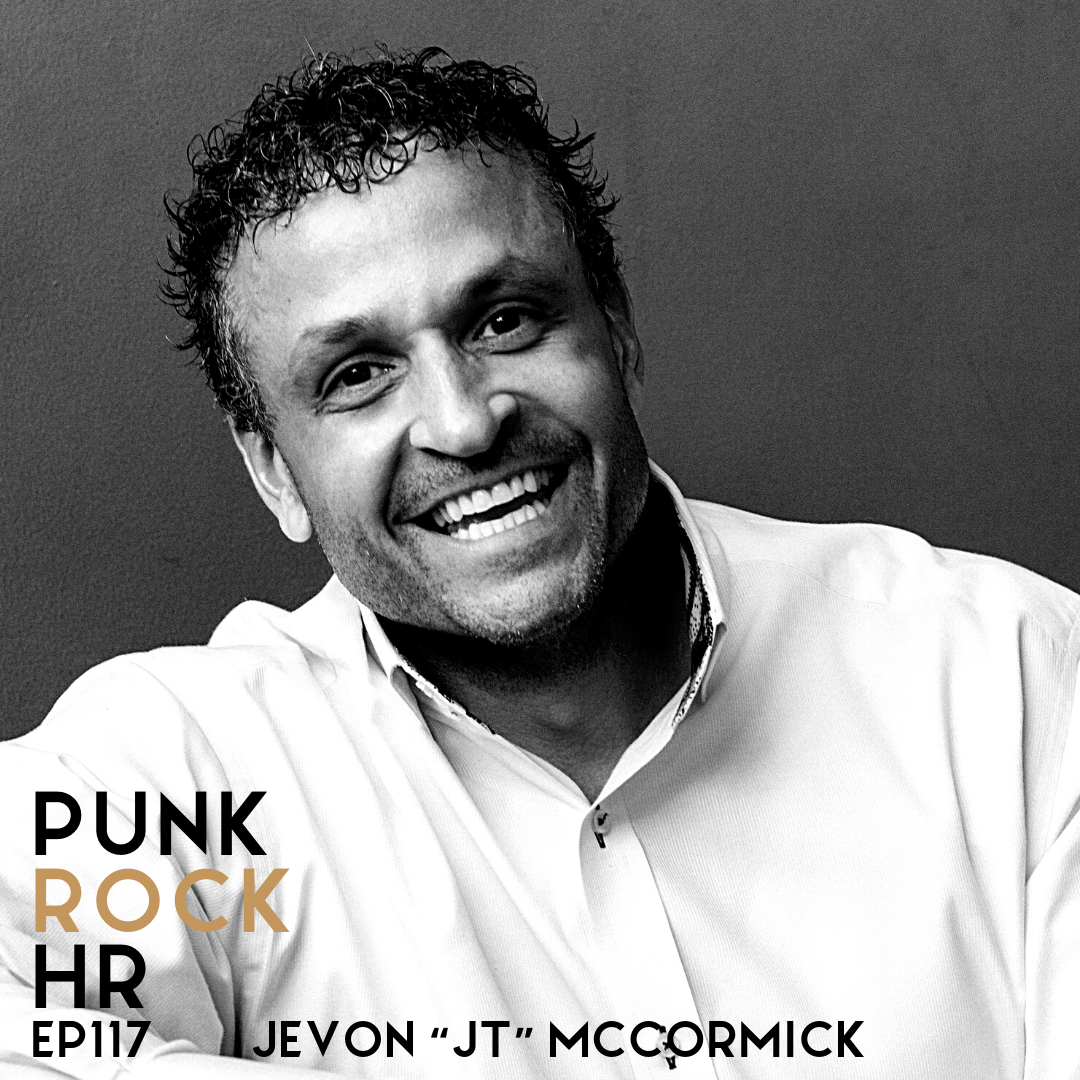
  • Creating a Culture of Trust with JeVon “JT” McCormick

    Creating a Culture of Trust with JeVon “JT” McCormick

    Punk Rock HR Episode 117:

    JeVon “JT” McCormick is the CEO of Scribe Media, a publishing company that helps authors write, publish, and market their books. More importantly, he is someone with an incredibly interesting backstory. 

    JT grew up amidst chaos, never went to college, and started his career in labor-intensive jobs. Yet, through these experiences, he managed to understand society better. That eventually became his avenue to success.

    Now, he runs a company that published the most sought after book in America last year: Can’t Hurt Me by David Goggins. He also recently wrote a piece that appeared on CNN.com and went viral. In today’s episode, we talk about work, power, politics, money, the Coronavirus, Black Lives Matter, and what it means to be a leader in uncertain times.

    In this episode you’ll hear:

    1. What got JT to where he is today.
    2. His chaotic origin story that helped contribute to his business success.
    3. The 3 rules of leadership he lives by.
    4. Why the future of work should be a combination of remote and office space.
    5. The toxicity of binary thinking.
    6. How to create a culture of trust.
    7. How to measure success in a way that honors employees.
    8. The changes and conversations that have occurred in Scribe Media amidst COVID-19 and the Black Lives Matter movement.
    9. The role of corporations in addressing the systemic problems in our country.

    KEY TAKEAWAYS

    WHAT ARE THE THREE RULES OF LEADERSHIP JT LIVES BY?

    When JT read these words from Henry Ford, his perspective on leadership changed forever. Ford said, “For every question that I don’t know the answer, I have people that work with me who know the answers.” From this insight, JT developed his 3 rules of leadership: surround the company with people far smarter than myself, surround myself with people far smarter than me, and then repeat rules one through two.

    WHY SHOULD THE FUTURE OF WORK BE A DYNAMIC COMBINATION OF REMOTE AND OFFICE SPACE?

    Binary thinking is toxic. We can’t assume that there are only two types of people in the world. Rather, there are all different kinds of people and each one is unique. Regarding remote and office work, there should be a dynamic combination of the two spaces. This is because some of the best work happens in collaboration. Being able to walk over to a co-worker’s desk and have a conversation is incredibly convenient and useful. However, there are also many benefits that come from not having to commute to work every day and from having the flexibility to leave for appointments and other events. What matters is that you are driving results and getting your work done.

    HOW CAN I CREATE A CULTURE OF TRUST IN MY CORPORATION?

    It starts with the hiring process. When many employees are hired, they don’t know what the company stands for or its principles and values. These aren’t communicated until the employee starts. Instead, businesses should make the company values public-facing. With that, they’re building trust before employees are even in the organization. Once they’re in it, they see that the company actually runs by those principles and this builds trust. Additionally, building trust is a two way street and a relationship. It is integral that corporations take a collaborative vs. dictator approach.

    HOW DO I MEASURE SUCCESS IN A WAY THAT HONORS MY EMPLOYEES?

    No one should be surprised if they’re let go, but no one should be surprised that they’re doing a great job either. One way to avoid this is with 30-day check-ins. Employees should know how they’re performing early and often. Both the negative and positive aspects of their performance should be communicated to them. Another way this can be developed is through supporting employees in all kinds of issues, not just work-related issues.

    WHAT IS THE ROLE OF CORPORATION IN ADDRESSING THE SYSTEMIC PROBLEMS IN AMERICA?

    The Constitution starts with “we the people.” Businesses can’t wait for the government to bring change. Rather, the greatest changes that can be made are within business. It is certainly true that money brings change and money brings a voice. Companies must stand by the things that need to change in this country. Even more powerful than business, however, is consistency. If you’re not consistent, you won’t drive results. So, businesses must stand against systemic problems and stand against them consistently.

    Resources from this episode:

    Scribe Writing

    JT’s Website

    JT on LinkedIn

    Napolean Hill’s Think & Grow Rich  

    Laurie on Instagram

    Laurie on LinkedIn

    Read more from Laurie

    Work with Laurie

  • The Future of Work After COVID-19

    Work is going to change post-COVID. So many things will look different than ever before. The role of flexibility, authenticity, and personalization will rise. Well-being will be emphasized more than it has been in the past. Social issues will need to be addressed in organizations that have avoided the topic for years. 

    Karina Schultheis knows all about these upcoming changes in the workforce. She is a manager of human insights and HCM evangelism at Ultimate Software who has experienced first-hand how COVID-19 has impacted businesses.

    Before the Coronavirus hit our country, many companies were getting by treating all of their employees the same. This is no longer possible if businesses want to thrive. The role of personalization and well-being is now a crucial one.

    Karina says, “I simply don’t see how organizations will be able to continue to thrive over the next who knows how many months without paying a lot of attention to individual circumstances.”

    So, why is personalization going to become crucial for organizations?

    There are many working parents and other employees who will be dealing with unprecedented issues. With that comes a large aspect of personalization. There is just no way that organizations can succeed if they don’t pay attention to individual issues and work through them accordingly. 

    Employees are juggling all different kinds of circumstances regarding COVID-19, such as educating their kids, having health concerns or anxiety about returning to work, and being unable to work traditional hours. These are the things organizations must personally attend to.

    I’m talking about these topics—and how else the workforce will change post-COVID—in my weekly newsletter. I’m also sharing a video to help you think about your week ahead. You can sign up here.


  • BFF Chat with Jennifer McClure

    BFF Chat with Jennifer McClure

    Punk Rock HR Episode 116:

    Today on the podcast, I’m talking to my best friend, Jennifer McClure. We have one of our BFF chats, Jennifer’s first on this iteration of the podcast. 

    During COVID-19, a lot has changed in Jennifer’s life. She has moved into her new house, navigated through the sickness of a family member, and rebooted her business. Like many of us, these life changes brought on by the pandemic have taught her many life lessons. Jennifer shares those with us today. 

    Jennifer is a full-time professional speaker, business advisor, and host of the podcast Impact Makers. She has spoken at over 350 industry-related conferences, helping international leaders embrace the future of work and leverage their influence. In this episode, she updates us on her life and provides valuable wisdom on all different areas of work.

    In this episode you’ll hear:

    1. Jennifer’s experience selling her house in a pandemic.
    2. The story of how her mom became sick in March and what that taught her about herself.
    3. The capacity of humans to step up and care for other humans.
    4. How she is now rebooting her business.
    5. How hiring a coach at the beginning of her transition from the corporate world changed the trajectory of her career.
    6. The way to know if your content is providing value to your email community.
    7. How COVID-19 has impacted Laurie’s business.
    8. Why any step forward is a good step.
    9. The real truth about what it’s like to write a book.
    10. Jennifer’s wisdom around getting fired.

    KEY TAKEAWAYS

    HOW COULD HIRING A COACH CHANGE THE TRAJECTORY OF MY CAREER?

    A coach holds you accountable and keeps you on track. They guide you along every step of the way so you don’t have to figure it out on your own. Hiring a coach is a way to invest in your business and it allows you to attain success faster than those without a coach.

    HOW CAN I KNOW THAT MY CONTENT IS PROVIDING VALUE TO MY EMAIL COMMUNITY?

    Think about the main few things that you are aiming to help people with. Then, make sure that each of your emails is helping your community in one of those areas. You can send out stories and other casual forms of communication, but make sure it has a purpose and isn’t being sent just to fill an inbox. 

    HOW CAN I HANDLE GETTING FIRED WELL?

    It’s not the getting fired part that’s important; it’s what you learned about yourself as a result of getting fired. Ask yourself what you learned about where you thrive and where you don’t thrive. Don’t let being fired be the thing that takes you down. Rather, make sure it becomes the springboard to future opportunities. In the future, you may be able to look back and be grateful that it happened.

    Resources from this episode:

    Jennifer’s website

    Story Brand

    StoryBrand Book

    Laurie on Instagram

    Laurie on LinkedIn

    Read more from Laurie

    Work with Laurie