Tag: SHRM

  • Technology, Authenticity, and Creativity at Work with Rana Stanfill-Hobbs

    Technology, Authenticity, and Creativity at Work with Rana Stanfill-Hobbs

    This week on Let’s Fix Work, I am excited to introduce you to Rana Stanfill-Hobbs. She wears many hats, including Director of Insights at Ultimate Software (our sponsor), mom, step-mom, musician, and consummate learner. On today’s episode, Rana and I talk about enterprise software and technology, of course.  We also talk about her journey from someone who recognizes patterns to an individual who’s living a full and authentic life at work.


    Rana is also the founder of Compass Credo, a website that helps people achieve their best lives and live according to their own set of values. I love it!  It’s not often that I speak to someone who’s an artist, singer, and songwriter, as well as the Director of Insights at a technology company. Rana’s background and expertise are really fascinating. If you love strong women, technology talk, and learning how to live an authentic life, then sit tight and listen to this episode of Let’s Fix Work.

    In this episode, you’ll hear:

    1. The influences of creativity and understanding how to create the best work environments
    2. Recognizing what you’re good at and how you excel
    3. The importance of having an open dialogue with customers to determine where they are in their journey, everyone is at different experience points
    4. Balancing the excitement of introducing a new technological platform in a company and why it’s important to slow the pace when onboarding
    5. Moving towards an honest conversation about imperfect solutions that can help move an organization forward
    6. How technology can help with positive conversations such as continuous performance management
    7. How to be your authentic self at work

    “The more that you can be human, more authentic, and the more holistic you are thinking about life and the work that you’re doing, the better you can navigate all of this. And the more powerful the connections are that you have with your customers, your colleagues, and with people in general.” ~ Rana Stanfill-Hobbs

    Resources from this episode:

    Thank our sponsor: Ultimatesoftware.com/LFW

    Rana Stanfill-Hobbs on LinkedIn: https://www.linkedin.com/in/ranahobbs

    CompassCredo on LinkedIn: https://www.linkedin.com/in/compasscredo

    CompassCredo on Facebook: https://www.facebook.com/pg/compasscredo/

    Compass Credo https://www.compasscredo.com

    ***

    We’re proud to be sponsored by Ultimate Software. They’re a leading cloud provider of people management solutions with a commitment to continuing education for HR, talent, and payroll professionals.

    Ultimate Software is hosting dozens of free educational HR workshops around the country. Check out ultimatesoftware.com/LFW for more information on how to earn free HRCI, SHRM, and APA recertification credits.
  • Defining Psychological Safety in the Workplace with Professor Amy Edmondson

    Defining Psychological Safety in the Workplace with Professor Amy Edmondson

    Conformity is a silent killer. Companies that punish new ideas stifle their employees and stunt their own growth.

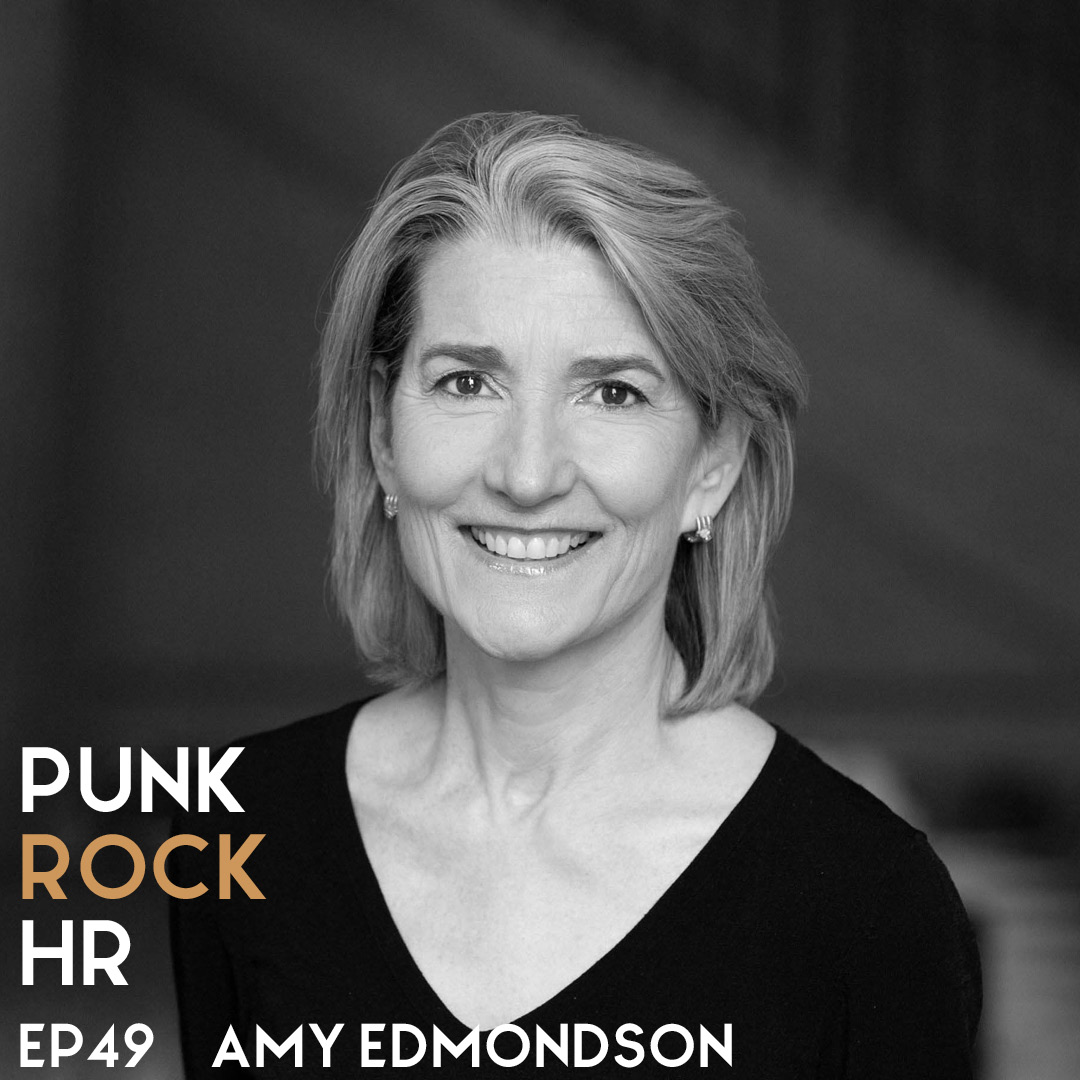
    That’s why fostering psychological safety is so important. In this episode of Punk Rock HR, I talk with Professor Amy Edmondson from Harvard Business School and author of “The Fearless Organization: Creating Psychological Safety in the Workplace for Learning, Innovation, and Growth.” Amy literally wrote the book on psychological safety, which she says manifests in the sense that we won’t feel humiliated or punished for speaking up on work-related issues. 

    If you’re interested in psychological safety, improving employee participation and using humor to destigmatize failure, then don’t miss this episode of Punk Rock HR.

    Put Psychological Safety to Work

    Sometimes our instincts work against us. When we’re overpowered by fear, our instincts tell us to agree with our boss even if we have suggestions for improvement. Or to play it safe in our careers rather take a risk — even if the payoff could be life-changing. 

    And in a knowledge economy, instinctual fear really works against us. When our work requires judgment or creativity, fear of failure can short circuit our ability to perform. Well-defined work on the other hand, doesn’t generally invite fear, although there are exceptions: “Even in the most extreme of routine work conditions, we still want your brain in the game — just in a different way,” Amy says. Asking employees for feedback on processes helps them feel more confident and do better work.

    Don’t Hold Your People Back

    When peak psychological safety is reached, employees are expected to bring their ideas, questions, concerns and even failures to the table. “Psychological safety is the description of an environment where people really do feel like their voice is welcome,” Amy says. If they aren’t comfortable bringing all of these aspects of themselves to work, you’re leaving some of their value on the table.

    Leaders who create a local climate of psychological safety — even if that means flouting corporate rules — foster teams that learn more and perform better. Top-down processes aren’t going to win the day anymore, Amy says, because in today’s work climate they no longer have all the answers. Inviting candor from team members on the ground supports better business outcomes.

    Remove the Shame of Failure

    We see two types of humor at play in the workplace. One shames us for failing, while the other destigmatizes failure. If an employee has an idea but feels like they’d be mocked or teased for failing at it, they’ll never take a risk. But a sense of humor based on shared experiences fosters psychological safety. “We are all fallible human beings,” Amy says. “We’re gonna mess up, we’re gonna get things wrong — but we’re in it together.”

    Leaders need to respond productively to new ideas, even if they don’t work. Emphasize that you don’t have all the answers. Making fun of someone or punishing them for taking a chance isn’t productive. When someone fails because they tried something new, celebrate the effort and learn from what went wrong. 

    People In This Episode

  • HR: Physical and Psychological Safety in an Era of Gun Violence at Work

    Whenever I come across news reporting on gun violence and mass shootings, which is almost daily, I remind myself what’s happening in our country is not normal.

    Gun violence, which is often linked to domestic violence, is terrorism. And terrorism is happening more frequently at work.

    Last week, the worst happened. A gunman shot five people in Aurora, IL. Their names are:

    Clayton Parks, HR Manager
    Trevor Wehner, HR Intern and Student at Northern Illinois University
    Russell Beyer, Mold Operator & Union Representative
    Vicente Juarez, Forklift operator
    Josh Pinkard, Plant Manager

    The shooting is the latest in a very long string of attacks by men who are disturbed, agitated, and take out their anger and aggression on colleagues. The individual in Aurora? Shocking nobody, he’s a convicted felon with a history of violence against women.

    The GoFund Me for the victims of the Aurora shooting can be found here.

    •

    Right now, America’s largest HR association is engaged in a dialogue about how to help convicted felons find work after they are released from prison. It’s called “Getting Talent Back to Work.”

    Getting Talent Back to Work is a national pledge open to all organizations that was signed even before the formal announcement by the U.S. Chamber of Commerce, the National Restaurant Association, the National Retail Federation, the American Staffing Association, SHRM, Koch Industries, Dave’s Killer Bread Foundation and more. Organizations are pledging to give opportunities to qualified people with a criminal background, deserving of a second chance, which creates successful outcomes for employers, all employees, customers and communities. Ninety-five percent of people in prison will be released—that’s more than 650,000 people every year. As they re-enter society, people with criminal backgrounds are deprived of employment opportunities and organizations are deprived of qualified talent, creating harmful consequences for millions of people.  

    The argument goes that, once our neighbors and family members people have paid their debt to society, we should make it easier for them to find jobs and return to normal lives. SHRM believes that HR can be a positive force for change and help these men and women contribute to society.

    I’m supportive of this initiative, but there’s more work to do.

    •

    While it makes sense for HR professionals to be recruiting advocates — and former criminals are an untapped talent pool — we should also be advocates for colleagues who are victims of domestic violence. We should push for better funding for mental health programs. And we should fight for commonsense gun reform to protect our employees from localized forms of terror, too.

    Those three things alone would be game-changing for every American worker and might make a lot of people feel better about working alongside convicted felons.

    So, tonight I’m going to say a prayer for the families in Aurora and also pray for SHRM to use its sizable lobbying powers and financial coffers to tackle the problem of criminal justice reform and physical and psychological safety at work.

    That’s what HR should be all about.

  • Carnival Of HR: February 2019 Edition

    Today is Carnival of HR Day, a splendid celebration of writers and thinkers who create fabulous HR content.

    This year, blog submissions were down. So, instead of waiting for people to send links, I’ve gone into the community and pulled some of the best articles I’ve read.

    That’s right. I still read HR blog posts. Do you?

    Sarah Morgan kicks off the carnival with a post about race, dialogue, and debates. https://www.thebuzzonhr.com/2019/01/30/blackblogsmatter-week-3-i-aint-going-black-forth-with-you/

    Doug Shaw wants to know where good ideas come from? https://consultingartist.com/creative/practicing-part-two

    Mollie Lombardi is writing about real-time pay visibility and other lessons from the US federal shutdown. https://www.linkedin.com/pulse/real-time-pay-visibility-other-shutdown-lessons-mollie-lombardi/

    Kris Dunn writes about regrettable career decisions, bold career moves, and criticism. https://www.hrcapitalist.com/2019/02/the-coldblooded-art-of-owninggetting-in-front-of-huge-career-mistakes.html

    Katie Augsburger offers five HR mind-shifts we all need to make. https://medium.com/@katie_16182/five-hr-mindshifts-we-all-need-to-make-b510cabe1df0

    Dorothy Dalton thinks it’s time to KonMari your career. https://dorothydalton.com/2019/02/02/time-to-konmari-your-career/

    Mary Faulkner walks us through her HR career journey. https://ia-hr.com/how-i-got-here-my-hr-story/

    Lars Schmidt tells us how a CHRO should plan their first 100 days. https://amplifytalent.com/21st-century-hrpost/how-a-chro-should-plan-their-first-100-days

    Tim Gardner writes about how he could’ve done more in his career to stop discrimination. https://www.performanceicreate.com/confronting-discrimination/

    Kate Bischoff is doing what she does best and writing about harassment with an eye towards how we manage grief. https://thrivelawconsulting.com/2019/02/07/like-grief/

    Kate is also doing double-duty on the Ultimate Software blog and writing about whistleblowers. https://blog.ultimatesoftware.com/whistleblowers-are-good-thing/

    Don MacPherson describes the future of energy in America by interviewing an expert named Lauren Azar. https://www.12geniuses.com/12-geniuses-podcast/2019/1/28/the-future-of-energy-in-america

    Joey C. Price interviews Esther Weinberg and asks, “Why is dignity such an important aspect of the workplace? Is lack of dignity an unintentional occurrence?” http://jumpstart-hr.com/180-how-to-develop-and-maintain-dignity-in-the-workplace-ft-esther-weinberg/

    Fabulous blogger Sabrina Baker writes about stepping into a new HR role. https://www.acaciahrsolutions.com/stepping-into-a-new-hr-role-do-this-first/

    Prasad Kurian writes about OD Managers and the unconscious of the organization. http://prasadokurian.blogspot.com/2019/01/od-managers-and-unconscious-of.html

    Tim Sackett is big enough to write about himself in the third person and ask, “What Does Tim Sackett Do?” https://timsackett.com/2019/02/11/what-does-tim-sackett-actually-do/

    Kathy Rapp wants to know if money buys happiness? https://fistfuloftalent.com/2019/02/money-buy-happy-employees.html

    Robin Schooling tells us about her work-life balance challenges and managing the care of her aging mother. http://robinschooling.com/work-and-life-and-everything-in-between/

    Wendy Berry gives us an overview of her 2018. http://wendyberry.com/more-about-my-2018/

    Tracie Sponenberg asks, “HR is changing. Are you?” https://www.linkedin.com/pulse/hr-changing-you-tracie-sponenberg-shrm-scp-sphr/

    Brad Galin writes a motivational post about not giving up. http://www.rollercoasterhr.com/10-percent/

    Wally Bock wrote a review of Cal Newport’s new book called “Digital Minimalism: Choosing A Focused Life in A Noisy World.” https://www.threestarleadership.com/books/what-im-reading-now-digital-minimalism

    Melissa Fairman wants you to save your sanity this time of year. https://melissafairman.com/save-your-sanity-this-year/

    Steve Browne is writing about people, people, people, and HR. http://sbrownehr.com/all-the-verts/

    Tamara Rasberry also has a fabulous 2018 year in review. https://tamaramrasberry.com/2018/12/31/2018-my-hr-year-in-review/

    Mike Haberman wants to know if a new minimum wage should come with an education? http://omegahrsolutions.com/2019/02/should-a-new-minimum-wage-come-with-some-education.html

    Renée Robson writes that your organization is drifting and you have no idea. https://reneerobson.com/2019/02/12/your-organisation-is-drifting-and-youve-got-no-idea/

    HR Jazzy says that black blogs matter — Y’all Want to Play? https://hrjazzy.blog/2019/02/04/blackblogsmatter-yall-want-to-play/

    John Sumser is writing about security and the HR center of excellence. https://www.hrexaminer.com/security-series-7-the-hr-security-center-of-excellence/

    Jane Watson would like to help you understand toxic cultures. https://talentvanguard.com/2019/02/03/understanding-toxic-cultures/

    Red Branch Media wants to tell you which social media platforms work best for your company. https://redbranchmedia.com/blog/social-media-platforms-work-best-your-company/

    Ben Eubanks celebrates the 50th episode of his podcast. https://upstarthr.com/were-only-human-50-hitting-a-milestone-plus-special-guests/

    Wendy Dailey talks to Aiko Bethea about #HRUprise and the conversation about HR, women, the LGBTQ+ community and other topics that will fascinate you. https://mydaileyjourney.com/2019/02/08/hrwonderwomen-episode-4-with-aiko-bethea/

    Jonathan Segal is writing about Valentine’s Day and kindness. https://blog.shrm.org/blog/valentine-s-day-and-kindness

    Here’s what Katrina Kibben learned by writing 60 job posts in 60 days. https://katrinakibben.com/2019/01/15/what-i-learned-job-postings/

    John Baldino is writing about choosing happiness, excellence, and intentionality. https://humareso.com/2019/02/12/really-dont-care/

    HR Bartender writes about the next challenge in the workforce—loneliness. https://www.hrbartender.com/2019/employee-engagement/loneliness-workplace/

    Dan Miller at Globoforce writes about storytelling, the Grammy’s and Michelle Obama. https://resources.globoforce.com/globoforce-blog/michelle-obama-builds-on-storytelling-theme-at-grammys

    Claire Petrie also revisits 2018. https://clairepetriehr.com/2018/12/31/2018-revisited/

    Dave Ryan writes about ageism and being a white guy. https://www.performanceicreate.com/ageism-a-white-man-intro-to-discrimination/

    Ginny Engholm writes that the future of content marketing is female. https://managingeditor.com/future-of-content-marketing-feminine/

    Carlos Escobar helps us to be more patient, say thank you, and contribute a little more to the world. https://cescobar.com/2019/02/01/5-reads-how-to-be-a-more-patient-person-say-thank-you-no-excuses-how-to-exclude-people-from-projects-and-more/

    Achievers submitted an interview with Lauren Brittingham of BayHealth Medical Center. https://www.achievers.com/blog/2019/01/a-recognition-moment-an-interview-with-lauren-brittingham-of-bayhealth-medical-center/

    William Tincup shares the top 25 reasons the HCM industry wants Workday to implode. https://www.linkedin.com/pulse/top-25-reasons-hcm-industry-wants-workday-implode-william-tincup/

    Paul Hebert believes that ageism is real and it’s your fault. https://fistfuloftalent.com/2019/02/ageism-real-fault.html

    Madeline Laurano gives us a look ahead at talent acquisition. https://www.aptituderesearchpartners.com/2018/12/07/talent-acquisition-a-look-ahead/

    The Recruiting Animal interviews Robert Smith, not from The Cure. http://www.blogtalkradio.com/animal/2019/02/06/robert-smith-partner-at-rockstarfindercom

    The folks at Limeade want you to know why they love Tim Gunn. Spoiler alert: he’s keynoting their conference. https://www.limeade.com/2019/02/why-we-love-tim-gunn/

    Jeanette Bronée wants you to create remarkable relationships. https://pathforlife.com/create-remarkable-relationships/

    Yvonne LaRose writes about OD and Title VII Consulting. https://consultantdesk.blogspot.com/2019/02/od-and-title-vii-consulting.html

    Greg Poulin gives us an article about HR and benefits trends for 2019. https://medium.com/@goodlyapp/latest-hr-myth-busted-by-human-resource-experts-14b67e05a1a3

    Nicole Roberts wants to motivate us and tells us to do it, anyway. https://hrwithoutego.com/2019/01/09/do-it-anyway/

    Ryan Estis shares the traits of mindful leaders. https://ryanestis.com/personal-growth/the-mindful-leader-inside-ey/

    Neil Morrison leaves us with this thought: we need to embrace the truths that hurt. https://change-effect.com/2019/02/11/we-need-to-embrace-the-truths-that-hurt/

    Like what you read? Want to read more? Check out the Carnival of HR twitter account and write something interesting for next month’s edition!

  • What Is SHRM?

    What Is SHRM?

    You’ve heard me talk about SHRM once or fifteen times in my career.

    For anyone who may not know, SHRM stands for The Society for Human Resource Management. It is the world’s largest HR professional society, representing 300,000 members in more than 165 countries. SHRM markets itself as the voice of all things work— experts and thought leaders on issues currently impacting HR organizations and professionals.

    What is the Purpose, Mission, and Vision of SHRM?

    “Our purpose is to elevate the HR profession. Our mission is to empower people and workplaces by advancing HR practices and by maximizing human potential. Our vision is to build a world of work that works for all,” the SHRM website states.

    SHRM considers themselves the voice of all things work. But many HR organizations and professionals view SHRM as the big brother who sometimes thinks it’s irrational to listen to opinions from their younger siblings.

    Where is the SHRM Headquarters?

    The SHRM headquarters are in Alexandria, Virginia. The SHRM address is 1800 Duke St # 100, Alexandria, VA 22314. The last time I was there, it was located in an office building with a small bookstore in the lobby.

    You can find them on a map here: goo.gl/maps/corKMCPRARu 

    Who Runs SHRM?

    Executive Leadership Team

    • Johnny C. Taylor, Jr., SHRM-SCP. President & CEO.
    • Sean Roddy. Chief Financial Officer.
    • Emily Dickens, J.D. Chief of Staff, Head of Government Affairs & Corporate Secretary.
    • Jeaneen Andrews-Feldman. Chief Marketing and Experience Officer.
    • James L. Banks, Jr., J.D. General Counsel.
    • Nick Schacht, SHRM-SCP. Chief Global Development Officer.
    • Alexander Alonso, PH.D. SHRM-SCP, Chief Knowledge Officer.
    • Nilanjan Adhya. Chief Digital Officer, Black Rock.
    • Wendi Safstrom. Executive Director of the SHRM Foundation.
    • Achal Khanna. SHRM India & Business Head, Asia Pacific and MENA.
    • Sean Sullivan. SHRM-SCP, Chief Human Resources Officer.
    • Mike Aitken. SVP of Membership.
    • George Rivera III. SVP of Commercial and Enterprise Sales.

    Who is On the SHRM Board of Directors in 2022?

    • Chair, Melissa Anderson, SHRM-CP. Senior Vice President, Human Resources, Albemarle Corporation.
    • Chair Designate, Betty Thompson, SHRM-SCP. Chief People Officer, Booz Allen Hamilton.
    • President & CEO, Johnny C. Taylor, Jr., SHRM-SCP. Society for Human Resource Management.
    • Elizabeth Adefioye. Chief People Officer, Emerson.
    • Nilanjan Adhya. Chief Digital Officer, Black Rock.
    • Janet Alberti. Vice President and Chief Financial Officer, THE HUNTINGTON Library, Art and Botanical Garden.
    • Sally Hornick Anderson, SHRM-SCP. Workforce Diversity Director Google People Operations, Google.
    • Michelle Bottomley. CEO, Modern Growth Exchange.
    • James Clark. President and CEO, Boys & Girls Clubs of America.
    • Michael D’Ambrose. Executive Vice President, Human Resources, The Boeing Company.
    • Paula Harvey, SHRM-SCP. Vice President of Human Resources and Safety Schulte Building Systems, Inc.
    • William Phelan. Senior Associate Executive Director & Chief Financial Officer, The American Bar Association.
    • Scott Snell, Ph.D. Frank Sands, Sr., Chair in Business Administration, Darden Graduate School of Business, University of Virginia.
    • Susana Suarez Gonzalez, Ph.D. Executive Vice President, Chief Human Resources and Diversity, Equity & Inclusion Officer, International Flavors & Fragrances, Inc.

    You can reach the group at Board@SHRM.org with any questions.

    Is SHRM Political?

    It depends on who you ask.  

    If you ask someone else, they’ll historically say that the organization tends to mimic and mirror the US Chamber of Commerce in many ways. In recent news, the passing of H.R. 842, the Protecting the Right to Organize Act (PRO Act)—a policy that creates an imbalance in labor-management relations—SHRM has urged House leaders to support policies that equally represent employees and employers. 

    Now, if you ask me…they are for sure political. Aside from SHRM’s president affiliating himself with Donald Trump, the organization has had many missteps in its efforts to remain unbiased and culturally in tune with the world of work. 

    Check out this Punk Rock HR episode, where I and a few HR powerhouses discuss one of SHRM’s recent missteps.

    Why Should I Have a SHRM Membership?

    A SHRM membership gives you access to content, courses, materials, news and conferences to help improve your core competencies in HR. This membership also provides access to a community of individuals who care about the field of human resources.

    Even more important, it allows you to stay in the conversation about what is currently happening in HR and work. From my time at SHRM, I’ve learned you’ve got to be present to be a part of the discussion. As more and more HR organizations/professionals push for diversity and inclusion, it’s not enough to stand on the sidelines. Being a part of the conversation drives change.

    What is a SHRM Certification? How Do You Become SHRM- Certified?

    SHRM offers testing and credentialing for business professionals who demonstrate an aptitude in the field of human resources. These certifications help professionals advance their skills and careers in HR/HR-related work.

    You must pass an exam to become SHRM-certified in either certification. From there, you can recertify using continuing education credits.

    Which SHRM Test Should I Take?

    There are two types of certifications at SHRM: The SHRM Certified Professional exam (SHRM-CP) and the SHRM Senior Certified Profesional exam (SHRM-SCP). 

    To be eligible to take the SHRM-CP certification, you don’t have to be a SHRM member, hold an HR title, have a degree, or even have previous experience to apply for the test. However, it’s essential to have a basic understanding of HR practices and principles. 

    To be eligible for the SHRM-SCP certification, individuals don’t have to hold an HR title or have a degree in HR. But, they do have to have at least 1,000 hours per calendar year dedicated to strategic-level HR/HR-related work.

     You can learn more here: www.shrm.org/certification/

    Is the SHRM Certification the Same as an HR Certification?

    No. There are various types of HR certification tests. Both tests do offer junior and senior certifications. Still, a SHRM notification is easier to earn than getting an HRCI certification, even though HRCI certifications are more widely respected and recognized in the industry. These two certifications aren’t the only ones you can get. HR professionals can obtain an HR certification from multiple organizations, such as CEBS or APA. People can also explore the idea of getting their MBA—the ultimate HR certification.

    Why is the SHRM Certification Important?

    Like other industries, getting a certification in HR allows for more opportunities to grow and advance to new roles in the industry. So, getting a SHRM certification showcases that you are knowledgeable in your field and closer to becoming an expert. 

    Can SHRM Help Me Calculate a Turnover Rate?

    SHRM members can access this information about calculating the turnover rate when they log in. However, if you are not a member, there are plenty of free calculators that you can use to determine this, like the Omni Calculator.

    Can SHRM Help Me Document Reasonable Suspicion?

    Yes, but only if you are a member. SHRM can help its members document reasonable suspicion through their accounts. If you are a member, log in to view this article and learn how SHRM can help.

    Want more SHRM information? Visit shrm.org today.  

    Have HR-related questions? Please send them to hello@letsfixwork.com, and I will try to answer them!

  • Job Market is Jacked Up

    Job Market is Jacked Up

    My HR and recruiting brethren are flummoxed. The biggest problem with the job market isn’t stagnant wages or a crisis in leadership. It’s that candidates are ghosting right now.

    Ghosting! Like we’re teenagers!

    Corporate leaders tell me it’s impossible to find capable people to fill open job requisitions or even show up for interviews. When they extend an offer and agree on a starting date, candidates never show up for the first day of work.

    They call it ghosting, and it’s a lie.

    I’m sure this version of “candidate ghosting” has happened a few times because people are awful. However, ghosting mostly occurs when recruiters and hiring managers bring candidates in for a job interview and never follow-up after the meeting.

    Regardless, the recruiting-industrial complex®™ wants you to believe companies are working hard to put Americans back to work, but Americans just don’t want to work. They want to do opioids and ghost. But don’t be fooled. These are handy narratives that indolent corporate professionals use to justify all kinds of behaviors from ageism to bigotry to indifference.

    “We can’t find candidates. People are ghosting us.”

    They’re whining like a bunch of middle-school girls about how life is unfair. Also, mom won’t let me get an Instagram account. I could die.

    So, it’s my full-time job to tell you not to believe the hype around ghosting or “the ongoing war for talent.” Instead, get smarter. Here’s what’s truly happening in the job market.

    1. Companies don’t want to hire anybody. People are an expensive hassle, and, even though we’re facing record unemployment, companies are risk-averse and would instead leave a position vacant — and interview 1000 candidates — instead of taking a chance on someone new.

    2. Companies only want to hire young people without defects. I can’t tell you how many times recruiters and HR professionals use the word “unemployable” to describe applicants over the age of 35. You are unemployable if you’re older, expensive, opinionated, ornery, fat, disabled, short, gay, transgender, have natural hair, wear the wrong clothes, not far enough along in your career to justify a recruiter’s attention, too far along in your career to seem loyal, or look anything like “trouble.”

    3. Companies simultaneously hate younger workers. Young Millennials and Gen Z workers are spoiled, impatient, taught by a broken public school system, illiterate, and obsessed with celebrity culture. They lack the maturity needed to get work done, so positions stay open.

    4. Everybody is way too judgy. Recruiters don’t look at resumes for long, and, when they do, they judge you based on font and presentation instead of the content of the CV. Hiring managers still use interviews to screen for culture and fit without having a consistent definition of what those two words mean. We assess candidates on personality, a tone of voice, smell, enthusiasm, articulateness, and values without benchmarking what success looks like in an organization. And we get it wrong all the time and hire people who blow it. Or we get it right and hire someone who is awesome, but we’re still surprised and disappointed when employees act like capitalists and quit for more money or more compelling work.

    What a mess. And nobody — and I mean nobody — is being honest about what’s happening inside HR departments and recruiting shops.

    Do you never want to hear the word “ghosting” again? Looking for solutions besides getting rid of recruiters and staying out of the job market? Here are my thoughts.

    1. Support universal health care and basic income. Let people contribute to our society based on aptitude and not a desperate need to feed their families. There’s more than enough to go around.

    2. Fix your finances. Improve your money so you can live on less and chase your dreams — or chase your kids in the park on a Tuesday afternoon — instead of chasing the almighty dollar. It’s not about the four-day workweek. It’s about the no-day workweek. You have autonomy when you don’t have debt.

    3. Know better, do better. If you work in HR or recruiting — or if you’re a corporate professional who leads a team — step up and don’t work for companies that keep jobs open for six months and then complain that they can’t find someone. Got a job opening? Fill it. Find an older worker or a veteran. Find a student or a non-traditional worker. Don’t have the power or influence to change your company’s behaviors? Improve your communication skills, or quit that job. We’ve got record unemployment. Go work for a company that’s doing it right.

    What’s wrong with the job market has been wrong since the early 2000s: companies are powerful, cheap, and hoarding profits at the top. Workers are risky, expensive, and impede profitability. There is no skills gap. There isn’t a shortage of talent. There is tension in the job market because companies won’t pay what people are worth, won’t stop discriminating, and won’t share their profits with the people who make it happen.

    Anybody who tells you otherwise has got it wrong.

  • You Must Have a Mentor

    You Must Have a Mentor

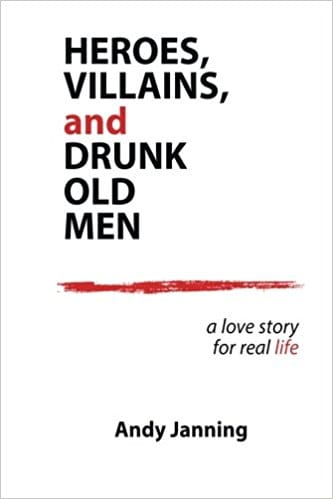
    I just finished Andy Janning’s book called Heroes, Villains, and Drunk Old Men: A Love Story for Real Life. I loved it. It’s autobiographical, motivational, and calls upon Andy’s expertise in the HR/training space to provide specific strategies for living a better life.

    Fair warning, there’s some Jesus in there. I don’t hate it. His Jesus isn’t oppressing me or telling me what I’m doing wrong with my life, which makes it easier to read. Maybe that’s a strategy to recruit me and Mean Jesus comes later, ha.

    Anyway, what I loved most about this book is that it comes from a place of earnestness. It’s easy to write a book (or a blog) for people you love and be the hero of your own story, but it’s harder to write a standalone treatment that serves as a guide for people who don’t know you and need expert advice. Just like Steve Browne’s important book on HR, Andy wrote a book that’s both generous and educational. Some chapters felt like they were written just for me.

    At one point, Andy tells his audience that heroes will become villains if they don’t have mentors who help them grow and evolve. I thought about my own HR blogging journey and how so many of my early peers have gone on to accomplish amazing things. While I’ve done some fun and interesting things, I’m a dilettante. I have not excelled in any specific area of my life or exceeded market expectations.

    Am I a villain? Could I be a villain? Would that be cool? I would like to liquidate my affairs on the internet and retire to a remote island, which seems very villainous, but the act of being a villain seems like a lot of work.

    How do I catch up to my peers and get to that remote island without being a scoundrel? Well, Andy had an eight-point plan and some important questions to ask in his book. I can already see that I need to cultivate better relationships in 2018. Work a little harder in areas of my life with clear ROI. Find a mentor who can stop me from being an HR rascal.

    Groundbreaking stuff? Probably not. But, combined with stories of life and love and heartache, Andy has me thinking. That’s why I strongly recommend this book.

  • HR Tribe

    HR Tribe

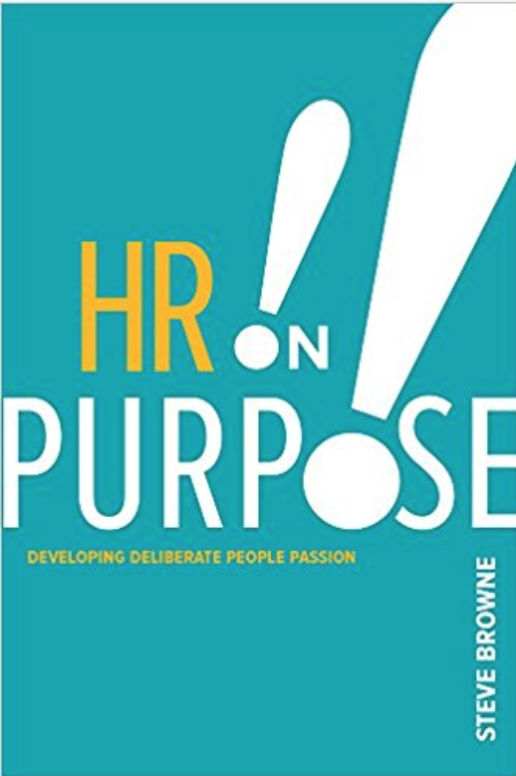
    I just finished Steve Browne’s book called HR on Purpose. It’s a positive and affectionate appreciation of an industry that can use a little optimism right now. If you’re going to be in HR, you might as well embrace it and enjoy it. Go out there, have fun, and make a difference.

    I don’t hate any of that. Life is much more enjoyable if you love your work and embrace the good with the bad.

    Later in the book, Steve dedicates a chapter to the act of finding your tribe. Surround yourself with people who understand your work and support you. When times are tough (and they’ll get challenging in HR), it’s good to have friends who know what you’re going through and can offer advice that your partner/spouse/non-HR friends can’t provide.

    I don’t hate that, either, except I’m not a big fan of the word tribe. We take a lot of things from indigenous Americans — their property, their dignity, their right to live in sovereign nations without oil and gas companies polluting their ancestral land — and we liberally borrow from them when we need to make a point.

    For example, Trump uses the slur “Pocahontas” to make a point about Elizabeth Warren (who claims she has Native American ancestors and listed herself as a minority teacher at Harvard). That guy is such a moron. Even if she’s not Native American, you don’t behave like that. And people use the word “tribe” to describe a ride-or-die community without understanding that people did fight to the death while being forcibly removed from their homelands. Google “trail of tears” for a history lesson on what it’s like to be in a tribe.

    Also, tribes aren’t necessarily healthy. We’re living in an age of tribal politics where people double-down on preferred interests without offering sympathy or grace to their neighbors. If you’re not part of my tribe, you’re an enemy. If you’re not in my circle, you’re dead to me. You know, I was once in a tribe over at Fistful of Talent. One of the things I learned from that experience is those tribal dynamics can be dysfunctional. It’s like family without the obligation, which sounds great until there’s conflict. The best part was working with a few individual people who loved me as a friend. The rest was just artifice, and, maybe, further proof that I’m the problem-child and don’t do well with tribes.

    Anyway, I’m not a sensitive and politically correct hippie, and I think Steve Browne uses the word “tribe” earnestly. He loves his friends and colleagues. They mean the world to him. But I make different choices when describing the people I love. I use the words “friends” and “community.” Not sexy, not trendy, but something to think about.

    Steve Browne is my friend, and he’s part of a broader HR community that I love. Now go read his book!