Tag: wellness

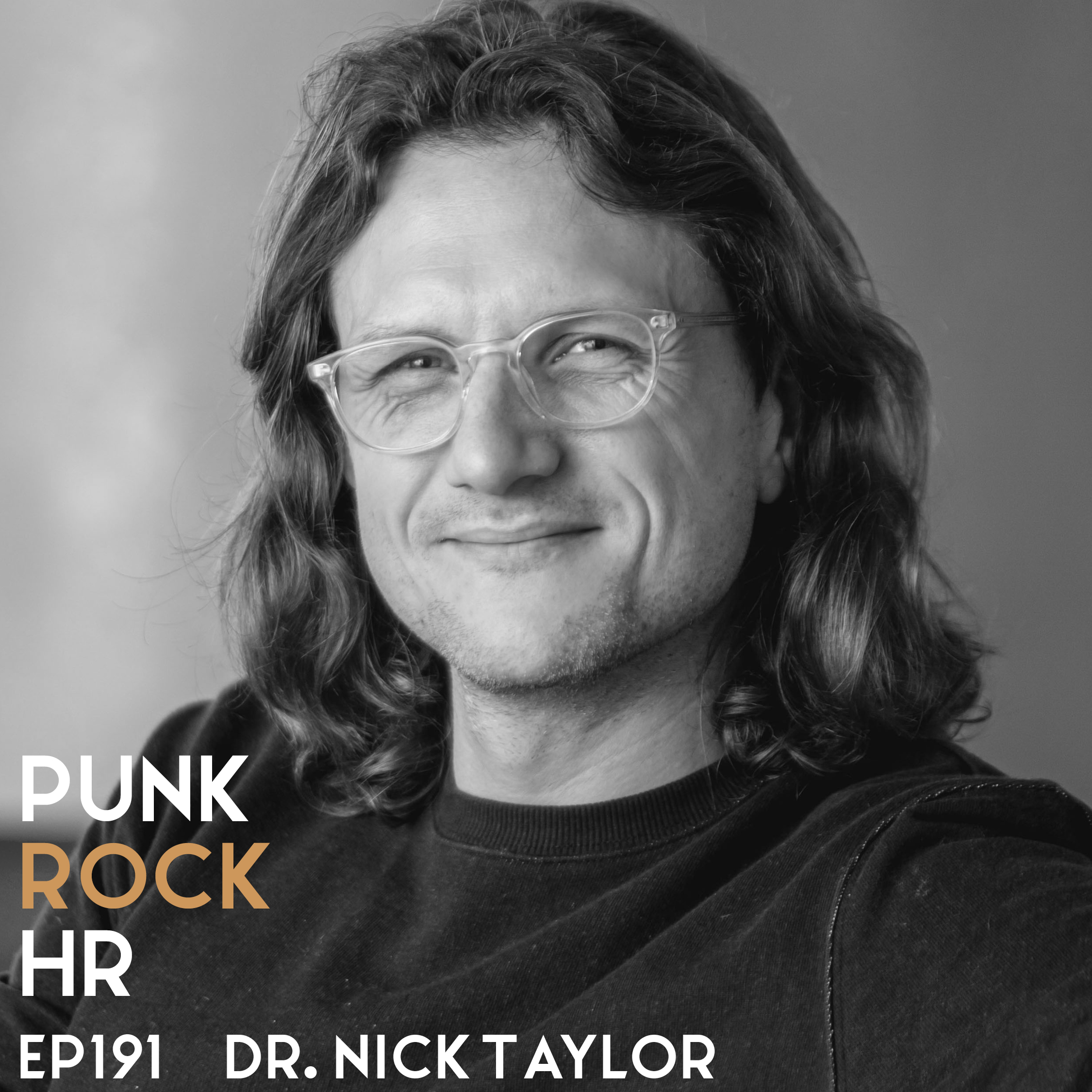
  • Take Control of Your Mental Wellbeing With Dr. Nick Taylor

    Take Control of Your Mental Wellbeing With Dr. Nick Taylor

    “[W]e are now in a time when the topic of mental health is finally being destigmatized in ways that were unimaginable just a few years ago.” ~ Dr. Nick Taylor.

    Welcome back! On this episode of Punk Rock HR, my guest is Dr. Nick Taylor, co-founder and CEO of Unmind. Unmind is a workplace mental health platform that empowers employees to measure, understand and improve their mental wellbeing proactively.   

    Today’s conversation talks about empowering your employees with evidence-based digital tools that manage and improve their mental wellbeing, the role of leadership and what wellbeing is, and whether there is an optimal way to operate in the world. If you are a human resources professional or a leader who wants what’s best for your workforce, sit tight and enjoy this conversation with Dr. Nick Taylor of Unmind.

    The Starr Conspiracy

    Punk Rock HR is proudly underwritten by The Starr Conspiracy. The Starr Conspiracy is a B2B marketing agency for innovative brands creating the future of workplace solutions. For more information, head over to thestarrconspiracy.com.

    Proactively Addressing Mental Health

    Dr. Nick has spent a lot of time in the mental health field, from providing care to seeking care. While he has seen many brilliant practices and worked with talented individuals, Dr. Nick has experienced frustration with how we address the topic of mental health.

    He found that this frustration boils down to two things: accessibility and reactive health care. When it comes to accessibility, “people don’t get access to timely mental health treatment when problems occur.” This is a well-known problem, as proper care leads to a better health outcome at the right time. 

    However, the bigger frustration that Dr. Nick discusses is the industry’s focus on reactive health care. “In other words, we wait for people to get unwell before we provide them with support with their mental health,” he says. This is the opposite of how dental health or physical health is focused. In dental and physical health, there is a proactive approach to preventing issues, but unfortunately, in mental health, nothing is done until after the fact.

    “What we do is we position the topic very negatively a lot of the time. And it’s often like a black-and-white image of someone holding their head in their hands. And I’ve never met anyone in black and white,” he says. “So I don’t know at what point we think that’s an accurate portrayal of mental illness anyway, but also it tells such a small part of their overall story.” 

    Mental health is far from just a set of problems. We as humans have the abilities to think, be creative, problem-solve and feel the emotions we need to feel that make life worthwhile. “Mental health is something we should celebrate,” Dr. Nick says. “It is the most amazing part of being a human being.”

    Optimum Mental Health

    When we talk about mental health, we often focus on people who are suffering, those who are not in the best state of their mental health or those who have a good state of mind, but it’s not that simple. Dr. Nick shares, “I think sometimes we’re too binary with mental health. We think you either have bad mental health, or you have good mental health, but it’s not true.”

    The key is to view mental health as a spectrum. Mental health is not one aspect but rather an ever-changing range of emotions that occur daily. We all live complicated lives where the day to day can be stressful and make life challenging. 

    We’ve learned from philosophers that part of life is suffering, but we need to acknowledge that mental health is biological if we want to understand mental health. Dr. Nick explains, “It’s how much sleep we have, our genetics, our age, nutrition. It’s how physically fit we are, it’s our psychological life, our personality, core beliefs about the world, et cetera.” 

    Add in “our social lives, our workplace, our finances, and all of these things together combined to uniquely give us mental health.” This leads to variations of mental health.

    Unmind’s Dedication

    There can be beauty in negative emotions because we can learn a lot through our feelings that we otherwise want to avoid in our daily lives. Unmind has tools that can help employees, the organization and leaders to truly address mental health in the workplace and develop a space where mental health is prioritized. 

    “At the heart of what we do, in our DNA, is this idea that if you can’t measure something, you can’t manage it. So measurements are really important,” says Dr. Nick. He and his team were not thrilled with the measures in place because they were not made to empower people to get the care they needed at the right time. So they built their own tool.

    Through collaboration with some of the world’s top universities, Dr. Nick and his team developed an assessment that scores a person in coping, calmness and happiness. Scoring on those aspects helps people find out what part of your mental health is most impactful for you and provides a range of educational materials that can help. “So it’s really wide and varied, and we worked with the world’s leading authors, academics and clinicians to bring all of their incredible teachings to life,” says Dr. Nick.

    [bctt tweet=”‘At the heart of what we do, in our DNA, is this idea that if you can’t measure something, you can’t manage it.’ – Dr. Nick Taylor. Listen to learn how @unmindhq is helping employers invest in their employees’ wellbeing on #PunkRockHR! ” via=”no”]

    People in This Episode

    Dr. Nick Taylor: LinkedIn, Unmind website, Unmind Twitter

    Full Transcript

    Laurie Ruettimann:

    This episode of Punk Rock HR is sponsored by The Starr Conspiracy. The Starr Conspiracy is the B2B marketing agency for innovative brands creating the future of workplace solutions. For more information, head on over to thestarrconspiracy.com.

    Hey everybody. I’m Laurie Ruettimann. Welcome back to Punk Rock HR. My guest today is Dr. Nick Taylor. He’s the founder and CEO of Unmind. It’s mental wellbeing done well. And in today’s conversation, we’re going to talk about how to empower your employees with evidence-based digital tools to proactively manage and improve their mental wellbeing. We also talk about the role of leadership and actually, what is wellbeing, and is there an optimal way to operate in the world? You’re going to love this conversation because Dr. Nick is also a fan of Radiohead, which means I get to nerd out a little bit, and he’s also someone who’s passionate about making sure that employees perform at their best and feel good. 

    So if you are a human resources professional or a leader who wants what’s best for your workforce, well, sit tight and enjoy this conversation with Dr. Nick Taylor of Unmind. Hey Dr. Nick, how’s it going?

    Dr. Nick Taylor:

    It’s going very well. Thank you.

    Laurie Ruettimann:

    Well, I’m super-pleased you’re here. It’s a tradition of the show to have guests introduce themselves and say who they are and what they’re all about. So why don’t you do us that honor?

    Dr. Nick Taylor:

    Yeah, absolutely. So my name’s Nick, and I’m the CEO and co-founder of Unmind, and we’re a workplace mental health platform. Personally, I’m a dad of three children and live in the UK in the countryside, and professionally I’m a clinical psychologist.

    Laurie Ruettimann:

    So much good stuff in there. Tell us a little bit about Unmind and why you do what you do.

    Dr. Nick Taylor:

    I’ve spent my adult life working in the field of mental health. I was a volunteer with the crisis helpline, the Samaritans in the UK, the leading helpline for people who need a voice at the end of a phone. I was a front-line support worker with the mental health charity, Mind, again the leading UK mental health charity, working with people with severe and enduring mental illnesses, people who required 24/7 care in their journey of recovery or just to stay well. And then I became a clinical psychologist and ended up leading health teams in the National Health Service, and also lecturing in mental health at world-leading organizations. So I’ve spent a lot of time in the field of mental health. And whilst I’ve seen a lot of brilliant practice and worked with some wonderful people, both providing and seeking care, I’ve ultimately been left feeling frustrated by the way in which, as a society, we address the topic of mental health.

    And that frustration boils down primarily to two things. The first is that people don’t get access to timely mental health treatment when problems occur. And that’s a problem because we know the right care at the right time results in the right health outcome. But the bigger frustration is that so much, if not all, of our emphasis and focus is on reactive health care. In other words, we wait for people to get unwell before we provide them with support with their mental health. And that’s in stark contrast to dental health or physical health, where actually all the emphasis is on prevention. I have three children and from the age of 1, I’ve been battling them to teach them how to brush their teeth twice a day. And with physical health, we take a similarly kind of lifelong approach to encouraging good physical health behaviors. And we position the topics very aspirationally. You cannot buy a dental product anywhere in the world, so far as I’m aware, with a picture of bad teeth on it. Every dental product is sold with beautiful teeth.

    But you know, like with mental health, what we do is we position the topic very negatively a lot of the time. And it’s often like a black-and-white image of someone holding their head in their hands. And I’ve never met anyone in black and white. So I don’t know at what point we think that’s an accurate portrayal of mental illness anyway, but also it tells such a small part of their overall story. And that story really is that human beings have mental health from the moment they’re born to the moment they die. We have mental health every single moment of our entire life. 

    And far from just being a set of problems, it’s also our ability to think and be creative and problem-solve and feel all the emotions that we feel that make life so worthwhile and far from being a something we should hide about and not talk about and hushed voices. Mental health is something we should celebrate. It is the most amazing part of being a human being.

    So those frustrations of not getting the right care at the right time to people and not focusing on prevention and not telling the right message around mental health led me to leave the NHS and co-found Unmind. And we always knew we wanted to focus on promotion of wellbeing, prevention of mental ill health. We knew we wanted to focus on science being at the heart of everything we do and measurement being at the heart of everything we do, because if you can’t measure something, you can’t manage it. And we knew we wanted to use digital tools because there aren’t enough therapists and clinicians to reactive health care, let alone proactive healthcare with mental health. And we knew we wanted to focus in on the workplace, and that was five years ago now.

    Laurie Ruettimann:

    Well, I’m amazed at this journey that you’ve had from practitioner to vendor to entrepreneur to innovator. It’s pretty exciting, and I want to drill in on what Unmind is trying to accomplish. But first I want to talk a little bit about optimum mental health, because you said something very interesting that when we talk about mental health, we talk about someone who’s suffering, right? A black and white image. I wonder if there’s optimum mental health, and how do you define a good state of mind and a poor state of mind? And can you even define it?

    Dr. Nick Taylor:

    It’s a really great question. And I think sometimes we’re too binary with mental health. We think you either have bad mental health or you have good mental health, but it’s not true. Like so many things you have all the time, it’s a spectrum. You move around with your mental health from day to day, week to week, month to month, year to year. And it’s ever-changing, really. And life is complicated. We all live these very, very complicated lives where things can be really stressful and life can be challenging. The philosophers taught us to live is to suffer. It is a part of life that suffering happens. But what we can do is that we can understand, what is mental health? And mental health is biological. It’s our how much sleep we have, our genetics, our age, nutrition, it’s how physically fit we are, it’s our psychological life, our personality, core beliefs about the world, et cetera. And also it’s our social lives, our workplace, our finances, and all of these things together, combined, to uniquely give us mental health. And actually it can therefore vary a lot.

    Laurie Ruettimann:

    I’m a little worried right now that the current trend in organizations is to view optimal mental health as shiny, happy people. And leaders have become these de facto therapists where they ask us how we feel, but they don’t really listen, and they don’t really have any solutions when we say I’m feeling terribly or I’m feeling conflicted or I’m feeling kind of flat, but I can still come to work every day and do my job. So I’m just a little bit worried about how mental health is viewed in this current landscape. What’s your reaction to that?

    Dr. Nick Taylor:

    I think it’s a good point. First off on the point of listening, I don’t think we spend nearly enough time learning how to listen, and yet it’s an incredibly impactful thing to be able to do. The second piece is around, I think it’s really important to challenge the assumption that because your mental health might not be good, or because you might have a diagnosis of a mental illness, that means you can’t also be productive. It’s perfectly possible to be very productive in many instances. And equally that we shouldn’t avoid negative emotions or what we perceive as negative emotions. And I say that as an avid Radiohead fan, there is a joy to sadness, and there can be beauty in negative emotions. We can learn a lot through emotions we might not want every single day of our life. So it is important to tell the full picture around mental health as part of how we talk about it.

    Laurie Ruettimann:

    Well, as a fellow Radiohead fan myself, I have a tattoo that talks about the low-flying panic attack that many of us feel. And for me that low-flying panic attack has been a motivator in my life to deal with things head on, to attack things, to face my fears. And I’m so glad you talk about this because I would imagine Unmind has tools for both the organization, for leaders and employees to really address mental health in the workplace. So talk a little bit about that.

    Dr. Nick Taylor:

    At the heart of what we do, in our DNA, is this idea that if you can’t measure something, you can’t manage it. So measurement’s really important. From day one, we didn’t feel comfortable with the measures that were available because they’re, again, they’re very negatively skewed, and they don’t really empower people in our opinion to get the right care at the right time.

    So we built our own assessment tool, in collaboration with some of the world’s top universities, that gives the employees insight into how their mental health is. You don’t get scores in depression, anxiety and stress. You get scores in coping, calmness and happiness. So it’s skewed, and the language used is more aspirational. Based on your score profile, you’ll then sign posted to what’s going to be most impactful for you. And that can be very wide and ranging from educational material about how to think about imposter syndrome through to tools that you can use to improve your sleep through to topical to our conversation and learning about how to listen better. So it’s really wide and varied, and we worked with the world’s leading authors, academics and clinicians to bring all of their incredible teachings to life.

    Laurie Ruettimann:

    Well, I also wonder how a tool like Unmind garners trust within an organization, because there are so many solutions out there that are trying to address mental health and mental wellbeing. And the utilization rate is low, or people feel that their information that they give up may not be kept in a confidential way. So do you think about those concerns? Do you address those concerns, and how do you get people to actually utilize the tool?

    Dr. Nick Taylor:

    I think working with organizations to ensure that their people trust the provision that they are provided for is incredibly important. And we do so much work about when an employee first logs into Unmind or comes to look at Unmind in reassuring the employee about how their data is anonymous to them and how much we will do to protect their security around the topic of mental health. Equally, we run campaigns for the launch and the ongoing campaigns throughout the year to educate the workforce about the resource they have available to them and the value that they can get from using it.

    Laurie Ruettimann:

    So, Dr. Nick, tell us about the role of leaders in an organization and creating this world of trust. I think leaders are so incredibly important at all elements of an employee life cycle, but creating conditions of trust, really impacting the positive worker experience, is so important. So talk to me a little bit about that.

    Dr. Nick Taylor:

    Yeah. It’s a good question because it’s interesting, isn’t it, to think about what impact can a leader have on the culture of an organization? Because so much of trust comes around culture, and employees need to know that their leaders not only are living by the values of the business they’re in, but also that they are creating a safe, psychological space where it’s OK to share, it’s OK to bring your whole self to work. And I think what leaders can do is to be human in the workplace, to share their own experiences they’ve had in their life, to try to help others know that just because they’re in a position of leadership doesn’t mean that they haven’t got many of the same challenges that others may have, as well. I think that there’s so much that can be done there, but I also think leaders, making sure they’re investing in multi-year campaigns around wellbeing for their people. It’s a long-term financial commitment that organizations have to make, and leaders ultimately can make that decision and unlock budgets, as well.

    Laurie Ruettimann:

    So how do leaders work with an organization like Unmind? So I would imagine you come in and provide some assessments as you’ve talked about and you also provide, I would imagine, some training and some consulting to make sure that leaders are fully living the values that they state. Am I not mistaken?

    Dr. Nick Taylor:

    More or less in our experience, every organization we work with have advocates who are deeply passionate about the topic of mental health and wellbeing. And we love to collaborate with leaders who have that passion and then to record webinars or live discussion events with those leaders on stage for their employees to hear. And so that they can share, as a leader in that business, their relationship to the topic of mental health and help normalize the subject for everyone.

    Laurie Ruettimann:

    What about an organization that recognizes its leadership team isn’t necessarily comfortable with this topic of mental health, or the leadership team that doesn’t necessarily trust naturally? How do you work with them?

    Dr. Nick Taylor:

    I think it’s perfectly OK to not feel comfortable around a topic. I think what’s important is that there is a desire and curiosity to learn and get comfortable, because actually I believe that leaders have a responsibility to really drive the wellbeing agenda. Because it’s their responsibility to create cultures and environments where people are well and have an opportunity to be well, where those cultures and environments do not do damage to people’s health.

    Laurie Ruettimann:

    So often people come on to Punk Rock HR and really talk about mental health or mental wellbeing and they don’t necessarily live their own values. But what I’m struck by is that you’re so candid in speaking about this. I would imagine that at Unmind, you have your own culture where you freely talk about this and you’re really trying to drink your own champagne, correct? So tell me a little bit about your organization’s culture.

    Dr. Nick Taylor:

    Yeah. We put a lot of time and energy into our culture, and I’m really proud of it. And I’m really proud to work alongside all the incredible Unminders in all of our global offices. And we do care a lot about values. We do care a lot about creating an environment where people’s wellbeing is considered. And we do invest a lot in making sure that our employees have access to things like the private medical insurance, flexible working, et cetera, but we are fallible as anyone, as well. We don’t get everything right. And sometimes we’ve done things too late or too little, too late, and we’ve had to hold our hands up and recognize that that’s the case. But we are all human beings. The important thing for me, as a leader, is I know our intention is right and we’re authentic and transparent around that, but we’re not going to be perfect all of the time.

    Laurie Ruettimann:

    Well, no, and no company would be. And I think we talked about some of the benefits of focusing on mental health and mental wellbeing, but when companies get it wrong, whether it’s in COVID or not in COVID, what do they get wrong?

    Dr. Nick Taylor:

    Oh a huge amount. I think giving it lip service. Really that’s the biggest thing is, like, either just giving lip service and not actually acting on what you’re saying or just not engaging with it as a topic at all. But I actually think that we are approaching a place in the market now where, if an organization flatly said, “We don’t care about this as a topic,” I think it would be a matter of time before that organization went bankrupt. I don’t think it’d be “if,” I think it’d be “when.” And I think organizations know that. So we might be in this strange place at the moment where there’s a transition, and even those organizations that are paying lip service for having to do it, will eventually just through habit end up doing it quite well because the market’s going to end up doing it quite well. And we will all continue to learn, and those people that are committed to it will drive it forwards. But I think the days where people can say we don’t care are pretty much over.

    Laurie Ruettimann:

    Well, I like where you’re going with this, that mental health, mental wellbeing is a groundswell. It’s an employee movement, and it will push the naysayers forward. Are you really seeing that in the marketplace?

    Dr. Nick Taylor:

    I think you do. I think if you look at negative stories in the news around organizations that haven’t cared about their people properly, they’re ever more present, and they’ve taken no prisoners. They tell the full story, and no organization wants to have that reputation as being a negative place to work. And also, why should people work for an organization that doesn’t care for their wellbeing? It’s really offensive that organizations might behave in that way, and it shouldn’t happen. And I feel very strongly about that.

    Laurie Ruettimann:

    Well, Dr. Nick, I wonder why you do what you do. I mean, you talked a little bit about your history working within the NHS, working at amazing charities, working to really make sure that people feel good in this world. But I wonder if you have a personal story that drives you to do the work that you do.

    Dr. Nick Taylor:

    I always attribute my passion for psychology due to one of my sisters. I have three sisters, my eldest, Catherine, middle sister, Jessica, my younger sister, Anna, and Jessica’s Down syndrome. So from a very young age, I was aware that people are different and can be different, can be treated differently by those around them. And I think Jessica had a profound impact on our whole family, because my mom went on to retrain as a social worker, my elder sister, a speech and language therapist. I became a psychologist. My younger sister in her first career was a teacher in schools of areas of deprivation. So we all went into quite social causes, and I think we all would say Jessica had a profound impact on our career choices.

    Laurie Ruettimann:

    I think it’s interesting because the act of psychology is an act of service. That’s a career that’s based in service. And here you are trying to translate that into a technological platform. How’s that going?

    Dr. Nick Taylor:

    Well, look, I think it’s really important to recognize the potential value of technology enhancing our lives. Also to recognize the limitations of technology. I personally manage waiting lists in healthcare services. I know what it feels like as a clinician to have to say to somebody, “I’m sorry, we’re not going to be able to see you for six months because we simply don’t have capacity,” in the knowledge that that person really needs support. 

    So I believe very much that technology has a key role to play in the topic of health care in the same way that it does in so many areas of our lives. But that doesn’t mean that there isn’t also enormous value in traditional ways of delivering mental health care. But it’s thinking, “what is the right care at the right time?” And in the same way that I don’t need a dentist to brush my teeth, I don’t need a therapist to learn how to proactively manage my mental health.

    Laurie Ruettimann:

    Well, yeah. And that’s why it’s so important to offer a tool like Unmind in an organization because you’re right. I mean, this focus on preventative care, which is what we began the conversation with and what I would like to end the conversation with is so incredibly important. And it’s also something that we and we alone as employees can really do for ourselves. So as we wrap up the conversation, leave us with some parting thoughts about where we are today in society and the role of Unmind in an organization.

    Dr. Nick Taylor:

    So where we are in terms of society with mental health, it’s a story of two halves really. On the one hand, we have a greater problem around the prevalence of mental illness than we’ve ever had before. And it is an enormous problem. The scale of mental illness in today’s society is mind-boggling. Whilst we look at these big statistics, actually when you break it down, each individual has a lived experience that they want to get better from or that has caused them difficulty. So it’s a very real human problem we have.

    The flip side of that is that we are now in a time when the topic of mental health is finally being destigmatized in ways that was unimaginable just a few years ago. People are able in confidence to talk about mental health in ways they couldn’t before. And there was a move towards promotion of wellbeing and prevention of ill health. They are absolutely the right trends to be seeing. After all, mental health is a truly wonderful part of the human experience, and it deserves to get that reputation back. We spend probably four to six minutes a day brushing our teeth. Wouldn’t it be wonderful if in the future we could all say the same about our mental health?

    Laurie Ruettimann:

    And Dr. Nick, if people are curious about Unmind and what you can do for their organization and their enterprise, where can they find you?

    Dr. Nick Taylor:

    They can find us at unmind.com and we would be really happy to speak with them. So please do reach out and get in touch. We love building an ever-greater network of passionate and advocate people around the topic of mental health.

    Laurie Ruettimann:

    Amazing. Thanks again for being a guest today on Punk Rock HR.

    Dr. Nick Taylor:

    Thank you so much.

    Laurie Ruettimann:

    Hey everybody, I hope you enjoyed this episode of Punk Rock HR. We are proudly underwritten by The Starr Conspiracy. The Starr Conspiracy is the B2B marketing agency for innovative brands creating the future of workplace solutions. For more information, head on over to thestarrconspiracy.com. Punk Rock HR is produced and edited by Rep Cap with special help from Michael Thibodeaux and Devon McGrath. For more information, show notes, links, and resource head on over to punkrockhr.com. Now that’s all for today and I hope you enjoyed it. We’ll see you next time on Punk Rock HR.
  • Moving From Employee Wellness to Holistic Health With Dr. Jarik Conrad

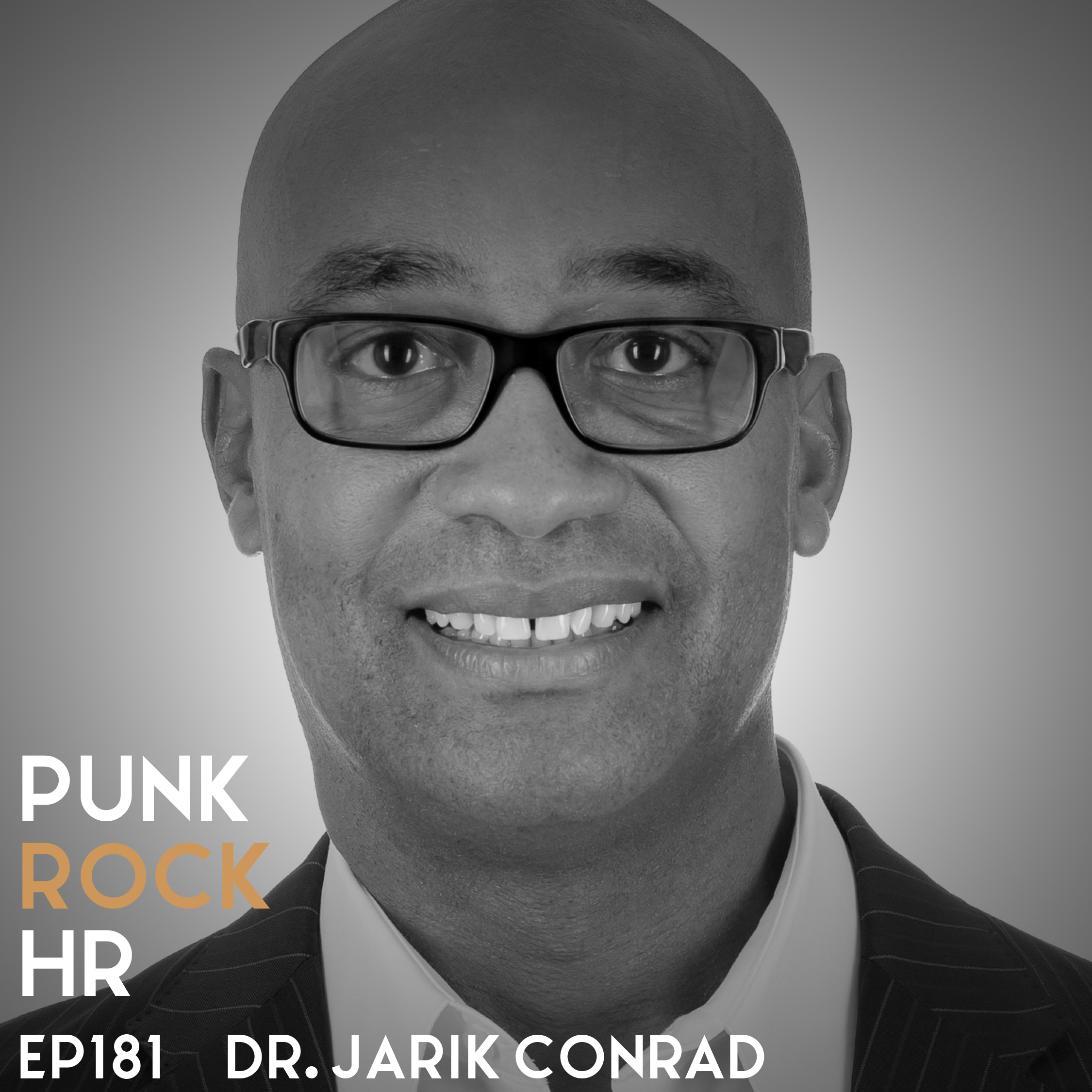
    Moving From Employee Wellness to Holistic Health With Dr. Jarik Conrad

    My guest today is Dr. Jarik Conrad, vice president of the Human Insights and the HCM Advisory team at UKG. Dr. Conrad also serves as the executive director of the UKG-sponsored Equity At Work Council, an interdisciplinary group of experts and practitioners dedicated to providing you with evidence-based strategies to eliminate workplace inequities.

    On today’s show, Dr. Conrad and I talk about the world of well-being and wellness, what it was like before COVID-19 and where it is today. We discuss how we can start thinking more holistically about employee wellness and how to better connect employees to answers for their physical and emotional health needs. So if you work in human resources and you’re wondering, “How do I make my organization a little healthier?” sit back and enjoy this conversation.

    Punk Rock HR is proudly sponsored by UKG. They are an award-winning all-in-one HR platform. If you’re curious and want to fix work and do HR better, check out our sponsors at UKG.com.

    Download my white paper “The Way Forward: A Look at Post-Crisis Work Life,” created in partnership with UKG.

    Thinking More Broadly About Employee Wellness

    Back in the day, when I worked in HR, I was 25 pounds overweight, not sleeping, not eating right, not putting myself first like a business does, and my bottom line was depleted. And someone walked into my office and asked me to organize the 5K for our company. And I’m like, “Why are you looking at me? I can’t walk 5K, let alone run 5K.”

    I think that sometimes organizations give stuff to HR, and I was in no position to run a 5K program with any integrity. That’s a small example, but I think companies sabotage well-being programs. They demand a lot of their workforce, and they don’t necessarily give them time to recuperate, sleep or even eat right.

    I wanted to talk to Dr. Conrad about this because I think that companies get in their own way.

    According to Dr. Conrad, “we think about physical health. We think about mental health, but we think about it in terms of depression and bipolar and all that stuff. For me, wellness is when you pick up your phone, and you see these alerts and people are fighting on the airplane: something is not right. Something is going on, and you can’t have any disagreement in public now without it getting to be some violent, confrontational situation.”

    This state of affairs is unsustainable, Dr. Conrad says. “You can’t be well if you can’t even engage in a conversation without getting emotionally overheated; something is going on in your life that has your nerves on edge.”

    The solution starts with looking more broadly at issues of wellness. “If you’re somebody who hates somebody, just because they’re different, there’s something not quite right there in your life,” Dr. Conrad says. “There’s some insecurity. There’s something that you don’t like about yourself. So, I just think we need to put a different lens on a lot of the challenges that we’re seeing. It gets back to, ‘Is this person healthy and well?’”

    Connecting Employees to the Answers for Holistic Wellness

    I believe that there’s absolutely something broken in our society. And companies can only do so much, but I wonder if there’s also an opportunity for HR to get ahead of some healing. When we do our jobs right, we’re proactive. We can see a problem before it becomes a scene in the middle of a flight, 38,000 feet up.

    I asked Dr. Conrad about toeing the line between being fake psychologists and being helpful.

    “I think we might not have all the answers, but we ought to be able to connect people to the answers. So, we need more robust mental and emotional health services in our organizations. All of us have EAP programs. You and I both know they’re underutilized. There’s still a stigma associated with this whole category — and especially to mental health services at work and all that.”

    Availability of resources isn’t necessarily the problem, but rather people not knowing how to access them, Dr. Conrad says. “Make sure they know what’s available, make sure there’s no stigma associated with using those things and make sure we fill in the gaps.”

    “I have a passion for diversity, equity, inclusion, belonging, just like I have a passion for health and wellness. And if you think about it like this, let’s say you’ve done your job as an HR person, you’ve done some research. You present all these stats about how underrepresented you are regarding certain populations in the workplace. We need to do something about that. We need more diversity, equity and inclusion for all these reasons and the business imperative.”

    Well-Being Starts With Emotional and Physical Health

    Dr. Conrad left us with some final thoughts on the importance of understanding employee wellness holistically.

    “I think all this starts with emotional and mental health. I think that has to be the foundation. And it has to be the groundwork for everything that we’re trying to do. You can tell people all day long, ‘Eat these foods, work out this many times a week, get this much sleep.’ You can tell them that all day long, and they can have good intentions. They understand it intellectually. And they have very good intentions, but something happens in the brain when it comes to understanding and executing.”

    Wellness programs need to start earlier, with helping people understand their minds and their processes, Dr. Conrad adds. “So, I just think we got to be smarter about that and how stress is affecting our decision-making. How stress is affecting our interactions with each other. And how we look at ourselves. All this is foundational stuff before a wellness program can come in and say, ‘OK, let me encourage you to run 5K.’ It’s got to be deeper than that because I want to know why you weren’t exercising in the first place. If I can flip that switch, I’m good.”

    Click to Tweet quote:

    [bctt tweet=”“We need to think about wellness more broadly. … I just think we need to put a different lens on a lot of the challenges that we’re seeing. It gets back to, ‘Is this person healthy and well?’” ~ @DrJarikConrad. Hear more on Punk Rock HR!” via=”no”]

    Watch This Episode

    People in This Episode

    Full Transcript

    Laurie Ruettimann:

    Punk Rock HR is proudly sponsored by UKG. They’re an award-winning all-in-one HR platform. If you’re curious and want to fix work and do HR a little bit better, and I know you do, because you’re a fan of Punk Rock HR, check out our sponsors at UKG.com.

    Hey everybody, I’m Laurie Ruettimann, welcome to Punk Rock HR. My guest today is Dr. Jarik Conrad. He’s the VP of the Human Insights and the HCM Advisory team at UKG. Dr. Conrad also serves as the Executive Director of the UKG-sponsored Equity At Work Council, an interdisciplinary group of experts and practitioners dedicated to providing you with evidence-based strategies to eliminate workplace inequities. On today’s show, Jarik and I talk about the world of well-being and wellness, what it was like before COVID and where it is today. So, if you work in human resources and you’re wondering, how do I make my organization a little healthier? Well, sit back and enjoy this conversation with Dr. Jarik Conrad of UKG.

    Hey, Dr. Conrad, welcome to the podcast.

    Dr. Jarik Conrad:

    Hi, Laurie, delighted to be here.

    Laurie Ruettimann:

    Well, I’m thrilled to have you here, Jarik. And before we get started, it’s a tradition to have the guests say who they are and what they’re all about. So, why don’t you get us started with that?

    Dr. Jarik Conrad:

    I guess, officially I’m the VP of Human Insights at UKG, and nobody understands what that means. So, I have to explain that. I really lead a thought leadership group at the company. And we’re thinking about the future. What the future workplace is going to look like? What are going to be the needs of future workers? How do we make sure we prepare our company and our customers for their future?

    Laurie Ruettimann:

    Well, to know the future of work means that you must study the today of work a lot. So, what’s work like today, in 2021?

    Dr. Jarik Conrad:

    Interesting. I mean, obviously, everything is dominated by COVID and everything is influx now with this fluid return-to-work situation. You think you got the green light, then you get a yellow light. You don’t know if you anticipate a red light. And so, I think we’re still dealing with a level of uncertainty and a high level of anticipation. There are pockets of people who want to go back and pockets of people who are like, “Look, everything is fun. I like my new setup.” So, this is just an interesting time. I think this is a time that organizations and organizational leaders really need to be listening to what their employees are telling them, because it might be different for different organizations, different industries. So, it’s interesting right now.

    Laurie Ruettimann:

    Well, I know you’re focused on workplace wellness and the health of organizations. And at the very micro-level, I work with a bunch of people and they’re like, “I’m healthier than ever. Now that I’m working from home, I’m running 50 miles a week. I don’t commute anymore. I get to see my kids in the morning.” It’s mostly men, by the way. And then, on the other side of things, there are individuals, I would never say they’re all women, but they’re exhausted, they’re burned out. So, talk to me a little bit about individual workers and how they’re feeling.

    Dr. Jarik Conrad:

    Yeah. I’m glad you said it that way, because we tend to read articles and if we get a number that says the average are 50-something percent, we roll with that. The reality is there’s a variety of experiences that are going on right now. And I know just personally for us early on, when it looked like this was going to be a long-term thing, my wife and I made a pact that we were going to be on the healthier side when we came out of it. So, we recommitted to working out and eating well. Now, I don’t know whether this is a good thing or a bad thing, because I like to support local businesses, but we have not eaten out at a restaurant for 18 months. No, carry out. I’m a gourmet chef now, Laurie. [crosstalk 00:03:52].

    Laurie Ruettimann:

    I’m coming over when things are better, oh my goodness-

    Dr. Jarik Conrad:

    That’s right, I can take care of you. So, we went into this saying that, we know human behavior, that some people are going to fall off. We don’t want to be those people. So, I think that some people went into it with that approach. So, it’s really mixed. And I think organizations, again, I’ll go back to, we’re going to have to meet where people are, and how do we get them back adjusted and ready to work in this new environment? And a big part of that — a huge part by the way, always has been, but it’s very obvious now, very visible — is the health and well-being of their employees, is critical.

    Laurie Ruettimann:

    Well, I’m often skeptical when people talk about the workforce globally, because come on, we’re all different, right? I mean, that’s one of the lessons from 2020 that we can’t make these sweeping assumptions anymore. And yet, there are some global trends happening in the world of work, as it relates to wellness and well-being. So, where are we globally? Are we all burnt out? Or, at least is every organization dealing with this? Where do things stand?

    Dr. Jarik Conrad:

    I hate to use the term “interesting” again, but I guess a lot of things are interesting right now. It’s mixed, obviously this pandemic has affected us all, right? There’s nobody on Earth that hadn’t been affected in some way, shape or form by the pandemic. So, we’re all still reeling, and we’re all on this rollercoaster. Everybody’s got the same rollercoaster, some countries get it before we do, some countries get it after us. So, globally, we’re still as uncertain. I mean, you got here, it’s very difficult to get a sizable part of the population to take the vaccine. You got other countries that will do anything to get an opportunity to take the vaccine. So, it’s just a unique time to sit back and understand what’s happening on a global scale.

    I will say this, though, if it’s possible, let’s put the pandemic aside and talk about where we were before. And unfortunately, some of the richest countries weren’t doing so well, the United States being chief among them, we have not had the best health outcomes for a long time. And so, we’re struggling from a health perspective for individuals, which then means organizationally, there are a lot of people who were already calling out of work, who were present, but not really there physically, or mentally, emotionally. I’ve been talking about the health crisis prior to the pandemic and all the pandemic did was exacerbate these issues.

    Laurie Ruettimann:

    Well, that’s really well-said. Because, I feel like I was burned out before it was cool. And you’re absolutely right, there were plenty of us who were dealing with health issues and financial stress, right? And student loan payments and all of this, which culminates in a broken well-being system. But, you tell me, how did we get here? Especially, here in America, to a place where the pandemic just put our well-being in a negative way on steroids.

    Dr. Jarik Conrad:

    I’ll talk about it from a couple of angles. From one angle, we got to look at the systems, the structures, the institutions that perpetuate the challenges that we have. So, just on a practical level, look at what we eat. I mean, fast food is ubiquitous. The marketing of it is great. It’s convenient. Convenience has been a real detriment to our health and well-being, even though it’s had all these promises of making our lives better. In some ways it’s made us lazy, right? So, we’re struggling from a systems perspective, a structural perspective. We know we had issues with the opioid crisis, and you know how some of that was orchestrated. So, we have all these issues going on.

    On the other side, there’s a degree of individual responsibility that’s part of this, as well. We don’t eat right, we don’t exercise enough, and we don’t sleep well. And we’re dealing with an incredible amount of stress. You mentioned being burned out. I mean, people are dealing with an incredible amount of stress. And on top of all this, you have these tremendous inequities and disparities. And some groups were lower on all these scales than other groups. So, we already had some structural issues that resulted in some people being marginalized, on the outskirts. And again, with the pandemic, that’s exacerbated that problem, right? People who are struggling the most, are the people who were already struggling.

    Laurie Ruettimann:

    That’s really well said, and an interesting way to put it. Because, back in the day, when I worked in human resources, I was 25 pounds overweight, not sleeping, not eating right, not putting myself first like a business does, and my bottom line was depleted. And someone walked into my office and asked me to organize the 5K for our company. And I’m like, “Why are you looking at me? I can’t walk 5K, let alone run 5K.” So, I just think, sometimes organizations give stuff to HR and I was in no position to run a 5K program with any integrity. So, that’s like a small example, but I think companies sabotage well-being programs. They demand a lot of their workforce and they don’t necessarily give them time to recuperate, to sleep, to eat right. So, let’s talk a little bit about this, because I think companies get in their own way. What are your thoughts on that?

    Dr. Jarik Conrad:

    Yeah, yeah, and I think we do need to look at ourselves in the mirror. I’m an HR professional as well, been doing HR for 20-something years. And I’ve tried not to be one of the problems, but I’ve definitely been on HR teams where, we have this wellness program, we do this big launch of this wellness program. We make up some contest for people, encourage them to eat right, workout. But every Friday we bring in donuts. It’s mixed messages. So, all the things that we told them not to do, are the things that we did, whenever there was a celebration. And you and I both know there was always some promotion, a retirement, or something worth celebrating. So, I think we’ve got to think about this stuff much more serious. The other thing, Laurie, is I think that we’ve got to think more broadly, in terms of health and wellness.

    We think about physical health. We think about mental health, but we think about it in terms of depression and bipolar and all that stuff. For me, wellness is when you pick up your phone and you see these alerts and people are fighting on the airplane, somebody is not right. Something is going on, and you can’t have any disagreement in public now without it getting to be some violent, confrontational situation. You can see that we’re on a pace that is unsustainable. You can’t be well if you can’t even engage in a conversation without getting emotionally overheated, Something is going on in your life that has your nerves on edge.

    So, I think we need to step back, and we need to think about wellness more broadly. I know diversity, equity and inclusion is a big focus now, as it should be for so many organizations. But, if you’re somebody who hates somebody just because they’re different, there’s something not quite right there in your life. There’s some insecurity. There’s something that you don’t like about yourself. So, I just think we need to put a different lens on a lot of the challenges that we’re seeing. It gets back to, “Is this person healthy and well?”

    Laurie Ruettimann:

    Yeah, I love that perspective, and I don’t necessarily think that it’s an organization’s responsibility to solve some of these systemic problems, nor can it. But, when your employee is one of those who is picking fights at work and then is ultimately arrested on a plane, you’ve got some responsibility to either give them resources, or give them access, or teach them a different way. But, do you? I mean, they’re adults. I don’t know. What are your thoughts on this? This is so complicated.

    Dr. Jarik Conrad:

    Well, I think, the first thing, you’ve made an investment. You’ve hired people. And if I’m right, that means there’s something not quite right within, right? That they don’t feel good about themselves in some way. So, if we look at them as vulnerable, if we look at them as if they need something, what if we, as an organization, can provide that thing? What if we can connect with people enough to know what it is they’re insecure about? What it is that they’re struggling with? If we can provide those resources, we help them. And then, obviously we help the organization. So, I think an investment in them is an investment in us.

    Our natural reaction when you have people who misbehave, and you know this from our experience in HR, it took me a few years to learn this. The natural reaction is the person who was just misbehaving. You go in, you discipline them. You make sure that they don’t do it. Actually, that’s oftentimes a cry for help. And again, it took me a while to learn that. And I would go in and ask a lot of questions, and it wasn’t unusual for those people to break down and there’s tears everywhere. This reminds me of a quick saying my wife used to say before I left the house every day, both as an HR person, and especially, when I started my own thing, I was doing executive coaching. She’d say, “Don’t make anybody cry today.”

    Laurie Ruettimann:

    Oh, my goodness. [crosstalk 00:12:19] My friend, that is the goal of HR, though. So, you’re right. And there’s absolutely something broken in our society. And companies can only do so much, but I wonder if there’s also an opportunity for HR to get ahead of some of the healing. When we do our jobs right, we’re proactive. We can see a problem before it blows up 38,000 feet on a plane. And so, I just wonder what your thoughts are on towing the line between being fake psychologists, but also being helpful?

    Dr. Jarik Conrad:

    Yeah, well, I think we might not have all the answers, but we ought to be able to connect people to the answers. So, we need more robust mental and emotional health services in our organizations. All of us have EAP programs. You and I both know they’re underutilized. There’s still a stigma associated with this whole category. And especially to mental health services at work and all that. We need to make sure that people know what’s available already, because in some organizations we have the resources, people just don’t know where to get to them. Make sure they know what’s available, make sure there’s no stigma associated with using those things, and make sure we fill in the gaps — I mean, if we don’t have what they need available. And we need to be making sure that we’re thinking about where people are in their lives as we try to move our organizations forward. Let me give you another quick example.

    I have a passion for diversity, equity, inclusion, belonging, just like I have a passion for health and wellness. And if you think about it like this, let’s say you’ve done your job as an HR person, you’ve done some research. You present all these stats about how underrepresented you are, regarding certain populations in the workplace. We need to do something about that. We need more diversity, equity and inclusion for all these reasons and the business imperative. And all this stuff. Well, let’s say I’m a white male and I hear you say that, but I’m a white male who is at risk a little bit. When you think about Maslow’s hierarchy, we have a similar path we’ve created called the life-work journey. If you think about those initial categories, if I’m at risk, and you just told me that we need more diversity, what have you just told me?

    You are coming after me, you’re trying to replace me. I’m already feeling at risk. On the other hand, let’s say that I’m a white male, but I’m further along. I’m at legacy stage. I’m thinking about retirement, I’ve done well here, I have savings. I’m secure in who I am and what I contribute. And you tell me the same thing, I might say, “Great. How can I help? I want to be around people from different backgrounds and perspectives. I enjoy that. I learned from people.” So, if what I’m saying is true, as an HR professional, maybe we ought to be investing in our people and understanding where they are and move them to a place that we can introduce these concepts and face less backlash, have a likelier, greater chance, a higher likelihood of these things being successful. So, I think we need to rethink everything that we do and look at it from the lens of where people are in our organizations and how are they likely to respond?

    Laurie Ruettimann:

    Well, that’s empathy and compassion in action, what you just described. And I love that, because we’ve been throwing around those words, they’re the buzzwords, du jour. Empathy, compassion, we’re showing it all the time, but we’re not … and I think you’re right, it takes hard work, it takes boots on the ground to actually be empathetic, to be compassionate. And there’s almost not enough time. We want HR professionals to connect individually. We also want them to have their fingertips on the pulse of everything and to know all these different resources, but we also want them to fill the 52 jobs that are open and be the diversity officer-in-chief, and do all of these crazy things. And I think one of the things that HR professionals say to me is that, “I haven’t had a vacation in 18 months, I’m doing 15 different jobs here. I’m exhausted myself.” So, I wonder if there are really great organizations that you work with, with HR departments that are doing it right. What do those departments look like? What is a healthy, functioning, HR team do that others can emulate?

    Dr. Jarik Conrad:

    Now, I probably shouldn’t say, “Well, UKG we have so-and-so’s.” I won’t do a commercial here, but there are a few things that we know. This debate has been going on since I started HR, 20-something years ago. “How effective are we? Do we matter? Do we have a seat at the table? Can I get to the strategic stuff? Because, I’m caught up with the tactical stuff.” The reality is, I think, our function needs to mature, not the people. I’m not saying we have immature people, but our function is not as mature as it needs to be. I think ultimately, you’re going to have HR departments that are divided into two. I think right now, we’re asking the same person to do both of these functions. And I think ultimately, you’re going to have a people sciences area and these people scientists — they’re into emotional intelligence and psychology and neuroscience, and what makes people tick? And how do we then take that knowledge and use it to help them tick better, all that stuff.

    And we’re always going to have a group that needs to be handling these tactical, the compliance, the day-to-day operational things that are critically important for our success. I just think we need to be more clear about these two functions and that they’re different. The skills that it takes to do one are not the same as the skills that it takes to do the other. So, I think we need to try to get there. This is one of our megatrends going into 2021, by the way. So, I hope that we can get there with this shift, this rebirth of HR is what we’re calling it. Now, while we wait to get there, here’s all my advice for an HR person. You got to take the vacation. The reality is you’re probably not as productive and as effective as you think you’re being by trying to be all things to all people and not taking care of yourself. You’re probably not meeting anybody’s needs, and it’s not sustainable.

    So, what happens then if you get overstressed? And now, you got to take an extended vacation, because you just can’t deal with it anymore. That’s not going to be good for you, it’s not going to be good for the organization. So, I know it’s easy to say, but we have to take that time. Furthermore, we ought to be models for what we’re trying to have other people in our organizations emulate. And so, if we are hard-driving, not taking the time, not investing in ourselves, how are we going to tell managers that they should be doing that for their employees? We got to be able to walk the talk, so that work will be there. The company is not going to fall apart because you take a vacation. I promise you, they’ll be OK.

    Laurie Ruettimann:

    Yeah, I’ve learned that myself, the hard way. Absolutely. Well, as we wrap up the conversation, is there anything else you’d like to leave with the audience, with the listeners, with the people who are watching about the world of work, the world of well-being and the world of health and happiness at work?

    Dr. Jarik Conrad:

    I’ll just reinforce that, I think all this starts with emotional and mental health. I think that has to be the foundation. And it has to be the groundwork for everything that we’re trying to do. You can tell people all day long, “Eat these foods, work out this many times a week, get this much sleep.” You can tell them that all day long, and they can have good intentions. They understand it intellectually. And they have very good intentions, but something happens in the brain when it comes to understanding and executing.

    And so, I think, the training around emotional intelligence and helping people understand what’s going on in their brains, when they see food? What’s happening in their process? So, I just think we got to be smarter about that, and how stress is affecting our decision-making. How stress is affecting our interactions with each other. And how we look at ourselves. All this is foundational stuff, before a wellness program can come in and say, “OK, let me encourage you to run 5K.” It’s got to be deeper than that, because I want to know why you weren’t exercising in the first place. If I can flip that switch, I’m good.

    Laurie Ruettimann:

    Well, I have to tell you, I learned the hard way that nobody can make you run a 5K. You got to arrive there yourself. So, I learned how to do it. And then, I started running marathons, and I’ve never looked back. So, if anybody like me can run a marathon, anybody else can do it. It’s just training. So, there is hope for all of us, and Jarik, it was really lovely to connect with you today, thanks for being a guest.

    Dr. Jarik Conrad:

    Well, terrific, terrific. Thanks for having me.

    Laurie Ruettimann:

    Hey everybody, I hope you enjoyed this conversation with Dr. Jarik Conrad. For more information, including a link to download an awesome white paper that I wrote about the changing world of work with UKG, head on over to LaurieRuettimann.com/podcast. Now, that’s all for today and I just want to thank UKG for being a great sponsor, and we’ll see you next time on Punk Rock HR.

  • I Work in HR and Hate It

    I Work in HR and Hate It

    Most days, I feel like my work in HR is slowly sucking the life out of me. Can you offer suggestions or enlightenment on how to get past these feelings of drudgery towards this career path I’ve chosen or how to jump into something else. This is not the place that I can see myself in another five years, but feel completely lost when it comes to career changes. I have been in HR for nine years, two months and about eight days. I don’t have experience in much else. I don’t feel qualified for many other jobs. Suggestions?

    You don’t have to work in human resources just because you’ve been in HR for nine years, two months and about eight days. You can do anything: work in a coal mine or work in marketing, to name just two jobs.

    It’s all the same. When you aren’t responsible for writing your paycheck, you will always give up a certain level of control and be accountable to someone else. And in the majority of those situations, the owners and your colleagues will be assholes.

    What’s worse is that the media won’t stop telling you that you need to find fulfillment in your career. I think it’s awesome when you can make money, do something that isn’t morally bankrupt, but still have time for a hobby. So get a hobby ASAP.

    But if you can’t see yourself in HR in five years, and you don’t have any other skills, it’s time to develop some new ones.

    Does your company offer tuition assistance? Take full advantage of it. Can you volunteer your time on a not-for-profit board of directors? You’ll learn a lot.

    Can you open up an Etsy shop or do something fun on the side to earn cash?

    If something is slowly sucking the life out of you (e.g., your job, your family, marriage), you have two choices.

    • You can stop the bleeding.
    • Die a miserable and gangrenous death.

    Who wants to die because they made themselves miserable working in HR. Here are some small ideas to begin the march forward towards your new life.

    Build New Connections

    Wake up 15 minutes early, groan for a second, and then use that time to make new connections with other HR folks. Don’t get your hopes up too high every time you reach out. Not every conversation will be mind-blowing or even helpful. But different points of view will help you feel less miserable in HR while learning a little about how others do their HR thing — and likely share in your utter hatred.

    Connections won’t likely just pop up and make it easy on you. Twitter has a gazillion HR channels, and websites such as hr bartender and Fistful of Talent are also good places to find HR professionals that might just feel like you.

    For people who want to lurk and linger, LinkedIn can be a more private network where you can send a direct message and share links without catching the attention of social media creeps and trolls.

    Conventions, classes and recertification events put you in direct contact with others in HR. It isn’t for everyone, but face-to-face conversations can help fill the holes that HR leaves in our souls.

    Maybe, just maybe, a new connection will share why they got into HR and why they enjoy it. You might remember why you are doing what you do — well, until your phone rings for the first of a million times for the day.

    Take a Hike

    Start walking during lunch. Be alone. Be quiet. Stimulate endorphins and slowly begin to overcome your career dysthymia.

    I am not a doctor, just a cog in the HR machine. But, walking it off works because, well, it works — focusing on your breathing and muscle tension will take your mind off of your frustrations. Taking that hike will help you shake off your fight-or-flight response. Because who needs more drama when you work in HR?

    That 15- or 30-minute stroll will calm you down and give you something to look at beyond the paperwork littering your desk. But not everyone gets those sorts of windows of time, and certainly not every day. When that’s the case, at least try standing up, standing straight and doing some quick stretches.

    Make Someone Else Happy

    Volunteering makes people feel good because it is selfless and meaningful. Prioritizing something or someone else helps you prioritize everything in your life. It takes your mind off of petty problems and makes the bigger ones look less horrible. This also allows us to find worth in our time and talent when we feel unnoticed or not enough as HR professionals.

    We are too critical of ourselves because we are human beings. Volunteering time and energy tends to work as a distraction, create a sense of accomplishment and push us to be better overall humans. When we feel confident and less isolated, we hate HR a little less and love others a lot more.

    Finding a volunteer opportunity that fits your skillset, location and time availability is pretty straightforward. You can try something new. Or, find a volunteer project that is just fun. It doesn’t have to be a long-term commitment. Pet adoption days or community park cleanup are one-day things with a lasting impact.

    Also, volunteering is not a shabby place to find friends. These are people outside of your work — people who like you for you and freely give their time to volunteer with you.

    Most of all, take yourself and your career less seriously. Take your obligation to improve the lives of other people more seriously.

    Hate Working in HR? Do Something About It

    Change doesn’t happen with a flip of a switch. Commit to do one small thing every single day that brings you a little joy and makes someone else’s life better. It is amazing what happens when we shift our focus away from our pain and think about how we positively impact the world and the lives of other people.

    And that includes HR managers who hate working in HR.

  • Fight For Yourself with Andy Storch

    Fight For Yourself with Andy Storch

    I’m joined today by a fellow author, podcaster, speaker and coach, Andy Storch. Andy is the host of two podcasts including The Talent Development Hot Seat and the Own Your Career Own Your Life Podcast as well as the author of the book “Own Your Career Own Your Life.” Andy also is the founder and host of the new Talent Development Think Tank conference and community.

    In this conversation, Andy shares his experience in talent development and what led him to launch his online group, the Talent Development Think Tank Community. He also shares some ideas from his book, “Own Your Career Own Your Life,” and the challenges of launching a book while undergoing treatment for cancer. If you’re ready to shift your career and your mindset, this episode is for you.

    Shift Career Summit Sponsor Banner

    This episode of Punk Rock HR is sponsored by the Shift Career Summit on June 17. Mary Ellen Slayter of Managing Editor and I are bringing together some of the biggest names in the world of work to help you take control of your career and talent development. The event is completely free, and you can register today at ShiftDigitalCareers.com. We’ll see you there!

    What the Heck is Talent Development?

    Andy Storch has spent years developing the skills and strengths of workers, but only recently did his field get a title that reflected its mission. A lot of people don’t know what talent development is. Veterans of the world of work likely think the term is simply a fancy way of saying “training.” But according to Andy, that’s not quite right. He describes talent development as “enabling, empowering and developing the people in your organization and your circle to help them do their job better and grow in their careers.” Andy’s vision of talent development includes technical training and soft skills (or “power skills”).

    The role of talent development is important for any company, but the individual who works in that role can often be a department of one. Andy noticed that many workers in the talent development community were struggling when the coronavirus pandemic hit. So he launched the Talent Development Think Tank Community in the middle of 2020. Since then, the community has experienced rapid growth which Andy contributes to human nature. “I think that humans are social creatures,” he said, “We need community. We need colleagues. We need people that we can connect with to find out what’s going on.”

    Own Your Career (and Your Life, Too)

    In 2020, both Andy and I were hard at work publishing books with realistic career advice for people who were fed up, burned out or craving something better for their careers. (What can I say, great minds think alike!) Andy’s book aims to inspire readers and provide them with a road map for how they can take ownership of their careers and own their life.

    According to Andy, some of the worst career advice on the internet is the idea that you would be happier if you were your own boss. “I see a lot of these messages out there saying, ‘if you don’t like your job, you need to quit the 9 to 5 and go start your own business … but it is not right for everyone.” We all know talented people who are valuable to the organization they work for but have no interest in entrepreneurship. So what advice can actually help them begin their journey to owning their career? There’s no one answer, but Andy has some suggestions for where you can start.

    “Start with self-reflection,” suggests Andy, and ask yourself, “Why do you feel you’re unhappy? What is causing that? Maybe if you change that, everything will be fine.” Once you check-in with yourself, you can begin to get intentional about your career and your life so you can take responsibility, and find fulfillment and happiness.

    Prioritizing Personal Well-Being When it Matters Most

    At the same time that Andy’s book was launched, he received a shocking diagnosis. At age 40, he had a book coming out, a growing online community, a global pandemic impacting every level of his life and business, and a life-altering diagnosis: testicular cancer. When asked what it was like trying to launch a book and maintain a business while going through chemo, Andy said, “it’s been a lot of ups and downs. A lot of days on the couch when I really wanted to be building a business.”

    But Andy hasn’t let his diagnosis keep him from pursuing his goals and owning his life. When it comes to mindset, Andy has kept things positive and prioritizes his well-being so he can get back to chasing his dreams. “Just like with our jobs, with our career, with our business, there are those challenges that come up that are just awful. And then you’re like, ‘I don’t want to do this,’ but then you get through it,” Andy said, “and you often learn from the experience, and you get better.”

    People in This Episode


  • Caring for Mental Health Through Art with Doug Shaw

    Caring for Mental Health Through Art with Doug Shaw

    This week, I am joined by a dear friend of mine, Doug Shaw, who is a visual artist rooted in music, self-care and speaking truth to power. Doug runs an award-winning project called “We Are All Artists,” which encourages community engagement through workshops, pop-up exhibitions and a weekly free art drop, where he hides a piece of art in his neighborhood for strangers to find.

    In this episode, we discuss the importance of prioritizing mental well-being and self-care, Doug’s passion project that transformed a community, and the importance of embracing our own creativity. I hope this show inspires you to pick up a pencil, brush or whatever creative tool you want, and get to creating something new. As Doug argues, we’re all artists, whether we share that art with the world or not.

    Also, be sure to check out my free offer to try LinkedIn Learning for 30 days to see my courses on “How to Proactively Manage Conflict as an Employee,” “Mastering Self-Leadership” or any of the great courses LinkedIn Learning has to offer!

    Well-Being is for All of Us

    Birch Tree painting by Doug Shaw - mental health

    Well-being should be for all of us. But often, men are left out of the conversations about mental health and well-being. Doug Shaw is no stranger to prioritizing his well-being. Before the pandemic even started, Doug sought counseling, and he says it has transformed his relationship with life, work and everything in between. When reflecting on the impact of counseling, Doug said, “It’s definitely connected me more closely with my creative practice, as well as just enabling me to move more freely through time and the life that I‘m having. I still get stuck from time to time, but much, much, much less often.” We all can benefit from counseling, and Doug’s focus on his emotional and psychological well-being has enabled him to take control of his artistic career.

    A Creative Project That Changed the Community

    Four years ago, Doug started creating art and hiding his pieces in random places around his neighborhood, with no intended recipient in mind. His mission of creating art for himself and strangers has provided an outlet for him to work on his own well-being. Before starting formal therapy in recent years, Doug used art as a way to explore his emotions. “I didn’t realize it at the time, but I think I’ve often used it as a form of therapy in and of itself,” said Doug.

    Sharing his art with the local community has been transformative in ways Doug never imagined. Reflecting on the impact of the project, he revealed that “it transformed my relationship with this geographic community. It transformed my relationship with my practice.” Speaking with Doug, I was struck by the beauty of a piece of art popping up unexpectedly and reminding us of our own innate humanity. The finders of Doug’s art have also been moved. Over the years, he has received countless notes of gratitude and appreciation for the project.

    Sparking Creativity in Others

    Wolf howling at moon painting by Doug Shaw - mental health

    Doug has always been interested in what makes people tick. Once he saw the impact his art was having on his community, he had a realization. “Artwork has a way of helping us all realize that we’re all looking at the same thing, but we’re all thinking or feeling something different.” This led Doug to start encouraging people to experiment with the artistic process and embrace their own creativity. Besides, Doug says, “It’s all in your head. You’re an artist. You’re a good artist when you make somebody else experience or feel something deep or unexpected.”

    So how can we learn from Doug and prioritize our mental and emotional well-being? Doug’s advice is to “just pick up a pen and, for goodness sake, try it.” I know what I’ll be trying this week. I hope you can join Doug and I in creating something new for yourself and sharing it with others when you’re ready.

    People in This Episode

  • The Power of Investing In Yourself and Your Well-Being

    Punk Rock HR is underwritten by Headspace for Work.

    Today I want to talk about my experience at Pfizer. That’s right, I’m talking about the global drug company, my former employer, and the place where I decided to end my career in human resources. 

    When I worked there, I was truly surrounded by people who made a big deal out of nothing and fought constantly over things that were unimportant and unrelated to patient care and well-being. These people really thought of themselves as performing at a very high level, but the output was very mediocre. 

    However, the truth is I was mediocre too. I wasn’t bringing my best to work every single day. Instead of pursuing my ideas, being a leader, going back to school to get my MBA, or even launching my career as a writer, I just stayed in that job. I thought I didn’t need those people but just needed to collect a paycheck. 

    Had I had the courage to fix my own employee experience, I would have made my life and the lives of other employees better. Instead, I was just stuck in a state of learned helplessness. 

    As the days turned into weeks, and the weeks months, and the months years, I sat in this job and grew increasingly disconnected from friends, colleagues, and even from myself. I was depressed, isolated, and suffered from insomnia. The only thing that soothed me was food, leading to even more problems as weight packed on quickly. 

    Eventually, however, I had a realization that companies put themselves first. If I wanted to fix work and my attitude toward it, I had to be like Pfizer and play a bigger, better game. I had to consider my long term interests, invest in my future, and put myself first. 

    The one way you can make it in life is through investment. Invest your money and invest your energy. If you want something bad enough, reallocate your budget to go and get it. 

    Back when I worked at Pfizer, I had a sense that if I wanted to do something great in this world, I needed to get a handle on my well being. For me, that meant addressing my size and my health. 

    At the time, I wasn’t thinking about goals. I was merely thinking about survival. All of that negative activity was permanently changing my body and it can do the same to you if you don’t invest in improving your well-being. 

    You don’t have to do exactly what I did, but the problem for so many of us is that we’re not doing anything at all. We’re not investing in ourselves and putting ourselves first. So, whatever your goal is, whatever will reboot your life and gives you another chance at happiness, get after it.

    I’m talking about these topics—and the specific steps I took towards investing in my well-being, including a weight-loss surgery in Mexico—in my weekly newsletter. I’m also sharing a video to help you think about your week ahead. You can sign up here.

  • Headspace for Work and Mental Health

    Mental Health Awareness Day is coming up on October 5th. Honestly, it should be every day. We need to be having consistent conversations on this topic and on the effect work can have on our mental health. 

    Lindsay Crittendon is someone who is bringing this issue to the forefront. She is the head of Headspace for Work, a company that works with businesses across the spectrum to help them identify the best ways to improve the workplace. They are dedicated to making the world and the world of work a little bit better.

    In our conversation, Lindsay and I talked about the benefits of mindfulness and more thoughtful behavior on the work environment and on our individual lives when we’re not working. I asked her how we can incorporate mindfulness into our workdays, even if it’s not recognized as a priority by our employers. 

    She said, “Honestly, I really started to understand a mindfulness experience and increasing my own performance through mindfulness by acknowledging that I have a relationship with my mental health and with my brain… to reframe a little bit and say, I take ownership over where my head is and I have the ability to really build a day-to-day relationship with my mind, it has been a really powerful reframing.”

    Lindsay also suggests the mini-meditations, workouts, and other content inside the Headspace for Work app. Taking a little bit of time each day to be mindful really counts, so take three minutes over your lunch break to try it out. 

    I’m talking about these topics—and more on well-being in the workplace— in my weekly newsletter. I’m also sharing a video to help you think about your week ahead. You can sign up here.

  • Headspace for Work and Mental Health with Lindsay Crittendon

    Headspace for Work and Mental Health with Lindsay Crittendon

    Punk Rock HR Episode 128:

    Lindsay Crittendon is the head of Headspace for Work. If you thought that was a meditation app on your phone, so did I. However, it is actually so much more than that. They work with businesses across the spectrum to help them identify the best ways to improve the workplace. 

    Mental Health Awareness Day is coming up on October 5th. Honestly, it should be every day. We need to be having consistent conversations on this topic and on the effect work can have on our mental health. Today, Lindsay helps bring this to the forefront. She’s dedicated to making the world and the world of work a little bit better.

    In this episode, we’re talking about the benefits of mindfulness and more thoughtful behavior on the work environment and on our individual lives when we’re not working. We also talk about COVID-19. We use this opportunity to talk about how to emerge from this pandemic in a healthier way. If you’re interested in a conversation about well-being at work and fixing work, sit back and enjoy this discussion with Lindsay from Headspace for Work.

    In this episode you’ll hear:

    1. Lindsay’s driving purpose behind what she does.
    2. The vision of Headspace for Work and what they do to make it a reality.
    3. How Headspace for Work defines mindfulness.
    4. The challenges that are affecting workplace mental health and what to do with that information.
    5. What a holistic mental health benefits program would look like in the workplace.
    6. How mindfulness at work and Headspace for Work specifically can benefit people.
    7. How to incorporate mindfulness into your workday, even if it’s not recognized as a priority by your employers.
    8. How businesses and leaders can remove some of the barriers and lessen the stigma attached to mental health.

    KEY TAKEAWAYS

    WHAT IS THE VISION OF HEADSPACE FOR WORK AND WHAT DO THEY DO TO MAKE IT A REALITY?

    The mission of Headspace is to make the world a healthier and happier place. They do that primarily through the design and development of scientifically-backed mindfulness content. They put this content into the world via a mobile app. They also have a lot of original content channels on YouTube and various other places. Specifically, their mission is to manifest the headspace promise within the workplace. This entails stepping back for a little bit and partnering with the companies they work with to bring credible expertise to the organization.

    HOW DOES HEADSPACE FOR WORK DEFINE MINDFULNESS?

    They define mindfulness by a single word: intentionality. It means being intentional about every area of life, including things like workouts and meditation. There is a lot of science behind meditation and scientific evidence that proves it can reduce mental health problems, which is why they emphasize that practice so heavily. 

    WHAT ARE THE CHALLENGES THAT ARE AFFECTING WORKPLACE MENTAL HEALTH? WHAT SHOULD I DO WITH THAT INFORMATION?

    There is a meaningful company impact on ignoring and or not addressing stress in the workplace. A million people actually miss work every day due to stress. Globally, there are a trillion dollars in lost productivity annually due to stress, anxiety, and depression, as 30% of workers suffer from anxiety and depression. The real opportunity to help here is to first recognize that there are not a lot of programs that address stress. So, if you have the ability to address stress inside of your workplace, a focus on that by the senior leaders and day-to-day managers can meaningfully improve your business performance. 

    HOW CAN I INCORPORATE MINDFULNESS INTO MY WORKDAY, EVEN IF ITS NOT RECOGNIZED AS A PRIORITY BY MY EMPLOYERS?

    Firstly, recognize that you have a relationship with your mental health and with your brain, just like all of the other relationships in your life. Realizing that you can build that relationship every day is a powerful reframing tool. Additionally, inside the Headspace for Work app, there are mini-meditations. Taking a little bit of time each day to be mindful really counts, so take three minutes over your lunch break. Additionally, if you are commuting to work every day, you can listen to a lot of different content in the app. There are also 15-minute workouts that don’t make you sweat but just get your body moving. 

    HOW CAN BUSINESSES AND LEADERS REMOVE SOME OF THE BARRIERS AND LESSEN THE STIGMA ATTACHED TO MENTAL HEALTH?

    Zoom out a little bit to see the components of your life and lifestyle that can improve your mental health. For example, if you are struggling with anxiety or depression, sleep can be a big part of that. It’s much easier to say you’re not sleeping well than to say you have anxiety. Leaders should think about this as simply onboarding into a mindfulness solution.

    Resources from this episode:

    Laurie on Instagram

    Laurie on LinkedIn

    Read more from Laurie

    Work with Laurie

    Lindsay on LinkedIn

    Headspace for Work main page

    2020 Mental Health Trends Report

    Headspace has special programming planned for World Mental Health Awareness Day and will launch an exciting new initiative around Employee Mental Health. 

    Follow them on LinkedIn and stay tuned to be the first to find out about upcoming announcements! 

  • An Opportunity for Change

    There’s so much happening in the world right now. And it is easy to lose faith in humanity, in God, or in your religious beliefs. I once had someone suggest to me that my lack of faith is a form of unreconciled grief. 

    So, when I found Reverend Wendy Hamilton on social media, her perspective on grief and trauma resonated with me. She is a D.C. area activist, minister, and mother who’s holding workshops on grief and trauma in the age of civil unrest.

    When 2020 began, we were filled with such optimism. Fast forward a few months, and the foundations we were building for the new year came tumbling down. 

    According to Wendy, we’re all in a stage of grief right now. We’re paralyzed. And paralysis causes all forms of toxic behaviors, some of which we’re seeing play out on a national stage. 

    Not all leaders are trained in the human condition. And, that’s okay. 

    There are still opportunities at this moment – for all. They include a chance for self-reflection, understanding that the emotions you (or those around you) may be feeling are deeply rooted in grief. And other opportunities include learning to listen, boldly take action, and make changes for the better. 

    Let’s begin to think about the world in which we live and work, differently. My challenge for you this week is to determine how you can help drive change and begin to make it happen. 

    I’m talking about these topics—and changing the way we look at the world of work — in my weekly newsletter. I’m also sharing a video to help you think about your week ahead. You can sign up here.


  • Work in the Post-COVID19 World

    There are very few people I care about, but​ my childhood best friend, April, is one of them​.  When she told me she had COVID-19, I was terrified. She has since recovered, and I am happy she is okay.  ​

    Her experience, as well as so many others, got me thinking about the world of work post-COVID19. Before we consider the post-COVID world, let’s turn to the days leading up to the global pandemic and what has transpired since. ​

    So many people dropped the ball, and there’s lots of blame to go around.​  Politicians who called it a hoax,​ supply chains that didn’t prepare themselves for a pandemic,​ and even IT departments that didn’t understand or allow people to work from home. ​They left​ me (and others) feeling less than confident.​

    Eventually, workplaces will begin to open. But, we must make sure the world we return to is not ‘business as usual’ because this pandemic has changed everything​​.

    My challenge for you today is to learn from my friend April’s experiences with COVID-19. Stop for a second, and think critically about whether​ you want to return to a workplace that fails​ to​ keep employees safe and puts people in jeopardy. ​

    I’m talking about these topics—and how everybody is responsible for creating a healthy work environment— in my weekly newsletter.​  I’m also sharing a​ video to help you think about your week ahead. You can sign up here.​