Month: January 2026

  • Why the Heritage Foundation’s Family Agenda Should Alarm Business and HR Leaders

    The Heritage Foundation’s Family Report Is an Economic Risk, Not a Moral Solution

    by Laurie Ruettimann

    I’m a Jewish, middle-aged woman who is post-menopausal. I’m married, don’t have children, and have cats. I support choice, science, and democracy. I believe in a global economy, workers’ rights, and that Human Resources should create fairness and equity at work.

    So when a report drops arguing that America’s real problem is that women like me are not having enough babies, or that immigrants are a threat, I pay attention.

    What This Report Is, and Why It Matters

    The Heritage Foundation released a report called Saving America by Saving the Family on January 8, 2026. Political leaders, business executives, and professional groups are already treating it as serious policy. But it doesn’t deserve that kind of attention.

    This isn’t a neutral analysis of demographic trends. It is a cultural restoration project dressed up in white-paper language, charts, and citations. The argument is simple: America’s core crisis is declining marriage and falling birth rates among white people. The country can only survive if people marry earlier, have more children, and raise those children within a heterosexual marriage. The report presents this as a “biological reality,” complete with moral clarity and common sense.

    It’s so beta. It’s also disturbing. This framing ignores the realities of modern life. The report treats women’s autonomy as a problem to fix, not a freedom. It frames reproductive choice as a threat to society. Divorce, waiting to marry, and choosing not to have children are seen as signs of social decline, instead of what they often are: reasonable responses to danger, risk, caregiving demands, and unequal opportunities.

    As a Jewish reader and leader, I find this report even more concerning. The Heritage Foundation puts a Christian moral framework at the center of American life and treats it as if it’s universal. Pluralism is only accepted if it doesn’t challenge the set social order. When this report mentions “Judeo-Christian values,” and notes Israel as an exception to moral decline, it quickly drops the Jewish part as soon as Jewish ethics, reproductive law, or community structures complicate its story. The idea of civilizational survival is reduced to birth rates, which puts white, Christian, heterosexual married families as the standard. Also, people are treated like inputs, women’s bodies as infrastructure, and minority communities as problems to fix instead of citizens to support.

    What worries me is that this kind of thinking rarely stays theoretical. The document has a clear eugenic logic. Beyond that, it’s also very bad for the economy.

    Why This Report Is Bad for the Economy

    The family model in this report relies on conditions that don’t exist anymore. It assumes people have stable single-earner wages, affordable housing, good healthcare, and steady jobs. The report doesn’t suggest rebuilding these systems for today’s world. Instead, it wants to force people into family structures that never really existed for many groups.

    That’s not pro-growth. It isn’t pro-business. It is definitely not pro-worker. It is pro-power and anti-democratic.

    It’s also simply wrong on the facts.

    Women in the workforce have driven economic growth for decades. Access to reproductive healthcare helps keep the federal and local workforce stable. Immigration, technology, and global trade help modern economies adapt and stay competitive. The founders of companies like Nvidia, Yahoo, and Google understood this. Yet, this report ignores or downplays the progress made by anyone who isn’t a white, heterosexual man, even as it claims to support overall American prosperity.

    Rather than investing in childcare, healthcare, housing, or labor protections, the report focuses on moralizing “family formation” and puts the burden back on women, caregivers, immigrants, and even disabled people. You’re either part of the new standard or seen as a problem to fix.

    The Circular Firing Squad in Corporate America

    This is where the whole thing gets ridiculous, and it’s one of a million reasons why we need money out of politics.

    Many business leaders (i.e., executives, founders, investors) back Republican candidates supported by the Heritage Foundation. Yet, these leaders profit from global talent, women’s work, innovation, and broad labor market participation to keep their companies running. This report goes against all of those things.

    Also, I couldn’t ignore this contradiction when Robby Starbuck, a Heritage Foundation fellow, recently spoke at a Society for Human Resource Management (SHRM) event. I still can’t make sense of it. How can an organization that represents America’s best HR departments give a platform to someone whose views treat women’s autonomy, diversity, and labor participation as threats?

    Human Resources is meant to manage risk, expand opportunity, and help organizations succeed in a complex global economy. The worldview in this report, and the one Robby Starbuck supports, does the opposite. Giving it a professional platform isn’t neutral. At best, it gives credibility. At worst, it shows agreement.

    We also haven’t discussed the Heritage Foundation’s views on LGBTQIA+ people. These positions are much closer to those of authoritarian religious regimes than to pluralistic democracies.

    Why This Report Keeps Me Up at Night

    I’m not asking you to read all 200 pages of this report. I did it for you. Slowly. And with a lot of regret.

    Instead, I’m asking you to trust me. The ideas in this report narrow who is “worthy” in American society. The authors judge private life and claim inequality is natural and unavoidable, using a specific Christian theology as justification.

    What’s frightening is that this report doesn’t look like hate propaganda. It comes with footnotes, charts, and polished business language. That doesn’t make it more legitimate. It just makes the bigotry and misogyny harder to spot, which makes it more dangerous.

    I’ve worked in Human Resources for thirty years. I know how quickly white papers can turn into policy. The speed at which ideas like this are seen as part of a balanced debate? That’s what keeps me up at night.
  • Premortem

    How to Run a Premortem (And Why You Should Do It Before Your Next Big Decision)

    by Laurie Ruettimann

    You’re about to launch a project. Or accept a job offer. Or restructure your team. You’ve done your homework. You feel good.

    Now assume it fails.

    That’s a premortem, a thinking exercise developed by psychologist Gary Klein to surface risks before you commit. Instead of asking “what could go wrong?” (which invites defensiveness), you assume the thing already failed and work backward: why did it fail?

    The shift is small but powerful. It gives people permission to name problems they’d otherwise keep quiet about.

    When to Use It

    Premortems work best when stakes are high and reversal is expensive:

    • Before accepting a job or making a hire
    • Before launching a product, campaign, or initiative
    • Before committing budget or headcount
    • Before signing a contract
    • Before any decision you’ll have to live with for a while

    How It Works

    The full worksheet walks you through six steps, but here’s the core:

    1. Name what you’re deciding.
    2. Assume failure. Set a timer for two minutes. Write “This failed because…” at the top of a page and list every reason you can think of—silly, cynical, obvious, uncomfortable. No fixing yet.
    3. Prioritize. Pick the three most likely or most damaging failure points. Note which one you’d notice too late.
    4. Mitigate. For each risk, name one action that lowers the odds or limits the damage. Assign an owner.
    5. Decide. Go ahead, change the plan, pause, or stop.
    6. Set a date to revisit.

    The whole thing takes 10–15 minutes solo, 30 minutes with a team.

    Why It Works

    Premortems work because they create psychological safety to name problems. When you assume failure upfront, you’re not criticizing the plan. You’re playing a game. That distinction matters, especially in organizations where dissent is risky.

    They also counter overconfidence. Most planning exercises focus on how things will succeed. Premortems force you to take the other side seriously.

    The Worksheet

    I created a company called Glitchpath in 2016 to offer premortems in the workplace. It failed! How ironic. So, instead, I told the story in my book and created a one-page worksheet you can use solo or with a team. It’s free and you can download it here: BASIC PREMORTEM WORKSHEET

    Use it, share it, adapt it, but give credit to Dr. Gary Klein for the method. And let me know how it goes.


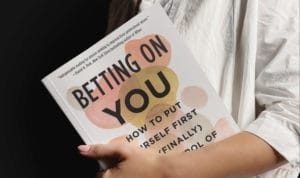
    Laurie Ruettimann is a keynote speaker, executive coach, and author of Betting on You. She writes about work, decisions, and how to stop making the same mistakes twice.

  • The Future of HR Is Smaller Than You Think

    The Future of HR Is Smaller Than You Think

    by Laurie Ruettimann

    Most HR departments are staffed for a world that no longer exists.

    The transactional work (conflict management, talent management, succession planning, talent advisory, recruiting, benefits administration, compliance tracking, onboarding paperwork) is being absorbed by AI faster than anyone predicted. What remains is a smaller, sharper function. I call it the elite core: human resources professionals who think critically, act ethically, and move organizations forward without calling themselves HR.

    If that sounds like bad news, you’re not paying attention.

    The Identity Problem

    Modern human resources associations have spent decades trying to prove it belongs at the table. Strategic partner. Coach. Policy enforcer. Event planner. Culture cheerleader. None of these identities survives what’s coming.

    The professionals who matter in 2026 and beyond are mentors, advisors, and architects of the employee experience. They’re the ones who can look at workforce data and see a story worth telling. They’re the ones who can sit with a struggling manager and say the hard thing.

    Resources get managed. People get led. And everybody gets back to work.

    The AI Correction

    Here’s what I’m watching: small- and mid-sized companies are backing away from the tech they bought during the 2024-2025 hype cycle. I’m talking about the AI tools that overpromised transformation, delivered dashboards no one uses, and eventually gave out insights that no one trusts.

    This year, 2026, is a year of correction. Budgets are shifting from shiny platforms back to fundamentals: process, execution, and the unglamorous work of cleaning up data so it actually means something.

    This isn’t a failure of technology. It’s a failure of implementation. The companies that win are the ones treating AI as a tool, not a savior.

    Fix the Middle

    If I had to pick one intervention that would improve most organizations overnight, it’s this: invest in your managers. Not your executives. Not your high-potentials. Your managers. The people who determine whether employees stay or leave, engage or disengage, speak up or shut down.

    Train them to give direct feedback. Teach them to set clear expectations. Help them build trust rather than chase visibility. Build managers that people don’t want to leave.

    The second intervention that deserves your attention is assessments. Stop opening job reqs and never filling them. Do a better job managing the talent you have. They are ready for more.

    HR for HR

    Here’s the part nobody in human resources wants to hear: you can’t fix work for others until you fix it for yourself first. I’ve been saying this for decades, and it’s as true in 2026 as it was in 2006.

    HR professionals are burned out, under-resourced, and caught between executive demands and employee needs. Many have lost the professional and emotional distance required to do this job well. After all, HR leaders are employees, too.

    Before you redesign the employee experience, ask yourself: Have you designed your own? Do you have boundaries? Do you have a career plan that doesn’t depend on your current employer’s approval? Do you have an identity outside this work?

    If the answer is no, start there.

    Self-Leadership Is the Future

    The modern workforce, especially younger workers, doesn’t want to be managed. They certainly don’t want to go to HR. They want autonomy, clarity, and alignment between their work and their values.

    This isn’t entitlement. It’s evolution. The organizations that figure out how to create self-managing teams will outperform those still clinging to command-and-control structures.

    HR’s role in this shift isn’t to manage harder. It’s to build the systems that make self-leadership possible: clear goals, transparent feedback, and cultures where people can do their best work without someone standing over them.

    The Gaps HR Must Fill

    Government legislation moves slowly. Social safety nets have holes. HR is increasingly being asked to fill political gaps that have nothing to do with traditional job descriptions: advice on surviving layoffs (for those who are affected and those who stay), mental health support in response to societal unrest, addressing rising healthcare costs, and helping workers find affordable daycare.

    This isn’t mission creep. It’s the job now.

    The organizations that treat these as strategic imperatives, not optional perks, will attract and retain the people everyone else is fighting for.

    New HR, New You

    The future of HR is smaller, smarter, and more consequential than anything that came before. The elite core isn’t a threat. It’s an opportunity to finally do work that matters.

    If you want more of this thinking delivered to your inbox, subscribe to my newsletter.

  • Even LFR Needs Goals

    Even LFR Needs Goals

    by Laurie Ruettimann

    I spent eighteen months giving away free career coaching and writing a cat book that didn’t get published. That’s what happens when you don’t set goals. You stay busy doing things that go nowhere.

    So I have goals in 2026. This is new for me. I am suspicious of it. But here we are.

    First, I am going to maximize my LinkedIn Learning earnings starting in Q2. I already make good money from my course library. I am one of the top instructors on the platform, but compared to other super successful instructors, I have been oddly quiet about it. That changes. My courses on self-leadership, conflict management, ethics, and transformational leadership are useful. They move careers forward. I am going to make a better case for why they matter, without turning into a spam account or a motivational grifter. I will tell the story and let adults like you decide.

    Second, I want eight coaching clients in rotation by the end of Q2. Why only eight? That’s enough. Coaching at a small scale is what I do well. Anything bigger requires a funnel, a framework, and eventually a pyramid scheme with a trademarked phrase you can shout on TikTok. I am not selling “Let Them.” (Especially since that idea has been passed around, plagiarized, and monetized to death already.) I work one-on-one with people who can expense this to their employers. If that is you, you already know how to find me.

    Third, I am relaunching my speaker journey. Probably. I have rheumatoid arthritis, and energy management matters more than ambition at this stage of my life. People ask how the simple act of “speaking” can wear me out when I also run marathons. The answer is simple: I would rather run 26.2 miles than run the gauntlet of delays, bad food, and a connecting Southwest flight. Nothing will match the keynoting volume I had in 2018 and 2019, which is a good thing. But I have a talk called Ready for More that I have been quietly delivering to employees and leaders across industries, and it works. I am going to film it. If I watch it back and believe I can sustain this work, it becomes part of a new speaker reel.

    Fourth, I will be blogging weekly starting March 1. I have things to say about work, power, politics, and money. It is time to say them on a schedule instead of in bursts of rage and inspiration.

    Fifth, I am simplifying this very old website. Less really is more.

    I need a stretch goal, so I’ve decided that it’s “getting dotted” in the Wall Street Journal. If you do not know what that means, the Journal uses stipple portraits instead of photos. Thousands of tiny hand-drawn dots that form your face. It is shorthand for being a recognized expert source. I have been interviewed and quoted before, but I am not yet someone reporters call when economic stories break. Not yet.

    I am also running up a skyscraper, running the London Marathon, and running the Chicago Marathon again because, well, I’m a masochist. Keeping my joints healthy and staying injury-free is the real goal underneath all of this. Everything else depends on that.

    That is the list. If you are someone who bristles at goals the way I do, I am curious what you do instead to stay accountable. I have a retiring husband who loves a challenge and a spreadsheet. Accountability conversations are coming whether I want them or not.

    (Sucker. Nobody can manage me.)

    If you want to work with me this year, you can see that I am taking coaching clients, booking speaking engagements, and teaching on LinkedIn Learning. Start here.

    Thanks for your support!

  • People Got COVID Checks. The Wall Street Journal Blames Them for Dying.

    People Got COVID Checks. The Wall Street Journal Blames Them for Dying.

    by Laurie Ruettimann

    Allysia Finley has a theory: COVID stimulus checks caused overdose deaths. In a recent Wall Street Journal column, she argues that pandemic relief payments, not healthcare system failures or social collapse, drove the spike in drug deaths during COVID.

    The Argument, Briefly

    Finley cites a study from the International Journal of Drug Policy showing overdose deaths increased after each stimulus round, with strong correlations between payment amounts and deaths across states. She extends this to explain the recent 36% decline in overdoses, crediting the end of pandemic benefits rather than expanded treatment access or harm reduction efforts.

    The study may be methodologically sound. The conclusion she draws from it is not.

    Why This Argument Fails

    Remember 2020? Emergency rooms were overwhelmed or avoided entirely by people terrified of COVID exposure. Addiction treatment facilities closed or shifted to telehealth, which does not work without stable housing, reliable internet, or a private space. Methadone clinics cut hours. Naloxone distribution programs shut down.

    The people most likely to overdose lost access to every intervention that keeps them alive. They were isolated from family, cut off from support systems, locked out of treatment, and under extraordinary stress.

    The stimulus payments arrived just as the healthcare system collapsed. Finley blames the checks.

    If cash caused overdose deaths, you would see the same pattern after tax refunds, annual bonuses, and Alaska Permanent Fund dividends. You do not.

    She also skips the counterfactual. Without stimulus payments: mass evictions, deeper food insecurity, economic desperation. Those conditions correlate with substance abuse and deaths of despair too. She does not weigh harms prevented because doing so would weaken her argument.

    Who This Argument Serves

    People who already believe poor people cannot be trusted with money. People who want intellectual cover for that belief. People who will forward this piece with “interesting data here” when what they mean is “see, I told you.”

    Finley is not persuading skeptics. She is providing ammunition for arguments about food stamps, Medicaid work requirements, and child tax credits.

    This is a moral argument disguised as public health research.

    What Actually Happens When You Trust People

    The Stanford Basic Income Lab and the Center for Guaranteed Income Research track guaranteed income pilots across the United States. The pattern is consistent: when people receive cash before crisis hits, without conditions or judgment, they do not self-destruct. They stabilize. They plan. They breathe.

    Bootstraps, a docuseries currently in post-production, follows 11 American households for two and a half years as they participate in a guaranteed income experiment. The series is anticipated for release on a major streaming network in 2026. I volunteer with ITSA Foundation, which supports the project.

    The Real Takeaway

    Finley’s piece will surface in policy debates. Someone will cite it when arguing against the child tax credit or Medicaid expansion.

    When they do, remember what she left out: the closed clinics, the overwhelmed ERs, the naloxone that never arrived, the treatment programs that went dark. The cash did not arrive in a vacuum. It arrived in a disaster.

    Blaming the money is easier than blaming the system. It always has been.

    That is not analysis. That is comfort for people who already decided that poor people cannot be helped.

  • Five Years of Betting On You: Why Your Work Is Not Your Worth

    Five Years of Betting On You: Why Your Work Is Not Your Worth

    by Laurie Ruettimann


    Five years ago, Betting On You — the book — came out in hardcover, at a moment when the world had very little patience for career advice of any kind. It was less than a week after the January 6 insurrection, the pandemic had flattened public life, stages were dark, bookstores were cautious, and the news cycle felt permanently locked on crisis. I remember thinking that if a book was ever going to disappear quietly, this would be it.

    It didn’t disappear. Against the odds, it found its way. The book sold well enough to earn a second printing in paperback and was published internationally in Europe, South America, and Australia and New Zealand. I spoke about its ideas across time zones, first virtually, then in person as stages reopened. Major outlets covered the work. From the outside, it looked like success, the kind you are taught to recognize and be grateful for.

    But from the inside, my life felt a little weird.

    Betting On You is built around a central truth I believed then and still believe now: your work is not your worth, and no system will ever love you back. I also wanted the book to change my life in the way people pretend books change lives. I wanted the clean upgrade. I wanted to land in the league of authors who get treated like sages instead of workers with a public-facing job. I’m ambitious, and I’m not embarrassed about that.

    Then reality arrived and stayed. A global pandemic will knock the wind out of any competitive person’s sails, especially if you’re trying to promote a book while people are suffering and dying. The book did well, my platform grew, opportunities followed, and none of that automatically made me happier, calmer, or more grounded. Some days, I felt worse, because the work of “launching” felt absurd next to what the world was living through.

    So I went back to therapy.

    I feel like 2021-2023 were lost years. A global health crisis and an American social contract on fire will do that to a person. I stopped waiting for professional momentum to fix my mood and started doing the plain work again. What was that like? Therapy. Consistent movement. Real rest. Paying attention to my body instead of overriding it. This wasn’t a reinvention strategy. It was a return to the values I actually hold, and a complete return to the spine of the book.

    The same pattern showed up spiritually. Over the past few years, I’ve doubled down on Judaism, not as a personal branding exercise or identity performance, but as practice and structure. It has given me rhythm, community, and a way to stay oriented when the world feels loud and unstable. It has also made me more accountable, which is the part people don’t always say out loud. When I don’t show up, people notice.

    My life widened in other ways, too.

    Since I published the book, I’ve become more involved in my community. I’m back to fostering kittens. I take classes. I put myself in rooms where I am not the expert. Right now, that means learning more about allyship and advocacy in the face of rising authoritarianism, and sitting with the uncomfortable question that always follows: what can one woman actually do?

    I can’t do everything. I can do something. I can show up. I can pay attention. I can help where I’m needed. I can keep learning. I can refuse to confuse outrage with action or cynicism with wisdom. I can do my part without pretending it will save the world.

    Betting On You was never really about “winning” at your career.

    Capitalism is a slog. That hasn’t changed. The market still rewards scale, speed, and endurance, and work is still unstable and uneven by design. What has changed is my clarity about what actually holds.

    The book was always about relationships, love, connection, and responsibility to yourself and others. It was about refusing to confuse your job with your identity and choosing a life that can sustain you when systems can’t. Five years later, that theme is not an idea I admire. It’s a practice I repeat.

    I’m grateful for the book. I’m proud of it. I’m also honest about what it could and could not do. A book can articulate a truth. Living that truth takes repetition, humility, and choice.

    Betting On You didn’t change my life. I did. I keep doing it. That’s the real work.

  • What a Real Book Proposal Looks Like When You’re Traditionally Published

    What a Real Book Proposal Looks Like When You’re Traditionally Published

    by Laurie Ruettimann

    I’m not writing a book called Don’t Get a Cat. I told you about that already, and I’ll link to it here again so the context is clear.

    Instead, I’m sharing the full book proposal I wrote for it. You can find the view-ony version here.

    This is a real book proposal, written by a traditionally published author, for a major literary agency and a Big Five publisher. The document still has value, and I want people to be able to read and learn from it.

    How the Book Proposal Process Actually Works

    A book proposal is not a manuscript. It’s a sales document. It explains what the book is, who it is for, why it belongs in the market, and why the author is the right person to write it.

    It should be both efficient but also repetitive on purpose. What I learned the first time is that you need to make the same argument in different ways because literary agents skim. Editors skim. Everyone is overwhelmed, busy, and scanning for signal.

    I also learned to format proposals for tired eyes. I use a large font. I think about my spacing. I want the work to feel readable and calm, even when the topic is chaotic or emotional.

    What to Notice If You’re Learning How Proposals Are Written

    If you’re reading my book proposal to learn, look at the structure first. The proposal tells you what the book is, then it tells you again, then it tells you again. It does that because clarity wins over charm and jokes.

    Pay attention to the “spine.” Every proposal has a center of gravity. There is always one chapter or one section that holds the whole thing together. In this proposal, that chapter is about my pee-cat named Scrubby. It is the strongest example of my writing, and it shows you what the book could be at its best.

    Also notice how I handle audience. A proposal needs a specific reader. It needs a defined promise. It needs a point of view that stays steady from the overview to the chapter samples.

    The Chapters, the Cats, and What Stayed With Me

    If you’re just reading the proposal for the cats, you’ll meet Lucy and Scrubby.

    Lucy is in there because she shaped how I think about rescue, responsibility, and the gap between what people want and what a cat actually needs.

    Scrubby is in the proposal because he carries the emotional weight of the book. He is also the clearest example of the kind of cat story I can tell without turning it into performance art. The Scrubby chapter is the one I would hand someone if they wanted to understand the whole project in one sitting.

    You’ll also meet Crow, a cat I had for six months. Crow did not stay, but Crow mattered. That story is in here because temporary relationships still change us. People who foster cats know that truth in their bones.

    Read the Full Book Proposal

    This post includes a full example of a real book proposal written for traditional publishing.

    You can read the full book proposal here: What a book proposal looks like.

    Even though it’s just a submitted draft and needs work, I’m sharing it for two reasons: People ask what a real book proposal looks like, and most examples online are either sanitized or hypothetical. This one is neither. I also believe my unpublished work can still be useful. It can teach, clarify, and move the conversation forward about cats.

    I hope it helps. I hope it’s useful. I hope you enjoy spending time with Lucy, Scrubby, and Crow.

  • A Work Operating System for the New World of Work

    A Work Operating System for the New World of Work

    by Laurie Ruettimann

    The modern world of work is broken in familiar ways. Burnout gets treated as a personal failure instead of a predictable, structural outcome. Meanwhile, career advice promises clarity, passion, and resilience while ignoring how unstable, extractive, and unforgiving work has become for most people.

    As a result, workers are encouraged to bring their whole selves to jobs that were never designed to care for whole humans.

    I didn’t arrive at this perspective from a distance. Instead, I learned it by staying in jobs too long, working too hard, confusing endurance with virtue, and paying for it in ways I didn’t recognize until my body and my life forced the issue.

    This isn’t a motivation problem. Motivation has been oversupplied for decades. What’s missing, instead, is a usable set of assumptions about how work actually works now, and how to participate without losing judgment, health, or agency.

    What follows is a work operating system for the new world of work. Not a manifesto. Not a personality. A framework I had to build after the old one failed me.

    Work is a relationship, not an identity

    Your work is not your worth. That sounds obvious, yet it’s easy to forget when a job pays your bills, organizes your time, and quietly becomes the center of your identity.

    Employment can matter without defining your entire life. When a job gets framed as a moral calling, it blurs power, incentives, and accountability. I fell for that framing, and it kept me loyal to systems that benefited from my commitment without offering much in return.

    Jobs are relationships. Some function well. Others exploit. None of them are you.

    Professional detachment protects judgment

    I once believed that caring deeply about my work meant caring deeply about every detail of my job. That belief cost me time, sleep, and clarity. Over time, it also made it harder to see when expectations drifted and workplace conditions degraded.

    Professional detachment doesn’t mean doing sloppy work or disengaging. Instead, it means refusing emotional fusion with institutions that will replace you without hesitation. Detachment protects judgment. Professional detachment also makes it easier to see when the cost of staying has quietly exceeded the return.

    I wish I had learned that lesson before burnout taught it to me.

    Agency is a requirement, not a personality trait

    For a long time, I waited to be chosen by bosses, systems, and people with more power than me to signal that it was time. Back then, I told myself patience was a virtue.

    Now I know this: waiting to be chosen is optional. You don’t need permission to rest, renegotiate, change direction, or leave. For that reason, endurance for the sake of survival is not a work ethic.

    I didn’t act on my agency quickly. That delay was expensive.

    Clarity beats motivation

    For years, I consumed motivational books and webinars when what I actually needed was clarity. I eventually found that clarity through therapy with a licensed clinician, not a podcaster.

    Understanding what you want, what you can tolerate, and what you are no longer willing to trade away isn’t a side activity. It is the job underneath the job.

    Your CEO is not your coach. Neither is someone on the internet. If you need help, find an expert who can sit with you and do the hard thinking.

    Boundaries are information

    I used to think boundaries were confrontational. Because of that, I worried they would make me difficult or disposable.

    Boundaries are information. They clarify what you will and will not absorb. Not every problem is yours to solve. And helping does not require becoming invisible.

    Indispensability often feels flattering right before it becomes a trap.


    This work operating system rejects fantasy. It favors reality over reassurance, restraint over theater, and longevity over extraction. You don’t need to agree with every part of this. You only need to notice where your current assumptions about work are costing you more than they return.

    If this way of thinking about work resonates, it’s the foundation of my book, Betting On You. The book goes deeper into how we end up over-identifying with work, why that pattern is so hard to break, and how to rebuild a healthier relationship with your career without waiting for permission.

    You can learn more about the book here: https://laurieruettimann.com/books

  • I Wrote a Book About Cats. It’s Not Getting Published.

    I Wrote a Book About Cats. It’s Not Getting Published.

    by Laurie Ruettimann

    I spent the past few months working on a book proposal called Don’t Get a Cat (But If You Do, Read This First).

    The thesis was simple: Every cat deserves to be wanted. Every cat deserves a forever home. The less drama, the better.

    I wrote the proposal as practical cat adoption advice for people thinking about getting a cat, or for people who already have one and are wondering what the hell they just signed up for. It was thirty years of fostering and rescue work distilled into something useful.

    Yes, this was a book about cat adoption, cat rescue, and fostering. But it was also a book about self-leadership, individual accountability, financial planning, and emotional regulation written by someone who has spent thirty years doing the work and living with the consequences.

    So, in my spare time, I built a full proposal. Each chapter was anchored to a specific cat and the lesson they forced me to learn.

    There was Lucy who arrived in a shoebox during a once-in-a-lifetime flood, covered in fleas and entirely unbothered by the chaos. Jake came home with me after too many whiskey sours at my friend April’s wedding. Molly appeared in our yard and quietly became my husband’s second wife. Scrubby became a pee cat despite every behaviorist, medication, and webcam I threw at the problem. Emma was my angel baby boo boo who left me too soon. Roxy is the black cat I gave myself for my fortieth birthday but somehow became Ken’s best friend. And Spicy iss our COVID foster fail with a ton of tortitude who still believes we might stab her.

    There was even a chapter called “Get That Cat: Why I Might Be Wrong.” Oh, and another focused on resources and tips that work in real life, not just online, pulled from years of rescue volunteering and fostering.

    I wrote two full sample chapters. Then I rewrote them. Then I rewrote them again. I paid an friend to edit and sharpen the proposal, and I paid another friend to design a small logo to keep me motivated.

    What publishers said

    My literary agency reviewed it, and the feedback was clear.

    • Memoirs are tough right now.
    • Animal books are not reliable best sellers.
    • Thirty years of hands-on experience without a veterinary degree or a national rescue title is not enough authority to justify the risk.
    • Publishers believe this material competes with free content online, from TikToks to Instagram advice threads.

    Fair enough. Not every project works. Not every swing connects. That’s not devastating. It’s just true.

    What I’m taking from it

    I’m proud that I wrote it. Each cat teaches a different lesson. The stories connect through consequence, not sentimentality. Love and failure sit next to each other without apology. And I’m also proud that I got an honest answer and actually listened to the feedback instead of chasing something the market wasn’t prepared to support.

    The cat work will live somewhere else. Maybe a self-published book. Possibly a podcast. Definitely in my house, with actual cats.

    What’s next

    It’s 2026. It’s time to get back to my work as a speaker, writer, and coach. That’s still the job. That’s still where I belong.

    If you want to work together this year, let’s talk. I suddenly have some free time on my hands, and I don’t want to get another cat!

  • The Worst Career Advice Ever Given: Write Your Boss an Instruction Manual

    The Worst Career Advice Ever Given: Write Your Boss an Instruction Manual

    by Laurie Ruettimann

    The worst career advice anyone has ever given is this: write your boss an instruction manual on how you operate.

    This advice resurfaces every few years, usually when work culture turns sentimental. It gains traction in moments when companies claim to care about workers as whole people. The underlying promise is always the same. If you explain yourself clearly enough, work will meet you where you are.

    • I’m soft.
    • I’m cozy.
    • I prefer GIFs to direct communication.

    I’ve watched capable professionals in their early thirties wonder why their managers don’t respect their judgment while handing over operating manuals made of kindergarten construction paper, punched with a three-ring hole punch, bound with yarn, and decorated with stickers and magazine cutouts that say things like “I am at my best after my afternoon nap” and “lavender lattes make me happy.”

    This isn’t a joke.

    I advocate for workers. I have always said that if you need something to do your job or improve your life, don’t present it as a personality trait or a preference. Take it. High performers who manage their workload and avoid unnecessary conflict are rarely punished for meeting their own needs. More often, they’re asked why they waited.

    The deeper issue is that work is unserious right now. Companies reduce people to data and metrics. Workers respond by treating employers like parents. When managers ask about outcomes and timelines, employees interpret that scrutiny as personal judgment instead of basic accountability. Everyone ends up confused about where authority and responsibility actually live.

    Work doesn’t improve because you explain yourself better. It improves because you show up, perform, make decisions, and manage your own needs without asking your employer to parent you. Credibility comes from results and consistency, not disclosure.

    If you really need to tell your boss how to love and care for you like Paddington Bear, your operating manual should fit in one paragraph.

    I show up. I perform. I go home. I live a full life. I do it again. I do that as long as the deal holds. Pay me well. Give me autonomy to make decisions and take risks. Run a respectful environment with fair pay, transparent incentives, and usable benefits. When that deal breaks, I leave.

    That’s the roadmap for workers in 2026.

    My wish for you is simple. Become a serious person. Be a fierce CEO of your own life. Stop outsourcing your comfort to your employer and calling it self-advocacy. If you want sleepy-bear tummy-time tea in the afternoon, make it yourself. Keep it to yourself. There’s no reason to ask your boss to give a shit, read your zine about it, or stock it in the company kitchen.

    Author note

    I write about ideas like this because I want you to have leverage. I want you to keep your dignity, your energy, and your options. If you need a thinking partner as you negotiate a new role, plan an exit, or reset your relationship to work, learn more about my coaching at https://laurieruettimann.com/coaching. If you want the bigger body of ideas behind this post, my acclaimed career book lives at https://laurieruettimann.com/books.