Tag: culture

  • Get nFormation with Deepa Purushothaman and Rha Goddess

    Get nFormation with Deepa Purushothaman and Rha Goddess

    Punk Rock HR Episode 137:

    My guests today are Deepa Purushothaman and Rha Goddess. They are the founders of nFormation, which is a first of its kind, app-based community created by women of color for women of color. The community provides a safe space for these women of color as well as career advancement opportunities.

    Deepa and Rha are on the show today because they are really trying to reimagine traditional power structures. They not only want to help more women of color find their seat at the table in corporate America but also want to leverage their collective power to change the way the table is formed.

    I like people with big ideas who do brave things and Deepa and Rha are doing just that. I am thrilled to introduce you to nFormation and these women who are shaking things up. If you’re like me and want to be a co-conspirator on this journey to revolutionize the workforce, tune into this conversation with Deepa and Rha.

    In this episode you’ll hear:

    1. Why they came together to create nFormation.
    2. How nFormation works and why women of color should join.
    3. Their vision for recreating the corporate structure.
    4. Why community is so important, especially right now.
    5. How to overcome the terrible biases in the world.
    6. What listeners who are not women of color can do to help their efforts.

    KEY TAKEAWAYS

    HOW DOES NFORMATION WORK AND WHY SHOULD WOMEN OF COLOR JOIN?

    The whole premise of NFormation is that it is meant to be a safe and brave space. However, at the moment, the more successful women of color become, the more isolated they tend to become. In a community like NFormation, they can share their unique experiences. In corporate environments, there’s so much pressure to perform that these women of color lose their full voice. They need a space where they can let their shoulders down, let their hair down, and really speak in their full voice. Additionally, women and color have insights and perspectives that are really important. In the NFormation community, they are encouraged to be bold and bring their ideas forward. This allows them to individually and collectively think about what the new structures and paradigms need to look like for leadership today. 

    WHAT IS DEEPA AND RHA’S VISION FOR RECREATING THE CORPORATE STRUCTURE?

    They have realized that a lot of the processes within corporate structures are set up for the advantage of the corporate structure. When issues are raised, there aren’t processes set up to even listen to the women of color who raised them. Rha and Deepa want to create a space where these women can come in and share what happened to them at work and then get feedback on how they can respond. They also want to provide resources such as a list of lawyers or counselors they can go to for help. Finally, they want to create an innovation strategy and a success plan to help women of color find new positions and then thrive in them. 

    HOW CAN I OVERCOME THE TERRIBLE BIASES IN THE WORLD?

    Women of color need a space such as NFormation where they can be their full selves and express their honest emotions. This is a great first step in overcoming biases. Being in this environment exposes us to different conversations than we’re used to. Stop keeping everything separate and get into diverse environments and conversations.

    WHAT CAN I DO TO HELP THEIR EFFORTS I’M NOT A WOMAN OF COLOR?

    Before you even think about what you can do, you have to look at your own attitudes, beliefs, and perceptions. Figure out the degree to which those attitudes, beliefs, and perceptions lend themselves to being part of the solution or to being part of the challenge. We’ve all been conditioned to operate in certain ways and in certain environments. However, if we’re committed to being part of an environment where everyone can thrive, we have to be welcoming to all perspectives, thoughts, and identities. Create spaces where all people can feel welcome, and where true and genuine inclusion can really take place. Change won’t happen if we don’t get healthy in this way first. From there, just be open to being a part of the conversation and encouraging women of color to use their full voice and be their full selves at work. 

    Resources from this episode:

    Laurie on Instagram

    Laurie on LinkedIn

    Read more from Laurie

    Work with Laurie

    NFormation’s website

    “How Do Professional Women Of Color Rise To Meet This Moment” article

    Deepa on LinkedIn

    Rha on LinkedIn


  • Learning and Leadership

    Changing our workplace environments can’t just be about changing the employee. Rather, organizations need to change around the employees in order to ensure that they can thrive.

    People explode with energy when they experience high levels of engagement and genuine positivity. If this happens and leaders help their employees be the best versions of themselves at work, those employees will go out into the world and create change. 

    Heidi Spirgi is incredibly passionate about this topic. She is the Chief Strategy and Marketing Officer at Cornerstone On Demand, an HR technology company. Heidi has done a little bit of everything, but the common thread of her career has been helping organizations to unlock the best of their employees through emerging practices and programs, building cultures that ensure people can be the best version of themselves at work, and leveraging technology to do all of that.

    In our recent conversation, I asked Heidi how organizations can keep employees from reaching their breaking points and instead help them thrive. She said, “leaders absolutely need a very different core skill set than they needed in the past. And two of those things that are so important are the ability to be vulnerable and show the entire organization and their teams that they too are suffering, that they too struggle, that their world is incredibly messy, just like their employees’ worlds are messy.”

    When leaders are vulnerable, employees feel they have permission to feel and be who they are instead of trying to not be their authentic selves at work. This is the only way to get people to trust you and bring their own full selves to work.

    I’m talking about these topics—as well as how to be there for your workforce and, really, be there for yourself— in my weekly newsletter. I’m also sharing a video to help you think about your week ahead. You can sign up here.


  • Learning and Leadership with Heidi Spirgi

    Learning and Leadership with Heidi Spirgi

    Punk Rock HR Episode 134:

    Today’s guest is Heidi Spirgi. She is the Chief Strategy and Marketing Officer at Cornerstone On Demand, an HR technology company. Heidi has done a little bit of everything, but the common thread of her career has been helping organizations to unlock the best of their employees through emerging practices and programs, building cultures that ensure people can be the best version of themselves at work, and leveraging technology to do all of that.

    Heidi is someone who I admire and look to in real life as well as on social media. Whenever there’s a new tool, trend, or something that’s gotten a lot of hype, I’ll know it’s real if Heidi buys into it.

    Our conversation today touches on all the good stuff: leadership, growth, learning, development, and what it’s like to be human at a time where it’s crazy even to be alive. If you’re wondering how to be there for your workforce and, really, be there for yourself, sit back and enjoy this conversation with Heidi Spirgi. 

    In this episode you’ll hear:

    1. What it’s like to be employed in 2020 for Heidi.
    2. How organizations need to change in order to prevent employees from reaching a breaking point.
    3. How she, as an executive and a leader, shows that she’s an employee, too.
    4. Why self-leadership is such an important emerging skill.
    5. How to manage zoom fatigue for our teams.
    6. How Heidi has seen remote work change over the past 6 months.
    7. How organizations can be a force for change and do some good in the world.

    KEY TAKEAWAYS

    HOW DO ORGANIZATIONS NEED TO CHANGE IN ORDER TO PREVENT EMPLOYEES FROM REACHING A BREAKING POINT?

    It can’t just be about changing the employee. Rather, organizations need to change around them in order to ensure that all people can thrive. The first way to do this is through vulnerability, which has to start with leadership. Leaders need to be vulnerable and show their organizations and teams that they, too, are struggling. This gives employees the permission to feel and be who they are instead of trying to not be their authentic selves at work. The second keyword is authenticity. Basically, keep it real. People want to be treated as adults and they want the truth. Organizations should make it clear where they stand as a company and where each employee stands as a person. Connect with people in a really authentic way by showing them every side of yourself. This is the only way to get people to trust you and bring their own full selves to work. 

    WHY IS SELF-LEADERSHIP SUCH AN IMPORTANT EMERGING SKILL?

    People need to learn how to be truly mindful about not just building their careers but running their careers. We all need to start making the choices that are most important to us, even if those are hard choices. Employees have gotten to the point where they’re sacrificing their personal lives in order to accomplish more at work. This is not a healthy practice. Without self-leadership and being deliberate about your boundaries, we will see our mental, physical, and family health erode very quickly. 

    HOW CAN I MANAGE ZOOM FATIGUE FOR MY TEAM?

    Consider making screens optional for your team members. This gives them permission to do whatever they need to during meetings and thus plan their lives accordingly. You could also consider instating walking meetings. During these meetings, everyone gets some fresh air and exercise by walking during the Zoom call. You don’t look at one another’s faces but just focus on what everyone is saying. In this case, the creativity and level of connection with your team is much stronger.

    HOW CAN AN ORGANIZATION BE A FORCE FOR CHANGE AND DO SOME GOOD IN THE WORLD?

    It starts with organizations creating a positive workplace environment where their employees can be fully understood and valued. Guide and coach them in a highly personalized way that is based on their natural strengths. People thrive and explode with energy when they experience high levels of engagement and genuine positivity. Play to your individual team members’ strengths and create a sense of belonging for them. When you can create extraordinary people at work and help them be the best versions of themselves there, they will go out into the world and create change. Another part of an executive’s role is to look beyond the employee and look into the community. Do things outside of the four walls of your office. Finally, consider how you engage with your customers. This engagement should be just as authentic and vulnerable as your interactions with your employees. Build a mission together with your customers to try to change the world. In sum, businesses can create a tremendous amount of positive change in the world by being creative, being thoughtful, and trying to instill that sense of connection and vulnerability with those around them.

    Resources from this episode:

    Laurie on Instagram

    Laurie on LinkedIn

    Read more from Laurie

    Work with Laurie

    Cornerstone Cares

    Heidi on Twitter

    Heidi on LinkedIn


  • Chronically Capable

    It’s National Disability Employment Awareness month in America, a time when we recognize disabled and chronically ill workers and acknowledge their contributions to the economy. The themes of this month are about increasing access and opportunity. It’s one thing to say that you’re a company that is inclusive and wants to hire people who are differently-abled. It’s another thing to actually put that recruiting spend into hiring. 

    Hannah Olson teaches this to companies on a daily basis. She is the co-founder and CEO of an organization called Chronically Capable. Hannah had her dream job right out of college but later contracted Lyme Disease. Her treatments for her chronic illness got in the way of her job. Frustrated, she thought there had to be a better way.

    So, she created that better way: Chronically Capable. It’s a technology platform, an ATS, and really a community that tries to match individuals with disabilities and chronic illnesses with employers who are thoughtful, progressive, and aim to support that community. 

    Hannah claims that hiring the disabled and chronically ill is good not only for those employees but for businesses as well. When I asked her why, she said, “if you hire people with disabilities and illnesses, that’s good for people and that’s good for companies. The key to helping everyone work better is to have more inclusive, accessible, flexible workplaces and policies. So companies that are fostering stronger disability inclusion programs, they’re having better access to talent, they’re able to find the right person for the right job, and have better employee retention.”

    I’m talking about these topics—and more on what a 24-year-old entrepreneur is doing to change the nature of global corporations— in my weekly newsletter. I’m also sharing a video to help you think about your week ahead. You can sign up here.

  • Compensation Truth & Lies

    Years ago, I interviewed for a job and the VP of HR was full of himself. At the end of the interview, I asked him what differentiated their HR department from others. He gave a long answer full of buzzwords, but he didn’t believe in any of it. 

    That was in 2004, but even now every trend I read about human resources and compensation uses those buzzwords. It makes them all feel like lies. 

    I recently gave a keynote to a company called Curo Comp. It was about this very topic, truth versus reality when it comes to talking about money at work. 

    In my keynote, I had to tell the audience that those trends were lies. I had to tell them that everything they aspirationally believe in is a lie. It was difficult, but it’s true. It’s important to disclose the lies and talk about where we stand and where we can go in the future. 

    The lies about money at work are that equal pay and transparency matter, that there should be more bonuses and more short term incentives for regular workers, and that technology will drive all of the strategies behind fixing things. It turns out that technology doesn’t do anything, nobody really cares about equal pay and transparency (and, if they did, it wouldn’t be that hard to fix), and we are terrible at evaluating and recognizing performance. 

    In reality, transparency is going to hit us all. If we don’t already believe in it, it is going to hit us like a truck. Additionally, compassion and empathy are no longer buzzwords. They’re the new operating model for the world of work. Finally, the reality is that self-leadership is the ultimate competency. 

    I’m talking about these topics—and more on compensation truth and lies— in my weekly newsletter. I’m also sharing a video to help you think about your week ahead. You can sign up here.


  • Chronically Capable with Hannah Olson

    Chronically Capable with Hannah Olson

    Punk Rock HR Episode 131:

    My guest this week is Hannah Olson. She is the co-founder and CEO of an organization called Chronically Capable. Hannah had her dream job right out of college but later contracted Lyme Disease. Her treatments for her chronic illness got in the way of her job. Frustrated, she thought there had to be a better way.

    So, she created that better way: Chronically Capable. It’s a technology platform, an ATS, and really a community that tries to match individuals with disabilities and chronic illnesses with employers who are thoughtful, progressive, and aim to support that community. It’s National Disability Employment Awareness month in America, a time when we recognize disabled and chronically ill workers and acknowledge their contributions to the economy. So, this is the perfect time to bring Hannah onto the show.

    Today, Hannah and I talk about her journey, her chronic condition, and what she’s doing to solve a problem that affects millions of people around the world. If you’re interested in what a 24-year-old entrepreneur is doing to change the nature of global corporations, sit tight and enjoy this conversation with Hannah. 

    In this episode you’ll hear:

    1. Some of the companies Hannah is working with.
    2. Common language around the community she serves.
    3. What employers have to say about hiring the disabled and chronically ill population.
    4. Why hiring that population is good for businesses.
    5. What companies can do to reach out to that population and let them know they’re hiring.
    6. The origin story of Chronically Capable, what it does, and who it serves.
    7. What her entrepreneurial community looks like.
    8. How she makes sure someone’s condition and the job they’re placed in will be a good fit.
    9. How to keep members of the disabled and chronically ill community once you’ve hired them.

    KEY TAKEAWAYS

    WHAT IS THE COMMON LANGUAGE HANNAH USES AROUND THE COMMUNITY SHE SERVES?

    Unlike most disabilities, there isn’t really a standard accommodation list for chronic illnesses. It’s even harder because those who suffer from these conditions have needs that fluctuate on a daily basis. Chronic illness affects 157 million Americans alone and 123 million of those Americans are of working age. Chronically Capable sees a large range of conditions, the top ones having to do with mental health, Lyme disease, and autoimmune-related disorders. The people in the Chronically Capable community tend to be more on the illness or invisible disability side of things. 

    WHAT DO EMPLOYERS HAVE TO SAY ABOUT HIRING THE DISABLED AND CHRONICALLY ILL POPULATION?

    The first few calls Hannah makes with employers are all about educating them about her audience. When these employers first hear about these kinds of people they have concerns about the high costs of accommodations and that those people are going to need to work remotely. In reality, however, these costs are pretty minimal and they are actually fruitful investments. It’s also a big misconception that everyone who’s struggling with a chronic illness needs to work remotely. Many prefer being in an office and being around people. In reality, the most common accommodation requests Hannah sees from her community is the need for flexibility. It’s important for a disabled or chronically ill employee to have an employer who will let them leave for doctor’s appointments or skip out during the lunch break for a blood draw. These folks aren’t looking for major accommodations that are going to drastically impact the workplace.

    WHY IS HIRING THAT POPULATION GOOD FOR BUSINESSES?

    Disability inclusion should be seen as an opportunity and not a chore. If you hire people with disabilities and illnesses, that’s good for people and that’s good for companies. Companies that are fostering stronger disability inclusion programs have better access to talent, they’re able to find the right person for the right job, and they have better employee retention. Most importantly, they have the tools in place to help all of their employees thrive. Unfortunately, it’s taken COVID-19 to show us the benefits of having a non-traditional workplace environment. The current trends are presenting new opportunities for companies. 

    WHAT CAN COMPANIES DO TO REACH OUT TO THAT POPULATION AND LET THEM KNOW THEY’RE HIRING?

    The themes of this month are about increasing access and opportunity. Those two words are really important because it’s one thing to say that you’re a company that is inclusive and wants to hire people who are differently-abled. It’s another thing to actually put that recruiting spend into hiring. So, the way to find this population is in communities like Chronically Capable. Seeking out different diverse recruiting sources that are catered to chronic illness and disability is a great place to start.

    HOW CAN I KEEP MEMBERS OF THE DISABLED AND CHRONICALLY ILL COMMUNITY ONCE I’VE HIRED THEM?

    By signing up for organizations like Chronically Capable, you’re one step closer to being more transparent. However, this needs to continue when you’re in the office. So, managers need to be open to their employees and talking to them about their needs. Businesses should also form employee resource groups. This all needs to start from the top down of organizations. Start with the hiring managers, then the managers, and then speak with all the employees. Inclusion is about figuring out how to get the entire work culture to change and spending the time to educate your employees. 

    Resources from this episode:

    Laurie on Instagram

    Laurie on LinkedIn

    Read more from Laurie

    Work with Laurie

    About Chronically Capable

    Library of Congress article on Disability Employment Awareness Month

    Hannah on LinkedIn


  • Unleash the Extraordinary

    Brant Menswar is a top 10 motivational speaker, critically acclaimed author, award-winning musician, podcast host, and the CEO and founder of Rock Star Impact, a boutique agency that teaches people and organizations how to cultivate value-based leadership. 

    Brant is also the author of a new book called Black Sheep: Unleash the Extraordinary Awe-Inspiring, Undiscovered You. He talks about self-leadership, individual accountability values, and really finding your core values and purpose in your life. 

    In our conversation, Brant tells the story of how his son’s life-threatening cancer diagnosis led him to recognize his own black sheep values and to stop trying to be someone he’s not. We also discuss how understanding your core values can lead you to make better decisions in your personal life as well as your professional life.

    From an HR perspective, Brant believes one of the biggest points of contention that a lot of people within a particular company culture witness is people who make horrible decisions getting promoted. They are being promoted based on a result that was achieved, not on the deliberate intention that went into making the decisions. He says, “I’ve made horrible decisions in my life that have ended in really good results by sheer luck. And if that is what I’m being promoted on, it’s going to destroy the culture of the organization. We have to stop focusing solely on results and start thinking through what it looks like to make good decisions in the first place. And when you reward that, I always believe you’re going to have the company’s best interests at heart.”

    I’m talking about these topics—and more on how to determine your black sheep values— in my weekly newsletter. I’m also sharing a video to help you think about your week ahead. You can sign up here.


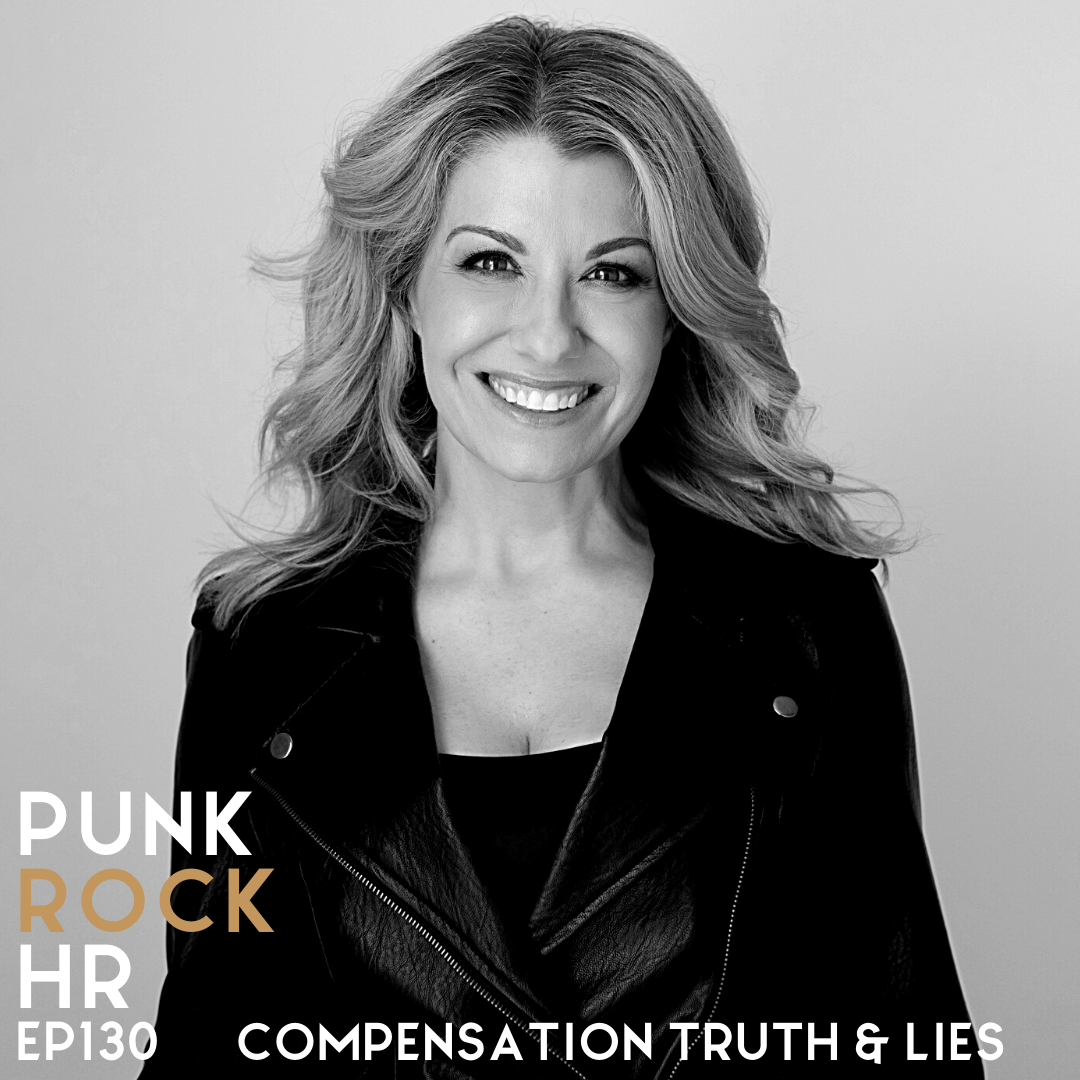
  • Compensation Truth & Lies with Laurie Ruettimann

    Compensation Truth & Lies with Laurie Ruettimann

    I recently gave a keynote to a company called Curo Comp. It was about truth versus reality when it comes to talking about money at work. I’m so jazzed about this topic that I wanted to tell you about it.

    Years ago, I interviewed for a job and the VP of HR was full of himself. At the end of the interview, I asked him what differentiated their HR department from others. He gave a long answer full of buzzwords, but he didn’t believe in any of it. That was in 2004, but even now every trend I read about human resources and compensation uses those buzzwords. It makes them all feel like lies. 

    In my keynote, I had to tell the audience that those trends were lies. I had to tell them that everything they aspirationally believe in is a lie. It was difficult, but it’s true. It’s important to disclose the lies and talk about where we stand and where we can go in the future. So, tune in and let’s talk about it.

    In this episode you’ll hear:

    1. The lie that equal pay and transparency matter.
    2. The two things we’re terrible at in the workforce: evaluating and recognizing performance.
    3. Why technology really doesn’t do anything.
    4. The realities of money at work.
    5. What we can do as a result of those realities.

    KEY TAKEAWAYS

    WHAT IS THE FIRST LIE ABOUT MONEY AT WORK?

    The first lie about money at work is that equal pay and transparency matter. We have a whole history behind us that shows us that nobody really cares about equal pay and transparency and that if they did, it wouldn’t be that hard to fix it. For example, Salesforce recently did an analysis of their employees. They created a much more organized, transparent system where they really aligned people with what they’re doing, what the job description says, and how they’re paying them. It turned out that there were a lot of opportunities to pay women and people of color more money. So, the hard part isn’t the process. The hard part is the decision and the commitment to do it. 

    WHAT IS THE SECOND LIE ABOUT MONEY AT WORK?

    The second lie we tell ourselves is that there should be more bonuses and more short term incentives for regular workers. We say, “Executives have all of these bonuses, so we’re going to start recognizing performance in the moment. We’re going to offer people a little bit of cash or some stock options to get them excited about work.” However, it turns out that we are terrible at two things: evaluating and recognizing performance. If we could evaluate performance in real-time, or even retroactively, our compensation systems would look completely different and our relationships with employees would be much better. Instead, we just default to our biases. We’re also awful at recognition. Many of us say that all employees just want to be thanked and that they don’t want money. However, it turns out employees are just like executives. They would like some short term incentives too.

    WHAT IS THE THIRD LIE ABOUT MONEY AT WORK?

    The third lie about money at work is that technology will drive all of the strategies behind fixing things. It turns out that technology doesn’t do anything, though. There are so many HR departments with no answers and no moral backbone that say what they need is a new system. This won’t fix anything. 

    WHAT IS THE FIRST REALITY OF MONEY FOR WORK?

    The first reality around money at work is that transparency is going to hit us all. Everyone is demanding that we be honest with them and stop lying to them. If we don’t already believe in transparency, it is going to hit us like a truck. At some point, advocates for the truth and the future of work are going to be in positions of power. They are going to dismantle structures that exist. So, you’re either for it now or you’re going to be named later when you were late to the party. 

    WHAT IS THE SECOND REALITY OF MONEY FOR WORK?

    The second reality of money at work is that compassion and empathy are no longer buzzwords. They’re the new operating model for the world of work. If you run an organization where white men in positions of power earn ridiculously more money than the average worker, you’re over. This is not a sustainable way of operating your business. Glassdoor, Indeed, and other places where people can talk about you won’t matter. In reality, people can talk about you anywhere. You must be prepared to be called out if you are not operating with compassion and empathy.

    WHAT IS THE SECOND REALITY OF MONEY FOR WORK?

    The final reality for the world of work and money is that self-leadership is the ultimate competency. We are living in a world where everybody’s at home, working remotely. The workforce of one company is now all over the world. Therefore, we need to incentivize and recognize individuals who can problem solve and get their work done without a heavy dependency on the team. Yet, everything about our global corporate structures makes people seem like children. We’ve really got to rethink how we talk to people, how we work with them, and how we reward them. Self-leadership is the thing that is going to change the world of work. It is going to be the thing that actually moves organizations forward.

    Resources from this episode:

    Laurie on Instagram

    Laurie on LinkedIn

    Read more from Laurie

    Work with Laurie

    Get my LI Learning courses for free for 30 days

    Curo Comp


  • Headspace for Work and Mental Health

    Mental Health Awareness Day is coming up on October 5th. Honestly, it should be every day. We need to be having consistent conversations on this topic and on the effect work can have on our mental health. 

    Lindsay Crittendon is someone who is bringing this issue to the forefront. She is the head of Headspace for Work, a company that works with businesses across the spectrum to help them identify the best ways to improve the workplace. They are dedicated to making the world and the world of work a little bit better.

    In our conversation, Lindsay and I talked about the benefits of mindfulness and more thoughtful behavior on the work environment and on our individual lives when we’re not working. I asked her how we can incorporate mindfulness into our workdays, even if it’s not recognized as a priority by our employers. 

    She said, “Honestly, I really started to understand a mindfulness experience and increasing my own performance through mindfulness by acknowledging that I have a relationship with my mental health and with my brain… to reframe a little bit and say, I take ownership over where my head is and I have the ability to really build a day-to-day relationship with my mind, it has been a really powerful reframing.”

    Lindsay also suggests the mini-meditations, workouts, and other content inside the Headspace for Work app. Taking a little bit of time each day to be mindful really counts, so take three minutes over your lunch break to try it out. 

    I’m talking about these topics—and more on well-being in the workplace— in my weekly newsletter. I’m also sharing a video to help you think about your week ahead. You can sign up here.

  • Unleash the Extraordinary with Brant Menswar

    Unleash the Extraordinary with Brant Menswar

    Punk Rock HR Episode 129:

    My guest this week is Brant Menswar. Brant is a top 10 motivational speaker, critically acclaimed author, award-winning musician, podcast host, and the CEO and founder of Rock Star Impact, a boutique agency that teaches people and organizations how to cultivate value-based leadership. 

    Brant is also the author of a new book called Black Sheep: Unleash the Extraordinary Awe-Inspiring, Undiscovered You. And I’m so excited that he came by to talk about self-leadership, individual accountability values, and really finding your core values and purpose in your life. So if you like your motivational speakers to be former rock stars, which I do, sit tight and enjoy this conversation with Brant Menswar. 

    In this episode you’ll hear:

    1. How a sports injury led Brant to his career as a musician.
    2. Why farmers don’t value black sheep as the rest of the flock.
    3. How living through his son’s life-threatening cancer diagnosis helped him realize his own black sheep values.
    4. How you know when you’ve made a good decision.
    5. Why it’s vital we stop looking solely at results when it comes to promoting people in the workplace.
    6. How to get in touch with your core values in the quiet moments before the storm.
    7. What you should do to figure out what matters most to you so you can stop trying to be someone you’re not.

    KEY TAKEAWAYS

    WHY DON’T FARMERS VALUE BLACK SHEEP AS THEY DO THE REST OF THE FLOCK?

    The reason farmers don’t value black sheep the same as the rest of the flock is because a black sheep’s wool cannot be dyed. And so every black sheep is in effect,100% authentically original. We have demonized black sheep for hundreds of years and positioned them as outcasts. And so the idea came into my head that we all possess these black sheep values; these deeply held personal core values that no matter how much someone wants to try to twist, or turn or change them, they simply cannot be changed just like a black sheep’s wool.

    HOW DO YOU KNOW WHEN YOU’VE MADE A GOOD DECISION?

    I have asked this question over the last two years to roughly 50,000 people and I always get the same answer. Their answer is always centered around some sort of outcome or result which is how they know they’ve made a good decision. And what science tells us is that, that’s not true. That’s what we call outcome bias. You can’t use an outcome or result to justify whether a decision was good or bad. And so what I suggest in the book is that a good decision is born from these black sheep values. 

    WHY DO WE NEED TO STOP LOOKING SOLELY AT RESULTS WHEN IT COMES TO PROMOTING PEOPLE IN THE WORKPLACE?

    From an HR perspective, this is the biggest point of contention that a lot of people within a particular company culture witness. What they see happening right before their eyes are people who make horrible decisions getting promoted. They are being promoted based on a result that was achieved, not on the deliberate intention that went into making the decisions. I’ve made horrible decisions in my life that have ended in really good results by sheer luck. And if that is what I’m being promoted on, it’s going to destroy the culture of the organization. We have to stop focusing solely on results and start thinking through what it looks like to make good decisions in the first place. And when you reward that, I always believe you’re going to have the company’s best interests at heart. 

    WHY SHOULD I GET IN TOUCH WITH MY CORE VALUES IN THE QUIET MOMENTS BEFORE THE STORM?

    You never want to be in the middle of a crisis when you’re trying to figure what your core values are. So as much as a global pandemic has slowed the world down, this may be the best time for you to start figuring out what matters most whether you are at work, or you are trying to figure out who you’re going to vote for, or whatever it looks like for you. These are things that you need to know to make good decisions that are in alignment with your values.

    Resources from this episode:

    Brant’s Website

    Brant on LinkedIn

    Brant on Instagram

    Brant on Facebook

    Brant on Twitter

    Brant’s Podcast

    Brant’s Book

    Laurie on Instagram

    Laurie on LinkedIn

    Read more from Laurie

    Work with Laurie