Tag: punk rock hr

  • Food and Social Activism

    COVID-19 has provided an incredible opportunity for growth in our world. This moment in history is not a moment to shrink, but to see what wasn’t working in our system and get rid of it. When we are lost and confused, we need to trace back our steps and correct what was wrong. At this time, we get to look back and find inspiration for how things can be better.

    I received this wisdom from Pierre Thiam, a New York-based chef, author, restauranteur, social entrepreneur, and culinary ambassador. Pierre is best known for bringing West African cuisine to the global fine-dining world. He is also the Executive Chef and co-owner of Teranga, a fast-casual food chain from New York City.

    I asked Pierre how he sees food and politics connected in the US. He answered by providing a tangible example of how his restaurant has gotten involved in their local community.

    They are located in the African center in Harlem. During COVID, they were able to keep serving the community by selling food for delivery or pickup and later partnering with a nearby hospital to serve food to the first responders. They also realized that there were kids in Harlem who relied on their schools to feed them. Without school in session, these kids lived in shelters. So, Teranga became the place they went for food.

    He also said, “the restaurant of COVID has to be a restaurant that really considers the situation and the community… for the community needs healing and food is an amazing way to bring that healing.”

    I’m talking about these topics—and more about Chef Pierre’s origin story— in my weekly newsletter. I’m also sharing a video to help you think about your week ahead. You can sign up here.


  • The Underbelly of Book Publishing with Scott Stratten

    The Underbelly of Book Publishing with Scott Stratten

    Punk Rock HR Episode 133:

    In case you haven’t heard, I have a new book coming out called Betting On You: How to Put Yourself First and Finally Take Control of Your Career. The journey of writing a book has been both straightforward and surprising. Throughout each step of the process, something happened to my health or my family, making it a journey for sure. 

    The easiest part of it all is writing the book; the business of publishing, on the other hand, is extremely complex. Beyond the many surface-level considerations, there’s the whole secondary market of getting your books into the hands of people.

    So that is what we’re talking about on the podcast today. I brought on my dear friend and Hall of Fame keynote speaker and author, Scott Stratten. Scott is the founder of The UnMarketing Movement and a true marketing genius. He has been where I am now, at the beginning of a book launch. So, this episode will be a good old-fashioned mentoring conversation. Tune in and I know you’ll learn something, too.

    In this episode you’ll hear:

    1. What the favor economy is and why it’s breaking my heart right now.
    2. Some of the sketchy ways books are sold today.
    3. What nominations really mean.
    4. Why it’s so critical to figure out your end goal when writing a book.
    5. All the work that actually goes into making a book.
    6. One thing about the book publishing process that has surprised Scott.

    KEY TAKEAWAYS

    WHAT IS THE FAVOR ECONOMY?

    The favor economy is when someone asks for a favor from someone in exchange for them doing a favor for them. We see it a lot when it comes to testimonials for books. However, we shouldn’t be friends or make connections with people just to get something from them. If we have a passion, we should do it just for the sake of it and not expect anything in return.

    WHAT ARE SOME OF THE SKETCHY WAYS BOOKS ARE SOLD TODAY?

    There are different ways that this sketch comes into publishing. A lot of it has to do with vanity metrics, such as publishing your own book with yourself on the cover. When it comes to behind the scenes sketchy things in publishing, though, there are author claims and bios. People will take a lower fee for a big client just to add their logo to their profile. Other times, authors will claim to have been nominated for an award that they weren’t nominated for. Additionally, the book industry has no agreed-upon unit for sales, so there is no way to tell which books are true bestsellers. 

    WHY IS SO CRITICAL TO FIGURE OUT YOUR END GOAL WHEN WRITING A BOOK?

    You have to understand what the goal is of your book. As with anything you do in business, when writing a book you must ask what is the end goal and end result that you want. Everyone will give a different answer. You really want to figure out the end result and the end goal, while also realizing that they are different things. 

    WHAT IS ONE THING ABOUT THE BOOK PUBLISHING PROCESS THAT HAS SURPRISED SCOTT?

    He was surprised by how hard it actually is to sell one book. It is so difficult to convince people to buy it. You write with the hope that the masses will eventually like it and yet it is so hard to get it into their hands. However, he also said that even though the problems never end with books and reviews and the shakiness of the whole industry, the joy also never ends if people buy your book, read it, and love it.

    Resources from this episode:

    Laurie on Instagram

    Laurie on LinkedIn

    Read more from Laurie

    Work with Laurie

    UnMarketing

    UnMarketing on LinkedIn

    Drive: The Surprising Truth About What Motivates Us

    UnMarketing: Everything Has Changed and Nothing is Different

    The Jackass Whisperer: How to deal with the worst people at work, at home and online―even when the Jackass is you


  • Chronically Capable

    It’s National Disability Employment Awareness month in America, a time when we recognize disabled and chronically ill workers and acknowledge their contributions to the economy. The themes of this month are about increasing access and opportunity. It’s one thing to say that you’re a company that is inclusive and wants to hire people who are differently-abled. It’s another thing to actually put that recruiting spend into hiring. 

    Hannah Olson teaches this to companies on a daily basis. She is the co-founder and CEO of an organization called Chronically Capable. Hannah had her dream job right out of college but later contracted Lyme Disease. Her treatments for her chronic illness got in the way of her job. Frustrated, she thought there had to be a better way.

    So, she created that better way: Chronically Capable. It’s a technology platform, an ATS, and really a community that tries to match individuals with disabilities and chronic illnesses with employers who are thoughtful, progressive, and aim to support that community. 

    Hannah claims that hiring the disabled and chronically ill is good not only for those employees but for businesses as well. When I asked her why, she said, “if you hire people with disabilities and illnesses, that’s good for people and that’s good for companies. The key to helping everyone work better is to have more inclusive, accessible, flexible workplaces and policies. So companies that are fostering stronger disability inclusion programs, they’re having better access to talent, they’re able to find the right person for the right job, and have better employee retention.”

    I’m talking about these topics—and more on what a 24-year-old entrepreneur is doing to change the nature of global corporations— in my weekly newsletter. I’m also sharing a video to help you think about your week ahead. You can sign up here.

  • Food and Social Activism with Chef Pierre Thiam

    Food and Social Activism with Chef Pierre Thiam

    Punk Rock HR Episode 132:

    My guest today is Pierre Thiam. He was raised in Senegal, but he is a New York-based chef, author, restauranteur, social entrepreneur, and culinary ambassador. Pierre is best known for bringing West African cuisine to the global fine-dining world. He is also the Executive Chef and co-owner of Teranga, a fast-casual food chain from New York City.

    Pierre’s company, Yolele Foods, advocates for small farmers by opening up new markets for crops grown in Africa. Its signature product, fonio, is found at Whole Foods, Amazon, and other retailers across America. 

    Chef Pierre is on my show because I think he has an interesting perspective on COVID and what’s happening to small businesses, but also the climate crisis and, more importantly, leadership. We have an awesome conversation that highlights how an immigrant who got stuck in New York City can truly get things done. To learn more, sit back and enjoy this conversation with Pierre Thiam.

    In this episode you’ll hear:

    1. Pierre’s origin story.
    2. The intense food culture in which he grew up.
    3. How important his life in Senegal was for his career.
    4. What West African flavors and fonio are.
    5. The multifaceted work that he does.
    6. The connection between politics and food in the US.
    7. His message for those who are feeling lost or worried about the current state of the world.

    KEY TAKEAWAYS

    WHAT KIND OF WORK DOES PIERRE DO?

    Pierre wears many hats. He is a chef in New York City, but he sees that as an opportunity to fight for justice. He aims to help farmers in West Africa, the poorest farmers in the world, by finding opportunities for them. This also helps bring great products to consumers who are more conscious of what they’re eating. In that way, he considers himself an activist. Other than that, he’s a chef and the author of multiple cookbooks. 

    WHAT IS THE CONNECTION BETWEEN COMMUNITY AND FOOD?

    Pierre’s restaurant, Teranga, is part of the community. They are located in the African center in Harlem. There are regulars who rely solely on them for their food. During COVID, they were able to keep serving the community by selling food for delivery or pickup and later partnering with a nearby hospital to serve food to the first responders. They also realized that there were kids in Harlem who relied on their schools to feed them. Without school in session, these kids lived in shelters. So, Teranga became the place they went for food. They also collaborated with Harlem Grown, an amazing organization in Harlem. From these experiences, Pierre knows firsthand that restaurants that stay standing during COVID have to be restaurants that consider the situation and the communities they are in. The general community needs healing right now and food is an amazing way to bring that healing. 

    WHAT DOES HE HAVE TO SAY TO THOSE WHO ARE FEELING LOST OR WORRIED ABOUT THE CURRENT STATE OF THE WORLD?

    Pierre says that we have to see this time in the world as an opportunity for growth. It’s not a moment to shrink, but to see what wasn’t working in our system and get rid of it. He also says that we have to do this as a whole, not as individuals. When we are lost and confused, we need to trace back our steps and correct what was wrong. This is a moment when we get to look back and find inspiration for how things can be better. 

    Resources from this episode:

    Laurie on Instagram

    Laurie on LinkedIn

    Read more from Laurie

    Work with Laurie

    Teranga’s website

    Learn more about Pierre

    Yolele Food’s website

    Yolele Foods on Instagram

    Pierre on Instagram


  • Compensation Truth & Lies

    Years ago, I interviewed for a job and the VP of HR was full of himself. At the end of the interview, I asked him what differentiated their HR department from others. He gave a long answer full of buzzwords, but he didn’t believe in any of it. 

    That was in 2004, but even now every trend I read about human resources and compensation uses those buzzwords. It makes them all feel like lies. 

    I recently gave a keynote to a company called Curo Comp. It was about this very topic, truth versus reality when it comes to talking about money at work. 

    In my keynote, I had to tell the audience that those trends were lies. I had to tell them that everything they aspirationally believe in is a lie. It was difficult, but it’s true. It’s important to disclose the lies and talk about where we stand and where we can go in the future. 

    The lies about money at work are that equal pay and transparency matter, that there should be more bonuses and more short term incentives for regular workers, and that technology will drive all of the strategies behind fixing things. It turns out that technology doesn’t do anything, nobody really cares about equal pay and transparency (and, if they did, it wouldn’t be that hard to fix), and we are terrible at evaluating and recognizing performance. 

    In reality, transparency is going to hit us all. If we don’t already believe in it, it is going to hit us like a truck. Additionally, compassion and empathy are no longer buzzwords. They’re the new operating model for the world of work. Finally, the reality is that self-leadership is the ultimate competency. 

    I’m talking about these topics—and more on compensation truth and lies— in my weekly newsletter. I’m also sharing a video to help you think about your week ahead. You can sign up here.


  • Chronically Capable with Hannah Olson

    Chronically Capable with Hannah Olson

    Punk Rock HR Episode 131:

    My guest this week is Hannah Olson. She is the co-founder and CEO of an organization called Chronically Capable. Hannah had her dream job right out of college but later contracted Lyme Disease. Her treatments for her chronic illness got in the way of her job. Frustrated, she thought there had to be a better way.

    So, she created that better way: Chronically Capable. It’s a technology platform, an ATS, and really a community that tries to match individuals with disabilities and chronic illnesses with employers who are thoughtful, progressive, and aim to support that community. It’s National Disability Employment Awareness month in America, a time when we recognize disabled and chronically ill workers and acknowledge their contributions to the economy. So, this is the perfect time to bring Hannah onto the show.

    Today, Hannah and I talk about her journey, her chronic condition, and what she’s doing to solve a problem that affects millions of people around the world. If you’re interested in what a 24-year-old entrepreneur is doing to change the nature of global corporations, sit tight and enjoy this conversation with Hannah. 

    In this episode you’ll hear:

    1. Some of the companies Hannah is working with.
    2. Common language around the community she serves.
    3. What employers have to say about hiring the disabled and chronically ill population.
    4. Why hiring that population is good for businesses.
    5. What companies can do to reach out to that population and let them know they’re hiring.
    6. The origin story of Chronically Capable, what it does, and who it serves.
    7. What her entrepreneurial community looks like.
    8. How she makes sure someone’s condition and the job they’re placed in will be a good fit.
    9. How to keep members of the disabled and chronically ill community once you’ve hired them.

    KEY TAKEAWAYS

    WHAT IS THE COMMON LANGUAGE HANNAH USES AROUND THE COMMUNITY SHE SERVES?

    Unlike most disabilities, there isn’t really a standard accommodation list for chronic illnesses. It’s even harder because those who suffer from these conditions have needs that fluctuate on a daily basis. Chronic illness affects 157 million Americans alone and 123 million of those Americans are of working age. Chronically Capable sees a large range of conditions, the top ones having to do with mental health, Lyme disease, and autoimmune-related disorders. The people in the Chronically Capable community tend to be more on the illness or invisible disability side of things. 

    WHAT DO EMPLOYERS HAVE TO SAY ABOUT HIRING THE DISABLED AND CHRONICALLY ILL POPULATION?

    The first few calls Hannah makes with employers are all about educating them about her audience. When these employers first hear about these kinds of people they have concerns about the high costs of accommodations and that those people are going to need to work remotely. In reality, however, these costs are pretty minimal and they are actually fruitful investments. It’s also a big misconception that everyone who’s struggling with a chronic illness needs to work remotely. Many prefer being in an office and being around people. In reality, the most common accommodation requests Hannah sees from her community is the need for flexibility. It’s important for a disabled or chronically ill employee to have an employer who will let them leave for doctor’s appointments or skip out during the lunch break for a blood draw. These folks aren’t looking for major accommodations that are going to drastically impact the workplace.

    WHY IS HIRING THAT POPULATION GOOD FOR BUSINESSES?

    Disability inclusion should be seen as an opportunity and not a chore. If you hire people with disabilities and illnesses, that’s good for people and that’s good for companies. Companies that are fostering stronger disability inclusion programs have better access to talent, they’re able to find the right person for the right job, and they have better employee retention. Most importantly, they have the tools in place to help all of their employees thrive. Unfortunately, it’s taken COVID-19 to show us the benefits of having a non-traditional workplace environment. The current trends are presenting new opportunities for companies. 

    WHAT CAN COMPANIES DO TO REACH OUT TO THAT POPULATION AND LET THEM KNOW THEY’RE HIRING?

    The themes of this month are about increasing access and opportunity. Those two words are really important because it’s one thing to say that you’re a company that is inclusive and wants to hire people who are differently-abled. It’s another thing to actually put that recruiting spend into hiring. So, the way to find this population is in communities like Chronically Capable. Seeking out different diverse recruiting sources that are catered to chronic illness and disability is a great place to start.

    HOW CAN I KEEP MEMBERS OF THE DISABLED AND CHRONICALLY ILL COMMUNITY ONCE I’VE HIRED THEM?

    By signing up for organizations like Chronically Capable, you’re one step closer to being more transparent. However, this needs to continue when you’re in the office. So, managers need to be open to their employees and talking to them about their needs. Businesses should also form employee resource groups. This all needs to start from the top down of organizations. Start with the hiring managers, then the managers, and then speak with all the employees. Inclusion is about figuring out how to get the entire work culture to change and spending the time to educate your employees. 

    Resources from this episode:

    Laurie on Instagram

    Laurie on LinkedIn

    Read more from Laurie

    Work with Laurie

    About Chronically Capable

    Library of Congress article on Disability Employment Awareness Month

    Hannah on LinkedIn


  • Unleash the Extraordinary

    Brant Menswar is a top 10 motivational speaker, critically acclaimed author, award-winning musician, podcast host, and the CEO and founder of Rock Star Impact, a boutique agency that teaches people and organizations how to cultivate value-based leadership. 

    Brant is also the author of a new book called Black Sheep: Unleash the Extraordinary Awe-Inspiring, Undiscovered You. He talks about self-leadership, individual accountability values, and really finding your core values and purpose in your life. 

    In our conversation, Brant tells the story of how his son’s life-threatening cancer diagnosis led him to recognize his own black sheep values and to stop trying to be someone he’s not. We also discuss how understanding your core values can lead you to make better decisions in your personal life as well as your professional life.

    From an HR perspective, Brant believes one of the biggest points of contention that a lot of people within a particular company culture witness is people who make horrible decisions getting promoted. They are being promoted based on a result that was achieved, not on the deliberate intention that went into making the decisions. He says, “I’ve made horrible decisions in my life that have ended in really good results by sheer luck. And if that is what I’m being promoted on, it’s going to destroy the culture of the organization. We have to stop focusing solely on results and start thinking through what it looks like to make good decisions in the first place. And when you reward that, I always believe you’re going to have the company’s best interests at heart.”

    I’m talking about these topics—and more on how to determine your black sheep values— in my weekly newsletter. I’m also sharing a video to help you think about your week ahead. You can sign up here.


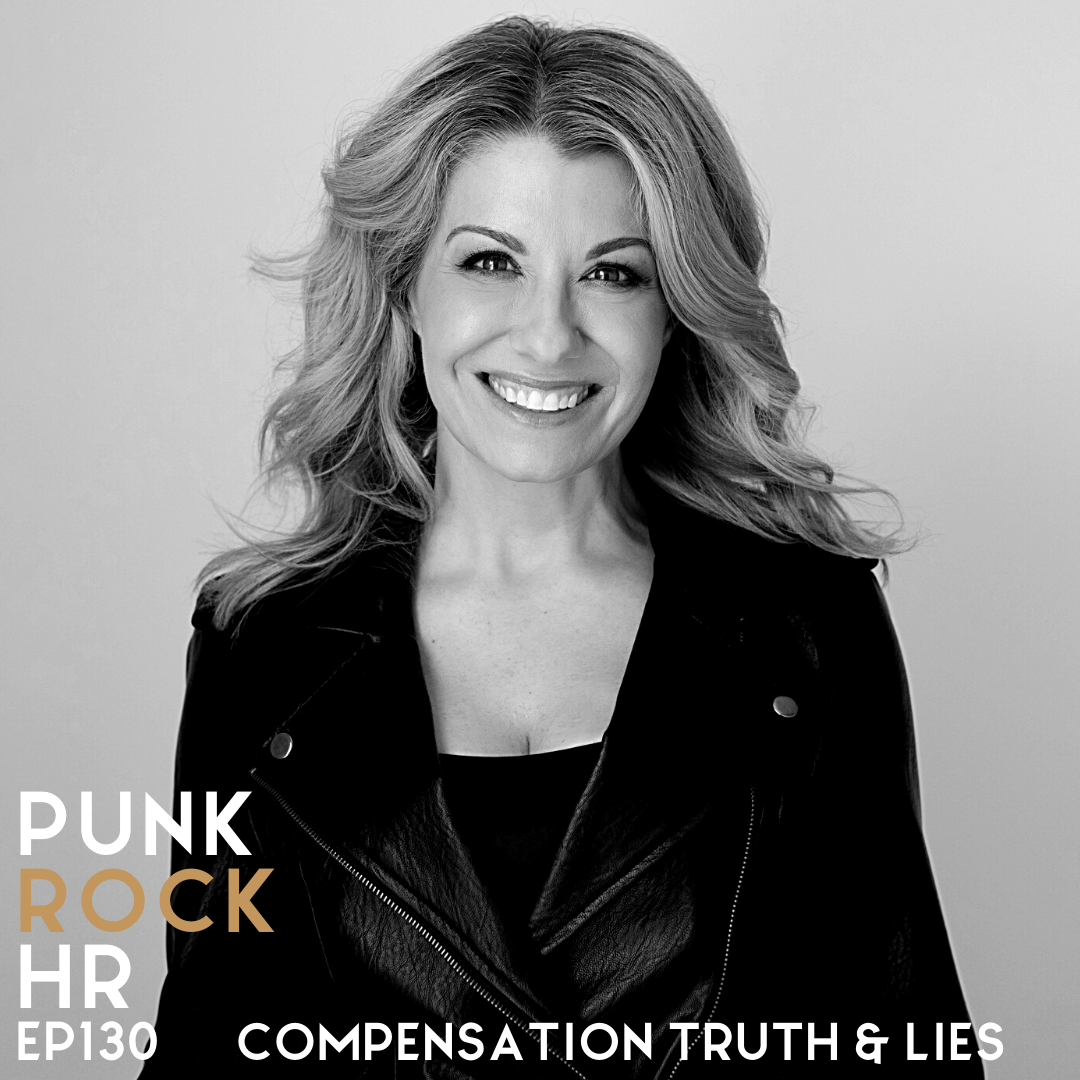
  • Compensation Truth & Lies with Laurie Ruettimann

    Compensation Truth & Lies with Laurie Ruettimann

    I recently gave a keynote to a company called Curo Comp. It was about truth versus reality when it comes to talking about money at work. I’m so jazzed about this topic that I wanted to tell you about it.

    Years ago, I interviewed for a job and the VP of HR was full of himself. At the end of the interview, I asked him what differentiated their HR department from others. He gave a long answer full of buzzwords, but he didn’t believe in any of it. That was in 2004, but even now every trend I read about human resources and compensation uses those buzzwords. It makes them all feel like lies. 

    In my keynote, I had to tell the audience that those trends were lies. I had to tell them that everything they aspirationally believe in is a lie. It was difficult, but it’s true. It’s important to disclose the lies and talk about where we stand and where we can go in the future. So, tune in and let’s talk about it.

    In this episode you’ll hear:

    1. The lie that equal pay and transparency matter.
    2. The two things we’re terrible at in the workforce: evaluating and recognizing performance.
    3. Why technology really doesn’t do anything.
    4. The realities of money at work.
    5. What we can do as a result of those realities.

    KEY TAKEAWAYS

    WHAT IS THE FIRST LIE ABOUT MONEY AT WORK?

    The first lie about money at work is that equal pay and transparency matter. We have a whole history behind us that shows us that nobody really cares about equal pay and transparency and that if they did, it wouldn’t be that hard to fix it. For example, Salesforce recently did an analysis of their employees. They created a much more organized, transparent system where they really aligned people with what they’re doing, what the job description says, and how they’re paying them. It turned out that there were a lot of opportunities to pay women and people of color more money. So, the hard part isn’t the process. The hard part is the decision and the commitment to do it. 

    WHAT IS THE SECOND LIE ABOUT MONEY AT WORK?

    The second lie we tell ourselves is that there should be more bonuses and more short term incentives for regular workers. We say, “Executives have all of these bonuses, so we’re going to start recognizing performance in the moment. We’re going to offer people a little bit of cash or some stock options to get them excited about work.” However, it turns out that we are terrible at two things: evaluating and recognizing performance. If we could evaluate performance in real-time, or even retroactively, our compensation systems would look completely different and our relationships with employees would be much better. Instead, we just default to our biases. We’re also awful at recognition. Many of us say that all employees just want to be thanked and that they don’t want money. However, it turns out employees are just like executives. They would like some short term incentives too.

    WHAT IS THE THIRD LIE ABOUT MONEY AT WORK?

    The third lie about money at work is that technology will drive all of the strategies behind fixing things. It turns out that technology doesn’t do anything, though. There are so many HR departments with no answers and no moral backbone that say what they need is a new system. This won’t fix anything. 

    WHAT IS THE FIRST REALITY OF MONEY FOR WORK?

    The first reality around money at work is that transparency is going to hit us all. Everyone is demanding that we be honest with them and stop lying to them. If we don’t already believe in transparency, it is going to hit us like a truck. At some point, advocates for the truth and the future of work are going to be in positions of power. They are going to dismantle structures that exist. So, you’re either for it now or you’re going to be named later when you were late to the party. 

    WHAT IS THE SECOND REALITY OF MONEY FOR WORK?

    The second reality of money at work is that compassion and empathy are no longer buzzwords. They’re the new operating model for the world of work. If you run an organization where white men in positions of power earn ridiculously more money than the average worker, you’re over. This is not a sustainable way of operating your business. Glassdoor, Indeed, and other places where people can talk about you won’t matter. In reality, people can talk about you anywhere. You must be prepared to be called out if you are not operating with compassion and empathy.

    WHAT IS THE SECOND REALITY OF MONEY FOR WORK?

    The final reality for the world of work and money is that self-leadership is the ultimate competency. We are living in a world where everybody’s at home, working remotely. The workforce of one company is now all over the world. Therefore, we need to incentivize and recognize individuals who can problem solve and get their work done without a heavy dependency on the team. Yet, everything about our global corporate structures makes people seem like children. We’ve really got to rethink how we talk to people, how we work with them, and how we reward them. Self-leadership is the thing that is going to change the world of work. It is going to be the thing that actually moves organizations forward.

    Resources from this episode:

    Laurie on Instagram

    Laurie on LinkedIn

    Read more from Laurie

    Work with Laurie

    Get my LI Learning courses for free for 30 days

    Curo Comp


  • Headspace for Work and Mental Health

    Mental Health Awareness Day is coming up on October 5th. Honestly, it should be every day. We need to be having consistent conversations on this topic and on the effect work can have on our mental health. 

    Lindsay Crittendon is someone who is bringing this issue to the forefront. She is the head of Headspace for Work, a company that works with businesses across the spectrum to help them identify the best ways to improve the workplace. They are dedicated to making the world and the world of work a little bit better.

    In our conversation, Lindsay and I talked about the benefits of mindfulness and more thoughtful behavior on the work environment and on our individual lives when we’re not working. I asked her how we can incorporate mindfulness into our workdays, even if it’s not recognized as a priority by our employers. 

    She said, “Honestly, I really started to understand a mindfulness experience and increasing my own performance through mindfulness by acknowledging that I have a relationship with my mental health and with my brain… to reframe a little bit and say, I take ownership over where my head is and I have the ability to really build a day-to-day relationship with my mind, it has been a really powerful reframing.”

    Lindsay also suggests the mini-meditations, workouts, and other content inside the Headspace for Work app. Taking a little bit of time each day to be mindful really counts, so take three minutes over your lunch break to try it out. 

    I’m talking about these topics—and more on well-being in the workplace— in my weekly newsletter. I’m also sharing a video to help you think about your week ahead. You can sign up here.

  • Unleash the Extraordinary with Brant Menswar

    Unleash the Extraordinary with Brant Menswar

    Punk Rock HR Episode 129:

    My guest this week is Brant Menswar. Brant is a top 10 motivational speaker, critically acclaimed author, award-winning musician, podcast host, and the CEO and founder of Rock Star Impact, a boutique agency that teaches people and organizations how to cultivate value-based leadership. 

    Brant is also the author of a new book called Black Sheep: Unleash the Extraordinary Awe-Inspiring, Undiscovered You. And I’m so excited that he came by to talk about self-leadership, individual accountability values, and really finding your core values and purpose in your life. So if you like your motivational speakers to be former rock stars, which I do, sit tight and enjoy this conversation with Brant Menswar. 

    In this episode you’ll hear:

    1. How a sports injury led Brant to his career as a musician.
    2. Why farmers don’t value black sheep as the rest of the flock.
    3. How living through his son’s life-threatening cancer diagnosis helped him realize his own black sheep values.
    4. How you know when you’ve made a good decision.
    5. Why it’s vital we stop looking solely at results when it comes to promoting people in the workplace.
    6. How to get in touch with your core values in the quiet moments before the storm.
    7. What you should do to figure out what matters most to you so you can stop trying to be someone you’re not.

    KEY TAKEAWAYS

    WHY DON’T FARMERS VALUE BLACK SHEEP AS THEY DO THE REST OF THE FLOCK?

    The reason farmers don’t value black sheep the same as the rest of the flock is because a black sheep’s wool cannot be dyed. And so every black sheep is in effect,100% authentically original. We have demonized black sheep for hundreds of years and positioned them as outcasts. And so the idea came into my head that we all possess these black sheep values; these deeply held personal core values that no matter how much someone wants to try to twist, or turn or change them, they simply cannot be changed just like a black sheep’s wool.

    HOW DO YOU KNOW WHEN YOU’VE MADE A GOOD DECISION?

    I have asked this question over the last two years to roughly 50,000 people and I always get the same answer. Their answer is always centered around some sort of outcome or result which is how they know they’ve made a good decision. And what science tells us is that, that’s not true. That’s what we call outcome bias. You can’t use an outcome or result to justify whether a decision was good or bad. And so what I suggest in the book is that a good decision is born from these black sheep values. 

    WHY DO WE NEED TO STOP LOOKING SOLELY AT RESULTS WHEN IT COMES TO PROMOTING PEOPLE IN THE WORKPLACE?

    From an HR perspective, this is the biggest point of contention that a lot of people within a particular company culture witness. What they see happening right before their eyes are people who make horrible decisions getting promoted. They are being promoted based on a result that was achieved, not on the deliberate intention that went into making the decisions. I’ve made horrible decisions in my life that have ended in really good results by sheer luck. And if that is what I’m being promoted on, it’s going to destroy the culture of the organization. We have to stop focusing solely on results and start thinking through what it looks like to make good decisions in the first place. And when you reward that, I always believe you’re going to have the company’s best interests at heart. 

    WHY SHOULD I GET IN TOUCH WITH MY CORE VALUES IN THE QUIET MOMENTS BEFORE THE STORM?

    You never want to be in the middle of a crisis when you’re trying to figure what your core values are. So as much as a global pandemic has slowed the world down, this may be the best time for you to start figuring out what matters most whether you are at work, or you are trying to figure out who you’re going to vote for, or whatever it looks like for you. These are things that you need to know to make good decisions that are in alignment with your values.

    Resources from this episode:

    Brant’s Website

    Brant on LinkedIn

    Brant on Instagram

    Brant on Facebook

    Brant on Twitter

    Brant’s Podcast

    Brant’s Book

    Laurie on Instagram

    Laurie on LinkedIn

    Read more from Laurie

    Work with Laurie