Tag: punk rock hr

  • COVID-19 Testing and PPE Q&A, A Conversation with 4 Oaks Ventures

    There is a lot of misinformation out there on PPE and COVID-19 testing. When the virus first hit our country, labs were overwhelmed by the lack of materials, equipment, and knowledge to fight it. Now, testing and strategies have improved, but the general public is still largely uninformed.

    Robert Williams and Brian Baucom from 4 Oaks Ventures have the facts. They are the co-founders of a company called 4 Oaks Ventures. The team at 4 Oaks provides quality PPE and COVID-19 testing to employees and industries all over America.

    In our recent conversation, we talked about the real issues behind the challenges of finding a PPE that’s not counterfeit or just disgusting and finding COVID-19 testing and strategies that really work. I asked them what COVID-19 testing really looks like and what it means for returning to work.

    Robert explained that there is antibody testing which is less reliable and accurate. He also said, “The other type of testing to identify whether or not to have it… is molecular tests {where} you’re looking for the RNA of the disease… {my father and I} had talked early about how to help expand testing for people. And as his lab has expanded their capacity to maintain a 24 to 48 hour result turnaround time, we’ve been helping to find institutions that require high volumes testing… to help assure them that their population doesn’t have it, or if they do, you can do quick contact tracing, and narrow down the number of individuals that could be exposed.”

    If you work in human resources, logistics, or marketing and you need to go back to work in an office at some point, this conversation will be very insightful for you. 

    I’m talking about these topics—and more on the truth about PPE and COVID-19 testing— in my weekly newsletter. I’m also sharing a video to help you think about your week ahead. You can sign up here.


  • Headspace for Work and Mental Health with Lindsay Crittendon

    Headspace for Work and Mental Health with Lindsay Crittendon

    Punk Rock HR Episode 128:

    Lindsay Crittendon is the head of Headspace for Work. If you thought that was a meditation app on your phone, so did I. However, it is actually so much more than that. They work with businesses across the spectrum to help them identify the best ways to improve the workplace. 

    Mental Health Awareness Day is coming up on October 5th. Honestly, it should be every day. We need to be having consistent conversations on this topic and on the effect work can have on our mental health. Today, Lindsay helps bring this to the forefront. She’s dedicated to making the world and the world of work a little bit better.

    In this episode, we’re talking about the benefits of mindfulness and more thoughtful behavior on the work environment and on our individual lives when we’re not working. We also talk about COVID-19. We use this opportunity to talk about how to emerge from this pandemic in a healthier way. If you’re interested in a conversation about well-being at work and fixing work, sit back and enjoy this discussion with Lindsay from Headspace for Work.

    In this episode you’ll hear:

    1. Lindsay’s driving purpose behind what she does.
    2. The vision of Headspace for Work and what they do to make it a reality.
    3. How Headspace for Work defines mindfulness.
    4. The challenges that are affecting workplace mental health and what to do with that information.
    5. What a holistic mental health benefits program would look like in the workplace.
    6. How mindfulness at work and Headspace for Work specifically can benefit people.
    7. How to incorporate mindfulness into your workday, even if it’s not recognized as a priority by your employers.
    8. How businesses and leaders can remove some of the barriers and lessen the stigma attached to mental health.

    KEY TAKEAWAYS

    WHAT IS THE VISION OF HEADSPACE FOR WORK AND WHAT DO THEY DO TO MAKE IT A REALITY?

    The mission of Headspace is to make the world a healthier and happier place. They do that primarily through the design and development of scientifically-backed mindfulness content. They put this content into the world via a mobile app. They also have a lot of original content channels on YouTube and various other places. Specifically, their mission is to manifest the headspace promise within the workplace. This entails stepping back for a little bit and partnering with the companies they work with to bring credible expertise to the organization.

    HOW DOES HEADSPACE FOR WORK DEFINE MINDFULNESS?

    They define mindfulness by a single word: intentionality. It means being intentional about every area of life, including things like workouts and meditation. There is a lot of science behind meditation and scientific evidence that proves it can reduce mental health problems, which is why they emphasize that practice so heavily. 

    WHAT ARE THE CHALLENGES THAT ARE AFFECTING WORKPLACE MENTAL HEALTH? WHAT SHOULD I DO WITH THAT INFORMATION?

    There is a meaningful company impact on ignoring and or not addressing stress in the workplace. A million people actually miss work every day due to stress. Globally, there are a trillion dollars in lost productivity annually due to stress, anxiety, and depression, as 30% of workers suffer from anxiety and depression. The real opportunity to help here is to first recognize that there are not a lot of programs that address stress. So, if you have the ability to address stress inside of your workplace, a focus on that by the senior leaders and day-to-day managers can meaningfully improve your business performance. 

    HOW CAN I INCORPORATE MINDFULNESS INTO MY WORKDAY, EVEN IF ITS NOT RECOGNIZED AS A PRIORITY BY MY EMPLOYERS?

    Firstly, recognize that you have a relationship with your mental health and with your brain, just like all of the other relationships in your life. Realizing that you can build that relationship every day is a powerful reframing tool. Additionally, inside the Headspace for Work app, there are mini-meditations. Taking a little bit of time each day to be mindful really counts, so take three minutes over your lunch break. Additionally, if you are commuting to work every day, you can listen to a lot of different content in the app. There are also 15-minute workouts that don’t make you sweat but just get your body moving. 

    HOW CAN BUSINESSES AND LEADERS REMOVE SOME OF THE BARRIERS AND LESSEN THE STIGMA ATTACHED TO MENTAL HEALTH?

    Zoom out a little bit to see the components of your life and lifestyle that can improve your mental health. For example, if you are struggling with anxiety or depression, sleep can be a big part of that. It’s much easier to say you’re not sleeping well than to say you have anxiety. Leaders should think about this as simply onboarding into a mindfulness solution.

    Resources from this episode:

    Laurie on Instagram

    Laurie on LinkedIn

    Read more from Laurie

    Work with Laurie

    Lindsay on LinkedIn

    Headspace for Work main page

    2020 Mental Health Trends Report

    Headspace has special programming planned for World Mental Health Awareness Day and will launch an exciting new initiative around Employee Mental Health. 

    Follow them on LinkedIn and stay tuned to be the first to find out about upcoming announcements! 

  • Revolutionizing The Workplace For Women Of Color

    We are at a really pivotal time in our society where the decisions we make can really benefit the next generation of leaders. If we are leaning into more compassion, being more flexible, and redefining success at work, then we can make sure that the workplace is better than we found it. 

    Minda Harts has dedicated her life to bringing these changes to fruition. If you have ever wondered who’s fighting for women of color to get a seat at the table, it’s Minda. Her book, Memo, has opened the doors for women and other authors to talk about what’s really happening in the world of work. 

    In my recent conversation with Minda, we talked all about her various channels for getting this message across. We also discussed what Memo is all about and why she believes the lessons presented in it are so important. She said, “I think sometimes when we talk about women in the workplace, we use these one-size-fits-all approaches to things. And so I’m saying, ‘Hey, all women don’t experience the workplace the same. And let’s talk about that.’”

    Minda is a self-proclaimed career revolutionary. Her goal is to leave the workplace better than she found it and she is committed to helping us do the same.

    I’m talking about these topics—and more on the incredible work Minda is doing to revolutionize the workplace— in my weekly newsletter. I’m also sharing a video to help you think about your week ahead. You can sign up here.

  • COVID-19 Testing and PPE Q&A with 4 Oaks Ventures

    COVID-19 Testing and PPE Q&A with 4 Oaks Ventures

    Punk Rock HR Episode 127:

    Today’s guests are Robert Williams and Brian Baucom. They are the co-founders of a company called 4 Oaks Ventures. The team at 4 Oaks provides quality PPE and COVID-19 testing to employees and industries all over America.


    Robert and Brian are my neighbors in this community. They’re my friends. However, I also brought them onto the show to advise them on how to talk and work with HR departments to make clear the importance of quality PPE and COVID-19 testing and cut through the noise.

    We’re talking about the real issues behind the challenges of finding a PPE that’s not counterfeit or just disgusting and finding COVID-19 testing and strategies that really work. If you work in human resources, logistics, or marketing and you need to go back to work in an office at some point, this episode will be very helpful for you. Tune in for an informative and incredible conversation with Robert and Brian.

    In this episode you’ll hear:

    1. The impetus behind Robert and Brian co-founding 4 Oaks.
    2. Why they thought they could help when so many other organizations didn’t.
    3. What the early days of the pandemic were like for them.
    4. What Robert saw in the PPE testing market in April and where it is now.
    5. Their particular area of response to COVID-19 and what they are providing.
    6. COVID-19 testing and what it means for returning to work.
    7. How their door to door service differentiates them in the marketplace.
    8. What their interactions with multiple constituencies within organizations have been like.
    9. What pool testing is.

    KEY TAKEAWAYS

    WHAT DID ROBERT SEE IN THE PPE TESTING MARKET IN APRIL AND WHERE IS IT NOW?

    In April, there was an abnormally large order of gloves out of Southeast Asia and an independent third party provided the validation of these gloves. With this order, the buyer happened to pay extra for them to do extra validation. In doing so, that third party discovered subpart products with blood and rodent hair in the gloves. They ended up having to scrap the entire order. As a result, the buyer started searching for a new source. Luckily, they found 4 Oaks and they were able to help them. 

    WHAT DOES COVID-19 TESTING MEAN FOR RETURNING TO WORK?

    There are two kinds of testing. There’s testing that identifies whether or not you had COVID-19 in the past and there’s testing that identifies whether or not you have it now. There are Killer T cells that are really hard to identify, but that produce antibodies. Those antibodies hang out in the body for a while and can be identified pretty rapidly. However, the Killer T cells have the blueprint that can remake the antibodies and that’s what helps fight infection. There are a lot of antibody tests in the market, some of which are pretty rapid. The problem is that we can’t know how effective or accurate they actually are. Besides antibody testing, there are many major categories of the other type of testing to identify whether or not you have COVID-19. However, the most reliable is the molecular test. No one knew how to do these at first, so the CDC got overwhelmed. 4 Oaks, though, has been able to expand their capacity to maintain a 24 to 48 hour result turnaround time. They’ve been helping institutions that require high volumes of testing by assuring them that their population doesn’t have it, or if they do, that they can do quick contact tracing and narrow down the number of individuals that could be exposed.

    WHAT IS POOL TESTING AND ARE COMPANIES DOING IT?

    Early on, a lot of labs jumped into the testing space. A lot of people were scrambling to run tests on a disease that nobody had ever seen before with new machines and scarce materials. After a while, things started working themselves out, but there still weren’t enough materials to meet the need. Pool testing came onto the scene to meet this high demand. Now, labs can test multiple people in one vial. If it comes back negative, they know everyone is negative. The only downside is that if it comes back positive, they have to go back and test all of the people individually. This work is expanding and improving every day. 

    IF I WANT TO WORK AT 4 OAKS, HOW WOULD LIKE THAT?

    They like to get face to face with their clients on Zoom and then ask them what their needs are. They would ask you, “How can we help fulfill your needs or even direct them towards something you weren’t thinking about?” They would talk through how many employees you have and other particulars of your organization. Then, they would make sure that you’re on the schedule for testing.

    Resources from this episode:

    Brian on LinkedIn

    Robert on LinkedIn

    4 Oaks Ventures Website

    Laurie on Instagram

    Laurie on LinkedIn

    Read more from Laurie

    Work with Laurie


  • Revolutionizing The Workplace For Women of Color with Minda Harts

    Revolutionizing The Workplace For Women of Color with Minda Harts

    Punk Rock HR Episode 126:

    Today’s guest is author and speaker Minda Harts. If you have ever wondered who’s fighting for women of color to get a seat at the table, it’s Minda. Her book, Memo, has opened the doors for women and other authors to talk about what’s really happening in the world of work. 

    On top of her nationally recognized book, Minda has a terrific LinkedIn account, a prolific blog, and great Instagram and Twitter accounts. Most importantly, she is an amazing podcaster and the host of the show, Secure the Seat. Minda is a self-proclaimed career revolutionary. Her goal is to leave the workplace better than she found it.

    In this episode, Minda and I are talking about her work, including her new book. We discuss where she gets her inspiration and passion for the content she creates. I’m so excited to talk to someone who’s kicking butt and taking names. Tune in to be a part of the conversation.

    In this episode you’ll hear:

    1. The different mediums Minda uses to get her message out.
    2. What her book, Memo, is all about and what lessons people can get out of it.
    3. Where she learned the lessons she shares in Memo.
    4. Her writing process for Memo and how she established her tone.
    5. The origin story that made her who she is today.
    6. How she knows she’s making a difference in her community.
    7. How she responds to those who complain about what she says and does.
    8. How to overcome imposter syndrome.
    9. What success means to her.
    10. Why she is excited about the future of work.

    KEY TAKEAWAYS

    WHAT IS MINDA’S BOOK, MEMO, ALL ABOUT?

    Sometimes, when we talk about women in the workplace, we use a one-size-fitsall approach. In Memo, Minda explains that all women don’t experience the workplace the same. She asserts that we need to start talking about this. As a black woman in the workplace, she often felt isolated. She had to work ten times harder just to be seen or taken seriously, even with the same credentials as someone who was her counterpart. From this experience, she realized that we aren’t talking about these issues enough. Memo was one of the first books of its kind talking about the experiences of women of color in the workplace.

    WHAT IS MINDA’S ORIGIN STORY?

    Minda has seen how racism doesn’t just kill people but careers too. Her whole life, she wanted to be in the C Suite. However, once she entered into one particular environment which she writes about in Memo, she realized that no matter how many relationships she had and even if she did everything right, the environment just did not want her in it. She experienced so many different micro and macro aggressions in a way that she hadn’t before. She realized that sometimes you can do everything right and still not get to your spot. It made her think about how many other women that look like her feel the exact same way. At that moment, she decided she was going to dedicate her life to making sure that women who worked really hard could lean into the courage available to them.

    HOW DOES MINDA KNOW SHE’S MAKING A DIFFERENCE IN HER COMMUNITY?

    Minda feels alive when she hears from the people she is influencing. When women reach out to her and tell her how much her content made a difference in their lives and helped them lean into their courage, she knows she’s made a difference. Those responses supersede any superficial markers of success. 

    HOW CAN I OVERCOME IMPOSTER SYNDROME?

    Imposter syndrome was created to make us always second-guess ourselves or be worried about what others are thinking of us. When we feel it coming on, we have to take back the narrative. We must realize that we have the power to redefine what success means to us. Everyone is going to have an opinion about the way you do things, but that is their narrative and you don’t have to accept it. 

    WHY CAN WE BE EXCITED ABOUT THE FUTURE OF WORK?

    We are at a really pivotal time in our society where the decisions we make can really benefit the next generation of leaders. If we are leaning into more compassion, being more flexible, and redefining success at work, then we can make sure that the workplace is better than we found it. People hold a lot of power right now to put in the processes and guardrails to make the workplace better for everybody. The workplace is being humanized more and more. When we remember that and the opportunities that are in this moment, we can make better decisions on how the workplace works for everybody.

    Resources from this episode:

    The Memo book

    Minda on LinkedIn

    Minda on Twitter

    Minda on Instagram

    Minda’s website

    The Memo Virtual Experience

    Minda on Real Leader’s 40 Top Women Keynote Speakers for 2020 List.

    Washington Post article

    Laurie on Instagram

    Laurie on LinkedIn

    Read more from Laurie

    Work with Laurie

  • The Power of Empathy

    Michelle Obama recently gave a speech and said that there is an empathy deficit among many people in power in our country. I feel that truth in my bones. Empathy is something so primal, yet so hard to achieve. 

    Mimi Nicklin is an author and podcaster who has dedicated her life to driving the conversation around empathy into the world. She is the author of Softening the Edge, a book all about empathy and how humanity’s oldest leadership trait is changing our world. Mimi believes that the ability to connect authentically with others has the power to shape not only our business environments but every part of our lives.

    In our conversation, Mimi and I talked all about what empathy is, what it isn’t, and how we can actually put it into practice at work. 

    Many of us work in environments that don’t operate on empathy. Corporate culture has become one that is non-stop. So I asked Mimi what those who find themselves in an environment like that can do to make a change?

    She said, “Yes, you can’t control your corporate culture, perhaps especially if you’re in a very large organization. You can’t necessarily change your office hours or any of those things that you were just referencing, but as a human being, as a person on the planet, you can control the relationships you build in your microcosms, the people around you.”

    Even if you’re making small wins and increasing empathy in a small microcosm, you will begin to make a change. Eventually, if you can lead with empathy and encourage that in others, you will impact many more people than just your small team.

    I’m talking about these topics—and more on the life-changing power of empathy— in my weekly newsletter. I’m also sharing a video to help you think about your week ahead. You can sign up here.

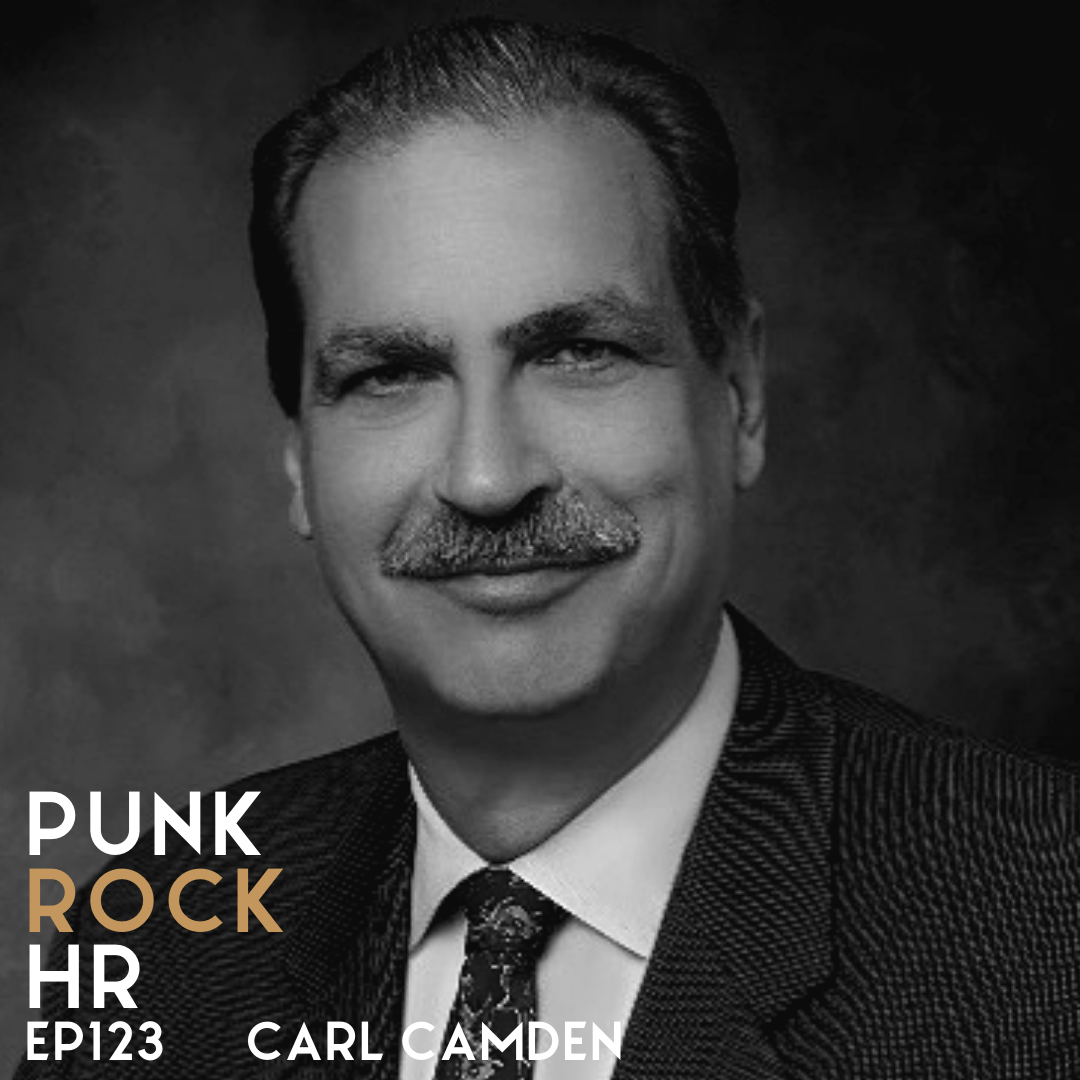
  • The Future of Independent Workers with Carl Camden

    The independent workforce has surged over the last several years. Waves of people have decided they want more control over their own lives. Now, with COVID-19, we are seeing more employees than ever transition to an independent work style. 

    Carl Camden has followed this progression closely and advocated greatly for these independent workers. He is the founder and president of iPSE-U.S. Carl has dedicated more than 25 years of his life to advocating politically for the independent workforce. This has looked like creating career opportunities and seeking justice for independent workers by challenging leaders to adapt to the future of work.

    I asked Carl how he was advocating in Washington for independent workers today. He said, “Surprisingly, one of the issues that we have to deal with as we look at providing benefits and support for independent workers is a set of archaic regulations inside the U.S. tax code… That puts a lot of pressure on those workers to have to be classified as employees rather than allowing them to continue their status that they want to have as an independent worker.” 

    In order to combat this and other forms of discrimination against independent workers, iPSE-U.S. has been a part of coalitions that are working to make it a certainty that independent workers can have access to the same types of support and benefits that employees take for granted.

    I’m talking about these topics—and more on the future of independent workers— in my weekly newsletter. I’m also sharing a video to help you think about your week ahead. You can sign up here.

  • The Power of Empathy with Mimi Nicklin

    The Power of Empathy with Mimi Nicklin

    Punk Rock HR Episode 124:

    Today’s guest is author and podcaster Mimi Nicklin. She is the author of Softening the Edge, a book all about empathy and how humanity’s oldest leadership trait is changing our world. Mimi believes that the ability to connect authentically with others has the power to shape not only our business environments but every part of our lives.

    Michelle Obama recently gave a speech and said that there is an empathy deficit among many people in power in our country. I feel that truth in my bones. Empathy is something so primal, yet so hard to achieve. Mimi’s big ideas drive the conversation around empathy into the world, which is why I brought her onto the show today.

    In this episode, Mimi and I talk about empathy. We discuss what it is, what it isn’t, and how you actually put empathy into practice at work. If you wonder how seeing someone’s perspective can help you be a better leader, listen in to this conversation with Mimi.

    In this episode you’ll hear:

    1. A simple definition of empathy.
    2. How to overcome the empathy deficit in our world.
    3. Where to go to add more empathy into the world.
    4. What it would look like to implement empathy training in an organization.
    5. Why listening is so important.
    6. How to balance the need for speed with the need to be seen and heard.
    7. How to control your microcosms to create a ripple effect in your company’s culture.
    8. Why Mimi is passionate about empathy.

    KEY TAKEAWAYS

    WHAT WOULD IT LOOK LIKE FOR ME TO IMPLEMENT EMPATHY TRAINING INTO MY ORGANIZATION?

    Empathy training is something that’s quite new and growing in demand. One of the key parts of empathy training is listening. Listening is one of the most undervalued skill sets in the workplace. We must start moving our teams towards understanding what listening is, how to use active listening, and how to hear people not just in a way that allows us to formulate a response, but in a way that truly seeks to understand the other person. This will build a level of connectivity between our people which is a great step in the right direction. 

    WHY IS LISTENING SO IMPORTANT?

    One of our highest orders as human beings is to be seen and heard. If you look at infants, even from a very young age they have that need to be recognized. Listening represents the human need to be able to reflect ourselves in the faces of others and know that we are understood. It’s how we recognize that we exist. If we could learn to lean in, make eye contact, hear people when they talk to us, and repeat what they said back to them, we would notice entire changes in the way people communicate and the amount of information people give us. Even if someone’s conscious mind hasn’t noticed that we aren’t listening, his or her subconscious has, and that changes how he or she behaves. 

    MY COMPANY DOESN’T OPERATE ON EMPATHY AND HAS A NON-STOP CULTURE. HOW DO I DEMONSTRATE EMPATHY AND MAKE A CHANGE HERE?

    This is a decision that’s in your control. Yes, you can’t control your corporate culture and you can’t necessarily change your office hours, but as a human being, you can control the relationships you build in your microcosms. You have the opportunity to impact the people around you. Empathy is contagious and it does ripple. You can turn around all kinds of environments, scenarios, and people by turning on your empathy and by practicing and honing that skill. When entering a high-stress environment, just persevere in empathy. Lean in, improve your eye contact, and smile. When you do, you will see that people come with you. Even if you’re making small wins and increasing empathy in a small microcosm, you will begin to make a change. Eventually, if you can lead with empathy and encourage that in others, you will impact many more people than just your small team.

    Resources from this episode:

    Mimi’s website

    Empathy for Breakfast Youtube Channel

    Softening the Edge book

    Mimi on Instagram

    Laurie on Instagram

    Laurie on LinkedIn

    Read more from Laurie

    Work with Laurie


  • Culture First with Damon Klotz

    I can’t say that I’m mentored by a lot of people because I’m a difficult individual. But if there’s one person that I learn from, that I grow from, that I actually pay attention to, and try to figure out which way the wind blows, it’s Damon Klotz.

    I have known Damon for over 11 years, and a lot of people mistake his optimism for naivete. But here’s the deal about Damon, he is savvy, he understands how to build relationships, he understands the world of work. And yet, knowing how nefarious the startup scene can be, and knowing how crazy the world of work is, he still believes that people are good and that human resources can make a difference. And then when it comes down to it, culture first really matters. 

    Damon Klotz has spent his career working at the intersection of people and technology. He’s held roles as an HR Consultant, Digital Strategist, and he’s the co-founder of a men’s mental health charity. He joined Culture Amp as an early employee where he grew their community to one of the largest in the world and scaled the company during a time where the employees and customer base grew by over 2500%. 

    As Culture Amp’s first Work Culture Evangelist he represents what’s possible within people and culture through storytelling, consulting, coaching, strategy execution, and thought leadership.

    As the host of The Culture First Podcast, Damon interviews people like Esther Perel, Claude Silver, Adam Grant & Simon Sinek to have conversations about why a better world of work can exist for the individual, team, leader & organization by focusing on workplace culture as the lever for change. 

    So, what is culture?

    According to Damon, he thinks culture is a set of beliefs, expectations, structures, and intentions around how a group of people decide together, that’s actualized through behaviors, and it can exist at an organizational level. He also believes culture can exist within a team and within a small project as well. We spend a lot of time talking about what we do at work. Damon believes we don’t spend as much time focusing on how we’re working. Who were the people who were in the room? Who are the people who are not in the room? Who are the decision-makers? Why are they the decision-makers? How are we going to make decisions? These are all the things that make up a culture of a team, culture of a project, and culture of an organization. 

    I’m talking about these topics—as well what Damon’s company is doing in the marketplace —in my weekly newsletter. I’m also sharing a video to help you think about your week ahead. You can sign up here.


  • The Future of Independent Workers with Carl Camden

    The Future of Independent Workers with Carl Camden

    Punk Rock HR Episode 123:

    Carl Camden is the former CEO of Kelly Services and the current president of iPSE-U.S. He has dedicated more than 25 years of his life to advocating for the independent workforce. This has looked like creating career opportunities and seeking justice for independent workers by challenging leaders to adapt to the future of work.

    In 2017 Carl assembled industry leaders, House members from both parties, and association leaders for an exclusive D.C. event. This eventually became the genesis for iPSE-U.S. Today, this organization partners with a variety of other companies to provide the protection that corporations offer to their employees for independent workers.

    In this episode, we talk about the differentiation between full-time workers and the gig economy and how often that differentiation turns people into second-class citizens. We also talk about the third rail of work, health-insurance benefits, and how iPSE-U.S. helps make it accessible to contractors. The gig economy covers everybody from Ph.D. scientists to delivery drivers and it could include you. So, if you have any interest in the topic, listen to my conversation with Carl. 

    In this episode you’ll hear:

    1. How Carl got to where he is today.
    2. Where we are today in the world of work.
    3. What Carl is doing to advocate for independent workers today.
    4. How independent workers are treated differently in the workplace.
    5. Independent work within marginalized communities.
    6. Carl’s prediction regarding breakthroughs in this area in the next generation.

    KEY TAKEAWAYS

    HOW IS CARL ADVOCATING FOR THE INDEPENDENT WORKFORCE TODAY?

    One of the biggest issues in providing benefits and support for independent workers is a set of archaic regulations inside the U.S. tax code. These rules are making it difficult for people to work as independent workers and to get access to benefits and support services. So, iPSE-U.S. has been a part of coalitions that are fighting against discrimination against independent workers. They are working to make it a certainty that independent workers can have access to the same types of support and benefits that employees take for granted.

    HOW ARE INDEPENDENT WORKERS TREATED DIFFERENTLY IN THE WORKFORCE?

    Many companies practice discrimination against independent workers in surprising ways. For example, some require their independent workers to work in the furthest away parts or to park their cars in furthest away spots. Independent workers are often labeled as distinct from the employees and are viewed as not “one of them.” Some Ph.D. scientists who have worked independently for a year on a particular trial have reported not being invited to their company picnics or to other celebrations. The forms of discrimination are subtle but can extend all the way up to the not-so-subtle and the very important. Some companies argue that if independent workers are provided benefits, they will have to be reclassified as employees, which will cause a whole host of other problems.

    IS THERE A FORESEEABLE BREAKTHROUGH IN THE WORLD OF INDEPENDENT WORK IN THE NEXT GENERATION?

    Carl is optimistic that the breakthroughs are in the process of happening right now. COVID has been a disaster in terms of the nature of employment. Waves of people are saying they want to have more control over their own lives. The independent work style empowers workers in many ways and, because of this, more and more employees are transitioning to this way of working.

    Resources from this episode:

    iPSE-U.S.

    Laurie on Instagram

    Laurie on LinkedIn

    Read more from Laurie

    Work with Laurie