Tag: leadership

  • Making Work Human with Derek Irvine

    Making Work Human with Derek Irvine

    Punk Rock HR is underwritten by Headspace for Work.

    My guest today is Derek Irvine. Derek has been in the human resources business for a long time, helping companies just be more human and more civil to one another. Today, he holds the position of Senior Vice President for the company Workhuman.

    Derek is also the author of the new book, Making Work Human. Derek and his co-author believe that by building a sense of belonging, purpose, meaning, happiness, and energy for every employee, you’ll create a profound connection between your organization and its goals. They wrote Making Work Human to provide you with everything you need to get there.

    I’ve known Derek for a long time. He was talking about making work human far before it was trendy. So if you’re interested in hearing from the pioneer of the work human movement, tune into my conversation with Derek.

    In this episode you’ll hear:

    1. All about Making Work Human and why Derek wrote it.
    2. Why we should always be thanking and celebrating essential workers.
    3. The role of technology in making work human.
    4. Why storytelling is so important, especially right now.
    5. What writing a book does for your business.
    6. What human resources leaders will learn from his book.
    7. What he learned about himself as he wrote this book and throughout COVID-19.
    8. How the stress of this season is impacting his own organization.
    9. All about resilience and how it appears in his book.

    KEY TAKEAWAYS

    WHAT IS MAKING WORK HUMAN ABOUT AND WHY DID DEREK WRITE IT?

    Making Work Human is really a story about Derek’s clients. It lays out everything that the world’s most admired companies that he has worked with have been successfully doing to bring more humanity into the workplace. The book contains multiple case studies about how those companies have been on a journey with Derek and his company. A big theme of the book is the top three words Derek emphasizes with the companies he works with. Those three words are authentically, frequently, and celebrating together. They have found that if you focus on those three words, you’ll successfully bring more humanity into your workplace.

    WHAT ROLE DOES TECHNOLOGY PLAY IN MAKING WORK HUMAN?

    There is so much technology out there to help with HR. However, if you focus on which of those technologies help bring humanity into the workplace, the list is pretty short. Workhuman’s technology, however, scales what many people want but quickly forget about. We all have a wish-list of the things we did more, such as appreciating and thanking others. However, as the day goes on, we forget to do these things. The technology at Workhuman helps by reminding you to do those things that you want to do. It also provides an opportunity for amplification with a social feed where you can actually do those things. Finally, this technology is so powerful because it allows companies to look at the data afterward. They can examine the networks, the connections, and the soft skills that are being exhibited as people are engaging in thinking, talking, and celebrating. 

    WHAT DOES RESILIENCE MEAN, ESPECIALLY IN THIS CURRENT SEASON IN AMERICA?

    Resilience means exercising the muscle of whatever it is you want to develop in your life. For example, if you want to start thanking, talking, and celebrating in your organization, you have to exercise the muscle of connection-building in the workplace. This takes resilience, but it is what keeps relationships strong.

    Resources from this episode:

    Laurie on Instagram

    Laurie on LinkedIn

    Read more from Laurie

    Work with Laurie

    Making Work Human: How Human-Centered Companies are Changing the Future of Work and the World

    Workhuman

    Derek on LinkedIn


  • Food and Social Activism

    COVID-19 has provided an incredible opportunity for growth in our world. This moment in history is not a moment to shrink, but to see what wasn’t working in our system and get rid of it. When we are lost and confused, we need to trace back our steps and correct what was wrong. At this time, we get to look back and find inspiration for how things can be better.

    I received this wisdom from Pierre Thiam, a New York-based chef, author, restauranteur, social entrepreneur, and culinary ambassador. Pierre is best known for bringing West African cuisine to the global fine-dining world. He is also the Executive Chef and co-owner of Teranga, a fast-casual food chain from New York City.

    I asked Pierre how he sees food and politics connected in the US. He answered by providing a tangible example of how his restaurant has gotten involved in their local community.

    They are located in the African center in Harlem. During COVID, they were able to keep serving the community by selling food for delivery or pickup and later partnering with a nearby hospital to serve food to the first responders. They also realized that there were kids in Harlem who relied on their schools to feed them. Without school in session, these kids lived in shelters. So, Teranga became the place they went for food.

    He also said, “the restaurant of COVID has to be a restaurant that really considers the situation and the community… for the community needs healing and food is an amazing way to bring that healing.”

    I’m talking about these topics—and more about Chef Pierre’s origin story— in my weekly newsletter. I’m also sharing a video to help you think about your week ahead. You can sign up here.


  • Food and Social Activism with Chef Pierre Thiam

    Food and Social Activism with Chef Pierre Thiam

    Punk Rock HR Episode 132:

    My guest today is Pierre Thiam. He was raised in Senegal, but he is a New York-based chef, author, restauranteur, social entrepreneur, and culinary ambassador. Pierre is best known for bringing West African cuisine to the global fine-dining world. He is also the Executive Chef and co-owner of Teranga, a fast-casual food chain from New York City.

    Pierre’s company, Yolele Foods, advocates for small farmers by opening up new markets for crops grown in Africa. Its signature product, fonio, is found at Whole Foods, Amazon, and other retailers across America. 

    Chef Pierre is on my show because I think he has an interesting perspective on COVID and what’s happening to small businesses, but also the climate crisis and, more importantly, leadership. We have an awesome conversation that highlights how an immigrant who got stuck in New York City can truly get things done. To learn more, sit back and enjoy this conversation with Pierre Thiam.

    In this episode you’ll hear:

    1. Pierre’s origin story.
    2. The intense food culture in which he grew up.
    3. How important his life in Senegal was for his career.
    4. What West African flavors and fonio are.
    5. The multifaceted work that he does.
    6. The connection between politics and food in the US.
    7. His message for those who are feeling lost or worried about the current state of the world.

    KEY TAKEAWAYS

    WHAT KIND OF WORK DOES PIERRE DO?

    Pierre wears many hats. He is a chef in New York City, but he sees that as an opportunity to fight for justice. He aims to help farmers in West Africa, the poorest farmers in the world, by finding opportunities for them. This also helps bring great products to consumers who are more conscious of what they’re eating. In that way, he considers himself an activist. Other than that, he’s a chef and the author of multiple cookbooks. 

    WHAT IS THE CONNECTION BETWEEN COMMUNITY AND FOOD?

    Pierre’s restaurant, Teranga, is part of the community. They are located in the African center in Harlem. There are regulars who rely solely on them for their food. During COVID, they were able to keep serving the community by selling food for delivery or pickup and later partnering with a nearby hospital to serve food to the first responders. They also realized that there were kids in Harlem who relied on their schools to feed them. Without school in session, these kids lived in shelters. So, Teranga became the place they went for food. They also collaborated with Harlem Grown, an amazing organization in Harlem. From these experiences, Pierre knows firsthand that restaurants that stay standing during COVID have to be restaurants that consider the situation and the communities they are in. The general community needs healing right now and food is an amazing way to bring that healing. 

    WHAT DOES HE HAVE TO SAY TO THOSE WHO ARE FEELING LOST OR WORRIED ABOUT THE CURRENT STATE OF THE WORLD?

    Pierre says that we have to see this time in the world as an opportunity for growth. It’s not a moment to shrink, but to see what wasn’t working in our system and get rid of it. He also says that we have to do this as a whole, not as individuals. When we are lost and confused, we need to trace back our steps and correct what was wrong. This is a moment when we get to look back and find inspiration for how things can be better. 

    Resources from this episode:

    Laurie on Instagram

    Laurie on LinkedIn

    Read more from Laurie

    Work with Laurie

    Teranga’s website

    Learn more about Pierre

    Yolele Food’s website

    Yolele Foods on Instagram

    Pierre on Instagram


  • Unleash the Extraordinary

    Brant Menswar is a top 10 motivational speaker, critically acclaimed author, award-winning musician, podcast host, and the CEO and founder of Rock Star Impact, a boutique agency that teaches people and organizations how to cultivate value-based leadership. 

    Brant is also the author of a new book called Black Sheep: Unleash the Extraordinary Awe-Inspiring, Undiscovered You. He talks about self-leadership, individual accountability values, and really finding your core values and purpose in your life. 

    In our conversation, Brant tells the story of how his son’s life-threatening cancer diagnosis led him to recognize his own black sheep values and to stop trying to be someone he’s not. We also discuss how understanding your core values can lead you to make better decisions in your personal life as well as your professional life.

    From an HR perspective, Brant believes one of the biggest points of contention that a lot of people within a particular company culture witness is people who make horrible decisions getting promoted. They are being promoted based on a result that was achieved, not on the deliberate intention that went into making the decisions. He says, “I’ve made horrible decisions in my life that have ended in really good results by sheer luck. And if that is what I’m being promoted on, it’s going to destroy the culture of the organization. We have to stop focusing solely on results and start thinking through what it looks like to make good decisions in the first place. And when you reward that, I always believe you’re going to have the company’s best interests at heart.”

    I’m talking about these topics—and more on how to determine your black sheep values— in my weekly newsletter. I’m also sharing a video to help you think about your week ahead. You can sign up here.


  • The Power of Empathy

    Michelle Obama recently gave a speech and said that there is an empathy deficit among many people in power in our country. I feel that truth in my bones. Empathy is something so primal, yet so hard to achieve. 

    Mimi Nicklin is an author and podcaster who has dedicated her life to driving the conversation around empathy into the world. She is the author of Softening the Edge, a book all about empathy and how humanity’s oldest leadership trait is changing our world. Mimi believes that the ability to connect authentically with others has the power to shape not only our business environments but every part of our lives.

    In our conversation, Mimi and I talked all about what empathy is, what it isn’t, and how we can actually put it into practice at work. 

    Many of us work in environments that don’t operate on empathy. Corporate culture has become one that is non-stop. So I asked Mimi what those who find themselves in an environment like that can do to make a change?

    She said, “Yes, you can’t control your corporate culture, perhaps especially if you’re in a very large organization. You can’t necessarily change your office hours or any of those things that you were just referencing, but as a human being, as a person on the planet, you can control the relationships you build in your microcosms, the people around you.”

    Even if you’re making small wins and increasing empathy in a small microcosm, you will begin to make a change. Eventually, if you can lead with empathy and encourage that in others, you will impact many more people than just your small team.

    I’m talking about these topics—and more on the life-changing power of empathy— in my weekly newsletter. I’m also sharing a video to help you think about your week ahead. You can sign up here.

  • The Power of Empathy with Mimi Nicklin

    The Power of Empathy with Mimi Nicklin

    Punk Rock HR Episode 124:

    Today’s guest is author and podcaster Mimi Nicklin. She is the author of Softening the Edge, a book all about empathy and how humanity’s oldest leadership trait is changing our world. Mimi believes that the ability to connect authentically with others has the power to shape not only our business environments but every part of our lives.

    Michelle Obama recently gave a speech and said that there is an empathy deficit among many people in power in our country. I feel that truth in my bones. Empathy is something so primal, yet so hard to achieve. Mimi’s big ideas drive the conversation around empathy into the world, which is why I brought her onto the show today.

    In this episode, Mimi and I talk about empathy. We discuss what it is, what it isn’t, and how you actually put empathy into practice at work. If you wonder how seeing someone’s perspective can help you be a better leader, listen in to this conversation with Mimi.

    In this episode you’ll hear:

    1. A simple definition of empathy.
    2. How to overcome the empathy deficit in our world.
    3. Where to go to add more empathy into the world.
    4. What it would look like to implement empathy training in an organization.
    5. Why listening is so important.
    6. How to balance the need for speed with the need to be seen and heard.
    7. How to control your microcosms to create a ripple effect in your company’s culture.
    8. Why Mimi is passionate about empathy.

    KEY TAKEAWAYS

    WHAT WOULD IT LOOK LIKE FOR ME TO IMPLEMENT EMPATHY TRAINING INTO MY ORGANIZATION?

    Empathy training is something that’s quite new and growing in demand. One of the key parts of empathy training is listening. Listening is one of the most undervalued skill sets in the workplace. We must start moving our teams towards understanding what listening is, how to use active listening, and how to hear people not just in a way that allows us to formulate a response, but in a way that truly seeks to understand the other person. This will build a level of connectivity between our people which is a great step in the right direction. 

    WHY IS LISTENING SO IMPORTANT?

    One of our highest orders as human beings is to be seen and heard. If you look at infants, even from a very young age they have that need to be recognized. Listening represents the human need to be able to reflect ourselves in the faces of others and know that we are understood. It’s how we recognize that we exist. If we could learn to lean in, make eye contact, hear people when they talk to us, and repeat what they said back to them, we would notice entire changes in the way people communicate and the amount of information people give us. Even if someone’s conscious mind hasn’t noticed that we aren’t listening, his or her subconscious has, and that changes how he or she behaves. 

    MY COMPANY DOESN’T OPERATE ON EMPATHY AND HAS A NON-STOP CULTURE. HOW DO I DEMONSTRATE EMPATHY AND MAKE A CHANGE HERE?

    This is a decision that’s in your control. Yes, you can’t control your corporate culture and you can’t necessarily change your office hours, but as a human being, you can control the relationships you build in your microcosms. You have the opportunity to impact the people around you. Empathy is contagious and it does ripple. You can turn around all kinds of environments, scenarios, and people by turning on your empathy and by practicing and honing that skill. When entering a high-stress environment, just persevere in empathy. Lean in, improve your eye contact, and smile. When you do, you will see that people come with you. Even if you’re making small wins and increasing empathy in a small microcosm, you will begin to make a change. Eventually, if you can lead with empathy and encourage that in others, you will impact many more people than just your small team.

    Resources from this episode:

    Mimi’s website

    Empathy for Breakfast Youtube Channel

    Softening the Edge book

    Mimi on Instagram

    Laurie on Instagram

    Laurie on LinkedIn

    Read more from Laurie

    Work with Laurie


  • Improving The Employee Experience

    From an HR perspective, we often look at employee experience through the lens of the organization. However, we must begin to understand the employee experience from their perspective. 

    The employee experience is made up of thousands of micro-experiences that we all experience from day to day. The primary role of leaders, then, is to influence and create experiences that are meaningful and put people in the best possible place to succeed.

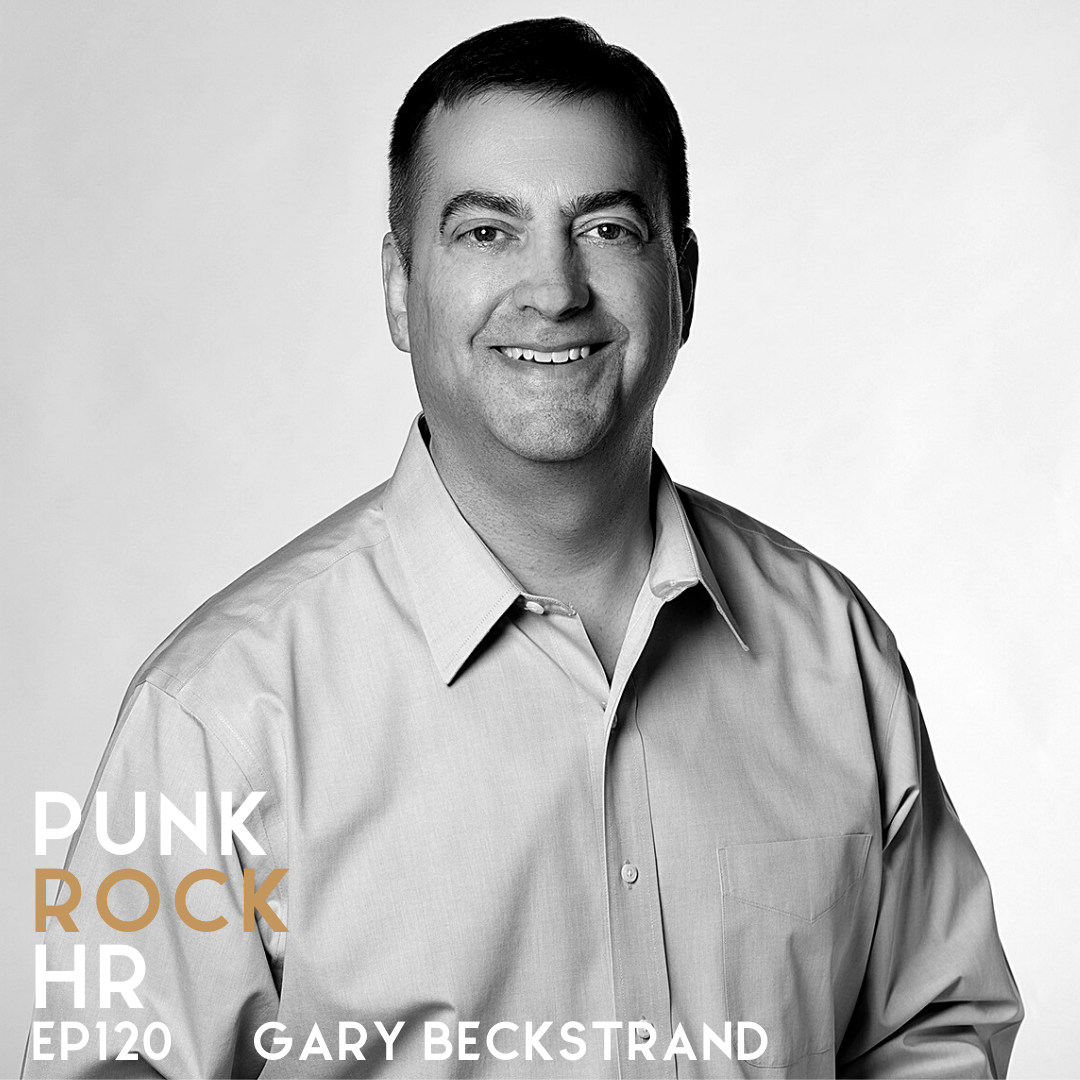
    Gary Beckstrand spends his career researching and teaching on these very topics. He is the vice president of The OC Tanner Institute. OC Tanner is a recognition company that’s focused on aligning people with their passion and their purpose. They do a tremendous amount of research on the employee in order to accomplish that goal. 

    So, what does the employee experience really mean, and which aspects of it matter most when trying to create a satisfying work experience?

    Gary says, “There are six key areas that are most important to employees relative to culture and their experience that really have an impact on your decision to join, engage with, or do their best work and stay in the organization… {these} six areas are {called} talent magnets because of their power to attract and connect people to your organization or one another.”

    The OC Tanner Institute published these six aspects of the employee experience in their Global Culture Report. This organizational culture research looks at current culture trends, company culture statistics, and how employees feel about their workplaces. See how companies with strong cultures recruit and attract top talent, reduce employee turnover, and become places where employees thrive.

    I’m talking about these topics—and more on modern vs. traditional leadership in the workplace— in my weekly newsletter. I’m also sharing a video to help you think about your week ahead. You can sign up here.

    Be sure to also check out these incredible resources:

    Culture Trends Tour: The Culture Trends Tour brings together HR leaders, experts, and professionals to connect and discover insights from the 2020 Global Culture Report—the largest annual study on workplace culture. Come to learn essential best-practices for shaping thriving workplace cultures that fuel organizational success.

    Influence Greatness: The most insightful conference on workplace culture is going virtual and international. With world-class speakers, a first look at the 2021 Global Culture Report, a wealth of on-demand content, and no registration fee.

    Talent Magnets: White Paper on the Six Essential Aspects of Workplace Culture  

    The Work Place Podcast: Conversations with leaders in culture and experience, featuring tangible takeaways in every episode.

    Request a Product Demo: Culture Cloud Recognition: Welcome to the most complete collection of employee recognition tools for celebrating daily wins and team triumphs.


  • Improving The Employee Experience with Gary Beckstrand

    Improving The Employee Experience with Gary Beckstrand

    Punk Rock HR Episode 120:

    Gary Beckstrand is the vice president of The OC Tanner Institute. OC Tanner is a recognition company that’s focused on aligning people with their passion and their purpose. They do a tremendous amount of research on the employee in order to accomplish that goal. 

    I have the amazing opportunity to partner with OC Tanner during the month of August on a webinar series called the Culture Trends Tour. This is a tour that brings together HR leaders, experts, and professionals to really connect and talk about the insights from OC Tanner’s 2020 Global Culture Report. I’m excited and honored to participate in it.

    We talk a little bit about this partnership in today’s episode, but mostly Gary and I talk about terms like recognition and employee experience. We discuss what these things really mean for modern leaders and the people that they support. Listen in for a really great conversation about leadership and employee experience in 2020 and beyond.

    In this episode you’ll hear:

    1. What employee experience means to Gary.
    2. The six aspects of employee experience that matter most when creating a satisfying work experience.
    3. The 21st-century methodology of leadership.
    4. The expectations of employees in 2020.
    5. How to begin moving a company towards modern leadership.
    6. The role of HR in the employee experience.

    KEY TAKEAWAYS

    WHAT DOES THE TERM EMPLOYEE EXPERIENCE REALLY MEAN?

    From an HR perspective, we often look through the lens of the organization. However, we must begin to understand the employee experience from their perspective and not just the organization’s perspective. The employee experience is made up of thousands of micro-experiences that we all experience from day to day. It is every email read, every conversation had, every recognition received or not received, and every interaction with leadership. It’s in that context that we leaders have to remember that our primary role is to influence and create experiences that are meaningful and put people in the best possible place to succeed. 

    WHICH ASPECTS OF EMPLOYEE EXPERIENCE MATTER MOST WHEN TRYING TO CREATE A SATISFYING WORK EXPERIENCE?

    There are six key areas that are most important to employees. They have the power to attract and connect people to one organization or another. The first is purpose: an organization’s noble cause or reason for being. The second area is the notion of opportunity. We all are looking for opportunities for growth and development, but more than the traditional job promotions or increases in pay, people are really wanting to have a voice and to do meaningful work. Thirdly, employees want to know what success looks like for their organizations and for themselves. They want to know what they need to do and what that looks like for them. The next aspect is appreciation. People want to be acknowledged for the work they do. They want to know and feel like they’re making a difference and like there’s something unique about them that contributes. Additionally, there is the aspect of well-being. Simply, well-being is working in a place where the company and leaders care about their employees. Finally, modern leadership is an important area of the employee experience.

    HOW IS THE OLD WAY OF LEADERSHIP DIFFERENT FROM THE 21ST CENTURY METHODOLOGY?

    Traditional leaders primarily direct, evaluate, and gatekeep. Their primary responsibility is to give direction based on experience. Traditional leaders hold back information or share on a need to know basis. However, there’s an outright rejection of this traditional leadership style right now in the workplace. Modern leaders’ primary focus is to mentor. Instead of evaluating, they’re developing. Instead of gatekeeping, they’re connecting. They still give directions, but it’s given in a way of coaching or guidance as opposed to imperatives. Modern leaders are also transparent and share information.

    HOW CAN I BEGIN PULLING MY COMPANY TOWARDS MODERN LEADERSHIP?

    The simple answer is recognition. Organizations need to start to build recognition and really reinforce values and business objectives. They need to move towards integrating recognition so that it becomes part of their culture. Leaders have to pay the price to really become aware and understand the value of their people, what they do, how they do it, and where they can help them get better. From there, leaders should express approval, gratitude, and appreciation. In doing so, they can start to build connections with their employees so that they can have difficult conversations in the context of acknowledging and understanding the great work their employees are doing.

    WHAT IS THE ROLE OF HR IN THE EMPLOYEE EXPERIENCE?

    This COVID situation has exposed both our strengths and weaknesses from a cultural standpoint. It’s provided us with opportunities to think about how we address policy changes and how we approach things differently. It’s given information and incentive to HR leaders to take them over the finish line on things that they’ve been trying to influence in their organizations. We’ve also discovered the notion of valuing people and the importance of the work they do. Executive teams have had to communicate more and find ways to connect. Now is truly the time for HR to double down, champion people, and start to invest and do some things differently. HR professionals can help their leaders move from traditional to modern leaders. They now have the opportunity to step back and address some things they haven’t gotten to before.

    Resources from this episode:

    Global Culture Report: Our latest organizational culture research looks at current culture trends, company culture statistics, and how employees feel about their workplaces. See how companies with strong cultures recruit and attract top talent, reduce employee turnover, and become places where employees thrive.

    Culture Trends Tour: The Culture Trends Tour brings together HR leaders, experts, and professionals to connect and discover insights from the 2020 Global Culture Report—the largest annual study on workplace culture. Come to learn essential best-practices for shaping thriving workplace cultures that fuel organizational success.

    Influence Greatness: The most insightful conference on workplace culture is going virtual and international. With world-class speakers, a first look at the 2021 Global Culture Report, a wealth of on-demand content, and no registration fee.

    Talent Magnets: White Paper on the Six Essential Aspects of Workplace Culture  

    The Work Place Podcast: Conversations with leaders in culture and experience, featuring tangible takeaways in every episode.

    Request a Product Demo: Culture Cloud Recognition: Welcome to the most complete collection of employee recognition tools for celebrating daily wins and team triumphs.

    Gary on LinkedIn

    Laurie on Instagram

    Laurie on LinkedIn

    Read more from Laurie

    Work with Laurie


  • Coaching Is Not a Side Hustle

    During the Great Recession in 2008 and 2009, I was a career coach. Sometimes I called myself an executive coach. Most of the time, I talked to people who were fundamentally unhappy with work and with their lives.

    I had to come up with a process, a methodology, and a way of interacting with people who needed my help. I had to figure out how I could give them my best and give them something worth paying for but also do this at scale. I had to learn how to build a coaching business. That’s what I am talking about on Punk Rock HR this week. 

    How do you make a coaching business work, so it thrives in a time when people have no money? Well, the answer is a little complicated.

    You have to approach it like a business, not a side hustle. If you are looking for a side hustle, there are many ways to do a side hustle that are faster, more profitable, and less destructive to other people than randomly opening up a coaching business.

    Before moving on to how to launch a business, perhaps the next most crucial step is understanding your why. 

    1. Why do you want to be an executive coach? 
    2. Why do you want to help people through the most challenging moments of their professional lives? 

    You need to know your backstory. You need to understand what motivates you. Because if you don’t know your backstory, including all of your strengths and all of your weaknesses, you’re going to be a terrible coach.

    Once you know your why, it’s time to get to work. 

    Remember, nobody wants a half-assed version of your effort. You’ve got to put everything you have, everything, into your coaching business. If you’re ready to work on behalf of other people who are trying to figure out the world of work, I think you can do great things. 

    I’m talking about these topics—and how to cultivate behaviors that promote accountability, empathy, and likability—in my weekly newsletter. I’m also sharing a video to help you think about your week ahead. You can sign up here.

  • The Comeback from a Setback with Emily O’Brien

    The Comeback from a Setback with Emily O’Brien

    Punk Rock HR Episode 112:

    So, what does a Canadian millennial entrepreneur know about making a comeback? This week’s guest, Emily O’Brien, founder of Comeback Snacks, is going to tell us. In today’s episode, Emily opens up about her journey from a sales professional at a global corporation to an entrepreneur, to a convicted felon, and then back again to an entrepreneur. She is someone who is trying to give back, make amends, and help her community. 

    Many motivational professionals like to say the setback is a setup for the comeback. And often, it sounds over-sensationalized. But in the case of Emily’s story, I think that’s true. If you’d like to hear about a person who overcame their worst instincts and how they turned it around, I think you’re going to love this conversation with Emily O’Brien.

    In this episode you’ll hear:

    1. Emily’s story of graduating college with honors, starting her own business, and how things took a left turn when she got arrested.
    2. She shares openly about life after her arrest, being sentenced, and going to jail. 
    3. How prison forces you to be mindful in a weird, unfortunate way. 
    4. She started her popcorn business, Comeback Snacks, in prison.
    5. How Emily deals with the pressures of entrepreneurship. 
    6. Emily’s perspective on how to grow as a leader and challenge yourself to do better.
    7. What Emily would like Executives and HR professionals to learn from her story. 

    KEY TAKEAWAYS

    WHAT ARE SOME WAYS EMILY HAS BEEN TRYING TO EXPAND AND GROW AS A LEADER?

    Some of the things that Emily has found helpful are connecting with people, reading more books, and finding opportunities to learn. Another way to grow as a leader is by mentoring people who are building their businesses.

    HERE IS WHAT EMILY WOULD LIKE EXECUTIVES AND HR PROFESSIONALS TO TAKE AWAY FROM HER STORY:

    She would like executives not to overlook potential employees who fell on hard times. Emily explains, “I think that many people that land in prison are incredibly talented. You’ll find a drug dealer and a CEO, and their only difference is how they use their creativity. Being a drug dealer requires all the same skills [as a CEO]. You have to be shrewd; you have to keep track of your money, and get your marketing in order, right? You’ve got to have good people that work for you. So [don’t count out] looking at the people that worked in the drug trade or got mixed up in other things. They’ve been through tough times. They’re tough. When they have a bad day, they say, ‘I’m going to come to work every day.’ Because a bad day for them before was a really bad day.”

    WHAT’S SOME ADVICE FOR MAKING A COMEBACK?

    Here’s more from Emily, “Comeback Snacks was started in an environment of adversity. It was started in an area where people were stressed out and very uncertain about their future, but they wanted something that brought them together. And so I think now more than ever, Comeback Snacks is relatable. That’s why we started to get through something together to build collective resiliency. And so that’s how we share your journey through popcorn and find comfort through popcorn. I encourage everyone to make a comeback. But comebacks aren’t given to you. Even if we are in an environment, we can’t control; we still have to put the work in.”

    Resources from this episode:

    Comeback Snacks

    Emily on LinkedIn

    Laurie on Instagram

    Laurie on LinkedIn

    Read more from Laurie

    Work with Laurie