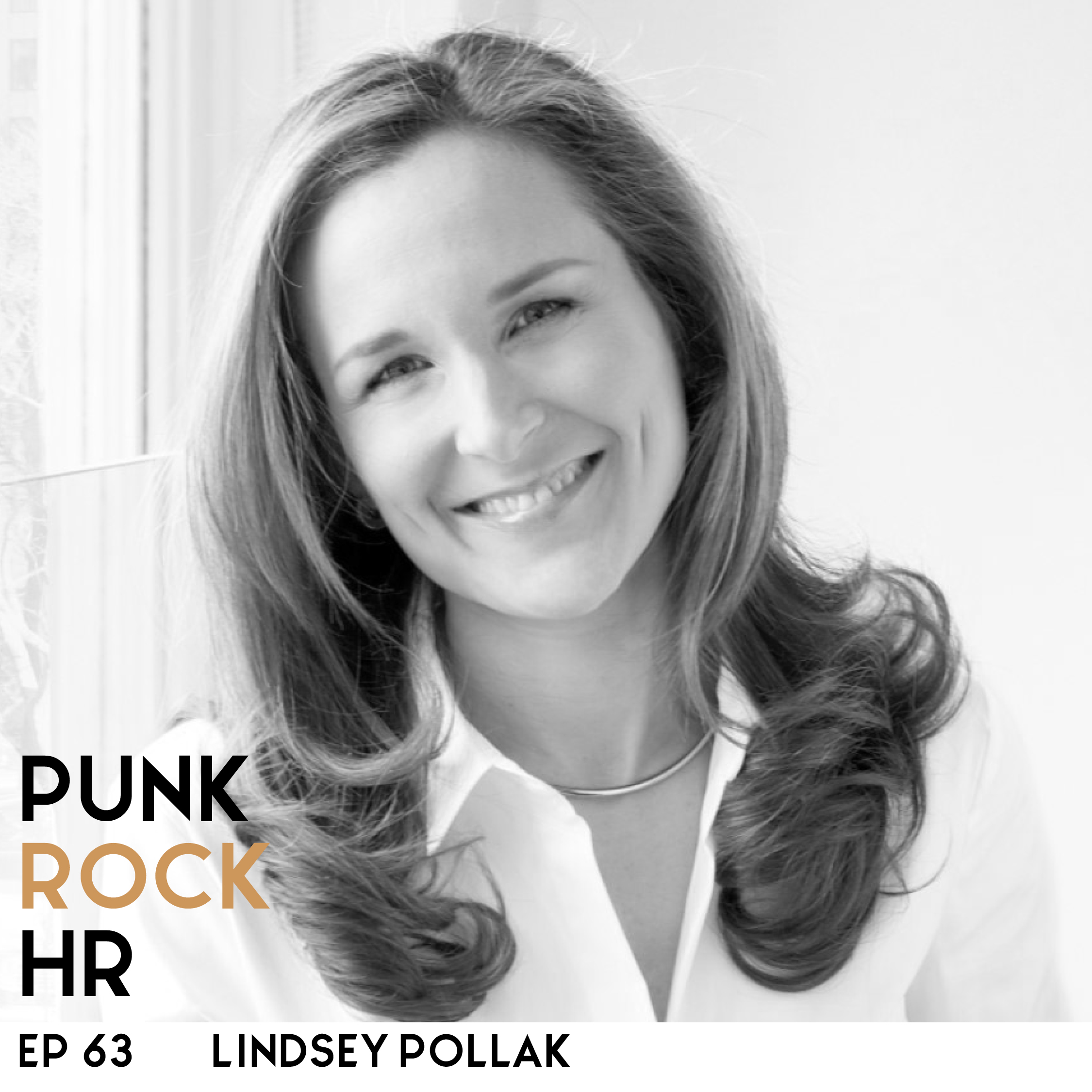
Three things you should know about multigenerational workplace expert Lindsey Pollak: She is one of the earliest people to talk about the Strauss-Howe Generational Theory. She does not like generational shaming or stereotypes. She also believes that it is possible to have fun at work.
In this episode, we talk about how five generations are working in the workforce right now. We discuss how to recognize the best in all five generations, learn from one another and actually have some fun in the world of work.
Inspiration for “The Remix”
Lindsey’s latest book is called “The Remix.” Twenty years ago, Lindsey began her career as a college campus speaker and based her first two books on college students preparing to enter the workforce. But a funny thing happened — those college students/millennials got older.
With that realization, Lindsey saw that the conversation and the situations were shifting in her audience. “The question was less about ‘How do we become successful as young professionals?’ but ‘Wow, there’s all these other people in the workplace, too,’” she shared. Before, many businesses would ask Lindsey about younger professionals. Now, with a multigenerational organization, it’s less about just looking for young talent and more about how to manage this organizational structure.
“What started happening was the young people coming in were still interesting, but I started paying attention to the older people that continued to work into their 60s, 70s and 80s, and that multigenerational mix is what sparked the inspiration for my book,” she says.
New Rules of the Workspace
The generations of workers in the workplace have definitely changed within the past 20 years. Many companies have up to five generations of workers currently in their employ. This shift is not something that will remain forever, but Lindsey’s book offers some rules that can help you manage the workspace better.
One rule is, “Common sense is not so common sense.” Back in the day, it was a rule that women wore pantyhose to interviews, that you stayed with a job for “X” amount of time, that you had to skip a certain amount of line space from your address on a resume, and so forth. But those rules no longer apply to today’s workforce.
“If you wore pantyhose to a job interview at a San Francisco startup, you wouldn’t get the job. You wouldn’t fit the culture,” Lindsey said. She shares that common sense to millennials can mean knowing how to post on Instagram, while that’s not common sense to others. For an older generation, it’s confronting someone younger face to face when that’s not always a norm for younger generations.
Another rule is “one-size-fits-none.” There isn’t one solution that can help the multigenerational workplace — there are multiple solutions that can be helpful with different generations and personality types. Harkening to the title of her book, Lindsey wants people to think of the various options as remixes that everyone is compatible with. “That’s the image that I want people to have of the workplace. Everybody gets a little bit of what they want, but everyone has to adapt a little bit, too,” she says.
Current Workforce Trends
Personalization is the name of the game. In today’s workforce, people want to feel seen, and one of the best ways to achieve that is through personalization. But this has taken away from some of the nuances that typically surround work.
Lindsey notes that a prevalent trend is the increased number of titles that companies are making to create momentum for people. While many people can still view the workforce as black and white, there are a good amount of gray areas that need to be filled in, too.
Another trend that has gained significant traction is the practice of career transparency. From job responsibilities to current salary, many professionals and companies are becoming more open and honest. Lindsey says, “Everyone freaks out, ‘Oh my gosh, I don’t want to tell people secrets, and they’re going to want to know my salary.’ No. Maybe you could tell them the new client that you signed yesterday. It’s degrees of personalization, degrees of transparency, not massive overwhelming.”
Workforce Assumptions
We make many assumptions about the world of work, with one of the most significant assumptions being that people always want a promotion. While it’s true that people want to advance in their careers, which will lead to higher pay and a living wage, it’s not the only thing that people want.
Another assumption is that people want to work from home or remotely instead of going to the office. “A lot of people ask me, ‘In the future when millennials are in charge, is everybody just going to work from their house?’ And the answer is no: Work is really social,” Lindsey says.
She has found that people don’t necessarily want to go to work. Instead, they are looking for the flexibility to choose where they work from and when they work within the working hours. “So when millennials say they want to work remotely or they want to work flexibly, that means they want the option to go home when they’re having something installed. They want to be able to go to SoulCycle at 4 o’clock and come back to the office,” she says.
However, this doesn’t mean changing your structure for work radically. It could just mean making small adjustments where workers have a bit more flexibility a few days out of the week.
What Are We Missing from Work?
Almost every task in the workforce is automated in some shape or form. These automation and tools have made nuanced tasks easier for people to complete, but it’s also taken away from the workplace’s camaraderie and community.
Lindsey shares that one of the worst things that have happened to the workforce has been creating and implementing open offices. Most people assume that younger generations have pushed for this layout, but no data support this theory. Instead of creating an open flow of ideas, connections and socializing, open-office plans caused people to retreat within themselves because most of their work isn’t necessarily collaborative.
“I remember when I used to have to make sales calls in my first job, I would pull the phone with the wire out into the hallway because I was too embarrassed to do it in front of other people. We’ve created that scenario again,” Lindsey states. “So I just think we blame a lot of things on millennials, like open office space, or we blame them for wearing headphones, when it’s actually the situation has become totally untenable for people.”
It’s essential to find a balance within open spaces that fosters collaboration and communication and stays away from workers using “AirPod walls” to disconnect from their colleagues and opportunities of strengthening those relationships. Open spaces can cause a lot more harm than good for companies.
People can feel a bit embarrassed to tackle tasks in front of other people, which can stall their progress and productivity. Lindsey explains, “It’s horrifying for a lot of people, but we just decided that this was going to be the way it was. And I think it’s really damaging. And the argument I made to companies is, ‘You’re losing productivity. You’re losing good people. People are unhappy.’ That’s really dangerous.”
Generational Shaming and Blaming
A multigenerational workplace isn’t going anywhere, and to make it work, it’s time to “stop shaming by generation.” We all know that every generation has that one quirk or stereotype that many people love to fixate on and weaponize as a way to bring down their capabilities, but that’s not acceptable — especially when it comes to millennials.
“The things that we say about millennials are things that we would have never said about other groups,” Lindsey shares. “What if we said that about women? We would never allow it. But when we talk about millennials, we all go, ‘Oh, these young people today. Right?’”
But it’s also essential not to make fun of yourself for the generation you are in. “The other piece of that, though, is don’t make fun of yourself for your age. “Oh, I’m such a Luddite. I’m old enough to be your grandmother.’ I mean, we all talk about age in this way, where we are constantly criticizing instead of seeing it as an asset,” Lindsey explains. Every generation within an organization should be seen as an asset and an element of diversity. Having the same people with the same work styles and experiences doesn’t leave much room for growth, which is essential to a business’s success.
Right now, many people are re-entering the workforce or starting new careers. People of all generations are looking for similar jobs and new opportunities, so judging based on general stereotypes is not reasonable. Remix your approach, strategies and structures to make an environment where everyone can succeed.
Resources from this episode:
Thanks to our sponsor: Namely.com/podcast
Lindsey’s website
The Remix
Drop This Beat: Lindsey Pollak Is Remixing The Workplace
Namely believes there’s one team that can help make your workplace great: HR. When their days are filled with administrative to-dos, they can’t focus on the big stuff—like parental leave and promotions. Namely’s all-in-one HR, payroll, and benefits platform makes their lives easier, saving them an average of 11 hours each week. Over 1,000 companies use Namely to build a better workplace. Get a free demo at Namely.com/podcast
Full Transcript
Laurie Ruettimann:
Let’s Fix Work is proudly sponsored by Namely. Namely’s all-in-one HR, payroll and benefits platform helps organizations like yours build a better workplace. Over 1,000 companies use Namely every day. Get a free demo by visiting Namely.com/podcast.
Hey everybody. Welcome to Let’s Fix Work. I’m Laurie Ruettimann. This week’s show is super-fun. I’m interviewing Lindsey Pollak, multigenerational workplace expert and keynote speaker. She is one of the earliest people out there to talk about the Strauss-Howe Generational Theory and how millennials needed some attention. She does not like generational shaming. She does not like stereotypes. And she’s here today to talk about how five generations are working in the workforce right now and how we can take the best from all of them and learn from one another and actually have some fun in the world of work. So if you like two Gen-Xers being a little nostalgic and talking about work, you’re going to love this show. Sit tight, and I’ll be right back with Lindsey Pollak and Let’s Fix Work.
Announcer:
Work is broken, and so is the way you think about it. Host Laurie Ruettimann is picking up the pieces so you can take control of your career, put yourself first and be your own HR. With the Let’s Fix Work podcast, here’s Laurie.
Laurie Ruettimann:
Hey Lindsey, welcome to Let’s Fix Work.
Lindsey Pollak:
Thank you so much for having me.
Laurie Ruettimann:
Oh, it’s my pleasure. You and I were just reminiscing about the last time we saw one another and it’s been a minute as the kids say, I think it was at the very first Workhuman conference, and I think it was in a bathroom.
Lindsey Pollak:
Not only that, but it was overshadowed by the fact that Rob Lowe was the keynote speaker. So I might have been a little bit distracted by Rob Lowe, but I was super-excited to see you, too. So …
Laurie Ruettimann:
Yeah. You and thousands of other menopausal women. That was pretty fun. That was a great event. Well, I’m so excited to have you as a guest. We’re friends, I’m a fan. So this is just really an honor and a pleasure for me to have you on my podcast. I know you’re an author of many esteemed books, but I wonder what inspired you to write the new book, “The Remix”?
Lindsey Pollak:
So I started my career 20 years ago as a college campus speaker. And so my first two books were for that audience. “Getting from College to Career” was for students to get their first job. “Becoming the Boss” was about advancing beyond that. And what started to happen as it does is those millennials and college kids got older and I got older. I’m a Gen Xer, I’m 44. And the question was less about how do we become successful as young people, but wow, there’s all these other people in the workplace, too.
Lindsey Pollak:
And the companies that had talked to me about recruiting young people were asking, “Okay, well, they’re here.” And the oldest millennials are 37. So I started to see this shift in the questions I was getting, which were more about, “Okay, my boss is 30 years younger than I am.” Or, “My boss is 20 years older than I am.” “I have a team of people 50 years apart in age.” So what started to happen was the young people coming in were still interesting, but I started to pay attention to the older people continuing to work into their 60s, 70s, 80s. And that multigenerational mix is what sparked the idea for the book.
Laurie Ruettimann:
Yeah. I love that. I mean, we do have such a diverse workforce in terms of age, race, gender in ways that we’ve never had before. There’s been a lot of talk around the Strauss-Howe Generational Theory, and some people love it and some people don’t like it. And you use it in many books to make certain points. What are your thoughts to the people out there who say there are no such thing, those generations, like, “That doesn’t exist, you’re making it up. And it’s really about life stages and not about the years that you were born.”
Lindsey Pollak:
And it’s a very valid argument, and I hear it a lot. So Neil Howe and William Straus were the gurus of this generational theory, so to speak. And I find it valuable because I think it’s another clue or another tool in your toolkit about how to interact with people. It is not. And I have never said that it is the be all and end all way to understand people. If you know, I’m a Gen Xer that doesn’t tell you everything about me. However, every piece of information we have is a clue, which is why I love Susan Cain’s book “Quiet.” So it just made me see people as introverts and extroverts as another way of interacting. So for people who are skeptical, the way I describe generations is that the times in which you are born and come of age are essentially a different cultural life experience from other eras.
Lindsey Pollak:
So if you’re born into the US in the 1940s, it is almost a different country from being born in the US in the 1990s. So just as I am a human, and someone from France is a human, I would agree or argue that we have cultural differences that are notable and might be important to understand if we work together. So your expectations and your life experiences are different based on when you were born. We are all human beings. We are more alike than we are different. And there are some differences in the times that we’re born that I think are helpful to understand.
Laurie Ruettimann:
Yeah, you find it helpful, and thousands of people also find it helpful. Your books sell well, you are a noted speaker. And I wonder, why is the time right for this book? Why now? Why did you feel like it was the moment for “The Remix”?
Lindsey Pollak:
The reason it is the moment for “The Remix” is for the first time in history, we have five generations in the workplace together. So the traditionalists, which is the World War II, Greatest Generation are continuing to work mostly because of the recession. We have more Americans in the workplace over 85 than ever before in history, over 200,000 people over 85, think the Ruth Bader Ginsburg-Warren Buffet era, are still working. The boomers are not retiring at traditional retirement age. They’re working well into their 60s and now their 70s. Xers like me are in our prime earning years, millennials are the largest generation in the workplace and are getting a late start because of the recession, so are likely to work a long time. And now Gen Z, born 1997 and later, according to Howe and Straus and the Pew Research Center, are just coming in. So when I started in the workplace in the ’90s, there were three generations at work and that was complicated enough. Now there are five. And that just started two years ago that that fifth generation of Gen-Zs came in.
Laurie Ruettimann:
Yeah. Super-confusing time, because not only do you need to manage yourself, which is the primary way, I think that many of us could fix work if we wanted to, but we also have to manage the expectations of other people, understand the culture and the norms from where other people come from. And you’re right. There are more people on this planet than ever before. When I, like you, went to work in the workforce in the late ’90s, I looked around and there weren’t a lot of people my age, because there weren’t a lot of people my age, anyways, part of that cohort. And then that has changed over the past 20 years. So the rules of work are definitely changing. And in your book, you share some rules for remixers. Give the top three that people might find surprising.
Lindsey Pollak:
So my first rule for remixers is stop shaming by generation. And that means shaming millennials. I did a TEDx talk on stop shaming millennials. We have criticized them and made fun of them, but we’ve been doing this forever. I mean, people made fun of Gen Xers like us as slackers. This is not new, but the things we say about millennials, we would never say about other groups — “lazy …”
Laurie Ruettimann:
Wait, wait.
Lindsey Pollak:
“… entitled.”
Laurie Ruettimann:
Yeah. So lazy, entitled-
Lindsey Pollak:
Sort of narcissistic. Don’t have a work ethic. What if you said that about women? We would never allow it. But when we say it about millennials, we all go, “These young people today.” Then the other piece of that though is don’t make fun of yourself for your age. “Oh, I’m such a Luddite. I’m old enough to be your grandmother.” I mean, we all talk about age in this way, where we are constantly criticizing as opposed to seeing it as an asset. So the first rule is to just stop making fun of age and see it as an element of diversity. That’s No. 1.
Another rule that I love on rules for remixers is remember that common sense is not so common. So you talked about the rules of the workplace. When we started work, there were rules. Like you did not quit a job before a year. I mean, that was a rule. You wore pantyhose to a job interview. You know what I mean? These were basically agreed-upon. This is how many lines you skipped in a business letter between the address and the date. Well, all of that has gone away. And so what was common sense to us is not common sense. If you wore pantyhose to a job interview at a San Francisco startup, you wouldn’t get the job. You wouldn’t fit in with the culture. So it was almost easier back then because everybody agreed whether — it was also stifling and frustrating for those of us who didn’t like it, but at least it was clear.
And so now common sense might mean if you’re going to reprimand somebody, you do it face to face. Well, that’s not maybe common sense to a young person who’s never been taught that skill. To a millennial, it might be common sense of how to post an Instagram story. Well, that’s not common sense to somebody in their 70s. So we sort of no longer have these rules or agreed-upon ways of working that we used to have. And that’s challenging. And I think it’s also freeing, but you have to acknowledge it in the workplace.
Laurie Ruettimann:
Yeah, that’s really fascinating. It makes me think about all the biases and assumptions and also the power structures that we have that are baked into common sense. And with the workforce being so diverse, people being so different than they were or people just being themselves more regularly at work, common sense is oppressive. Common sense makes assumptions, and common sense is often wrong. Well, I wonder if you could talk a little bit about your book because it talks a lot about how the generations actually want the same things, for example everyone — well, I mean, you believe everyone craves work-life integration. I think I would have more life than I would work if I could, but I wonder how companies can continue to figure out what works well for all of their workers and stop making assumptions, stop relying on the old tiny common sense that you just described.
Lindsey Pollak:
So another rule that I talk about is “one-size-fits-none,” which is, I think a lot of my clients or people come to my speeches, sort of ask this question, “Well, what’s the one solution of … let’s say a workspace?” Some people want corner offices. Some people want open space. What’s the one solution? And the answer is there isn’t one. There are multiple options. And so I think that being flexible in serving all the generations or all personality types or all job functions is not that we find some master solution that fits every single person’s needs, but you simply offer more options. So, for example, if you’re holding the conference and some people love to go and schmooze and network and listen to workshops, that’s great. Also videotape it for the people who’d rather watch it on their couch. Audio-tape it for the people who want to listen in their car or while they’re jogging. It’s the same nugget of information or content or experience, but you’re making it accessible in different ways.
So 9 to 5 was very oppressive for a lot of people. That doesn’t mean that 10 to 4 solves the problem. That means that giving people different options is valuable. I want to explain the title of the book, I think it’s helpful in thinking about it. So it’s based on a remix song, and everyone knows a remix song is when you take a classic and you mix in modern elements, but you’re not saying the classic is wrong or bad, or that people shouldn’t like the classic. And you’re not saying the new is better and should replace the classic. It’s the combination. And I interviewed a bunch of DJs about remixes, because I was not particularly knowledgeable about music. And they said that a little secret of DJing is that if you have an empty dance floor at a wedding or a Bar Mitzvah or a party and you want people to dance, you play a remix.
Because the old people recognize the classic and dance. And the young people recognize the modern version and dance. And everyone feels a little bit included, but also a little bit uncomfortable because they don’t know the other version. And so everybody’s in the same boat. And I think that’s the image that I want people to have of the workplace, that everybody gets a little bit of what they want, but everybody also has to adapt a little bit, too. It’s not about one side winning or losing or one solution solving for everybody. It’s about more options, more combinations. And I think that’s where we can get really creative, but it’s also uncomfortable for people.
Laurie Ruettimann:
Yeah. I love the creativity and the thought process behind all of this. And it makes me think how people at work tend to see a trend and then overcorrect for it. And so the new trend in the workforce is personalization. Everything has to be personalized to you. You have to walk in, you have to have a feed that’s directly related to your experience, all day long. I don’t know. Everything just has to be about you. And I think one of the things that we miss are these nuances at work and these experiences to help people be a little bit uncomfortable. Like that’s OK. And to teach them, to help them learn and to grow along the way. I wonder what you’re seeing as some of the trends in the workplace right now? I see personalization as being the thing that you’re going to hear about at conferences for the next 12 months. What are you hearing and what are you seeing?
Lindsey Pollak:
Well, to play off the personalization piece, what came to mind for me is this trend of increased numbers of titles, so creating momentum for people. Again, we’re so black and white in our society, and the overcorrection is so true. It’s gone from like — think of a law firm. First-year associate, second-year associate, third-year associate and on and on and on and on. So it’s one size fits all. Well, when you say to a law firm, “Maybe you could rethink that.” They think we’re going to start calling people “chief legal ninjas.” And they freak out that it’s going to go wildly off the charts. There’s a whole lot of gray area in there, where someone could be a second-year associate specializing in litigation. So it’s these small tweaks.
Flexibility is another one. “Well, everybody’s going to be a free for all. Everybody’s going to work whenever they, wherever they want.” No. What if you gave people 5% more flexibility. So even if they’re a call center worker and they do some paperwork, maybe they could do the paperwork from home. So it’s about these changes. Transparency is another trend. Everyone freaks out, “Oh my gosh, I don’t want to tell people secrets and they’re going to want to know my salary.” No. Maybe you could tell them the new client that you signed yesterday. It’s degrees of personalization, degrees of transparency, not massive overwhelming.
And I think in some ways, Silicon Valley is harmful to a lot of other companies because you have a company like Zappos or Buffer or Netflix that says “radical transparency!” That’s cool. That’s one company. That’s not going to be all of us going in that direction. Where can you just take one step forward? And that’s sort of where I try to live with people. I’m not a radical, but I do think we can make progress.
Laurie Ruettimann:
Yeah. I love that. It’s like baby steps, small steps, little experiments, beta tests-
Lindsey Pollak:
Pilots.
Laurie Ruettimann:
Pilot programs. Yeah, all of those buzzwords, all of it that we all know and we never do. And I think as you were describing the different shades of gray that happen with flexibility with job titles, it makes me think that we have so many assumptions about the world of work. And one of those is that everybody today, no matter how old you are, wants a promotion. That’s what people are working for. And I think there’s something to be said there, but I think wages have been suppressed for so long that yeah, people are eager to earn more money. They want more recognition because the workplace was so hard for so long. So what do you think about these assumptions that people make? I mean one common one is that everybody, and especially young kids, want a promotion. What are some other ones that are just absolutely incorrect?
Lindsey Pollak:
So I completely agree with you on that one. Yeah, everyone wants a living wage, but there’s a lot more they want as well. I think it’s important to say that. But the other one I hear a lot is everybody wants to work from home. And a lot of people ask me, “In the future when millennials are in charge, is everybody just going to work from their house?” And the answer is no, work is really social. And so when millennials say they want to work remotely or they want to work flexibly, that means they want the option to go home when they’re having something installed.
They want to be able to go to SoulCycle at 4 o’clock and come back to the office. I don’t foresee a future where everybody wants to work from home. I have an office, I am a one-person business. I have an office because I don’t like working from home. Once in a while, I do. But I think that’s another myth that we hear a lot. And again, it’s about this feeling, when you say “let’s fix work,” it doesn’t mean change everything to the most radical degree. It means I want to work from home once a month when my cat is sick and that’s OK. It’s not about every day.
Laurie Ruettimann:
Yeah. When people ask me about the future of work and the future of working at home, I have a little story for you. I also work from home, I’m a sole proprietor. And these landscapers were constantly coming around, and I could not figure out when to do my podcast. So I went to my homeowner’s association and asked, “Is there a way we can put landscapers on a schedule? That would be really helpful.” And they told me no. “And by the way, your home isn’t zoned for work.”
I was like, “Oh snap, you are a piece of work. And thank you. I’ll just shut up and continue to work from home and not cause any trouble.” So I think these questions about the assumption of work are really interesting because we don’t have a system in place, anyway, to work other than at work. And when we work from home, it’s like these other things that we need aren’t necessarily there.
And I just think about my grandmother, who probably could never imagine the world today. She passed away about a decade ago, but she worked at a candy factory. She worked at Dunkin’ Donuts. She was a receptionist and work is a place that you went that had rules and had four walls and concrete floors. I mean, it looked nothing like it does today. I wonder about older supervisors and bosses in the workforce and that tension that they have with people who are not part of their generation. Is it a myth that they’re the ones that have the tension, or do you see tension throughout the generations no matter who is in that supervisory role?
Lindsey Pollak:
I actually find the biggest tension tends to be between Xers and Millennials.
Laurie Ruettimann:
Well, that’s because we’re angry. Come on now.
Lindsey Pollak:
We’re bitter. It’s like sibling rivalry sometimes more difficult than parent and child. I find a lot of tension between people who are just one or two steps ahead of somebody else, where they feel like they had to work harder so much more recently. I think a lot of boomers genuinely understand that a lot of time has passed and things are really, really different. And I think they’re very interested in staying relevant and learning the new stuff. I think a lot of Xers are really caught in the middle and feel like it was supposed to be our time. We never got to lead. I think generational size is a very overlooked characteristic, and boomers and millennials are just more people. And so they get their way more and Xers and Zs are kind of smaller generations. So I think that’s really, really important.
Laurie Ruettimann:
1,783, that’s the average number of hours American employees work every year. That’s a lot of time. Who wouldn’t want to spend it in a great workplace? A place that makes you feel engaged and productive, among peers that help you grow. Namely believes there’s one team that can help make your workplace great, HR. When their days are filled with administrative to-dos, they can’t focus on the big stuff like parental leave and promotions. Namely all-in-one HR payroll and benefits platform makes their lives easier, saving them on average 11 hours each week. As an employee, Namely makes your life easier, too. Requesting PTO, appreciating peers and reviewing pay stubs — it’s all just one click away. 75% of Namely’s clients say their platform has increased engagement company-wide. Over 1,000 companies use Namely to build a better workplace, get a free demo at Namely.com/podcast. That’s Namely.com/podcast. Build your better workplace today.
Lindsey Pollak:
It’s just demographics, and I think we need to acknowledge it, but I think it goes in all directions. And I also want to say, there are also plenty of people who have tons of multigenerational relationships. I have so many young people who say, “I didn’t even notice my colleagues were older. We just get along or we have similar personalities.” I don’t want to create problems where there aren’t any, but when there is tension, often it’s because we have these expectations of how things should be. And we’re not willing to look at how another generation might see things. So empathy is just so important. And I also — just to go off in a little tangent, there’s some things that have been lost, and I think that’s really important.
An example I used in the book, I had a lawyer friend who said when she was starting out, she had to fax contracts, hundreds and hundreds of pages of contracts. And if you remember old fax machines, some of your listeners don’t remember, but you’d have to sort of put this paper through and it would go like — I mean, it was incredibly slow and every page beeped. So she’s standing at the fax machine for literally hours, which sounds horrible. Everyone says, “Well it’s progress.” Now you attach a PDF by email. But what she said was, “I’d stand there in the middle of my law firm, and I would hear people’s conversations. So I was listening to people negotiate on the phone. I was listening to other lawyers talk to clients. I was standing there for so long that some senior partner would come over and chit-chat with me, and we’d build a relationship. I read every page that I faxed. So I got to read all these contracts. Some things were really valuable that now we move too fast for.”
So I’m actually seeing companies add things like apprenticeship or purposely sitting young — I don’t like a bullpen where you put all the young people. They’ll put a young person next to a really seasoned person and they love listening to them talk on the phone. So I think it’s really important to think that everything is not speeding forward in progress. There’s a lot in that classic of work that was really, really good. I’ve had a lot of bankers say, “In the old days. Yeah, we worked all night and we had to be in the office, but we hung out and we had pizza together, and I got to know people.” And those times, as much as it was hard work and we couldn’t go home, there was value in that. And so I just always want to point out that it’s not always progress and always great to move forward. Sometimes fixing work is about going back to some classic things that actually were really good and might need to be brought back. Does that make sense?
Laurie Ruettimann:
It does. It’s really well-stated. One of the things that I find missing from work almost ironically, because it’s so trendy right now, is the sense of community. We used to go to work and find community because our families were all messed up. And we had all of these unifying experiences outside of the workforce, and we would bring it into the workforce and share and learn and grow. And I think some of that has just degraded, which is interesting to me because in this era where everybody is shoved into open-office seating, almost like we’re receding into ourselves. These are gross generalizations. I understand that. But when I hear from clients that I work with all the time, “I don’t feel like I connect with anybody at work. Work is supposed to be my family, and it’s not.” There’s this disappointing experience that I hear more and more of. And maybe it’s because I’m older, maybe it’s because I’m coaching, but it seems more common to me. What do you think about that?
Lindsey Pollak:
I have two thoughts on that first is, and I don’t like to shame any generation, but I can’t tell you how many millennials say to me, “I wish my bosses were in the office more.” They’re all going home to be with their kids and they’re traveling and that’s great that they can work from home and have work-life balance, but I want to get to know them. I hear that all the time. So I think that’s just something to note that if you’re an older manager, your young people want to hang out with you, they want to get to know you, they want to build relationships. The second thing: I think open offices are one of the worst things to happen to humanity in a very long time. It is not true that millennials want them. There is no data saying that young people want them. It is a cost-saving measure.
Lindsey Pollak:
And I have more conversations about headphones and earbuds and AirPods than any other topic because millennials are not wearing them because they are lazy, entitled narcissists who want to listen to music, they’re wearing them because you’re sticking them in airplane hangers and telling them to make sales calls and do spreadsheets. And it is horrible for them. They say, “AirPods are the new walls.” And I totally get that. So a couple of companies. I did some work with Capital One and went through their offices. They have modular space where you’re in an open space, but they have these sort of like wheeled bookcases and bookshelves and plants even. And you can sort of move them. So if I’m making sales calls, and I’m a little shy, I can, like, maneuver a plant between you and me so that I can make those calls with a little bit of privacy.
And then when you and I want to collaborate, we can move the plant. And that just made so much sense to me that you can have big open spaces that save money, but you can also create ways — I mean, I remember when I used to have to make sales calls in my first job, I would pull the phone with the wire out into the hallway because I was too embarrassed to do it in front of other people. We’ve created that scenario again. So I just think we blame a lot of things on millennials, like open-office space, or we blame them for wearing headphones when it’s actually, the situation has become totally untenable for people. And I’m just so against wide-open offices unless they’re necessary, like in a newsroom, it makes sense. Everybody’s talking on the phone, I get it. But in many situations it’s really causing a lot of harm. And I do think there’s a backlash. I do think people are starting to realize the trouble with that, but they’ve made investments and are in a tough spot.
Laurie Ruettimann:
Yeah. They’ve made investments and the only other solution is to send people to work from home. I mean —
Lindsey Pollak:
No, plants. I’m telling you, movable plants.
Laurie Ruettimann:
I have to say I’ve never worked in an environment where I didn’t have an office. I mean, I worked in human resources. I always had the need for privacy or the need for an office to interview people physically. So I went my whole corporate career with four walls, and it was just glorious. So I didn’t realize how lucky I was, and I had gorgeous offices. They were not shabby.
Lindsey Pollak:
That’s rare.
Laurie Ruettimann:
Then a couple of years ago, I did a consulting stint at a company called Zenefits, and they were lovely, but it was just the bench. Everybody was on the bench. The CEO was on the bench. Everybody just had a workspace. And I have never struggled to hear as much as I’ve struggled to hear in my whole entire life. And I felt aged. I mean, you talk about shame and blame of generations. I felt like, “What is wrong with me? I cannot work in this environment.” So I can’t imagine women my age, who are out of the workforce, returning to the workforce and seeing what’s become of it. I’ve had these conversations with girlfriends. They’re like, “Holy crap. I’m not sure I can do it.” Thought on that?
Lindsey Pollak:
There was a story that I had read in a magazine that I put in the book about a woman who was going through menopause and needed a fan at her desk and was too embarrassed to have a fan at her desk in public. And so she suffered, which must have been so hard to get her work done. So I think we’re just creating barriers to people’s success by putting them in these big open — how about introverts? I mean, forget about age. It’s horrifying for a lot of people, but we just decided that this was going to be the way it was. And I think it’s really damaging. And the argument I made to companies is, “You’re losing productivity. You’re losing good people. People are unhappy. That’s really dangerous.” OK, so if you have a big open-office space and you’re listening to this and you’re saying, “but, but it’s there. I can’t fix it. I’m not the boss. I didn’t design the space.” Where can you, like, repurpose a utility closet as a phone booth? Where can you —
Laurie Ruettimann:
Oh, they figured it out already.
Lindsey Pollak:
Anything, right? Anything.
Laurie Ruettimann:
Yes.
Lindsey Pollak:
How can you take what people need? Create a quiet space, create a collaborative space. There was one company I worked with that took their conference room and they said from 12 to 1 every day, this is going to be the social lunch area because people wanted to hang out, and they didn’t want to have personal conversations out in their big open-office space. So from 12 to 1, for one hour, they repurpose the conference room. Try to be creative. There’s always something that you can do to make it a little better. So just try to make it, not this cavernous awful humongous space, but you know what, again? My husband loves his open office. He had an office, and he moved out of it because he wanted to hang out with everybody else. So some people love it. You just — everybody’s different across all generations, so options and choice I think are really this solution because everybody is really different in their preferences. There’s no one solution for everyone.
Laurie Ruettimann:
Well, as we wrap up our conversation today, I wonder what’s next for you, Lindsey? I mean, you’ve conquered the world. You have this new book out, your family’s doing well. Things are seemingly great. I mean that’s what social media is for, share all of the good stuff. What are you doing to learn, to grow, to continue your individual development?
Lindsey Pollak:
Thank you so much for that question. I have just joined the board of a nonprofit called FourBlock, which helps military veterans transitioning out of the military into civilian life. So I’m trying to take the work that I do and apply it to people in very different situations from mine. I have no military background, and thinking about people who want to become entrepreneurs, people who have been in the military, military spouses is a totally overlooked category of people who have to figure out ways to work in different areas. And as I get older, I’m just increasingly interested in second careers, in third careers, in post-retirement careers. I don’t know if I’ll ever retire, but I was so in the college moment, and I love that and I’ll never change it, but there’s just so many different sort of niches to explore with this work. And the military is one that I’m moving on next, but thank you for asking. That’s a great question.
Laurie Ruettimann:
Yeah. Yeah. I’m really fascinated by that. And also I will retire for you. You know I’ve won the lottery if you never hear from me again.
Lindsey Pollak:
Oh really? You want to do that Instagram with your cats?
Laurie Ruettimann:
Yeah. I haven’t had any new cats lately. I figured I’ve got the last one, and that’s it for me. And I’m really committed to all of them. I love them dearly, but I like the idea because I’m of that stereotypical generation — we can shame me all I want, but I want to opt out. I don’t want to be a part of anybody’s system. And so I think it’s phenomenal that I have found and have been blessed enough to find a career that suits me — writer, speaker, advisor, contributor. All of that I can do on my own terms and I can manage the risk on my own. But for other people who need to stay in the corporate world who have more traditional lives, they could not find the work that I do tenable. It’s just untenable. So it’s really interesting to hear you come on and talk about the generations. Talk about work. It’s really fascinating. And it just reminds me that I like what I do a whole bunch.
So I wonder, Lindsey, where can we find you and all of your good work and get to know more about your whole ecosystem?
Lindsey Pollak:
Thank you for asking. I am everywhere under my name, the challenge is my name is really hard to spell. So I’m going to stop and spell it for you. I’m on Instagram, Twitter, LinkedIn, my website at Lindsey Pollak, and it’s L-I-N-D-S-E-Y P-O-L-L-A-K, and I love to get emails. I love to get messages. I’d love to keep in touch with everybody. I could totally talk about this stuff all day. As you know.
Laurie Ruettimann:
We’ll make sure to contribute all of that into the show notes.
Lindsey Pollak:
Thank you.
Laurie Ruettimann:
I wonder if there’s a hack that you tell people, “If you Google this you’ll find me. Do you have that?
Lindsey Pollak:
Oh no. What’s yours?
Laurie Ruettimann:
Mine is, “I hate human resources.”
Lindsey Pollak:
Well, OK. I’m going to tell you a secret, but now it’s good to drive more traffic to it. I have dedicated 20 years to setting generations. I try to be really meaningful and intellectual in my work. And the number one blog post I have ever written is “Can You Wear Shorts To Work?” That gets more traffic. So all the research I’ve done, “Can You Wear Shorts to Work?” You’re guaranteed to find me on Google.
Laurie Ruettimann:
And the answer. Just give it to us?
Lindsey Pollak:
I advise against it, but some cultures it’s OK. But yes, that is my claim to fame, that’s the first line of my obituary-
Laurie Ruettimann:
Hey, take it. I think that’s good SEO. It always works. All right. Well look for you under your full name and also under whether or not you can wear shorts. Thank you so much for being a guest on Let’s Fix Work.
Lindsey Pollak:
So good. Thank you for all the work that you do, Laurie.
Laurie Ruettimann:
Thanks, Lindsey. Everybody stick around. We’ll be right back, right after the break with more Let’s Fix Work.
Laurie Ruettimann:
Hey, everybody hope you enjoyed my conversation with Lindsey Pollak, workplace expert and noted thinker on the multi-generational workforce. I just love Lindsey so much. And if you want to learn more about her, don’t forget to check out our show notes on my blog. Now I also want to take a second and thank our wonderful sponsor Namely. They make the world of work in the world of HR a little bit better and a little bit easier. So if you work in the world of work or in human resources, check out Namely.com/podcast.
This episode of Let’s Fix Work, as always, is produced by Danny Ozment at Emerald City Productions. I know you’re curious about podcasting, because you keep emailing me. So make sure you check out Danny Ozment and his short course on how to launch a podcast. Now that’s all for today, and I really hope you enjoyed it. We’ll see you next time on Let’s Fix Work.
Announcer:
If you’re ready to make a real change in your workplace, start today by number one, subscribing to Let’s Fix Work on the Apple podcasts app or iTunes or Stitcher or Android or wherever you listen. Number two, write a five-star rating and review, and number three, share it with a friend, colleague or co-worker who you think would enjoy our episodes.
Laurie Ruettimann:
All executives need to be podcasting. Podcasts are the number one way for executives to create an authentic and trusting relationship with employees and potential customers. That’s why my producer, Danny Ozment just did a three-part series on why executives should be podcasting. Want to give your company a brand or a face? Want to connect with current or future employees? Are you interested in pivoting out of your current position and into a new career or personal brand? Well, if you’re an executive who is podcast-curious, head on over to dannyozment.com/executives and learn how a podcast builds credibility, how podcasting gives you a leg up against the competition and how a podcast can power a speaking career and help you write a book. Don’t worry about finding the time to listen. Each episode is less than 10 minutes, and Danny has put all three episodes in one place, head on over to dannyozment.com/executives to listen and find more resources. That’s dannyozment.com/executives.